More than 1 in 4 teens who gave birth were ages 15 to 17, before teens typically complete high school.
1,700
Nearly 1,700 teens ages 15 to 17 years give birth every week.
27%
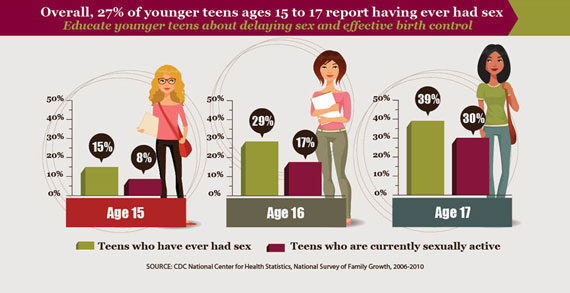
Only 1 in 4 (27%) teens ages 15 to 17 have ever had sex.
Teen births in the US have declined over the last 20 years to the lowest level ever recorded, but still more than 86,000 teens ages 15 to 17 gave birth in 2012. Giving birth during the teen years has been linked with increased medical risks and emotional, social, and financial costs to the mother and her children. Becoming a teen mom affects whether the mother finishes high school, goes to college, and the type of job she will get, especially for younger teens ages 15 to 17. More can be done to prevent younger teens from becoming pregnant, particularly in health care.
Doctors, nurses, and other health care professionals can
Provide confidential, respectful, and culturally appropriate services that meet the needs of teen clients.
Encourage teens who are not sexually active to continue to wait.
Offer sexually active teens a broad range of contraceptive methods and encourage them to use the most effective methods.
Counsel teens about the importance of condom use to prevent pregnancy and sexually transmitted diseases, including HIV/AIDS.
Problem
Many younger teens give birth at ages 15 to 17.
More than 1 in 4 teens who give birth are ages 15-17.
Hispanic, non-Hispanic black and American Indian/Alaska Native teens have higher rates of teen births.
Only 38% of teens who gave birth at age 17 or younger earned high school diplomas by their 22nd birthday versus 60% of teen who were 18 or older when they gave birth. Among teens not giving birth, 89% earned high school diplomas.
Sexually active teens need ready access to effective and affordable types of birth control.
Long-acting reversible contraception (LARC) including intrauterine devices (IUDs) and hormonal implants are the most effective reversible methods. These methods do not require taking a pill each day or doing something each time before having sex.
Nine in 10 (92%) younger teens ages 15 to 17 used birth control the last time they had sex, but only 1% used LARC. The most common methods used were condoms and birth control pills.
There are effective ways to prevent pregnancy among younger teens ages 15-17.
About 8 in 10 (83%) teens did not receive sex education before they first had sex. Earlier delivery of sex education may enhance prevention efforts.
More than 7 in 10 (76%) spoke to their parents about birth control or about not having sex. Parents play a powerful role in helping teens make healthy decisions about sex, sexuality, and relationships.
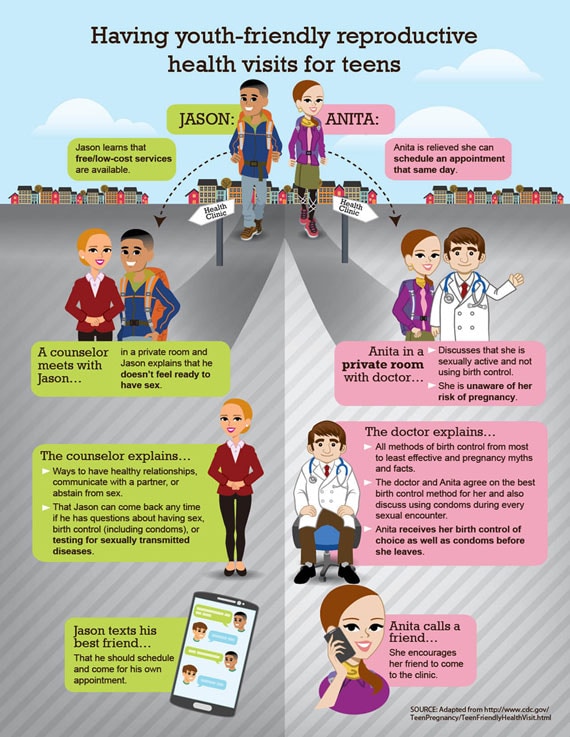
More than half (58%) of sexually active younger teens made a reproductive health visit for birth control services in the past year. Doctors and nurses could use this opportunity to discuss advantages and disadvantages of different contraceptive methods and the importance of condom use during every sexual encounter.
Supporting states in efforts to reduce pregnancies, births, and abortions among teens.
Working to improve the health and social well-being of teens to reach the Healthy People 2020 national objective to reduce pregnancy in teens ages 15-17.
Doctors, nurses, and other health care providers can
Encourage teens to delay sexual activity.
Encourage sexually active teens to consider the most effective reversible methods of birth control. Refer to CDC guidelines.
Talk about using condoms correctly every time during sex to prevent sexually transmitted diseases, including HIV/AIDS, even if another birth control method is used.
Discuss normal physical, emotional, and sexual development with teens and parents.




 1 in 4
 1,700
1,700 27%
27%