
 |
|
Español: Norovirus 
Have You Ever Heard of Norovirus?Running Time: 2:37 This short video explains what norovirus is, how it spreads, and how you can protect yourself and loved ones from getting it. 
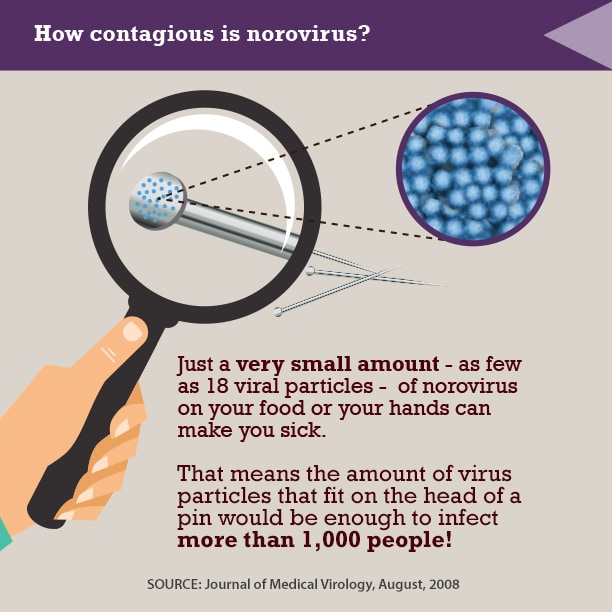
Norovirus is a very contagious virus that can infect anyone. You can get it from an infected person, contaminated food or water, or by touching contaminated surfaces. The virus causes your stomach or intestines or both to get inflamed. This leads you to have stomach pain, nausea, and diarrhea and to throw up. These symptoms can be serious for some people, especially young children and older adults… First Ever - Human norovirus successfully grown in a lab!
CDC celebrates the work of scientists at Baylor College of Medicine in Texas, who recently developed a way to grow human norovirus in cells that line the human intestine. This is a major scientific achievement that has been more than 40 years in the making after numerous attempts by many labs, ever since norovirus was first discovered. This discovery will help us better understand basic human norovirus biology, and how to prevent and treat norovirus infections, the most common cause of diarrhea and vomiting in the United States and globally. Learn more from our partners at NoroCORE or read the article. Norovirus Collection
The Global Burden of Norovirus & Prospects for Vaccine Development This PLOS norovirus collection fills critical knowledge gaps and provides key information for the development of a much-needed vaccine. This is a “living collection” and more articles will be added over time. Norovirus OutbreaksNorovirus outbreaks occur throughout the year. But, over 80% of the outbreaks occur from November to April. Learn more about U.S. Trends and Outbreaks. Review other norovirus multimedia tools. SymptomsThe most common symptoms are: 
Other symptoms include:
You can get dehydrated if you are not able to drink enough liquids. You may urinate less, have a dry mouth and throat, and feel dizzy. Many Names, Same SymptomsYou may hear norovirus illness called "food poisoning" or "stomach flu." It is true that food poisoning can be caused by noroviruses. But, other germs and chemicals can also cause food poisoning. Norovirus illness is not related to the flu, which is a respiratory illness caused by influenza virus. Syndicated Content Details:
Source URL: http://www.cdc.gov/norovirus/index.html Source Agency: Centers for Disease Control and Prevention (CDC) Captured Date: 2016-05-23 22:43:44.0
|
|