About 90% of US children ages 6-18 years eat too much sodium daily.
10
10 common types of foods contributed more than 40% of the sodium eaten by children.
1 in 6
1 in 6 children has raised blood pressure, which can be lowered in part by a healthy diet, including less sodium.
About 9 in 10 US children eat more sodium than recommended. Most sodium is in the form of salt, as a part of processed foods. A high sodium diet can lead to high blood pressure. About 1 in 6 children ages 8-17 years has raised blood pressure. High blood pressure is a major risk factor for heart disease and stroke. Lowering sodium in children's diets today can help prevent heart disease tomorrow, especially for those who are overweight. The taste for salt is established through diet at a young age. Parents and caregivers can help lower sodium by influencing the way foods are produced, sold, prepared, and served.
As a parent and caregiver, you can:
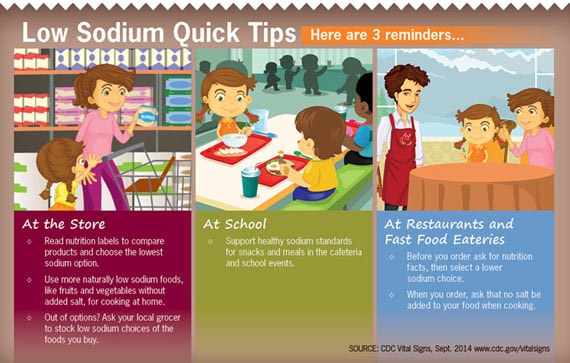
Model healthy eating for your children by having a diet rich in fruits and vegetables without added sodium.
Compare Nutrition Facts labels to choose the lowest sodium option before you buy.
Ask your grocery manager to provide more low sodium options of your family's favorite foods.
Request restaurant nutrition information to make lower sodium choices.
Problem
Commonly eaten foods have too much sodium.
How much is too much?
US children ages 6-18 years eat an average of about 3,300 mg of sodium a day before salt is added at the table. The 2010 Dietary Guidelines for Americans recommend that children eat less than 2,300 mg per day.
Eating too much sodium affects some people's blood pressure more than others. Children in these groups should eat even less sodium, 1,500 mg per day:
African Americans, and those with
Hypertension
Diabetes
Chronic kidney disease
Teens consume more calories and more sodium rich foods than younger children.
Where does it come from?
Every meal and snack. Children eat about 15% of sodium at breakfast, 30% at lunch, 39% at dinner, and 16% at snacks.
Common foods. About 43% of sodium eaten by children comes from just 10 common food types: pizza; bread and rolls; cold cuts and cured meats; sandwiches like cheeseburgers; snacks, such as chips; cheese; chicken patties, nuggets, and tenders; pasta mixed dishes, such as spaghetti with sauce; Mexican mixed dishes, such as burritos and tacos; and soup.
Processed foods and restaurant foods. Most sodium is already in food before you buy it or order it. About 65% comes from store foods, 13% from fast food and pizza restaurant foods, and 9% from school cafeteria foods.
Applying new nutrition standards for foods sold and served in schools that will reduce sodium up to 50% by 2022.
Reducing sodium intake as part of the Million Hearts® initiative. Low sodium meal ideas, recipes, and nutrition information are available at http://recipes.millionhearts.hhs.gov/.
Working with communities and states to improve access to lower sodium foods.
Parents and caregivers can
When cooking at home, try different spices, herbs, and vegetables instead of salt.
Use 'low sodium' or 'no salt added' ingredients in your meals and recipes.
Model healthy eating for your children by having a diet rich in fruits and vegetables without added sodium.
Compare Nutrition Facts labels to choose the lowest sodium options before you buy.
Ask your grocery manager to provide more low sodium options of your family's favorite foods.
Request restaurant nutrition information to make healthier, lower sodium choices.
Use social media outlets to share your challenges and successes for reducing sodium in your child's diet.
Places that produce, sell, or serve food can
Make gradual reductions in sodium added to foods sold and served. Some companies have already made efforts to reduce added sodium.
Replace sodium with alternatives like spices, herbs, and vegetables.
Shop around for lower sodium brands to carry or ask producers for lower sodium options.
Make low sodium foods more visible through displays and promotions.
Want to learn more about the ways schools are cutting back sodium? Check out these resources. United States Department of Agriculture (USDA)
Use this guide [PDF – 1.84 MB] to plan sodium reduction strategies with your local parent-teacher organization. Centers for Disease Control and Prevention
Read more about how fruits and vegetables can be great alternatives to higher sodium snacks. If serving frozen or canned vegetables or fruit, choose those with low or no sodium. Centers for Disease Control and Prevention
For more information on high blood pressure and children. What you need to know. National Institute of Diabetes and Digestive and Kidney Diseases (NIDDK), NIH




 90%
90% 10
10 1 in 6