
 |
2014-2016 Ebola Outbreak in West AfricaWhat's New
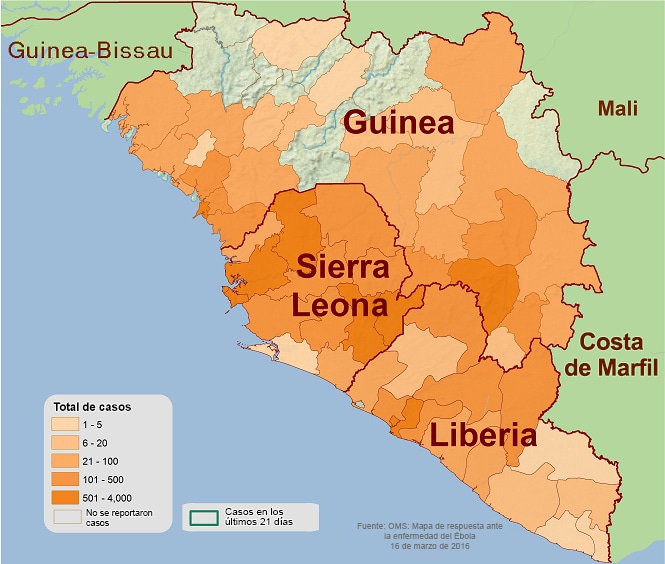
OverviewSince March 2014, West Africa has experienced the largest outbreak of Ebola in history, with multiple countries affected. In response to the outbreak, CDC activated its Emergency Operations Center to coordinate technical assistance and control activities with other U.S. government agencies, the World Health Organization, and other domestic and international partners. CDC also deployed teams of public health experts to West Africa. Widespread transmission of Ebola in West Africa has been controlled, although additional cases may continue to occur sporadically. However, because of ongoing surveillance and strengthened response capacities, the affected countries now have the experience and tools to rapidly identify any additional cases and to limit transmission. March 31, 2016Outbreak Update
Previous Outbreak UpdatesMarch 29, 2016Outbreak Update
March 24, 2016Outbreak Update
March 17, 2016Outbreak Update
Communication ResourcesCase Counts*As of April 13, 2016 Total Cases (Suspected, Probable, and Confirmed): 28,652Laboratory-Confirmed Cases: 15,261Total Deaths: 11,325*Case counts updated in conjunction with the World Health Organization updates and are based on information reported by the Ministries of Health. Syndicated Content Details:
Source URL: http://espanol.cdc.gov/enes/vhf/ebola/outbreaks/2014-west-africa/index.html Source Agency: Centers for Disease Control and Prevention (CDC) Captured Date: 2016-05-23 22:51:29.0
|


|