Whether you are a public health expert in need of a technical briefing or are new to public health and CDC, this E-Brief contains links to useful information about CDC's science, budget, and presence on the ground. For quick access to additional information about CDC's work, please contact the CDC Washington Office at (202) 245-0600, and see below for information about how CDC Washington can help you.
What CDC Does
CDC scientists and disease detectives work 24/7 around the world to:
Prepare the US to respond to emergency health threats
Investigate and stop deadly disease outbreaks in the US and around the world (e.g. rapidly detecting foodborne illness protecting the US food supply)
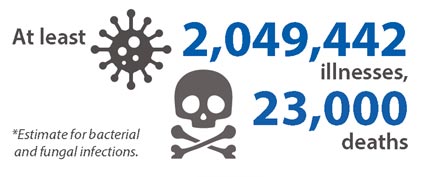
Estimated minimum number of illnesses and deaths caused by antibiotic resistance*
$264 Million in FY 2016 budget proposal to combat Antibiotic Resistance would:
Fund programs in 50 states and 10 large cities including DC to protect people and stop the spread of resistant bacteria
Fund a lab network to better detect resistance and determine what works in prevention
Track and improve prescribing practices
Perscription Drug Abuse
$54 Million increase in FY2016 budget proposal to prevent Prescription Drug Overdose would:
Expand evidence-based prevention programs to 50 states and DC
Improve prevention and prescribing practices among providers and hospitals
Improve analysis and data collection on heroin use
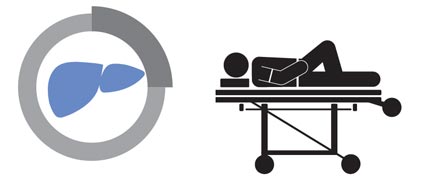
Hepatitis C is the #1 Cause of Liver Transplants
$31 Million FY2016 budget proposal to prevent hepatitis would:
Increase hepatitis testing, linkage to care, treatment and cure
Improve the quality of hepatitis prevention and care
Reduce new hepatitis C virus infections
Advance strategies to eliminate hepatitis A and hepatitis B
$11.6 Million increase in FY2016 budget proposal would focus on
Global Health Security Priorities:
Prevent epidemics including naturally occurring outbreaks and intentional or accidental biological releases
Detect, characterize, and report emerging biological threats early
Respond rapidly and effectively to biological threats of international concern
Only 20% of countries report being able to rapidly detect, respond to, or prevent global health threats caused by emerging infections.
A Health Threat Anywhere is a Health Threat Everywhere
Global aviation network
Source: The Lancet 380:9857, 1–7 Dec. 2012, pp. 1946–55. www.sciencedirect. com/science/article/pu/S0140673612611519 Note: air traffic to most places in Africa, regions of South America, and parts of central Asia is low.If travel increases in these regions, additional introductions of vector-borne pathogens are probable





 Whether you are a public health expert in need of a technical briefing or are new to public health and CDC, this E-Brief contains links to useful information about CDC's science, budget, and presence on the ground. For quick access to additional information about CDC's work, please contact the
