
 |
Acanthamoeba Keratitis (AK)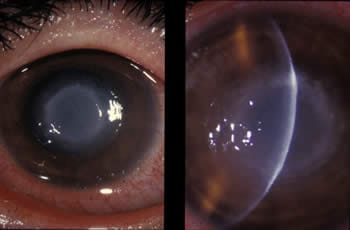
Eye infection from Acanthamoeba. Symptoms of AK include: 2
If you experience any of these symptoms, remove your contact lenses (if you wear them) and call your eye doctor right away. AK is a rare condition, but if left untreated it can result in vision loss or blindness 3. Acanthamoeba is very common in nature and can be found in bodies of water (for example, lakes and oceans) and soil 4. It can also be found in tap water, heating, ventilating, and air conditioning units, and whirlpools 4. Infection of the eye occurs when the Acanthamoeba organisms contained in water or contact lens solution enter the eye through small scrapes that can be caused by contact lens wear or other minor eye injuries 5, 6. The Acanthamoeba organism has to make contact directly with the eyes in order to cause AK, so this type of corneal infection cannot occur from drinking or inhaling water that has this ameba in it 5-7. AK cannot be spread from person to person. In the United States, an estimated 85% of AK cases occur in contact lens wearers 8, 9. For people who wear contact lenses, the risk of getting Acanthamoeba keratitis is higher if they:
In 2007, CDC investigated a nationwide outbreak of Acanthamoeba keratitis which led to the recall of a specific type of contact lens solution from the market 11, 13. Another nationwide outbreak in 2011 pointed to inadequate hygiene among contact lens wearers, in addition to water exposure and "topping off"—adding fresh solution to old solution—in the contact case. Early diagnosis is important because early treatment can prevent AK infections from becoming more severe 3. The infection is usually diagnosed by an eye doctor based on symptoms, lab results from a scraping of the eye, and/or through a close-up eye exam that allows the eye doctor to see the ameba 2. Follow these tips to keep your eyes healthy while wearing contact lenses. Your daily habits, your contact lenses and supplies, and your eye doctor are all important. Syndicated Content Details:
Source URL: http://www.cdc.gov/contactlenses/parasitic-keratitis.html Source Agency: Centers for Disease Control and Prevention (CDC) Captured Date: 2016-05-23 23:10:11.0
|
|