
 |
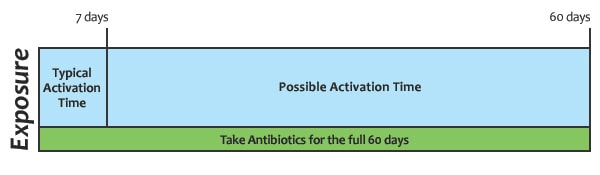
PreventionAntibioticsAntibiotics can prevent anthrax from developing in people who have been exposed but have not developed symptoms. Ciprofloxacin and doxycycline are two of the antibiotics that could be used to prevent anthrax. Each of these antibiotics offers the same protection against anthrax. Anthrax spores typically take 1 to 6 days to be activated, but some spores can remain inside the body and take up to 60 days or more before they are activated. Activated spores release toxins—or poisons—that attack the body, causing the person to become sick. That’s why people who have been exposed to anthrax must take antibiotics for 60 days. This will protect them from any anthrax spores in their body when the spores are activated.
How long does it take for anthrax to activate and release toxins? 
Antibiotics work in two main ways, by killing the anthrax or by stopping the anthrax from growing. When the anthrax can't grow anymore, it dies. To learn more, you can watch the full video about anthrax and antibiotics. VaccineWhile there is a vaccine licensed to prevent anthrax, it is not typically available for the general public. Anthrax Vaccine Adsorbed (AVA) protects against cutaneous and inhalation anthrax, according to limited but well researched evidence. The vaccine is approved by the Food and Drug Administration (FDA) for at-risk adults before exposure to anthrax. The vaccine does not contain any anthrax bacteria and cannot give people anthrax. Currently, FDA has not approved the vaccine for use after exposure for anyone. However, if there were ever an anthrax emergency, people who are exposed might be given anthrax vaccine to help prevent disease. This would be allowed under a special protocol for use of the vaccine in emergencies.
Routine Use (Before Exposure)
Anthrax vaccine is routinely used in three groups of adults 18 to 65 years of age who may be at risk of coming in contact with anthrax because of their job:
To build up protection against anthrax, these groups should get 5 shots of anthrax vaccine over 18 months. To stay protected, they should get annual boosters. The shots are injected into the muscle (intramuscular). Who Should Not Get the Vaccine? Certain people shouldn’t get the anthrax vaccine in routine situations.
Emergency Use (After Exposure)
In certain situations, such as a bioterrorist attack involving anthrax, anthrax vaccine might be recommended to prevent anthrax in people after they have been exposed. If this were to happen, people who were exposed would get 3 shots of anthrax vaccine over 4 weeks plus a 60-day course of antibiotics to prevent disease. During an emergency, the only people who should not get the vaccine after exposure are those who have had a serious allergic reaction to a previous dose of anthrax vaccine. Prevention and Treatment RecommendationsClinical Framework and Medical Countermeasure Use During an Anthrax Mass-Casualty Incident: CDC Recommendations (2015) Antimicrobial Treatment for Systemic Anthrax: Analysis of Cases from 1945 to 2014 Identified Through a Systematic Literature Review (2015) Antitoxin Treatment of Inhalation Anthrax: A Systematic Review (2015) National Notifiable Diseases Surveillance System: Case Definitions (2010) Prevention and Treatment of Anthrax in Adults (2014): Results of CDC Expert Panels EID Journal (2014): Special Considerations for Pregnant and Postpartum Women Pediatric Anthrax Management (2014): Executive Summary Clinical Report CDC Guidance (2013): Anthrax Vaccine Adsorbed (AVA) Post-Exposure Prioritization For More Information
Syndicated Content Details:
Source URL: http://www.cdc.gov/anthrax/medical-care/prevention.html Source Agency: Centers for Disease Control and Prevention (CDC) Captured Date: 2016-05-23 23:13:57.0
|
|