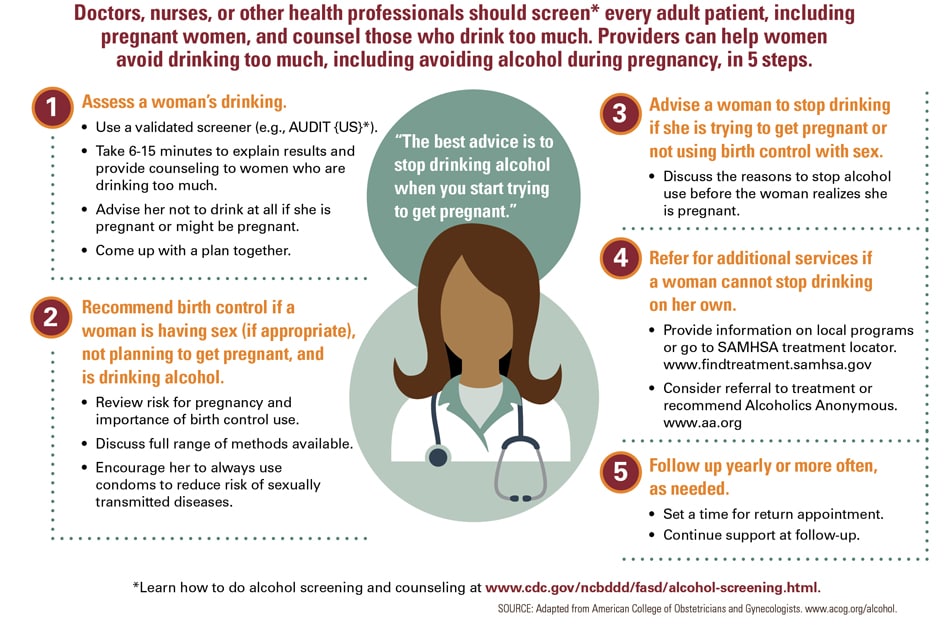
Alcohol use during pregnancy can cause fetal alcohol spectrum disorders (FASDs), which are physical, behavioral, and intellectual disabilities that last a lifetime. More than 3 million US women are at risk of exposing their developing baby to alcohol because they are drinking, having sex, and not using birth control to prevent pregnancy. About half of all US pregnancies are unplanned and, even if planned, most women do not know they are pregnant until they are 4-6 weeks into the pregnancy. This means a woman might be drinking and exposing her developing baby to alcohol without knowing it. Alcohol screening and counseling helps people who are drinking too much to drink less. It is recommended that women who are pregnant or might be pregnant not drink alcohol at all. FASDs do not occur if a developing baby is not exposed to alcohol before birth.
Women can:
Talk with their health care provider about their plans for pregnancy, their alcohol use, and ways to prevent pregnancy if they are not planning to get pregnant.
Stop drinking alcohol if they are trying to get pregnant or could get pregnant.
Ask their partner, family, and friends to support their choice not to drink during pregnancy or while trying to get pregnant.
Ask their health care provider or another trusted person about resources for help if they cannot stop drinking on their own.
Requiring most health insurance plans to cover recommended alcohol screening and counseling services without cost to the patient.
Requiring most health insurance plans to cover FDA-approved methods of birth control and patient education and counseling as prescribed by a health care provider for women of reproductive age without cost to the patient.
Adopting clinical guidelines to carry out alcohol screening and counseling in community health centers.
Working with partner organizations to promote alcohol screening and counseling.
Women can
Talk with their health care provider about their plans for pregnancy, their alcohol use, and ways to prevent pregnancy if they are not planning to get pregnant.
Stop drinking alcohol if they are trying to get pregnant or could get pregnant.
Ask their partner, family, and friends to support their choice not to drink during pregnancy or while trying to get pregnant.
Ask their health care provider or another trusted person about resources for help if they cannot stop drinking on their own.
Health care providers can
We know how practices can implement alcohol screening and counseling.
CDC has a guide to help staff in any primary care practice to plan and implement alcohol screening and counseling.