
 |
Structural Genomics Research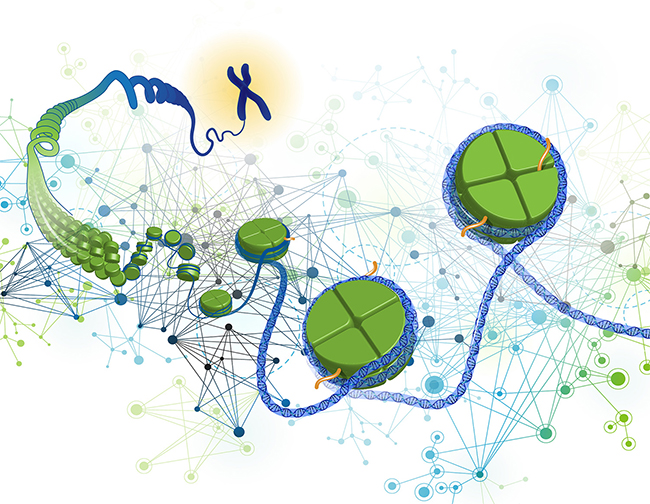
DNA is tightly packaged in the cell. Strands of DNA are wrapped around histone proteins to form nucleosomes, which coil to form chromatin. Chromatin is further condensed into chromosomes.
Credit: Darryl Leja, NHGRI
The study of structural genomics aims to complete the "parts list" of cancer, where "parts" are genetic structures – DNA and RNA– that are altered in cancer. Structural genomics research, such as The Cancer Genome Atlas (TCGA), has already revealed a variety of oncogenic alterations, and these discoveries have improved the care of patients with many different types of cancer. Key Questions
Tools and MethodsCCG characterizes tumor samples and matched normal tissue using a variety of techniques because a deep and comprehensive study of the genome can provide significantly more information about cancer biology than any single platform can. CCG’s tools include:
The Genome Characterization Pipeline carries out CCG’s structural genomics research and the resulting data are made available via the Genomic Data Commons (GDC). Learn more about how CCG works and what data are produced. Programs and CollaborationsAdjuvant Lung Cancer Enrichment Marker Identification and Sequencing Trial (ALCHEMIST)ALCHEMIST is a precision medicine clinical trial of lung cancer that screens patients for two genetic changes in their tumors:
Patients with these alterations receive standard of care treatment followed by a targeted therapy that corresponds to the alteration in their tumors’ genome, erlotinib for EGFR mutations and crizotinib for ALK rearrangements. ALCHEMIST is a collaboration between CCG and NCI’s Division of Cancer Treatment and Diagnosis. Cancer Driver Discovery Program (CDDP)CDDP aims to identify driver mutations in as few as 2% of patients. By sequencing a large number of cases, CDDP will have the statistical power to discover recurrent mutations in genes that may drive the oncogenic process. As a pilot project, CDDP will analyze samples from lung, colon, and ovarian cancers. Cancer Genome Characterization Initiative (CGCI)CGCI supports research to comprehensively catalog the genomic alterations in adult and pediatric cancers. The research community can use CGCI data to gain insight into the underlying mechanisms of these cancers and identify potential therapeutic targets. The HIV+ Tumor Molecular Characterization Project (HTMCP) and Burkitt Lymphoma Genome Sequencing Project (BLGSP) are two active CGCI projects. CGCI also supported the sequencing of medulloblastoma and non-Hodgkin lymphoma. View the CGCI data matrix to search and download data generated by the Initiative. Clinical Trial Sequencing Project (CTSP)CTSP launched out of a joint aspiration of CCG and NCI’s Division of Cancer Treatment and Diagnosis (DCTD) to promote the use of genomics in NCI-sponsored clinical trials of the National Clinical Trials Network (NCTN). CTSP’s goal is to elucidate the molecular basis of response and resistance to therapies studied. The cancer types currently under study are breast cancer, renal cell carcinoma, and diffuse large B-cell lymphoma. Early Onset Malignancies Initiative (EOMI)The EOMI, a collaboration between CCG and the Division of Cancer Prevention's NCI Community Oncology Research Program (NCORP), studies the molecular characteristics of six cancers that develop at an earlier age and may occur in higher rates and/or be more aggressive in some populations. By characterizing cancers from NCORP's minority/underserved sites, the initiative is investigating how biology may underpin these disparities. Exceptional Responders (ER) InitiativeThe ER Initiative aims to understand the genetic basis of some cancer patients' dramatically positive responses to particular drug therapies that are not effective for most other patients. This pilot study is characterizing the genomic profiles of 100 "exceptional responder" patients who were treated for a variety of different types of cancer. The Exceptional Responders Initiative is a joint initiative of CCG and the Division of Cancer Treatment and Diagnosis (DCTD). Therapeutically Applicable Research to Generate Effective Treatments (TARGET)TARGET applies comprehensive genomic approaches to determine molecular changes that drive certain childhood cancers, including aggressive and hard to treat subsets of acute lymphoblastic leukemia, acute myeloid leukemia, neuroblastoma, osteosarcoma, and several types of kidney tumors. TARGET investigators collaborate with the NCI-supported Children's Oncology Group and NCI's Cancer Therapy Evaluation Program (CTEP), which facilitates discovery of molecular targets and the rapid translation of those findings to the clinic. Learn more about TARGET or access TARGET data The Cancer Genome Atlas (TCGA)TCGA is a collaboration between the National Cancer Institute (NCI) and the National Human Genome Research Institute (NHGRI) that has generated comprehensive, multi-dimensional maps of the key genomic changes in 33 types of cancer. The TCGA dataset, comprising more than two petabytes of genomic data, is publically available and helps the cancer research community improve the prevention, diagnosis, and treatment of cancer. Posted: August 4, 2017 Syndicated Content Details:
Source URL: https://www.cancer.gov/publishedcontent/syndication/1074843.htm Source Agency: National Cancer Institute (NCI) Captured Date: 2017-08-05 01:12:17.0
|
|