
 |
|
NIH is launching a series of initiatives that are rolling out in 2017-2018 to enhance the accountability and transparency of clinical research. These initiatives target key points along the whole clinical trial lifecycle from concept to results reporting. Learn more about these changes and how they will affect your research.
NIH Definition of a Clinical TrialA research study in which one or more human subjects are prospectively assigned prospectively assigned The term "prospectively assigned" refers to a pre-defined process (e.g., randomization) specified in an approved protocol that stipulates the assignment of research subjects (individually or in clusters) to one or more arms (e.g., intervention, placebo, or other control) of a clinical trial. to one or more interventions interventionsAn "intervention" is defined as a manipulation of the subject or subject’s environment for the purpose of modifying one or more health-related biomedical or behavioral processes and/or endpoints. Examples include: drugs/small molecules/compounds; biologics; devices; procedures (e.g., surgical techniques); delivery systems (e.g., telemedicine, face-to-face interviews); strategies to change health-related behavior (e.g., diet, cognitive therapy, exercise, development of new habits); treatment strategies; prevention strategies; and, diagnostic strategies. (which may include placebo or other control) to evaluate the effects of those interventions on health-related biomedical or behavioral outcomes. health-related biomedical or behavioral outcomes.A "health-related biomedical or behavioral outcome" is defined as the pre-specified goal(s) or condition(s) that reflect the effect of one or more interventions on human subjects’ biomedical or behavioral status or quality of life. Examples include: positive or negative changes to physiological or biological parameters (e.g., improvement of lung capacity, gene expression); positive or negative changes to psychological or neurodevelopmental parameters (e.g., mood management intervention for smokers; reading comprehension and /or information retention); positive or negative changes to disease processes; positive or negative changes to health-related behaviors; and, positive or negative changes to quality of life. Learn more 
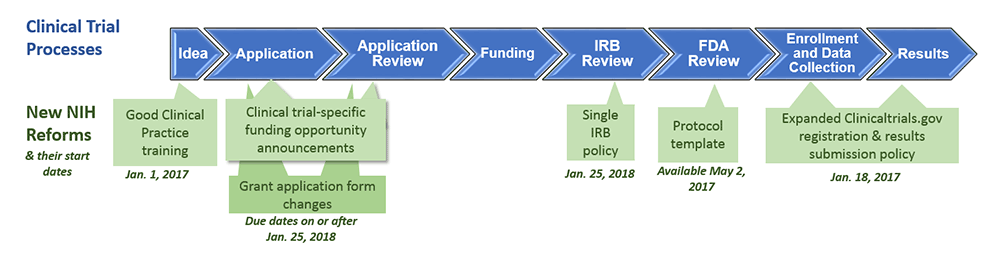
Why Changes to Clinical Trial Policies?Learn more about why NIH is implementing changes to enhance the stewardship of clinical trials and how these changes will impact your research. Good Clinical Practice TrainingEffective January 1, 2017 NIH expects all NIH-funded clinical investigators and clinical trial staff who are involved in the design, conduct, oversight, or management of clinical trials to be trained in Good Clinical Practice (GCP). Learn more. 
Clinical Trial-specific Funding OpportunitiesBeginning for January 25, 2018 due dates, all applications proposing clinical trials must be submitted through a funding opportunity announcement (FOA) designated specifically for clinical trials. Learn more. Clinical Trial-Specific Review CriteriaNew review criteria will be used to evaluate applications proposing clinical trials or clinical trial research experience. Learn more about the new clinical trial-specific review criteria that will apply to applications with due dates on or after January 25, 2018. New Human Subjects and Clinical Trial Information FormA new Human Subjects and Clinical Trial Information form will be required for all human subjects and/or clinical trial research beginning for January 25, 2018 due dates. Learn more about this new form and what it means for your grant application or contract proposal. Single IRB Policy for Multi-site ResearchDo you conduct multi-site clinical research? Learn more about the new policy requiring use of single IRB for grant applications with due dates January 25, 2018 and beyond, and for contract solicitations published starting January 25, 2018. Clinical Trials Protocol TemplateIf your application includes phase 2 or 3 clinical trials that require Investigational New Drug application (IND) or Investigational Device Exemption (IDE) applications, a NIH-FDA template with instructional and sample text can help you write your protocols. Use of this template is optional. Exemption (IDE) applications, a NIH-FDA template with instructional and sample text can help you in writing your protocols. Learn more. Clinicaltrials.gov Registration and ReportingA new regulation and NIH policy has expanded Clinicaltrials.gov registration and reporting to all NIH-funded clinical trials. Learn more about what you need to know about these requirements. Syndicated Content Details:
Source URL: https://grants.nih.gov/policy/clinical-trials.htm Source Agency: National Institutes of Health (NIH) Captured Date: 2017-10-04 13:38:04.0
|







|