Abdominal Adhesions

What are abdominal adhesions?

Abdominal adhesions are bands of fibrous tissue that can form between abdominal tissues and organs. Normally, internal tissues and organs have slippery surfaces, preventing them from sticking together as the body moves. However, abdominal adhesions cause tissues and organs in the abdominal cavity to stick together.

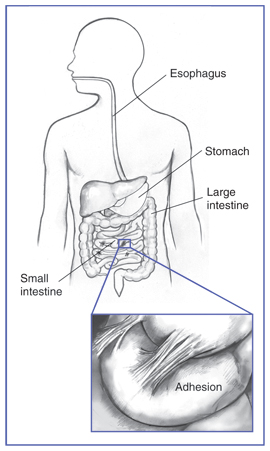
Drawing of the gastrointestinal tract showing the esophagus, stomach, and large intestine. Inset shows abdominal adhesions on the small intestine.
Abdominal adhesions are bands of fibrous tissue that can form between abdominal tissues and organs.

What is the abdominal cavity?

The abdominal cavity is the internal area of the body between the chest and hips that contains the lower part of the esophagus, stomach, small intestine, and large intestine. The esophagus carries food and liquids from the mouth to the stomach, which slowly pumps them into the small and large intestines. Abdominal adhesions can kink, twist, or pull the small and large intestines out of place, causing an intestinal obstruction. Intestinal obstruction, also called a bowel obstruction, results in the partial or complete blockage of movement of food or stool through the intestines.

What causes abdominal adhesions?

Abdominal surgery is the most frequent cause of abdominal adhesions. Surgery-related causes include

  • cuts involving internal organs
  • handling of internal organs
  • drying out of internal organs and tissues
  • contact of internal tissues with foreign materials, such as gauze, surgical gloves, and stitches
  • blood or blood clots that were not rinsed away during surgery

Abdominal adhesions can also result from inflammation not related to surgery, including

  • appendix rupture
  • radiation treatment
  • gynecological infections
  • abdominal infections

Rarely, abdominal adhesions form without apparent cause.

How common are abdominal adhesions and who is at risk?

Of patients who undergo abdominal surgery, 93 percent develop abdominal adhesions.1 Surgery in the lower abdomen and pelvis, including bowel and gynecological operations, carries an even greater chance of abdominal adhesions. Abdominal adhesions can become larger and tighter as time passes, sometimes causing problems years after surgery.

What are the symptoms of abdominal adhesions?

In most cases, abdominal adhesions do not cause symptoms. When symptoms are present, chronic abdominal pain is the most common.

What are the complications of abdominal adhesions?

Abdominal adhesions can cause intestinal obstruction and female infertility—the inability to become pregnant after a year of trying.

Abdominal adhesions can lead to female infertility by preventing fertilized eggs from reaching the uterus, where fetal development takes place. Women with abdominal adhesions in or around their fallopian tubes have an increased chance of ectopic pregnancy—a fertilized egg growing outside the uterus. Abdominal adhesions inside the uterus may result in repeated miscarriages—a pregnancy failure before 20 weeks.

How are abdominal adhesions and intestinal obstructions diagnosed?

Abdominal adhesions cannot be detected by tests or seen through imaging techniques such as x-rays or ultrasound. Most abdominal adhesions are found during surgery performed to examine the abdomen. However, abdominal x-rays, a lower gastrointestinal (GI) series, and computerized tomography (CT) scans can diagnose intestinal obstructions.

  • Abdominal x-rays use a small amount of radiation to create an image that is recorded on film or a computer. An x-ray is performed at a hospital or an outpatient center by an x-ray technician, and the images are interpreted by a radiologist—a doctor who specializes in medical imaging. An x-ray does not require anesthesia. The person will lie on a table or stand during the x-ray. The x-ray machine is positioned over the abdominal area. The person will hold his or her breath as the picture is taken so that the picture will not be blurry. The person may be asked to change position for additional pictures.
  • A lower GI series is an x-ray exam that is used to look at the large intestine. The test is performed at a hospital or an outpatient center by an x-ray technician, and the images are interpreted by a radiologist. Anesthesia is not needed. The health care provider may provide written bowel prep instructions to follow at home before the test. The person may be asked to follow a clear liquid diet for 1 to 3 days before the procedure. A laxative or an enema may be used before the test. A laxative is medication that loosens stool and increases bowel movements. An enema involves flushing water or laxative into the rectum using a special squirt bottle.

    For the test, the person will lie on a table while the radiologist inserts a flexible tube into the person’s anus. The large intestine is filled with barium, making signs of underlying problems show up more clearly on x-rays.
  • CT scans use a combination of x-rays and computer technology to create images. The procedure is performed at a hospital or an outpatient center by an x-ray technician, and the images are interpreted by a radiologist. Anesthesia is not needed. A CT scan may include the injection of a special dye, called contrast medium. The person will lie on a table that slides into a tunnel-shaped device where the x-rays are taken.

How are abdominal adhesions and intestinal obstructions treated?

Abdominal adhesions that do not cause symptoms generally do not require treatment. Surgery is the only way to treat abdominal adhesions that cause pain, intestinal obstruction, or fertility problems. More surgery, however, carries the risk of additional abdominal adhesions. People should speak with their health care provider about the best way to treat their abdominal adhesions.

Complete intestinal obstructions usually require immediate surgery to clear the blockage. Most partial intestinal obstructions can be managed without surgery.

How can abdominal adhesions be prevented?

Abdominal adhesions are difficult to prevent; however, certain surgical techniques can minimize abdominal adhesions.

Laparoscopic surgery decreases the potential for abdominal adhesions because several tiny incisions are made in the lower abdomen instead of one large incision. The surgeon inserts a laparoscope—a thin tube with a tiny video camera attached—into one of the small incisions. The camera sends a magnified image from inside the body to a video monitor. Patients will usually receive general anesthesia during this surgery.

If laparoscopic surgery is not possible and a large abdominal incision is required, at the end of surgery a special filmlike material can be inserted between organs or between the organs and the abdominal incision. The filmlike material, which looks similar to wax paper and is absorbed by the body in about a week, hydrates organs to help prevent abdominal adhesions.

Other steps taken during surgery to reduce abdominal adhesions include

  • using starch- and latex-free gloves
  • handling tissues and organs gently
  • shortening surgery time
  • using moistened drapes and swabs
  • occasionally applying saline solution

Eating, Diet, and Nutrition

Researchers have not found that eating, diet, and nutrition play a role in causing or preventing abdominal adhesions. A person with a partial intestinal obstruction may relieve symptoms with a liquid or low-fiber diet, which is more easily broken down into smaller particles by the digestive system.

Points to Remember

  • Abdominal adhesions are bands of fibrous tissue that can form between abdominal tissues and organs. Abdominal adhesions cause tissues and organs in the abdominal cavity to stick together.
  • Abdominal surgery is the most frequent cause of abdominal adhesions. Of patients who undergo abdominal surgery, 93 percent develop abdominal adhesions.
  • In most cases, abdominal adhesions do not cause symptoms. When symptoms are present, chronic abdominal pain is the most common.
  • A complete intestinal obstruction is life threatening and requires immediate medical attention and often surgery.
  • Abdominal adhesions cannot be detected by tests or seen through imaging techniques such as x-rays or ultrasound. However, abdominal x-rays, a lower gastrointestinal (GI) series, and computerized tomography (CT) scans can diagnose intestinal obstructions.
  • Surgery is the only way to treat abdominal adhesions that cause pain, intestinal obstruction, or fertility problems.

References

Clinical Trials

The National Institute of Diabetes and Digestive and Kidney Diseases (NIDDK) and other components of the National Institutes of Health (NIH) conduct and support research into many diseases and conditions.

What are clinical trials, and are they right for you?

Clinical trials are part of clinical research and at the heart of all medical advances. Clinical trials look at new ways to prevent, detect, or treat disease. Researchers also use clinical trials to look at other aspects of care, such as improving the quality of life for people with chronic illnesses. Find out if clinical trials are right for you.

What clinical trials are open?

Clinical trials that are currently open and are recruiting can be viewed at www.ClinicalTrials.gov.

This content is provided as a service of the National Institute of Diabetes and Digestive and Kidney Diseases (NIDDK), part of the National Institutes of Health. The NIDDK translates and disseminates research findings through its clearinghouses and education programs to increase knowledge and understanding about health and disease among patients, health professionals, and the public. Content produced by the NIDDK is carefully reviewed by NIDDK scientists and other experts.

The NIDDK would like to thank:
James M. Becker, M.D., F.A.C.S.; Arthur F. Stucchi, Ph.D.; Karen L. Reed, Ph.D.

Anatomic Problems of the Lower GI Tract

What are anatomic problems of the lower gastrointestinal (GI) tract?

Anatomic problems of the lower GI tract are structural defects. Anatomic problems that develop before birth are known as congenital abnormalities. Other anatomic problems may occur any time after birth—from infancy into adulthood.

The GI tract is a series of hollow organs joined in a long, twisting tube from the mouth to the anus. The movement of muscles in the GI tract, along with the release of hormones and enzymes, allows for the digestion of food. Organs that make up the GI tract are the mouth, esophagus, stomach, small intestine, large intestine—which includes the appendix, cecum, colon, and rectum—and anus. The intestines are sometimes called the bowel. The last part of the GI tract—called the lower GI tract—consists of the large intestine and anus.

The large intestine is about 5 feet long in adults and absorbs water and any remaining nutrients from partially digested food passed from the small intestine. The large intestine then changes waste from liquid to a solid matter called stool. Stool passes from the colon to the rectum. The rectum is 6 to 8 inches long in adults and is located between the last part of the colon—called the sigmoid colon—and the anus. The rectum stores stool prior to a bowel movement. During a bowel movement, the muscles of the rectal wall contract to move stool from the rectum to the anus, a 1-inch-long opening through which stool leaves the body.

Drawing of the lower gastrointestinal tract inside the outline of a man’s torso. Inset of the lower gastrointestinal tract with the cecum, ascending colon, transverse colon, descending colon, sigmoid colon, and rectum labeled.
The lower GI tract

Anatomic problems of the lower GI tract may involve parts of organs being in the wrong place, shaped abnormally, or incorrectly connected to other organs. Anatomic problems that affect the large intestine or anus include

  • malrotation
  • volvulus
  • intussusception
  • fistula
  • imperforate anus
  • colonic atresia

How does the lower GI tract develop?

About 4 weeks into gestation—the 9-month period from conception to birth—the intestines of the developing baby, or fetus, consist of a thin, straight tube that connects the stomach and the rectum. Over the next 2 weeks, the rapidly developing intestines outgrow the baby’s abdomen and move into the umbilical cord, which connects the baby to the mother. During gestational weeks 10 to 12, the baby’s abdomen has grown large enough to hold the intestines, which return to the abdomen, rotating counterclockwise to their final position. The intestines are held in place by tissue called mesentery.

What is malrotation?

Malrotation is when the intestines do not rotate completely or correctly during gestation. Malrotation can cause serious medical problems in some infants and children, while others may never develop problems. Surgeons estimate that problems with malrotation occur in a small percentage of cases and are usually diagnosed in the first month of life. Boys are more likely than girls to be diagnosed with malrotation during infancy, but problems identified later in childhood are equally likely in boys and girls. Malrotation rarely occurs in adults.

Malrotation can prevent the cecum—the beginning of the large intestine—from moving to its normal position in the lower right area of the abdomen. If this happens, bands of mesentery can block the small intestine, creating an intestinal obstruction—also called bowel obstruction—a life-threatening event and a medical emergency. Malrotation may also leave the mesentery only narrowly attached to the back of the abdomen. This incomplete attachment may result in the intestine twisting—a serious condition called volvulus—see "What is volvulus?"

Symptoms of Malrotation

Infants who have serious problems resulting from malrotation experience pain that can be severe, and they often vomit bile—a greenish-yellow fluid. Other symptoms may include

  • abdominal tenderness, swelling, or bloating
  • bloody or dark-red stools
  • constipation—a condition in which a child has fewer than two bowel movements a week
  • dehydration, or abnormal loss of body fluids—decreased tears and little or no urine or dark-yellow urine may be observed
  • signs of shock—paleness, sweating, confusion, and rapid pulse
  • weight loss

Older children with problems from malrotation may have the above symptoms as well as nausea, abdominal pain, diarrhea, or an abnormal growth rate, as compared with their peers.

Infants or children with any of the above symptoms should be evaluated immediately by a health care provider.

Diagnosis and Treatment of Malrotation

Doctors use x rays of the abdomen and imaging studies to diagnose intestinal problems related to malrotation.

  • Computerized tomography (CT) scan. CT scans use a combination of x rays and computer technology to create three-dimensional (3-D) images. A CT scan may include the injection of a special dye, called contrast medium. CT scans require the child to lie on a table that slides into a tunnel-shaped device where the x rays are taken. CT scans can help diagnose malrotation. Infants and children may be given a sedative to help them fall asleep for the test.
  • Upper GI series. An upper GI series may be done to look at the small intestine. No eating or drinking is allowed for 8 hours before the procedure, if possible. During the procedure, a child is given barium—a chalky liquid—to drink. An infant will lie on a table and is given barium through a tiny tube placed in the nose that runs into the stomach. Infants and children may be given a sedative to help them fall asleep for the test. Barium coats the small intestine, making signs of malrotation show up more clearly on x rays.

    The child may experience bloating and nausea for a short time after the test. For several days afterward, barium liquid in the GI tract causes stools to be white or light colored. A health care provider will provide specific instructions about eating and drinking after the test.
  • Lower GI series. A lower GI series may be done to look at the large intestine. A health care provider may provide written bowel prep instructions to follow at home before the test. The child may be given a clear liquid diet for 1 to 3 days before the procedure. A laxative or enema may be used before the test. A laxative is medication that loosens stool and increases bowel movements. An enema involves flushing water, laxative, or sometimes a mild soap solution into the anus using a special plastic bottle.

    Infants and children may be given a sedative to help them fall asleep for the test. For the test, the child will lie on a table while the doctor inserts a flexible tube into the child’s anus. The large intestine is filled with barium, making signs of malrotation show up more clearly on x rays.

    For several days afterward, barium liquid in the GI tract causes stools to be white or light colored. Enemas and repeated bowel movements may cause anal soreness. A health care provider will provide specific instructions about eating and drinking after the test.

The above tests are all performed at a hospital or outpatient center by an x-ray technician, and the images are interpreted by a radiologist—a doctor who specializes in medical imaging.

Surgery is almost always required to correct problems resulting from malrotation. A surgeon performs the procedure in a hospital and the child is given general anesthesia. With early diagnosis and treatment, surgery is usually successful and may involve

  • repositioning the large and small intestines
  • dividing the bands of mesentery blocking the small intestine
  • removing the appendix, a 4-inch pouch attached to the cecum
  • untwisting the large intestine if volvulus has occurred

What is volvulus?

Volvulus occurs when the intestine twists around itself and the mesentery that supports it, creating an obstruction. The area of intestine above the obstruction continues to function and fills with food, fluid, and gas. The mesentery may become so tightly twisted that blood flow to the affected part of the intestine is cut off. This situation can lead to death of the blood-starved tissue and tearing of the intestinal wall—a life-threatening event and a medical emergency.

Volvulus can be caused by malrotation or by other medical conditions such as

  • an enlarged colon
  • Hirschsprung disease, a disease of the large intestine that causes severe constipation or intestinal obstruction
  • abdominal adhesions, or bands of scar tissue that form as part of the healing process following abdominal injury, infection, or surgery

Sigmoid volvulus—twisting of the sigmoid colon—accounts for the majority of cases, with cecal volvulus—twisting of the cecum and ascending colon—occurring less frequently.

Sigmoid Volvulus

Anatomic problems that increase a person’s risk of developing sigmoid volvulus include

  • an elongated or movable sigmoid colon that is not attached to the left wall of the abdomen
  • a narrow mesentery connection at the base of the sigmoid colon
  • malrotation that presents with problems in infancy

Sigmoid volvulus that occurs after infancy is more commonly seen in people who

  • are male
  • are older than age 60
  • live in a nursing or psychiatric facility
  • have a history of mental health conditions

Symptoms of Sigmoid Volvulus

Sigmoid volvulus symptoms can be severe and occur suddenly. Symptoms may include

  • abdominal cramping
  • bloody stools
  • constipation
  • nausea
  • signs of shock
  • vomiting

People with any of these symptoms should be evaluated immediately by a health care provider.

Other symptoms may develop more slowly but worsen with time, such as constipation, inability to pass gas, and abdominal swelling. People with these symptoms should also contact a health care provider.

Diagnosis and Treatment of Sigmoid Volvulus

Prompt diagnosis and appropriate treatment of sigmoid volvulus generally lead to a successful outcome. Doctors use x rays, upper or lower GI series, CT scans, and flexible sigmoidoscopy—another common diagnostic test—to help diagnose sigmoid volvulus.

  • Flexible sigmoidoscopy. This test is used to look inside the rectum and lower colon. Sigmoidoscopy is performed at a hospital, outpatient center, or doctor’s office by a gastroenterologist—a doctor who specializes in digestive diseases—or a radiologist. Infants and children may be given a sedative to help them fall asleep for the test. For the test, the person will lie on a table while the doctor inserts a flexible tube into the anus. A small camera on the tube sends a video image of the intestinal lining to a computer screen. The doctor can see sigmoid volvulus.

    Children and adults can usually go back to their normal diet after the test, though cramping or bloating may occur during the first hour after the test.

If volvulus is found, the doctor may use the sigmoidoscope to untwist the colon. However, if the colon is twisted tightly or if the blood flow has been cut off, immediate surgery will be needed. Surgery involves restoring the blood supply, if possible, to the affected part of the sigmoid colon. Sometimes the affected part of the colon must be removed and the healthy ends reattached, a procedure called an intestinal resection. Resection prevents volvulus from recurring; untwisting the volvulus with the sigmoidoscope may not prevent recurrence.

Cecal Volvulus

Cecal volvulus is twisting of the cecum and ascending colon. Normally, the cecum and ascending colon are fixed to the abdominal wall. If improperly attached, they can move and become twisted.

Symptoms of Cecal Volvulus

More commonly seen in people ages 30 to 60, cecal volvulus may be caused by abdominal adhesions, severe coughing, or pregnancy. People with cecal volvulus often have intermittent chronic symptoms—those that come and go over a longer period of time—including

  • abdominal cramping or swelling
  • nausea
  • vomiting

People with any of the above symptoms should be evaluated immediately by a health care provider.

Other symptoms may develop more slowly but worsen with time, such as constipation, inability to pass gas, and abdominal swelling. People with these symptoms should also contact a health care provider.

Diagnosis and Treatment of Cecal Volvulus

Doctors use x rays, upper or lower GI series, and CT scans to diagnose cecal volvulus. Imaging shows whether the cecum is out of place and inflated with trapped air. Imaging may also show that the appendix, which is attached to the cecum, is filled with air. To treat cecal volvulus, surgeons use a procedure called cecopexy to reposition the cecum and attach it to the abdominal wall. If the cecum is seriously damaged by volvulus, the surgeon will perform intestinal resection surgery. Cecopexy and intestinal resection surgery have high rates of success and usually prevent the recurrence of cecal volvulus.

What is intussusception?

Intussusception is a condition in which one section of either the large or small intestine folds into itself, much like a collapsible telescope. The condition can cause obstruction and cut off blood flow to the affected part of the intestine—a life-threatening event and a medical emergency.

Malrotation increases the risk that an infant or young child will develop intussusception. Sometimes, a viral infection or growth in the small or large intestine—such as a polyp or tumor—can trigger intussusception, but most childhood cases have no known cause.

Intussusception, though uncommon, is the leading cause of bowel obstruction in young children in the United States. About 1,400 cases occur in the United States each year, nearly all of them in children younger than 1 year old. Intussusception is 1.5 times as likely to affect boys as girls.1

Symptoms of Intussusception

Infants or children with intussusception may have symptoms including

  • abdominal pain, which may be intermittent
  • bloody stools
  • diarrhea
  • fever
  • lack of energy
  • signs of dehydration
  • stool mixed with mucus—a clear liquid made by the intestines that coats and protects tissues
  • swelling or a lump in the abdomen
  • vomiting with or without bile

Infants or children with any of the above symptoms should be evaluated immediately by a health care provider.

Diagnosis and Treatment of Intussusception

A range of tests may be required to diagnose intussusception. X rays of the abdomen may show an intestinal obstruction. Upper and lower GI series can locate the intussusception and show telescoping of the intestine. CT scans can also help diagnose the condition. If intussusception is not diagnosed promptly, it can cause serious damage to the affected part of the intestine.

In some cases, intussusception may be temporary and correct itself and, if no underlying problem is found, treatment is not required. When intussusception does not resolve on its own, doctors can usually correct the problem with a lower GI series, using air or barium to gently push the telescoped part of intestine into its proper position. However, intestinal resection surgery is sometimes necessary to successfully treat the condition.

What is a fistula?

A fistula is an abnormal passage, or tunnel, between two organs—called an internal fistula—or between an organ and the outside of the body—called an external fistula. In the lower GI tract, both internal and external fistulas can occur. Fistulas can develop during gestation or at any age after birth. Fistulas that develop during gestation are more common in boys than girls.

Fistulas may occur as a result of

  • complications following surgery—the most common cause
  • childbirth—a fistula can develop between a mother’s vagina and rectum
  • Crohn’s disease, a chronic inflammatory bowel disease that can affect any part of the GI tract
  • diverticulitis, an inflammation or infection of small pouches called diverticula that are created by bulging, weak spots on the colon
  • infection
  • trauma

Symptoms of Fistulas

Some people with a fistula in the lower GI tract have no symptoms; others may experience

  • abdominal pain that begins in one spot and spreads throughout the abdomen
  • dehydration
  • diarrhea
  • fatigue, muscle cramps, or slow growth due to malabsorption—a condition that occurs when the small intestine cannot absorb nutrients from food
  • fever, with or without chills

People with any of these symptoms should be evaluated immediately by a health care provider.

Diagnosis and Treatment of Fistulas

External fistulas can be found during a physical examination. Internal fistulas can be seen during an upper or lower GI series, CT scan, or colonoscopy.

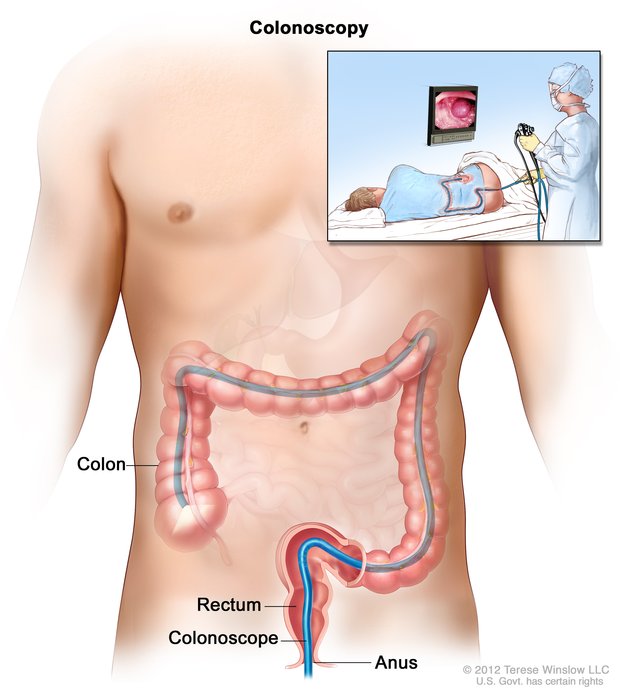
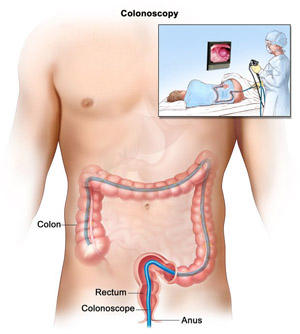
  • Colonoscopy. Colonoscopy is used to look inside the rectum and entire colon for signs of fistulas. Colonoscopy is performed at a hospital or outpatient center by a gastroenterologist or a radiologist. The health care provider will provide written bowel prep instructions to follow at home before the test. The person may be asked to follow a clear liquid diet for 1 to 3 days before the test. Laxatives and enemas may be used before the test.

    For the test, the person will lie on a table while the doctor inserts a flexible tube into the anus. A small camera on the tube sends a video image of the intestinal lining to a computer screen. The doctor can see signs of fistulas. In most cases, a light sedative, and possibly pain medication, helps keep the person relaxed.

    Cramping or bloating may occur during the first hour after the test. Driving is not permitted for 24 hours after the test to allow the sedative time to wear off. Before the appointment, people should make plans for a ride home. Full recovery is expected by the next day.

Internal and external fistulas may close on their own, although this process could take weeks or months. The doctor may prescribe antibiotics to prevent or treat infection resulting from leakage of intestinal contents. Some people may need to stop eating and receive nourishment intravenously to ensure proper healing.

If a fistula does not close on its own, a surgeon may perform intestinal resection surgery.

What is imperforate anus?

Imperforate anus occurs during gestation and involves abnormal development of the rectum and anus. This condition results in a blocked or missing anus, which allows little or no stool to pass from the rectum. Imperforate anus is uncommon and occurs slightly more often in boys than in girls. Types of imperforate anus include

  • an anus that is narrow or blocked by a thin membrane—this condition is also called anal atresia
  • an anus that is missing or incorrectly placed
  • a rectum that is not connected to the anus
  • a rectum that is connected to the urinary tract or genitals by a fistula

Although most girls with imperforate anus have a less severe form of the condition, such as anal atresia, some are born with a more severe form of imperforate anus called cloaca—a common opening for the rectum, bladder, and vagina.

Symptoms of Imperforate Anus

Imperforate anus is observed when a newborn is first examined after birth. In addition to visible indications such as an incorrectly placed anus, imperforate anus may be associated with symptoms that include abdominal swelling and the absence of bowel movements.

Diagnosis and Treatment of Imperforate Anus

The severity of imperforate anus depends on where the blockage is situated—low, intermediate, or high—in relation to the set of muscles that support the rectum and other organs within the pelvic region. X rays of the abdomen and CT scans can help determine the severity of the condition. The doctor may perform other tests to look for abnormalities in the urinary tract.

Correcting imperforate anus almost always requires surgery, and the type of procedure depends on the location and severity of the defect. For example, a low imperforate anus may only require gently widening the anus. Sometimes anoplasty—a surgery to rebuild or move the anus—is needed within the first days after birth. Intermediate or high imperforate anus may require multiple surgeries done in stages. Girls with cloaca may require multiple extensive and complicated surgeries.

The outcome of surgery is measured by the child’s ability to eventually control bowel movements. Most children treated for imperforate anus develop voluntary bowel movements at the usual age of toilet training. However, some children may not achieve good bowel control after surgery because the anal muscles do not develop properly. Factors affecting the outcome of surgery include

  • location of the defect—treatment of low imperforate anus has a more successful long-term outcome than intermediate or high imperforate anus
  • the child’s sex—girls tend to have low imperforate anus, which can be corrected more easily and has more successful long-term results
  • age at the time of surgery—the younger the child when surgery is done, the more successful the outcome

What is colonic atresia?

Colonic atresia is an extremely rare congenital anomaly that occurs when a section of the colon closes before birth. Symptoms appear in infants soon after birth and include vomiting, abdominal swelling, and the absence of bowel movements. Intestinal resection surgery is performed immediately after diagnosis.

Eating, Diet, and Nutrition

Eating, diet, and nutrition have not been shown to play a role in causing or preventing anatomic problems of the lower GI tract.

Points to Remember

  • Anatomic problems of the lower gastrointestinal (GI) tract are structural defects.
  • Anatomic problems that develop before birth are known as congenital abnormalities. Other anatomic problems may occur any time after birth—from infancy into adulthood.
  • The GI tract is a series of hollow organs joined in a long, twisting tube from the mouth to the anus. The movement of muscles in the GI tract, along with the release of hormones and enzymes, allows for the digestion of food.
  • The last part of the GI tract—called the lower GI tract—consists of the large intestine and anus.
  • Anatomic problems of the lower GI tract may involve parts of organs being in the wrong place, shaped abnormally, or incorrectly connected to other organs.
  • Anatomic problems that affect the large intestine or anus include malrotation, volvulus, intussusception, fistula, imperforate anus, and colonic atresia.
  • Surgery is often needed to correct anatomic problems of the lower GI tract.
  • Some anatomic problems of the lower GI tract can be corrected without surgery and others resolve without treatment or never cause problems.

References

Clinical Trials

The National Institute of Diabetes and Digestive and Kidney Diseases (NIDDK) and other components of the National Institutes of Health (NIH) conduct and support research into many diseases and conditions.

What are clinical trials, and are they right for you?

Clinical trials are part of clinical research and at the heart of all medical advances. Clinical trials look at new ways to prevent, detect, or treat disease. Researchers also use clinical trials to look at other aspects of care, such as improving the quality of life for people with chronic illnesses. Find out if clinical trials are right for you.

What clinical trials are open?

Clinical trials that are currently open and are recruiting can be viewed at www.ClinicalTrials.gov.

This content is provided as a service of the National Institute of Diabetes and Digestive and Kidney Diseases (NIDDK), part of the National Institutes of Health. The NIDDK translates and disseminates research findings through its clearinghouses and education programs to increase knowledge and understanding about health and disease among patients, health professionals, and the public. Content produced by the NIDDK is carefully reviewed by NIDDK scientists and other experts.

The NIDDK would like to thank:
Robert Beart, M.D., University of Southern California; James W. Fleshman, M.D., Washington University and Barnes-Jewish Hospital; Kevan Jacobson, M.B.B.Ch, B.C.’s (British Columbia, Canada’s) Children’s Hospital; Joseph Levy, M.D., Children’s Hospital of New York-Presbyterian; John H. Pemberton, M.D., Mayo Clinic

Appendicitis

Definition & Facts

What is appendicitis?

Appendicitis is inflammation of your appendix.

How common is appendicitis?

In the United States, appendicitis is the most common cause of acute abdominal pain requiring surgery. Over 5% of the population develops appendicitis at some point.1

Who is more likely to develop appendicitis?

Appendicitis most commonly occurs in the teens and twenties but may occur at any age.1

What are the complications of appendicitis?

If appendicitis is not treated, it may lead to complications. The complications of a ruptured appendix are

  • peritonitis, which can be a dangerous condition. Peritonitis happens if your appendix bursts and infection spreads in your abdomen. If you have peritonitis, you may be very ill and have
    • fever
    • nausea
    • severe tenderness in your abdomen
    • vomiting
  • an abscess of the appendix called an appendiceal abscess.
References


Symptoms & Causes

What are the symptoms of appendicitis?

The most common symptom of appendicitis is pain in your abdomen.

If you have appendicitis, you’ll most often have pain in your abdomen that

  • begins near your belly button and then moves lower and to your right
  • gets worse in a matter of hours
  • gets worse when you move around, take deep breaths, cough, or sneeze
  • is severe and often described as different from any pain you’ve felt before
  • occurs suddenly and may even wake you up if you’re sleeping
  • occurs before other symptoms

Other symptoms of appendicitis may include

  • loss of appetite
  • nausea
  • vomiting
  • constipation or diarrhea
  • an inability to pass gas
  • a low-grade fever
  • swelling in your abdomen
  • the feeling that having a bowel movement will relieve discomfort

Symptoms can be different for each person and can seem like the following conditions that also cause pain in the abdomen:

What causes appendicitis?

Appendicitis can have more than one cause, and in many cases the cause is not clear. Possible causes include:

  • Blockage of the opening inside the appendix
  • enlarged tissue in the wall of your appendix, caused by infection in the gastrointestinal (GI) tract or elsewhere in your body
  • inflammatory bowel disease
  • stool, parasites, or growths that can clog your appendiceal lumen
  • trauma to your abdomen

When should I seek a doctor's help?

Appendicitis is a medical emergency that requires immediate care. See a health care professional or go to the emergency room right away if you think you or a child has appendicitis. A doctor can help treat the appendicitis and reduce symptoms and the chance of complications.


Diagnosis

How do doctors diagnose appendicitis?

Most often, health care professionals suspect the diagnosis of appendicitis based on your symptoms, your medical history, and a physical exam. A doctor can confirm the diagnosis with an ultrasound, x-ray, or MRI exam.

Medical history

A health care professional will ask specific questions about your symptoms and health history to help rule out other health problems. The health care professional will want to know

  • when your abdominal pain began
  • the exact location and severity of your pain
  • when your other symptoms appeared
  • your other medical conditions, previous illnesses, and surgical procedures
  • whether you use medicines, alcohol, or illegal drugs

Physical exam

Health care professionals need specific details about the pain in your abdomen to diagnose appendicitis correctly. A health care professional will assess your pain by touching or applying pressure to specific areas of your abdomen.

The following responses to touch or pressure may indicate that you have appendicitis:

  • Rovsing's sign
  • Psoas sign
  • Obturator sign
  • Guarding
  • Rebound tenderness
  • Digital rectal exam
  • Pelvic exam

Lab tests

Doctors use lab tests to help confirm the diagnosis of appendicitis or find other causes of abdominal pain.

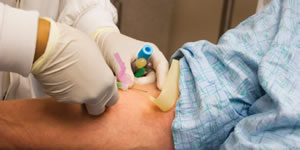
Blood tests. A health care professional draws your blood for a blood test at a doctor’s office or a commercial facility. The health care professional sends the blood sample to a lab for testing. Blood tests can show a high white blood cell count, a sign of infection. Blood tests also may show dehydration or fluid and electrolyte imbalances.

Urinalysis. Urinalysis is testing of a urine sample. You will provide a urine sample in a special container in a doctor’s office, a commercial facility, or a hospital. Health care professionals can test the urine in the same location or send it to a lab for testing. Doctors use urinalysis to rule out a urinary tract infection or a kidney stone.

Pregnancy test. For women, health care professionals also may order blood or urine samples to check for pregnancy.

Imaging tests

Doctors use imaging tests to confirm the diagnosis of appendicitis or find other causes of pain in the abdomen.

Abdominal ultrasound. In an ultrasound, a health care professional uses a device, called a transducer, to bounce safe, painless sound waves off of your organs to create an image of their structure. He or she can move the transducer to different angles to examine different organs.

In an abdominal ultrasound, a health care professional applies a gel to your abdomen and moves a hand-held transducer over your skin. A health care professional performs this procedure in a doctor’s office, an outpatient center, or a hospital, and you don’t need anesthesia.

A radiologist reviews the images, which can show signs of

  • a blockage in your appendiceal lumen
  • a burst appendix
  • inflammation
  • other sources of abdominal pain

Health care professionals use an ultrasound as the first imaging test for possible appendicitis in infants, children, young adults, and pregnant women.

Magnetic resonance imaging (MRI). MRI machines use radio waves and magnets to produce detailed pictures of your body’s internal organs and soft tissues without using x-rays.

A health care professional performs the procedure in an outpatient center or a hospital. A radiologist reviews the images. Patients don’t need anesthesia, although a health care professional may give light sedation, taken by mouth, to children and people with a fear of small spaces. A health care professional may inject a special dye, called contrast medium, into your body.

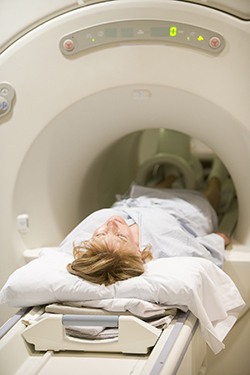
In most cases, you’ll lie on a table that slides into a tunnel-shaped device. The tunnel may be open ended or closed at one end.

An MRI can show signs of

  • a blockage in your appendiceal lumen
  • a burst appendix
  • inflammation
  • other sources of abdominal pain

When diagnosing appendicitis and other sources of abdominal pain, doctors can use an MRI as a safe, reliable alternative to a computerized tomography (CT) scan.2

CT scan. CT scans use x-rays and computer technology to create images.

A health care professional may give you a solution to drink and an injection of contrast medium. You’ll lie on a table that slides into a tunnel-shaped device that takes the x-rays. X-ray technicians perform CT scans in an outpatient center or a hospital. Radiologists review the images.

Patients don’t need anesthesia, although health care professionals may give children a sedative to help them fall asleep for the test.

A CT scan of the abdomen can show signs of inflammation, such as

  • an enlarged or a burst appendix
  • an appendiceal abscess
  • a blockage in your appendiceal lumen

Women of childbearing age should have a pregnancy test before having a CT scan. The radiation from CT scans can be harmful to a developing fetus.

References


Treatment

How do doctors treat appendicitis?

Doctors typically treat appendicitis with surgery to remove the appendix. Surgeons perform the surgery in a hospital with general anesthesia. Your doctor will recommend surgery if you have continuous abdominal pain and fever, or signs of a burst appendix and infection. Prompt surgery decreases the chance that your appendix will burst.

Health care professionals call the surgery to remove the appendix an appendectomy. A surgeon performs the surgery using one of the following methods:

  • Laparoscopic surgery. During laparoscopic surgery, surgeons use several smaller incisions and special surgical tools that they feed through the incisions to remove your appendix. Laparoscopic surgery leads to fewer complications, such as hospital-related infections, and has a shorter recovery time.
  • Laparotomy. Surgeons use laparotomy to remove the appendix through a single incision in the lower right area of your abdomen.

After surgery, most patients completely recover from appendicitis and don’t need to make changes to their diet, exercise, or lifestyle. Surgeons recommend that you limit physical activity for the first 10 to 14 days after a laparotomy and for the first 3 to 5 days after laparoscopic surgery.

What if the surgeon finds a normal appendix?

In some cases, a surgeon finds a normal appendix during surgery. In this case, many surgeons will remove it to eliminate the future possibility of appendicitis. Sometimes surgeons find a different problem, which they may correct during surgery.

Can doctors treat appendicitis without surgery?

Some cases of mild appendicitis may be cured with antibiotics alone. All patients suspected of having appendicitis are treated with antibiotics before surgery, and some patients may improve completely before surgery is performed.

How do doctors treat complications of a burst appendix?

Treating the complications of a burst appendix will depend on the type of complication. In most cases of peritonitis, a surgeon will remove your appendix immediately with surgery. The surgeon will use laparotomy to clean the inside of your abdomen to prevent infection and then remove your appendix. Without prompt treatment, peritonitis can cause death.

A surgeon may drain the pus from an appendiceal abscess during surgery or, more commonly, before surgery. To drain an abscess, the surgeon places a tube in the abscess through the abdominal wall. You leave the drainage tube in place for about 2 weeks while you take antibiotics to treat infection. When the infection and inflammation are under control, about 6 to 8 weeks later, surgeons operate to remove what remains of the burst appendix.


Eating, Diet, & Nutrition

How can your diet help prevent or relieve appendicitis?

Researchers have not found that eating, diet, and nutrition cause or prevent appendicitis.?


Clinical Trials

The National Institute of Diabetes and Digestive and Kidney Diseases (NIDDK) and other components of the National Institutes of Health (NIH) conduct and support basic and clinical research into many digestive disorders.

What are clinical trials and are they right for you?

Clinical trials are part of clinical research and at the heart of all medical advances. Clinical trials look at new ways to prevent, detect, or treat disease. Researchers also use clinical trials to look at other aspects of care, such as improving the quality of life for people with chronic illnesses. Find out if clinical trials are right for you.

What clinical trials are open?

Clinical trials that are currently open and are recruiting can be viewed at www.ClinicalTrials.gov.?


This content is provided as a service of the National Institute of Diabetes and Digestive and Kidney Diseases (NIDDK), part of the National Institutes of Health. The NIDDK translates and disseminates research findings through its clearinghouses and education programs to increase knowledge and understanding about health and disease among patients, health professionals, and the public. Content produced by the NIDDK is carefully reviewed by NIDDK scientists and other experts.

Syndicated Content Details:
Source URL: https://www.niddk.nih.gov/Syndication/appendicitis
Source Agency: National Institute of Diabetes and Digestive and Kidney Diseases (NIDDK)
Captured Date: 2015-12-05 06:52:00.0

Barrett's Esophagus

Definition & Facts

What is Barrett's Esophagus?

Barrett’s esophagus is a condition in which tissue that is similar to the lining of your intestine replaces the tissue lining your esophagus. Doctors call this process intestinal metaplasia.

Are people with Barrett’s esophagus more likely to develop cancer?

People with Barrett’s esophagus are more likely to develop a rare type of cancer called esophageal adenocarcinoma.

The risk of esophageal adenocarcinoma in people with Barrett’s esophagus is about 0.5 percent per year.1 Typically, before this cancer develops, precancerous cells appear in the Barrett’s tissue. Doctors call this condition dysplasia and classify the dysplasia as low grade or high grade.

You may have Barrett’s esophagus for many years before cancer develops. Visit the National Cancer Institute to learn more about esophageal adenocarcinoma.

How common is Barrett’s esophagus?

Experts are not sure how common Barrett’s esophagus is. Researchers estimate that it affects 1.6 to 6.8 percent of people.2

Who is more likely to develop Barrett’s esophagus?

Men develop Barrett’s esophagus twice as often as women, and Caucasian men develop this condition more often than men of other races.1 The average age at diagnosis is 55.3 Barrett’s esophagus is uncommon in children.3

References


Symptoms & Causes

What are the symptoms of Barrett’s esophagus?

While Barrett’s esophagus itself doesn’t cause symptoms, many people with Barrett’s esophagus have gastroesophageal reflux disease (GERD), which does cause symptoms.

What causes Barrett’s esophagus?

Experts don’t know the exact cause of Barrett’s esophagus. However, some factors can increase or decrease your chance of developing Barrett’s esophagus.

What factors increase a person’s chances of developing Barrett’s esophagus?

Having GERD increases your chances of developing Barrett’s esophagus. GERD is a more serious, chronic form of gastroesophageal reflux, a condition in which stomach contents flow back up into your esophagus. Refluxed stomach acid that touches the lining of your esophagus can cause heartburn and damage the cells in your esophagus.

Between 10 and 15 percent of people with GERD develop Barrett’s esophagus.4

Obesity—specifically high levels of belly fat—and smoking also increase your chances of developing Barrett’s esophagus. Some studies suggest that your genetics, or inherited genes, may play a role in whether or not you develop Barrett’s esophagus.

What factors decrease a person’s chances of developing Barrett’s esophagus?

Having a Helicobacter pylori (H. pylori) infection may decrease your chances of developing Barrett’s esophagus. Doctors are not sure how H. pylori protects against Barrett’s esophagus. While the bacteria damage your stomach and the tissue in your duodenum, some researchers believe the bacteria make your stomach contents less damaging to your esophagus if you have GERD.

Researchers have found that other factors may decrease the chance of developing Barrett’s esophagus, including

  • frequent use of aspirin or other nonsteroidal anti-inflammatory drugs
  • a diet high in fruits, vegetables, and certain vitamins

References


Diagnosis

How do doctors diagnose Barrett’s esophagus?

Doctors diagnose Barrett’s esophagus with an upper gastrointestinal (GI) endoscopy and a biopsy. Doctors may diagnose Barrett’s esophagus while performing tests to find the cause of a patient’s gastroesophageal reflux disease (GERD) symptoms.

Medical history

Your doctor will ask you to provide your medical history. Your doctor may recommend testing if you have multiple factors that increase your chances of developing Barrett’s esophagus.

Upper GI endoscopy and biopsy

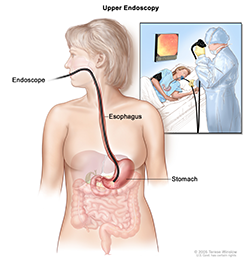
In an upper GI endoscopy, a gastroenterologist, surgeon, or other trained health care provider uses an endoscope to see inside your upper GI tract, most often while you receive light sedation. The doctor carefully feeds the endoscope down your esophagus and into your stomach and duodenum. The procedure may show changes in the lining of your esophagus.

The doctor performs a biopsy with the endoscope by taking a small piece of tissue from the lining of your esophagus. You won’t feel the biopsy. A pathologist examines the tissue in a lab to determine whether Barrett’s esophagus cells are present. A pathologist who has expertise in diagnosing Barrett’s esophagus may need to confirm the results.

Barrett’s esophagus can be difficult to diagnose because this condition does not affect all the tissue in your esophagus. The doctor takes biopsy samples from at least eight different areas of the lining of your esophagus.

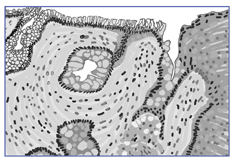
Normal esophagus
Barrett's esophagus

Who should be screened for Barrett’s esophagus?

Your doctor may recommend screening for Barrett’s esophagus if you are a man with chronic—lasting more than 5 years—and/or frequent—happening weekly or more—symptoms of GERD and two or more risk factors for Barrett’s esophagus. These risk factors include

  • being age 50 and older
  • being Caucasian
  • having high levels of belly fat
  • being a smoker or having smoked in the past
  • having a family history of Barrett’s esophagus or esophageal adenocarcinoma

Treatment

How do doctors treat Barrett’s esophagus?

Your doctor will talk about the best treatment options for you based on your overall health, whether you have dysplasia, and its severity. Treatment options include medicines for GERD, endoscopic ablative therapies, endoscopic mucosal resection, and surgery.

Periodic surveillance endoscopy

Your doctor may use upper gastrointestinal endoscopy with a biopsy periodically to watch for signs of cancer development. Doctors call this approach surveillance.

Experts aren’t sure how often doctors should perform surveillance endoscopies. Talk with your doctor about what level of surveillance is best for you. Your doctor may recommend endoscopies more frequently if you have high-grade dysplasia rather than low-grade or no dysplasia. Read whether people with Barrett’s esophagus are more likely to develop cancer.

Medicines

If you have Barrett’s esophagus and gastroesophageal reflux disease (GERD), your doctor will treat you with acid-suppressing medicines called proton pump inhibitors (PPIs). These medicines can prevent further damage to your esophagus and, in some cases, heal existing damage.

PPIs include

All of these medicines are available by prescription. Omeprazole and lansoprazole are also available in over-the-counter strength.

Your doctor may consider anti-reflux surgery if you have GERD symptoms and don’t respond to medicines. However, research has not shown that medicines or surgery for GERD and Barrett’s esophagus lower your chances of developing dysplasia or esophageal adenocarcinoma.

Endoscopic ablative therapies

Endoscopic ablative therapies use different techniques to destroy the dysplasia in your esophagus. After the therapies, your body should begin making normal esophageal cells.

A doctor, usually a gastroenterologist or surgeon, performs these procedures at certain hospitals and outpatient centers. You will receive local anesthesia and a sedative. The most common procedures are the following:

  • Photodynamic therapy. Photodynamic therapy uses a light-activated chemical called porfimer (Photofrin), an endoscope, and a laser to kill precancerous cells in your esophagus. A doctor injects porfimer into a vein in your arm, and you return 24 to 72 hours later to complete the procedure.
  • Radiofrequency ablation. Radiofrequency ablation uses radio waves to kill precancerous and cancerous cells in the Barrett’s tissue. An electrode mounted on a balloon or an endoscope creates heat to destroy the Barrett’s tissue and precancerous and cancerous cells.

Endoscopic mucosal resection

In endoscopic mucosal resection, your doctor lifts the Barrett’s tissue, injects a solution underneath or applies suction to the tissue, and then cuts the tissue off. The doctor then removes the tissue with an endoscope. Gastroenterologists perform this procedure at certain hospitals and outpatient centers. You will receive local anesthesia to numb your throat and a sedative to help you relax and stay comfortable.

Before performing an endoscopic mucosal resection for cancer, your doctor will do an endoscopic ultrasound.

Complications can include bleeding or tearing of your esophagus. Doctors sometimes combine endoscopic mucosal resection with photodynamic therapy.

Surgery

Surgery called esophagectomy is an alternative to endoscopic therapies. Many doctors prefer endoscopic therapies because these procedures have fewer complications.

Esophagectomy is the surgical removal of the affected sections of your esophagus. After removing sections of your esophagus, a surgeon rebuilds your esophagus from part of your stomach or large intestine. The surgery is performed at a hospital. You’ll receive general anesthesia, and you’ll stay in the hospital for 7 to 14 days after the surgery to recover.

Surgery may not be an option if you have other medical problems. Your doctor may consider the less-invasive endoscopic treatments or continued frequent surveillance instead.


Eating, Diet, & Nutrition

How can your diet help prevent Barrett’s esophagus?

Researchers have not found that diet and nutrition play an important role in causing or preventing Barrett’s esophagus.?

If you have gastroesophageal reflux (GER) or gastroesophageal reflux disease (GERD), you can prevent or relieve your symptoms by changing your diet. Dietary changes that can help reduce your symptoms include

  • decreasing fatty foods
  • eating small, frequent meals instead of three large meals

Avoid eating or drinking the fol?lowing items that may make GER or GERD worse:

  • ?chocolate
  • coffee
  • peppermint
  • greasy or spicy foods?
  • tomatoes and tomato products
  • alcoholic drinks

Clinical Trials

The National Institute of Diabetes and Digestive and Kidney Diseases (NIDDK) and other components of the National Institutes of Health (NIH) conduct and support basic and clinical research into many digestive disorders.

What are clinical trials and are they right for you?

Clinical trials are part of clinical research and at the heart of all medical advances. Clinical trials look at new ways to prevent, detect, or treat disease. Researchers also use clinical trials to look at other aspects of care, such as improving the quality of life for people with chronic illnesses. Find out if clinical trials are right for you.

What clinical trials are open?

Clinical trials that are currently open and are recruiting can be viewed at www.ClinicalTrials.gov.?


This content is provided as a service of the National Institute of Diabetes and Digestive and Kidney Diseases (NIDDK), part of the National Institutes of Health. The NIDDK translates and disseminates research findings through its clearinghouses and education programs to increase knowledge and understanding about health and disease among patients, health professionals, and the public. Content produced by the NIDDK is carefully reviewed by NIDDK scientists and other experts.

Bowel Control Problems (Fecal Incontinence)

Definition & Facts

What is fecal incontinence?

Fecal incontinence, also called accidental bowel leakage, is the accidental passing of bowel movements—including solid stools, liquid stools, or mucus—from your anus.

The most common type of fecal incontinence is called urge incontinence. When you have urge incontinence, you feel a strong urge to have a bowel movement but cannot stop it before reaching a toilet. If you have urge incontinence, your pelvic floor muscles may be too weak to hold back a bowel movement due to muscle injury or nerve damage.

Another type of fecal incontinence is called passive incontinence. When you have passive incontinence, leakage occurs without you knowing it. If you have passive incontinence, your body may not be able to sense when your rectum is full.

Fecal incontinence can be upsetting and embarrassing. Some people may feel ashamed and try to hide the problem. You may be afraid or embarrassed to talk about fecal incontinence with your doctor. However, talking openly and honestly with your doctor is important in diagnosing and treating your fecal incontinence.

An upset woman with her head down and hand on her forehead.
Fecal incontinence can be upsetting and embarrassing. You may feel ashamed and try to hide the problem.

Does fecal incontinence have other names?

Fecal incontinence is also called

  • accidental bowel leakage
  • bowel incontinence
  • encopresis—a term used mostly for fecal incontinence in children

How common is fecal incontinence?

Medical experts consider fecal incontinence a common problem, affecting about 1 in 3 people who see a primary health care provider.1

  • Fecal incontinence is more common in older adults.2
  • Among adults who are not in hospitals or nursing homes, between 7 and 15 out of 100 have fecal incontinence.1
  • Among adults who are in hospitals, between 18 and 33 out of 100 have fecal incontinence.3
  • Among adults who are in nursing homes, between 50 and 70 out of 100 have fecal incontinence.2

Fecal incontinence occurs in about 2 out of 100 children.4

Who is more likely to have fecal incontinence?

You may be more likely to have fecal incontinence if you

  • are older than age 65
  • are not physically active
  • have certain chronic diseases, medical conditions, or health problems
  • have had your gallbladder removed
  • are a current smoker

Children who were born with certain birth defects of the spinal cord, anus, or rectum are more likely to have fecal incontinence. Children who are constipated are also more likely to have fecal incontinence.

What other health problems do people with fecal incontinence have?

If you have fecal incontinence, you may also have other health problems, including

What problems may fecal incontinence cause?

The problems that fecal incontinence may cause include

  • discomfort or irritation of the skin around the anus
  • emotional and social distress, such as fear, embarrassment, social isolation, loss of self-esteem, anger, or depression
  • quality-of-life issues, such as not being able to exercise, work, attend school, or go to social gatherings

References


Symptoms & Causes

What are the symptoms of fecal incontinence?

The symptoms of fecal incontinence depend on the type.

  • If you have urge fecal incontinence, you will know when you need to pass stool but not be able to control passing stool before reaching a toilet.
  • If you have passive fecal incontinence, you will pass stool or mucus from your anus without knowing it.

Some medical experts include streaks or stains of stool or mucus on your underwear—called soiling—as a symptom of fecal incontinence.

When should I see a doctor for fecal incontinence?

You should see a doctor if your fecal incontinence is frequent or severe. Although some people are able to manage mild or infrequent fecal incontinence on their own, you should see a doctor if your fecal incontinence is affecting your quality of life or causing emotional or social distress.

What causes fecal incontinence in adults?

Fecal incontinence has many causes, including digestive tract disorders and chronic diseases. Some causes of fecal incontinence, such as childbirth by vaginal delivery, happen only in women.

Diarrhea

Loose, watery stools from diarrhea fill your rectum quickly and are harder to hold in than solid stools. Diarrhea is the most common risk factor for fecal incontinence for people not staying in hospitals, nursing homes, or other similar institutions. Diarrhea may be caused by digestive tract problems such as

Constipation

Constipation can lead to large, hard stools that are difficult to pass. The hard stools stretch and, over time, weaken the muscles in your rectum. The weakened muscles let watery stools that build up behind the hard stool leak out.

Muscle injury or weakness

If the muscles in your anus, pelvic floor, or rectum are injured or weakened, they may not be able to keep your anus closed, letting stool leak out. These muscles can be injured or weakened by

Nerve damage

If the nerves that control your anus, pelvic floor, and rectum are damaged, the muscles can’t work the way they should. Damage to the nerves that tell you when there is stool in your rectum makes it hard to know when you need to look for a toilet. Nerves can be damaged by

  • a long-term habit of straining to pass stool
  • brain injury
  • spinal cord injury

Neurologic diseases

Neurologic diseases that affect the nerves of the anus, pelvic floor, or rectum can cause fecal incontinence. These diseases include

Loss of stretch in the rectum

If your rectum is scarred or inflamed, it becomes stiff and can’t stretch as much to hold stool. Your rectum can get full quickly, and stool can leak out. Rectal surgery, radiation therapy in the pelvic area, and inflammatory bowel disease can cause scarring and inflammation in your rectum.

Hemorrhoids

Hemorrhoids can keep the muscles around your anus from closing completely, which lets small amounts of stool or mucus to leak out.

Rectal prolapse

Rectal prolapse—a condition that causes your rectum to drop down through your anus—can also keep the muscles around your anus from closing completely, which lets small amounts of stool or mucus leak out.

Physical inactivity

If you are not physically active, especially if you spend many hours a day sitting or lying down, you may be holding a lot of stool in your rectum. Liquid stool can then leak around the more solid stool. Frail, older adults are most likely to develop constipation-related fecal incontinence for this reason.

Childbirth by vaginal delivery

Childbirth sometimes causes injuries to the anal sphincters, which can cause fecal incontinence. The chances are greater if

  • your baby was large
  • forceps were used to help deliver your baby
  • you had a vacuum-assisted delivery
  • the doctor made a cut, called an episiotomy, in your vaginal area to prevent the baby’s head from tearing your vagina during birth

Rectocele

Rectocele is a condition that causes your rectum to bulge out through your vagina. Rectocele can happen when the thin layer of muscles separating your rectum from your vagina becomes weak. Stool may stay in your rectum because the rectocele makes it harder to push stool out.

What causes fecal incontinence in children?

For children older than age 4, the most common cause of fecal incontinence is constipation with a large amount of stool in the rectum. When this happens, a child may not be able to sense when a new stool is coming into the rectum. The child may not know that he or she needs to have a bowel movement. A large amount of stool in the rectum can cause the internal anal sphincters to become chronically relaxed, which lets soft stool seep around hard stool in the rectum and leak out.

Birth defects of the anus, rectum, or colon, such as Hirschsprung disease, can cause fecal incontinence in children. These birth defects may weaken pelvic floor muscles or damage nerves in the anus or rectum. Injuries to the nerves in the anus and rectum can also cause fecal incontinence, as can spinal cord injuries and birth defects of the spinal cord.


Diagnosis

How do doctors diagnose fecal incontinence?

Doctors use your medical history, a physical exam, and medical tests to diagnose fecal incontinence and its causes.

Medical history

In addition to reviewing your general medical history, your doctor may ask the following questions:

  • When did your fecal incontinence start?
  • Did your fecal incontinence start after
    • the birth of your child?
    • a motor vehicle accident?
    • a fall?
    • the start of another illness?
  • How often does your fecal incontinence happen?
  • How much stool passes?
  • Do you pass liquid or solid stool?
  • Do you have a strong urge to have a bowel movement before your fecal incontinence happens?
  • Do you know when you need to have a bowel movement before it happens?
  • Does your fecal incontinence happen without you knowing?
  • Do you leak liquid stool or mucus?
  • Do you have fecal incontinence when you have diarrhea or constipation?
  • Is your fecal incontinence worse after eating?
  • Do certain foods seem to make your fecal incontinence worse?
  • How does fecal incontinence affect your daily life?

Your doctor may ask you to keep a stool diary to help answer these questions. A stool diary is a chart for recording details of your daily bowel movements. Your doctor may give you a stool diary form that he or she has created. Or, you can create your own stool diary form or record your bowel movement details in a notebook.

You may feel embarrassed or shy about answering your doctor’s questions. However, your doctor will not be shocked or surprised. The more details and examples you can give about your problem, the better your doctor will be able to help you. You can play an active role in your diagnosis by talking openly and honestly with your doctor.

A patient answering a doctor’s questions.
You may feel embarrassed or shy about answering your doctor’s questions, but your doctor will not be shocked or surprised by what you say.

Physical exam

Your doctor will perform a physical exam, including a

  • digital rectal exam
  • pelvic exam—an exam to check if internal female reproductive organs are normal by feeling their shape and size

What medical tests do doctors use to diagnose fecal incontinence?

Lab tests

Your doctor may use one or more of the following lab tests to look for signs of certain diseases and conditions that may be causing your fecal incontinence.

Bowel function tests

Your doctor may perform one or more of the following tests to see how well the muscles and nerves in your anus, pelvic floor, and rectum are working:

  • anorectal manometry—a test that checks how sensitive your rectum is, how well it works, and how well the anal sphincters work
  • defecography—an x-ray of the area around the anus and rectum to see how well you can hold and release stool
  • electromyography—a test that checks how well the muscles and nerves of your anus and pelvic floor are working

Endoscopy

Your doctor may perform an endoscopy to look inside your anus, rectum, and colon for signs of inflammation and digestive tract problems that may be causing your fecal incontinence. Endoscopies for fecal incontinence include

Imaging tests

To look for problems in the anus, pelvic floor, or rectum that may be causing your fecal incontinence, your doctor may perform an imaging test such as


Treatment

The first step in treating your fecal incontinence is to see a doctor. Your doctor will talk to you about the causes of fecal incontinence and how they can be treated. Simple treatments—such as diet changes, medicines, bowel training, and exercises to strengthen your pelvic floor muscles—can improve symptoms by about 60 percent.5 These treatments can stop fecal incontinence in 1 out of 5 people.5

Your doctor can recommend ways you can help manage and treat your fecal incontinence. Your doctor can also recommend ways to relieve anal discomfort and cope with your fecal incontinence.

You can play an active role in your treatment by talking openly and honestly with your doctor about your symptoms and how well your treatments are working.

How can I manage and treat my fecal incontinence?

You can help manage and treat your fecal incontinence in the following ways.

Wearing absorbent pads

Wearing absorbent pads inside your underwear is the most frequently used treatment for fecal incontinence. For milder forms of fecal incontinence—few bowel leakage accidents, small volumes of stool, or staining of underwear—wearing absorbent pads may make a big difference in your quality of life. Wearing absorbent pads can be combined with other treatments.

Diet changes

Changing what you eat can help prevent or relieve your fecal incontinence. If diarrhea is the problem, your doctor will recommend avoiding foods and drinks that make your diarrhea worse. To find out which foods and drinks make your fecal incontinence better or worse, your doctor may recommend keeping a food diary to track

  • what you eat each day
  • how much of certain foods you eat
  • when you eat
  • what symptoms you have
  • what types of bowel movements you have, such as diarrhea or constipation
  • when your fecal incontinence happens
  • which foods or drinks make your fecal incontinence better or worse

Take your food diary to your doctor to talk about the foods and drinks that affect your fecal incontinence.

If constipation or hemorrhoids are causing your fecal incontinence, your doctor may recommend eating more fiber and drinking more liquids. Talk with your doctor or a dietitian about how much fiber and liquids are right for you.

Over-the-counter medicines

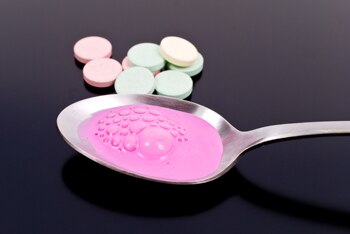
Depending on the cause, over-the-counter medicines can help reduce or relieve your fecal incontinence. If diarrhea is causing your fecal incontinence, your doctor may recommend medicines such as loperamide (Imodium) and bismuth subsalicylate (Pepto-Bismol, Kaopectate). If constipation is causing your fecal incontinence, your doctor may recommend laxatives, stool softeners, or fiber supplements such as psyllium (Metamucil) or methylcellulose (Citrucel).

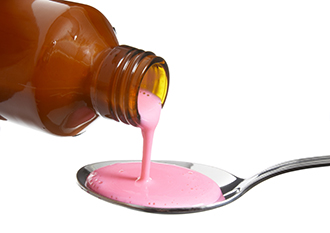
Pink liquid medicine being poured from a bottle into a spoon.
Depending on the cause, over-the-counter medicines can help reduce or relieve your fecal incontinence.

Bowel training

Your doctor may recommend that you train yourself to have bowel movements at certain times of the day, such as after meals. Developing regular bowel movements may take weeks to months to improve fecal incontinence.

Pelvic floor muscle exercises

Pelvic floor muscle exercises, also called Kegel exercises, can improve fecal incontinence symptoms. Tightening and relaxing your pelvic floor muscles many times a day can strengthen the muscles in your anus, pelvic floor, and rectum. Your doctor can help make sure you’re doing the exercises the right way.

How do doctors treat fecal incontinence?

How doctors treat fecal incontinence depends on the cause. Your doctor may recommend one or more of the following treatments:

Biofeedback therapy

Biofeedback therapy uses devices to help you learn how to do exercises to strengthen your pelvic floor muscles. This therapy can also help you learn how to

Biofeedback therapy can be more effective than learning pelvic floor exercises on your own. Ask your doctor about getting a biofeedback machine or device.

Sacral nerve stimulation

The sacral nerves control the anal sphincters, colon, and rectum. Doctors use sacral nerve stimulation—a type of electrical stimulation—when the nerves are not working properly. For this treatment, your doctor places thin wires under your skin near the sacral nerves, just above the tailbone. A battery-operated device sends mild electrical pulses through the wires to the sacral nerves.

Electrical stimulation of the sacral nerves helps them work properly. The electrical pulses do not hurt. You can turn the electrical stimulation on or off at any time.

Prescription medicines

If over-the-counter medicines to treat your fecal incontinence aren’t helping your symptoms, your doctor may prescribe prescription medicines that are stronger. These medicines may treat the causes of fecal incontinence, such as irritable bowel syndrome, Crohn’s disease, and ulcerative colitis.

Vaginal balloons

For women with fecal incontinence, your doctor may prescribe a device that inflates a balloon inside your vagina. The balloon puts pressure on the wall of your rectum through the vaginal wall. Pressure on the wall of your rectum keeps stool from passing. After your doctor makes sure the device fits right, you can add or remove air from the device as needed to control the passing of stool.

Nonabsorbable bulking agents

Nonabsorbable bulking agents are substances injected into the wall of your anus to bulk up the tissue around the anus. The bulkier tissues make the opening of your anus narrower so the sphincters are able to close better.

Surgery

Surgery may be an option for fecal incontinence that fails to improve with other treatments, or for fecal incontinence caused by injuries to the pelvic floor muscles or anal sphincters.

Sphincteroplasty. Sphincteroplasty—the most common fecal incontinence surgery—reconnects the separated ends of an anal sphincter torn by childbirth or another injury.

Artificial anal sphincter. This surgery involves placing a cuff around your anus and implanting a small pump under the skin so that you can inflate or deflate the cuff. Inflating the cuff controls the passage of stool. This surgery is not a common treatment because it may cause side effects.

Colostomy. Colostomy is a surgery in which the colon is brought through an opening in the abdominal wall, and stools are collected in a bag on the outside of the abdomen. Doctors may recommend this surgery as a last resort for the treatment of fecal incontinence. However, this surgery is rarely used to treat fecal incontinence because of the colostomy’s effect on quality of life.

Other surgeries. Doctors may perform other surgeries to treat the causes of fecal incontinence, such as

What should I do about anal discomfort?

Fecal incontinence can cause anal discomfort such as irritation, pain, or itching. You can help relieve anal discomfort by

  • washing the anal area after a bowel movement
  • changing soiled underwear as soon as possible
  • keeping the anal area dry
  • using a moisture-barrier cream in the area around your anus
  • using nonmedicated powders
  • using wicking pads or disposable underwear
  • wearing clothes and underwear that let air pass through easily

Talk with your doctor or a health care professional about which moisture-barrier creams and nonmedicated powders are right for you.

White powder being sprinkled from a bottle onto a hand.
You can help relieve anal discomfort by using nonmedicated powders.

How do I cope with my fecal incontinence?

Doing the following can help you cope with your fecal incontinence:

  • using the toilet before leaving home
  • carrying a bag with cleanup supplies and a change of clothes when leaving the house
  • finding public restrooms before one is needed
  • wearing absorbent pads inside your underwear
  • wearing disposable underwear
  • using fecal deodorants—over-the-counter pills that reduce the smell of stool and gas
  • taking over-the-counter medicines to help prevent diarrhea before eating in restaurants or at social gatherings

As part of coping with your fecal incontinence, remember that fecal incontinence

  • isn't something to be ashamed of—it's simply a medical problem
  • can often be treated—a wide range of successful treatments are available
  • isn't always a normal part of aging
  • won't usually go away on its own—most people need treatment

What should I do if my child has fecal incontinence?

If your child has fecal incontinence and is older than age 4 and toilet trained, you should see a doctor to find out the cause. How the doctor treats your child’s incontinence depends on the cause.

References


Eating, Diet, & Nutrition

How can my diet help prevent or relieve fecal incontinence?

Depending on the cause, changing what you eat and drink can help prevent or relieve your fecal incontinence.

What should I eat if I have fecal incontinence?

You should eat a healthy, well-balanced diet. Your doctor or a dietitian can recommend a healthy eating plan that is right for you.

If your fecal incontinence is caused by constipation or hemorrhoids, eating more fiber and drinking more liquids can improve your symptoms. Talk with your doctor or a dietitian about how much fiber and liquids are right for you.

Healthy foods representing a well-balanced diet.
Eating a healthy, well-balanced diet can help you prevent or relieve your fecal incontinence.

What should I avoid eating if I have fecal incontinence?

If your fecal incontinence is caused by diarrhea, you should avoid foods that make your symptoms worse, such as

  • alcoholic beverages
  • drinks and foods containing caffeine
  • dairy products such as milk, cheese, and ice cream
  • fatty and greasy foods
  • drinks and foods containing fructose
  • fruits such as apples, peaches, and pears
  • spicy foods
  • products, including candy and gum, with sweeteners ending in “–ol,” such as sorbitol, mannitol, xylitol, and maltitol

Keeping a food diary

Your doctor or dietitian may recommend keeping a food diary, which can help you find out which foods and drinks make your symptoms better or worse. After a few days, the diary may show a link between certain foods and drinks and your fecal incontinence. Changing the foods and drinks linked to your fecal incontinence may improve your symptoms.


Clinical Trials

The National Institute of Diabetes and Digestive and Kidney Diseases (NIDDK) and other components of the National Institutes of Health (NIH) conduct and support research into many diseases and conditions.

What are clinical trials, and are they right for you?

Clinical trials are part of clinical research and at the heart of all medical advances. Clinical trials look at new ways to prevent, detect, or treat disease. Researchers also use clinical trials to look at other aspects of care, such as improving the quality of life for people with chronic illnesses. Find out if clinical trials are right for you.

What clinical trials are open?

Clinical trials that are currently open and are recruiting can be viewed at www.ClinicalTrials.gov.


This content is provided as a service of the National Institute of Diabetes and Digestive and Kidney Diseases (NIDDK), part of the National Institutes of Health. The NIDDK translates and disseminates research findings through its clearinghouses and education programs to increase knowledge and understanding about health and disease among patients, health professionals, and the public. Content produced by the NIDDK is carefully reviewed by NIDDK scientists and other experts.

Celiac Disease

Definition & Facts

What is celiac disease?

Celiac disease is a digestive disorder that damages the small intestine. The disease is triggered by eating foods containing gluten. Gluten is a protein found naturally in wheat, barley, and rye, and is common in foods such as bread, pasta, cookies, and cakes. Many pre-packaged foods, lip balms and lipsticks, hair and skin products, toothpastes, vitamin and nutrient supplements, and, rarely, medicines, contain gluten.

Celiac disease can be very serious. The disease can cause long-lasting digestive problems and keep your body from getting all the nutrients it needs. Celiac disease can also affect the body outside the intestine.

Celiac disease is different from gluten sensitivity or wheat intolerance. If you have gluten sensitivity, you may have symptoms similar to those of celiac disease, such as abdominal pain and tiredness. Unlike celiac disease, gluten sensitivity does not damage the small intestine.

A picture of a wheat field.
Celiac disease is triggered by eating foods containing gluten.

Celiac disease is also different from a wheat allergy. In both cases, your body’s immune system reacts to wheat. However, some symptoms in wheat allergies, such as having itchy eyes or a hard time breathing, are different from celiac disease. Wheat allergies also do not cause long-term damage to the small intestine.1

How common is celiac disease?

As many as one in 141 Americans has celiac disease, although most don’t know it.2

Who is more likely to develop celiac disease?

Although celiac disease affects children and adults in all parts of the world, the disease is more common in Caucasians and more often diagnosed in females. You are more likely to develop celiac disease if someone in your family has the disease. Celiac disease also is more common among people with certain other diseases, such as Down syndrome, Turner syndrome, and type 1 diabetes.

What other health problems do people with celiac disease have?

If you have celiac disease, you also may be at risk for

What are the complications of celiac disease?

Long-term complications of celiac disease include

  • malnutrition, a condition in which you don’t get enough vitamins, minerals, and other nutrients you need to be healthy
  • accelerated osteoporosis or bone softening, known as osteomalacia
  • nervous system problems
  • problems related to reproduction

Rare complications can include

  • intestinal cancer
  • liver diseases
  • lymphoma, a cancer of part of the immune system called the lymph system that includes the gut

In rare cases, you may continue to have trouble absorbing nutrients even though you have been following a strict gluten-free diet. If you have this condition, called refractory celiac disease, your intestines are severely damaged and can’t heal. You may need to receive nutrients through an IV.

References


Symptoms & Causes

What are the symptoms of celiac disease?

Most people with celiac disease have one or more symptoms. However, some people with the disease may not have symptoms or feel sick. Sometimes health issues such as surgery, a pregnancy, childbirth, bacterial gastroenteritis, a viral infection, or severe mental stress can trigger celiac disease symptoms.

If you have celiac disease, you may have digestive problems or other symptoms. Digestive symptoms are more common in children and can include

  • bloating, or a feeling of fullness or swelling in the abdomen
  • chronic diarrhea
  • constipation
  • gas
  • nausea
  • pale, foul-smelling, or fatty stools that float
  • stomach pain
  • vomiting

For children with celiac disease, being unable to absorb nutrients when they are so important to normal growth and development can lead to

  • damage to the permanent teeth’s enamel
  • delayed puberty
  • failure to thrive in infants
  • mood changes or feeling annoyed or impatient
  • slowed growth and short height
  • weight loss
A person standing on a scale.
Celiac disease in children may lead to weight loss.

Adults are less likely to have digestive symptoms and, instead, may have one or more of the following:

  • anemia
  • a red, smooth, shiny tongue
  • bone or joint pain
  • depression or anxiety
  • dermatitis herpetiformis
  • headaches
  • infertility or repeated miscarriage
  • missed menstrual periods
  • mouth problems such a canker sores or dry mouth
  • seizures
  • tingling numbness in the hands and feet
  • tiredness
  • weak and brittle bones

Adults who have digestive symptoms with celiac disease may have

  • abdominal pain and bloating
  • intestinal blockages
  • tiredness that lasts for long periods of time
  • ulcers, or sores on the stomach or lining of the intestine

Celiac disease also can produce a reaction in which your immune system, or your body’s natural defense system, attacks healthy cells in your body. This reaction can spread outside your digestive tract to other areas of your body, including your

  • bones
  • joints
  • nervous system
  • skin
  • spleen

Depending on how old you are when a doctor diagnoses your celiac disease, some symptoms, such as short height and tooth defects, will not improve.

Dermatitis herpetiformis

Dermatitis herpetiformis is an itchy, blistering skin rash that usually appears on the elbows, knees, buttocks, back, or scalp. The rash affects about 10 percent of people with celiac disease. The rash can affect people of all ages but is most likely to appear for the first time between the ages of 30 and 40. Men who have the rash also may have oral or, rarely, genital sores. Some people with celiac disease may have the rash and no other symptoms.

Why are celiac disease symptoms so varied?

Symptoms of celiac disease vary from person to person. Your symptoms may depend on

  • how long you were breastfed as an infant; some studies have shown that the longer you were breastfed, the later celiac disease symptoms appear
  • how much gluten you eat
  • how old you were when you started eating gluten
  • the amount of damage to your small intestine
  • your age—symptoms can vary between young children and adults

People with celiac disease who have no symptoms can still develop complications from the disease over time if they do not get treatment.

What causes celiac disease?

Research suggests that celiac disease only happens to individuals who have particular genes. These genes are common and are carried by about one-third of the population. Individuals also have to be eating food that contains gluten to get celiac disease. Researchers do not know exactly what triggers celiac disease in people at risk who eat gluten over a long period of time. Sometimes the disease runs in families. About 10 to 20 percent of close relatives of people with celiac disease also are affected.3

Your chances of developing celiac disease increase when you have changes in your genes, or variants. Certain gene variants and other factors, such as things in your environment, can lead to celiac disease.

References


Diagnosis

How do doctors diagnose celiac disease?

Celiac disease can be hard to diagnose because some of the symptoms are like symptoms of other diseases, such as irritable bowel syndrome (IBS) and lactose intolerance. Your doctor may diagnose celiac disease with a medical and family history, physical exam, and tests. Tests may include blood tests, genetic tests, and biopsy.

Medical and family history

Your doctor will ask you for information about your family’s health—specifically, if anyone in your family has a history of celiac disease.

A doctor speaking with a patient.
Your doctor will ask you for information about your family's health.

Physical exam

During a physical exam, a doctor most often

  • checks your body for a rash or malnutrition, a condition that arises when you don’t get enough vitamins, minerals, and other nutrients you need to be healthy
  • listens to sounds in your abdomen using a stethoscope
  • taps on your abdomen to check for pain and fullness or swelling

Dental exam

For some people, a dental visit can be the first step toward discovering celiac disease. Dental enamel defects, such as white, yellow, or brown spots on the teeth, are a pretty common problem in people with celiac disease, especially children. These defects can help dentists and other health care professionals identify celiac disease.

What tests do doctors use to diagnose celiac disease?

Blood tests

A health care professional may take a blood sample from you and send the sample to a lab to test for antibodies common in celiac disease. If blood test results are negative and your doctor still suspects celiac disease, he or she may order more blood tests.

Genetic tests

If a biopsy and other blood tests do not clearly confirm celiac disease, your doctor may order genetic blood tests to check for certain gene changes, or variants.4 You are very unlikely to have celiac disease if these gene variants are not present. Having these variants alone is not enough to diagnose celiac disease because they also are common in people without the disease. In fact, most people with these genes will never get celiac disease.

Intestinal biopsy

If blood tests suggest you have celiac disease, your doctor will perform a biopsy to be sure. During a biopsy, the doctor takes a small piece of tissue from your small intestine during a procedure called an upper GI endoscopy.

Skin biopsy

If a doctor suspects you have dermatitis herpetiformis, he or she will perform a skin biopsy. For a skin biopsy, the doctor removes tiny pieces of skin tissue to examine with a microscope.

A doctor examines the skin tissue and checks the tissue for antibodies common in celiac disease. If the skin tissue has the antibodies, a doctor will perform blood tests to confirm celiac disease. If the skin biopsy and blood tests both suggest celiac disease, you may not need an intestinal biopsy.

Do doctors screen for celiac disease?

Screening is testing for diseases when you have no symptoms. Doctors in the United States do not routinely screen people for celiac disease. However, blood relatives of people with celiac disease and those with type 1 diabetes should talk with their doctor about their chances of getting the disease.

Many researchers recommend routine screening of all family members, such as parents and siblings, for celiac disease.5 However, routine genetic screening for celiac disease is not usually helpful when diagnosing the disease.

References


Treatment

How do doctors treat celiac disease?

A gluten-free diet

Doctors treat celiac disease with a gluten-free diet. Gluten is a protein found naturally in wheat, barley, and rye that triggers a reaction if you have celiac disease. Symptoms greatly improve for most people with celiac disease who stick to a gluten-free diet. In recent years, grocery stores and restaurants have added many more gluten-free foods and products, making it easier to stay gluten free.

Your doctor may refer you to a dietitian who specializes in treating people with celiac disease. The dietitian will teach you how to avoid gluten while following a healthy diet. He or she will help you

  • check food and product labels for gluten
  • design everyday meal plans
  • make healthy choices about the types of foods to eat
A person holding a grocery basket filled with vegetables.
A dietitian can help you make healthy food choices.

For most people, following a gluten-free diet will heal damage in the small intestine and prevent more damage. You may see symptoms improve within days to weeks of starting the diet. The small intestine usually heals in 3 to 6 months in children. Complete healing can take several years in adults. Once the intestine heals, the villi, which were damaged by the disease, regrow and will absorb nutrients from food into the bloodstream normally.

Gluten-free diet and dermatitis herpetiformis

If you have dermatitis herpetiformis—an itchy, blistering skin rash—skin symptoms generally respond to a gluten-free diet. However, skin symptoms may return if you add gluten back into your diet. Medicines such as dapsone, taken by mouth, can control the skin symptoms. People who take dapsone need to have regular blood tests to check for side effects from the medicine.

Dapsone does not treat intestinal symptoms or damage, which is why you should stay on a gluten-free diet if you have the rash. Even when you follow a gluten-free diet, the rash may take months or even years to fully heal—and often comes back over the years.

Avoiding medicines and nonfood products that may contain gluten

In addition to prescribing a gluten-free diet, your doctor will want you to avoid all hidden sources of gluten.  If you have celiac disease, ask a pharmacist about ingredients in

  • herbal and nutritional supplements
  • prescription and over-the-counter medicines
  • vitamin and mineral supplements

You also could take in or transfer from your hands to your mouth other products that contain gluten without knowing it. Products that may contain gluten include

  • children’s modeling dough, such as Play-Doh
  • cosmetics
  • lipstick, lip gloss, and lip balm
  • skin and hair products
  • toothpaste and mouthwash
  • communion wafers
A picture of several bottles of lotion.
Products that may contain gluten include skin and hair products.

Medications are rare sources of gluten. Even if gluten is present in a medicine, it is likely to be in such small quantities that it would not cause any symptoms.

Reading product labels can sometimes help you avoid gluten. Some product makers label their products as being gluten-free. If a product label doesn’t list the product’s ingredients, ask the maker of the product for an ingredients list.

What if changing to a gluten-free diet isn't working?

If you don’t improve after starting a gluten-free diet, you may still be eating or using small amounts of gluten. You probably will start responding to the gluten-free diet once you find and cut out all hidden sources of gluten. Hidden sources of gluten include additives made with wheat, such as

  • modified food starch
  • malt flavoring
  • preservatives
  • stabilizers

If you still have symptoms even after changing your diet, you may have other conditions or disorders that are more common with celiac disease, such as irritable bowel syndrome (IBS), lactose intolerance, microscopic colitis, dysfunction of the pancreas, and small intestinal bacterial overgrowth.


Eating, Diet, & Nutrition

What should I avoid eating if I have celiac disease?

Avoiding foods with gluten, a protein found naturally in wheat, rye, and barley, is critical in treating celiac disease. Removing gluten from your diet will improve symptoms, heal damage to your small intestine, and prevent further damage over time. While you may need to avoid certain foods, the good news is that many healthy, gluten-free foods and products are available.

A bowl of pasta with a side of bread.
Avoiding foods with gluten is critical in treating celiac disease.

You should avoid all products that contain gluten, such as most cereal, grains, and pasta, and many processed foods. Be sure to always read food ingredient lists carefully to make sure the food you want to eat doesn’t have gluten. In addition, discuss gluten-free food choices with a dietitian or health care professional who specializes in celiac disease.

What should I eat if I have celiac disease?

Foods such as meat, fish, fruits, vegetables, rice, and potatoes without additives or seasonings do not contain gluten and are part of a well-balanced diet. You can eat gluten-free types of bread, pasta, and other foods that are now easier to find in stores, restaurants, and at special food companies. You also can eat potato, rice, soy, amaranth, quinoa, buckwheat, or bean flour instead of wheat flour.

In the past, doctors and dietitians advised against eating oats if you have celiac disease. Evidence suggests that most people with the disease can safely eat moderate amounts of oats, as long as they did not come in contact with wheat gluten during processing. You should talk with your health care team about whether to include oats in your diet.

When shopping and eating out, remember to

  • read food labels—especially on canned, frozen, and processed foods—for ingredients that contain gluten
  • identify foods labelled “gluten-free;” by law, these foods must contain less than 20 parts per million, well below the threshold to cause problems in the great majority of patients with celiac disease
  • ask restaurant servers and chefs about how they prepare the food and what is in it
  • find out whether a gluten-free menu is available
  • ask a dinner or party host about gluten-free options before attending a social gathering

Foods labeled gluten-free tend to cost more than the same foods that have gluten. You may find that naturally gluten-free foods are less expensive. With practice, looking for gluten can become second nature.

If you have just been diagnosed with celiac disease, you and your family members may find support groups helpful as you adjust to a new approach to eating.

Is a gluten-free diet safe if I don't have celiac disease?

In recent years, more people without celiac disease have adopted a gluten-free diet, believing that avoiding gluten is healthier or could help them lose weight. No current data suggests that the general public should maintain a gluten-free diet for weight loss or better health. 6, 7

A gluten-free diet isn’t always a healthy diet. For instance, a gluten-free diet may not provide enough of the nutrients, vitamins, and minerals the body needs, such as fiber, iron, and calcium. Some gluten-free products can be high in calories and sugar.

If you think you might have celiac disease, don’t start avoiding gluten without first speaking with your doctor. If your doctor diagnoses you with celiac disease, he or she will put you on a gluten-free diet.

Gluten-free food labeling requirements

The U.S. Food and Drug Administration (FDA) published a rule defining what “gluten-free” means on food labels. The "gluten-free" for food labeling rule requires that any food with the terms “gluten-free,” “no gluten,” "free of gluten,” and “without gluten” on the label must meet all of the definition’s requirements.

While the FDA rule does not apply to foods regulated by the U.S. Department of Agriculture, including meat and egg products, it is often still observed.

References


Clinical Trials

The National Institute of Diabetes and Digestive and Kidney Diseases (NIDDK) and other components of the National Institutes of Health (NIH) conduct and support basic and clinical research into many digestive disorders.

What are clinical trials and are they right for you?

Clinical trials are part of clinical research and at the heart of all medical advances. Clinical trials look at new ways to prevent, detect, or treat disease. Researchers also use clinical trials to look at other aspects of care, such as improving the quality of life for people with chronic illnesses. Find out if clinical trials are right for you.

What clinical trials are open?

Clinical trials that are currently open and are recruiting can be viewed at www.ClinicalTrials.gov.?


This content is provided as a service of the National Institute of Diabetes and Digestive and Kidney Diseases (NIDDK), part of the National Institutes of Health. The NIDDK translates and disseminates research findings through its clearinghouses and education programs to increase knowledge and understanding about health and disease among patients, health professionals, and the public. Content produced by the NIDDK is carefully reviewed by NIDDK scientists and other experts.

Celiac Disease Testing (for Health Care Professionals)

Serologic tests for celiac disease provide an effective first step in identifying candidates for intestinal biopsy.

If serologic or genetic tests indicate the possibility of celiac disease, a biopsy should be done promptly and before initiating any dietary changes.  Genetic tests that confirm the presence or absence of specific genes associated with celiac disease may be beneficial in some cases.

Serologic Tests

Serologic tests look for three antibodies common in celiac disease:

  • anti-tissue transglutaminase (tTG) antibodies
  • endomysial antibodies (EMA)
  • deamidated gliadin peptide (DGP) antibodies

The most sensitive antibody tests are of the immunoglobulin A (IgA) class; however, immunoglobulin G (IgG) tests may be used in people with IgA deficiency.  Panels are often used because no one serologic test is ideal.  However, the tests included in a celiac panel vary by lab, and one or more may be unwarranted.  Some reference labs—labs used for specialized tests—have developed cascades of tests in an attempt to minimize the use of less accurate tests whose automatic inclusion in a panel would add little or no sensitivity and/or detract from specificity.  For accurate diagnostic test results, patients must be on a gluten-containing diet.

tTG

Image of blood samples taken from an arm.

The tTG-IgA test is an enzyme-linked immunosorbent assay (ELISA) test.  The tTG-IgA test is the preferred screening method and has a sensitivity of 93 percent, yielding few false negative results.  The tTG test also has a specificity of more than 98 percent.1

The performance of the tTG-IgA test may depend on the degree of intestinal damage, making the test less sensitive among people with milder celiac disease.  In addition to screening, the tTG test may be used to assess initiation and maintenance of a gluten-free diet.

Point-of-care tTG tests have been developed commercially; however, because of lower sensitivity and specificity, assay results may differ from those in the lab.

The tTG-IgG test is only useful in those subjects who have IgA deficiency, which is 1/400 of the general population or 2 to 3 percent of people with celiac disease.2

EMA

The test for EMA-IgA is highly specific for celiac disease, with 99 percent accuracy.1 The reason the test has a variable sensitivity of 70 to 100 percent may be due in part to the high technical difficulty in performing this test. EMA are measured by indirect immunofluorescent assay, a more expensive and time-consuming process than ELISA testing. In addition, the EMA test is qualitative, making the results more subjective than those for tTG. EMA is often used as an adjunctive test to the routine tTG-IgA test when EMA make celiac disease more certain.3

A jejunal biopsy may help diagnose patients who are EMA or tTG negative and suspected of having celiac disease.

DGP

A new generation of tests that use DGP antibodies has sensitivity and specificity that is substantially better than the older gliadin tests. However, based on a meta-analysis of 11 studies, insufficient evidence exists to support the use of DGP over tTG or EMA tests. The tTG test is less expensive than the DGP test and offers better diagnostic performance.4

IgA Deficiency

If tTG-IgA or EMA-IgA is negative and celiac disease is still suspected, total IgA should be measured to identify selective IgA deficiency. In cases of IgA deficiency, tTG-IgG or DGP-IgG should be measured. DGP-IgG may be sensitive for celiac disease, and it is preferable to tTG-IgG if used in a cascade. DGP-IgG has reasonable sensitivity for celiac disease in IgA-sufficient as well as IgA-deficient patients.

Genetic Screening Tests

Most people with celiac disease have gene pairs that encode for at least one of the human leukocyte antigen (HLA) gene variants, or alleles, designated HLA-DQ2—found in 95 percent of people with the disease—and HLA-DQ8. However, these alleles are found in about 30 to 35 percent of Caucasians, and most people with the variants do not develop celiac disease.1 Negative findings for HLA-DQ2 and HLA-DQ8 make current or future celiac disease very unlikely in patients for whom other tests, including biopsy, do not provide a clear diagnostic result. An increased risk of developing celiac disease has recently been described in individuals who carry a new HLA-G I allele in addition to HLA-DQ2.5

References

Clinical Trials

The National Institute of Diabetes and Digestive and Kidney Diseases (NIDDK) and other components of the National Institutes of Health (NIH) conduct and support research into many diseases and conditions.

What are clinical trials, and are they right for you?

Clinical trials are part of clinical research and at the heart of all medical advances. Clinical trials look at new ways to prevent, detect, or treat disease. Researchers also use clinical trials to look at other aspects of care, such as improving the quality of life for people with chronic illnesses. Find out if clinical trials are right for you.

What clinical trials are open?

Clinical trials that are currently open and are recruiting can be viewed at www.ClinicalTrials.gov.

This content is provided as a service of the National Institute of Diabetes and Digestive and Kidney Diseases (NIDDK), part of the National Institutes of Health. The NIDDK translates and disseminates research findings through its clearinghouses and education programs to increase knowledge and understanding about health and disease among patients, health professionals, and the public. Content produced by the NIDDK is carefully reviewed by NIDDK scientists and other experts.

The NIDDK would like to thank:
Joseph A. Murray, M.D., Mayo Clinic

Chronic Diarrhea in Children

Definition & Facts

What is chronic diarrhea in children?

Chronic diarrhea is passing loose, watery stools three or more times a day for at least 4 weeks. Children with chronic diarrhea may have loose, watery stools continually, or their diarrhea may come and go. Chronic diarrhea can affect children of any age.

A young child sitting on a potty.
Chronic diarrhea can affect children of any age.

Diarrhea that lasts only a short time is called acute diarrhea. Acute diarrhea, a common problem in children, usually lasts a few days and goes away on its own.

What are the complications of chronic diarrhea in children?

Malabsorption

Certain diseases and conditions that cause chronic diarrhea may cause malabsorption—a condition in which a child’s body can’t absorb nutrients from foods, resulting in shortages of protein, calories, and vitamins. See a list of malabsorption symptoms.

A child who does not absorb enough nutrients from the food he or she eats may become malnourished. Malnourishment during the years when nutrition is important to a child’s normal growth and development can result in health problems.

Dehydration

Chronic diarrhea may lead to dehydration. With diarrhea, especially acute diarrhea, a child’s body loses more fluid and electrolytes in loose stools than solid stools. See a list of dehydration symptoms.


Symptoms & Causes

What are the symptoms of chronic diarrhea in children?

The main symptom of chronic diarrhea in children is passing loose, watery stools three or more times a day for at least 4 weeks.

Depending on the cause, children with chronic diarrhea may also have one or more of the following symptoms:

  • bloody stools
  • chills
  • fever
  • loss of control of bowel movements
  • nausea or vomiting
  • pain or cramping in the abdomen

Chronic diarrhea may cause malabsorption and may lead to dehydration.

A mother and father with sick child.
Chronic diarrhea may cause malabsorption and may lead to dehydration.

What are the symptoms of malabsorption and dehydration in children?

Malabsorption

Symptoms of malabsorption may include

  • bloating
  • changes in appetite
  • gas
  • loose, greasy, foul-smelling bowel movements
  • weight loss or poor weight gain

Dehydration

Symptoms of dehydration may include

  • thirst
  • urinating less than usual, or no wet diapers for 3 hours or more
  • lack of energy
  • dry mouth
  • no tears when crying
  • decreased skin turgor, meaning that when your child’s skin is pinched and released, the skin does not flatten back to normal right away
  • sunken eyes, cheeks, or soft spot in the skull

What causes chronic diarrhea in children?

Common diseases and disorders that cause chronic diarrhea in children include

Infections of the digestive tract

Infections from harmful viruses, bacteria, or parasites sometimes lead to chronic diarrhea. Children may become infected through contaminated water, beverages, or food; or through person-to-person contact. After an infection, some children have problems digesting carbohydrates such as lactose or proteins in foods such as milk, milk products, or soy. These problems can cause prolonged diarrhea—often for up to 6 weeks—after an infection. Also, some bacterial and parasitic infections that cause diarrhea do not go away quickly without treatment.

Read more about infections that cause diarrhea, such as foodborne illnesses and viral gastroenteritis.

Celiac disease

Celiac disease is a digestive disorder that damages the small intestine. The disease is triggered by eating foods containing gluten. Gluten is a protein found naturally in wheat, barley, and rye. Gluten is common in foods such as bread, pasta, cookies, and cakes. Celiac disease can cause chronic diarrhea in children of any age.

Functional GI disorders

In functional GI disorders, symptoms are caused by changes in how the digestive tract works. Children with a functional GI disorder have frequent symptoms, yet the digestive tract does not become damaged. Functional GI disorders are not diseases; they are groups of symptoms that occur together.

Two functional GI disorders that cause chronic diarrhea in children are toddler’s diarrhea and irritable bowel syndrome (IBS).

Toddler’s diarrhea
Toddler’s diarrhea—also called functional diarrhea, or chronic nonspecific diarrhea of childhood—is a common cause of chronic diarrhea in toddlers (ages 1 to 3), and preschool-age children (ages 3 to 5). Children with toddler’s diarrhea pass four or more watery or loose stools a day and do not have any other symptoms. They typically are growing well, gaining weight, and are healthy.

Toddler’s diarrhea develops between the ages of 6 months and 3 years, and it usually goes away on its own by the time children begin grade school. Researchers think that drinking too many sugar-sweetened beverages, especially those high in high-fructose corn syrup and sorbitol, may cause toddler’s diarrhea.

IBS
The most common symptoms of IBS are abdominal pain, discomfort, or cramping; along with diarrhea, constipation, or both. The pain or discomfort of IBS typically gets better with the passage of stool or gas. IBS does not cause symptoms such as weight loss, vomiting, or blood in the stool.

IBS is a common cause of chronic diarrhea in grade school-age children and adolescents. Doctors rarely diagnose IBS in younger children because younger children are not able to report symptoms of IBS such as abdominal pain or discomfort.

Food allergies and intolerances

Food allergies, lactose intolerance, fructose intolerance, and sucrose intolerance are common causes of chronic diarrhea.

Food allergies
Milk, milk products, and soy allergies are the most common food allergies that affect the digestive tract in children. Food allergies usually appear in the first year of life. Many children outgrow allergies to milk, milk-products, and soy by age 3. Allergies to other foods such as cereal grains, eggs, and seafood may also affect the digestive tract in children.

Lactose intolerance
Lactose intolerance is a common condition that may cause diarrhea after eating foods or drinking beverages that contain milk or milk products. Low levels of lactase—the enzyme that helps digest lactose—or lactase deficiency, and malabsorption of lactose cause lactose intolerance.

The most common type of lactase deficiency in children develops over time, beginning after about age 2, when a child’s body begins to produce less lactase. Children who have lactase deficiency may not experience symptoms of lactose intolerance until they become older teenagers or adults.

Infants—newborns to age 1—rarely have lactose intolerance at birth. However, premature infants may experience lactose intolerance for a short time after birth. People sometimes mistake milk allergy, which can cause diarrhea in infants, for lactose intolerance.

Fructose intolerance
Fructose intolerance is a condition that may cause diarrhea after eating foods or drinking beverages that contain fructose, a sugar found in fruits, fruit juices, and honey. Fructose is added to many foods and soft drinks as a sweetener called high-fructose corn syrup. Fructose malabsorption causes fructose intolerance. The amount of fructose that a child’s body can absorb varies. A child’s ability to absorb fructose increases with age. Some children may be able to tolerate more fructose as they get older.

Sucrose intolerance
Sucrose intolerance is a condition that may cause diarrhea after eating foods or drinking beverages that contain sucrose, also known as table sugar or white sugar. Sucrose malabsorption causes sucrose intolerance. Children who are sucrose intolerant lack the enzyme that helps digest sucrose. Most children with sucrose intolerance are better able to tolerate sucrose as they get older.

Inflammatory bowel disease (IBD)

The two main types of IBD are Crohn’s disease and ulcerative colitis. These disorders can affect children at any age. However, they commonly begin in the grade school years or in adolescence.

Small intestinal bacterial overgrowth (SIBO)

SIBO is an increase in the number of bacteria or a change in the type of bacteria in your small intestine. SIBO is often related to diseases that damage the digestive system such as Crohn’s disease.


Diagnosis

How do doctors find the cause of chronic diarrhea in children?

To find the cause of a child’s chronic diarrhea, doctors may use information from the child’s medical and family history, a physical exam, or tests.

Medical and family history

Your child’s doctor will ask you for information about your child’s symptoms, such as

  • how long your child has had diarrhea
  • how much stool your child passes
  • how often your child has diarrhea
  • how your child’s stool looks, such as color and consistency
  • whether your child has other symptoms along with diarrhea

The doctor will ask about the foods your child eats and beverages he or she drinks. The doctor may recommend keeping a diary of what your child eats and drinks and his or her bowel habits.

Your child’s doctor may also ask about family medical history. Some of the conditions that cause chronic diarrhea, such as Crohn’s disease and ulcerative colitis, run in families.

A doctor talking with a mother holding her child.
The doctor will ask about the foods your child eats and beverages he or she drinks.

Physical exam

During a physical exam, a doctor typically

What tests do doctors use to find the cause of chronic diarrhea in children?

Doctors may use the following tests to help find the cause of a child’s chronic diarrhea:

Stool test

Stool tests can show the presence of blood and signs of infection, food allergies, and digestive tract problems, such as malabsorption of certain sugars, proteins, or nutrients. A health care professional will give you a container for catching and storing a sample of your child’s stool, along with instructions on where to send or take the sample for testing. A doctor may also do a digital rectal exam to check for blood in your child’s stool.

Blood tests

A health care professional may take a sample of your child’s blood to test for signs of certain diseases or disorders that can cause chronic diarrhea, such as infections or celiac disease.

Hydrogen breath tests

This test measures the amount of hydrogen in a child’s breath. Normally, little hydrogen is found in your child’s breath. However, bacteria break down sugars—such as lactose, fructose, and sucrose—that are not digested by the small intestine and produce high levels of hydrogen. By measuring the amount of hydrogen in your child’s breath, a doctor can diagnose

For a lactose intolerance test, your child will drink a beverage that contains a known amount of lactose. For a fructose intolerance test, your child will drink a beverage that contains a known amount of fructose For a sucrose intolerance test, your child will drink a beverage that contains a known amount of sucrose. For a SIBO test, your child will drink a beverage that contains a known amount of sugar. Your child will then breathe into a balloon-type container that measures hydrogen. If the hydrogen level is high, your doctor will diagnose one of these disorders.

Fasting tests

To find out if a food allergy or intolerance is causing your child’s chronic diarrhea, the doctor may recommend that your child avoid foods with lactose, carbohydrates, wheat, or other ingredients to see if a change in diet reduces or stops the diarrhea.

Endoscopy

Your doctor may use endoscopy to look inside your child’s body to help find the cause of his or her chronic diarrhea. Endoscopic procedures include


Treatment

How do doctors treat chronic diarrhea in children?

How doctors treat chronic diarrhea in children depends on the cause. Doctors may be able to reduce or stop chronic diarrhea by treating the cause.

Infections of the digestive tract

Your child’s doctor may prescribe antibiotics to treat bacterial infections and medicines that target parasites to treat parasitic infections. If your child has long-lasting problems digesting certain carbohydrates or proteins after an infection, a doctor may recommend changes in the foods your child eats.

Your child’s doctor may prescribe antibiotics to treat your child’s small intestinal bacterial overgrowth (SIBO) and may recommend changes in what your child eats.

Functional GI disorders

Toddler’s diarrhea
For toddler’s diarrhea, treatment is usually not needed. Most children outgrow toddler’s diarrhea by the time they start school (around age 5). In many children, reducing sugar-sweetened beverages and increasing the amount of fiber and fat in the diet may improve symptoms of toddler’s diarrhea.

Irritable bowel syndrome
A doctor may treat your child’s irritable bowel syndrome with changes in what your child eats and medicines.

Food allergies and intolerances

Food allergies
If your child has a food allergy, his or her doctor will recommend avoiding foods that trigger the allergy. Keeping a diary of what your child eats and drinks and his or her bowel habits will help your child’s doctor find out what foods trigger the allergy.

Various foods that may cause food allergies.
If your child has a food allergy, his or her doctor will recommend avoiding foods that trigger the allergy.

Celiac disease
If your child has celiac disease, his or her doctor will recommend avoiding all foods and products that contain gluten.

Lactose intolerance
If your child is lactose intolerant, his or her doctor will recommend reducing or avoiding foods and beverages that contain milk or milk products. Most children with lactose intolerance can tolerate some amount of lactose in what they eat or drink. The amount of change needed in what a child eats or drinks depends on how much lactose a child can consume without symptoms. Your child’s doctor may recommend dietary supplements that contain lactase, the enzyme that helps digest lactose. Your child’s doctor may also recommend calcium supplements.

Fructose intolerance
If your child is fructose intolerant, his or her doctor will recommend reducing or avoiding foods and beverages that contain fructose.

Sucrose intolerance
If your child is sucrose intolerant, his or her doctor will recommend reducing or avoiding foods and beverages that contain sucrose.

Inflammatory bowel disease

A doctor may use medicines, surgery, and changes in what your child eats to treat inflammatory bowel diseases such as Crohn’s disease and ulcerative colitis.


Eating, Diet, & Nutrition

How can what a child eats help prevent or treat chronic diarrhea?

Eating, diet, and nutrition play a major role in treating chronic diarrhea in children. Depending on the cause, changing what your child eats can reduce or stop chronic diarrhea. Changing what your child eats may also help manage symptoms of some of the causes of chronic diarrhea. Talk with your child’s doctor before changing what he or she eats. Your child’s doctor or a dietitian can recommend a healthy eating plan that is right for your child.

A young boy sitting at a table eating.
Eating, diet, and nutrition play a major role in treating chronic diarrhea in children.

What should a child with chronic diarrhea eat?

A child with chronic diarrhea should eat foods that may improve symptoms and ensure good nutrition for normal growth and development.

Children whose chronic diarrhea was caused by an infection of the digestive tract should eat the foods they normally eat. If your child has long-lasting problems digesting certain carbohydrates or proteins after an infection, talk with your child’s doctor about what foods your child should eat.

Increasing the amount of fat and fiber your child eats may improve symptoms of toddler’s diarrhea.

What should a child with chronic diarrhea avoid eating?

What foods your child should avoid eating depends on the cause of chronic diarrhea. In general, your child should avoid foods that make symptoms worse.

To find out if certain foods trigger your child’s symptoms, keep a diary and track

  • what your child eats each day
  • what symptoms your child has
  • when the symptoms occur
  • what foods make the symptoms worse

Take your notes to your child’s doctor and talk about which foods seem to make your child’s symptoms worse. Your child may need to avoid these foods or eat less of them.

A woman making notes in a food diary.
To find out if certain foods trigger your child’s symptoms, keep a diary of what your child eats and what foods make the symptoms worse.

More information on what your child should eat or avoid eating if he or she has chronic diarrhea caused by certain digestive tract problems is available in these NIDDK health topics:


Clinical Trials

The National Institute of Diabetes and Digestive and Kidney Diseases (NIDDK) and other components of the National Institutes of Health (NIH) conduct and support basic and clinical research into many diseases and conditions.

What are clinical trials and what role do children play in research?

Clinical trials are research studies involving people of all ages. Clinical trials look at safe and effective new ways to prevent, detect, or treat disease. Researchers also use clinical trials to look at other aspects of care, such as improving quality of life. Research involving children helps scientists

  • identify care that is best for a child
  • find the best dose of medicines
  • find treatments for conditions that only affect children
  • treat conditions that behave differently in children
  • understand how treatment affects a growing child’s body

Find out more about clinical trials and children.

What clinical trials are open?

Clinical trials that are currently open and are recruiting can be viewed at www.ClinicalTrials.gov.??


This content is provided as a service of the National Institute of Diabetes and Digestive and Kidney Diseases (NIDDK), part of the National Institutes of Health. The NIDDK translates and disseminates research findings through its clearinghouses and education programs to increase knowledge and understanding about health and disease among patients, health professionals, and the public. Content produced by the NIDDK is carefully reviewed by NIDDK scientists and other experts.

Syndicated Content Details:
Source URL: https://www.niddk.nih.gov/Syndication/chronic-diarrhea-children
Source Agency: National Institute of Diabetes and Digestive and Kidney Diseases (NIDDK)
Captured Date: 2015-12-05 06:53:00.0

Colon Polyps

Definition & Facts

What are colon polyps?

Colon polyps are growths on the lining of your colon and rectum. You can have more than one colon polyp.

Are colon polyps cancerous?

Colon and rectal cancer—also called colorectal cancer—most often begins as polyps. Most polyps are not cancerous, but some may turn into cancer over time. Removing polyps can help prevent colorectal cancer. Colorectal cancer is the second leading cause of cancer death in the United States.1

How common are colon polyps?

Colon polyps are common in American adults. Anywhere between 15 and 40 percent of adults may have colon polyps. Colon polyps are more common in men and older adults.2

Who is more likely to develop colon polyps?

Although anyone can develop colon polyps, you may have a greater chance of developing them if you

An older and younger man sitting together on a couch and smiling.
You may have a greater chance of developing polyps if someone in your family has had them.

When should I start colon polyp screening?

Screening is testing for diseases when you have no symptoms. Finding and removing polyps can help prevent colorectal cancer. Your doctor will recommend screening for colorectal cancer starting at age 50 if you don’t have health problems or other factors that make you more likely to develop colorectal cancer.4

If you are at higher risk for colorectal cancer, your doctor may recommend screening at a younger age. You also may need to be tested more often.

If you are older than age 75, talk with your doctor about whether you should be screened. For more information, read the current colorectal cancer screening guidelines from the U.S. Preventive Services Task Force.

References


Symptoms & Causes

What are the symptoms of colon polyps?

Most people with colon polyps don’t have symptoms. You can’t tell that you have polyps because you feel well. When colon polyps do cause symptoms, you may

  • have bleeding from your rectum. You might notice blood on your underwear or on toilet paper after you’ve had a bowel movement.
  • have blood in your stool. Blood can make stool look black or can show up as red streaks in your stool.
  • feel tired because you have anemia and not enough iron in your body. Bleeding from colon polyps can lead to anemia and a lack of iron.

Many other health problems can also cause these symptoms. However, if you have bleeding from your rectum or blood in your stool, contact your doctor right away.

What causes colon polyps?

Experts aren’t sure what causes colon polyps. However, research suggests that certain factors, such as age and family history, can raise your chances of developing colon polyps. Learn who is more likely to develop colon polyps.


Diagnosis

How do doctors diagnose colon polyps?

Doctors can find colon polyps only by using certain tests or procedures, such as a colonoscopy or imaging study. Your doctor may first take a medical and family history and perform a physical exam to help decide which test or procedure is best for you.

For example, your doctor may ask if you have any symptoms. He or she may also ask if you have a family history of colon polyps or colorectal cancer. After taking a medical and family history, your doctor may perform a physical exam.

Health care professional speaking with a patient and sharing a document
Your doctor can find colon polyps only by using certain tests or procedures.

Tests and procedures

  • Flexible sigmoidoscopy. For a flexible sigmoidoscopy, a trained medical professional uses a sigmoidoscope—a flexible, narrow tube with a light and tiny camera on one end—to look inside your rectum and lower colon. Flexible sigmoidoscopy can show irritated or swollen tissue, ulcers, polyps, and cancer.
  • Colonoscopy. During a colonoscopy, a trained medical professional uses a long, flexible, narrow tube with a light and tiny camera on one end, called a colonoscope, to look inside your rectum and colon. Colonoscopy can show irritated and swollen tissue, ulcers, polyps, and cancer.
  • Virtual colonoscopy. Virtual colonoscopy uses x-rays and a computer to create images of your rectum and colon from outside the body. Virtual colonoscopy can show ulcers, polyps, and cancer. Doctors can’t remove polyps during virtual colonoscopy.
  • Lower gastrointestinal series. For a lower gastrointestinal (GI) series, a doctor uses x-rays and a chalky liquid called barium to view your large intestine. The barium will make your large intestine easier to see on an x-ray. A lower GI series is also called a barium enema.

Treatment

How do doctors treat colon polyps?

Doctors treat colon polyps by removing them.

In most cases, doctors use special tools during a colonoscopy or flexible sigmoidoscopy to remove colon polyps. After doctors remove the polyp, they send it for testing to check for cancer. A pathologist will review the test results and send a report to your doctor. Doctors can remove almost all polyps without surgery.

If you have colon polyps, your doctor will ask you to get tested regularly in the future because you have a higher chance of developing more polyps.

Seek Care Right Away

Call your doctor right away if you have any of the following symptoms after he or she removes a colon polyp:

  • severe pain in your abdomen
  • fever
  • bloody bowel movements that do not get better
  • bleeding from your anus that does not stop
  • dizziness
  • weakness

How can I prevent colon polyps?

Researchers don’t know a sure way to prevent colon polyps. However, you can take steps to lower your chances of developing colon polyps.

Eating, diet, and nutrition

Eating, diet, and nutrition changes—such as eating less red meat and more fruits and vegetables—may lower your chances of developing colon polyps.

Healthy lifestyle choices

You can make the following healthy lifestyle choices to help lower your chances of developing colon polyps:

Woman walking a dog outdoors
Being physically active and losing weight if you’re overweight may lower your chances of developing colon polyps.

Aspirin

Taking a low dose of aspirin every day for a long period of time may help prevent polyps from developing into colorectal cancer in some people.5 However, taking aspirin daily may cause side effects such as bleeding in your stomach or intestines. Talk with your doctor before you start taking aspirin daily.

References


Eating, Diet, & Nutrition

What type of eating plan is best to prevent colon polyps?

Research suggests that making the following changes may have health benefits and may lower your chances of developing colon polyps:

Shopper handing a bunch of broccoli to the checkout clerk at a grocery store
Eating more fruits, vegetables, and other foods with fiber may lower your chances of developing colon polyps.

Foods to limit

Research suggests that eating less of the following foods may have health benefits and may lower your chances of developing polyps:

  • fatty foods, such as fried foods
  • red meat, such as beef and pork
  • processed meat, such as bacon, sausage, hot dogs, and lunch meats

Clinical Trials

The National Institute of Diabetes and Digestive and Kidney Diseases (NIDDK) and other components of the National Institutes of Health (NIH) conduct and support basic and clinical research into many digestive disorders.

What are clinical trials and are they right for you?

Clinical trials are part of clinical research and at the heart of all medical advances. Clinical trials look at new ways to prevent, detect, or treat disease. Researchers also use clinical trials to look at other aspects of care, such as improving the quality of life for people with chronic illnesses. Find out if clinical trials are right for you.

What clinical trials are open?

Clinical trials that are currently open and are recruiting can be viewed at www.ClinicalTrials.gov.


This content is provided as a service of the National Institute of Diabetes and Digestive and Kidney Diseases (NIDDK), part of the National Institutes of Health. The NIDDK translates and disseminates research findings through its clearinghouses and education programs to increase knowledge and understanding about health and disease among patients, health professionals, and the public. Content produced by the NIDDK is carefully reviewed by NIDDK scientists and other experts.

Colonoscopy

What is colonoscopy?

Colonoscopy is a procedure in which a doctor uses a colonoscope or scope, to look inside your rectum and colon. Colonoscopy can show irritated and swollen tissue, ulcers, polyps, and cancer.

How is virtual colonoscopy different from colonoscopy?

Virtual colonoscopy and colonoscopy are different in several ways:

  • Virtual colonoscopy is an x-ray test, takes less time, and you don’t need anesthesia.
  • With virtual colonoscopy, your doctor doesn’t view the entire length of your colon.
  • Virtual colonoscopy may not find certain polyps as easily as a colonoscopy can.
  • Doctors can’t remove polyps or treat certain other problems during a virtual colonoscopy.
  • Your health insurance coverage may be different for the two procedures.

Why do doctors use colonoscopy?

A colonoscopy can help a doctor find the cause of symptoms, such as

  • bleeding from your anus
  • changes in your bowel activity, such as diarrhea
  • pain in your abdomen
  • unexplained weight loss

Doctors also use colonoscopy as a screening tool for colon polyps and cancer. Screening is testing for diseases when you have no symptoms. Screening may find diseases at an early stage, when a doctor has a better chance of curing the disease.

Screening for Colon and Rectal Cancer

Your doctor will recommend screening for colon and rectal cancer —also called colorectal cancer—starting at age 50 if you don’t have health problems or risk factors that make you more likely to develop colon cancer.1

You have risk factors for colorectal cancer if you2

If you are more likely to develop colorectal cancer, your doctor may recommend screening at a younger age, and more often.

If you are older than age 75, talk with your doctor about whether you should be screened. For more information, read the current colorectal cancer screening guidelines from the U.S. Preventive Services Task Force (USPSTF).

Government health insurance plans, such as Medicare, and private insurance plans sometimes change whether and how often they pay for cancer screening tests. Check with your insurance plan to find out how often your plan will cover a screening colonoscopy.

How do I prepare for a colonoscopy?

To prepare for a colonoscopy, you will need to talk with your doctor, change your diet for a few days, clean out your bowel, and arrange for a ride home after the procedure.

Talk with your doctor

You should talk with your doctor about any health problems you have and all prescribed and over-the-counter medicines, vitamins, and supplements you take, including

Change your diet and clean out your bowel

A health care professional will give you written bowel prep instructions to follow at home before the procedure so that little or no stool remains in your intestine. A complete bowel prep lets you pass stool that is clear and liquid. Stool inside your intestine can prevent your doctor from clearly seeing the lining.

You may need to follow a clear liquid diet for 1 to 3 days before the procedure. You should avoid red and purple-colored drinks or gelatin. The instructions will include details about when to start and stop the clear liquid diet. In most cases, you may drink or eat the following:

  • fat-free bouillon or broth
  • gelatin in flavors such as lemon, lime, or orange
  • plain coffee or tea, without cream or milk
  • sports drinks in flavors such as lemon, lime, or orange
  • strained fruit juice, such as apple or white grape—avoid orange juice
  • water

Different bowel preps may contain different combinations of laxatives—pills that you swallow or powders that you dissolve in water or clear liquids. Some people will need to drink a large amount, often a gallon, of liquid laxative over a scheduled amount of time—most often the night before and the morning of the procedure. Your doctor may also prescribe an enema.

The bowel prep will cause diarrhea, so you should stay close to a bathroom. You may find this part of the bowel prep hard; however, finishing the prep is very important. Call a health care professional if you have side effects that keep you from finishing the prep.

Your doctor will tell you how long before the procedure you should have nothing by mouth.

A woman drinking a clear liquid from a glass.
The instructions will include details about when to start and stop the clear liquid diet.

Arrange for a ride home

For safety reasons, you can’t drive for 24 hours after the procedure, as the sedatives or anesthesia need time to wear off. You will need to make plans for getting a ride home after the procedure.

How do doctors perform a colonoscopy?

A doctor performs a colonoscopy in a hospital or an outpatient center. A colonoscopy usually takes 30 to 60 minutes.

A health care professional will place an intravenous (IV) needle in a vein in your arm or hand to give you sedatives, anesthesia, or pain medicine, so you won’t be aware or feel pain during the procedure. The health care staff will check your vital signs and keep you as comfortable as possible.

For the procedure, you’ll lie on a table while the doctor inserts a colonoscope through your anus and into your rectum and colon. The scope inflates your large intestine with air for a better view. The camera sends a video image to a monitor, allowing the doctor to examine your large intestine.

The doctor may move you several times on the table to adjust the scope for better viewing. Once the scope reaches the opening to your small intestine, the doctor slowly removes the scope and examines the lining of your large intestine again.

Drawing of a torso and a colonoscope in the anus, rectum, and colon. An inset shows a health professional performing a colonoscopy and a patient on his side.
For the procedure, you will lie on a table while the doctor inserts a colonoscope through your anus and into your rectum and colon.

During the procedure, the doctor may remove polyps and will send them to a lab for testing. You will not feel the polyp removal. Colon polyps are common in adults and are harmless in most cases. However, most colon cancer begins as a polyp, so removing polyps early helps to prevent cancer.

If your doctor finds abnormal tissue, he or she may perform a biopsy. You won’t feel the biopsy.

What should I expect after a colonoscopy?

After a colonoscopy, you can expect the following:

  • The anesthesia takes time to wear off completely. You’ll stay at the hospital or outpatient center for 1 to 2 hours after the procedure.
  • You may feel cramping in your abdomen or bloating during the first hour after the procedure.
  • After the procedure, you—or a friend or family member—will receive instructions on how to care for yourself after the procedure. You should follow all instructions.
  • You’ll need your pre-arranged ride home, since you won’t be able to drive after the procedure.
  • You should expect a full recovery and return to your normal diet by the next day.

After the sedatives or anesthesia wear off, your doctor may share what was found during the procedure with you or, if you choose, with a friend or family member.

If the doctor removed polyps or performed a biopsy, you may have light bleeding from your anus. This bleeding is normal. A pathologist will examine the biopsy tissue, and results take a few days or longer to come back. A health care professional will call you or schedule an appointment to go over the results.

A doctor talking with a male patient who is seated on an examination table.
After the procedure, you—or a friend or family member—will receive instructions on how to care for yourself after the procedure. You should follow all instructions.

What are the risks of colonoscopy?

The risks of colonoscopy include

  • bleeding
  • perforation of the colon
  • a reaction to the sedative, including breathing or heart problems
  • severe pain in your abdomen
  • death, although this risk is rare

A study of screening colonoscopies found roughly 4 to 8 serious complications for every 10,000 procedures.3

Bleeding and perforation are the most common complications from colonoscopy. Most cases of bleeding occur in patients who have polyps removed. The doctor can treat bleeding that happens during the colonoscopy right away.

You may have delayed bleeding up to 2 weeks after the procedure. The doctor can diagnose and treat delayed bleeding with a repeat colonoscopy. The doctor may need to treat perforation with surgery.

Seek Care Right Away

If you have any of the following symptoms after a colonoscopy, seek medical care right away:

  • severe pain in your abdomen
  • fever
  • bloody bowel movements that do not get better
  • bleeding from the anus that does not stop
  • dizziness
  • weakness

References

This content is provided as a service of the National Institute of Diabetes and Digestive and Kidney Diseases (NIDDK), part of the National Institutes of Health. The NIDDK translates and disseminates research findings through its clearinghouses and education programs to increase knowledge and understanding about health and disease among patients, health professionals, and the public. Content produced by the NIDDK is carefully reviewed by NIDDK scientists and other experts.

Constipation

Definition & Facts

What is Constipation?

Constipation is a condition in which you typically have:

  • fewer than three bowel movements a week
  • bowel movements with stools that are hard, dry, and small, making them painful or difficult to pass

Some people think they are constipated if they don’t have a bowel movement every day. However, people can have different bowel movement patterns. Some people may have three bowel movements a day. Other people may only have three bowel movements a week.

Constipation most often lasts for only a short time and is not dangerous. You can take steps to prevent or relieve constipation.

How common is constipation?

Constipation is one of the most common gastrointestinal (GI) problems, affecting about 42 million people in the United States.1

Who is more likely to become constipated?

Constipation is common among all ages and populations in the United States, yet certain people are more likely to become constipated, including

  • women, especially during pregnancy or after giving birth
  • older adults
  • non-Caucasians
  • people with lower incomes
  • people who just had surgery
  • people taking medicines to treat depression or to relieve pain from things such as a broken bone, a pulled tooth, or back pain
Young pregnant woman looking into the refrigerator

What are the complications of constipation?

Chronic, or long-lasting, constipation can lead to health problems such as hemorrhoids, anal fissures, rectal prolapse, or fecal impaction.

Hemorrhoids

Hemorrhoids are swollen and inflamed veins around your anus or in your lower rectum. You can develop hemorrhoids if you strain to have a bowel movement. If you have hemorrhoids, you may have bleeding in your rectum. You have bleeding in the rectum when you see bright red blood in your stool, on toilet paper, or in the toilet after a bowel movement.

Anal fissures

Anal fissures are small tears in your anus that may cause itching, pain, or bleeding.

Rectal prolapse

Rectal prolapse happens when your rectum slips so that it sticks out of your anus. Rectal prolapse can happen if you strain during bowel movements, among other reasons. Rectal prolapse may cause mucus to leak from your anus. Rectal prolapse is most common in older adults with a history of constipation, and is also more common in women than men, especially postmenopausal women.2

Fecal impaction

Fecal impaction happens when hard stool packs your intestine and rectum so tightly that the normal pushing action of your colon is not enough to push the stool out. Fecal impaction occurs most often in children and older adults.

References


Symptoms & Causes

What are the symptoms of constipation?

The most common symptoms of constipation are

  • fewer-than-normal bowel movements
  • stool that is difficult or painful to pass
  • pain or bloating in your abdomen

What causes constipation?

Constipation can happen for many reasons, and constipation may have more than one cause at a time. Among the most common causes of constipation are

  • slow movement of stool through the colon
  • delayed emptying of the colon from pelvic disorders, especially in women
  • a form of irritable bowel syndrome (IBS) that has symptoms of both IBS and constipation, also called IBS with constipation, or IBS-C.

Constipation may become worse because of the following factors:

Diets low in fiber

Fiber helps stool stay soft. Drink liquids to help fiber keep stool soft.

Older adults commonly have constipation because of limited dietary fiber, lack of physical activity, and medications.

Lack of physical activity

If you don’t exercise or move around regularly you may get constipated. For example, people may be less active because they

  • have other health problems
  • sit all day and don’t exercise regularly
  • have to stay in bed most of the time because of an illness or accident

Medicines

Some medicines that doctors prescribe to treat other health problems can cause constipation. Medicines that can cause constipation include

  • antacids—used to neutralize stomach acid—that contain aluminum and calcium
  • anticholinergics—used to treat muscle spasms in the intestines
  • anticonvulsants—used to decrease abnormal electrical activity in the brain to prevent seizures
  • antispasmodics—used to reduce muscle spasms in the intestines
  • calcium channel blockers—used to treat high blood pressure and heart disease
  • diuretics—used to help the kidneys remove fluid from the blood
  • iron supplements—used to build up higher iron levels in the blood
  • medicines used to treat Parkinson’s disease
  • narcotics—used to treat severe pain
  • some medicines used to treat depression

Life changes or daily routine changes

Constipation can happen when your life or daily routine changes. For example, your bowel movements can change

  • when you travel
  • if you become pregnant
  • as you get older

Ignoring the urge to have a bowel movement

If you ignore the urge to have a bowel movement, over time, you may stop feeling the need to have one. You may delay having a bowel movement because you do not want to use toilets outside of your home, do not have access to a toilet, or may feel you are too busy. This habit can lead to constipation.

Certain health problems

Some health problems can make stool move more slowly through your colon, rectum, or anus, causing constipation. These health problems include

  • disorders that affect your brain and spine, such as Parkinson’s disease
  • spinal cord or brain injuries
  • diabetes
  • hypothyroidism

Gastrointestinal (GI) tract problems

Problems in your GI tract that compress or narrow your colon and rectum can cause constipation. These problems include

Functional GI disorders

Functional GI disorders happen when your GI tract behaves in an abnormal way, yet without evidence of damage due to a disease. For example, IBS is a common functional GI disorder, and many people with IBS can have IBS with constipation.


Diagnosis

How do doctors diagnose constipation?

Doctors diagnose constipation by

  • taking a medical history
  • performing a physical exam
  • performing diagnostic tests, such as a blood test

Medical history

The medical history will include questions about your constipation, such as

  • how often you have a bowel movement
  • how long you’ve had symptoms
  • what your stools look like and whether you have blood in your stool
  • your eating habits
  • your level of physical activity
  • the medicines you take
A doctor taking the medical history of a patient at a desk.
To find out why you have constipation, your doctor will take your medical history.

Physical exam

The physical exam may include a digital rectal exam. During a digital rectal exam, your doctor will have you bend over a table or lie on your side while holding your knees close to your chest. After putting on a glove, the doctor slides a lubricated finger into your anus to check for tenderness, blockage, or blood, and will ask you to squeeze your anal muscles.

Diagnostic tests

The tests your doctor may order for constipation depend on

  • how long you’ve been constipated
  • how severe your constipation is
  • your age
  • whether you’ve had blood in your stool, recent changes in your bowel movement pattern, or weight loss

What tests do doctors use to diagnose constipation?

A doctor may use one or more of the following tests to diagnose constipation.

Blood test

A health care professional may take a blood sample from you to test for certain conditions that can cause constipation, such as anemia or hypothyroidism.

Flexible sigmoidoscopy or colonoscopy

Although the tests are similar, doctors use a colonoscopy to view your rectum and entire colon, while they use a flexible sigmoidoscopy to view just your rectum and lower colon. For either procedure, you’ll lie on a table while your doctor inserts a flexible tube into your anus. A small camera on the tube sends a video image of your bowel lining to a monitor. The procedures can show signs of problems in your lower gastrointestinal (GI) tract.

During these two tests, your doctor may also perform a biopsy. The doctor may take several small pieces of tissue from different areas of your bowel lining. A pathologist will look at the tissue using a microscope. You won’t feel the biopsy.

A patient lying on their side while a doctor performs a colonoscopy and a depiction of the lower GI tract examined during a colonoscopy (including the colon, rectum, colonoscope, and anus.
Colonoscopy is used to view the entire colon and rectum. © October 2014 Terese Winslow LLC, U.S. Govt. has certain rights

Colorectal transit studies

Colorectal transit studies are tests that show how well stool moves through your colon.

  • Radiopaque markers. For this test, you swallow capsules with small radioactive markers that doctors can see on an x-ray. Three to 7 days after you swallow the capsules, a health care professional will take several x-rays of your abdomen that track the movement of the markers through your colon. You eat a high-fiber diet to help stool and the markers move through your GI tract. The markers pass when you have a bowel movement.
  • Scintigraphy. For this test, you eat a meal that contains radioactive substances. The dose of radioactive substances is small, so scintigraphy isn’t likely to damage your cells. A health care professional will use computers and special cameras placed outside your body over your abdomen to create pictures of the radioactive substances as they move through your intestines.

Anorectal function tests

Anorectal function tests can show problems in your anus or rectum.

  • Anal manometry uses pressure sensors and a balloon that a health care professional inflates inside your rectum to check how sensitive your rectum is and how well it works. Anal manometry also checks the tightness of the muscles around your anus and how well they respond to nerve signals. For this test, a health care professional puts a thin tube that has pressure sensors and a balloon on its tip into your anus. Once the balloon reaches your rectum and the pressure sensors are in your anus, the health care professional slowly pulls the tube out to measure muscle tone and contractions. The test takes about 30 minutes.
  • Balloon expulsion tests consist of a health care professional filling a balloon with different amounts of water after he or she places it into your rectum. The health care professional will give you a stopwatch and instructions to go to the restroom and measure the amount of time it takes you to push the balloon out. If you can’t push out a balloon filled with less than 150 milliliters of water, or it takes longer than 1 minute to push the balloon out, you may have a problem pushing out stool.

Lower GI series

A lower GI series is an x-ray exam that doctors use to look at your large intestine. A health care professional will perform the procedure at a hospital or an outpatient center. A health care professional may give you written instructions about what to do at home before the procedure, called a bowel prep.

The health care professional may ask you to follow a clear liquid diet for 1 to 3 days before the procedure. You may also need to use a laxative or an enema before the procedure. Laxatives and enemas cause diarrhea, so you should stay close to a bathroom during the bowel prep.

For the procedure, you’ll lie on a table while your doctor inserts a flexible tube into your anus. Your doctor then fills your large intestine with barium, which makes signs of problems that may be causing constipation show up more clearly on x-rays.

Traces of barium in your large intestine can cause white or light-colored stools for several days. Enemas and repeated bowel movements may cause anal soreness. A health care professional will give you specific instructions about eating and drinking after the procedure.

Defecography

Defecography is a video x-ray of the area around your anus and rectum. The procedure may show problems with how you have a bowel movement.

During the test, a health care professional fills your rectum with a soft paste that shows up on x-rays and feels like stool. You sit on a toilet next to an x-ray machine. The health care professional will ask you to first pull in and squeeze muscles to keep stool in. Then, he or she will tell you to strain to have a bowel movement. The health care professional looks for problems as you push the paste out.

Magnetic resonance imaging (MRI)

MRI machines use radio waves and magnets to produce detailed pictures of your body’s internal organs and soft tissues without using x-rays.

Patients don’t need anesthesia, although a health care professional may give light sedation, taken by mouth, to children and people with a fear of small spaces. A health care professional may inject a special dye, called contrast medium, into your body. In most cases, you’ll lie on a table that slides into a tunnel-shaped device. The tunnel may be open ended or closed at one end. A radiologist reviews the images. A doctor can use the MRI images to diagnose health problems that may be causing your constipation.

Computerized tomography (CT) scan

CT scans use x-rays and computer technology to create images. A health care professional may give you a solution to drink and an injection of contrast medium. You’ll lie on a table that slides into a tunnel-shaped device that takes the x-rays. Radiologists review the images. A doctor can use the MRI images to diagnose health problems that may be causing your constipation.

Patients don’t need anesthesia, although health care professionals may give children a sedative to help them fall asleep for the test.

Women of childbearing age should have a pregnancy test before having a CT scan. The radiation from CT scans can be harmful to a developing fetus.


Treatment

How do doctors treat constipation?

Treatment for constipation depends on

  • what’s causing your constipation
  • how bad your constipation is
  • how long you’ve been constipated

Treatment for constipation may include the following:

Changes in eating, diet, and nutrition

Changes in your eating, diet, and nutrition can treat constipation. These changes include

  • drinking liquids throughout the day. A health care professional can recommend how much and what kind of liquids you should drink.
  • eating more fruits and vegetables.
  • eating more fiber.

Read about what you should eat to help prevent and relieve constipation and foods to avoid if you are constipated.

Exercise and lifestyle changes

Exercising every day may help prevent and relieve constipation.

You can also try to have a bowel movement at the same time each day. Picking a specific time of day may help you have a bowel movement regularly. For example, some people find that trying to have a bowel movement 15 to 45 minutes after breakfast helps them have a bowel movement. Eating helps your colon move stool. Make sure you give yourself enough time to have a bowel movement. You should also use the bathroom as soon as you feel the urge to have a bowel movement.

Two people walking for exercise.

Over-the-counter medicines

Your doctor may suggest using a laxative for a short time if you’re doing all the right things and are still constipated. Your doctor will tell you what type of laxative is best for you. Over-the-counter laxatives come in many forms, including liquid, tablet, capsule, powder, and granules.

If you’re taking an over-the-counter or prescription medicine or supplement that can cause constipation, your doctor may suggest you stop taking it or switch to a different one.

Bulk-forming agents. Bulk-forming agents absorb fluid in your intestines, making your stool bulkier. Bulkier stool helps trigger the bowel to contract and push stool out. Be sure to take bulk-forming agents with water or they can cause an obstruction or a blockage in your bowel. They can also cause bloating and pain in your abdomen. Brand names include

Osmotic agents. Osmotic agents help stool retain fluid. Stools with more fluid increase your number of bowel movements and soften stool. Older adults and people with heart or kidney failure should be careful when taking osmotic agents. They can cause dehydration or a mineral imbalance. Brand names include

Stool softeners. Stool softeners help mix fluid into stools to soften them. Doctors recommend stool softeners for people who should avoid straining while having a bowel movement. Doctors often recommend stool softeners after surgery or for women after childbirth. Brand names include

Lubricants. Lubricants work by coating the surface of stool, which helps the stool hold in fluid and pass more easily. Lubricants are simple, inexpensive laxatives. Doctors may recommend lubricants for people with anorectal blockage. Brand names include

  • Fleet
  • Zymenol

If these laxatives don’t work for you, your doctor may recommend other types of laxatives, including

Stimulants. Stimulant laxatives cause the intestines to contract, which moves stool. You should only use stimulants if your constipation is severe or other treatments have not worked. Brand names include

People should not use stimulant laxatives containing phenolphthalein. Phenolphthalein may increase your chances of cancer. Most laxatives sold in the United States do not contain phenolphthalein. Make sure to check the ingredients on the medicine’s package or bottle.

If you’ve been taking laxatives for a long time and can’t have a bowel movement without taking a laxative, talk with your doctor about how you can slowly stop using them. If you stop taking laxatives, over time, your colon should start moving stool normally.

Prescription medicines

If over-the-counter medicines do not relieve your symptoms, your doctor may prescribe one of the following medicines:

Chloride channel activator. If you have irritable bowel syndrome (IBS) with long-lasting or idiopathic—meaning the cause is not known—constipation, your doctor may prescribe lubiprostone (Amitiza). Lubiprostone is a chloride channel activator available with a prescription. Research has shown lubiprostone to be safe when used for 6 to 12 months. This type of medicine increases fluid in your GI tract, which helps to

  • reduce pain or discomfort in your abdomen
  • make your stool softer
  • reduce your need to strain when having a bowel movement
  • increase how often you have bowel movements

Guanylate cyclase-C agonist. If you have IBS with long-lasting or idiopathic constipation, your doctor may prescribe linaclotide (Linzess) to help make your bowel movements regular. Linaclotide is a guanylate cyclase-C agonist that eases pain in your abdomen and speeds up how often you have bowel movements.

Biofeedback

If you have problems with the muscles that control bowel movements, your doctor may recommend biofeedback to retrain your muscles. Biofeedback uses special sensors to measure bodily functions. A video monitor shows the measurements as line graphs, and sounds from the equipment tell you when you’re using the correct muscles. By watching the monitor and listening to the sounds, you learn how to change the muscle function. Practicing at home can improve muscle function. You may have to practice for 3 months before you get all the benefit from the training.

Surgery

You may need surgery to treat an anorectal blockage caused by rectal prolapse if other treatments don’t work. You may need surgery to remove your colon if your colon muscles don’t work correctly. Your doctor can tell you about the benefits and risks of surgery.

How do doctors treat complications of constipation?

Doctors can treat or tell you how to treat complications of constipation. Hemorrhoids, anal fissures, rectal prolapse, and fecal impaction all have different treatments.

Hemorrhoids

You can treat hemorrhoids at home by

  • making dietary changes to prevent constipation
  • taking warm tub baths
  • applying over-the-counter hemorrhoid cream to the area or using suppositories—a medicine you insert into your rectum—before bedtime

Talk with your doctor about hemorrhoids that do not respond to at-home treatments.

Anal fissures

You can treat anal fissures at home by

  • making changes in your diet to prevent constipation
  • applying over-the-counter hemorrhoid cream to numb the area or relax your muscles
  • using stool softeners
  • taking warm tub baths

Your doctor may recommend surgery to treat anal fissures that don’t heal with at-home treatments.

Rectal prolapse

Your doctor may be able to treat your rectal prolapse in his or her office by manually pushing the rectum back through your anus. If you have a severe or chronic—long-lasting—rectal prolapse, you may need surgery. The surgery will strengthen and tighten your anal sphincter muscle and repair the prolapsed lining. You can help prevent rectal prolapse caused by constipation by not straining during a bowel movement.

Fecal impaction

You can soften a fecal impaction with mineral oil that you take by mouth or through an enema. After softening the impaction, a health care professional may break up and remove part of the hardened stool by inserting one or two gloved, lubricated fingers into your anus.


Eating, Diet, & Nutrition

How can my diet help prevent and relieve constipation?

You can drink water and other fluids, such as fruit and vegetable juices and clear soups, to help the fiber in your diet work better. This change should make your stools more normal and regular. Ask your doctor about how much you should drink each day based on your health and activity level and where you live.

Depending on their age and sex, adults should get 22 to 34 grams of fiber a day.3 Older adults sometimes don’t get enough fiber in their diets, because they may lose interest in food. If you are older and have lost interest in food, talk with your doctor if

  • food doesn’t taste the same as it once did
  • you don’t feel hungry as often
  • you don’t want to cook
  • you have problems chewing or swallowing

Talk with your doctor to plan a diet with the right amount of fiber for you. Be sure to add fiber to your diet a little at a time so that your body gets used to the change.

Use this table as a tool to help replace less healthy foods with foods that have fiber.

Portions of food for constipation
Examples of Foods That Have Fiber 3
Beans, cereals, and breads
Fiber
½ cup of beans (navy, pinto, kidney, etc.), cooked 6.2–9.6 grams
½ cup of shredded wheat, ready-to-eat cereal 2.7-3.8 grams
? cup of 100% bran, ready-to-eat cereal 9.1 grams
1 small oat bran muffin 3.0 grams
1 whole-wheat English muffin  4.4 grams
Fruits
1 small apple, with skin 3.6 grams
1 medium pear, with skin 5.5 grams
½ cup of raspberries 4.0 grams
½ cup of stewed prunes 3.8 grams
Vegetables
½ cup of winter squash, cooked 2.9 grams
1 medium sweet potato, baked in skin 3.8 grams
½ cup of green peas, cooked 3.5-4.4 grams
1 small potato, baked, with skin 3.0 grams
½ cup of mixed vegetables, cooked 4.0 grams
½ cup of broccoli, cooked  2.6-2.8 grams
½ cup of greens (spinach, collards, turnip greens), cooked 2.5-3.5 grams

What should I avoid eating if I'm constipated?

If you’re constipated, try not to eat too many foods with little or no fiber, such as

  • cheese
  • chips
  • fast food
  • ice cream
  • meat
  • prepared foods, such as some frozen meals and snack foods
  • processed foods, such as hot dogs or some microwavable dinners

References


Clinical Trials

The National Institute of Diabetes and Digestive and Kidney Diseases (NIDDK) and other components of the National Institutes of Health (NIH) conduct and support basic and clinical research into many digestive disorders.

What are clinical trials and are they right for you?

Clinical trials are part of clinical research and at the heart of all medical advances. Clinical trials look at new ways to prevent, detect, or treat disease. Researchers also use clinical trials to look at other aspects of care, such as improving the quality of life for people with chronic illnesses. Find out if clinical trials are right for you.

What clinical trials are open?

Clinical trials that are currently open and are recruiting can be viewed at www.ClinicalTrials.gov.?


This content is provided as a service of the National Institute of Diabetes and Digestive and Kidney Diseases (NIDDK), part of the National Institutes of Health. The NIDDK translates and disseminates research findings through its clearinghouses and education programs to increase knowledge and understanding about health and disease among patients, health professionals, and the public. Content produced by the NIDDK is carefully reviewed by NIDDK scientists and other experts.

Syndicated Content Details:
Source URL: https://www.niddk.nih.gov/Syndication/constipation
Source Agency: National Institute of Diabetes and Digestive and Kidney Diseases (NIDDK)
Captured Date: 2015-12-05 06:53:00.0

Constipation in Children

Definition & Facts

What is constipation in children?

Constipation in children is a condition in which a child may have

  • fewer than two bowel movements a week
  • bowel movements with stools that are hard, dry, and small, making them painful or difficult to pass

In most cases, constipation in children lasts a short time and is not dangerous.

How common is constipation in children?

Almost 5 percent of visits to pediatricians are for constipation. About 25 percent of the children who visit gastroenterologists are constipated.1

What are the complications of constipation in children?

Constipation can lead to health problems such as fecal impaction, anal fissures, or rectal prolapse.

Fecal impaction

Fecal impaction happens when hard stool packs a child’s intestine and rectum so tightly that the normal pushing action of the colon is not enough to push the stool out.

Anal fissures

Anal fissures are small tears in the anus that may cause itching, pain, or bleeding.

Rectal prolapse

Rectal prolapse happens when a child’s rectum slips so that it sticks out from his or her anus. Rectal prolapse in children is not common in developed countries.2 Rectal prolapse can happen if a child strains during bowel movements, among other reasons. Rectal prolapse may cause mucus to leak from the child’s anus.

References


Symptoms & Causes

What are the symptoms of constipation in children?

If a child is constipated, he or she may have the following symptoms:

Posturing or changing positions

Posturing or changing positions can show that a child is trying to hold in stool or is constipated. When a child postures or changes position, he or she may

  • stand on tiptoes and then rock back on his or her heels
  • clench his or her buttocks muscles
  • do unusual, dancelike movements

Parents or caretakers often mistake these postures as ways to try and have a bowel movement.

Abdominal pain and bloating

A child may feel pain or bloating in his or her abdomen.

Stool in a child’s underwear

If a child delays having a bowel movement, he or she may develop a large amount of stool in the rectum—something health care professionals call a fecal impaction. Some of this stool may leak and soil a child’s underwear. Parents or caretakers often mistake this soiling as a sign of diarrhea.

Urinary incontinence

Stool in a child’s colon can press against his or her bladder. This pressure may cause daytime or nighttime wetting called urinary incontinence.

When should a child with constipation see a doctor?

A child should see a doctor if his or her symptoms of constipation last for more than 2 weeks. You should take a child to see a doctor right away if he or she has one or more of the following symptoms:

  • fever
  • vomiting
  • blood in his or her stool
  • a swollen abdomen
  • weight loss

What causes constipation in children?

Constipation happens when stool stays too long in a child’s colon. Causes of constipation in children may include the following:

Ignoring the urge to have a bowel movement

Children most often get constipated from holding in stool. When a child holds in stool, the colon absorbs too much fluid and his or her stool becomes hard, dry, and difficult to pass.

Children may hold in stool because they

  • are feeling stressed about potty training
  • are embarrassed to use a public bathroom
  • do not want to interrupt playtime
  • are worried about having a painful or an unpleasant bowel movement

Diets low in fiber

Another common cause of constipation in children is a diet with too little fiber. Fiber helps stool stay soft so that it moves smoothly through a child’s colon. Liquids such as water and juice help fiber work better.

Medicines

Some medicines that doctors prescribe to treat other health problems can cause constipation in children. Medicines that can cause constipation in children include

  • antacids—used to neutralize stomach acid—that contain aluminum and calcium
  • anticholinergics—used to treat muscle spasms in the intestines
  • narcotics—used to treat severe pain
  • some medicines used to treat depression

Certain health problems

Certain health problems can make stool move more slowly through a child’s colon, rectum, or anus, causing constipation:

  • Hirschsprung disease—a birth defect in which the large intestine lacks some nerve cells. The signals that tell your muscles to push stool along are missing, so stool stays in the large intestine and causes blockage.
  • obstructions that block part of the lower gastrointestinal (GI) tract
  • tumors or narrowing of the GI tract

Functional GI disorders

Functional GI disorders happen when something changes the way a child’s GI tract works, yet doesn’t cause damage. Functional constipation happens when the muscles in a child’s colon or anus move stool more slowly, and it often happens during one of three times:

  • when infants transition from breast milk to formula or when they start eating solid foods
  • when parents or caretakers are potty training toddlers, and toddlers are learning how to control bowel movements
  • when children start school and avoid using the bathroom at school for bowel movements

Irritable bowel syndrome (IBS) is also a functional GI disorder. Children with IBS can be constipated.


Diagnosis

How do doctors diagnose constipation in children?

To find out why a child is constipated, the child’s doctor will take a medical history and perform a physical exam, and may order tests.

Medical history

The medical history will include questions about the child’s constipation, such as

  • what are the child’s bowel movement patterns, including how often the child has bowel movements
  • when the first bowel movement after birth happened
  • what are the child’s eating habits, including when and what the child most often eats and drinks
  • what are the child’s social situations like, including
    • his or her day care attendance
    • his or her potty training
  • whether the child has any health problems
  • whether the child is taking medicine that can cause constipation
  • what is the family’s history of constipation

Doctors primarily use a child’s medical history to diagnose functional constipation. The child’s history and symptoms may be different depending on his or her age.

Physical exam

During a physical exam, a doctor will listen for bowel sounds and feel the child’s abdomen for

  • swelling
  • tenderness
  • masses, or lumps

The physical exam may include a rectal exam. After putting on a glove, a doctor will slide a lubricated finger into a child’s anus to check for tenderness, blockage, or blood.

Diagnostic tests

Since functional constipation is so common in children, doctors do not normally use diagnostic tests for children with constipation unless they do not respond to treatment or the doctor suspects a specific cause.

What tests do doctors use to diagnose constipation in children?

A doctor may use one or more of the following tests to diagnose constipation:

Blood test

A blood test might show an abnormality, such as anemia, indicating that a disease might be the cause of a child’s constipation.

X-ray

A doctor may order an x-ray of the child’s abdomen to look for problems causing the constipation. The child will lie on a table or stand during the x-ray. A health care professional positions the x-ray machine over the child’s abdomen. The child will hold his or her breath while the health care professional takes the x-ray so that the picture will not be blurry. The health care professional may ask the child to change position for more x-rays.


Treatment

How do doctors treat constipation in children?

Parents or caretakers can most often treat a child at home. However, if a child does not respond to treatment, call the child’s doctor. Treatment for constipation in children may include changes in eating, diet, and nutrition; behavioral changes; and enemas and laxatives:

Changes in eating, diet, and nutrition

Changes in a child’s eating, diet, and nutrition can treat constipation. These changes include

  • drinking liquids throughout the day. A health care professional can recommend how much and what kind of liquids a child should drink.
  • eating more fruits and vegetables.
  • eating more fiber.

Read what a child should eat to help prevent and relieve constipation and foods to avoid if a child is constipated.

Behavioral changes

Changing a child’s patterns and behaviors about having bowel movements can help treat constipation. You can help the child by

  • encouraging older children to use the toilet shortly after meals to build a routine
  • using a reward system when children use the bathroom regularly
  • taking a break from potty training until the constipation stops

Enemas and laxatives

Some children need to have an enema or take medicines to treat constipation. Most often, a doctor will first recommend using an enema. Cleansing a child’s bowel with an enema flushes water or a laxative into his or her anus using a special squirt bottle, which helps the child pass stool.

A doctor may prescribe a laxative for a child to take by mouth until his or her bowel movements are normal. Laxatives clean out the bowel and help a child have a bowel movement. Once a child has better eating and bowel habits, the doctor will recommend stopping the laxative. If you stop giving a child the laxative too soon then the child could become constipated again. You should not give a child laxatives unless told to do so by a doctor.

How do doctors treat complications of constipation in children?

Doctors can treat or recommend how to treat complications of constipation in children. Fecal impaction, anal fissures, and rectal prolapse all have different treatments.

Fecal impaction

Talk with the child’s doctor for how to treat fecal impaction in a child under 2 years old.

For a child who is 2 years old or older, you can soften his or her fecal impaction with mineral oil that he or she takes by mouth or through an enema. A health care professional may then recommend that you bring the child in to the doctor’s office. The health care professional can break up and remove part of the hardened stool by inserting one or two gloved, lubricated fingers into the child’s anus.

Anal fissures

You can treat a child’s anal fissures by

  • making changes in his or her diet to prevent constipation
  • applying over-the-counter anesthetic cream to numb the area or relax his or her muscles
  • using stool softeners
  • having him or her take warm tub baths to soothe the area

Rectal prolapse

A child’s doctor may be able to treat rectal prolapse during an office visit by manually pushing the rectum back through the child’s anus. Helping a child prevent constipation is the best way to prevent rectal prolapse.


Eating, Diet, & Nutrition

How can a child's diet help prevent or relieve constipation?

A child should drink water and other fluids, such as fruit and vegetable juices and clear soups, to help the fiber in his or her diet work better. This change should make the child’s stools more normal and regular. A doctor can help you plan a diet with the appropriate amount of fiber to help treat a child with constipation. A list of high-fiber foods appears below. Use this table as a tool to help replace less healthy foods with foods that have fiber.

Children ages 1 to 18, depending on their age and sex, should get 14 to 31 grams of fiber a day.3 Fiber guidelines are not available for infants less than 1 year old, who normally eat little to no solid food yet. Talk with the infant’s doctor about possibly breastfeeding the infant or what kind of foods he or she should eat.

Portions of food for constipation
Examples of Food That Have Fiber 3
?Beans, cereals, and breads ?Fiber
½ cup of beans (navy, pinto, kidney, etc.), cooked 6.2–9.6 grams
½ cup of shredded wheat, ready-to-eat cereal 2.7–3.8 grams
? cup of 100% bran, ready-to-eat cereal 9.1 grams
1 small oat bran muffin 3.0 grams
?1 whole-wheat English muffin 4.4 grams
??Fruits
1 small apple, with skin 3.6 grams?
1 medium pear, with skin 5.5 grams
½ cup of raspberries 4.0 grams
½ cup of stewed prunes 3.8 grams
??Vegetables
½ cup of winter squash, cooked 2.9 grams?
1 medium sweet potato, baked in skin 3.8 grams
½ cup of green peas, cooked 3.5–4.4 grams
1 small potato, baked, with skin 3.0 grams
½ cup of mixed vegetables, cooked 4.0 grams
½ cup of broccoli, cooked 2.6–2.8 grams
½ cup of greens (spinach, collards, turnip greens), cooked 2.5–3.5 grams

What should my child avoid eating if he or she is constipated?

If a child is constipated, try not to give him or her too many foods with little or no fiber, such as

  • ?cheese
  • chips
  • fast food
  • ice cream
  • meat
  • prepared foods, such as some frozen meals and snack foods, such as saltine or animal crackers, angel food cake, and vanilla wafers
  • processed foods, such as hot dogs or some microwavable dinners, such as pizza, Salisbury steak, and pot pie?

References


Clinical Trials

The National Institute of Diabetes and Digestive and Kidney Diseases (NIDDK) and other components of the National Institutes of Health (NIH) conduct and support basic and clinical research into many diseases and conditions.

What are clinical trials and what role do children play in research?

Clinical trials are research studies involving people of all ages. Clinical trials look at safe and effective new ways to prevent, detect, or treat disease. Researchers also use clinical trials to look at other aspects of care, such as improving quality of life. Research involving children helps scientists

  • identify care that is best for a child
  • find the best dose of medicines
  • find treatments for conditions that only affect children
  • treat conditions that behave differently in children
  • understand how treatment affects a growing child’s body

Find out more about clinical trials and children.

What clinical trials are open?

Clinical trials that are currently open and are recruiting can be viewed at www.ClinicalTrials.gov.??


This content is provided as a service of the National Institute of Diabetes and Digestive and Kidney Diseases (NIDDK), part of the National Institutes of Health. The NIDDK translates and disseminates research findings through its clearinghouses and education programs to increase knowledge and understanding about health and disease among patients, health professionals, and the public. Content produced by the NIDDK is carefully reviewed by NIDDK scientists and other experts.

Syndicated Content Details:
Source URL: https://www.niddk.nih.gov/Syndication/constipation-children
Source Agency: National Institute of Diabetes and Digestive and Kidney Diseases (NIDDK)
Captured Date: 2015-12-05 06:54:00.0

Crohn's Disease

Definition & Facts

What is Crohn’s disease?

Crohn’s disease is a chronic disease that causes inflammation and irritation in your digestive tract. Most commonly, Crohn’s affects your small intestine and the beginning of your large intestine. However, the disease can affect any part of your digestive tract, from your mouth to your anus. Learn more about your digestive system and how it works.

Crohn’s disease is an inflammatory bowel disease (IBD). Ulcerative colitis and microscopic colitis are other common types of IBD.

Crohn’s disease most often begins gradually and can become worse over time. You may have periods of remission that can last for weeks or years.

How common is Crohn’s disease?

Researchers estimate that more than half a million people in the United States have Crohn’s disease.1 Studies show that, over time, Crohn’s disease has become more common in the United States and other parts of the world.1,2 Experts do not know the reason for this increase.

Who is more likely to develop Crohn’s disease?

Crohn’s disease can develop in people of any age and is more likely to develop in people

  • between the ages of 20 and 292
  • who have a family member, most often a sibling or parent, with IBD
  • who smoke cigarettes

What are the complications of Crohn’s disease?

Complications of Crohn’s disease can include the following:

  • Intestinal obstruction. Crohn’s disease can thicken the wall of your intestines. Over time, the thickened areas of your intestines can narrow, which can block your intestines. A partial or complete intestinal obstruction, also called a bowel blockage, can block the movement of food or stool through your intestines.
  • Fistulas. In Crohn’s disease, inflammation can go through the wall of your intestines and create tunnels, or fistulas. Fistulas are abnormal passages between two organs, or between an organ and the outside of your body. Fistulas may become infected.
  • Abscesses. Inflammation that goes through the wall of your intestines can also lead to abscesses. Abscesses are painful, swollen, pus-filled pockets of infection.
  • Anal fissures. Anal fissures are small tears in your anus that may cause itching, pain, or bleeding.
  • Ulcers. Inflammation anywhere along your digestive tract can lead to ulcers or open sores in your mouth, intestines, anus, or perineum.
  • Malnutrition. Malnutrition develops when your body does not get the right amount of vitamins, minerals, and nutrients it needs to maintain healthy tissues and organ function.
  • Inflammation in other areas of your body. You may have inflammation in your joints, eyes, and skin.

What other health problems do people with Crohn’s disease have?

If you have Crohn’s disease in your large intestine, you may be more likely to develop colon cancer. If you receive ongoing treatment for Crohn’s disease and stay in remission, you may reduce your chances of developing colon cancer.3

Talk with your doctor about how often you should get screened for colon cancer. Screening is testing for diseases when you have no symptoms. Screening for colon cancer can include colonoscopy with biopsies. Although screening does not reduce your chances of developing colon cancer, it may help to find cancer at an early stage and improve the chance of curing the cancer.

References


Symptoms & Causes

What are the symptoms of Crohn’s Disease?

The most common symptoms of Crohn’s disease are

Other symptoms include

  • anemia
  • eye redness or pain
  • feeling tired
  • fever
  • joint pain or soreness
  • nausea or loss of appetite
  • skin changes that involve red, tender bumps under the skin

Your symptoms may vary depending on the location and severity of your inflammation.

Some research suggests that stress, including the stress of living with Crohn’s disease, can make symptoms worse. Also, some people may find that certain foods can trigger or worsen their symptoms.

What causes Crohn’s disease?

Doctors aren’t sure what causes Crohn’s disease. Experts think the following factors may play a role in causing Crohn’s disease.

Autoimmune reaction

One cause of Crohn’s disease may be an autoimmune reaction—when your immune system attacks healthy cells in your body. Experts think bacteria in your digestive tract can mistakenly trigger your immune system. This immune system response causes inflammation, leading to symptoms of Crohn’s disease.

Genes

Crohn’s disease sometimes runs in families. Research has shown that if you have a parent or sibling with Crohn’s disease, you may be more likely to develop the disease. Experts continue to study the link between genes and Crohn’s disease.

Other factors

Some studies suggest that other factors may increase your chance of developing Crohn’s disease:

  • Smoking may double your chance of developing Crohn’s disease.4
  • Nonsteroidal anti-inflammatory drugs (NSAIDs) such as aspirin or ibuprofen,5 antibiotics,6 and birth-control pills6 may slightly increase the chance of developing Crohn’s disease.
  • A high-fat diet may also slightly increase your chance of getting Crohn’s disease.7

Stress and eating certain foods do not cause Crohn’s disease.

References


Diagnosis

How do doctors diagnose Crohn’s disease?

Doctors typically use a combination of tests to diagnose Crohn’s disease. Your doctor will also ask you about your medical history—including medicines you are taking—and your family history and will perform a physical exam.

Physical exam

During a physical exam, a doctor most often

  • checks for bloating in your abdomen
  • listens to sounds within your abdomen using a stethoscope
  • taps on your abdomen to check for tenderness and pain and to see if your liver or spleen is abnormal or enlarged

Diagnostic tests

Your doctor may use the following tests to help diagnose Crohn’s disease:

  • lab tests
  • intestinal endoscopy
  • upper gastrointestinal (GI) series
  • computed tomography (CT) scan

Your doctor may also perform tests to rule out other diseases, such as ulcerative colitis, diverticular disease, or cancer, that cause symptoms similar to those of Crohn’s disease.

What tests do doctors use to diagnose Crohn’s disease?

Your doctor may perform the following tests to help diagnose Crohn’s disease.

Lab tests

Lab tests to help diagnose Crohn’s disease include:

Blood tests. A health care professional may take a blood sample from you and send the sample to a lab to test for changes in

  • red blood cells. If your red blood cells are fewer or smaller than normal, you may have anemia.
  • white blood cells. When your white blood cell count is higher than normal, you may have inflammation or infection somewhere in your body.
Image of a nurse taking blood
Blood test

Stool tests. A stool test is the analysis of a sample of stool. Your doctor will give you a container for catching and storing the stool. You will receive instructions on where to send or take the kit for analysis. Doctors use stool tests to rule out other causes of digestive diseases.

Intestinal endoscopy

Intestinal endoscopies are the most accurate methods for diagnosing Crohn’s disease and ruling out other possible conditions, such as ulcerative colitis, diverticular disease, or cancer. Intestinal endoscopies include the following:

Colonoscopy. Colonoscopy is a procedure in which a doctor uses a long, flexible, narrow tube with a light and tiny camera on one end, called a colonoscope or endoscope, to look inside your rectum and colon. The doctor may also examine your ileum to look for signs of Crohn’s disease.

A trained specialist performs a colonoscopy in a hospital or an outpatient center. A health care professional will give you written bowel prep instructions to follow at home before the procedure. You will receive sedatives, anesthesia, or pain medicine during the procedure.

During a colonoscopy, you’ll be asked to lie on a table while the doctor inserts a colonoscope into your anus and slowly guides it through your rectum and colon and into the lower part of your ileum. If your doctor suspects that you have Crohn’s disease, the colonoscopy will include biopsies of your ileum, colon, and rectum. You won’t feel the biopsies.

Upper GI endoscopy and enteroscopy. In an upper GI endoscopy, your doctor uses an endoscope to see inside your upper digestive tract, also called your upper GI tract.

A trained specialist performs the procedure at a hospital or an outpatient center. You should not eat or drink before the procedure. A health care professional will tell you how to prepare for an upper GI endoscopy. You most often receive a liquid anesthetic to numb your throat and a light sedative to help you stay relaxed and comfortable during the procedure.

During the procedure, the doctor carefully feeds the endoscope down your esophagus and into your stomach and duodenum.

During an enteroscopy, a doctor examines your small intestine with a special, longer endoscope using one of the following procedures:

  • push enteroscopy, which uses a long endoscope to examine the upper portion of your small intestine
  • single- or double-balloon enteroscopy, which uses small balloons to help move the endoscope into your small intestine
  • spiral enteroscopy, which uses a tube attached to an endoscope that acts as a corkscrew to move the instrument into your small intestine

Capsule endoscopy. In capsule endoscopy, you swallow a capsule containing a tiny camera that allows your doctor to see inside your digestive tract. You should not eat or drink before the procedure. A health care professional will tell you how to prepare for a capsule endoscopy. You don’t need anesthesia for this procedure.

The test begins in a doctor’s office, where you swallow the capsule. You can leave the doctor’s office during the test. As the capsule passes through your digestive tract, the camera will record and transmit images to a small receiver device that you wear. When the recording is done, your doctor downloads and reviews the images. The camera capsule leaves your body during a bowel movement, and you can safely flush it down the toilet.

Upper GI series

An upper GI series is a procedure in which a doctor uses x-rays, fluoroscopy, and a chalky liquid called barium to view your upper GI tract.

An x-ray technician and a radiologist perform this test at a hospital or an outpatient center. You should not eat or drink before the procedure. A health care professional will tell you how to prepare for an upper GI series. You don’t need anesthesia for this procedure.

For the procedure, you’ll be asked to stand or sit in front of an x-ray machine and drink barium. The barium will make your upper GI tract more visible on an x-ray. You will then lie on the x-ray table, and the radiologist will watch the barium move through your upper GI tract on the x-ray and fluoroscopy.

CT scan

A CT scan uses a combination of x-rays and computer technology to create images of your digestive tract.

For a CT scan, a health care professional may give you a solution to drink and an injection of a special dye, called contrast medium. Contrast medium makes the structures inside your body easier to see during the procedure. You’ll lie on a table that slides into a tunnel-shaped device that takes the x-rays. CT scans can diagnose both Crohn’s disease and the complications of the disease.


Treatment

How do doctors treat Crohn’s disease?

Doctors treat Crohn’s disease with medicines, bowel rest, and surgery.

No single treatment works for everyone with Crohn’s disease. The goals of treatment are to decrease the inflammation in your intestines, to prevent flare-ups of your symptoms, and to keep you in remission.

Medicines

Many people with Crohn’s disease need medicines. Which medicines your doctor prescribes will depend on your symptoms.

Image of a woman taking medications with a glass of water
Many people with Crohn’s disease need medicines. Which
medicines your doctor prescribes will depend on your symptoms.

Although no medicine cures Crohn’s disease, many can reduce symptoms.

Aminosalicylates. These medicines contain 5-aminosalicylic acid (5-ASA), which helps control inflammation. Doctors use aminosalicylates to treat people newly diagnosed with Crohn’s disease who have mild symptoms. Aminosalicylates include

Some of the common side effects of aminosalicylates include

Corticosteroids. Corticosteroids, also known as steroids, help reduce the activity of your immune system and decrease inflammation. Doctors prescribe corticosteroids for people with moderate to severe symptoms. Corticosteroids include

Side effects of corticosteroids include

In most cases, doctors do not prescribe corticosteroids for long-term use.

Immunomodulators. These medicines reduce immune system activity, resulting in less inflammation in your digestive tract. Immunomodulators can take several weeks to 3 months to start working. Immunomodulators include

Doctors prescribe these medicines to help you go into remission or help you if you do not respond to other treatments. You may have the following side effects:

  • a low white blood cell count, which can lead to a higher chance of infection
  • feeling tired
  • nausea and vomiting
  • pancreatitis

Doctors most often prescribe cyclosporine only if you have severe Crohn’s disease because of the medicine’s serious side effects. Talk with your doctor about the risks and benefits of cyclosporine.

Biologic therapies. These medicines target proteins made by the immune system. Neutralizing these proteins decreases inflammation in the intestines. Biologic therapies work to help you go into remission, especially if you do not respond to other medicines. Biologic therapies include

Doctors most often give patients infliximab every 6 to 8 weeks at a hospital or an outpatient center. Side effects may include a toxic reaction to the medicine and a higher chance of developing infections, particularly tuberculosis.

Other medicines. Other medicines doctors prescribe for symptoms or complications may include

  • acetaminophen for mild pain. You should avoid using ibuprofen, naproxen, and aspirin because these medicines can make your symptoms worse.
  • antibiotics to prevent or treat complications that involve infection, such as abscesses and fistulas.
  • loperamide to help slow or stop severe diarrhea. In most cases, people only take this medicine for short periods of time because it can increase the chance of developing megacolon.

Bowel rest

If your Crohn’s disease symptoms are severe, you may need to rest your bowel for a few days to several weeks. Bowel rest involves drinking only certain liquids or not eating or drinking anything. During bowel rest, your doctor may

  • ask you to drink a liquid that contains nutrients
  • give you a liquid that contains nutrients through a feeding tube inserted into your stomach or small intestine
  • give you intravenous (IV) nutrition through a special tube inserted into a vein in your arm

You may stay in the hospital, or you may be able to receive the treatment at home. In most cases, your intestines will heal during bowel rest.

Surgery

Even with medicines, many people will need surgery to treat their Crohn’s disease. One study found that nearly 60 percent of people had surgery within 20 years of having Crohn’s disease.8 Although surgery will not cure Crohn’s disease, it can treat complications and improve symptoms. Doctors most often recommend surgery to treat

  • fistulas
  • bleeding that is life threatening
  • intestinal obstructions
  • side effects from medicines when they threaten your health
  • symptoms when medicines do not improve your condition

A surgeon can perform different types of operations to treat Crohn’s disease.

For any surgery, you will receive general anesthesia. You will most likely stay in the hospital for 3 to 7 days following the surgery. Full recovery may take 4 to 6 weeks.

Small bowel resection. Small bowel resection is surgery to remove part of your small intestine. When you have an intestinal obstruction or severe Crohn’s disease in your small intestine, a surgeon may need to remove that section of your intestine. The two types of small bowel resection are

  • laparoscopic—when a surgeon makes several small, half-inch incisions in your abdomen. The surgeon inserts a laparoscope—a thin tube with a tiny light and video camera on the end—through the small incisions. The camera sends a magnified image from inside your body to a video monitor, giving the surgeon a close-up view of your small intestine. While watching the monitor, the surgeon inserts tools through the small incisions and removes the diseased or blocked section of small intestine. The surgeon will reconnect the ends of your intestine.
  • open surgery—when a surgeon makes one incision about 6 inches long in your abdomen. The surgeon will locate the diseased or blocked section of small intestine and remove or repair that section. The surgeon will reconnect the ends of your intestine.

Subtotal colectomy. A subtotal colectomy, also called a large bowel resection, is surgery to remove part of your large intestine. When you have an intestinal obstruction, a fistula, or severe Crohn’s disease in your large intestine, a surgeon may need to remove that section of intestine. A surgeon can perform a subtotal colectomy by

  • laparoscopic colectomy—when a surgeon makes several small, half-inch incisions in your abdomen. While watching the monitor, the surgeon removes the diseased or blocked section of your large intestine. The surgeon will reconnect the ends of your intestine.
  • open surgery—when a surgeon makes one incision about 6 to 8 inches long in your abdomen. The surgeon will locate the diseased or blocked section of large intestine and remove that section. The surgeon will reconnect the ends of your intestine.

Proctocolectomy and ileostomy. A proctocolectomy is surgery to remove your entire colon and rectum. An ileostomy is a stoma, or opening in your abdomen, that a surgeon creates from a part of your ileum. The surgeon brings the end of your ileum through an opening in your abdomen and attaches it to your skin, creating an opening outside your body. The stoma is about three-quarters of an inch to a little less than 2 inches wide and is most often located in the lower part of your abdomen, just below the beltline.

A removable external collection pouch, called an ostomy pouch or ostomy appliance, connects to the stoma and collects stool outside your body. Stool passes through the stoma instead of passing through your anus. The stoma has no muscle, so it cannot control the flow of stool, and the flow occurs whenever occurs.

If you have this type of surgery, you will have the ileostomy for the rest of your life.

How do doctors treat the complications of Crohn’s disease?

Your doctor may recommend treatments for the following complications of Crohn’s disease:

  • Intestinal obstruction. A complete intestinal obstruction is life threatening. If you have a complete obstruction, you will need medical attention right away. Doctors often treat complete intestinal obstruction with surgery.
  • Fistulas. How your doctor treats fistulas will depend on what type of fistulas you have and how severe they are. For some people, fistulas heal with medicine and diet changes, whereas other people will need to have surgery.
  • Abscesses. Doctors prescribe antibiotics and drain abscesses. A doctor may drain an abscess with a needle inserted through your skin or with surgery.
  • Anal fissures. Most anal fissures heal with medical treatment, including ointments, warm baths, and diet changes.
  • Ulcers. In most cases, the treatment for Crohn’s disease will also treat your ulcers.
  • Malnutrition. You may need IV fluids or feeding tubes to replace lost nutrients and fluids.
  • Inflammation in other areas of your body. Your doctor can treat inflammation by changing your medicines or prescribing new medicines.

References


Eating, Diet, & Nutrition

How can my diet help the symptoms of Crohn’s disease?

Changing your diet can help reduce symptoms. Your doctor may recommend that you make changes to your diet such as

  • avoiding carbonated, or “fizzy,” drinks
  • avoiding popcorn, vegetable skins, nuts, and other high-fiber foods
  • drinking more liquids
  • eating smaller meals more often
  • keeping a food diary to help identify foods that cause problems

Depending on your symptoms or medicines, your doctor may recommend a specific diet, such as a diet that is

Talk with your doctor about specific dietary recommendations and changes.

Your doctor may recommend nutritional supplements and vitamins if you do not absorb enough nutrients. For safety reasons, talk with your doctor before using dietary supplements, such as vitamins, or any complementary or alternative medicines or medical practices.


Clinical Trials

The National Institute of Diabetes and Digestive and Kidney Diseases (NIDDK) and other components of the National Institutes of Health (NIH) conduct and support basic and clinical research into many digestive disorders.

What are clinical trials and are they right for you?

Clinical trials are part of clinical research and at the heart of all medical advances. Clinical trials look at new ways to prevent, detect, or treat disease. Researchers also use clinical trials to look at other aspects of care, such as improving the quality of life for people with chronic illnesses. Find out if clinical trials are right for you.

What clinical trials are open?

Clinical trials that are currently open and are recruiting can be viewed at www.ClinicalTrials.gov.?


This content is provided as a service of the National Institute of Diabetes and Digestive and Kidney Diseases (NIDDK), part of the National Institutes of Health. The NIDDK translates and disseminates research findings through its clearinghouses and education programs to increase knowledge and understanding about health and disease among patients, health professionals, and the public. Content produced by the NIDDK is carefully reviewed by NIDDK scientists and other experts.

Cyclic Vomiting Syndrome

What is cyclic vomiting syndrome?

Cyclic vomiting syndrome, sometimes referred to as CVS, is an increasingly recognized disorder with sudden, repeated attacks—also called episodes—of severe nausea, vomiting, and physical exhaustion that occur with no apparent cause. The episodes can last from a few hours to several days. Episodes can be so severe that a person has to stay in bed for days, unable to go to school or work. A person may need treatment at an emergency room or a hospital during episodes. After an episode, a person usually experiences symptom-free periods lasting a few weeks to several months. To people who have the disorder, as well as their family members and friends, cyclic vomiting syndrome can be disruptive and frightening.

The disorder can affect a person for months, years, or decades. Each episode of cyclic vomiting syndrome is usually similar to previous ones, meaning that episodes tend to start at the same time of day, last the same length of time, and occur with the same symptoms and level of intensity.

What is the gastrointestinal (GI) tract?

The GI tract is a series of hollow organs joined in a long, twisting tube from the mouth to the anus—the opening through which stool leaves the body. The body digests food using the movement of muscles in the GI tract, along with the release of hormones and enzymes. Cyclic vomiting syndrome affects the upper GI tract, which includes the mouth, esophagus, stomach, small intestine, and duodenum, the first part of the small intestine. The esophagus is the muscular tube that carries food and liquids from the mouth to the stomach. The stomach slowly pumps the food and liquids through the duodenum and into the rest of the small intestine, which absorbs nutrients from food particles. This process is automatic and people are usually not aware of it, though people sometimes feel food in their esophagus when they swallow something too large, try to eat too quickly, or drink hot or cold liquids.

Picture of the digestive tract within an outline of the human body. The mouth, esophagus, stomach, duodenum, small intestine, and anus are labeled.
Cyclic vomiting syndrome affects the upper GI tract, which includes the mouth, esophagus, stomach, small intestine, and duodenum.

What causes cyclic vomiting syndrome?

The cause of cyclic vomiting syndrome is unknown. However, some experts believe that some possible problems with bodily functions may contribute to the cause, such as the following:

  • gastrointestinal motility—the way food moves through the digestive system
  • central nervous system function—includes the brain, spinal cord, and nerves that control bodily responses
  • autonomic nervous system function—nerves that control internal organs such as the heart
  • hormone imbalances—hormones are a chemical produced in one part of the body and released into the blood to trigger or regulate particular bodily functions
  • in children, an abnormal inherited gene may also contribute to the condition

Specific conditions or events may trigger an episode of cyclic vomiting:

  • emotional stress, anxiety, or panic attacks—for example, in children, common triggers of anticipatory anxiety are school exams or events, birthday parties, holidays, family conflicts, or travel
  • infections, such as a sinus infection, a respiratory infection, or the flu
  • eating certain foods, such as chocolate or cheese, or additives such as caffeine, nitrites—commonly found in cured meats such as hot dogs—and monosodium glutamate, also called MSG
  • hot weather
  • menstrual periods
  • motion sickness
  • overeating, fasting, or eating right before bedtime
  • physical exhaustion or too much exercise

How common is cyclic vomiting syndrome?

Cyclic vomiting syndrome is more common in children than adults, although reports of the syndrome in adults have increased in recent years.1 Usually, children are about 5 years old when diagnosed with cyclic vomiting syndrome, which occurs in every three out of 100,000 children.2

Who is more likely to develop cyclic vomiting syndrome?

Children who suffer from migraines—severe, throbbing headaches with nausea, vomiting, and sensitivity to light and sound—are more likely to develop cyclic vomiting syndrome. Up to 80 percent of children and 25 percent of adults who develop cyclic vomiting syndrome also get migraine headaches.1 People with a family history of migraines may be more likely to develop the syndrome.

People with a history of chronic marijuana use may also be more likely to develop cyclic vomiting syndrome.

What are the symptoms of cyclic vomiting syndrome?

The main symptoms of cyclic vomiting syndrome are severe nausea and sudden vomiting lasting hours to days. A person may also experience one or more of the following symptoms:

  • retching, or making an attempt to vomit
  • heaving or gagging
  • lack of appetite
  • abdominal pain
  • diarrhea
  • fever
  • dizziness
  • headache
  • sensitivity to light

Intensity of symptoms will vary as a person cycles through four distinct phases of an episode:

  • Prodrome phase. During the prodrome phase, the person feels that an episode of nausea and vomiting is about to start. Often marked by intense sweating and nausea—with or without abdominal pain—this phase can last from a few minutes to several hours. The person may appear unusually pale.
  • Vomiting phase. This phase consists of intense nausea, vomiting, and retching. Periods of vomiting and retching can last 20 to 30 minutes at a time. The person may be subdued and responsive, immobile and unresponsive, or writhing and moaning with intense abdominal pain. An episode can last from hours to days.
  • Recovery phase. This phase begins when the vomiting and retching stop and the nausea subsides. Improvement of symptoms during the recovery phase can vary. Healthy color, appetite, and energy return gradually or right away.
  • Well phase. This phase occurs between episodes when no symptoms are present.

What are the complications of cyclic vomiting syndrome?

The severe vomiting and retching that define cyclic vomiting syndrome increase the chance of developing several complications, including dehydration, esophagitis, a Mallory-Weiss tear, and tooth decay.

  • Dehydration may occur when a person does not replace fluids that were lost because of vomiting and diarrhea. When dehydrated, the body lacks enough fluid and electrolytes—minerals in salts, including sodium, potassium, and chloride—to function properly. Severe dehydration may require intravenous (IV) fluids and hospitalization.
  • Esophagitis—inflammation or irritation of the esophagus—can result from the stomach acid that exits through the esophagus during vomiting.
  • A Mallory-Weiss tear—a tear in the lower end of the esophagus—is caused by severe vomiting. A person with bloody vomit and stool should see a health care provider right away.
  • Tooth decay or corroding tooth enamel is damage caused by stomach acid.

How is cyclic vomiting syndrome diagnosed?

A specific test to diagnose cyclic vomiting syndrome does not exist; instead, a health care provider will rule out other conditions and diagnose the syndrome based upon

  • a medical and family history
  • a physical exam
  • a pattern or cycle of symptoms
  • blood tests
  • urine tests
  • imaging tests
  • upper GI endoscopy
  • a gastric emptying test

Often, it is suspected that one of the following is causing their symptoms:

  • gastroparesis—a disorder that slows or stops the movement of food from the stomach to the small intestine
  • gastroenteritis—inflammation of the lining of the stomach, small intestine, and large intestine

A diagnosis of cyclic vomiting syndrome may be difficult to make until the person sees a health care provider. A health care provider will suspect cyclic vomiting syndrome if the person suffers from repeat episodes of vomiting.

Medical and Family History

Taking a medical and family history is one of the first things a health care provider may do to help diagnose cyclic vomiting syndrome. He or she will ask the patient to provide a medical and family history.

Physical Exam

A physical exam may help diagnose other conditions besides cyclic vomiting syndrome. During a physical exam, a health care provider usually

  • examines a patient’s body
  • taps on specific areas of the patient’s body

Pattern or Cycle of Symptoms in Children3

A health care provider will often suspect cyclic vomiting syndrome in a child when the child

  • has at least five separate episodes, or at least three separate episodes over 6 months
  • has episodes of intense nausea and vomiting lasting 1 hour to 10 days and occurring at least 1 week apart
  • has episodes that are similar to previous ones—they tend to start at the same time of day, last the same length of time, and occur with the same symptoms and level of intensity
  • vomits during episodes at least four times per hour for at least 1 hour
  • vomits and it is not attributed to another disorder
  • has absence of nausea and vomiting between episodes

Pattern or Cycle of Symptoms in Adults4,5

A health care provider will often suspect cyclic vomiting syndrome in adults when the following is present for at least 3 months and the symptoms started more than 6 months ago:

  • Each episode of cyclic vomiting syndrome is usually similar to previous ones, meaning that episodes tend to start at the same time of day and last the same length of time—less than 1 week.
  • Three or more separate episodes in the past year.
  • Absence of nausea or vomiting between episodes.

Blood Tests

A nurse or technician will draw blood samples at a health care provider’s office or a commercial facility and send the samples to a lab for analysis. The blood test can tell the health care provider if the patient has any signs of dehydration or other problems.

Urine Tests

Urinalysis involves testing a urine sample. The patient collects a urine sample in a special container in a health care provider’s office or a commercial facility. A health care provider tests the sample in the same location or sends the sample to a lab for analysis. A urinalysis can rule out kidney problems or an infection.

Imaging Tests

The health care provider decides which test to order based on the symptoms, medical history, and physical exam.

Upper GI series. A health care provider may order an upper GI series to look at the upper GI tract. A radiologist—a doctor who specializes in medical imaging—performs this test at a hospital or an outpatient center. This test does not require anesthesia. The patient should not eat or drink for 8 hours before the procedure, if possible. During the procedure, the patient will stand or sit in front of an x-ray machine and drink barium, a chalky liquid. Infants lie on a table and a health care provider gives them barium through a tiny tube placed in the nose that runs into the stomach. Barium coats the GI tract, making signs of obstruction or other problems that can cause vomiting show up more clearly on x rays. A patient may experience bloating and nausea for a short time after the test. The upper GI series can show other problems that may be causing symptoms, such as an ulcer or obstruction.

Abdominal ultrasound. A health care provider may order an ultrasound to look at the organs in the abdomen. A technician uses a device, called a transducer, that bounces safe, painless sound waves off organs to create an image of their structure. The technician performs the procedure in a health care provider’s office, an outpatient center, or a hospital. A radiologist interprets the images. A patient does not need anesthesia. The abdominal ultrasound can show other problems that may be causing symptoms, such as gallstones.

Upper Gastrointestinal Endoscopy

This procedure involves using an endoscope—a small, flexible tube with a light—to see the upper GI tract. A gastroenterologist—a doctor who specializes in digestive diseases—performs the test at a hospital or an outpatient center. A health care provider may give a patient a liquid anesthetic to gargle or may spray anesthetic on the back of the patient’s throat. A nurse or technician will place an IV needle in a vein in the arm to administer sedation or anesthesia. Sedatives or anesthesia help a patient stay relaxed and comfortable. The gastroenterologist carefully inserts the endoscope into the mouth and feeds the endoscope down the esophagus and into the stomach and duodenum. A small camera mounted on the endoscope transmits a video image to a monitor, allowing close examination of the intestinal lining. The upper GI endoscopy can show other problems that may be causing symptoms, such as an ulcer. A gastroenterologist may obtain a biopsy—a procedure that involves taking a small piece of tissue for examination with a microscope—of the small-intestinal lining during an upper GI endoscopy. The patient will not feel the biopsy.

Gastric Emptying Test

Also called gastric emptying scintigraphy, this test involves eating a bland meal—such as eggs or an egg substitute—that contains a small amount of radioactive material. A specially trained technician performs the test in a radiology center or hospital, and a radiologist interprets the results; the patient does not need anesthesia. An external camera scans the abdomen to show where the radioactive material is located. The radiologist is then able to measure the rate of gastric emptying at 1, 2, 3, and 4 hours after the meal.

How is cyclic vomiting syndrome treated?

A health care provider may refer patients to a gastroenterologist for treatment.

People with cyclic vomiting syndrome should get plenty of rest and take medications to prevent a vomiting episode, stop an episode in progress, speed up recovery, or relieve associated symptoms.

The health care team tailors treatment to the symptoms experienced during each of the four cyclic vomiting syndrome phases:

  • Prodrome phase treatment. The goal during the prodrome phase is to stop an episode before it progresses. Taking medication early in the phase can help stop an episode from moving to the vomiting phase or becoming severe; however, people do not always realize an episode is coming. For example, a person may wake up in the morning and begin vomiting. A health care provider may recommend the following medications for both children and adults:
    • ondansetron (Zofran) or lorazepam (Ativan) for nausea
    • ibuprofen for abdominal pain
    • ranitidine (Zantac), lansoprazole (Prevacid), or omeprazole (Prilosec, Zegerid) to control stomach acid production
    • sumatriptan (Imitrex)—prescribed as a nasal spray, an injection, or a pill that dissolves under the tongue—for migraines
  • Vomiting phase treatment. Once vomiting begins, people should call or see a health care provider as soon as possible. Treatment usually requires the person to stay in bed and sleep in a dark, quiet room. A health care provider may recommend the following for both children and adults:
    • medication for pain, nausea, and reducing stomach acid and anxiety
    • anti-migraine medications such as sumatriptan to stop symptoms of a migraine or possibly stop an episode in progress
    • hospitalization for severe nausea and vomiting
    • IV fluids and medications to prevent dehydration and treat symptoms
    • IV nutrition if an episode continues for several days
  • Recovery phase treatment. During the recovery phase, drinking and eating will replace lost electrolytes. A person may need IV fluids for a period of time. Some people find their appetite returns to normal right away, while others start by drinking clear liquids and then moving slowly to other liquids and solid food. A health care provider may prescribe medications during the recovery phase and well phase to prevent future episodes.
  • Well phase treatment. During the well phase, a health care provider may use medications to treat people whose episodes are frequent and long lasting in an effort to prevent or ease future episodes. A person may need to take a medication daily for 1 to 2 months before evaluating whether it helps prevent episodes. A health care provider may prescribe the following medications for both children and adults during the well phase to prevent cyclic vomiting syndrome episodes, lessen their severity, and reduce their frequency:
    • amitriptyline (Elavil)
    • propranolol (Inderal)
    • cyproheptadine (Periactin)

How can a person prevent cyclic vomiting syndrome?

A person should stay away from known triggers, especially during the well phase, as well as

  • get adequate sleep to prevent exhaustion
  • treat sinus problems or allergies
  • seek help on reducing stress and anxiety
  • avoid foods that trigger episodes or foods with additives

A health care provider may refer people with cyclic vomiting syndrome and anxiety to a stress management specialist for relaxation therapy or other treatments.

A health care provider may prescribe medications to prevent migraines for people with cyclic vomiting syndrome.

Eating, Diet, and Nutrition

During the prodrome and vomiting phases of cyclic vomiting syndrome, a person will generally take in little or no nutrition by mouth. During the recovery phase, the person may be quite hungry as soon as the vomiting stops. As eating resumes, a person or his or her family should watch for the return of nausea. In some cases, a person can start with clear liquids and proceed slowly to a regular diet.

During the well phase, a balanced diet and regular meals are important. People should avoid any trigger foods and foods with additives. Eating small, carbohydrate-containing snacks between meals, before exercise, and at bedtime may help prevent future attacks. A health care provider will assist with planning a return to a regular diet.

Points to Remember

  • Cyclic vomiting syndrome, sometimes referred to as CVS, is an increasingly recognized disorder with sudden, repeated attacks—also called episodes—of severe nausea, vomiting, and physical exhaustion that occur with no apparent cause.
  • The disorder can affect a person for months, years, or decades.
  • The cause of cyclic vomiting syndrome is unknown.
  • The severe vomiting and retching that define cyclic vomiting syndrome increase the chance of developing several complications, including dehydration, esophagitis, a Mallory-Weiss tear, and tooth decay.
  • Intensity of symptoms will vary as a person cycles through four distinct phases of an episode.
  • The main symptoms of cyclic vomiting syndrome are severe nausea and sudden vomiting lasting hours to days.
  • People with cyclic vomiting syndrome should get plenty of rest and take medications to prevent a vomiting episode, stop an episode in progress, speed up recovery, or relieve associated symptoms.
  • During the well phase, a balanced diet and regular meals are important. A health care provider will assist with planning a return to a regular diet.

References

Clinical Trials

The National Institute of Diabetes and Digestive and Kidney Diseases (NIDDK) and other components of the National Institutes of Health (NIH) conduct and support research into many diseases and conditions.

What are clinical trials, and are they right for you?

Clinical trials are part of clinical research and at the heart of all medical advances. Clinical trials look at new ways to prevent, detect, or treat disease. Researchers also use clinical trials to look at other aspects of care, such as improving the quality of life for people with chronic illnesses. Find out if clinical trials are right for you.

What clinical trials are open?

Clinical trials that are currently open and are recruiting can be viewed at www.ClinicalTrials.gov.

This content is provided as a service of the National Institute of Diabetes and Digestive and Kidney Diseases (NIDDK), part of the National Institutes of Health. The NIDDK translates and disseminates research findings through its clearinghouses and education programs to increase knowledge and understanding about health and disease among patients, health professionals, and the public. Content produced by the NIDDK is carefully reviewed by NIDDK scientists and other experts.

The NIDDK would like to thank:
David R. Fleisher, M.D., Children’s Hospital, University of Missouri Health Care; Henry P. Parkman, M.D., Temple University School of Medicine

Syndicated Content Details:
Source URL: https://niddk.nih.gov/Syndication/cyclic-vomiting-syndrome
Source Agency: National Institute of Diabetes and Digestive and Kidney Diseases (NIDDK)
Captured Date: 2015-12-04 02:02:00.0

Dermatitis Herpetiformis

Intense itching. A burning sensation. Clusters of small blisters that persistently break out on the elbows, knees, buttocks, back, or scalp. These symptoms are the hallmarks of dermatitis herpetiformis (DH), a skin manifestation of celiac disease. DH affects 15 to 25 percent of people with celiac disease, and these people typically have no digestive symptoms of the disease.

One such person is Rory Jones. Although plagued with celiac-related ailments including joint pain, thyroid disease, and early-onset osteoporosis, she never experienced intestinal symptoms and had no idea she had celiac disease. Then came the increasingly frequent appearance of itchy sores on her hands, which eventually spread to her face and arms. “The itching would wake me up at night,” said Jones, who sometimes bled from scratching in her sleep. “I wanted to scratch my bones.”

Dermatologists, allergists, and other specialists couldn’t determine the cause of her skin outbreaks and other symptoms. Another 4 years passed before she was diagnosed with DH and celiac disease.

Celiac and the Skin

How does a disorder that damages the intestines show up on the skin? When a person with celiac disease consumes gluten, the mucosal immune system in the intestine responds by producing a type of antibody called immunoglobulin A (IgA), explains John Zone, M.D., chairman of the Department of Dermatology at the University of Utah School of Medicine. As IgA enters the bloodstream, it can collect in small blood vessels under the skin, triggering further immune reactions that result in the blistering rash of DH.

Telltale Signs

The first clue that a skin eruption may be DH is that “it itches like crazy,” said Zone. “People are digging at themselves.” As a result, the blisters are almost always broken open by the time a DH sufferer seeks medical help.

The second characteristic sign of DH is its location on the body. Lesions most often appear on the extensor surfaces—the forearms near the elbows, the knees, and the buttocks. The outbreak of lesions also tends to be bilateral, meaning it appears on both sides of the body.

The grouping of the lesions provides a final clue. Although DH is not caused by the herpes virus, its lesions resemble those of herpes, hence the word “herpetiformis.” In both conditions, lesions form in small groups.

Still, DH is often confused with eczema, a common inflammatory skin disorder that, like DH, results in an itchy rash that is often scratched raw.

A Selective Disorder

DH can affect people of all ages but most often appears for the first time between the ages of 30 and 40. People of northern European descent are more likely than those of African or Asian heritage to develop DH. The condition is somewhat more common in men than women. And men are more likely to have atypical oral or genital lesions.

The unusual outbreaks of DH on Rory Jones’ forehead and eyelids may have led her dermatologists down the wrong path.

Diagnosing DH

For Jones, the diagnosis of DH came about in an unexpected way. An endocrinologist became suspicious of the unusual severity and early onset of her osteoporosis. In an effort to find a cause, her doctor sent a blood sample to Peter Green, M.D., director of the Celiac Disease Center at Columbia University, who was conducting a random screening for celiac disease in osteoporosis patients. Jones tested positive for the presence of antibodies that often indicate the presence of celiac disease and was scheduled to undergo an endoscopy to confirm the diagnosis. “At the hospital, while Dr. Green explained the procedure, he saw me scratching my hands and face,” said Jones. Green suggested she have a skin biopsy for DH. The endoscopy results were inconclusive but the skin biopsy was not. She had DH—and an answer to the source of her bone, joint, and thyroid problems.

A skin biopsy is the key tool in confirming a diagnosis of DH. Doctors take a skin sample from the area next to a lesion and, using a fluorescent dye that highlights antibodies, look for the presence of IgA deposits. Skin biopsies of people with DH are almost always positive for IgA.

Blood tests for other antibodies commonly found in people with celiac disease—antiendomysial and anti-tissue transglutaminase antibodies—supplement the diagnostic process. If the antibody tests are positive and the skin biopsy has the typical findings of DH, patients do not need an intestinal biopsy to confirm the diagnosis of celiac disease.

Treatment

The rashes caused by DH can be controlled with antibiotics such as dapsone. “What’s most interesting about DH is that the rash itself responds dramatically to dapsone, usually in 48 to 72 hours,” said Zone. This dramatic response—another hallmark of the disease—was once the basis for diagnosis, before skin biopsies became the norm. People who can’t tolerate dapsone may be given sulfapyridine or sulfamethoxypyridazine instead, although these drugs are less effective.

A strict gluten-free diet is the only treatment for the underlying celiac disease. Even with a gluten-free diet, dapsone or sulfapyridine therapy may need to be continued for 1–2 years to prevent further DH outbreaks. For people like Jones, who elected not to use dapsone, relief comes gradually as the diet does its job.

Jones’ circuitous path to a diagnosis is a common one for people with celiac disease. According to Zone, more than 95 percent of DH cases are misdiagnosed as eczema. Thankfully, once diagnosed, relief for most people with DH will come through treatment and strict adherence to a gluten-free diet.

This content is provided as a service of the National Institute of Diabetes and Digestive and Kidney Diseases (NIDDK), part of the National Institutes of Health. The NIDDK translates and disseminates research findings through its clearinghouses and education programs to increase knowledge and understanding about health and disease among patients, health professionals, and the public. Content produced by the NIDDK is carefully reviewed by NIDDK scientists and other experts.

Syndicated Content Details:
Source URL: https://www.niddk.nih.gov/Syndication/dermatitis-herpetiformis
Source Agency: National Institute of Diabetes and Digestive and Kidney Diseases (NIDDK)
Captured Date: 2015-12-05 06:53:00.0

Diarrhea

Definition & Facts

What is diarrhea?

Diarrhea is loose, watery stools three or more times a day. Diarrhea may be acute, persistent, or chronic:

  • Acute diarrhea is a common problem that typically lasts 1 or 2 days and goes away on its own.

  • Persistent diarrhea lasts longer than 2 weeks and less than 4 weeks.

  • Chronic diarrhea lasts at least 4 weeks. Chronic diarrhea symptoms may be continual or may come and go.

How common is diarrhea?

Diarrhea is a common problem. Acute diarrhea is more common than persistent or chronic diarrhea. Researchers estimate that about 179 million cases of acute diarrhea occur in the United States each year.1

What are the complications of diarrhea?

Dehydration

Diarrhea may cause dehydration, which means your body lacks enough fluid and electrolytes to work properly. Your body loses more fluid and electrolytes in loose stools than solid stools. See a list of the symptoms of dehydration.

Malabsorption

Diarrhea may cause malabsorption. If people do not absorb enough nutrients from the food they eat, they may become malnourished. Certain conditions that cause chronic diarrhea—such as infections, food allergies and intolerances, and certain digestive tract problems—may also cause malabsorption. See a list of the symptoms of malabsorption.

References


Symptoms & Causes

What are the symptoms of diarrhea?

The main symptom of diarrhea is passing loose, watery stools three or more times a day.

People with diarrhea may also have one or more of the following symptoms:

People with diarrhea caused by some infections may also have one or more of the following symptoms:

  • bloody stools
  • fever and chills
  • light-headedness and dizziness
  • vomiting

Diarrhea may cause dehydration and malabsorption.

What are the symptoms of dehydration and malabsorption?

Dehydration and malabsorption can be serious complications of diarrhea. Their symptoms in adults, infants, toddlers, and young children are as follows.

Dehydration

Symptoms of dehydration in adults may include:

  • thirst
  • urinating less than usual
  • feeling tired
  • dark-colored urine
  • dry mouth
  • decreased skin turgor, meaning that when your skin is pinched and released, the skin does not flatten back to normal right away
  • sunken eyes or cheeks
  • light-headedness or fainting

Signs of dehydration in infants, toddlers, and young children may include

  • thirst
  • urinating less than usual, or no wet diapers for 3 hours or more
  • lack of energy
  • dry mouth
  • no tears when crying
  • decreased skin turgor
  • sunken eyes, cheeks, or soft spot in the skull

Malabsorption

Symptoms of malabsorption in adults may include

  • bloating
  • changes in appetite
  • gas
  • loose, greasy, foul-smelling bowel movements
  • weight loss

Symptoms of malabsorption in infants, toddlers, and young children may include

  • bloating
  • changes in appetite
  • gas
  • loose, greasy, foul-smelling bowel movements
  • weight loss or poor weight gain

What causes diarrhea?

Acute and persistent diarrhea may have causes that are different from those of chronic diarrhea. In many cases, doctors do not find the cause of diarrhea. Most diarrhea goes away on its own within 4 days, and finding the cause is not necessary.

Acute and persistent diarrhea

The most common causes of acute and persistent diarrhea are infections, travelers’ diarrhea, and side effects of medicines.

Infections

Three types of infections that cause diarrhea include

Infections in the digestive tract that spread through foods or drinks are called foodborne illnesses.

Infections lasting more than 2 weeks and less than 4 weeks can cause persistent diarrhea.

Travelers’ diarrhea

Travelers’ diarrhea is caused by eating food or drinking water contaminated with bacteria, viruses, or parasites. Travelers’ diarrhea is most often acute. However, some parasites cause diarrhea that lasts longer. Travelers’ diarrhea can be a problem for people traveling to developing countries.

Man and woman having picnic lunch outside
Travelers’ diarrhea can be a problem for people traveling to developing countries.

Side effects of medicines

Many medicines may cause diarrhea. Medicines that may cause diarrhea include antibiotics, antacids containing magnesium, and medicines used to treat cancer.

Chronic diarrhea

Some infections, food allergies and intolerances, digestive tract problems, abdominal surgery, and long-term use of medicines can cause chronic diarrhea.

Infections

Some infections from bacteria and parasites that cause diarrhea do not go away quickly without treatment. Also, after an infection, people may have problems digesting carbohydrates such as lactose or proteins in foods such as cow’s milk, milk products, or soy. Problems digesting carbohydrates or proteins can prolong diarrhea.

Food allergies and intolerances

Allergies to foods such as cow’s milk, soy, cereal grains, eggs, and seafood may cause chronic diarrhea.

Lactose intolerance is a common condition that may cause diarrhea after eating foods or drinking liquids that contain milk or milk products.

Fructose intolerance is a condition that may cause diarrhea after eating foods or drinking liquids that contain fructose, a sugar found in fruits, fruit juices, and honey. Fructose is added to many foods and soft drinks as a sweetener called high-fructose corn syrup.

Sugar alcohols such as sorbitol, mannitol, and xylitol may cause diarrhea in some people. Sugar-free candies and gum often include these sugar alcohols.

Digestive tract problems

Digestive tract problems that may cause chronic diarrhea include

Abdominal surgery

You may develop chronic diarrhea after abdominal surgery. Abdominal surgery is an operation on the appendix, gallbladder, large intestine, liver, pancreas, small intestine, spleen, or stomach.

Long-term use of medicines

Medicines that must be taken for a long time may cause chronic diarrhea. Some medicines, such as antibiotics, can change the normal gut flora and increase your chances of infection with Clostridium difficile, a bacterium that can cause chronic diarrhea.


Diagnosis

How do doctors find the cause of diarrhea?

Doctors do not typically need to find a cause of acute diarrhea. If your diarrhea lasts longer than 4 days or you have symptoms such as fever or bloody stools, your doctor may need to find the cause. Your doctor may use information from your medical and family history, a physical exam, or tests to find the cause of your diarrhea.

Medical and family history

Your doctor will ask for information about your symptoms, such as

  • how long you have had diarrhea
  • how much stool you have passed
  • how often you have diarrhea
  • how your stool looks, such as color or consistency
  • whether you have other symptoms along with diarrhea

Your doctor will ask about the foods you eat and the beverages you drink. If your doctor suspects you have a food allergy or intolerance, he or she may recommend that you change what you eat to see if your symptoms improve.

Your doctor will also ask about

  • current and past medical conditions
  • prescription and over-the-counter medicines
  • recent contact with other people who are sick
  • recent travel to developing countries

Your doctor may ask whether anyone in your family has a history of conditions that cause chronic diarrhea, such as celiac disease, Crohn’s disease, irritable bowel syndrome, lactose intolerance, and ulcerative colitis.

Male doctor talking to male patient sitting on an examining table.
Your doctor may use information from your medical and family history, a physical exam, or tests to find the cause of your diarrhea.

Physical exam

During a physical exam, your doctor may

  • check your blood pressure and pulse for signs of dehydration
  • examine your body for signs of fever or dehydration
  • use a stethoscope to listen to sounds in your abdomen
  • tap on your abdomen to check for tenderness or pain

Sometimes, doctors perform a digital rectal exam. Your doctor will have you bend over a table or lie on your side while holding your knees close to your chest. After putting on a glove, the doctor will slide a lubricated finger into your anus to check for blood in your stool.

What tests do doctors use to find the cause of diarrhea?

Your doctor may use the following tests to help find the cause of your diarrhea.

Stool test

Stool tests can show the presence of blood, bacteria, or parasites; or signs of diseases and disorders. A health care professional will give you a container for catching and storing the stool. You will receive instructions on where to send or take the container for analysis.

Blood tests

A health care professional may take a blood sample to test for certain diseases or disorders that can cause diarrhea.

Hydrogen breath test

This test is used to diagnose lactose intolerance by measuring the amount of hydrogen in your breath. Normally, little hydrogen is detectable in your breath. With lactose intolerance, undigested lactose produces high levels of hydrogen in your breath. For this test, you will drink a beverage that contains a known amount of lactose. You will then breathe into a balloon-type container that measures your breath hydrogen level. If the hydrogen level is high, your doctor will diagnose lactose intolerance.

Fasting tests

To find out if a food intolerance or allergy is causing your diarrhea, your doctor may ask you to avoid foods with lactose, carbohydrates, wheat, or other ingredients to see whether your diarrhea responds to a change in diet.

Endoscopy

Your doctor may use endoscopy to look inside your body to help find the cause of your diarrhea. Endoscopic procedures include


Treatment

How can I treat my acute diarrhea?

In most cases, you can treat your acute diarrhea with over-the-counter medicines such as loperamide (Imodium) and bismuth subsalicylate (Pepto-Bismol, Kaopectate). Doctors generally do not recommend using over-the-counter medicines for people who have bloody stools or fever—signs of infection with bacteria or parasites. If your diarrhea lasts more than 2 days, see a doctor right away.

Young woman sitting on a sofa wrapped in a blanket and holding a large mug.
In most cases, you can treat acute diarrhea with over-the-counter medicines.

When you have acute diarrhea, you may lose your appetite for a short time. When your appetite returns, you can go back to eating your normal diet. Learn more about eating when you have diarrhea.

How can I treat my child’s acute diarrhea?

Over-the-counter medicines to treat acute diarrhea in adults can be dangerous for infants, toddlers, and young children. Talk to a doctor before giving your child an over-the-counter medicine. If your child’s diarrhea lasts more than 24 hours, see a doctor right away.

You can give your child his or her usual age-appropriate diet. You can give your infant breast milk or formula as usual.

How do doctors treat persistent and chronic diarrhea?

How doctors treat persistent and chronic diarrhea depends on the cause. Doctors may prescribe antibiotics and medicines that target parasites to treat bacterial or parasitic infections. Doctors may also prescribe medicines to treat some of the conditions that cause chronic diarrhea, such as Crohn’s disease, irritable bowel syndrome, or ulcerative colitis. How doctors treat chronic diarrhea in children also depends on the cause.

Doctors may recommend probiotics. Probiotics are live microorganisms, most often bacteria, that are similar to microorganisms you normally have in your digestive tract. Researchers are still studying the use of probiotics to treat diarrhea.

For safety reasons, talk with your doctor before using probiotics or any other complementary or alternative medicines or practices. If your doctor recommends probiotics, talk with him or her about how much probiotics you should take and for how long.

How can I prevent diarrhea?

You can prevent certain types of diarrhea, such as those caused by infections—including rotavirus and traveler’s diarrhea—and foodborne illnesses.

Infections

You can reduce your chances of getting or spreading infections that can cause diarrhea by washing your hands thoroughly with soap and warm water for 15 to 30 seconds

  • after using the bathroom
  • after changing diapers
  • before and after handling or preparing food

Rotavirus, which causes viral gastroenteritis, was the most common cause of diarrhea in infants before rotavirus vaccines became available. The vaccines have reduced the number of cases of rotavirus and hospitalizations due to rotavirus among children in the United States.1

Two oral vaccines are approved to protect children from rotavirus infections:

  • rotavirus vaccine, live, oral, pentavalent (RotaTeq). Doctors give infants this vaccine in three doses: at 2 months of age, 4 months of age, and 6 months of age.
  • rotavirus vaccine, live, oral (Rotarix). Doctors give infants this vaccine in two doses: at 2 months of age and at 4 months of age.

For the rotavirus vaccine to be effective, infants should receive all doses by 8 months of age. Infants 15 weeks of age or older who have never received the rotavirus vaccine should not start the series.

Parents or caregivers of infants should discuss rotavirus vaccination with a doctor.

Travelers’ diarrhea

To reduce the chances of getting travelers’ diarrhea when traveling to developing countries, avoid

  • drinking tap water
  • using tap water to make ice, prepare foods or drinks, or brush your teeth
  • drinking juice or milk or eating milk products that have not been pasteurized—heated to kill harmful microbes—viruses, bacteria, and parasites
  • eating food from street vendors
  • eating meat, fish, or shellfish that is raw, undercooked, or not served hot
  • eating raw vegetables and most raw fruits

You can drink bottled water, soft drinks, and hot drinks such as coffee or tea made with boiling water.

If you are worried about travelers’ diarrhea, talk with your doctor before traveling. Doctors may recommend taking antibiotics before and during a trip to help prevent travelers’ diarrhea. Early treatment with antibiotics can shorten a case of travelers’ diarrhea.

Foodborne illnesses

You can prevent foodborne illnesses that cause diarrhea by properly storing, cooking, cleaning, and handling foods.

How can I treat or prevent dehydration caused by diarrhea?

To treat or prevent dehydration, you need to replace lost fluids and electrolytes—called rehydration therapy—especially if you have acute diarrhea. Although drinking plenty of water is important in treating and preventing dehydration, you should also drink liquids that contain electrolytes, such as the following:

  • broths
  • caffeine-free soft drinks
  • fruit juices
  • sports drinks

If you are an older adult or have a weak immune system, you should also drink oral rehydration solutions, such as Pedialyte, Naturalyte, Infalyte, or CeraLyte. Oral rehydration solutions are liquids that contain glucose and electrolytes. You can make oral rehydration solutions at home (PDF, 90KB) .

How can I treat or prevent my child’s dehydration caused by diarrhea?

To treat or prevent dehydration, give your child liquids that contain electrolytes. You can also give your child an oral rehydration solution, such as Pedialyte, Naturalyte, Infalyte, or CeraLyte, as directed. Talk to a doctor about giving these solutions to your infant.

References


Eating, Diet, & Nutrition

What should I eat if I have diarrhea?

If you have diarrhea, you may lose your appetite for a short time. In most cases, when your appetite returns, you can go back to eating your normal diet. Parents and caretakers should give children with diarrhea their usual age-appropriate diet and give infants breast milk or formula.

Mother feeding a bottle to an infant.
Parents and caretakers should give children with diarrhea their usual age-appropriate diet and give infants breast milk or formula.

Your doctor may recommend changing your diet to treat some causes of chronic diarrhea, such as lactose intolerance or celiac disease.

What should I avoid eating if I have diarrhea?

You should avoid foods that may make your diarrhea worse, such as

  • alcoholic beverages
  • drinks and foods containing caffeine
  • dairy products such as milk, cheese, and ice cream
  • fatty and greasy foods
  • drinks and foods containing fructose
  • fruits such as apples, peaches, and pears
  • spicy foods
  • diet drinks and sugarless gum and candies containing sweeteners such as sorbitol, mannitol, and xylitol

Research shows that following a restricted diet does not help treat diarrhea in most cases. Most experts do not recommend fasting or following a restricted diet when you have diarrhea.


Clinical Trials

The National Institute of Diabetes and Digestive and Kidney Diseases (NIDDK) and other components of the National Institutes of Health (NIH) conduct and support research into many diseases and conditions.

What are clinical trials, and are they right for you?

Clinical trials are part of clinical research and at the heart of all medical advances. Clinical trials look at new ways to prevent, detect, or treat disease. Researchers also use clinical trials to look at other aspects of care, such as improving the quality of life for people with chronic illnesses. Find out if clinical trials are right for you.

What clinical trials are open?

Clinical trials that are currently open and are recruiting can be viewed at www.ClinicalTrials.gov.


This content is provided as a service of the National Institute of Diabetes and Digestive and Kidney Diseases (NIDDK), part of the National Institutes of Health. The NIDDK translates and disseminates research findings through its clearinghouses and education programs to increase knowledge and understanding about health and disease among patients, health professionals, and the public. Content produced by the NIDDK is carefully reviewed by NIDDK scientists and other experts.

Dumping Syndrome

What is dumping syndrome?

Dumping syndrome occurs when food, especially sugar, moves too fast from the stomach to the duodenum—the first part of the small intestine—in the upper gastrointestinal (GI) tract. This condition is also called rapid gastric emptying. Dumping syndrome has two forms, based on when symptoms occur:

  • early dumping syndrome—occurs 10 to 30 minutes after a meal
  • late dumping syndrome—occurs 2 to 3 hours after a meal

What is the GI tract?

The GI tract is a series of hollow organs joined in a long, twisting tube from the mouth to the anus—the opening where stool leaves the body. The body digests food using the movement of muscles in the GI tract, along with the release of hormones and enzymes. The upper GI tract includes the mouth, esophagus, stomach, duodenum, and small intestine. The esophagus carries food and liquids from the mouth to the stomach. The stomach slowly pumps the food and liquids into the intestine, which then absorbs needed nutrients. Two digestive organs, the liver and the pancreas, produce digestive juices that reach the small intestine through small tubes called ducts.

The last part of the GI tract—called the lower GI tract—consists of the large intestine and anus. The large intestine is about 5 feet long in adults and absorbs water and any remaining nutrients from partially digested food passed from the small intestine. The large intestine then changes waste from liquid to a solid matter called stool. Stool passes from the colon to the rectum. The rectum is located between the last part of the colon—called the sigmoid colon—and the anus. The rectum stores stool prior to a bowel movement. During a bowel movement, stool moves from the rectum to the anus.

Illustration of the digestive tract within an outline of the top half of a human body.
The upper GI tract includes the mouth, esophagus, stomach, duodenum, and small intestine. The lower GI tract consists of the large intestine—which includes the colon and rectum—and anus.

What causes dumping syndrome?

Dumping syndrome is caused by problems with the storage of food particles in the stomach and emptying of particles into the duodenum. Early dumping syndrome results from rapid movement of fluid into the intestine following a sudden addition of a large amount of food from the stomach. Late dumping syndrome results from rapid movement of sugar into the intestine, which raises the body's blood glucose level and causes the pancreas to increase its release of the hormone insulin. The increased release of insulin causes a rapid drop in blood glucose levels, a condition known as hypoglycemia, or low blood sugar.

Who is more likely to develop dumping syndrome?

People who have had surgery to remove or bypass a significant part of the stomach are more likely to develop dumping syndrome. Some types of gastric surgery, such as bariatric surgery, reduce the size of the stomach. As a result, dietary nutrients pass quickly into the small intestine. Other conditions that impair how the stomach stores and empties itself of food, such as nerve damage caused by esophageal surgery, can also cause dumping syndrome.

What are the symptoms of dumping syndrome?

The symptoms of early and late dumping syndrome are different and vary from person to person. Early dumping syndrome symptoms may include

  • nausea
  • vomiting
  • abdominal pain and cramping
  • diarrhea
  • feeling uncomfortably full or bloated after a meal
  • sweating
  • weakness
  • dizziness
  • flushing, or blushing of the face or skin
  • rapid or irregular heartbeat

The symptoms of late dumping syndrome may include

  • hypoglycemia
  • sweating
  • weakness
  • rapid or irregular heartbeat
  • flushing
  • dizziness

About 75 percent of people with dumping syndrome report symptoms of early dumping syndrome and about 25 percent report symptoms of late dumping syndrome. Some people have symptoms of both types of dumping syndrome.1

How is dumping syndrome diagnosed?

A health care provider will diagnose dumping syndrome primarily on the basis of symptoms. A scoring system helps differentiate dumping syndrome from other GI problems. The scoring system assigns points to each symptom and the total points result in a score. A person with a score above 7 likely has dumping syndrome.

The following tests may confirm dumping syndrome and exclude other conditions with similar symptoms:

  • A modified oral glucose tolerance test checks how well insulin works with tissues to absorb glucose. A health care provider performs the test during an office visit or in a commercial facility and sends the blood samples to a lab for analysis. The person should fast—eat or drink nothing except water—for at least 8 hours before the test. The health care provider will measure blood glucose concentration, hematocrit—the amount of red blood cells in the blood—pulse rate, and blood pressure before the test begins. After the initial measurements, the person drinks a glucose solution. The health care provider repeats the initial measurements immediately and at 30-minute intervals for up to 180 minutes. A health care provider often confirms dumping syndrome in people with
    • low blood sugar between 120 and 180 minutes after drinking the solution
    • an increase in hematocrit of more than 3 percent at 30 minutes
    • a rise in pulse rate of more than 10 beats per minute after 30 minutes
  • A gastric emptying scintigraphy test involves eating a bland meal—such as eggs or an egg substitute—that contains a small amount of radioactive material. A specially trained technician performs this test in a radiology center or hospital, and a radiologist—a doctor who specializes in medical imaging—interprets the results. Anesthesia is not needed. An external camera scans the abdomen to locate the radioactive material. The radiologist measures the rate of gastric emptying at 1, 2, 3, and 4 hours after the meal. The test can help confirm a diagnosis of dumping syndrome.

The health care provider may also examine the structure of the esophagus, stomach, and upper small intestine with the following tests:

  • An upper GI endoscopy involves using an endoscope—a small, flexible tube with a light—to see the upper GI tract. A gastroenterologist—a doctor who specializes in digestive diseases—performs the test at a hospital or an outpatient center. The gastroenterologist carefully feeds the endoscope down the esophagus and into the stomach and duodenum. A small camera mounted on the endoscope transmits a video image to a monitor, allowing close examination of the intestinal lining. A person may receive general anesthesia or a liquid anesthetic that is gargled or sprayed on the back of the throat. If the person receives general anesthesia, a health care provider will place an intravenous (IV) needle in a vein in the arm. The test may show ulcers, swelling of the stomach lining, or cancer.
  • An upper GI series examines the small intestine. An x-ray technician performs the test at a hospital or an outpatient center and a radiologist interprets the images. Anesthesia is not needed. No eating or drinking is allowed before the procedure, as directed by the health care staff. During the procedure, the person will stand or sit in front of an x-ray machine and drink barium, a chalky liquid. Barium coats the small intestine, making signs of a blockage or other complications of gastric surgery show up more clearly on x rays.

A person may experience bloating and nausea for a short time after the test. For several days afterward, barium liquid in the GI tract causes white or light-colored stools. A health care provider will give the person specific instructions about eating and drinking after the test.

How is dumping syndrome treated?

Treatment for dumping syndrome includes changes in eating, diet, and nutrition; medication; and, in some cases, surgery. Many people with dumping syndrome have mild symptoms that improve over time with simple dietary changes.

Eating, Diet, and Nutrition

The first step to minimizing symptoms of dumping syndrome involves changes in eating, diet, and nutrition, and may include

  • eating five or six small meals a day instead of three larger meals
  • delaying liquid intake until at least 30 minutes after a meal
  • increasing intake of protein, fiber, and complex carbohydrates—found in starchy foods such as oatmeal and rice
  • avoiding simple sugars such as table sugar, which can be found in candy, syrup, sodas, and juice beverages
  • increasing the thickness of food by adding pectin or guar gum—plant extracts used as thickening agents

Some people find that lying down for 30 minutes after meals also helps reduce symptoms.

Medication

A health care provider may prescribe octreotide acetate (Sandostatin) to treat dumping syndrome symptoms. The medication works by slowing gastric emptying and inhibiting the release of insulin and other GI hormones. Octreotide comes in short- and long-acting formulas. The short-acting formula is injected subcutaneously—under the skin—or intravenously—into a vein—two to four times a day. A health care provider may perform the injections or may train the patient or patient's friend or relative to perform the injections. A health care provider injects the long-acting formula into the buttocks muscles once every 4 weeks. Complications of octreotide treatment include increased or decreased blood glucose levels, pain at the injection site, gallstones, and fatty, foul-smelling stools.

Surgery

A person may need surgery if dumping syndrome is caused by previous gastric surgery or if the condition is not responsive to other treatments. For most people, the type of surgery depends on the type of gastric surgery performed previously. However, surgery to correct dumping syndrome often has unsuccessful results.

Points to Remember

  • Dumping syndrome occurs when food, especially sugar, moves too fast from the stomach to the duodenum—the first part of the small intestine—in the upper gastrointestinal (GI) tract.
  • Dumping syndrome has two forms, based on when symptoms occur:
    • early dumping syndrome—occurs 10 to 30 minutes after a meal
    • late dumping syndrome—occurs 2 to 3 hours after a meal
  • People who have had surgery to remove or bypass a significant part of the stomach are more likely to develop dumping syndrome. Other conditions that impair how the stomach stores and empties itself of food, such as nerve damage caused by esophageal surgery, can also cause dumping syndrome.
  • Early dumping syndrome symptoms include
    • nausea
    • vomiting
    • abdominal pain and cramping
    • diarrhea
    • feeling uncomfortably full or bloated after a meal
    • sweating
    • weakness
    • dizziness
    • flushing, or blushing of the face or skin
    • rapid or irregular heartbeat
  • The symptoms of late dumping syndrome include
    • hypoglycemia
    • sweating
    • weakness
    • rapid or irregular heartbeat
    • flushing
    • dizziness
  • Treatment for dumping syndrome includes changes in eating, diet, and nutrition; medication; and, in some cases, surgery. Many people with dumping syndrome have mild symptoms that improve over time with simple dietary changes.

References

Clinical Trials

The National Institute of Diabetes and Digestive and Kidney Diseases (NIDDK) and other components of the National Institutes of Health (NIH) conduct and support research into many diseases and conditions.

What are clinical trials, and are they right for you?

Clinical trials are part of clinical research and at the heart of all medical advances. Clinical trials look at new ways to prevent, detect, or treat disease. Researchers also use clinical trials to look at other aspects of care, such as improving the quality of life for people with chronic illnesses. Find out if clinical trials are right for you.

What clinical trials are open?

Clinical trials that are currently open and are recruiting can be viewed at www.ClinicalTrials.gov.

This content is provided as a service of the National Institute of Diabetes and Digestive and Kidney Diseases (NIDDK), part of the National Institutes of Health. The NIDDK translates and disseminates research findings through its clearinghouses and education programs to increase knowledge and understanding about health and disease among patients, health professionals, and the public. Content produced by the NIDDK is carefully reviewed by NIDDK scientists and other experts.

The NIDDK would like to thank:
Thomas Ziegler, M.D., Emory University Hospital

Syndicated Content Details:
Source URL: https://www.niddk.nih.gov/Syndication/dumping-syndrome
Source Agency: National Institute of Diabetes and Digestive and Kidney Diseases (NIDDK)
Captured Date: 2015-12-05 06:55:00.0

Endoscopic Retrograde Cholangiopancreatography (ERCP)

What is ERCP?

Endoscopic retrograde cholangiopancreatography (ERCP) is a procedure that combines upper gastrointestinal (GI) endoscopy and x-rays to treat problems of the bile and pancreatic ducts.

What are the bile and pancreatic ducts?

Your bile ducts are tubes that carry bile from your liver to your gallbladder and duodenum. Your pancreatic ducts are tubes that carry pancreatic juice from your pancreas to your duodenum. Small pancreatic ducts empty into the main pancreatic duct. Your common bile duct and main pancreatic duct join before emptying into your duodenum.

Illustration of the liver, pancreas, duodenum, gallbladder, and bile ducts, including the common bile duct, pancreatic ducts, and pain pancreatic duct.

Why do doctors use ERCP?

Doctors use ERCP to treat problems of the bile and pancreatic ducts. Doctors also use ERCP to diagnose problems of the bile and pancreatic ducts if they expect to treat problems during the procedure. For diagnosis alone, doctors may use noninvasive tests—tests that do not physically enter the body—instead of ERCP. Noninvasive tests such as magnetic resonance cholangiopancreatography (MRCP)—a type of magnetic resonance imaging (MRI)—are safer and can also diagnose many problems of the bile and pancreatic ducts.

Doctors perform ERCP when your bile or pancreatic ducts have become narrowed or blocked because of

How do I prepare for ERCP?

To prepare for ERCP, talk with your doctor, arrange for a ride home, and follow your doctor’s instructions.

Talk with your doctor

You should talk with your doctor about any allergies and medical conditions you have and all prescribed and over-the-counter medicines, vitamins, and supplements you take, including

Your doctor may ask you to temporarily stop taking medicines that affect blood clotting or interact with sedatives. You typically receive sedatives during ERCP to help you relax and stay comfortable.

Tell your doctor if you are, or may be, pregnant. If you are pregnant and need ERCP to treat a problem, the doctor performing the procedure may make changes to protect the fetus from x-rays. Research has found that ERCP is generally safe during pregnancy.1

Arrange for a ride home

For safety reasons, you can’t drive for 24 hours after ERCP, as the sedatives or anesthesia used during the procedure needs time to wear off. You will need to make plans for getting a ride home after ERCP.

Don’t eat, drink, smoke, or chew gum

To see your upper GI tract clearly, you doctor will most likely ask you not to eat, drink, smoke, or chew gum during the 8 hours before ERCP.

How do doctors perform ERCP?

Doctors who have specialized training in ERCP perform this procedure at a hospital or an outpatient center. An intravenous (IV) needle will be placed in your arm to provide a sedative. Sedatives help you stay relaxed and comfortable during the procedure. A health care professional will give you a liquid anesthetic to gargle or will spray anesthetic on the back of your throat. The anesthetic numbs your throat and helps prevent gagging during the procedure. The health care staff will monitor your vital signs and keep you as comfortable as possible. In some cases, you may receive general anesthesia.

You’ll be asked to lie on an examination table. The doctor will carefully feed the endoscope down your esophagus, through your stomach, and into your duodenum. A small camera mounted on the endoscope will send a video image to a monitor. The endoscope pumps air into your stomach and duodenum, making them easier to see.

During ERCP, the doctor

  • locates the opening where the bile and pancreatic ducts empty into the duodenum
  • slides a thin, flexible tube called a catheter through the endoscope and into the ducts
  • injects a special dye, also called contrast medium, into the ducts through the catheter to make the ducts more visible on x-rays
  • uses a type of x-ray imaging, called fluoroscopy, to examine the ducts and look for narrowed areas or blockages

The doctor may pass tiny tools through the endoscope to

  • open blocked or narrowed ducts.
  • break up or remove stones.
  • perform a biopsy or remove tumors in the ducts.
  • insert stents—tiny tubes that a doctor leaves in narrowed ducts to hold them open. A doctor may also insert temporary stents to stop bile leaks that can occur after gallbladder surgery.

The procedure most often takes between 1 and 2 hours.

What should I expect after ERCP?

After ERCP, you can expect the following:

  • You will most often stay at the hospital or outpatient center for 1 to 2 hours after the procedure so the sedation or anesthesia can wear off. In some cases, you may need to stay overnight in the hospital after ERCP.
  • You may have bloating or nausea for a short time after the procedure.
  • You may have a sore throat for 1 to 2 days.
  • You can go back to a normal diet once your swallowing has returned to normal.
  • You should rest at home for the remainder of the day.

Following the procedure, you—or a friend or family member who is with you if you’re still groggy—will receive instructions on how to care for yourself after the procedure. You should follow all instructions.

A doctor talking with a patient.
You will receive instructions on how to care for yourself after ERCP. You should follow all instructions.

Some results from ERCP are available right away after the procedure. After the sedative has worn off, the doctor will share results with you or, if you choose, with your friend or family member.

If the doctor performed a biopsy, a pathologist will examine the biopsy tissue. Biopsy results take a few days or longer to come back.

What are the risks of ERCP?

The risks of ERCP include complications such as the following:

  • pancreatitis
  • infection of the bile ducts or gallbladder
  • excessive bleeding, called hemorrhage
  • an abnormal reaction to the sedative, including respiratory or cardiac problems
  • perforation in the bile or pancreatic ducts, or in the duodenum near the opening where the bile and pancreatic ducts empty into it
  • tissue damage from x-ray exposure
  • death, although this complication is rare

Research has found that these complications occur in about 5 to 10 percent of ERCP procedures.2 People with complications often need treatment at a hospital.

References

This content is provided as a service of the National Institute of Diabetes and Digestive and Kidney Diseases (NIDDK), part of the National Institutes of Health. The NIDDK translates and disseminates research findings through its clearinghouses and education programs to increase knowledge and understanding about health and disease among patients, health professionals, and the public. Content produced by the NIDDK is carefully reviewed by NIDDK scientists and other experts.

The NIDDK would like to thank:
Christopher E. Forsmark, M.D., University of Florida College of Medicine

Foodborne Illnesses

What are foodborne illnesses?

Foodborne illnesses are infections or irritations of the gastrointestinal (GI) tract caused by food or beverages that contain harmful bacteria, parasites, viruses, or chemicals. The GI tract is a series of hollow organs joined in a long, twisting tube from the mouth to the anus. Common symptoms of foodborne illnesses include vomiting, diarrhea, abdominal pain, fever, and chills.

Most foodborne illnesses are acute, meaning they happen suddenly and last a short time, and most people recover on their own without treatment. Rarely, foodborne illnesses may lead to more serious complications. Each year, an estimated 48 million people in the United States experience a foodborne illness. Foodborne illnesses cause about 3,000 deaths in the United States annually.1

What causes foodborne illnesses?

The majority of foodborne illnesses are caused by harmful bacteria and viruses.2 Some parasites and chemicals also cause foodborne illnesses.

Bacteria

Bacteria are tiny organisms that can cause infections of the GI tract. Not all bacteria are harmful to humans.

Some harmful bacteria may already be present in foods when they are purchased. Raw foods including meat, poultry, fish and shellfish, eggs, unpasteurized milk and dairy products, and fresh produce often contain bacteria that cause foodborne illnesses. Bacteria can contaminate food—making it harmful to eat—at any time during growth, harvesting or slaughter, processing, storage, and shipping.

Foods may also be contaminated with bacteria during food preparation in a restaurant or home kitchen. If food preparers do not thoroughly wash their hands, kitchen utensils, cutting boards, and other kitchen surfaces that come into contact with raw foods, cross-contamination—the spread of bacteria from contaminated food to uncontaminated food—may occur.

If hot food is not kept hot enough or cold food is not kept cold enough, bacteria may multiply. Bacteria multiply quickly when the temperature of food is between 40 and 140 degrees. Cold food should be kept below 40 degrees and hot food should be kept above 140 degrees. Bacteria multiply more slowly when food is refrigerated, and freezing food can further slow or even stop the spread of bacteria. However, bacteria in refrigerated or frozen foods become active again when food is brought to room temperature. Thoroughly cooking food kills bacteria.

Many types of bacteria cause foodborne illnesses. Examples include

  • Salmonella, a bacterium found in many foods, including raw and undercooked meat, poultry, dairy products, and seafood. Salmonella may also be present on egg shells and inside eggs.
  • Campylobacter jejuni (C. jejuni), found in raw or undercooked chicken and unpasteurized milk.
  • Shigella, a bacterium spread from person to person. These bacteria are present in the stools of people who are infected. If people who are infected do not wash their hands thoroughly after using the bathroom, they can contaminate food that they handle or prepare. Water contaminated with infected stools can also contaminate produce in the field.
  • Escherichia coli (E. coli), which includes several different strains, only a few of which cause illness in humans. E. coli O157:H7 is the strain that causes the most severe illness. Common sources of E. coli include raw or undercooked hamburger, unpasteurized fruit juices and milk, and fresh produce.

  • Listeria monocytogenes (L. monocytogenes), which has been found in raw and undercooked meats, unpasteurized milk, soft cheeses, and ready-to-eat deli meats and hot dogs.

  • Vibrio, a bacterium that may contaminate fish or shellfish.
  • Clostridium botulinum (C. botulinum), a bacterium that may contaminate improperly canned foods and smoked and salted fish.

Viruses

Viruses are tiny capsules, much smaller than bacteria, that contain genetic material. Viruses cause infections that can lead to sickness. People can pass viruses to each other. Viruses are present in the stool or vomit of people who are infected. People who are infected with a virus may contaminate food and drinks, especially if they do not wash their hands thoroughly after using the bathroom.

Common sources of foodborne viruses include

  • food prepared by a person infected with a virus
  • shellfish from contaminated water
  • produce irrigated with contaminated water

Common foodborne viruses include

  • norovirus, which causes inflammation of the stomach and intestines
  • hepatitis A, which causes inflammation of the liver

Parasites

Parasites are tiny organisms that live inside another organism. In developed countries such as the United States, parasitic infections are relatively rare.

Cryptosporidium parvum and Giardia intestinalis are parasites that are spread through water contaminated with the stools of people or animals who are infected. Foods that come into contact with contaminated water during growth or preparation can become contaminated with these parasites. Food preparers who are infected with these parasites can also contaminate foods if they do not thoroughly wash their hands after using the bathroom and before handling food.

Trichinella spiralis is a type of roundworm parasite. People may be infected with this parasite by consuming raw or undercooked pork or wild game.

Chemicals

Harmful chemicals that cause illness may contaminate foods such as

  • fish or shellfish, which may feed on algae that produce toxins, leading to high concentrations of toxins in their bodies. Some types of fish, including tuna and mahi mahi, may be contaminated with bacteria that produce toxins if the fish are not properly refrigerated before they are cooked or served.
  • certain types of wild mushrooms.
  • unwashed fruits and vegetables that contain high concentrations of pesticides.

Who gets foodborne illnesses?

Anyone can get a foodborne illness. However, some people are more likely to develop foodborne illnesses than others, including

  • infants and children
  • pregnant women and their fetuses
  • older adults
  • people with weak immune systems

These groups also have a greater risk of developing severe symptoms or complications of foodborne illnesses.

What are the symptoms of foodborne illnesses?

Symptoms of foodborne illnesses depend on the cause. Common symptoms of many foodborne illnesses include

  • vomiting
  • diarrhea or bloody diarrhea
  • abdominal pain
  • fever
  • chills

Symptoms can range from mild to serious and can last from a few hours to several days.

C. botulinum and some chemicals affect the nervous system, causing symptoms such as

  • headache
  • tingling or numbness of the skin
  • blurred vision
  • weakness
  • dizziness
  • paralysis

What are the complications of foodborne illnesses?

Foodborne illnesses may lead to dehydration, hemolytic uremic syndrome (HUS), and other complications. Acute foodborne illnesses may also lead to chronic—or long lasting—health problems.

Dehydration

When someone does not drink enough fluids to replace those that are lost through vomiting and diarrhea, dehydration can result. When dehydrated, the body lacks enough fluid and electrolytes—minerals in salts, including sodium, potassium, and chloride—to function properly. Infants, children, older adults, and people with weak immune systems have the greatest risk of becoming dehydrated.

Signs of dehydration are

  • excessive thirst
  • infrequent urination
  • dark-colored urine
  • lethargy, dizziness, or faintness

Signs of dehydration in infants and young children are

  • dry mouth and tongue
  • lack of tears when crying
  • no wet diapers for 3 hours or more
  • high fever
  • unusually cranky or drowsy behavior
  • sunken eyes, cheeks, or soft spot in the skull

Also, when people are dehydrated, their skin does not flatten back to normal right away after being gently pinched and released.

Severe dehydration may require intravenous fluids and hospitalization. Untreated severe dehydration can cause serious health problems such as organ damage, shock, or coma—a sleeplike state in which a person is not conscious.

HUS

Hemolytic uremic syndrome is a rare disease that mostly affects children younger than 10 years of age. HUS develops when E. coli bacteria lodged in the digestive tract make toxins that enter the bloodstream. The toxins start to destroy red blood cells, which help the blood to clot, and the lining of the blood vessels.

In the United States, E. coli O157:H7 infection is the most common cause of HUS, but infection with other strains of E. coli, other bacteria, and viruses may also cause HUS. A recent study found that about 6 percent of people with E. coli O157:H7 infections developed HUS. Children younger than age 5 have the highest risk, but females and people age 60 and older also have increased risk.3

Symptoms of E. coli O157:H7 infection include diarrhea, which may be bloody, and abdominal pain, often accompanied by nausea, vomiting, and fever. Up to a week after E. coli symptoms appear, symptoms of HUS may develop, including irritability, paleness, and decreased urination. HUS may lead to acute renal failure, which is a sudden and temporary loss of kidney function. HUS may also affect other organs and the central nervous system. Most people who develop HUS recover with treatment. Research shows that in the United States between 2000 and 2006, fewer than 5 percent of people who developed HUS died of the disorder. Older adults had the highest mortality rate—about one-third of people age 60 and older who developed HUS died.3

Studies have shown that some children who recover from HUS develop chronic complications, including kidney problems, high blood pressure, and diabetes.

Other Complications

Some foodborne illnesses lead to other serious complications. For example, C. botulinum and certain chemicals in fish and seafood can paralyze the muscles that control breathing. L. monocytogenes can cause spontaneous abortion or stillbirth in pregnant women.

Research suggests that acute foodborne illnesses may lead to chronic disorders, including

  • reactive arthritis, a type of joint inflammation that usually affects the knees, ankles, or feet. Some people develop this disorder following foodborne illnesses caused by certain bacteria, including C. jejuni and Salmonella. Reactive arthritis usually lasts fewer than 6 months, but this condition may recur or become chronic arthritis.4
  • irritable bowel syndrome (IBS), a disorder of unknown cause that is associated with abdominal pain, bloating, and diarrhea or constipation or both. Foodborne illnesses caused by bacteria increase the risk of developing IBS.5
  • Guillain-Barré syndrome, a disorder characterized by muscle weakness or paralysis that begins in the lower body and progresses to the upper body. This syndrome may occur after foodborne illnesses caused by bacteria, most commonly C. jejuni. Most people recover in 6 to 12 months.6

A recent study found that adults who had recovered from E. coli O157:H7 infections had increased risks of high blood pressure, kidney problems, and cardiovascular disease.7

When should people with foodborne illnesses see a health care provider?

People with any of the following symptoms should see a health care provider immediately:

  • signs of dehydration
  • prolonged vomiting that prevents keeping liquids down
  • diarrhea for more than 2 days in adults or for more than 24 hours in children
  • severe pain in the abdomen or rectum
  • a fever higher than 101 degrees
  • stools containing blood or pus
  • stools that are black and tarry
  • nervous system symptoms
  • signs of HUS

If a child has a foodborne illness, parents or guardians should not hesitate to call a health care provider for advice.

How are foodborne illnesses diagnosed?

To diagnose foodborne illnesses, health care providers ask about symptoms, foods and beverages recently consumed, and medical history. Health care providers will also perform a physical examination to look for signs of illness.

Diagnostic tests for foodborne illnesses may include a stool culture, in which a sample of stool is analyzed in a laboratory to check for signs of infections or diseases. A sample of vomit or a sample of the suspected food, if available, may also be tested. A health care provider may perform additional medical tests to rule out diseases and disorders that cause symptoms similar to the symptoms of foodborne illnesses.

If symptoms of foodborne illnesses are mild and last only a short time, diagnostic tests are usually not necessary.

How are foodborne illnesses treated?

The only treatment needed for most foodborne illnesses is replacing lost fluids and electrolytes to prevent dehydration.

Over-the-counter medications such as loperamide (Imodium) and bismuth subsalicylate (Pepto-Bismol and Kaopectate) may help stop diarrhea in adults. However, people with bloody diarrhea—a sign of bacterial or parasitic infection—should not use these medications. If diarrhea is caused by bacteria or parasites, over-the-counter medications may prolong the problem. Medications to treat diarrhea in adults can be dangerous for infants and children and should only be given with a health care provider’s guidance.

If the specific cause of the foodborne illness is diagnosed, a health care provider may prescribe medications, such as antibiotics, to treat the illness.

Hospitalization may be required to treat lifethreatening symptoms and complications, such as paralysis, severe dehydration, and HUS.

Eating, Diet, and Nutrition

The following steps may help relieve the symptoms of foodborne illnesses and prevent dehydration in adults:

  • drinking plenty of liquids such as fruit juices, sports drinks, caffeine-free soft drinks, and broths to replace fluids and electrolytes
  • sipping small amounts of clear liquids or sucking on ice chips if vomiting is still a problem
  • gradually reintroducing food, starting with bland, easy-to-digest foods such as rice, potatoes, toast or bread, cereal, lean meat, applesauce, and bananas
  • avoiding fatty foods, sugary foods, dairy products, caffeine, and alcohol until recovery is complete

Infants and children present special concerns. Infants and children are likely to become dehydrated more quickly from diarrhea and vomiting because of their smaller body size. The following steps may help relieve symptoms and prevent dehydration in infants and children:

  • giving oral rehydration solutions such as Pedialyte, Naturalyte, Infalyte, and CeraLyte to prevent dehydration
  • giving food as soon as the child is hungry
  • giving infants breast milk or fullstrength formula, as usual, along with oral rehydration solutions

Older adults and adults with weak immune systems should also drink oral rehydration solutions to prevent dehydration.

How are foodborne illnesses prevented?

Foodborne illnesses can be prevented by properly storing, cooking, cleaning, and handling foods.

  • Raw and cooked perishable foods—foods that can spoil—should be refrigerated or frozen promptly. If perishable foods stand at room temperature for more than 2 hours, they may not be safe to eat. Refrigerators should be set at 40 degrees or lower and freezers should be set at 0 degrees.
  • Foods should be cooked long enough and at a high enough temperature to kill the harmful bacteria that cause illnesses. A meat thermometer should be used to ensure foods are cooked to the appropriate internal temperature:
    • 145 degrees for roasts, steaks, and chops of beef, veal, pork, and lamb, followed by 3 minutes of rest time after the meat is removed from the heat source
    • 160 degrees for ground beef, veal, pork, and lamb
    • 165 degrees for poultry
  • Cold foods should be kept cold and hot foods should be kept hot.
  • Fruits and vegetables should be washed under running water just before eating, cutting, or cooking. A produce brush can be used under running water to clean fruits and vegetables with firm skin.
  • Raw meat, poultry, seafood, and their juices should be kept away from other foods.
  • People should wash their hands for at least 20 seconds with warm, soapy water before and after handling raw meat, poultry, fish, shellfish, produce, or eggs. People should also wash their hands after using the bathroom, changing diapers, or touching animals.
  • Utensils and surfaces should be washed with hot, soapy water before and after they are used to prepare food. Diluted bleach—1 teaspoon of bleach to 1 quart of hot water—can also be used to sanitize utensils and surfaces.

More information about preventing foodborne illnesses is available at www.foodsafety.gov.

Traveler’s Diarrhea

People who visit certain foreign countries are at risk for traveler’s diarrhea, which is caused by eating food or drinking water contaminated with bacteria, viruses, or parasites. Traveler’s diarrhea can be a problem for people traveling to developing countries in Africa, Asia, Latin America, and the Caribbean. Visitors to Canada, most European countries, Japan, Australia, and New Zealand do not face much risk for traveler’s diarrhea.

To prevent traveler’s diarrhea, people traveling from the United States to developing countries should avoid

  • drinking tap water, using tap water to brush their teeth, or using ice made from tap water
  • drinking unpasteurized milk or milk products
  • eating raw fruits and vegetables, including lettuce and fruit salads, unless they peel the fruits or vegetables themselves
  • eating raw or rare meat and fish
  • eating meat or shellfish that is not hot when served
  • eating food from street vendors

Travelers can drink bottled water, bottled soft drinks, and hot drinks such as coffee or tea.

People concerned about traveler’s diarrhea should talk with a health care provider before traveling. The health care provider may recommend that travelers bring medication with them in case they develop diarrhea during their trip. Health care providers may advise some people—especially people with weakened immune systems—to take antibiotics before and during a trip to help prevent traveler’s diarrhea. Early treatment with antibiotics can shorten a bout of traveler’s diarrhea.

Points to Remember

  • Foodborne illnesses are infections or irritations of the gastrointestinal (GI) tract caused by food or beverages that contain harmful bacteria, parasites, viruses, or chemicals.
  • Anyone can get a foodborne illness. However, some people are more likely to develop foodborne illnesses than others, including infants and children, pregnant women and their fetuses, older adults, and people with weakened immune systems.
  • Symptoms of foodborne illnesses depend on the cause. Common symptoms of many foodborne illnesses include vomiting, diarrhea or bloody diarrhea, abdominal pain, fever, and chills.
  • Foodborne illnesses may lead to dehydration, hemolytic uremic syndrome (HUS), and other complications. Acute foodborne illnesses may also lead to chronic—or long lasting—health problems.
  • The only treatment needed for most foodborne illnesses is replacing lost fluids and electrolytes to prevent dehydration.
  • Foodborne illnesses can be prevented by properly storing, cooking, cleaning, and handling foods.

References

Clinical Trials

The National Institute of Diabetes and Digestive and Kidney Diseases (NIDDK) and other components of the National Institutes of Health (NIH) conduct and support research into many diseases and conditions.

What are clinical trials, and are they right for you?

Clinical trials are part of clinical research and at the heart of all medical advances. Clinical trials look at new ways to prevent, detect, or treat disease. Researchers also use clinical trials to look at other aspects of care, such as improving the quality of life for people with chronic illnesses. Find out if clinical trials are right for you.

What clinical trials are open?

Clinical trials that are currently open and are recruiting can be viewed at www.ClinicalTrials.gov.

This content is provided as a service of the National Institute of Diabetes and Digestive and Kidney Diseases (NIDDK), part of the National Institutes of Health. The NIDDK translates and disseminates research findings through its clearinghouses and education programs to increase knowledge and understanding about health and disease among patients, health professionals, and the public. Content produced by the NIDDK is carefully reviewed by NIDDK scientists and other experts.

The NIDDK would like to thank:
Howard Trachtman, M.D., Long Island Jewish Medical Center; Peter McNally, M.D., American College of Gastroenterology; Howard Sutter, U.S. Food and Drug Administration; Peter McNally, M.D., American College of Gastroenterology; Howard Sutter, U.S. Food and Drug Administration; Paul N. Maton, M.D., Digestive Disease Specialists, Oklahoma City, OK

Syndicated Content Details:
Source URL: https://www.niddk.nih.gov/Syndication/foodborne-illnesses
Source Agency: National Institute of Diabetes and Digestive and Kidney Diseases (NIDDK)
Captured Date: 2015-12-05 06:49:00.0

Gallstones

What are gallstones?

Gallstones are hard particles that develop in the gallbladder. The gallbladder is a small, pear-shaped organ located in the upper right abdomen—the area between the chest and hips—below the liver.

Gallstones can range in size from a grain of sand to a golf ball. The gallbladder can develop a single large gallstone, hundreds of tiny stones, or both small and large stones. Gallstones can cause sudden pain in the upper right abdomen. This pain, called a gallbladder attack or biliary colic, occurs when gallstones block the ducts of the biliary tract.

What is the biliary tract?

The biliary tract consists of the gallbladder and the bile ducts. The bile ducts carry bile and other digestive enzymes from the liver and pancreas to the duodenum—the first part of the small intestine.

The liver produces bile—a fluid that carries toxins and waste products out of the body and helps the body digest fats and the fat-soluble vitamins A, D, E, and K. Bile mostly consists of cholesterol, bile salts, and bilirubin. Bilirubin, a reddish-yellow substance, forms when hemoglobin from red blood cells breaks down. Most bilirubin is excreted through bile.

Illustration of the biliary system, with the liver, gallbladder, duodenum, pancreatic duct, common bile duct, pancreas, cystic duct, and hepatic ducts labeled.
The biliary tract

The bile ducts of the biliary tract include the hepatic ducts, the common bile duct, the pancreatic duct, and the cystic duct. The gallbladder stores bile. Eating signals the gallbladder to contract and empty bile through the cystic duct and common bile duct into the duodenum to mix with food.

What causes gallstones?

Imbalances in the substances that make up bile cause gallstones. Gallstones may form if bile contains too much cholesterol, too much bilirubin, or not enough bile salts. Scientists do not fully understand why these imbalances occur. Gallstones also may form if the gallbladder does not empty completely or often enough.

The two types of gallstones are cholesterol and pigment stones:

  • Cholesterol stones, usually yellow-green in color, consist primarily of hardened cholesterol. In the United States, more than 80 percent of gallstones are cholesterol stones.1
  • Pigment stones, dark in color, are made of bilirubin.

Who is at risk for gallstones?

Certain people have a higher risk of developing gallstones than others:2

  • Women are more likely to develop gallstones than men. Extra estrogen can increase cholesterol levels in bile and decrease gallbladder contractions, which may cause gallstones to form. Women may have extra estrogen due to pregnancy, hormone replacement therapy, or birth control pills.
  • People over age 40 are more likely to develop gallstones than younger people.
  • People with a family history of gallstones have a higher risk.
  • American Indians have genetic factors that increase the amount of cholesterol in their bile. In fact, American Indians have the highest rate of gallstones in the United States—almost 65 percent of women and 30 percent of men have gallstones.
  • Mexican Americans are at higher risk of developing gallstones.

Other factors that affect a person’s risk of gallstones include2

  • Obesity. People who are obese, especially women, have increased risk of developing gallstones. Obesity increases the amount of cholesterol in bile, which can cause stone formation.
  • Rapid weight loss. As the body breaks down fat during prolonged fasting and rapid weight loss, the liver secretes extra cholesterol into bile. Rapid weight loss can also prevent the gallbladder from emptying properly. Low-calorie diets and bariatric surgery—surgery that limits the amount of food a person can eat or digest—lead to rapid weight loss and increased risk of gallstones.
  • Diet. Research suggests diets high in calories and refined carbohydrates and low in fiber increase the risk of gallstones. Refined carbohydrates are grains processed to remove bran and germ, which contain nutrients and fiber. Examples of refined carbohydrates include white bread and white rice.
  • Certain intestinal diseases. Diseases that affect normal absorption of nutrients, such as Crohn’s disease, are associated with gallstones.
  • Metabolic syndrome, diabetes, and insulin resistance. These conditions increase the risk of gallstones. Metabolic syndrome also increases the risk of gallstone complications. Metabolic syndrome is a group of traits and medical conditions linked to being overweight or obese that puts people at risk for heart disease and type 2 diabetes.

More information about these conditions is provided in the NIDDK health topic, Insulin Resistance and Prediabetes.

Pigment stones tend to develop in people who have
  • cirrhosis—a condition in which the liver slowly deteriorates and malfunctions due to chronic, or long lasting, injury
  • infections in the bile ducts
  • severe hemolytic anemias—conditions in which red blood cells are continuously broken down, such as sickle cell anemia

What are the symptoms and complications of gallstones?

Many people with gallstones do not have symptoms. Gallstones that do not cause symptoms are called asymptomatic, or silent, gallstones. Silent gallstones do not interfere with the function of the gallbladder, liver, or pancreas.

If gallstones block the bile ducts, pressure increases in the gallbladder, causing a gallbladder attack. The pain usually lasts from 1 to several hours.1 Gallbladder attacks often follow heavy meals, and they usually occur in the evening or during the night.

Gallbladder attacks usually stop when gallstones move and no longer block the bile ducts. However, if any of the bile ducts remain blocked for more than a few hours, complications can occur. Complications include inflammation, or swelling, of the gallbladder and severe damage or infection of the gallbladder, bile ducts, or liver.

A gallstone that becomes lodged in the common bile duct near the duodenum and blocks the pancreatic duct can cause gallstone pancreatitis—inflammation of the pancreas.

Left untreated, blockages of the bile ducts or pancreatic duct can be fatal.

When should a person talk with a health care provider about gallstones?

People who think they have had a gallbladder attack should notify their health care provider. Although these attacks usually resolve as gallstones move, complications can develop if the bile ducts remain blocked.

People with any of the following symptoms during or after a gallbladder attack should see a health care provider immediately:

  • abdominal pain lasting more than 5 hours
  • nausea and vomiting
  • fever—even a low-grade fever—or chills
  • yellowish color of the skin or whites of the eyes, called jaundice
  • tea-colored urine and light-colored stools

These symptoms may be signs of serious infection or inflammation of the gallbladder, liver, or pancreas.

How are gallstones diagnosed?

A health care provider will usually order an ultrasound exam to diagnose gallstones. Other imaging tests may also be used.

  • Ultrasound exam. Ultrasound uses a device, called a transducer, that bounces safe, painless sound waves off organs to create an image of their structure. A specially trained technician performs the procedure in a health care provider’s office, outpatient center, or hospital, and a radiologist—a doctor who specializes in medical imaging—interprets the images. Anesthesia is not needed. If gallstones are present, they will be visible in the image. Ultrasound is the most accurate method to detect gallstones.
  • Computerized tomography (CT) scan. A CT scan is an x ray that produces pictures of the body. A CT scan may include the injection of a special dye, called contrast medium. CT scans use a combination of x rays and computer technology to create three-dimensional (3-D) images. CT scans require the person to lie on a table that slides into a tunnel-shaped device where the x rays are taken. An x-ray technician performs the procedure in an outpatient center or hospital, and a radiologist interprets the images. Anesthesia is not needed. CT scans can show gallstones or complications, such as infection and blockage of the gallbladder or bile ducts. However, CT scans can miss gallstones that are present.
  • Magnetic resonance imaging (MRI). MRI machines use radio waves and magnets to produce detailed pictures of the body’s internal organs and soft tissues without using x rays. A specially trained technician performs the procedure in an outpatient center or hospital, and a radiologist interprets the images. Anesthesia is not needed, though people with a fear of confined spaces may receive light sedation. An MRI may include the injection of contrast medium. With most MRI machines, the person lies on a table that slides into a tunnel-shaped device that may be open ended or closed at one end; some newer machines allow the person to lie in a more open space. MRIs can show gallstones in the ducts of the biliary system.
  • Cholescintigraphy. Cholescintigraphy—also called a hydroxyl iminodiacetic acid scan, HIDA scan, or hepatobiliary scan—uses an unharmful radioactive material to produce pictures of the biliary system. In cholescintigraphy, the person lies on an exam table and a health care provider injects a small amount of unharmful radioactive material into a vein in the person’s arm. The health care provider may also inject a substance that causes the gallbladder to contract. A special camera takes pictures of the radioactive material as it moves through the biliary system. A specially trained technician performs the procedure in an outpatient center or hospital, and a radiologist interprets the images. Anesthesia is not needed. Cholescintigraphy is used to diagnose abnormal contractions of the gallbladder or obstruction of the bile ducts.
  • Endoscopic retrograde cholangiopancreatography (ERCP). ERCP uses an x ray to look into the bile and pancreatic ducts. After lightly sedating the person, the health care provider inserts an endoscope—a small, flexible tube with a light and a camera on the end—through the mouth into the duodenum and bile ducts. The endoscope is connected to a computer and video monitor. The health care provider injects contrast medium through the tube into the bile ducts, which makes the ducts show up on the monitor. The health care provider performs the procedure in an outpatient center or hospital. ERCP helps the health care provider locate the affected bile duct and the gallstone. The stone is captured in a tiny basket attached to the endoscope and removed. This test is more invasive than other tests and is used selectively.

Health care providers also use blood tests to look for signs of infection or inflammation of the bile ducts, gallbladder, pancreas, or liver. A blood test involves drawing blood at a health care provider’s office or commercial facility and sending the sample to a lab for analysis.

Gallstone symptoms may be similar to those of other conditions, such as appendicitis, ulcers, pancreatitis, and gastroesophageal reflux disease.

Sometimes, silent gallstones are found when a person does not have any symptoms. For example, a health care provider may notice gallstones when performing ultrasound for a different reason.

How are gallstones treated?

If gallstones are not causing symptoms, treatment is usually not needed. However, if a person has a gallbladder attack or other symptoms, a health care provider will usually recommend treatment. A person may be referred to a gastroenterologist—a doctor who specializes in digestive diseases—for treatment. If a person has had one gallbladder attack, more episodes will likely follow.

The usual treatment for gallstones is surgery to remove the gallbladder. If a person cannot undergo surgery, nonsurgical treatments may be used to dissolve cholesterol gallstones. A health care provider may use ERCP to remove stones in people who cannot undergo surgery or to remove stones from the common bile duct in people who are about to have gallbladder removal surgery.

Surgery

Surgery to remove the gallbladder, called cholecystectomy, is one of the most common operations performed on adults in the United States.

The gallbladder is not an essential organ, which means a person can live normally without a gallbladder. Once the gallbladder is removed, bile flows out of the liver through the hepatic and common bile ducts and directly into the duodenum, instead of being stored in the gallbladder.

Surgeons perform two types of cholecystectomy:

  • Laparoscopic cholecystectomy. In a laparoscopic cholecystectomy, the surgeon makes several tiny incisions in the abdomen and inserts a laparoscope—a thin tube with a tiny video camera attached. The camera sends a magnified image from inside the body to a video monitor, giving the surgeon a close-up view of organs and tissues. While watching the monitor, the surgeon uses instruments to carefully separate the gallbladder from the liver, bile ducts, and other structures. Then the surgeon removes the gallbladder through one of the small incisions. Patients usually receive general anesthesia.

    Most cholecystectomies are performed with laparoscopy. Many laparoscopic cholecystectomies are performed on an outpatient basis, meaning the person is able to go home the same day. Normal physical activity can usually be resumed in about a week.3

  • Open cholecystectomy. An open cholecystectomy is performed when the gallbladder is severely inflamed, infected, or scarred from other operations. In most of these cases, open cholecystectomy is planned from the start. However, a surgeon may perform an open cholecystectomy when problems occur during a laparoscopic cholecystectomy. In these cases, the surgeon must switch to open cholecystectomy as a safety measure for the patient.

    To perform an open cholecystectomy, the surgeon creates an incision about 4 to 6 inches long in the abdomen to remove the gallbladder.4 Patients usually receive general anesthesia. Recovery from open cholecystectomy may require some people to stay in the hospital for up to a week. Normal physical activity can usually be resumed after about a month.3

A small number of people have softer and more frequent stools after gallbladder removal because bile flows into the duodenum more often. Changes in bowel habits are usually temporary; however, they should be discussed with a health care provider.

Though complications from gallbladder surgery are rare, the most common complication is injury to the bile ducts. An injured common bile duct can leak bile and cause a painful and possibly dangerous infection. One or more additional operations may be needed to repair the bile ducts. Bile duct injuries occur in less than 1 percent of cholecystectomies.5

Nonsurgical Treatments for Cholesterol Gallstones

Nonsurgical treatments are used only in special situations, such as when a person with cholesterol stones has a serious medical condition that prevents surgery. Gallstones often recur within 5 years after nonsurgical treatment.6

Two types of nonsurgical treatments can be used to dissolve cholesterol gallstones:

  • Oral dissolution therapy. Ursodiol (Actigall) and chenodiol (Chenix) are medications that contain bile acids that can dissolve gallstones. These medications are most effective in dissolving small cholesterol stones. Months or years of treatment may be needed to dissolve all stones.
  • Shock wave lithotripsy. A machine called a lithotripter is used to crush the gallstone. The lithotripter generates shock waves that pass through the person’s body to break the gallstone into smaller pieces. This procedure is used only rarely and may be used along with ursodiol.

Eating, Diet, and Nutrition

Factors related to eating, diet, and nutrition that increase the risk of gallstones include

  • obesity
  • rapid weight loss
  • diets high in calories and refined carbohydrates and low in fiber

People can decrease their risk of gallstones by maintaining a healthy weight through proper diet and nutrition.

Ursodiol can help prevent gallstones in people who rapidly lose weight through low-calorie diets or bariatric surgery. People should talk with their health care provider or dietitian about what diet is right for them.

Points to Remember

  • Gallstones are hard particles that develop in the gallbladder.
  • Imbalances in the substances that make up bile cause gallstones. Gallstones may form if bile contains too much cholesterol, too much bilirubin, or not enough bile salts. Scientists do not fully understand why these imbalances occur.
  • Women, people over age 40, people with a family history of gallstones, American Indians, and Mexican Americans have a higher risk of developing gallstones.
  • Many people with gallstones do not have symptoms. Gallstones that do not cause symptoms are called asymptomatic, or silent, gallstones.
  • If gallstones block the bile ducts, pressure increases in the gallbladder, causing a gallbladder attack.
  • Gallbladder attacks often follow heavy meals, and they usually occur in the evening or during the night.
  • Gallstone symptoms may be similar to those of other conditions.
  • If gallstones are not causing symptoms, treatment is usually not needed. However, if a person has a gallbladder attack or other symptoms, a health care provider will usually recommend treatment.
  • The usual treatment for gallstones is surgery to remove the gallbladder. If a person cannot undergo surgery, nonsurgical treatments may be used to dissolve cholesterol gallstones. A health care provider may use endoscopic retrograde cholangiopancreatography (ERCP) to remove stones in people who cannot undergo surgery or to remove stones from the common bile duct in people who are about to have gallbladder removal surgery.
  • The gallbladder is not an essential organ, which means a person can live normally without a gallbladder. Once the gallbladder is removed, bile flows out of the liver through the hepatic and common bile ducts and directly into the duodenum, instead of being stored in the gallbladder.

References

Clinical Trials

The National Institute of Diabetes and Digestive and Kidney Diseases (NIDDK) and other components of the National Institutes of Health (NIH) conduct and support research into many diseases and conditions.

What are clinical trials, and are they right for you?

Clinical trials are part of clinical research and at the heart of all medical advances. Clinical trials look at new ways to prevent, detect, or treat disease. Researchers also use clinical trials to look at other aspects of care, such as improving the quality of life for people with chronic illnesses. Find out if clinical trials are right for you.

What clinical trials are open?

Clinical trials that are currently open and are recruiting can be viewed at www.ClinicalTrials.gov.

This content is provided as a service of the National Institute of Diabetes and Digestive and Kidney Diseases (NIDDK), part of the National Institutes of Health. The NIDDK translates and disseminates research findings through its clearinghouses and education programs to increase knowledge and understanding about health and disease among patients, health professionals, and the public. Content produced by the NIDDK is carefully reviewed by NIDDK scientists and other experts.

The NIDDK would like to thank:
Michael G. Sarr, M.D., Mayo Clinic

Syndicated Content Details:
Source URL: https://niddk.nih.gov/Syndication/gallstones
Source Agency: National Institute of Diabetes and Digestive and Kidney Diseases (NIDDK)
Captured Date: 2015-12-05 06:52:00.0

Gas in the Digestive Tract

Definition & Facts

What is gas?

Gas is air in your digestive tract. Gas leaves your body through your mouth when you burp or through your anus when you pass gas.

Flatulence is excess gas in your stomach or intestines that can cause bloating and flatus. Flatus, gas that leaves your body through your anus, can contain small amounts of sulfur. Flatus that contains more sulfur has more of an odor.

Learn more about your digestive tract and how it works.

How common is gas?

Everyone has gas. People may think that they burp or pass gas too often and that they have too much gas. Having too much gas is uncommon.

Who is more likely to get gas?

Certain conditions may cause you to have more gas or to have more symptoms when you have a normal amount of gas in your digestive tract. People who swallow more air or eat certain foods may be more likely to have more gas.


Symptoms & Causes

What are the symptoms of gas?

The most common gas symptoms include burping, passing gas, bloating, and pain or discomfort in your abdomen. Gas symptoms vary from person to person.

Burping

Burping, or belching, once in a while, especially during and after meals, is normal. If you burp a lot, you may be swallowing too much air and releasing it before the air enters your stomach.

Passing gas

Passing gas around 13 to 21 times a day is normal.1

Bloating

Bloating is a feeling of fullness or swelling in your abdomen. Bloating most often occurs during or after a meal.

Pain or discomfort in your abdomen

You may feel pain or discomfort in your abdomen when gas does not move through your intestines normally.

When should I talk with a doctor about my gas symptoms?

You should talk with your doctor if

  • gas symptoms bother you
  • your symptoms change suddenly
  • you have other symptoms with gas—such as constipation, diarrhea, or weight loss

What causes gas?

Gas normally enters your digestive tract when you swallow air and when bacteria in your large intestine break down certain undigested foods. You may have more gas in your digestive tract if you swallow more air or eat certain foods.

Swallowed air

Everyone swallows a small amount of air when eating and drinking. You swallow more air when you

  • chew gum
  • drink carbonated, or fizzy, drinks
  • eat or drink too fast
  • smoke
  • suck on hard candy
  • wear loose-fitting dentures

Swallowed air that doesn’t leave your stomach by burping moves into your intestines and passes through your anus.

Stick of gum out of wrapper
Glass of soda with ice and straw
Set of four colorful hard candies
You swallow more air when you chew gum; drink carbonated, or fizzy, drinks; or suck on hard candy.

Bacteria in your large intestine

Your stomach and small intestine don’t fully digest some of the carbohydrates—sugars, starches, and fiber—in the food you eat. Undigested carbohydrates will pass to your large intestine, which contains bacteria. These bacteria break down undigested carbohydrates and create gas in the process.

What foods, drinks, or products cause gas?

A variety of foods, drinks, and products can cause gas. See the following table for examples.

Table 1. Examples of foods, drinks, and products that can cause gas
Foods
Vegetables
asparagus
artichokes
black beans
broccoli
brussels sprouts
cabbage
cauliflower
kidney beans
mushrooms
navy beans
onions
pinto beans
Fruits
apples
peaches
pears

Whole Grains
bran
whole wheat
Milk Products
cheese
ice cream
yogurt

Packaged Foods with Lactose
bread
cereal
salad dressing
Drinks
apple juice
pear juice
carbonated drinks
drinks with high-fructose corn syrup
fruit drinks (such as fruit punch)
milk
Products
Sugar-free Products with Sorbitol, Mannitol, or Xylitol
candies
gum

Dietary Supplements and Additives
certain types of fiber, such as inulin and fructo-oligosaccharide, that may be added to processed foods to replace fat or sugar fiber supplements

What conditions cause excess gas or increase gas symptoms?

Some conditions can cause you to have more gas than usual or have more symptoms when you have gas. These conditions include the following:

Small intestinal bacterial overgrowth

Small intestinal bacterial overgrowth is an increase in the number of bacteria or a change in the type of bacteria in your small intestine. These bacteria can produce extra gas and may also cause diarrhea and weight loss. Small intestinal bacterial overgrowth is most often a complication of other conditions.

IBS

Irritable bowel syndrome (IBS) is a group of symptoms—including pain or discomfort in your abdomen and changes in your bowel movement patterns—that occur together. IBS can affect how gas moves through your intestines. You may also feel bloated due to increased sensitivity to normal amounts of gas.

GERD

Gastroesophageal reflux disease (GERD) is a chronic condition that occurs when stomach contents flow back up into your esophagus. People with GERD may burp a lot to relieve discomfort.

Problems digesting carbohydrates

Problems digesting carbohydrates that can lead to gas and bloating include

  • lactose intolerance, a condition in which you have digestive symptoms such as bloating, gas, or diarrhea after eating or drinking milk or milk products.
  • dietary fructose intolerance, a condition in which you have digestive symptoms such as bloating, gas, or diarrhea after consuming foods that contain fructose.
  • celiac disease, an immune disorder in which you cannot tolerate gluten, a protein found in wheat, rye, barley, and some products such as lip balm and cosmetics. If you have celiac disease, gluten damages the lining of your small intestine.

Conditions that affect how gas moves through your intestines

Conditions that affect how gas moves through your intestines can lead to problems with gas and bloating. These conditions include dumping syndrome, abdominal adhesions, abdominal hernias, and conditions that can cause an intestinal obstruction such as colon cancer or ovarian cancer.

References


Diagnosis

How do doctors diagnose the cause of gas?

Doctors may diagnose the causes of excess gas or increased gas symptoms with a medical history and physical exam.

If your doctor thinks you may have a condition that causes excess gas or increases gas symptoms, he or she may order more tests.

Medical history

For a medical history, your doctor will ask about

  • your symptoms
  • your eating habits
  • prescription and over-the-counter medicines you take
  • current and past medical conditions

Your doctor may ask you to keep a diary of the food you eat and when your gas symptoms occur. Your diary may show specific foods that are causing gas. Reviewing your diary may also help your doctor find out if you have more gas or are more sensitive to normal amounts of gas.

Bowl of strawberries on desk on top of a blank page of a journal book.
Your doctor may ask you to keep a diary of the food you eat and when your gas symptoms occur.

Physical exam

During a physical exam, a doctor typically

  • checks for bloating or swelling in your abdomen
  • listens to sounds within your abdomen using a stethoscope
  • taps on your abdomen to check for tenderness or pain

Treatment

How can I reduce or prevent excess gas?

To reduce or prevent excess gas and gas symptoms, your doctor may suggest the following:

Swallow less air

Your doctor may suggest that you take steps to swallow less air. For example, eat more slowly, avoid gum and hard candies, and don’t use a straw. If you wear dentures, check with your dentist to make sure they fit correctly. Swallowing less air may help ease gas symptoms, especially if you burp a lot.

Quit smoking

If you smoke, quit smoking. Your doctor can help you find ways to quit smoking. Studies show that people who get help quitting have a better chance of succeeding.

Woman breaking a cigarette in half
If you smoke, quit.

Change your diet

To reduce gas, your doctor may suggest you eat smaller, more frequent meals and eat less of the foods that give you gas. Learn more about changing your diet to reduce gas.

Take medicines

Some over-the-counter medicines may reduce gas or gas symptoms:

  • Alpha-galactosidase (Beano, Gas-Zyme 3x) contains the enzyme the body lacks to digest sugars in beans, grains, and many vegetables. You can take this enzyme just before eating to break down gas-producing sugars. Doctors recommend the enzyme for adults and for children ages 12 and older.
  • Simethicone (Gas-X, Mylanta Gas) can relieve gas-related bloating and pain or discomfort in your abdomen by helping gas pass through your digestive tract. Doctors may recommend simethicone for infants and children.
  • Lactase tablets and drops are available for people with lactose intolerance. The lactase enzyme digests the lactose in the food or drink and reduces the chances of developing symptoms such as bloating, gas, or diarrhea. Lactose-free and lactose-reduced milk and milk products are available at most supermarkets and are identical nutritionally to regular milk and milk products. Check with your doctor before using lactase products. Some people, such as children younger than age 3 and pregnant and breastfeeding women, may not be able to take these products.

For safety reasons, talk with your doctor before using supplements or any complementary or alternative medicines or medical practices.

Your doctor may prescribe medicines to help reduce gas or gas symptoms, especially if you have small intestinal bacterial overgrowth or irritable bowel syndrome.


Eating, Diet, & Nutrition

What should I avoid eating to reduce gas?

You may be able to reduce gas by avoiding or eating less of the foods that give you gas. You can keep a food diary to help figure out which foods give you gas and how much of the gas-producing foods you can handle.

You may try avoiding or limiting

  • carbonated, or fizzy, drinks
  • fried and high-fat foods
  • high-fiber foods for a few weeks and then slowly increasing your daily fiber intake
  • sugar

If your doctor diagnoses you with celiac disease, your doctor will recommend a gluten-free diet. Most people with celiac disease see a big improvement in their symptoms when they follow a gluten-free diet.

If your doctor diagnoses you with lactose intolerance, your doctor may recommend limiting how much lactose you eat or drink. Many people can manage the symptoms of lactose intolerance by changing their diet.

If your doctor diagnoses you with irritable bowel syndrome, your doctor may recommend trying a special diet—called Low FODMAP or FODMAP. If you follow this diet, you avoid or eat less of certain foods—called high FODMAP foods—that contain carbohydrates that are hard to digest. Examples of high FODMAP foods include certain fruits and vegetables, dairy products, wheat and rye products, and foods that contain certain types of sweeteners.

Doctor writing data on a clipboard while sitting in front of a patient with folded hands.
Talk with your doctor about which changes to your diet are best.

Clinical Trials

The National Institute of Diabetes and Digestive and Kidney Diseases (NIDDK) and other components of the National Institutes of Health (NIH) conduct and support research into many diseases and conditions.

What are clinical trials and are they right for you?

Clinical trials are part of clinical research and at the heart of all medical advances. Clinical trials look at new ways to prevent, detect, or treat disease. Researchers also use clinical trials to look at other aspects of care, such as improving the quality of life for people with chronic illnesses. Find out if clinical trials are right for you.

What clinical trials are open?

Clinical trials that are currently open and are recruiting can be viewed at www.ClinicalTrials.gov.?


This content is provided as a service of the National Institute of Diabetes and Digestive and Kidney Diseases (NIDDK), part of the National Institutes of Health. The NIDDK translates and disseminates research findings through its clearinghouses and education programs to increase knowledge and understanding about health and disease among patients, health professionals, and the public. Content produced by the NIDDK is carefully reviewed by NIDDK scientists and other experts.

Gastritis

What is gastritis?

Gastritis is a condition in which the stomachlining—known as the mucosa—is inflamed, or swollen. The stomach lining contains glands that produce stomach acid and an enzyme called pepsin. The stomach acid breaks down food and pepsin digests protein. A thick layer of mucus coats the stomach lining and helps prevent the acidic digestive juice from dissolving the stomach tissue. When the stomach lining is inflamed, it produces less acid and fewer enzymes. However, the stomach lining also produces less mucus and other substances that normally protect the stomach lining from acidic digestive juice.

Gastritis may be acute or chronic:

  • Acute gastritis starts suddenly and lasts for a short time.
  • Chronic gastritis is long lasting. If chronic gastritis is not treated, it may last for years or even a lifetime.

Gastritis can be erosive or nonerosive:

  • Erosive gastritis can cause the stomach lining to wear away, causing erosions—shallow breaks in the stomach lining—or ulcers—deep sores in the stomach lining.
  • Nonerosive gastritis causes inflammation in the stomach lining; however, erosions or ulcers do not accompany nonerosive gastritis.
Drawing of the digestive tract with labels for the mouth, esophagus, stomach, duodenum, and small intestine.
A health care provider may refer a person with gastritis to a gastroenterologist—a doctor who specializes in digestive diseases.

What causes gastritis?

Common causes of gastritis include

  • Helicobacter pylori (H. pylori) infection
  • damage to the stomach lining, which leads to reactive gastritis
  • an autoimmune response

H. pylori infection. H. pylori is a type of bacteria—organisms that may cause an infection. H. pylori infection

  • causes most cases of gastritis
  • typically causes nonerosive gastritis
  • may cause acute or chronic gastritis

H. pylori infection is common, particularly in developing countries, and the infection often begins in childhood. Many people who are infected with H. pylori never have any symptoms. Adults are more likely to show symptoms when symptoms do occur.

Researchers are not sure how the H. pylori infection spreads, although they think contaminated food, water, or eating utensils may transmit the bacteria. Some infected people have H. pylori in their saliva, which suggests that infection can spread through direct contact with saliva or other body fluids.

More information about Peptic Ulcer Disease and H. pylori is provided in the NIDDK health topic, Peptic Ulcer Disease.

Damage to the stomach lining, which leads to reactive gastritis. Some people who have damage to the stomach lining can develop reactive gastritis.

Reactive gastritis

  • may be acute or chronic
  • may cause erosions
  • may cause little or no inflammation

Reactive gastritis may also be called reactive gastropathy when it causes little or no inflammation.

The causes of reactive gastritis may include

  • nonsteroidal anti-inflammatory drugs (NSAIDs), a type of over-the-counter medication. Aspirin and ibuprofen are common types of NSAIDs.
  • drinking alcohol.
  • using cocaine.
  • exposure to radiation or having radiation treatments.
  • reflux of bile from the small intestine into the stomach. Bile reflux may occur in people who have had part of their stomach removed.
  • a reaction to stress caused by traumatic injuries, critical illness, severe burns, and major surgery. This type of reactive gastritis is called stress gastritis.

An autoimmune response. In autoimmune gastritis, the immune system attacks healthy cells in the stomach lining. The immune system normally protects people from infection by identifying and destroying bacteria, viruses, and other potentially harmful foreign substances. Autoimmune gastritis is chronic and typically nonerosive.

Less common causes of gastritis may include

  • Crohn's disease, which causes inflammation and irritation of any part of the gastrointestinal (GI) tract.
  • sarcoidosis, a disease that causes inflammation that will not go away. The chronic inflammation causes tiny clumps of abnormal tissue to form in various organs in the body. The disease typically starts in the lungs, skin, and lymph nodes.
  • allergies to food, such as cow's milk and soy, especially in children.
  • infections with viruses, parasites, fungi, and bacteria other than H. pylori, typically in people with weakened immune systems.

What are the signs and symptoms of gastritis?

Some people who have gastritis have pain or discomfort in the upper part of the abdomen—the area between the chest and hips. However, many people with gastritis do not have any signs and symptoms. The relationship between gastritis and a person's symptoms is not clear. The term “gastritis” is sometimes mistakenly used to describe any symptoms of pain or discomfort in the upper abdomen.

When symptoms are present, they may include

  • upper abdominal discomfort or pain
  • nausea
  • vomiting

What are the complications of chronic and acute gastritis?

The complications of chronic gastritis may include

  • peptic ulcers. Peptic ulcers are sores involving the lining of the stomach or duodenum, the first part of the small intestine. NSAID use and H. pylori gastritis increase the chance of developing peptic ulcers.
  • atrophic gastritis. Atrophic gastritis happens when chronic inflammation of the stomach lining causes the loss of the stomach lining and glands. Chronic gastritis can progress to atrophic gastritis.
  • anemia. Erosive gastritis can cause chronic bleeding in the stomach, and the blood loss can lead to anemia. Anemia is a condition in which red blood cells are fewer or smaller than normal, which prevents the body's cells from getting enough oxygen. Red blood cells contain hemoglobin, an iron-rich protein that gives blood its red color and enables the red blood cells to transport oxygen from the lungs to the tissues of the body. Research suggests that H. pylori gastritis and autoimmune atrophic gastritis can interfere with the body's ability to absorb iron from food, which may also cause anemia. Read more about anemia at www.nhlbi.nih.gov.
  • vitamin B12 deficiency and pernicious anemia. People with autoimmune atrophic gastritis do not produce enough intrinsic factor. Intrinsic factor is a protein made in the stomach and helps the intestines absorb vitamin B12. The body needs vitamin B12 to make red blood cells and nerve cells. Poor absorption of vitamin B12 may lead to a type of anemia called pernicious anemia. Read more about pernicious anemia at www.nhlbi.nih.gov.
  • growths in the stomach lining. Chronic gastritis increases the chance of developing benign, or noncancerous, and malignant, or cancerous, growths in the stomach lining. Chronic H. pylori gastritis increases the chance of developing a type of cancer called gastric mucosa-associated lymphoid tissue (MALT) lymphoma. Read more about MALT lymphoma and gastric cancer at www.cancer.gov.

In most cases, acute gastritis does not lead to complications. In rare cases, acute stress gastritis can cause severe bleeding that can be life threatening.

How is gastritis diagnosed?

A health care provider diagnoses gastritis based on the following:

  • medical history
  • physical exam
  • upper GI endoscopy
  • other tests

Medical History

Taking a medical history may help the health care provider diagnose gastritis. He or she will ask the patient to provide a medical history. The history may include questions about chronic symptoms and travel to developing countries.

Physical Exam

A physical exam may help diagnose gastritis. During a physical exam, a health care provider usually

  • examines a patient's body
  • uses a stethoscope to listen to sounds in the abdomen
  • taps on the abdomen checking for tenderness or pain

Upper Gastrointestinal Endoscopy

Upper GI endoscopy is a procedure that uses an endoscope—a small, flexible camera with a light—to see the upper GI tract. A health care provider performs the test at a hospital or an outpatient center. The health care provider carefully feeds the endoscope down the esophagus and into the stomach and duodenum. The small camera built into the endoscope transmits a video image to a monitor, allowing close examination of the GI lining. A health care provider may give a patient a liquid anesthetic to gargle or may spray anesthetic on the back of the patient's throat before inserting the endoscope. A health care provider will place an intravenous (IV) needle in a vein in the arm to administer sedation. Sedatives help patients stay relaxed and comfortable. The test may show signs of inflammation or erosions in the stomach lining.

The health care provider can use tiny tools passed through the endoscope to perform biopsies. A biopsy is a procedure that involves taking a piece of tissue for examination with a microscope by a pathologist—a doctor who specializes in examining tissues to diagnose diseases. A health care provider may use the biopsy to diagnose gastritis, find the cause of gastritis, and find out if chronic gastritis has progressed to atrophic gastritis. More information is provided in the NIDDK health topic, Upper GI Endoscopy.

Other Tests

A health care provider may have a patient complete other tests to identify the cause of gastritis or any complications. These tests may include the following:

  • Upper GI series. Upper GI series is an x-ray exam that provides a look at the shape of the upper GI tract. An x-ray technician performs this test at a hospital or an outpatient center, and a radiologist—a doctor who specializes in medical imaging—interprets the images. This test does not require anesthesia. A patient should not eat or drink before the procedure, as directed by the health care provider. Patients should check with their health care provider about what to do to prepare for an upper GI series. During the procedure, the patient will stand or sit in front of an x-ray machine and drink barium, a chalky liquid. Barium coats the esophagus, stomach, and small intestine so the radiologist and health care provider can see these organs' shapes more clearly on x-rays. A patient may experience bloating and nausea for a short time after the test. For several days afterward, barium liquid in the GI tract may cause white or light-colored stools. A health care provider will give the patient specific instructions about eating and drinking after the test. More information is provided in the NIDDK health topic, Upper GI Series.
  • Blood tests. A health care provider may use blood tests to check for anemia or H. pylori. A health care provider draws a blood sample during an office visit or at a commercial facility and sends the sample to a lab for analysis.
  • Stool test. A health care provider may use a stool test to check for blood in the stool, another sign of bleeding in the stomach, and for H. pylori infection. A stool test is an analysis of a sample of stool. The health care provider will give the patient a container for catching and storing the stool. The patient returns the sample to the health care provider or a commercial facility that will send the sample to a lab for analysis.
  • Urea breath test. A health care provider may use a urea breath test to check for H. pylori infection. The patient swallows a capsule, liquid, or pudding that contains urea—a waste product the body produces as it breaks down protein. The urea is “labeled” with a special carbon atom. If H. pylori are present, the bacteria will convert the urea into carbon dioxide. After a few minutes, the patient breathes into a container, exhaling carbon dioxide. A nurse or technician will perform this test at a health care provider's office or a commercial facility and send the samples to a lab. If the test detects the labeled carbon atoms in the exhaled breath, the health care provider will confirm an H. pylori infection in the GI tract.

How is gastritis treated?

Health care providers treat gastritis with medications to

  • reduce the amount of acid in the stomach
  • treat the underlying cause

Reduce the Amount of Acid in the Stomach

The stomach lining of a person with gastritis may have less protection from acidic digestive juice. Reducing acid can promote healing of the stomach lining. Medications that reduce acid include

  • antacids, such as Alka-Seltzer, Maalox, Mylanta, Rolaids, and Riopan. Many brands use different combinations of three basic salts—magnesium, aluminum, and calcium—along with hydroxide or bicarbonate ions to neutralize stomach acid. Antacids, however, can have side effects. Magnesium salt can lead to diarrhea, and aluminum salt can cause constipation. Magnesium and aluminum salts are often combined in a single product to balance these effects. Calcium carbonate antacids, such as Tums, Titralac, and Alka-2, can cause constipation.
  • H2 blockers, such as cimetidine (Tagamet HB), famotidine (Pepcid AC), nizatidine (Axid AR), and ranitidine (Zantac 75). H2 blockers decrease acid production. They are available in both over-the-counter and prescription strengths.
  • proton pump inhibitors (PPIs) include omeprazole (Prilosec, Zegerid), lansoprazole (Prevacid), dexlansoprazole (Dexilant), pantoprazole (Protonix), rabeprazole (AcipHex), and esomeprazole (Nexium). PPIs decrease acid production more effectively than H2 blockers. All of these medications are available by prescription. Omeprazole and lansoprazole are also available in over-the-counter strength.

Treat the Underlying Cause

Depending on the cause of gastritis, a health care provider may recommend additional treatments.

  • Treating H. pylori infection with antibiotics is important, even if a person does not have symptoms from the infection. Curing the infection often cures the gastritis and decreases the chance of developing complications, such as peptic ulcer disease, MALT lymphoma, and gastric cancer.
  • Avoiding the cause of reactive gastritis can provide some people with a cure. For example, if prolonged NSAID use is the cause of the gastritis, a health care provider may advise the patient to stop taking the NSAIDs, reduce the dose, or change pain medications.
  • Health care providers may prescribe medications to prevent or treat stress gastritis in a patient who is critically ill or injured. Medications to protect the stomach lining include sucralfate (Carafate), H2 blockers, and PPIs. Treating the underlying illness or injury most often cures stress gastritis.
  • Health care providers may treat people with pernicious anemia due to autoimmune atrophic gastritis with vitamin B12 injections.

How can gastritis be prevented?

People may be able to reduce their chances of getting gastritis by preventing H. pylori infection. No one knows for sure how H. pylori infection spreads, so prevention is difficult. To help prevent infection, health care providers advise people to

  • wash their hands with soap and water after using the bathroom and before eating
  • eat food that has been washed well and cooked properly
  • drink water from a clean, safe source

Eating, Diet, and Nutrition

Researchers have not found that eating, diet, and nutrition play a major role in causing or preventing gastritis.

Points to Remember

  • Gastritis is a condition in which the stomach lining—known as the mucosa—is inflamed, or swollen.
  • Common causes of gastritis include Helicobacter pylori (H. pylori) infection, damage to the stomach lining, and an autoimmune response.
  • Some people who have gastritis have pain or discomfort in the upper part of the abdomen. However, many people with gastritis do not have any signs and symptoms.
  • Erosive gastritis may cause ulcers or erosions in the stomach lining that can bleed. A person with any signs or symptoms of bleeding in the stomach should call or see a health care provider right away.
  • A health care provider diagnoses gastritis based on a medical history, a physical exam, upper GI endoscopy, and other tests.
  • Health care providers treat gastritis with medications to reduce the amount of acid in the stomach and treat the underlying cause.

Clinical Trials

The National Institute of Diabetes and Digestive and Kidney Diseases (NIDDK) and other components of the National Institutes of Health (NIH) conduct and support research into many diseases and conditions.

What are clinical trials, and are they right for you?

Clinical trials are part of clinical research and at the heart of all medical advances. Clinical trials look at new ways to prevent, detect, or treat disease. Researchers also use clinical trials to look at other aspects of care, such as improving the quality of life for people with chronic illnesses. Find out if clinical trials are right for you.

What clinical trials are open?

Clinical trials that are currently open and are recruiting can be viewed at www.ClinicalTrials.gov.

This content is provided as a service of the National Institute of Diabetes and Digestive and Kidney Diseases (NIDDK), part of the National Institutes of Health. The NIDDK translates and disseminates research findings through its clearinghouses and education programs to increase knowledge and understanding about health and disease among patients, health professionals, and the public. Content produced by the NIDDK is carefully reviewed by NIDDK scientists and other experts.

The NIDDK would like to thank:
Lindsay Jones, M.D., and Brooks D. Cash, M.D., F.A.C.P., F.A.C.G., National Naval Medical Center (now at the University of South Alabama College of Medicine)

Acid Reflux (GER & GERD) in Adults

Definition & Facts

What is GER?

Gastroesophageal reflux (GER) happens when your stomach contents come back up into your esophagus.

Stomach acid that touches the lining of your esophagus can cause heartburn, also called acid indigestion.

Does GER have another name?

Doctors also refer to GER as

  • acid indigestion
  • acid reflux
  • acid regurgitation
  • heartburn
  • reflux

How common is GER?

Having GER once in a while is common.

What is GERD?

Gastroesophageal reflux disease (GERD) is a more serious and long-lasting form of GER.

What is the difference between GER and GERD?

GER that occurs more than twice a week for a few weeks could be GERD. GERD can lead to more serious health problems over time. If you think you have GERD, you should see your doctor.

How common is GERD?

GERD affects about 20 percent of the U.S. population.1

Who is more likely to have GERD?

Anyone can develop GERD, some for unknown reasons. You are more likely to have GERD if you are

What are the complications of GERD?

Without treatment, GERD can sometimes cause serious complications over time, such as

Esophagitis

Esophagitis is inflammation in the esophagus. Adults who have chronic esophagitis over many years are more likely to develop precancerous changes in the esophagus.

Esophageal stricture

An esophageal stricture happens when your esophagus becomes too narrow. Esophageal strictures can lead to problems with swallowing.

Respiratory problems

With GERD you might breathe stomach acid into your lungs. The stomach acid can then irritate your throat and lungs, causing respiratory problems, such as

  • asthma—a long-lasting disease in your lungs that makes you extra sensitive to things that you’re allergic to
  • chest congestion, or extra fluid in your lungs
  • a dry, long-lasting cough or a sore throat
  • hoarseness—the partial loss of your voice
  • laryngitis—the swelling of your voice box that can lead to a short-term loss of your voice
  • pneumonia—an infection in one or both of your lungs—that keeps coming back
  • wheezing—a high-pitched whistling sound when you breathe

Barrett’s esophagus

GERD can sometimes cause Barrett’s esophagus. A small number of people with Barrett’s esophagus develop a rare yet often deadly type of cancer of the esophagus.

If you have GERD, talk with your doctor about how to prevent or treat long-term problems.

References


Symptoms & Causes

What are the symptoms of GER and GERD?

If you have gastroesophageal reflux (GER), you may taste food or stomach acid in the back of your mouth.

The most common symptom of gastroesophageal reflux disease (GERD) is regular heartburn, a painful, burning feeling in the middle of your chest, behind your breastbone, and in the middle of your abdomen. Not all adults with GERD have heartburn.

Other common GERD symptoms include

  • bad breath
  • nausea
  • pain in your chest or the upper part of your abdomen
  • problems swallowing or painful swallowing
  • respiratory problems
  • vomiting
  • the wearing away of your teeth

Some symptoms of GERD come from its complications, including those that affect your lungs.

What causes GER and GERD?

GER and GERD happen when your lower esophageal sphincter becomes weak or relaxes when it shouldn’t, causing stomach contents to rise up into the esophagus. The lower esophageal sphincter becomes weak or relaxes due to certain things, such as

  • increased pressure on your abdomen from being overweight, obese, or pregnant
  • certain medicines, including
    • those that doctors use to treat asthma—a long-lasting disease in your lungs that makes you extra sensitive to things that you’re allergic to
    • calcium channel blockers—medicines that treat high blood pressure
    • antihistamines—medicines that treat allergy symptoms
    • painkillers
    • sedatives—medicines that help put you to sleep
    • antidepressants—medicines that treat depression
  • smoking, or inhaling secondhand smoke

A hiatal hernia can also cause GERD. Hiatal hernia is a condition in which the opening in your diaphragm lets the upper part of the stomach move up into your chest, which lowers the pressure in the esophageal sphincter.

When should I seek a doctor’s help?

You should see a doctor if you have persistent GER symptoms that do not get better with over-the-counter medications or change in your diet.

Call a doctor right away if you

  • vomit large amounts
  • have regular projectile, or forceful, vomiting
  • vomit fluid that is
    • green or yellow
    • looks like coffee grounds
    • contains blood
  • have problems breathing after vomiting
  • have pain in the mouth or throat when you eat
  • have problems swallowing or painful swallowing

Diagnosis

How do doctors diagnose GER?

In most cases, your doctor diagnoses gastroesophageal reflux (GER) by reviewing your symptoms and medical history. If your symptoms don’t improve with lifestyle changes and medications, you may need testing.

How do doctors diagnose GERD?

If your GER symptoms don’t improve, if they come back frequently, or if you have trouble swallowing, your doctor may recommend testing you for gastroesophageal reflux disease (GERD).

Your doctor may refer you to a gastroenterologist to diagnose and treat GERD.

What tests do doctors use to diagnose GERD?

Several tests can help a doctor diagnose GERD. Your doctor may order more than one test to make a diagnosis.

Upper gastrointestinal (GI) endoscopy and biopsy

In an upper GI endoscopy, a gastroenterologist, surgeon, or other trained health care professional uses an endoscope to see inside your upper GI tract. This procedure takes place at a hospital or an outpatient center.

An intravenous (IV) needle will be placed in your arm to provide a sedative. Sedatives help you stay relaxed and comfortable during the procedure. In some cases, the procedure can be performed without sedation. You will be given a liquid anesthetic to gargle or spray anesthetic on the back of your throat. The doctor carefully feeds the endoscope down your esophagus and into your stomach and duodenum. A small camera mounted on the endoscope sends a video image to a monitor, allowing close examination of the lining of your upper GI tract. The endoscope pumps air into your stomach and duodenum, making them easier to see.

The doctor may perform a biopsy with the endoscope by taking a small piece of tissue from the lining of your esophagus. You won’t feel the biopsy. A pathologist examines the tissue in a lab.

In most cases, the procedure only diagnoses GERD if you have moderate to severe symptoms.

Read more about upper GI endoscopy.

Upper GI series

An upper GI series looks at the shape of your upper GI tract.

An x-ray technician performs this procedure at a hospital or an outpatient center. A radiologist reads and reports on the x-ray images. You don’t need anesthesia. A health care professional will tell you how to prepare for the procedure, including when to stop eating and drinking.

During the procedure, you will stand or sit in front of an x-ray machine and drink barium to coat the inner lining of your upper GI tract. The x-ray technician takes several x-rays as the barium moves through your GI tract. The upper GI series can’t show GERD in your esophagus; rather, the barium shows up on the x-ray and can find problems related to GERD, such as

You may have bloating and nausea for a short time after the procedure. For several days afterward, you may have white or light-colored stools from the barium. A health care professional will give you instructions about eating, drinking, and taking your medicines after the procedure.

Esophageal pH and impedance monitoring

The most accurate procedure to detect acid reflux is esophageal pH and impedance monitoring. Esophageal pH and impedance monitoring measures the amount of acid in your esophagus while you do normal things, such as eating and sleeping.

A gastroenterologist performs this procedure at a hospital or an outpatient center as a part of an upper GI endoscopy. Most often, you can stay awake during the procedure.

A gastroenterologist will pass a thin tube through your nose or mouth into your stomach. The gastroenterologist will then pull the tube back into your esophagus and tape it to your cheek. The end of the tube in your esophagus measures when and how much acid comes up your esophagus. The other end of the tube attaches to a monitor outside your body that records the measurements.

You will wear a monitor for the next 24 hours. You will return to the hospital or outpatient center to have the tube removed.

This procedure is most useful to your doctor if you keep a diary of when, what, and how much food you eat and your GERD symptoms are after you eat. The gastroenterologist can see how your symptoms, certain foods, and certain times of day relate to one another. The procedure can also help show whether acid reflux triggers any respiratory symptoms.

Bravo wireless esophageal pH monitoring

Bravo wireless esophageal pH monitoring also measures and records the pH in your esophagus to determine if you have GERD. A doctor temporarily attaches a small capsule to the wall of your esophagus during an upper endoscopy. The capsule measures pH levels in the esophagus and transmits information to a receiver. The receiver is about the size of a pager, which you wear on your belt or waistband.

You will follow your usual daily routine during monitoring, which usually lasts 48 hours. The receiver has several buttons on it that you will press to record symptoms of GERD such as heartburn. The nurse will tell you what symptoms to record. You will be asked to maintain a diary to record certain events such as when you start and stop eating and drinking, when you lie down, and when you get back up.

To prepare for the test talk to your doctor about medicines you are taking. He or she will tell you whether you can eat or drink before the procedure. After about seven to ten days the capsule will fall off the esophageal lining and pass through your digestive tract.

Esophageal manometry

Esophageal manometry measures muscle contractions in your esophagus. A gastroenterologist may order this procedure if you’re thinking about anti-reflux surgery.

The gastroenterologist can perform this procedure during an office visit. A health care professional will spray a liquid anesthetic on the back of your throat or ask you to gargle a liquid anesthetic.

The gastroenterologist passes a soft, thin tube through your nose and into your stomach. You swallow as the gastroenterologist pulls the tube slowly back into your esophagus. A computer measures and records the pressure of muscle contractions in different parts of your esophagus.

The procedure can show if your symptoms are due to a weak sphincter muscle. A doctor can also use the procedure to diagnose other esophagus problems that might have symptoms similar to heartburn. A health care professional will give you instructions about eating, drinking, and taking your medicines after the procedure.


Treatment

How do you control GER and GERD?

You may be able to control gastroesophageal reflux (GER) and gastroesophageal reflux disease (GERD) by

  • not eating or drinking items that may cause GER, such as greasy or spicy foods and alcoholic drinks
  • not overeating
  • not eating 2 to 3 hours before bedtime
  • losing weight if you’re overweight or obese
  • quitting smoking and avoiding secondhand smoke
  • taking over-the-counter medicines, such as Maalox, or Rolaids

How do doctors treat GERD?

Depending on the severity of your symptoms, your doctor may recommend lifestyle changes, medicines, surgery, or a combination.

Lifestyle changes

Making lifestyle changes can reduce your GER and GERD symptoms. You should

  • lose weight, if needed.
  • wear loose-fitting clothing around your abdomen. Tight clothing can squeeze your stomach area and push acid up into your esophagus.
  • stay upright for 3 hours after meals. Avoid reclining and slouching when sitting.
  • sleep on a slight angle. Raise the head of your bed 6 to 8 inches by safely putting blocks under the bedposts. Just using extra pillows will not help.
  • quit smoking and avoid secondhand smoke.

Over-the-counter and prescription medicines

You can buy many GERD medicines without a prescription. However, if you have symptoms that will not go away, you should see your doctor.

All GERD medicines work in different ways. You may need a combination of GERD medicines to control your symptoms.

Antacids. Doctors often first recommend antacids to relieve heartburn and other mild GER and GERD symptoms. Antacids include over-the-counter medicines such as

Antacids can have side effects, including diarrhea and constipation.

H2 blockers. H2 blockers decrease acid production. They provide short-term or on-demand relief for many people with GER and GERD symptoms. They can also help heal the esophagus, although not as well as other medicines. You can buy H2 blockers over-the-counter or your doctor can prescribe one. Types of H2 blockers include

If you get heartburn after eating, your doctor may recommend that you take an antacid and an H2 blocker. The antacid neutralizes stomach acid, and the H2 blocker stops your stomach from creating acid. By the time the antacid stops working, the H2 blocker has stopped the acid.

Proton pump inhibitors (PPIs). PPIs lower the amount of acid your stomach makes. PPIs are better at treating GERD symptoms than H2 blockers.2 They can heal the esophageal lining in most people with GERD. Doctors often prescribe PPIs for long-term GERD treatment.

However, studies show that people who take PPIs for a long time or in high doses are more likely to have hip, wrist, and spinal fractures. You need to take these medicines on an empty stomach so that your stomach acid can make them work.

Several types of PPIs are available by a doctor’s prescription, including

Talk with your doctor about taking lower-strength omeprazole or lansoprazole, sold over the counter.

Prokinetics. Prokinetics help your stomach empty faster. Prescription prokinetics include

Both of these medicines have side effects, including

  • nausea
  • diarrhea
  • fatigue, or feeling tired
  • depression
  • anxiety
  • delayed or abnormal physical movement

Prokinetics can cause problems if you mix them with other medicines, so tell your doctor about all the medicines you’re taking.

Antibiotics. Antibiotics, including erythromycin, can help your stomach empty faster. Erythromycin has fewer side effects than prokinetics; however, it can cause diarrhea.

Surgery

Your doctor may recommend surgery if your GERD symptoms don’t improve with lifestyle changes or medicines. You’re more likely to develop complications from surgery than from medicines.

Fundoplication is the most common surgery for GERD. In most cases, it leads to long-term reflux control.

A surgeon performs fundoplication using a laparoscope, a thin tube with a tiny video camera. During the operation, a surgeon sews the top of your stomach around your esophagus to add pressure to the lower end of your esophagus and reduce reflux. The surgeon performs the operation at a hospital. You receive general anesthesia and can leave the hospital in 1 to 3 days. Most people return to their usual daily activities in 2 to 3 weeks.

Endoscopic techniques, such as endoscopic sewing and radiofrequency, help control GERD in a small number of people. Endoscopic sewing uses small stitches to tighten your sphincter muscle. Radiofrequency creates heat lesions, or sores, that help tighten your sphincter muscle. A surgeon performs both operations using an endoscope at a hospital or an outpatient center, and you receive general anesthesia.

The results for endoscopic techniques may not be as good as those for fundoplication. Doctors don’t use endoscopic techniques often.

References


Eating, Diet, & Nutrition

How can your diet help prevent or relieve GER or GERD?

You can prevent or relieve your symptoms from gastroesophageal reflux (GER) or gastroesophageal reflux disease (GERD) by changing your diet. You may need to avoid certain foods and drinks that make your symptoms worse. Other dietary changes that can help reduce your symptoms include

  • decreasing fatty foods
  • eating small, frequent meals instead of three large meals

What should I avoid eating if I have GER or GERD?

Avoid eating or drinking the following items that may make GER or GERD worse:

  • chocolate
  • coffee
  • peppermint
  • greasy or spicy foods
  • tomatoes and tomato products
  • alcoholic drinks

What can I eat if I have GER or GERD?

Eating healthy and balanced amounts of different types of foods is good for your overall health. For more information about eating a balanced diet, visit Choose My Plate.

If you’re overweight or obese, talk with your doctor or a dietitian about dietary changes that can help you lose weight and decrease your GERD symptoms.


Clinical Trials

The National Institute of Diabetes and Digestive and Kidney Diseases (NIDDK) and other components of the National Institutes of Health (NIH) conduct and support basic and clinical research into many digestive disorders.

What are clinical trials and are they right for you?

Clinical trials are part of clinical research and at the heart of all medical advances. Clinical trials look at new ways to prevent, detect, or treat disease. Researchers also use clinical trials to look at other aspects of care, such as improving the quality of life for people with chronic illnesses. Find out if clinical trials are right for you.

What clinical trials are open?

Clinical trials that are currently open and are recruiting can be viewed at www.ClinicalTrials.gov.?


This content is provided as a service of the National Institute of Diabetes and Digestive and Kidney Diseases (NIDDK), part of the National Institutes of Health. The NIDDK translates and disseminates research findings through its clearinghouses and education programs to increase knowledge and understanding about health and disease among patients, health professionals, and the public. Content produced by the NIDDK is carefully reviewed by NIDDK scientists and other experts.

Acid Reflux (GER & GERD) in Children & Teens

Definition & Facts

What is GER?

Gastroesophageal reflux (GER) happens when stomach contents come back up into the esophagus.

Stomach acid that touches the lining of the esophagus can cause heartburn, also called acid indigestion.

Does GER have another name?

Doctors also refer to GER as:

  • acid indigestion
  • acid reflux
  • acid regurgitation
  • heartburn
  • reflux

How common is GER in children and teens?

Occasional GER is common in children and teens—ages 2 to 19—and doesn’t always mean that they have gastroesophageal reflux disease (GERD).1

What is GERD?

GERD is a more serious and long-lasting form of GER in which acid reflux irritates the esophagus.

What is the difference between GER and GERD?

GER that occurs more than twice a week for a few weeks could be GERD. GERD can lead to more serious health problems over time. If you think your child or teen has GERD, you should take him or her to see a doctor or a pediatrician.

How common is GERD in children and teens?

Up to 25 percent of children and teens have symptoms of GERD, although GERD is more common in adults.1

What are the complications of GERD in children and teens?

Without treatment, GERD can sometimes cause serious complications over time, such as:

Esophagitis

Esophagitis may lead to ulcerations, a sore in the lining of the esophagus.

Esophageal Stricture

An esophageal stricture happens when a person’s esophagus becomes too narrow. Esophageal strictures can lead to problems with swallowing.

Respiratory Problems

A child or teen with GERD might breathe stomach acid into his or her lungs. The stomach acid can then irritate his or her throat and lungs, causing respiratory problems or symptoms, such as

  • asthma—a long-lasting lung disease that makes a child or teen extra sensitive to things that he or she is allergic to
  • chest congestion, or extra fluid in the lungs
  • a dry, long-lasting cough or a sore throat
  • hoarseness—the partial loss of a child or teen’s voice
  • laryngitis—the swelling of a child or teen’s voice box that can lead to a short-term loss of his or her voice
  • pneumonia—an infection in one or both lungs—that keeps coming back
  • wheezing—a high-pitched whistling sound that happens while breathing

A pediatrician should monitor children and teens with GERD to prevent or treat long-term problems.

References


Symptoms & Causes

What are the symptoms of GER and GERD in children and teens?

If a child or teen has gastroesophageal reflux (GER), he or she may taste food or stomach acid in the back of the mouth.

Symptoms of gastroesophageal reflux disease (GERD) in children and teens can vary depending on their age. The most common symptom of GERD in children 12 years and older is regular heartburn, a painful, burning feeling in the middle of the chest, behind the breastbone, and in the middle of the abdomen. In many cases, children with GERD who are younger than 12 don’t have heartburn.

Other common GERD symptoms include

  • bad breath
  • nausea
  • pain in the chest or the upper part of the abdomen
  • problems swallowing or painful swallowing
  • respiratory problems
  • vomiting
  • the wearing away of teeth

What causes GER and GERD in children and teens?

GER and GERD happen when a child or teen’s lower esophageal sphincter becomes weak or relaxes when it shouldn’t, causing stomach contents to rise up into the esophagus. The lower esophageal sphincter becomes weak or relaxes due to certain things, such as

  • increased pressure on the abdomen from being overweight, obese, or pregnant
  • certain medicines, including
    • those used to treat asthma—a long-lasting disease in the lungs that makes a child or teen extra sensitive to things that he or she is allergic to
    • antihistamines—medicines that treat allergy symptoms
    • painkillers
    • sedatives—medicines that help put someone to sleep
    • antidepressants—medicines that treat depression
  • smoking,which is more likely with teens than younger children, or inhaling secondhand smoke

Other reasons a child or teen develops GERD include

  • previous esophageal surgery
  • having a severe developmental delay or neurological condition, such as cerebral palsy

When should I seek a doctor's help?

Call a doctor right away if your child or teen

  • vomits large amounts
  • has regular projectile, or forceful, vomiting
  • vomits fluid that is
    • green or yellow
    • looks like coffee grounds
    • contains blood
  • has problems breathing after vomiting
  • has mouth of throat pain when he or she eats
  • has problems swallowing or pain when swallowing
  • refuses food repeatedly, causing weight loss or poor growth
  • shows signs of dehydration, such as no tears when he or shes cries

Diagnosis

How do doctors diagnose GER in children and teens?

In most cases, a doctor diagnoses gastroesophageal reflux (GER) by reviewing a child or teen’s symptoms and medical history. If symptoms of GER do not improve with lifestyle changes and anti-reflux medicines, he or she may need testing.

How do doctors diagnose GERD in children and teens?

If a child or teen’s GER symptoms do not improve, if they come back frequently, or he or she has trouble swallowing, the doctor may recommend testing for gastroesophageal reflux disease (GERD).

The doctor may refer the child or teen to a pediatric gastroenterologist to diagnose and treat GERD.

What tests do doctors use to diagnose GERD?

Several tests can help a doctor diagnose GERD. A doctor may order more than one test to make a diagnosis.

Upper GI Series

An upper GI series looks at the shape of the child or teen’s upper GI tract.

During the procedure, the child or teen will drink liquid contrast (barium or gastrograffin) to coat the lining of the upper GI tract. The x-ray technician takes several x-rays as the contrast moves through the GI tract. The technician or radiologist will often change the position of the child or teen to get the best view of the GI tract. They may press on the child’s abdomen during the x-ray procedure.

The upper GI series can’t show mild irritation in the esophagus. It can find problems related to GERD, such as esophageal strictures, or problems with the anatomy that may cause symptoms of GERD.

Children or teens may have bloating and nausea for a short time after the procedure. For several days afterward, they may have white or light-colored stools from the barium. A health care professional will give you specific instructions about the child or teen’s eating and drinking after the procedure.

Esophageal pH and impedance monitoring

The most accurate procedure to detect acid reflux is esophageal pH and impedance monitoring. Esophageal pH and impedance monitoring measures the amount of acid or liquid in a child or teen’s esophagus while he or she does normal things, such as eating and sleeping.

This procedure takes place at a hospital or outpatient center. A nurse or physician places a thin flexible tube through the child or teen’s nose into the stomach. The tube is then pulled back into the esophagus and taped to the child or teen’s cheek. The end of the tube in the esophagus measures when and how much acid comes up into the esophagus. The other end of the tube attaches to a monitor outside his or her body that records the measurements. The placement of the tube is sometimes done while a child is sedated after an upper endoscopy, but can be done while a child is fully awake.

The child or teen will wear a monitor for the next 24 hours. He or she will return to the hospital or outpatient center to have the tube removed. Children may need to stay in the hospital for the esophageal pH and impedancemonitoring.

This procedure is most useful to the doctor if you keep a diary of when, what, and how much food the child or teen eats and his or her GERD symptoms after eating. The gastroenterologist can see how the symptoms, certain foods, and certain times of day relate to one another. The procedure can also help show whether acid reflux triggers any respiratory symptoms the child or teen might have.

Upper Gastro Intestinal (GI) endoscopy and biopsy

In an upper GI endoscopy, a gastroenterologist, surgeon, or other trained health care professional uses an endoscope to see inside a child or teen’s upper GI tract. This procedure takes place at a hospital or an outpatient center.

An intravenous (IV) needle will be placed in the child or teen’s arm to give him or her medicines that keep him or her relaxed and comfortable during the procedure. They may be given a liquid anesthetic to gargle or spray anesthetic on the back of his or her throat. The doctor carefully feeds the endoscope down the child or teen’s esophagus then into the stomach and duodenum. A small camera mounted on the endoscope sends a video image to a monitor, allowing close examination of the lining of the upper GI tract. The endoscope pumps air into the child or teen’s stomach and duodenum, making them easier to see.

The doctor may perform a biopsy with the endoscope by taking small pieces of tissue from the lining of the child or teen’s esophagus, stomach, or duodenum. He or she won’t feel the biopsy. A pathologist examines the tissue in a lab.

In most cases, the procedure only diagnoses GERD if the child or teen has moderate to severe symptoms.


Treatment

How do doctors treat GER and GERD in children and teens?

You can help control a child or teen’s gastroesophageal reflux (GER) or gastroesophageal reflux disease (GERD) by having him or her

How do doctors treat GERD in children and teens?

Depending on the severity of the child’s symptoms, a doctor may recommend lifestyle changes, medicines, or surgery.

Lifestyle changes

Helping a child or teen make lifestyle changes can reduce his or her GERD symptoms. A child or teen should

  • lose weight, if needed.
  • eat smaller meals
  • avoid high-fat foods
  • wear loose-fitting clothing around the abdomen. Tight clothing can squeeze the stomach area and push the acid up into the esophagus.
  • stay upright for 3 hours after meals and avoid reclining and slouching when sitting.
  • sleep at a slight angle. Raise the head of the child or teen’s bed 6 to 8 inches by safely putting blocks under the bedposts. Just using extra pillows will not help.
  • If a teen smokes, help them quit smoking and avoid secondhand smoke.

Over-the-counter and prescription medicines

If a child or teen has symptoms that won’t go away, you should take him or her to see a doctor. The doctor can prescribe medicine to relieve his or her symptoms. Some medicines are available over the counter.

All GERD medicines work in different ways. A child or teen may need a combination of GERD medicines to control symptoms.

Antacids

Doctors often first recommend antacids to relieve GER and other mild GERD symptoms. A doctor will tell you which over-the-counter antacids to give a child or teen, such as

Antacids can have side effects, including diarrhea and constipation. Don’t give your child or teen over-the-counter antacids without first checking with his or her doctor.

H2 blockers

H2 blockers decrease acid production. They provide short-term or on-demand relief for many people with GERD symptoms. They can also help heal the esophagus, although not as well as other medicines. If a doctor recommends an H2 blocker for the child or teen, you can buy them over the counter or a doctor can prescribe one. Types of H2 blockers include

If a child or teen develops heartburn after eating, his or her doctor may prescribe an antacid and an H2 blocker. The antacids neutralize stomach acid, and the H2 blockers stop the stomach from creating acid. By the time the antacids wear off, the H2 blockers are controlling the acid in the stomach.

Don’t give your child or teen over-the-counter H2 blockers without first checking with his or her doctor.

Proton pump inhibitors (PPIs)

PPIs lower the amount of acid the stomach makes. PPIs are better at treating GERD symptoms than H2 blockers.2 They can heal the esophageal lining in most people with GERD. Doctors often prescribe PPIs for long-term GERD treatment.

However, studies show that people who take PPIs for a long time or in high doses are more likely to have hip, wrist, and spinal fractures. A child or teen should take these medicines on an empty stomach so that his or her stomach acid can make them work correctly.

Several types of PPIs are available by a doctor’s prescription, including

Talk with the child or teen’s doctor about taking lower-strength omeprazole or lansoprazole, sold over the counter. Don’t give a child or teen over-the-counter PPIs without first checking with his or her doctor.

Prokinetics

Prokinetics help the stomach empty faster. Prescription prokinetics include

Both these medicines have side effects, including

  • nausea
  • diarrhea
  • fatigue, or feeling tired
  • depression
  • anxiety
  • delayed or abnormal physical movement

Prokinetics can cause problems if a child or teen mixes them with other medicines, so tell the doctor about all the medicines he or she is taking.

Antibiotics

Antibiotics, including erythromycin, can help the stomach empty faster. Erythromycin has fewer side effects than prokinetics; however, it can cause diarrhea.

Surgery

A pediatric gastroenterologist may recommend surgery if a child or teen’s GERD symptoms don’t improve with lifestyle changes or medicines. A child or teen is more likely to develop complications from surgery than from medicines.

Fundoplication is the most common surgery for GERD. In most cases, it leads to long-term reflux control.

A surgeon performs fundoplication using a laparoscope, a thin tube with a tiny video camera. During the operation, a surgeon sews the top of the stomach around the esophagus to add pressure to the lower end of the esophagus and reduce reflux.

The surgeon performs the operation at a hospital. The child or teen receives general anesthesia and can leave the hospital in 1 to 3 days. Most children and teens return to their usual daily activities in 2 to 3 weeks.

Endoscopic techniques, such as endoscopic sewing and radiofrequency, help control GERD in a small number of people. Endoscopic sewing uses small stitches to tighten the sphincter muscle. Radiofrequency creates heat lesions, or sores, that help tighten the sphincter muscle. A surgeon performs both operations using an endoscope at a hospital or an outpatient center, and the child or teen receives general anesthesia.

The results for endoscopic techniques may not be as good as those for fundoplication. Doctors don’t use endoscopic techniques.

References


Eating, Diet, & Nutrition

How can diet help prevent or relieve GER or GERD in children and teens?

You can help a child or teen prevent or relieve their symptoms from gastroesophageal reflux (GER) or gastroesophageal reflux disease (GERD) by changing their diet. He or she may need to avoid certain foods and drinks that make his or her symptoms worse. Other dietary changes that can help reduce the child or teen’s symptoms include

  • decreasing fatty foods
  • eating small, frequent meals instead of three large meals

What should a child or teen with GERD avoid eating or drinking?

He or she should avoid eating or drinking the following items that may make GER or GERD worse

  • chocolate
  • coffee
  • peppermint
  • greasy or spicy foods
  • tomatoes and tomato products

What can a child or teen eat if they have GERD?

Eating healthy and balanced amounts of different types of foods is good for your child or teen’s overall health. For more information about eating a balanced diet, visit Choose My Plate.

If your child or teen is overweight or obese, talk with a doctor or dietitian about dietary changes that can help with losing weight and decreasing the GERD symptoms.


Clinical Trials

The National Institute of Diabetes and Digestive and Kidney Diseases (NIDDK) and other components of the National Institutes of Health (NIH) conduct and support basic and clinical research into many diseases and conditions.

What are clinical trials and what role do children play in research?

Clinical trials are research studies involving people of all ages. Clinical trials look at safe and effective new ways to prevent, detect, or treat disease. Researchers also use clinical trials to look at other aspects of care, such as improving quality of life. Research involving children helps scientists

  • identify care that is best for a child
  • find the best dose of medicines
  • find treatments for conditions that only affect children
  • treat conditions that behave differently in children
  • understand how treatment affects a growing child’s body

Find out more about clinical trials and children.

What clinical trials are open?

Clinical trials that are currently open and are recruiting can be viewed at www.ClinicalTrials.gov.??


This content is provided as a service of the National Institute of Diabetes and Digestive and Kidney Diseases (NIDDK), part of the National Institutes of Health. The NIDDK translates and disseminates research findings through its clearinghouses and education programs to increase knowledge and understanding about health and disease among patients, health professionals, and the public. Content produced by the NIDDK is carefully reviewed by NIDDK scientists and other experts.

Acid Reflux (GER & GERD) in Infants

Definition & Facts

What is GER?

Gastroesophageal reflux (GER) happens when stomach contents come back up into the esophagus. Infants—babies younger than 2 years—with GER spit up liquid mostly made of saliva and stomach acid. Stomach acid that touches the lining of the infant’s esophagus can cause heartburn, also called acid indigestion.

Does GER have another name?

Doctors also refer to GER as

  • acid indigestion
  • acid reflux
  • acid regurgitation
  • heartburn
  • reflux

How common is GER in infants?

GER is common in infants. About half of all infants spit up, or regurgitate, many times a day in the first 3 months of their lives. In most cases, infants stop spitting up between the ages of 12 and 14 months.1

What is GERD?

GERD is a more serious and long-lasting form of GER in which acid reflux irritates the esophagus.

What is the difference between GER and GERD?

Infants with symptoms that prevent them from feeding or those with GER that lasts more than 12 to 14 months may actually have GERD. If you think your infant has GERD, you should take him or her to see a doctor or a pediatrician.

How common is GERD in infants?

GERD is common in infants. Two-thirds of 4-month-olds have symptoms of GERD. By 1 year old, up to 10 percent of infants have symptoms of GERD.1

References


Symptoms & Causes

What are the symptoms of GERD in infants?

The main symptom of gastroesophageal reflux disease (GERD) in infants is spitting up more than they normally do. Infants with GERD can also have some or all of the following recurring symptoms:

  • arching of the back, often during or right after feeding
  • colic—crying that lasts for more than 3 hours a day with no medical cause
  • coughing
  • gagging or trouble swallowing
  • irritability, particularly after feeding
  • pneumonia—an infection in one or both of the lungs
  • poor feeding or refusal to feed
  • poor growth and malnutrition
  • poor weight gain
  • trouble breathing
  • vomiting
  • weight loss
  • wheezing—a high-pitched whistling sound that happens while breathing

What causes GER & GERD in infants?

Gastroesophageal reflux (GER) happens when an infant’s lower esophageal sphincter is not fully developed, and the muscle lets the stomach contents back up the esophagus. Once the stomach contents move up into the esophagus, the infant will regurgitate, or spit up. Once an infant’s sphincter muscle fully develops, he or she should no longer spit up.

GERD happens when an infant’s lower esophageal sphincter muscle becomes weak or relaxes when it shouldn’t. This weakness or relaxation lets the stomach contents come back up into the esophagus.

When should I seek a doctor's help?

Call a doctor right away if an infant

  • vomits large amounts
  • has regular projectile, or forceful, vomiting, particularly in infants younger than 2 months
  • vomits fluid that is
    • green or yellow
    • looks like coffee grounds
    • contains blood
  • has problems breathing after vomiting or spitting up
  • often refuses feedings, causing weight loss or poor growth
  • cries 3 or more hours a day and is more irritable than usual
  • shows signs of dehydration, such as having dry diapers or extreme fussiness

Diagnosis

How do doctors diagnose GER in infants?

In most cases, a doctor diagnoses gastroesophageal reflux (GER) by reviewing an infant’s symptoms and medical history. If symptoms of GER do not improve with feeding changes and anti-reflux medicines, he or she may need testing.

How do doctors diagnose GERD in infants?

The doctor may recommend testing for gastroesophageal reflux disease (GERD) if

  • an infant’s symptoms don’t improve
  • he or she is not gaining weight
  • he or she is having lung problems

The doctor may refer the infant to a pediatric gastroenterologist to diagnose and treat GERD.

What tests do doctors use to diagnose GERD in infants?

Several tests can help a doctor diagnose GERD. A doctor may order more than one test to make a diagnosis.

Upper gastro intestinal (GI) endoscopy and biopsy

In an upper GI endoscopy, a gastroenterologist, surgeon, or other trained health care professional uses an endoscope to see inside an infant’s upper GI tract. This procedure takes place at a hospital or an outpatient center. A health care professional will use an upper GI endoscopy especially if an infant has growth or breathing problems.

An intravenous (IV) needle is placed into one of the veins in the infant’s arms, hands, or feet to give him or her medicines to keep him or her relaxed during the endoscopy procedure. The infant will receive extra oxygen throughout the procedure. The health care professional carefully feeds the endoscope down the infant’s esophagus and into the stomach and duodenum. A small camera mounted on the endoscope sends a video image to a monitor, allowing close examination of the lining of the upper GI tract. The endoscope pumps air into the infant’s GI tract, making them easier to see.

The doctor may perform a biopsy with the endoscope by taking a small piece of tissue from the lining of the infant’s esophagus. He or she won’t feel the biopsy. A pathologist examines the tissue in a lab.

In most cases, the procedure only diagnoses GERD if the infant has moderate to severe symptoms

Upper GI series

An upper GI series looks at the shape of an infant’s upper GI tract.

An x-ray technician performs this procedure at a hospital or an outpatient center. A radiologist reads and reports on the x-ray images. The infant doesn’t need anesthesia. If possible, you shouldn’t feed the infant before the procedure. Check with the doctor about what to do to prepare the infant for an upper GI series.

During the procedure, a health care professional will give the infant liquid contrast (barium) in a bottle or mixed with food to coat the inner lining of the upper GI tract. The x-ray technician takes several x-rays as the contrast moves through the GI tract. The technician or radiologist will often change the position of the infant to get the best view of the GI tract. The barium shows up on the x-ray and can help find problems related to GERD.

For several days afterward, the infant may have white or light-colored stools from the barium. A health care professional will give you specific instructions about the infant’s feeding and drinking after the procedure.

Esophageal pH and impedance monitoring

The most accurate procedure to detect acid reflux is esophageal pH and impedance monitoring. Esophageal pH and impedance monitoring measures the amount of acid or liquid in an infant’s esophagus while he or she does normal things, such as eating and sleeping.

This procedure takes place at a hospital or outpatient center. A nurse or physician places a thin flexible tube through the infant’s nose into the stomach. The tube is then pulled back into the esophagus and is secured in place with tape to the infant’s cheek. The end of the tube in the esophagus measures when and how much acid or liquid comes into the esophagus from the stomach. The other end of the tube attaches to a monitor outside his or her body that records the measurements. The placement of the tube is sometimes done while a child is sedated after an upper endoscopy, but can be done while an infant is fully awake.

Most infants will stay overnight in the hospital for 24 hours after the tube is placed.

This procedure is most useful to the doctor if you keep a diary of when, what, and how much food the infant eats and his or her GERD symptoms after feeding. The gastroenterologist can see how the symptoms, certain foods, and certain times of day relate to one another. The procedure can also show whether or not reflux triggers any breathing problems.


Treatment

How do doctors treat GER in infants?

In most cases, gastroesophageal reflux (GER) in infants goes away before it becomes gastroesophageal reflux disease (GERD), so doctors don’t treat GER in infants.

How do doctors treat GERD in infants?

Treatment for GERD depends on an infant’s symptoms and age and may involve feeding changes, medicines, or surgery.

Feeding changes

A doctor may first recommend treating an infant’s GERD by changing the way you feed him or her. The doctor may suggest that you

  • add up to 1 tablespoon of rice cereal for every 2 ounces of formula in the infant’s bottles. If the mixture is too thick, you can change the nipple size or cut a little “x” in the nipple to make the opening larger. Do not change formulas unless the doctor tells you to.
  • add rice cereal to breast milk stored in a bottle for breastfed babies.
  • burp infants after they have 1 to 2 ounces of formula, or burp breastfed infants after nursing from each breast.
  • avoid overfeeding infants. Follow the amount of formula or breast milk recommended.
  • hold infants upright for 30 minutes after feedings.
  • try putting infants on a hydrolyzed protein formula for 2 to 4 weeks if the doctor thinks he or she may be sensitive to milk protein. The protein content of this type of formula is already broken down or “predigested.”

Over-the-counter and prescription medicines

A doctor may recommend medicines that treat GERD by decreasing the amount of acid in the infant’s stomach. The doctor will only prescribe a medicine if the infant still has regular GERD symptoms and if

  • you have tried making feeding changes
  • the infant has problems sleeping or feeding
  • the infant does not grow properly

The doctor will often prescribe a medicine on a trial basis and will explain any possible complications. You shouldn’t give an infant any medicines unless told to do so by a doctor.

H2 blockers. H2 blockers decrease acid production. They provide short-term or on-demand relief for infants with GERD symptoms. They can also help heal the esophagus.

A doctor may prescribe an H2 blocker, such as

Proton pump inhibitors (PPIs). PPIs lower the amount of acid the infant’s stomach makes. PPIs are better at treating GERD symptoms than H2 blockers.2 They can heal the esophageal lining in infants. Doctors often prescribe PPIs for long-term GERD treatment.

An infant needs to be given these medicines on an empty stomach so that his or her stomach acid can make them work.

Several types of PPIs are available by a doctor’s prescription, including

Surgery

A pediatric gastroenterologist will only use surgery to treat GERD in infants in severe cases. Infants must have severe breathing problems or a physical problem that causes GERD symptoms for surgery to be an option.

References


Eating, Diet, & Nutrition

How can diet prevent or relieve GER and GERD in infants?

An infant’s doctor will first suggest feeding changes if the infant is not growing well or has malnutrition.

If feeding changes don’t help an infant’s GERD symptoms, the doctor may suggest a higher-calorie formula or tube feedings. For tube feedings, a doctor places a feeding tube through an infant’s nose or mouth and into the stomach. An infant feeds from food, liquids, and medicines through the tube.


Clinical Trials

The National Institute of Diabetes and Digestive and Kidney Diseases (NIDDK) and other components of the National Institutes of Health (NIH) conduct and support basic and clinical research into many diseases and conditions.

What are clinical trials and what role do children play in research?

Clinical trials are research studies involving people of all ages. Clinical trials look at safe and effective new ways to prevent, detect, or treat disease. Researchers also use clinical trials to look at other aspects of care, such as improving quality of life. Research involving children helps scientists

  • identify care that is best for a child
  • find the best dose of medicines
  • find treatments for conditions that only affect children
  • treat conditions that behave differently in children
  • understand how treatment affects a growing child’s body

Find out more about clinical trials and children.

What clinical trials are open?

Clinical trials that are currently open and are recruiting can be viewed at www.ClinicalTrials.gov.??


This content is provided as a service of the National Institute of Diabetes and Digestive and Kidney Diseases (NIDDK), part of the National Institutes of Health. The NIDDK translates and disseminates research findings through its clearinghouses and education programs to increase knowledge and understanding about health and disease among patients, health professionals, and the public. Content produced by the NIDDK is carefully reviewed by NIDDK scientists and other experts.

Gastrointestinal Bleeding

Definition & Facts

What is GI bleeding?

Gastrointestinal (GI) bleeding is any type of bleeding that starts in your GI tract, also called your digestive tract. GI bleeding is a symptom of a disease or condition, rather than a disease or condition itself.

Acute GI bleeding is sudden and can sometimes be severe. Chronic GI bleeding is slight bleeding that can last a long time or may come and go.

Learn more about your digestive system and how it works.

Does GI bleeding have another name?

GI bleeding is also called bleeding in the digestive tract, upper GI bleeding, or lower GI bleeding. The upper GI tract and lower GI tract are different areas of your GI tract.

How common is GI bleeding?

Every year, about 100,000 people in the United States go to the hospital for upper GI bleeding.1 About 20 to 33 percent of GI bleeding episodes in Western countries are in the lower GI tract.2

Who is more likely to have GI bleeding?

Men are twice as likely as women to have upper GI bleeding.3

Female nurse speaking to gentlemen and going over medical charts.
Men are twice as likely as women to have upper GI bleeding.

References


Symptoms & Causes

What are the symptoms of GI bleeding?

Symptoms of gastrointestinal (GI) bleeding may include

  • black or tarry stool
  • bright red blood in vomit
  • cramps in the abdomen
  • dark or bright red blood mixed with stool
  • dizziness or faintness
  • feeling tired
  • paleness
  • shortness of breath
  • vomit that looks like coffee grounds
  • weakness

Acute bleeding symptoms

You may go into shock if you have acute bleeding. Acute bleeding is an emergency condition. Symptoms of shock include

  • a drop in blood pressure
  • little or no urination
  • a rapid pulse
  • unconsciousness

If you have any symptoms of shock, you or someone should call 911 right away.

Chronic bleeding symptoms

You may develop anemia if you have chronic bleeding. Symptoms of anemia may include feeling tired and shortness of breath, which can develop over time.

Some people may have occult bleeding. Occult bleeding may be a symptom of inflammation or a disease such as colorectal cancer. A simple lab test can detect occult blood in your stool.

What causes GI bleeding?

Many conditions can cause GI bleeding. A doctor can try to find the cause of your bleeding by finding its source. The following conditions, which are listed in alphabetical order, include possible causes of GI bleeding:

Angiodysplasia. Angiodysplasia is when you have abnormal or enlarged blood vessels in your GI tract. These blood vessels can become fragile and bleed.

Benign tumors and cancer. Benign tumors and cancer in the esophagus, stomach, colon, or rectum may cause bleeding when they weaken the lining of the GI tract. A benign tumor is an abnormal tissue growth that is not cancerous.

Colitis. Ulcers in the large intestine are a complication of colitis. Ulcerative colitis is an inflammatory bowel disease that can cause GI bleeding.

Colon polyps. Colon polyps can cause GI bleeding. You can have more than one colon polyp at a time. Some types of polyps may be cancerous or can become cancerous.

Diverticular disease. Diverticular disease can cause GI bleeding when small pouches, or sacs, form and push outward through weak spots in your colon wall.

Esophageal varices. Esophageal varices can cause GI bleeding. Esophageal varices are usually related to a chronic liver condition called cirrhosis.

Esophagitis. The most common cause of esophagitis is gastroesophageal reflux (GER). GER happens when your lower esophageal sphincter is weak or relaxes when it should not. Stomach acid can damage your esophagus and cause sores and bleeding.

Gastritis. Some common causes of gastritis include

If untreated, gastritis can lead to ulcers or worn-away areas of the stomach lining that can bleed in your GI tract.

Hemorrhoids or anal fissures. Hemorrhoids can cause GI bleeding. Constipation and straining during bowel movements cause hemorrhoids to swell. Hemorrhoids cause itching, pain, and sometimes bleeding in your anus or lower rectum. Anal fissures are small tears that also can cause itching, tearing, or bleeding in your anus.

Mallory-Weiss tears. Severe vomiting may cause Mallory-Weiss tears, which can cause GI bleeding. You can have more than one Mallory-Weiss tear at a time.

Peptic Ulcers. The bacteria Helicobacter pylori (H. pylori) and use of NSAIDs can cause peptic ulcers. Peptic ulcers can wear away your mucosa and cause GI bleeding.

Pills and a pill bottle on its side on top of a table.
Nonsteroidal anti-inflammatory drugs (NSAIDs) can cause peptic ulcers, which can cause GI bleeding

Diagnosis

How do doctors diagnose GI bleeding?

To diagnose gastrointestinal (GI) bleeding, a doctor will first find the site of the bleeding based on your medical history—including what medicines you are taking—and family history, a physical exam, and diagnostic tests.

Physical exam

During a physical exam, a doctor most often

  • examines your body
  • listens to sounds in your abdomen using a stethoscope
  • taps on specific areas of your body

Diagnostic tests

Depending on your symptoms, your doctor will order one or more diagnostic tests to confirm whether you have GI bleeding and, if so, to help find the source of the bleeding.

What tests do doctors use to diagnose GI bleeding?

Your doctor may perform the following tests to help diagnose the cause of your GI bleeding.

Lab tests

Lab tests to help diagnose the cause of your GI bleeding include:

Stool tests. A stool test is the analysis of a sample of stool. Your doctor will give you a container for catching and storing the stool. You will receive instructions on where to send or take the kit for analysis. Stool tests can show occult bleeding.

Blood tests. A health care professional may take a blood sample from you and send the sample to a lab to test. The blood test can help determine the extent of your bleeding and whether you have anemia.

Gastric lavage

A gastric lavage is a procedure in which a doctor passes a tube through your nose or mouth into your stomach to remove your stomach contents to determine the possible location of your GI bleeding. A doctor may also use gastric lavage to help prepare for another diagnostic test or, most often, for acute, severe bleeding. The doctor performs this procedure in an outpatient center or a hospital. You most often receive a liquid anesthetic to numb your throat.

Endoscopy

Endoscopy procedures involve a doctor examining a hollow passage in your body using a special instrument. An endoscopy procedure may help your doctor see if and where you have GI bleeding and the bleeding’s cause. Doctors most often use upper GI endoscopy and colonoscopy to test for acute GI bleeding in the upper and lower GI tracts.4,5

Upper GI endoscopy. In an upper GI endoscopy, your doctor feeds an endoscope down your esophagus and into your stomach and duodenum. A trained specialist performs the procedure at a hospital or an outpatient center. You most often receive a liquid anesthetic to numb your throat and a light sedative to help you stay relaxed and comfortable during the procedure.

Enteroscopy. During an enteroscopy, a doctor examines your small intestine with a special, longer endoscope.

Capsule endoscopy. In capsule endoscopy, you swallow a capsule containing a tiny camera that allows your doctor to see inside your GI tract. You don’t need anesthesia for this procedure. The test begins in a doctor’s office, where you swallow the capsule. As the capsule passes through your GI tract, the camera will record images that your doctor later downloads and reviews. The camera capsule leaves your body during a bowel movement.

Colonoscopy. Colonoscopy is a procedure in which a doctor uses a long, flexible, narrow tube with a light and tiny camera on one end, called a colonoscope or scope, to look inside your rectum and colon. A trained specialist performs a colonoscopy in a hospital or an outpatient center. You will receive sedatives, anesthesia, or pain medicine during the procedure. The doctor can see and treat any GI bleeding during a colonoscopy.

Flexible sigmoidoscopy. Flexible sigmoidoscopy is a procedure in which a doctor uses a flexible, narrow tube with a light and tiny camera on one end, called a sigmoidoscope or scope, to look inside your rectum and sigmoid colon and treat any bleeding. A trained specialist performs a flexible sigmoidoscopy at a doctor’s office, a hospital, or an outpatient center. You do not need anesthesia for this procedure.

Illustration of an upper GI endoscopy procedure
An upper GI endoscopy procedure may help your doctor see if and where you have GI bleeding and the bleeding’s cause

Imaging tests

To help find the cause of your GI bleeding, your doctor may order one or more of the following imaging tests. You do not need anesthesia for these tests.

Abdominal CT scan. An abdominal computerized tomography (CT) scan uses a combination of x-rays and computer technology to create images of your GI tract. An x-ray technician performs the procedure in an outpatient center or a hospital. A radiologist reads and reports on the images.

Lower GI series. A lower GI series is a procedure in which a doctor uses x-rays and a chalky liquid called barium to view your large intestine. An x-ray technician and a radiologist perform a lower GI series at a hospital or an outpatient center.

Upper GI series. An upper GI series is a procedure in which a doctor uses x-rays, fluoroscopy, and a chalky liquid called barium to view your upper GI tract. An x-ray technician and a radiologist perform an upper GI series at a hospital or an outpatient center.

Angiogram. An angiogram is a special kind of x-ray in which a radiologist threads a catheter through your large arteries. The radiologist performs the procedure and interprets the images in a hospital or an outpatient center. You may receive a light sedative to help you stay relaxed and comfortable during the procedure.

Radionuclide scan. A radionuclide scan can help your doctor find the cause of your GI bleeding. A specially trained technician performs this scan in an outpatient center or a hospital. The technician injects a mixture of your blood and radioactive material into your body to highlight the area in your body that is bleeding. The dose of radioactive chemicals is small, so the chance of it causing damage to your cells is low. A special camera takes pictures that highlight the radioactive material.

Image of a woman entering a CT Scan machine.
To help find the cause of your GI bleeding, your doctor may order one or more imaging tests, such as an abdominal CT scan.

Procedures to examine the GI tract

If none of the other tests help your doctor diagnose the source of your GI bleeding, a surgeon may perform one of the following operations to examine your GI tract:

Laparotomy. During a laparotomy, a surgeon will make a single cut in your abdomen and explore the abdomen. During the operation, the surgeon can treat the problems that cause the bleeding. You will receive general anesthesia.

Laparoscopy. During a laparoscopy, a surgeon uses a laparoscope to make several small cuts in your abdomen. The surgeon inserts special tools and a camera to try to locate and treat the source of the bleeding. You will receive general anesthesia.

References


Treatment

How do doctors treat GI bleeding?

Treatment of gastrointestinal (GI) bleeding depends on the cause and location of your bleeding.

Treatment during a diagnostic procedure

During an upper GI endoscopy, a lower GI endoscopy, a colonoscopy, a flexible sigmoidoscopy, or a laparotomy, a doctor can stop the bleeding in your GI tract. He or she can stop the bleeding by inserting tools through an endoscope, colonoscope, or sigmoidoscope to

  • inject medicines into the bleeding site
  • treat the bleeding site and surrounding tissue with a heat probe, an electric current, or a laser
  • close affected blood vessels with a band or clip

During an angiogram, a radiologist can inject medicines or other materials into blood vessels to stop some types of bleeding.

Learn more about the procedures doctors use to diagnose GI bleeding.

Illustration of a torso and over top of that illustration, an illustration of a doctor conducting a colonoscopy
During certain diagnostic procedures, such as a colonoscopy, a doctor can stop GI bleeding

Medicines

When infections or ulcers cause bleeding in your GI tract, health care professionals prescribe medicines to treat the problem.

Surgery

When a person has severe acute bleeding or bleeding that does not stop, a surgeon may need to perform a laparoscopy or a laparotomy to stop the bleeding.

How can I prevent GI bleeding?

Doctors can prevent GI bleeding by treating the conditions that cause the bleeding. You can prevent some of the causes of bleeding in your GI tract by


Eating, Diet, & Nutrition

What should I eat if I have GI bleeding?

If you have a history of gastrointestinal (GI) bleeding from diverticular disease, anal fissures, or hemorrhoids, you should follow the diet your health care professional recommends.

What should I avoid if I have GI bleeding?

If you have had bleeding from peptic ulcers or gastritis, you can help prevent GI bleeding by avoiding alcoholic drinks and smoking. Alcohol and smoking can increase stomach acids and lead to ulcers. Do not drink alcoholic beverages or smoke if you have GI bleeding.


Clinical Trials

The National Institute of Diabetes and Digestive and Kidney Diseases (NIDDK) and other components of the National Institutes of Health (NIH) conduct and support research into many diseases and conditions.

What are clinical trials and are they right for you?

Clinical trials are part of clinical research and at the heart of all medical advances. Clinical trials look at new ways to prevent, detect, or treat disease. Researchers also use clinical trials to look at other aspects of care, such as improving the quality of life for people with chronic illnesses. Find out if clinical trials are right for you.

What clinical trials are open?

Clinical trials that are currently open and are recruiting can be viewed at www.ClinicalTrials.gov.?


This content is provided as a service of the National Institute of Diabetes and Digestive and Kidney Diseases (NIDDK), part of the National Institutes of Health. The NIDDK translates and disseminates research findings through its clearinghouses and education programs to increase knowledge and understanding about health and disease among patients, health professionals, and the public. Content produced by the NIDDK is carefully reviewed by NIDDK scientists and other experts.

Gastroparesis

What is gastroparesis?

Gastroparesis, also called delayed gastric emptying, is a disorder that slows or stops the movement of food from the stomach to the small intestine. Normally, the muscles of the stomach, which are controlled by the vagus nerve, contract to break up food and move it through the gastrointestinal (GI) tract. The GI tract is a series of hollow organs joined in a long, twisting tube from the mouth to the anus. The movement of muscles in the GI tract, along with the release of hormones and enzymes, allows for the digestion of food. Gastroparesis can occur when the vagus nerve is damaged by illness or injury and the stomach muscles stop working normally. Food then moves slowly from the stomach to the small intestine or stops moving altogether.

Drawing of the digestive tract with the stomach, small intestine, and jejunum labeled.
Gastroparesis slows or stops the movement of food from the stomach to the small intestine.

What causes gastroparesis?

Most people diagnosed with gastroparesis have idiopathic gastroparesis, which means a health care provider cannot identify the cause, even with medical tests. Diabetes is the most common known cause of gastroparesis. People with diabetes have high levels of blood glucose, also called blood sugar. Over time, high blood glucose levels can damage the vagus nerve. Other identifiable causes of gastroparesis include intestinal surgery and nervous system diseases such as Parkinson’s disease or multiple sclerosis. For reasons that are still unclear, gastroparesis is more commonly found in women than in men.

What are the symptoms of gastroparesis?

The most common symptoms of gastroparesis are nausea, a feeling of fullness after eating only a small amount of food, and vomiting undigested food—sometimes several hours after a meal. Other symptoms of gastroparesis include

  • gastroesophageal reflux (GER), also called acid reflux or acid regurgitation—a condition in which stomach contents flow back up into the esophagus, the organ that connects the mouth to the stomach
  • pain in the stomach area
  • abdominal bloating
  • lack of appetite

Symptoms may be aggravated by eating greasy or rich foods, large quantities of foods with fiber—such as raw fruits and vegetables—or drinking beverages high in fat or carbonation. Symptoms may be mild or severe, and they can occur frequently in some people and less often in others. The symptoms of gastroparesis may also vary in intensity over time in the same individual. Sometimes gastroparesis is difficult to diagnose because people experience a range of symptoms similar to those of other diseases.

How is gastroparesis diagnosed?

Gastroparesis is diagnosed through a physical exam, medical history, blood tests, tests to rule out blockage or structural problems in the GI tract, and gastric emptying tests. Tests may also identify a nutritional disorder or underlying disease. To rule out any blockage or other structural problems, the health care provider may perform one or more of the following tests:

  • Upper gastrointestinal (GI) endoscopy. This procedure involves using an endoscope—a small, flexible tube with a light—to see the upper GI tract, which includes the esophagus, stomach, and duodenum—the first part of the small intestine. The test is performed at a hospital or outpatient center by a gastroenterologist—a doctor who specializes in digestive diseases. The endoscope is carefully fed down the esophagus and into the stomach and duodenum. A small camera mounted on the endoscope transmits a video image to a monitor, allowing close examination of the intestinal lining. A person may receive a liquid anesthetic that is gargled or sprayed on the back of the throat. An intravenous (IV) needle is placed in a vein in the arm if general anesthesia is given. The test may show blockage or large bezoars—solid collections of food, mucus, vegetable fiber, hair, or other material that cannot be digested in the stomach—that are sometimes softened, dissolved, or broken up during an upper GI endoscopy.
  • Upper GI series. An upper GI series may be done to look at the small intestine. The test is performed at a hospital or outpatient center by an x-ray technician, and the images are interpreted by a radiologist—a doctor who specializes in medical imaging. Anesthesia is not needed. No eating or drinking is allowed for 8 hours before the procedure, if possible. If the person has diabetes, a health care provider may give different instructions about fasting before the test. During the procedure, the person will stand or sit in front of an x-ray machine and drink barium, a chalky liquid. Barium coats the small intestine, making signs of gastroparesis show up more clearly on x rays. Gastroparesis is likely if the x ray shows food in the stomach after fasting. A person may experience bloating and nausea for a short time after the test. For several days afterward, barium liquid in the GI tract causes stools to be white or light colored. A health care provider will give the person specific instructions about eating and drinking after the test.
  • Ultrasound. Ultrasound uses a device, called a transducer, that bounces safe, painless sound waves off organs to create an image of their structure. The procedure is performed in a health care provider’s office, outpatient center, or hospital by a specially trained technician, and the images are interpreted by a radiologist; anesthesia is not needed. The images can show whether gallbladder disease and pancreatitis could be the cause of a person’s digestive symptoms, rather than gastroparesis.
  • Gastric emptying scintigraphy. The test involves eating a bland meal—such as eggs or an egg substitute—that contains a small amount of radioactive material. The test is performed in a radiology center or hospital by a specially trained technician and interpreted by a radiologist; anesthesia is not needed. An external camera scans the abdomen to show where the radioactive material is located. The radiologist is then able to measure the rate of gastric emptying at 1, 2, 3, and 4 hours after the meal. If more than 10 percent of the meal is still in the stomach at 4 hours, the diagnosis of gastroparesis is confirmed.
  • SmartPill. The SmartPill is a small electronic device in capsule form. The SmartPill test is available at specialized outpatient centers. The images are interpreted by a radiologist. The device is swallowed and moves through the entire digestive tract, sending information to a cell-phone-sized receiver worn around the person’s waist or neck. The recorded information provides a detailed record of how quickly food travels through each part of the digestive tract.
  • Gastric emptying breath test. With this test, the person eats a special test meal that includes a natural material with a special type of carbon in it. Then, breath samples are taken over a period of several hours to measure the amount of the material in the exhaled breath. The results allow the health care provider to calculate how fast the stomach is emptying.

How is gastroparesis treated?

Treatment of gastroparesis depends on the severity of the person’s symptoms. In most cases, treatment does not cure gastroparesis, which is usually a chronic, or long-lasting, condition. Gastroparesis is also a relapsing condition—the symptoms can come and go for periods of time. Treatment helps people manage the condition so they can be as comfortable and active as possible.

Eating, Diet, and Nutrition

Changing eating habits can sometimes help control the severity of gastroparesis symptoms. A health care provider may suggest eating six small meals a day instead of three large ones. If less food enters the stomach each time a person eats, the stomach may not become overly full, allowing it to empty more easily. Chewing food well, drinking noncarbonated liquids with a meal, and walking or sitting for 2 hours after a meal—instead of lying down—may assist with gastric emptying.

A health care provider may also recommend avoiding high-fat and fibrous foods. Fat naturally slows digestion and some raw vegetables and fruits are more difficult to digest than other foods. Some foods, such as oranges and broccoli, contain fibrous parts that do not digest well. People with gastroparesis should minimize their intake of large portions of these foods because the undigested parts may remain in the stomach too long. Sometimes, the undigested parts form bezoars.

When a person has severe symptoms, a liquid or puréed diet may be prescribed. As liquids tend to empty more quickly from the stomach, some people may find a puréed diet helps improve symptoms. Puréed fresh or cooked fruits and vegetables can be incorporated into shakes and soups. A health care provider may recommend a dietitian to help a person plan meals that minimize symptoms and ensure all nutritional needs are met.

When the most extreme cases of gastroparesis lead to severe nausea, vomiting, and dehydration, urgent care may be required at a medical facility where IV fluids can be given.

Medications

Several prescription medications are available to treat gastroparesis. A combination of medications may be used to find the most effective treatment.

Metoclopramide (Reglan). This medication stimulates stomach muscle contractions to help with gastric emptying. Metoclopramide also helps reduce nausea and vomiting. The medication is taken 20 to 30 minutes before meals and at bedtime. Possible side effects of metoclopramide include fatigue, sleepiness, and depression. Currently, this is the only medication approved by the FDA for treatment of gastroparesis. However, the FDA has placed a black box warning on this medication because of rare reports of it causing an irreversible neurologic side effect called tardive dyskinesia—a disorder that affects movement.

Erythromycin. This antibiotic, prescribed at low doses, may improve gastric emptying. Like metaclopramide, erythromycin works by increasing the contractions that move food through the stomach. Possible side effects of erythromycin include nausea, vomiting, and abdominal cramps.

Other medications. Other medications may be used to treat symptoms and problems related to gastroparesis. For example, medications known as antiemetics are used to help control nausea and vomiting.

Botulinum Toxin

Botulinum toxin is a nerve blocking agent also known as Botox. After passing an endoscope into the stomach, a health care provider injects the Botox into the pylorus, the opening from the stomach into the duodenum. Botox is supposed to help keep the pylorus open for longer periods of time and improve symptoms of gastroparesis. Although some initial research trials showed modest improvement in gastroparesis symptoms and the rate of gastric emptying following the injections, other studies have failed to show the same degree of effectiveness of the Botox injections.1

Gastric Electrical Stimulation

This treatment alternative may be effective for some people whose nausea and vomiting do not improve with dietary changes or medications. A gastric neurostimulator is a surgically implanted battery-operated device that sends mild electrical pulses to the stomach muscles to help control nausea and vomiting. The procedure may be performed at a hospital or outpatient center by a gastroenterologist. General anesthesia may be required. The gastroenterologist makes several tiny incisions in the abdomen and inserts a laparoscope—a thin tube with a tiny video camera attached. The camera sends a magnified image from inside the stomach to a video monitor, giving the gastroenterologist a close-up view of the tissues. Once implanted, the settings on the battery-operated device can be adjusted to determine the settings that best control symptoms.

Jejunostomy

If medications and dietary changes don’t work, and the person is losing weight or requires frequent hospitalization for dehydration, a health care provider may recommend surgically placing a feeding tube through the abdominal wall directly into a part of the small intestine called the jejunum. The surgical procedure is known as a jejunostomy. The procedure is performed by a surgeon at a hospital or outpatient center. Anesthesia is needed. The feeding tube bypasses the stomach and delivers a special liquid food with nutrients directly into the jejunum. The jejunostomy is used only when gastroparesis is extremely severe.

Parenteral Nutrition

When gastroparesis is so severe that dietary measures and other treatments are not helping, a health care provider may recommend parenteral nutrition—an IV liquid food mixture supplied through a special tube in the chest. The procedure is performed by a surgeon at a hospital or outpatient center; anesthesia is needed. The surgeon inserts a thin, flexible tube called a catheter into a chest vein, with the catheter opening outside the skin. A bag containing liquid nutrients is attached to the catheter, and the nutrients are transported through the catheter into the chest vein and into the bloodstream. This approach is a less preferable alternative to a jejunostomy and is usually a temporary treatment to get through a difficult period of gastroparesis.

How is gastroparesis treated if a person has diabetes?

An elevated blood glucose level directly interferes with normal stomach emptying, so good blood glucose control in people with diabetes is important. However, gastroparesis can make blood glucose control difficult. When food that has been delayed in the stomach finally enters the small intestine and is absorbed, blood glucose levels rise. Gastric emptying is unpredictable with gastroparesis, causing a person’s blood glucose levels to be erratic and difficult to control.

The primary treatment goals for gastroparesis related to diabetes are to improve gastric emptying and regain control of blood glucose levels. In addition to the dietary changes and treatments already described, a health care provider will likely adjust the person’s insulin regimen.

To better control blood glucose, people with diabetes and gastroparesis may need to

  • take insulin more often or change the type of insulin they take
  • take insulin after meals, instead of before
  • check blood glucose levels frequently after eating and administer insulin when necessary

A health care provider will give specific instructions for taking insulin based on the individual’s needs and the severity of gastroparesis.

In some cases, the dietitian may suggest eating several liquid or puréed meals a day until gastroparesis symptoms improve and blood glucose levels are more stable.

What are the problems of gastroparesis?

The problems of gastroparesis can include

  • severe dehydration due to persistent vomiting
  • gastroesophageal reflux disease (GERD), which is GER that occurs more than twice a week for a few weeks; GERD can lead to esophagitis— irritation of the esophagus
  • bezoars, which can cause nausea, vomiting, obstruction, or interfere with absorption of some medications in pill form
  • difficulty managing blood glucose levels in people with diabetes
  • malnutrition due to poor absorption of nutrients or a low calorie intake
  • decreased quality of life, including work absences due to severe symptoms

Points to Remember

  • Gastroparesis, also called delayed gastric emptying, is a disorder that slows or stops the movement of food from the stomach to the small intestine.
  • Gastroparesis can occur when the vagus nerve is damaged by illness or injury and the stomach muscles stop working normally. Food then moves slowly from the stomach to the small intestine or stops moving altogether.
  • Most people diagnosed with gastroparesis have idiopathic gastroparesis, which means a health care provider cannot identify the cause, even with medical tests.
  • Diabetes is the most common known cause of gastroparesis. People with diabetes have high levels of blood glucose, also called blood sugar. Over time, high blood glucose levels can damage the vagus nerve.
  • The most common symptoms of gastroparesis are nausea, a feeling of fullness after eating only a small amount of food, and vomiting undigested food— sometimes several hours after a meal. Other common symptoms include gastroesophageal reflux (GER), pain in the stomach area, abdominal bloating, and lack of appetite.
  • Gastroparesis is diagnosed through a physical exam, medical history, blood tests, tests to rule out blockage or structural problems in the gastrointestinal (GI) tract, and gastric emptying tests.
  • Changing eating habits can sometimes help control the severity of gastroparesis symptoms. A health care provider may suggest eating six small meals a day instead of three large ones. When a person has severe symptoms, a liquid or puréed diet may be prescribed.
  • Treatment of gastroparesis may include medications, botulinum toxin, gastric electrical stimulation, jejunostomy, and parenteral nutrition.
  • For people with gastroparesis and diabetes, a health care provider will likely adjust the person’s insulin regimen.

References

Clinical Trials

The National Institute of Diabetes and Digestive and Kidney Diseases (NIDDK) and other components of the National Institutes of Health (NIH) conduct and support research into many diseases and conditions.

What are clinical trials, and are they right for you?

Clinical trials are part of clinical research and at the heart of all medical advances. Clinical trials look at new ways to prevent, detect, or treat disease. Researchers also use clinical trials to look at other aspects of care, such as improving the quality of life for people with chronic illnesses. Find out if clinical trials are right for you.

What clinical trials are open?

Clinical trials that are currently open and are recruiting can be viewed at www.ClinicalTrials.gov.

This content is provided as a service of the National Institute of Diabetes and Digestive and Kidney Diseases (NIDDK), part of the National Institutes of Health. The NIDDK translates and disseminates research findings through its clearinghouses and education programs to increase knowledge and understanding about health and disease among patients, health professionals, and the public. Content produced by the NIDDK is carefully reviewed by NIDDK scientists and other experts.

The NIDDK would like to thank:
Linda A. Lee, M.D., Johns Hopkins University School of Medicine

Hemorrhoids

Definition & Facts

What are hemorrhoids?

Hemorrhoids, also called piles, are swollen and inflamed veins around your anus or in your lower rectum.

The two types of hemorrhoids are

  • external hemorrhoids, which form under the skin around the anus
  • internal hemorrhoids, which form in the lining of the anus and lower rectum
Drawing showing internal and external hemorrhoids in the rectum and anus.
The two types of hemorrhoids are external and internal.

How common are hemorrhoids?

Hemorrhoids are common in both men and women1 and affect about 1 in 20 Americans.2 About half of adults older than age 50 have hemorrhoids.2

Who is more likely to get hemorrhoids?

You are more likely to get hemorrhoids if you

What are the complications of hemorrhoids?

Complications of hemorrhoids can include the following:

  • blood clots in an external hemorrhoid
  • skin tags—extra skin left behind when a blood clot in an external hemorrhoid dissolves
  • infection of a sore on an external hemorrhoid
  • strangulated hemorrhoid—when the muscles around your anus cut off the blood supply to an internal hemorrhoid that has fallen through your anal opening
  • anemia

References


Symptoms & Causes

What are the symptoms of hemorrhoids?

The symptoms of hemorrhoids depend on the type you have.

If you have external hemorrhoids, you may have

  • anal itching
  • one or more hard, tender lumps near your anus
  • anal ache or pain, especially when sitting

Too much straining, rubbing, or cleaning around your anus may make your symptoms worse. For many people, the symptoms of external hemorrhoids go away within a few days.

If you have internal hemorrhoids, you may have

  • bleeding from your rectum––bright red blood on stool, on toilet paper, or in the toilet bowl after a bowel movement
  • a hemorrhoid that has fallen through your anal opening, called prolapse

Internal hemorrhoids that are not prolapsed most often are not painful. Prolapsed internal hemorrhoids may cause pain and discomfort.

Although hemorrhoids are the most common cause of anal symptoms, not every anal symptom is caused by a hemorrhoid. Some hemorrhoid symptoms are similar to those of other digestive tract problems. For example, bleeding from your rectum may be a sign of bowel diseases such as Crohn’s disease, ulcerative colitis, or cancer of the colon or rectum.

When should I seek a doctor’s help?

You should seek a doctor’s help if you

  • still have symptoms after 1 week of at-home treatment
  • have bleeding from your rectum

What causes hemorrhoids?

The causes of hemorrhoids include

  • straining during bowel movements
  • sitting on the toilet for long periods of time
  • chronic constipation or diarrhea
  • a low-fiber diet
  • weakening of the supporting tissues in your anus and rectum that happens with aging
  • pregnancy
  • often lifting heavy objects

Diagnosis

How are hemorrhoids diagnosed?

Your doctor can often diagnose hemorrhoids based on your medical history and a physical exam. He or she can diagnose external hemorrhoids by checking the area around your anus. To diagnose internal hemorrhoids, your doctor will perform a digital rectal exam and may perform procedures to look inside your anus and rectum.

Medical history

Your doctor will ask you to provide your medical history and describe your symptoms. He or she will ask you about your eating habits, toilet habits, enema and laxative use, and current medical conditions.

Photo of a male patient talking with a male doctor.
Your doctor will ask you to provide your medical history and describe your symptoms.

Physical exam

Your doctor will check the area around your anus for

  • lumps or swelling
  • internal hemorrhoids that have fallen through your anal opening, called prolapse
  • external hemorrhoids with a blood clot in a vein
  • leakage of stool or mucus
  • skin irritation
  • skin tags––extra skin that is left behind when a blood clot in an external hemorrhoid dissolves
  • anal fissures—a small tear in the anus that may cause itching, pain, or bleeding

Your doctor will perform a digital rectal exam to

  • check the tone of the muscles in your anus
  • check for tenderness, blood, internal hemorrhoids, and lumps or masses

Procedures

Your doctor may use the following procedures to diagnose internal hemorrhoids:

  • Anoscopy. For an anoscopy, your doctor uses an anoscope to view the lining of your anus and lower rectum. Your doctor will carefully examine the tissues lining your anus and lower rectum to look for signs of lower digestive tract problems and bowel disease. Your doctor performs an anoscopy during an office visit or at an outpatient center. Most patients do not need anesthesia.
  • Rigid proctosigmoidoscopy. Rigid proctosigmoidoscopy is similar to anoscopy, except that your doctor uses an instrument called a proctoscope to view the lining of your rectum and lower colon. Your doctor will carefully examine the tissues lining your rectum and lower colon to look for signs of lower digestive tract problems and bowel disease. Your doctor performs this procedure during an office visit or at an outpatient center or a hospital. Most patients do not need anesthesia.

Your doctor may diagnose internal hemorrhoids while performing procedures for other digestive tract problems or during routine examination of your rectum and colon. These procedures include colonoscopy and flexible sigmoidoscopy.


Treatment

How can I treat my hemorrhoids?

You can most often treat your hemorrhoids at home by

  • eating foods that are high in fiber
  • taking a stool softener or a fiber supplement such as psyllium (Metamucil) or methylcellulose (Citrucel)
  • drinking water or other nonalcoholic liquids each day as recommended by your health care professional
  • not straining during bowel movements
  • not sitting on the toilet for long periods of time
  • taking over-the-counter pain relievers such as acetaminophen, ibuprofen, naproxen, or aspirin
  • sitting in a tub of warm water, called a sitz bath, several times a day to help relieve pain

Applying over-the-counter hemorrhoid creams or ointments or using suppositories—a medicine you insert into your rectum—may relieve mild pain, swelling, and itching of external hemorrhoids. Most often, doctors recommend using over-the-counter products for 1 week. You should follow up with your doctor if the products

  • do not relieve your symptoms after 1 week
  • cause side effects such dry skin around your anus or a rash

Most prolapsed internal hemorrhoids go away without at-home treatment. However, severely prolapsed or bleeding internal hemorrhoids may need medical treatment.

How do doctors treat hemorrhoids?

Doctors treat hemorrhoids with procedures during an office visit or in an outpatient center or a hospital.

Office treatments include the following:

  • Rubber band ligation. Rubber band ligation is a procedure that doctors use to treat bleeding or prolapsing internal hemorrhoids. A doctor places a special rubber band around the base of the hemorrhoid. The band cuts off the blood supply. The banded part of the hemorrhoid shrivels and falls off, most often within a week. Scar tissue forms in the remaining part of the hemorrhoid, often shrinking the hemorrhoid. Only a doctor should perform this procedure—you should never try this treatment yourself.
  • Sclerotherapy. A doctor injects a solution into an internal hemorrhoid, which causes scar tissue to form. The scar tissue cuts off the blood supply, often shrinking the hemorrhoid.
  • Infrared photocoagulation. A doctor uses a tool that directs infrared light at an internal hemorrhoid. Heat created by the infrared light causes scar tissue to form, which cuts off the blood supply, often shrinking the hemorrhoid.
  • Electrocoagulation. A doctor uses a tool that sends an electric current into an internal hemorrhoid. The electric current causes scar tissue to form, which cuts off the blood supply, often shrinking the hemorrhoid.

Outpatient center or hospital treatments include the following:

  • Hemorrhoidectomy. A doctor, most often a surgeon, may perform a hemorrhoidectomy to remove large external hemorrhoids and prolapsing internal hemorrhoids that do not respond to other treatments. Your doctor will give you anesthesia for this treatment.
  • Hemorrhoid stapling. A doctor, most often a surgeon, may use a special stapling tool to remove internal hemorrhoid tissue and pull a prolapsing internal hemorrhoid back into the anus. Your doctor will give you anesthesia for this treatment.

Sometimes complications of hemorrhoids also require treatment.

How can I prevent hemorrhoids?

You can help prevent hemorrhoids by

  • eating foods that are high in fiber
  • drinking water or other nonalcoholic liquids each day as recommended by your health care professional
  • not straining during bowel movements
  • not sitting on the toilet for long periods of time
  • avoiding regular heavy lifting

Eating, Diet, & Nutrition

What should I eat if I have hemorrhoids?

Your doctor may recommend that you eat more foods that are high in fiber. Eating foods that are high in fiber can make stools softer and easier to pass and can help treat and prevent hemorrhoids. Drinking water and other liquids, such as fruit juices and clear soups, can help the fiber in your diet work better. Ask your doctor about how much you should drink each day based on your health and activity level and where you live.

The 2015-2020 Dietary Guidelines for Americans recommends a dietary fiber intake of 14 grams per 1,000 calories consumed. For example, for a 2,000-calorie diet, the fiber recommendation is 28 grams per day.

The amount of fiber in a food is listed on the food’s nutrition facts label. Some fiber-rich foods are listed in the table below.

Fiber Rich Foods
Food and Portion Size Amount of Fiber
Grains
??¾ cup high-fiber bran, ready-to-eat cereal 9.1–14.3 grams
1?1¼ cups of shredded wheat, ready-to-eat cereal 5.0–9.0 grams
1½ cups whole-wheat spaghetti, cooked 3.2 grams
1 small oat bran muffin 3.0 grams
Fruits
1 medium pear, with skin 5.5 grams
1 medium apple, with skin 4.4 grams
½ cup of raspberries 4.0 grams
½ cup of stewed prunes 3.8 grams
Vegetables
½ cup of green peas, cooked 3.5–4.4 grams
½ cup of mixed vegetables, cooked from frozen 4.0 grams
½ cup of collards, cooked 3.8 grams
1 medium sweet potato, baked in skin 3.8 grams
1 medium potato, baked, with skin 3.6 grams
½ cup of winter squash, cooked 2.9 grams
Beans
½ cup navy beans, cooked 9.6 grams
½ cup pinto beans, cooked 7.7 grams
½ cup kidney beans, cooked 5.7 grams

A doctor or dietitian can help you learn how to add more high-fiber foods to your diet.

Photo of high-fiber foods.
If you have hemorrhoids, your doctor may recommend eating more foods that are high in fiber.

What should I avoid eating if I have hemorrhoids?

If your hemorrhoids are caused by chronic constipation, try not to eat too many foods with little or no fiber, such as

  • cheese
  • chips
  • fast food
  • ice cream
  • meat
  • prepared foods, such as some frozen and snack foods
  • processed foods, such as hot dogs and some microwavable dinners

Clinical Trials

The National Institute of Diabetes and Digestive and Kidney Diseases (NIDDK) and other components of the National Institutes of Health (NIH) conduct and support research into many diseases and conditions.

What are clinical trials and are they right for you?

Clinical trials are part of clinical research and at the heart of all medical advances. Clinical trials look at new ways to prevent, detect, or treat disease. Researchers also use clinical trials to look at other aspects of care, such as improving the quality of life for people with chronic illnesses. Find out if clinical trials are right for you.

What clinical trials are open?

Clinical trials that are currently open and are recruiting can be viewed at www.ClinicalTrials.gov.?


This content is provided as a service of the National Institute of Diabetes and Digestive and Kidney Diseases (NIDDK), part of the National Institutes of Health. The NIDDK translates and disseminates research findings through its clearinghouses and education programs to increase knowledge and understanding about health and disease among patients, health professionals, and the public. Content produced by the NIDDK is carefully reviewed by NIDDK scientists and other experts.

Hirschsprung Disease

What is Hirschsprung disease?

Hirschsprung disease is a birth defect in which nerve cells are missing at the end of a child’s bowel. Normally, the bowel contains many nerve cells all along its length that control how the bowel works. When the bowel is missing nerve cells, it does not work well. This damage causes blockages in the bowel because the stool does not move through the bowel normally.

Most often, the areas missing the nerve cells are the rectum and the sigmoid colon. However, some children are missing the nerve cells for the entire colon or part of the small intestine.

  • In short-segment Hirschsprung disease, nerve cells are missing from the last part of the large intestine.
  • In long-segment Hirschsprung disease, nerve cells are missing from most or all of the large intestine and sometimes the last part of the small intestine.
  • Rarely, nerve cells are missing in the entire large and small intestine.

In a child with Hirschsprung disease, stool moves through the bowel until it reaches the part lacking nerve cells. At that point, the stool moves slowly or stops.

Frontal image of body chart with stomach, colon, anus, rectum and small and large intestines
The large intestine, which includes the colon and rectum, is the last part of the gastrointestinal (GI) tract.

What are the bowel, large intestine, colon, rectum, and anus?

The bowel consists of the small and large intestines. The large intestine, which includes the colon and rectum, is the last part of the gastrointestinal (GI) tract. The large intestine’s main job is to absorb water and hold stool. The rectum connects the colon to the anus. Stool passes out of the body through the anus. At birth, the large intestine is about 2 feet long. An adult’s large intestine is about 5 feet long.

What causes Hirschsprung disease?

During early development of the baby in the mother’s womb, nerve cells stop growing toward the end of a child’s bowel causing Hirschsprung disease. Most of these cells start at the beginning of the bowel and grow toward the end. Hirschsprung disease occurs when these cells do not reach the end of a child’s bowel. Scientists know that genetic defects can increase the chance of a child developing Hirschsprung disease. However, no testing exists that can diagnose a child while the mother is pregnant. Researchers are studying if the mother’s health history or lifestyle during pregnancy increases the chance of her baby developing Hirschsprung disease.

pregnant woman in jeans and t-shirt

Who gets Hirschsprung disease?

Hirschsprung disease occurs in approximately one in 5,000 newborns. Children with Down syndrome and other medical problems, such as congenital heart defects, are at much greater risk. For example, about one in 100 children with Down syndrome also has Hirschsprung disease.

Hirschsprung disease is congenital, or present at birth; however, symptoms may or may not be obvious at birth. If you have a child with Hirschsprung disease, your chances of having more children with Hirschsprung disease are greater than people who don’t have a child with Hirschsprung disease. Also, if a parent has Hirschsprung disease, the chance of their child having Hirschsprung disease is higher. Talk with your doctor to learn more.

What are the signs and symptoms of Hirschsprung disease?

The main signs and symptoms of Hirschsprung disease are constipation or intestinal obstruction, usually appearing shortly after birth. Many healthy infants and children have difficulty passing stool or infrequent bowel movements. However, unlike healthy children and infants, kids with Hirschsprung disease typically do not respond to constipation medicines given by mouth. Most often, an infant or a child with Hirschsprung disease will have other symptoms, including

  • growth failure
  • swelling of the abdomen, or belly
  • unexplained fever
  • vomiting

The symptoms can vary; however, how they vary does not depend on how much of the intestine is missing nerve cells. No matter where in the intestine the nerve cells are missing, once the stool reaches this area, the blockage forms and the child develops symptoms.

Symptoms in Newborns

An early symptom in some newborns is failure to have a first bowel movement within 48 hours after birth. Other symptoms may include

  • green or brown vomit
  • explosive stools after a doctor inserts a finger into the newborn’s rectum
  • swelling of the abdomen
  • diarrhea, often with blood
doctor inspecting a newborn baby
Symptoms of Hirschsprung disease in newborns, toddlers, and older children may include swelling of the abdomen.

Symptoms in Toddlers and Older Children

Symptoms of Hirschsprung disease in toddlers and older children may include

  • not being able to pass stools without enemas or suppositories. An enema involves flushing liquid into the child’s anus using a special wash bottle. A suppository is a pill placed into the child’s rectum.
  • swelling of the abdomen.
  • diarrhea, often with blood.
  • slow growth.

How does a doctor know if my child has Hirschsprung disease?

A doctor will know if your child has Hirschsprung disease based on

  • a physical exam
  • a medical and family history
  • symptoms
  • test results

If your doctor suspects Hirschsprung disease, he or she may refer your child to a pediatric gastroenterologist—a doctor who specializes in digestive diseases in children—for additional evaluation.

Physical Exam

During a physical exam, a doctor usually

  • reviews your child’s height and weight
  • examines your child’s abdomen for swelling and examines his or her body for signs of poor nutrition
  • uses a stethoscope to listen to sounds within abdomen
  • taps on specific areas of your child’s body
  • performs a rectal exam—explosive stool after a rectal exam may be a sign of Hirschsprung disease

Medical and Family History

A doctor will ask you to provide your child’s medical and family history to help diagnose Hirschsprung disease. The doctor will ask questions about your child’s bowel movements. The doctor will also ask about vomiting, swelling of the abdomen, and unexplained fever. The doctor is less likely to diagnose Hirschsprung disease if problems with bowel movements began after 1 year of age.

Medical Tests

A doctor who suspects Hirschsprung disease will do one or more of the following tests:

  • Rectal biopsy. A rectal biopsy is a procedure that involves taking a small piece of tissue from the rectum for examination with a microscope. The doctor can perform two types of procedures:
    • a rectal “suction” biopsy. During this biopsy, a pediatric gastroenterologist or a pediatric surgeon will insert a small instrument into the child’s anus and remove a small piece of tissue from the lining of his or her rectum. The biopsy is not painful and babies may even fall asleep during the procedure. In most cases, doctors do not use pain medicine or anesthesia. However, for older children doctors sometimes will use medicine to relieve anxiety or reduce the memory of the test.
    • a “full thickness” rectal biopsy. A pediatric surgeon performs this procedure, in which he or she will remove a thicker piece of tissue. The child will receive anesthesia.
    A doctor will examine the tissue under a microscope. The rectal biopsy is the best test to diagnose or rule out Hirschsprung disease.
  • Abdominal x-ray. An x-ray is a picture created by using radiation and recorded on film or on a computer. The amount of radiation is small. An x-ray technician performs the x-ray at a hospital or an outpatient center, and a radiologist—a doctor who specializes in medical imaging—interprets the images. The child does not need anesthesia. The child will lie on a table or stand during the x-ray. The technician may ask the child to change positions for additional pictures. An x-ray of the abdomen may show intestinal obstruction.
  • Anorectal Manometry. Anorectal manometry is a test that uses pressure sensors and balloons to measure how well the child’s rectum is working. A doctor performs anorectal manometry in a hospital. During the procedure, the doctor inflates a small balloon inside the child’s rectum. Normally, the child’s rectal muscles will relax. If his or her muscles don’t relax, the doctor may suspect Hirschsprung disease.
  • Lower GI series. A lower GI series is an x-ray exam that doctors use to look at the large intestine. An x-ray technician and a radiologist perform the test at a hospital or an outpatient center, and a radiologist interprets the images. A child does not need anesthesia and does not need a bowel prep for the test.

    For the test, the child will lie on a table while the radiologist inserts a flexible tube into the child’s anus. The radiologist fills the child’s large intestine with barium or another contrast material. A technician performs this test on newborns, toddlers, and older children. A lower GI series can show changes in the bowel and help doctors diagnose obstructions.

In most cases, doctors diagnose Hirschsprung disease in infancy; however, sometimes doctors diagnose Hirschsprung disease in older children.

How is Hirschsprung disease treated?

Hirschsprung disease is a life-threatening illness, and treatment requires surgery. Children who have surgery for Hirschsprung disease most often feel better after surgery. If growth was slow because of Hirschsprung disease, growth typically improves after surgery.

For treatment, a pediatric surgeon will perform a pull-through procedure or an ostomy surgery. During either procedure, the surgeon may remove all or part of the colon, called a colectomy.

Pull-through Procedure

During a pull-through procedure, a surgeon removes the part of the large intestine that is missing nerve cells and connects the healthy part to the anus. A surgeon most often does a pull-through procedure soon after diagnosis.

Ostomy Surgery

Ostomy surgery is a surgical procedure that reroutes the normal movement of the stool out of the body when a part of the bowel is removed. Creating an ostomy means bringing part of the intestine through the abdominal wall so that stool can leave the body without passing through the anus. The opening in the abdomen through which stool leaves the body is called a stoma.

A removable external collection pouch, called an ostomy pouch or ostomy appliance, is attached to the stoma and worn outside the body to collect the stool. The child or caregiver will need to empty the pouch several times each day.

Although most children with Hirschsprung disease do not need ostomy surgery, a child sick from Hirschsprung disease may need ostomy surgery to get better before undergoing the pull-through procedure. This gives the inflamed areas of the intestine time to heal. In most cases, an ostomy is temporary and the child will have a second surgery to close the ostomy and reattach the intestine. However, sometimes children with Hirschsprung disease have a permanent ostomy, especially if a long segment of the bowel is missing nerve cells or the child has repeated episodes of bowel inflammation, which health care providers call enterocolitis.

Ostomy surgeries include the following:

  • Ileostomy surgery is when the surgeon connects the small intestine to the stoma.
  • Colostomy surgery is when the surgeon connects part of the large intestine to the stoma.

More information is provided in the NIDDK health topic, Ostomy Surgery of the Bowel.

What can I expect as my child recovers from surgery?

After surgery, your child will need time to adjust to the new structure of his or her large intestine.

After the Pull-through Procedure

Most children feel better after the pull-through procedure. However, some children can have complications or problems after surgery. Problems can include

  • narrowing of the anus
  • constipation
  • diarrhea
  • leaking stool from the anus
  • delayed toilet training
  • enterocolitis

Typically, these problems improve over time with guidance from your child’s doctors. Most children eventually have normal bowel movements.

After Ostomy Surgery

Infants will feel better after ostomy surgery because they will be able to pass gas and stool easily.

Older children will feel better as well, although they must adjust to living with an ostomy. They will need to learn how to take care of the stoma and how to change the ostomy pouch. With a few lifestyle changes, children with ostomies can lead normal lives. However, they may worry about being different from their friends. A special nurse, called an ostomy nurse, can answer questions and show your child how to care for an ostomy. More information is provided in the NIDDK health topic, Ostomy Surgery of the Bowel.

Nurse talking to a patient in a hospital hallway.
An ostomy nurse can answer questions and show your child how to care for an ostomy.

Enterocolitis

Adults and children with Hirschsprung disease can suffer from enterocolitis before or after surgery. Symptoms of enterocolitis may include

  • a swollen abdomen
  • bleeding from the rectum
  • diarrhea
  • fever
  • lack of energy
  • vomiting
Child with head down on school desk

A child with enterocolitis needs to go to the hospital, because enterocolitis can be life threatening. Doctors can treat some children with enterocolitis with a special antibiotic by mouth, often in combination with rectal irrigation at home and in the doctor’s office. During rectal irrigation, a doctor inserts a small amount of mild salt water into the child’s rectum and allows it to come back out.

Doctors will admit children with more severe symptoms of enterocolitis to the hospital for monitoring, rectal irrigation, and intravenous (IV) antibiotics and IV fluid. Doctors give IV antibiotics and fluids through a tube inserted into a vein in the child’s arm. In severe or repeated cases of enterocolitis, a child may need a temporary ostomy to let the intestine heal or a revision of the pull-through surgery.

Eating, Diet, and Nutrition

If a surgeon removes the child’s colon or bypasses it because of an ostomy, the child will need to drink more liquids to make up for water loss and prevent dehydration. They also need twice as much salt as a healthy child. A doctor can measure the sodium in a child’s urine and adjust his or her diet to ensure adequate salt replacement.

Child drinking juice while sitting on father’s lap
If a surgeon removes the child’s colon or bypasses it because of an ostomy, the child will need to drink more liquids to make up for water loss and prevent dehydration.

Some infants may need tube feedings for a while. A feeding tube is a passageway for the infant to receive infant formula or liquid food directly into his or her stomach or small intestine. The doctor will pass the feeding tube through the nose. In some cases the doctor will recommend a more permanent feeding tube that he or she puts in place surgically in the child’s abdomen.

Points to Remember

  • Hirschsprung disease is a birth defect in which nerve cells are missing at the end of a child’s bowel.
  • In a child with Hirschsprung disease, stool moves through the bowel until it reaches the part lacking nerve cells. At that point, the stool moves slowly or stops.
  • During early development of the baby in the mother’s womb, nerve cells stop growing toward the end of a child’s bowel causing Hirschsprung disease.
  • Hirschsprung disease occurs in approximately one in 5,000 newborns. Children with Down syndrome and other medical problems, such as congenital heart defects, are at much greater risk.
  • The main signs and symptoms of Hirschsprung disease are constipation or intestinal obstruction, usually appearing shortly after birth. Most often, an infant or a child with Hirschsprung disease will have other symptoms, including growth failure, swelling of the abdomen, unexplained fever, or vomiting.
  • A doctor will know if your child has Hirschsprung disease based on a physical exam, a medical and family history, symptoms, and test results.
  • Hirschsprung disease is a life-threatening illness, and treatment requires surgery. Children who have surgery for Hirschsprung disease most often feel better after surgery. If growth was slow because of Hirschsprung disease, growth typically improves after surgery.

Clinical Trials

The National Institute of Diabetes and Digestive and Kidney Diseases (NIDDK) and other components of the National Institutes of Health (NIH) conduct and support research into many diseases and conditions.

What are clinical trials, and are they right for you?

Clinical trials are part of clinical research and at the heart of all medical advances. Clinical trials look at new ways to prevent, detect, or treat disease. Researchers also use clinical trials to look at other aspects of care, such as improving the quality of life for people with chronic illnesses. Find out if clinical trials are right for you.

What clinical trials are open?

Clinical trials that are currently open and are recruiting can be viewed at www.ClinicalTrials.gov.

This content is provided as a service of the National Institute of Diabetes and Digestive and Kidney Diseases (NIDDK), part of the National Institutes of Health. The NIDDK translates and disseminates research findings through its clearinghouses and education programs to increase knowledge and understanding about health and disease among patients, health professionals, and the public. Content produced by the NIDDK is carefully reviewed by NIDDK scientists and other experts.

The NIDDK would like to thank:
Robert O. Heuckeroth, M.D., Ph.D., The Children’s Hospital of Philadelphia; Paul Hyman, M.D., University of Kansas Medical Center; Jacob C. Langer, M.D., The Hospital for Sick Children; Andrea M. Anastas, International Foundation for Functional Gastrointestinal Disorders; Kimberly Robinstein, Hirschsprungs & Motility Disorders Support Network, The Guardian Society; Robert O. Heuckeroth, M.D., Ph.D., Washington University School of Medicine, St. Louis.

Indigestion (Dyspepsia)

Definition & Facts

What is indigestion?

Indigestion, also called dyspepsia or upset stomach, is a general term that describes a group of gastrointestinal symptoms that occur together. These symptoms most often include

  • pain, a burning feeling, or discomfort in your upper abdomen
  • feeling full too soon while eating a meal
  • feeling uncomfortably full after eating a meal

Indigestion may be

  • occasional—happening once in a while
  • chronic—happening regularly for a few weeks or months
  • functional—having chronic symptoms without a specific cause

Indigestion is not a disease. However, indigestion may be a sign of certain digestive tract diseases or conditions. Indigestion is not always related to eating.

Sometimes digestive tract diseases such as peptic ulcer disease, gastritis, and stomach cancer cause chronic indigestion. However, most often doctors do not know what causes chronic indigestion. Chronic indigestion without a health problem or digestive tract disease that could explain symptoms is called functional dyspepsia.

How common is indigestion?

Indigestion is a common condition, affecting about 1 in 4 people in the United States each year.1

Of those people with indigestion who see a doctor, almost 3 in 4 are diagnosed with functional dyspepsia.2

Who is more likely to get indigestion?

You are more likely to get indigestion if you

  • drink
    • too many alcoholic beverages
    • too much coffee or too many drinks containing caffeine
  • eat
    • too fast or too much during a meal
    • spicy, fatty, or greasy foods
    • foods that contain a lot of acid, such as tomatoes, tomato products, and oranges
  • feel stressed
  • have certain health problems or digestive tract diseases
  • smoke
  • take certain medicines

What are the complications of indigestion?

In most cases, indigestion does not have complications, although it may affect your quality of life.

References


Symptoms & Causes

What are the symptoms of indigestion?

When you have indigestion, you may have one or more of the following symptoms:

  • pain, a burning feeling, or discomfort in your upper abdomen
  • feeling full too soon while eating a meal
  • feeling uncomfortably full after eating a meal
  • bloating
  • burping

Other symptoms may include

  • burping up food or liquid
  • loud growling or gurgling in your stomach
  • nausea
  • gas

Sometimes when you have indigestion, you may also have heartburn. However, heartburn and indigestion are two separate conditions.

Photo of a person holding two hands against the stomach.
When you have indigestion, you may have pain, a burning feeling, or discomfort in your upper abdomen.

Seek care right away

If you have indigestion and any of the following symptoms, you may have a more serious condition and should see a doctor right away:

  • black, tarlike stools
  • bloody vomit
  • difficulty swallowing or painful swallowing
  • frequent vomiting
  • losing weight without trying
  • pain in your chest, jaw, neck, or arm
  • severe and constant pain in your abdomen
  • shortness of breath
  • sweating
  • yellowing of your eyes or skin

You should also see a doctor if your indigestion lasts longer than 2 weeks.

What causes indigestion?

Some of the causes of indigestion include

  • drinking
    • too many alcoholic beverages
    • too much coffee or too many drinks containing caffeine
    • too many carbonated, or fizzy, drinks
  • eating
    • too fast or too much during a meal
    • spicy, fatty, or greasy foods
    • foods that contain a lot of acid, such as tomatoes, tomato products, and oranges
  • feeling stressed
  • smoking

Some medicines can cause indigestion, such as

Health problems and digestive tract diseases and conditions can cause indigestion, including

Researchers do not know what causes functional dyspepsia. Some research3 suggests that the following factors may play a role in functional dyspepsia:

  • eating
  • gastroparesis
  • problems in the first part of your small intestine, including inflammation and being overly sensitive to stomach acids
  • infection by microorganisms such as H. pylori, Salmonella, Escherichia coli (E. coli), Campylobacter, giardia, or norovirus
  • psychological problems, especially anxiety
  • genes—a trait passed from parent to child

References


Diagnosis

How do doctors diagnose indigestion?

Your doctor diagnoses indigestion based on your medical history, a physical exam, upper gastrointestinal (GI) endoscopy, and other tests.

Medical history

Your doctor will review your symptoms and medical history. He or she will ask you about your eating and drinking habits, your use of over-the-counter and prescription medicines, and whether you smoke.

Photo of a man sitting on an examining table talking to a male doctor sitting in a chair.
Your doctor will review your symptoms and medical history.

Physical exam

During a physical exam, your doctor may

  • check for bloating
  • listen to sounds in your abdomen using a stethoscope
  • tap on your abdomen to check for tenderness, pain, and lumps
  • look for yellowing of your eyes or skin

Upper GI endoscopy

Your doctor may perform an upper GI endoscopy to diagnose diseases and conditions that may be causing your indigestion, such as

A doctor may recommend an upper GI endoscopy for people with indigestion who are older than 55 or for people with indigestion of any age who have

During an upper GI endoscopy, your doctor can use tiny tools passed through the endoscope to take small pieces of tissue from the lining of your stomach and duodenum. This procedure is called an upper GI biopsy. A doctor will examine the tissue samples to look for digestive tract diseases and conditions, including Helicobacter pylori (H. pylori) infection.

Other tests

Imaging tests. Your doctor may use imaging tests such as x-rays, computed tomography (CT) scans, or ultrasound to look for diseases and conditions in your digestive tract that may be causing your indigestion.

H. pylori testing. Your doctor can detect an H. pylori infection by using blood, stool, or breath tests or by performing an upper GI biopsy.

Blood test. A health care professional may take a blood sample from you and send the sample to a lab to test for signs of H. pylori infection.

Stool test. Your doctor may use stool tests to look for signs of H. pylori infection. Your doctor may also use a stool test to see if treatment has worked to get rid of H. pylori.

Urea breath test. Your doctor may use a urea breath test to check for H. pylori infection. You will swallow a capsule, liquid, or pudding that contains urea—a waste product the body produces as it breaks down protein. The urea is “labeled” with a special carbon atom. If H. pylori are present, the bacteria will convert the urea into carbon dioxide. After a few minutes, you will breathe into a container, exhaling carbon dioxide. A health care professional will test your exhaled breath for labeled carbon dioxide. If the test detects the labeled carbon atoms, the health care professional will confirm an H. pylori infection in your digestive tract. A doctor can also use this test to see if treatment has worked to get rid of H. pylori.


Treatment

How do doctors treat indigestion?

Treatment for indigestion depends on the cause and may include

  • over-the-counter and prescription medicines
  • changing what you eat and drink
  • psychological therapies

Over-the-counter and prescription medicines

You can buy many medicines to treat indigestion without a prescription, such as antacids, H2 blockers, or proton pump inhibitors. However, if your indigestion lasts longer than 2 weeks, you should see your doctor. Your doctor may prescribe acid-suppressing medicines that are stronger than the ones you can buy, antibiotics, prokinetics, or psychological medicines.

Antacids. Doctors often first recommend antacids—over-the-counter medicines that neutralize acids in your stomach. Antacids include

Photo of antacid tablets and spoon with antacid liquid.
Doctors often first recommend antacids for indigestion

Antibiotics. To treat a Helicobacter pylori (H. pylori) infection, your doctor will prescribe antibiotics—medicines that kill bacteria. He or she will prescribe at least two of the following:

H2 blockers. H2 blockers are medicines that decrease the amount of acid your stomach produces. H2 blockers provide short-term or on-demand relief for many people with indigestion. You can buy an H2 blocker or your doctor can prescribe one. H2 blockers include

Proton pump inhibitors (PPIs). PPIs are most effective in treating indigestion if you also have heartburn. You can buy some PPIs or your doctor can prescribe one. PPIs include

Prokinetics. Prokinetics help your stomach empty faster. Prescription prokinetics include

Changes in what you eat and drink

Your doctor may recommend that you avoid certain foods and drinks that may cause indigestion or make your symptoms worse, such as

  • alcoholic beverages
  • carbonated, or fizzy, drinks
  • foods or drinks that contain caffeine
  • foods that contain a lot of acid, such as tomatoes, tomato products, and oranges
  • spicy, fatty, or greasy foods

Psychological therapies

Your doctor may recommend a type of psychological therapy called “talk therapy” to help treat anxiety and depression that may be causing your indigestion. If stress is causing your indigestion, your doctor may recommend ways to help you reduce your stress, such as meditation, relaxation exercises, or counseling. Talk therapy can also help you learn how to reduce your stress.

What can I do to help prevent indigestion?

In addition to making changes in what you eat and drink, you can help prevent indigestion by making lifestyle changes such as

  • avoiding exercise right after eating
  • chewing food carefully and completely
  • losing weight
  • not eating late-night snacks
  • not taking a lot of nonsteroidal anti-inflammatory drugs
  • quitting smoking
  • trying to reduce stress in your life
  • waiting 2 to 3 hours after eating before you lie down

Eating, Diet, & Nutrition

How can my diet help prevent indigestion?

You can help prevent indigestion by changing what you eat and drink. You may need to avoid foods and drinks that cause indigestion.

What foods and drinks should I avoid if I have indigestion?

If you have indigestion, avoid foods and drinks that may make your symptoms worse, such as

  • alcoholic beverages
  • carbonated, or fizzy, drinks
  • foods and drinks that contain caffeine
  • foods that contain a lot of acid, such as tomatoes, tomato products, and oranges
  • spicy, fatty, or greasy foods

What can I eat if I have indigestion?

You should eat a healthy, well-balanced diet. A healthy diet can improve your overall health, help manage certain diseases and conditions, and reduce the chance of disease.


Clinical Trials

The National Institute of Diabetes and Digestive and Kidney Diseases (NIDDK) and other components of the National Institutes of Health (NIH) conduct and support research into many diseases and conditions.

What are clinical trials and are they right for you?

Clinical trials are part of clinical research and at the heart of all medical advances. Clinical trials look at new ways to prevent, detect, or treat disease. Researchers also use clinical trials to look at other aspects of care, such as improving the quality of life for people with chronic illnesses. Find out if clinical trials are right for you.

What clinical trials are open?

Clinical trials that are currently open and are recruiting can be viewed at www.ClinicalTrials.gov.


This content is provided as a service of the National Institute of Diabetes and Digestive and Kidney Diseases (NIDDK), part of the National Institutes of Health. The NIDDK translates and disseminates research findings through its clearinghouses and education programs to increase knowledge and understanding about health and disease among patients, health professionals, and the public. Content produced by the NIDDK is carefully reviewed by NIDDK scientists and other experts.

Inguinal Hernia

What is an inguinal hernia?

An inguinal hernia happens when contents of the abdomen—usually fat or part of the small intestine—bulge through a weak area in the lower abdominal wall. The abdomen is the area between the chest and the hips. The area of the lower abdominal wall is also called the inguinal or groin region.

Two types of inguinal hernias are

  • indirect inguinal hernias, which are caused by a defect in the abdominal wall that is congenital, or present at birth
  • direct inguinal hernias, which usually occur only in male adults and are caused by a weakness in the muscles of the abdominal wall that develops over time

Inguinal hernias occur at the inguinal canal in the groin region.

What is the inguinal canal?

The inguinal canal is a passage through the lower abdominal wall. People have two inguinal canals—one on each side of the lower abdomen. In males, the spermatic cords pass through the inguinal canals and connect to the testicles in the scrotum—the sac around the testicles. The spermatic cords contain blood vessels, nerves, and a duct, called the spermatic duct, that carries sperm from the testicles to the penis. In females, the round ligaments, which support the uterus, pass through the inguinal canals.

What causes inguinal hernias?

The cause of inguinal hernias depends on the type of inguinal hernia.

Indirect inguinal hernias. A defect in the abdominal wall that is present at birth causes an indirect inguinal hernia.

During the development of the fetus in the womb, the lining of the abdominal cavity forms and extends into the inguinal canal. In males, the spermatic cord and testicles descend out from inside the abdomen and through the abdominal lining to the scrotum through the inguinal canal. Next, the abdominal lining usually closes off the entrance to the inguinal canal a few weeks before or after birth. In females, the ovaries do not descend out from inside the abdomen, and the abdominal lining usually closes a couple of months before birth.1

Sometimes the lining of the abdomen does not close as it should, leaving an opening in the abdominal wall at the upper part of the inguinal canal. Fat or part of the small intestine may slide into the inguinal canal through this opening, causing a hernia. In females, the ovaries may also slide into the inguinal canal and cause a hernia.

Indirect hernias are the most common type of inguinal hernia.2 Indirect inguinal hernias may appear in 2 to 3 percent of male children; however, they are much less common in female children, occurring in less than 1 percent.3

Drawing of an inguinal hernia with the small intestine, inguinal canal, spermatic cord, scrotum, and testicle labeled.
Indirect inguinal hernia in a male

Direct inguinal hernias. Direct inguinal hernias usually occur only in male adults as aging and stress or strain weaken the abdominal muscles around the inguinal canal. Previous surgery in the lower abdomen can also weaken the abdominal muscles.

Females rarely form this type of inguinal hernia. In females, the broad ligament of the uterus acts as an additional barrier behind the muscle layer of the lower abdominal wall. The broad ligament of the uterus is a sheet of tissue that supports the uterus and other reproductive organs.

Who is more likely to develop an inguinal hernia?

Males are much more likely to develop inguinal hernias than females. About 25 percent of males and about 2 percent of females will develop an inguinal hernia in their lifetimes.2 Some people who have an inguinal hernia on one side will have or will develop a hernia on the other side.

People of any age can develop inguinal hernias. Indirect hernias can appear before age 1 and often appear before age 30; however, they may appear later in life. Premature infants have a higher chance of developing an indirect inguinal hernia. Direct hernias, which usually only occur in male adults, are much more common in men older than age 40 because the muscles of the abdominal wall weaken with age.4

People with a family history of inguinal hernias are more likely to develop inguinal hernias. Studies also suggest that people who smoke have an increased risk of inguinal hernias.5

What are the signs and symptoms of an inguinal hernia?

The first sign of an inguinal hernia is a small bulge on one or, rarely, on both sides of the groin—the area just above the groin crease between the lower abdomen and the thigh. The bulge may increase in size over time and usually disappears when lying down.

Other signs and symptoms can include

  • discomfort or pain in the groin—especially when straining, lifting, coughing, or exercising—that improves when resting
  • feelings such as weakness, heaviness, burning, or aching in the groin
  • a swollen or an enlarged scrotum in men or boys

Indirect and direct inguinal hernias may slide in and out of the abdomen into the inguinal canal. A health care provider can often move them back into the abdomen with gentle massage.

What are the complications of inguinal hernias?

Inguinal hernias can cause the following complications:

  • Incarceration. An incarcerated hernia happens when part of the fat or small intestine from inside the abdomen becomes stuck in the groin or scrotum and cannot go back into the abdomen. A health care provider is unable to massage the hernia back into the abdomen.
  • Strangulation. When an incarcerated hernia is not treated, the blood supply to the small intestine may become obstructed, causing “strangulation” of the small intestine. This lack of blood supply is an emergency situation and can cause the section of the intestine to die.

How are inguinal hernias diagnosed?

A health care provider diagnoses an inguinal hernia with

  • a medical and family history
  • a physical exam
  • imaging tests, including x rays

Medical and family history. Taking a medical and family history may help a health care provider diagnose an inguinal hernia. Often the symptoms that the patient describes will be signs of an inguinal hernia.

Physical exam. A physical exam may help diagnose an inguinal hernia. During a physical exam, a health care provider usually examines the patient’s body. The health care provider may ask the patient to stand and cough or strain so the health care provider can feel for a bulge caused by the hernia as it moves into the groin or scrotum. The health care provider may gently try to massage the hernia back into its proper position in the abdomen.

Imaging tests. A health care provider does not usually use imaging tests, including x rays, to diagnose an inguinal hernia unless he or she

  • is trying to diagnose a strangulation or an incarceration
  • cannot feel the inguinal hernia during a physical exam, especially in patients who are overweight
  • is uncertain if the hernia or another condition is causing the swelling in the groin or other symptoms

Specially trained technicians perform imaging tests at a health care provider’s office, an outpatient center, or a hospital.

A radiologist—a doctor who specializes in medical imaging—interprets the images. A patient does not usually need anesthesia.

Tests may include the following:

  • Abdominal x ray. An x ray is a picture recorded on film or on a computer using a small amount of radiation. The patient will lie on a table or stand during the x ray. The technician positions the x-ray machine over the abdominal area. The patient will hold his or her breath as the technician takes the picture so that the picture will not be blurry. The technician may ask the patient to change position for additional pictures.
  • Computerized tomography (CT) scan. CT scans use a combination of x rays and computer technology to create images. For a CT scan, the technician may give the patient a solution to drink and an injection of a special dye, called contrast medium. A health care provider injects the contrast medium into a vein, and the injection will make the patient feel warm all over for a minute or two. The contrast medium allows the health care provider to see the blood vessels and blood flow on the x rays. CT scans require the patient to lie on a table that slides into a tunnel-shaped device where the technician takes the x rays. A health care provider may give children a sedative to help them fall asleep for the test.
  • Abdominal ultrasound. Ultrasound uses a device, called a transducer, that bounces safe, painless sound waves off organs to create an image of their structure.

How are inguinal hernias treated?

Repair of an inguinal hernia via surgery is the only treatment for inguinal hernias and can prevent incarceration and strangulation. Health care providers recommend surgery for most people with inguinal hernias and especially for people with hernias that cause symptoms. Research suggests that men with hernias that cause few or no symptoms may be able to safely delay surgery until their symptoms increase.3, 6 Men who delay surgery should watch for symptoms and see a health care provider regularly. Health care providers usually recommend surgery for infants and children to prevent incarceration.1 Emergent, or immediate, surgery is necessary for incarcerated or strangulated hernias.

A general surgeon—a doctor who specializes in abdominal surgery—performs hernia surgery at a hospital or surgery center, usually on an outpatient basis. Recovery time varies depending on the size of the hernia, the technique used, and the age and health of the person.

Hernia surgery is also called herniorrhaphy. The two main types of surgery for hernias are

  • Open hernia repair. During an open hernia repair, a health care provider usually gives a patient local anesthesia in the abdomen with sedation; however, some patients may have
    • sedation with a spinal block, in which a health care provider injects anesthetics around the nerves in the spine, making the body numb from the waist down
    • general anesthesia
  • The surgeon makes an incision in the groin, moves the hernia back into the abdomen, and reinforces the abdominal wall with stitches. Usually the surgeon also reinforces the weak area with a synthetic mesh or “screen” to provide additional support.
  • Laparoscopic hernia repair. A surgeon performs laparoscopic hernia repair with the patient under general anesthesia. The surgeon makes several small, half-inch incisions in the lower abdomen and inserts a laparoscope—a thin tube with a tiny video camera attached. The camera sends a magnified image from inside the body to a video monitor, giving the surgeon a close-up view of the hernia and surrounding tissue. While watching the monitor, the surgeon repairs the hernia using synthetic mesh or “screen.”

People who undergo laparoscopic hernia repair generally experience a shorter recovery time than those who have an open hernia repair. However, the surgeon may determine that laparoscopy is not the best option if the hernia is large or if the person has had previous pelvic surgery.

Most adults experience discomfort and require pain medication after either an open hernia repair or a laparoscopic hernia repair. Intense activity and heavy lifting are restricted for several weeks. The surgeon will discuss when a person may safely return to work. Infants and children also experience some discomfort; however, they usually resume normal activities after several days.

Surgery to repair an inguinal hernia is quite safe, and complications are uncommon. People should contact their health care provider if any of the following symptoms appear:

  • redness around or drainage from the incision
  • fever
  • bleeding from the incision
  • pain that is not relieved by medication or pain that suddenly worsens

Possible long-term complications include

  • long-lasting pain in the groin
  • recurrence of the hernia, requiring a second surgery
  • damage to nerves near the hernia

How can inguinal hernias be prevented?

People cannot prevent the weakness in the abdominal wall that causes indirect inguinal hernias. However, people may be able to prevent direct inguinal hernias by maintaining a healthy weight and not smoking.

People can keep inguinal hernias from getting worse or keep inguinal hernias from recurring after surgery by

  • avoiding heavy lifting
  • using the legs, not the back, when lifting objects
  • preventing constipation and straining during bowel movements
  • maintaining a healthy weight
  • not smoking

Eating, Diet, and Nutrition

Researchers have not found that eating, diet, and nutrition play a role in causing inguinal hernias. A person with an inguinal hernia may be able to prevent symptoms by eating high-fiber foods. Fresh fruits, vegetables, and whole grains are high in fiber and may help prevent the constipation and straining that cause some of the painful symptoms of a hernia.

The surgeon will provide instructions on eating, diet, and nutrition after inguinal hernia surgery. Most people drink liquids and eat a light diet the day of the operation and then resume their usual diet the next day.

Points to Remember

  • An inguinal hernia happens when contents of the abdomen—usually fat or part of the small intestine—bulge through a weak area in the lower abdominal wall.
  • A defect in the abdominal wall that is present at birth causes an indirect inguinal hernia.
  • Direct inguinal hernias usually occur only in male adults as aging and stress or strain weaken the abdominal muscles around the inguinal canal. Females rarely form this type of inguinal hernia.
  • The first sign of an inguinal hernia is a small bulge on one or, rarely, on both sides of the groin—the area just above the groin crease between the lower abdomen and the thigh.
  • An incarcerated hernia happens when part of the fat or small intestine from inside the abdomen becomes stuck in the groin or scrotum and cannot go back into the abdomen.
  • When an incarcerated hernia is not treated, the blood supply to the small intestine may become obstructed, causing “strangulation” of the small intestine.
  • People who have symptoms of an incarcerated or a strangulated hernia should seek emergency medical help immediately. A strangulated hernia is a life-threatening condition.
  • Repair of an inguinal hernia via surgery is the only treatment for inguinal hernias and can prevent incarceration and strangulation.

References

Clinical Trials

The National Institute of Diabetes and Digestive and Kidney Diseases (NIDDK) and other components of the National Institutes of Health (NIH) conduct and support research into many diseases and conditions.

What are clinical trials, and are they right for you?

Clinical trials are part of clinical research and at the heart of all medical advances. Clinical trials look at new ways to prevent, detect, or treat disease. Researchers also use clinical trials to look at other aspects of care, such as improving the quality of life for people with chronic illnesses. Find out if clinical trials are right for you.

What clinical trials are open?

Clinical trials that are currently open and are recruiting can be viewed at www.ClinicalTrials.gov.

This content is provided as a service of the National Institute of Diabetes and Digestive and Kidney Diseases (NIDDK), part of the National Institutes of Health. The NIDDK translates and disseminates research findings through its clearinghouses and education programs to increase knowledge and understanding about health and disease among patients, health professionals, and the public. Content produced by the NIDDK is carefully reviewed by NIDDK scientists and other experts.

The NIDDK would like to thank:
Michael G. Sarr, M.D., Mayo Clinic

Syndicated Content Details:
Source URL: https://www.niddk.nih.gov/Syndication/inguinal-hernia
Source Agency: National Institute of Diabetes and Digestive and Kidney Diseases (NIDDK)
Captured Date: 2015-12-05 06:50:00.0

Intestinal Pseudo-obstruction

What is intestinal pseudo-obstruction?

Intestinal pseudo-obstruction is a rare condition with symptoms that resemble those caused by a blockage, or obstruction, of the intestines, also called the bowel. However, when a health care provider examines the intestines, no blockage exists. Instead, the symptoms are due to nerve or muscle problems that affect the movement of food, fluid, and air through the intestines.

The intestines are part of the gastrointestinal (GI) tract and include the small intestine and the large intestine. The small intestine is the organ where most digestion occurs. The small intestine measures about 20 feet and includes the

  • duodenum, the first part of the small intestine
  • jejunum, the middle section of the small intestine
  • ileum, the lower end of the small intestine

The large intestine absorbs water from stool and changes it from a liquid to a solid form, which passes out of the body during a bowel movement. The large intestine measures about 5 feet and includes the

  • cecum, the first part of the large intestine, which is connected to the ileum
  • colon, the part of the large intestine extending from the cecum to the rectum
  • rectum, the lower end of the large intestine leading to the anus
Illustration of the GI tract, with the esophagus, stomach, small intestine, duodenum, jejunum, ileum, large intestine, cecum, colon, rectum, and anus labeled.
The GI tract

Who is more likely to have intestinal pseudo-obstruction?

This condition can occur in people of any age. Some infants are born with congenital intestinal pseudo-obstruction, and some people develop this condition as adults. Intestinal pseudo-obstruction may be acute, occurring suddenly and lasting a short time, or it may be chronic, or long lasting.

Acute colonic pseudo-obstruction, also called Ogilvie syndrome or acute colonic ileus, mostly affects older adults. In this condition, the colon becomes distended, or enlarged, after

  • surgery, such as operations to open the abdomen or replace a hip or knee
  • injury, such as a hip fracture
  • illness, such as a serious infection

Acute colonic pseudo-obstruction can lead to serious complications. However, people with the condition usually get better with treatment.

What causes intestinal pseudo-obstruction?

Problems with nerves, muscles, or interstitial cells of Cajal cause intestinal pseudo-obstruction. Interstitial cells of Cajal are called “pacemaker” cells because they set the pace of intestinal contractions. These cells convey messages from nerves to muscles.

Problems with nerves, muscles, or interstitial cells of Cajal prevent normal contractions of the intestines and cause problems with the movement of food, fluid, and air through the intestines.

Primary or idiopathic intestinal pseudo-obstruction is intestinal pseudo-obstruction that occurs by itself. In some people with primary intestinal pseudo-obstruction, mutations, or changes, in genes—traits passed from parent to child—cause the condition. However, health care providers do not typically order genetic testing for an intestinal pseudo-obstruction, as they don’t commonly recognize gene mutations as a cause.

Some people have duplications or deletions of genetic material in the FLNA gene. Researchers believe that these genetic changes may impair the function of a protein, causing problems with the nerve cells in the intestines.1 As a result, the nerves cannot work with the intestinal muscles to produce normal contractions that move food, fluid, and air through the digestive tract. Also, these genetic changes may account for some of the other signs and symptoms that can occur with intestinal pseudo-obstruction, such as bladder symptoms and muscle weakness.

A condition called mitochondrial neurogastrointestinal encephalopathy may also cause primary intestinal pseudo-obstruction. In people with this condition, mitochondria—structures in cells that produce energy—do not function normally. Mitochondrial neurogastrointestinal encephalopathy can also cause other symptoms, such as problems with nerves in the limbs and changes in the brain.

Secondary intestinal pseudo-obstruction develops as a complication of another medical condition. Causes of secondary intestinal pseudo-obstruction include

  • abdominal or pelvic surgery
  • diseases that affect muscles and nerves, such as lupus erythematosus, scleroderma, and Parkinson’s disease
  • infections
  • medications, such as opiates and antidepressants, that affect muscles and nerves
  • radiation to the abdomen
  • certain cancers, including lung cancer

What are the symptoms of intestinal pseudo-obstruction?

Intestinal pseudo-obstruction symptoms may include

  • abdominal swelling or bloating, also called distension
  • abdominal pain
  • nausea
  • vomiting
  • constipation
  • diarrhea

Over time, the condition can cause malnutrition, bacterial overgrowth in the intestines, and weight loss. Malnutrition is a condition that develops when the body does not get the right amount of the vitamins, minerals, and other nutrients it needs to maintain healthy tissues and organ function.

Some people develop problems with their esophagus, stomach, or bladder.

How is intestinal pseudo-obstruction diagnosed?

To diagnose intestinal pseudo-obstruction, a health care provider may suggest the person consult a gastroenterologist—a doctor who specializes in digestive diseases. A health care provider will perform a physical exam; take a complete medical history, imaging studies, and a biopsy; and perform blood tests. A health care provider may order other tests to confirm the diagnosis. The health care provider also will look for the cause of the condition, such as an underlying illness.

Intestinal pseudo-obstruction can be difficult to diagnose, especially primary intestinal pseudo-obstruction. As a result, a correct diagnosis may take a long time.

Physical Exam

A physical exam is one of the first things a health care provider may do to help diagnose intestinal pseudo-obstruction. During a physical exam, a health care provider usually

  • examines a person’s body
  • uses a stethoscope to listen to bodily sounds
  • taps on specific areas of the person’s body

Medical History

The health care provider will ask a person to provide a medical and family history to help diagnose intestinal pseudo-obstruction.

Imaging Studies

A health care provider may order the following imaging studies:

  • Abdominal x ray. An x ray is a picture recorded on film or a computer that a technician takes using low-level radiation. The amount of radiation used is small. An x-ray technician takes the x ray at a hospital or an outpatient center, and a radiologist—a doctor who specializes in medical imaging—interprets the images. A person does not need anesthesia. The person will lie on a table or stand during the x ray. The technician positions the x-ray machine over the abdominal area. The person will hold his or her breath as the technician takes the picture so that the picture will not be blurry. The technician may ask the person to change position for additional pictures. An x ray of the abdominal area will show whether symptoms are due to an intestinal blockage.
  • Upper GI series. A health care provider may order an upper GI series to look at the small intestine. An x-ray technician performs the test at a hospital or an outpatient center, and a radiologist interprets the images; the health care provider may give infants and children anesthesia. A person should not eat or drink for 8 hours before the procedure, if possible. During the procedure, the person will stand or sit in front of an x-ray machine and drink barium, a chalky liquid. Infants lie on a table and the technician will give them barium through a tiny tube placed in the nose that runs into the stomach. Barium coats the lining of the small intestine, making signs of obstruction show up more clearly on x rays.

    A person may experience bloating and nausea for a short time after the test. Barium liquid in the GI tract causes stools to be white or light colored for several days or longer in people with intestinal pseudo-obstruction. A health care provider will give the person specific instructions about eating and drinking after the test.
  • Lower GI series. A health care provider may order a lower GI series, an x-ray exam to look at the large intestine. An x-ray technician performs the test at a hospital or an outpatient center, and a radiologist interprets the images. A person does not need anesthesia. The health care provider may provide written bowel prep instructions to follow at home before the test. The health care provider may ask the person to follow a clear liquid diet for 1 to 3 days before the procedure. A person may need to use a laxative or an enema before the test. A laxative is medication that loosens stool and increases bowel movements. An enema involves flushing water or laxative into the anus using a special squirt bottle.

    For the test, the person will lie on a table while the health care provider inserts a flexible tube into the person’s anus. The health care provider will fill the large intestine with barium, making signs of underlying problems show up more clearly on x rays. The test can show problems with the large intestine that are causing the person’s symptoms.

    Barium liquid in the GI tract causes stools to be white or light colored for several days or longer in people with intestinal pseudo-obstruction. Enemas and repeated bowel movements may cause anal soreness. A health care provider will provide specific instructions about eating and drinking after the test.
  • Computerized tomography (CT) scan. CT scans use a combination of x rays and computer technology to create images. An x-ray technician performs the test at a hospital or an outpatient center, and a radiologist interprets the images. For a CT scan, a health care provider may give the person a solution to drink and an injection of a special dye, called contrast medium. CT scans require the person to lie on a table that slides into a tunnel-shaped device where the technician takes the x rays. CT scans can show both the internal and external intestinal wall. The health care provider may give children a sedative to help them fall asleep for the test.
  • Upper GI endoscopy. This procedure involves using an endoscope—a small, flexible tube with a light—to see the upper GI tract, which includes the esophagus, stomach, and duodenum. A gastroenterologist performs the test at a hospital or an outpatient center. The gastroenterologist carefully feeds the endoscope down the esophagus and into the stomach and duodenum. A small camera mounted on the endoscope transmits a video image to a monitor, allowing close examination of the intestinal lining. A health care provider may give a person a liquid anesthetic to gargle or may spray anesthetic on the back of the person’s throat. A health care provider will place an intravenous (IV) needle in a vein in the arm to administer sedation. Sedatives help patients stay relaxed and comfortable. This test can show blockages or other conditions in the upper small intestine. A gastroenterologist may obtain a biopsy of the lining of the small intestine during an upper GI endoscopy.

Biopsy

A gastroenterologist can obtain a biopsy of the intestinal wall during endoscopy or during surgery, if the person has surgery for intestinal pseudo-obstruction and the cause is unknown. If the health care provider needs to examine the nerves in the intestinal wall, a deeper biopsy, which a gastroenterologist can typically obtain only during surgery, is necessary.

A biopsy is a procedure that involves taking a piece of the intestinal wall tissue for examination with a microscope. A health care provider performs the biopsy in a hospital and uses light sedation and local anesthetic; the health care provider uses general anesthesia if performing the biopsy during surgery. A pathologist—a doctor who specializes in diagnosing diseases—examines the intestinal tissue in a lab. Diagnosing problems in the nerve pathways of the intestinal tissue requires special techniques that are not widely available.

A health care provider can also use a biopsy obtained during endoscopy to rule out celiac disease. Celiac disease is an autoimmune disorder in which people cannot tolerate gluten because it damages the lining of their small intestine and prevents absorption of nutrients. Gluten is a protein found in wheat, rye, and barley and in products such as vitamin and nutrient supplements, lip balms, and certain medications.

Blood Tests

A blood test involves drawing blood at a health care provider’s office or a commercial facility and sending the sample to a lab for analysis. The blood test can show the presence of other diseases or conditions that may be causing a person’s symptoms. The blood test also can show levels of essential vitamins and minerals to help detect malnutrition.

Manometry

Manometry is a test that measures muscle pressure and movements in the GI tract, such as how well the smooth muscles of the stomach and small intestine contract and relax. A gastroenterologist performs the test at a hospital or an outpatient center. While the person is under sedation, a health care provider places a thin tube, or manometry tube, into the stomach and moves it down into the small intestine. A gastroenterologist may use an endoscope to place this tube. A health care provider will move the person to a manometry room and connect the manometry tube to a computer. When the person wakes up from sedation, the computer records the pressure inside the intestine while the person is fasting and after the person has eaten a meal. Manometry can confirm the diagnosis of intestinal pseudo-obstruction and show the extent of the condition.

Gastric Emptying Tests

Gastric emptying tests can show if a disorder called gastroparesis is causing a person’s symptoms. People with gastroparesis, which literally refers to a paralyzed stomach, have severely delayed gastric emptying, or the delayed movement of food from the stomach to the small intestine. Some patients with intestinal pseudo-obstruction also have gastroparesis.

Types of gastric emptying tests include the following:

  • Gastric emptying scintigraphy. This test involves eating a bland meal—such as eggs or an egg substitute—that contains a small amount of radioactive material. A specially trained technician performs the test in a radiology center or hospital, and a radiologist interprets the results; the person does not need anesthesia. An external camera scans the abdomen to show where the radioactive material is located. The radiologist is then able to measure the rate of gastric emptying at 1, 2, 3, and 4 hours after the meal. Normal values depend on the composition of the meal. With some meals, if more than 10 percent of the meal is still in the stomach at 4 hours, a health care provider confirms the diagnosis of gastroparesis. Obtaining scans for 4 hours after the meal is essential. When the technician only obtains scans 1 to 2 hours after the meal, the results are often unreliable.
  • Breath test. With this test, the person eats a meal containing a small amount of nonradioactive material. Then, the health care provider takes breath samples over a period of several hours to measure the amount of nonradioactive material in the exhaled breath. The results allow the health care provider to calculate how fast the stomach is emptying.
  • SmartPill. The SmartPill is a small electronic device in capsule form. The SmartPill test is available at specialized outpatient centers. The person swallows the device so that it can move through the entire digestive tract and send information to a cell-phone-sized receiver worn around the person’s waist or neck. The recorded information provides details about how quickly food travels through each part of the digestive tract.

How is intestinal pseudo-obstruction treated?

A health care provider will treat intestinal pseudo-obstruction with nutritional support, medications, and, in some cases, decompression. Rarely, a person will need surgery. If an illness, a medication, or both cause intestinal pseudo-obstruction, a health care provider will treat the underlying illness, stop the medication, or do both.

Nutritional Support

People with intestinal pseudo-obstruction often need nutritional support to prevent malnutrition and weight loss. Enteral nutrition provides liquid food through a feeding tube inserted through the nose into the stomach or placed directly into the stomach or small intestine. A health care provider inserts the feeding tube, sometimes using x ray or endoscopy for guidance, and teaches the person how to care for the tube after returning home. Enteral nutrition is sufficient for most people with intestinal pseudo-obstruction. In a severe case, a person may need IV feeding, also called parenteral nutrition, which provides liquid food through a tube placed in a vein.

Enteral nutrition is possible because the intestinal lining is normal in most people with intestinal pseudo-obstruction. Enteral nutrition is preferred over parenteral nutrition because it has a much lower risk of complications.

Medications

A health care provider prescribes medications to treat the different symptoms and complications of intestinal pseudo-obstruction, such as

  • antibiotics to treat bacterial infections
  • pain medication, which should be used sparingly, if at all, because most pain medications delay intestinal transit
  • medication to make intestinal muscles contract
  • antinausea medications
  • antidiarrheal medications
  • laxatives

Decompression

A person with acute colonic pseudo-obstruction and a greatly enlarged colon who does not respond to medications may need a procedure, called decompression, to remove gas from the colon. A gastroenterologist can perform the procedure in a hospital or an outpatient center. The gastroenterologist may choose to decompress the colon by using colonoscopy. During colonoscopy, the gastroenterologist inserts a flexible tube into the colon through the anus. A health care provider gives the person a light sedative, and possibly pain medication, to relax. If the person requires long-term decompression, the gastroenterologist also can decompress the colon through a surgical opening in the cecum. In this case, the health care provider gives the person local anesthesia.

Surgery

In severe cases of intestinal pseudo-obstruction, a person may need surgery to remove part of the intestine. However, surgery should be performed rarely, if at all, because intestinal pseudo-obstruction is a generalized disorder that typically affects the entire intestine. Removing part of the intestine cannot cure the disease.

A surgeon—a doctor who specializes in surgery—will perform the surgery at a hospital; a person will need general anesthesia. A few highly specialized treatment centers offer small intestine transplantation. A health care provider may recommend small intestine transplantation when all other treatments have failed.

Eating, Diet, and Nutrition

Researchers have not found that eating, diet, and nutrition play a role in causing or preventing intestinal pseudo-obstruction. Following special diets usually does not help improve the disorder. However, eating frequent, small meals with pureed foods or liquids may ease digestion. Vitamin and trace mineral supplements may help a person who is malnourished.

Points to Remember

  • Intestinal pseudo-obstruction is a rare condition with symptoms that resemble those caused by a blockage, or obstruction, of the intestines, also called the bowel. However, when a health care provider examines the intestines, no blockage exists. Instead, the symptoms are due to nerve or muscle problems that affect the movement of food, fluid, and air through the intestines.
  • Intestinal pseudo-obstruction symptoms may include abdominal swelling or bloating, also called distension; abdominal pain; nausea; vomiting; constipation; and diarrhea. Over time, the condition can cause malnutrition, bacterial overgrowth in the intestines, and weight loss.
  • To diagnose intestinal pseudo-obstruction, a health care provider may suggest the person consult a gastroenterologist—a doctor who specializes in digestive diseases. A health care provider will perform a physical exam; take a complete medical history, imaging studies, and a biopsy; and perform blood tests. A health care provider may order other tests to confirm the diagnosis.
  • A health care provider will treat intestinal pseudo-obstruction with nutritional support, medications, and, in some cases, decompression. Rarely, a person will need surgery. If an illness, a medication, or both cause intestinal pseudo-obstruction, a health care provider will treat the underlying illness, stop the medication, or do both. A health care provider may recommend small intestine transplantation when all other treatments have failed.

References

Clinical Trials

The National Institute of Diabetes and Digestive and Kidney Diseases (NIDDK) and other components of the National Institutes of Health (NIH) conduct and support research into many diseases and conditions.

What are clinical trials, and are they right for you?

Clinical trials are part of clinical research and at the heart of all medical advances. Clinical trials look at new ways to prevent, detect, or treat disease. Researchers also use clinical trials to look at other aspects of care, such as improving the quality of life for people with chronic illnesses. Find out if clinical trials are right for you.

What clinical trials are open?

Clinical trials that are currently open and are recruiting can be viewed at www.ClinicalTrials.gov.

This content is provided as a service of the National Institute of Diabetes and Digestive and Kidney Diseases (NIDDK), part of the National Institutes of Health. The NIDDK translates and disseminates research findings through its clearinghouses and education programs to increase knowledge and understanding about health and disease among patients, health professionals, and the public. Content produced by the NIDDK is carefully reviewed by NIDDK scientists and other experts.

The NIDDK would like to thank:
Adil E. Bharucha, MBBS, M.D., Mayo Clinic

Irritable Bowel Syndrome

Definition & Facts

What is IBS?

Irritable bowel syndrome (IBS) is a group of symptoms—including pain or discomfort in your abdomen and changes in your bowel movement patterns—that occur together. Doctors call IBS a functional gastrointestinal (GI) disorder. Functional GI disorders happen when your GI tract behaves in an abnormal way without evidence of damage due to a disease.

Does IBS have another name?

In the past, doctors called IBS colitis, mucous colitis, spastic colon, nervous colon, and spastic bowel. Experts changed the name to reflect the understanding that the disorder has both physical and mental causes and isn’t a product of a person’s imagination.

What are the four types of IBS?

Doctors often classify IBS into one of four types based on your usual stool consistency. These types are important because they affect the types of treatment that are most likely to improve your symptoms.

The four types of IBS are

  • IBS with constipation, or IBS-C
    • hard or lumpy stools at least 25 percent of the time
    • loose or watery stools less than 25 percent of the time
  • IBS with diarrhea, or IBS-D
    • loose or watery stools at least 25 percent of the time
    • hard or lumpy stools less than 25 percent of the time
  • Mixed IBS, or IBS-M
    • hard or lumpy stools at least 25 percent of the time
    • loose or watery stools at least 25 percent of the time
  • Unsubtyped IBS, or IBS-U
    • hard or lumpy stools less than 25 percent of the time
    • loose or watery stools less than 25 percent of the time

How common is IBS?

Studies estimate that IBS affects 10 to 15 percent of U.S. adults.1 However, only 5 to 7 percent of U.S. adults have received a diagnosis of IBS.2

Who is more likely to develop IBS?

IBS affects about twice as many women as men and most often occurs in people younger than age 45.1

What other health problems do people with IBS have?

People with IBS often suffer from other GI and non-GI conditions. GI conditions such as gastroesophageal reflux disease and dyspepsia are more common in people with IBS than the general population.

Non-GI conditions that people with IBS often have include

References


Symptoms & Causes

What are the symptoms of IBS?

The most common symptoms of irritable bowel syndrome (IBS) include pain or discomfort in your abdomen and changes in how often you have bowel movements or how your stools look. The pain or discomfort of IBS may feel like cramping and have at least two of the following:

  • Your pain or discomfort improves after a bowel movement.
  • You notice a change in how often you have a bowel movement.
  • You notice a change in the way your stools look.

IBS is a chronic disorder, meaning it lasts a long time, often years. However, the symptoms may come and go. You may have IBS if:

  • You’ve had symptoms at least three times a month for the past 3 months.
  • Your symptoms first started at least 6 months ago.

People with IBS may have diarrhea, constipation, or both. Some people with IBS have only diarrhea or only constipation. Some people have symptoms of both or have diarrhea sometimes and constipation other times. People often have symptoms soon after eating a meal.

Other symptoms of IBS are

  • bloating
  • the feeling that you haven’t finished a bowel movement
  • whitish mucus in your stool

Women with IBS often have more symptoms during their menstrual periods.

While IBS can be painful, IBS doesn’t lead to other health problems or damage your gastrointestinal (GI) tract.

What causes IBS?

Doctors aren’t sure what causes IBS. Experts think that a combination of problems can lead to IBS.

Physical Problems

Brain-Gut Signal Problems

Signals between your brain and the nerves of your gut, or small and large intestines, control how your gut works. Problems with brain-gut signals may cause IBS symptoms.

GI Motility Problems

If you have IBS, you may not have normal motility in your colon. Slow motility can lead to constipation and fast motility can lead to diarrhea. Spasms can cause abdominal pain. If you have IBS, you may also experience hyperreactivity—a dramatic increase in bowel contractions when you feel stress or after you eat.

Pain Sensitivity

If you have IBS, the nerves in your gut may be extra sensitive, causing you to feel more pain or discomfort than normal when gas or stool is in your gut. Your brain may process pain signals from your bowel differently if you have IBS.

Infections

A bacterial infection in the GI tract may cause some people to develop IBS. Researchers don’t know why infections in the GI tract lead to IBS in some people and not others, although abnormalities of the GI tract lining and mental health problems may play a role.

Small Intestinal Bacterial Overgrowth

Normally, few bacteria live in your small intestine. Small intestinal bacterial overgrowth is an increase in the number or a change in the type of bacteria in your small intestine. These bacteria can produce extra gas and may also cause diarrhea and weight loss. Some experts think small intestinal bacterial overgrowth may lead to IBS. Research continues to explore a possible link between the two conditions.

Neurotransmitters (Body Chemicals)

People with IBS have altered levels of neurotransmitters—chemicals in the body that transmit nerve signals—and GI hormones. The role these chemicals play in IBS is unclear.

Younger women with IBS often have more symptoms during their menstrual periods. Post-menopausal women have fewer symptoms compared with women who are still menstruating. These findings suggest that reproductive hormones can worsen IBS problems.

Genetics

Whether IBS has a genetic cause, meaning it runs in families, is unclear. Studies have shown IBS is more common in people with family members who have a history of GI problems.

Food Sensitivity

Many people with IBS report that foods rich in carbohydrates, spicy or fatty foods, coffee, and alcohol trigger their symptoms. However, people with food sensitivity typically don’t have signs of a food allergy. Researchers think that poor absorption of sugars or bile acids may cause symptoms.

Mental Health Problems

Psychological, or mental health, problems such as panic disorder, anxiety, depression, and post-traumatic stress disorder are common in people with IBS. The link between mental health and IBS is unclear. GI disorders, including IBS, are sometimes present in people who have reported past physical or sexual abuse. Experts think people who have been abused tend to express psychological stress through physical symptoms.

If you have IBS, your colon may respond too much to even slight conflict or stress. Stress makes your mind more aware of the sensations in your colon. IBS symptoms can also increase your stress level.


Diagnosis

How do doctors diagnose IBS?

Your doctor may be able to diagnose irritable bowel syndrome (IBS) based on a review of your medical history, symptoms, and physical exam. Your doctor may also order tests.

To diagnose IBS, your doctor will take a complete medical history and perform a physical exam.

Medical History

The medical history will include questions about

Doctor talking to patient
  • your symptoms
  • family history of gastrointestinal (GI) tract disorders
  • recent infections
  • medicines
  • stressful events related to the start of your symptoms

Your doctor will look for a certain pattern in your symptoms. Your doctor may diagnose IBS if

  • your symptoms started at least 6 months ago
  • you’ve had pain or discomfort in your abdomen at least three times a month for the past 3 months
  • your abdominal pain or discomfort has two or three of the following features:
    • Your pain or discomfort improves after a bowel movement.
    • You notice a change in how often you have a bowel movement.
    • You notice a change in the way your stools look.

Physical Exam

During a physical exam, your doctor usually

  • checks for abdominal bloating
  • listens to sounds within your abdomen using a stethoscope
  • taps on your abdomen checking for tenderness or pain

What tests do doctors use to diagnose IBS?

In most cases, doctors don’t need to perform tests to diagnose IBS. Your doctor may perform a blood test to check for other conditions or problems. Your doctor may perform more tests based on the results of the blood test and if you have

Blood test

Doctors use blood tests to check for conditions or problems other than IBS. A health care professional sends your blood sample to a lab.

Stool test

A stool test is the analysis of a sample of stool. Your doctor will give you a container for catching and holding a stool sample. You will receive instructions on where to send or take the kit for analysis, to check for blood or parasites. Your doctor may also check for blood in your stool by examining your rectum during your physical exam.

Flexible sigmoidoscopy

Flexible sigmoidoscopy is a procedure that uses a flexible, narrow tube with a light and tiny camera (called a sigmoidoscope) on one end to look inside your rectum and lower colon.

This procedure can show signs of conditions or problems in the lower GI tract. During the procedure, the doctor can take a biopsy. You won’t feel the biopsy.

Colonoscopy

Colonoscopy is a procedure that uses a long, flexible, narrow tube with a light and tiny camera (called a colonoscope) on one end to look inside your rectum and colon.

Colonoscopy can show irritated or swollen tissue, ulcers, polyps, and cancer. A trained specialist performs this procedure.

Colonoscopy testing and colon description
Colonoscopy testing
© October 2014 Terese Winslow LLC,
U.S. Govt. has certain rights

Lower GI series

A lower GI series, also called a Barium Enema, uses x-rays to look at your large intestine.

During a lower GI series, you’ll be asked to lie on a table while the doctor inserts a flexible tube into your anus. The doctor will fill your large intestine with barium. You may be asked to change positions several times during the test.


Treatment

How do doctors treat IBS?

Though irritable bowel syndrome (IBS) doesn’t have a cure, your doctor can manage the symptoms with a combination of diet, medicines, probiotics, and therapies for mental health problems. You may have to try a few treatments to see what works best for you. Your doctor can help you find the right treatment plan.

Changes in eating, diet, and nutrition

Changes in eating, diet, and nutrition, such as following a FODMAP diet, can help treat your symptoms.

Medicines

Your doctor may recommend medicine to relieve your symptoms.

  • Fiber supplements to relieve constipation when increasing fiber in your diet doesn’t help.
  • Laxatives to help with constipation. Laxatives work in different ways, and your doctor can recommend a laxative that’s right for you.
  • Loperamide to reduce diarrhea by slowing the movement of stool through your colon. Loperamide is an antidiarrheal that reduces diarrhea in people with IBS, though it doesn’t reduce pain, bloating, or other symptoms.
  • Antispasmodics, such as hyoscine, cimetropium, and pinaverium, help to control colon muscle spasms and reduce pain in your abdomen
  • Antidepressants, such as low doses of tricyclic antidepressants and selective serotonin reuptake inhibitors, to relieve IBS symptoms, including abdominal pain. In theory, because of their effect on colon transit, tricyclic antidepressants should be better for people with IBS with diarrhea, or IBS-D, and selective serotonin reuptake inhibitors should be better for people with IBS with constipation, or IBS-C, although studies haven’t confirmed this theory. Tricyclic antidepressants work in people with IBS by reducing their sensitivity to pain in the gastrointestinal (GI) tract as well as normalizing their GI motility and secretion.
  • Lubiprostone (Amitiza) for people who have IBS-C to improve abdominal pain or discomfort and constipation symptoms. 
  • Linaclotide (Linzess) for people who have IBS-C to relieve abdominal pain and increase how often you have bowel movements.
  • The antibiotic rifaximin to reduce bloating by treating small intestinal bacterial overgrowth. However, experts are still debating and researching the use of antibiotics to treat IBS.
  • Coated peppermint oil capsules to reduce IBS symptoms.

Follow your doctor’s instructions when you use medicine to treat IBS. Talk with your doctor about possible side effects and what to do if you have them.

Woman taking medicine

Some medicines can cause side effects. Ask your doctor and your pharmacist about side effects before taking any medicine. MedlinePlus maintains the latest information about side effects and drug warnings.

Probiotics

Your doctor may also recommend probiotics. Probiotics are live microorganisms—tiny organisms that can be seen only with a microscope. These microorganisms, most often bacteria, are like the microorganisms that are normally present in your GI tract. Studies have found that taking large enough amounts of probiotics, specifically Bifidobacteria and certain probiotic combinations, can improve symptoms of IBS. However, researchers are still studying the use of probiotics to treat IBS.

You can find probiotics in dietary supplements, such as capsules, tablets, and powders, and in some foods, such as yogurt.

Discuss your use of complementary and alternative medical practices, including probiotics and dietary supplements, with your doctor.

Therapies for mental health problems

Psychological therapies may improve your IBS symptoms.

Managing Stress

Learning to reduce stress can help improve IBS. With less stress, you may find you have less cramping and pain. You may also find it easier to manage your symptoms.

Some options for managing stress include

  • taking part in stress reduction and relaxation therapies such as meditation
  • getting counseling and support
  • taking part in regular exercise such as walking or yoga
  • reducing stressful life situations as much as possible
  • getting enough sleep

Talk Therapy

Talk therapy may reduce stress and improve your IBS symptoms. Two types of talk therapy that health care professionals use to treat IBS are cognitive behavioral therapy and psychodynamic, or interpersonal, therapy. Cognitive behavioral therapy focuses on your thoughts and actions. Psychodynamic therapy focuses on how your emotions affect your IBS symptoms. This type of therapy often involves relaxation and stress management techniques.

Gut-Directed Hypnotherapy

In gut-directed hypnotherapy, a therapist uses hypnosis to help you relax the muscles in the colon.

Mindfulness Training

Mindfulness training can teach you to focus your attention on sensations occurring at the moment and to avoid catastrophizing, or worrying about the meaning of those sensations.


Eating, Diet, & Nutrition

How can my diet treat the symptoms of IBS?

Eating smaller meals more often, or eating smaller portions, may help your irritable bowel syndrome (IBS) symptoms. Large meals can cause cramping and diarrhea if you have IBS.

Woman drinking glass of milk at table

Eating foods that are low in fat and high in carbohydrates, such as pasta, rice, whole-grain breads and cereals, fruits, and vegetables, may help.

Fiber may improve constipation symptoms caused by IBS because it makes stool soft and easier to pass. Fiber is a part of foods such as whole-grain breads and cereals, beans, fruits, and vegetables. The U.S. Department of Agriculture and U.S. Department of Health and Human Services state in its Dietary Guidelines for Americans, 2010 (PDF, 2.963 MB) that adults should get 22 to 34 grams of fiber a day.3

While fiber may help constipation, it may not reduce the abdominal discomfort or pain of IBS. In fact, some people with IBS may feel a bit more abdominal discomfort after adding more fiber to their diet. Add foods with fiber to your diet a little at a time to let your body get used to them. Too much fiber at once can cause gas, which can trigger symptoms in people with IBS. Adding fiber to your diet slowly, by 2 to 3 grams a day, may help prevent gas and bloating.

What should I avoid eating to ease IBS symptoms?

Certain foods or drinks may make symptoms worse, such as

  • foods high in fat
  • some milk products
  • drinks with alcohol or caffeine
  • drinks with large amounts of artificial sweeteners
  • beans, cabbage, and other foods that may cause gas

To find out if certain foods trigger your symptoms, keep a diary and track

  • what you eat during the day
  • what symptoms you have
  • when symptoms occur
Woman writing in journal

Take your notes to your doctor and talk about which foods seem to make your symptoms worse. You may need to avoid these foods or eat less of them.

Your doctor may recommend that you try a special diet—called low FODMAP or FODMAP—to reduce or avoid certain foods containing carbohydrates that are hard to digest. Examples of high FODMAP foods and products you may reduce or avoid include

  • fruits such as apples, apricots, blackberries, cherries, mango, nectarines, pears, plums, and watermelon, or juice containing any of these fruits
  • canned fruit in natural fruit juice, or large quantities of fruit juice or dried fruit
  • vegetables such as artichokes, asparagus, beans, cabbage, cauliflower, garlic and garlic salts, lentils, mushrooms, onions, and sugar snap or snow peas
  • dairy products such as milk, milk products, soft cheeses, yogurt, custard, and ice cream
  • wheat and rye products
  • honey and foods with high-fructose corn syrup
  • products, including candy and gum, with sweeteners ending in “–ol,” such as
    • sorbitol
    • mannitol
    • xylitol
    • maltitol

References


Clinical Trials

The National Institute of Diabetes and Digestive and Kidney Diseases (NIDDK) and other components of the National Institutes of Health (NIH) conduct and support basic and clinical research into many digestive disorders.

What are clinical trials and are they right for you?

Clinical trials are part of clinical research and at the heart of all medical advances. Clinical trials look at new ways to prevent, detect, or treat disease. Researchers also use clinical trials to look at other aspects of care, such as improving the quality of life for people with chronic illnesses. Find out if clinical trials are right for you.

What clinical trials are open?

Clinical trials that are currently open and are recruiting can be viewed at www.ClinicalTrials.gov.?


This content is provided as a service of the National Institute of Diabetes and Digestive and Kidney Diseases (NIDDK), part of the National Institutes of Health. The NIDDK translates and disseminates research findings through its clearinghouses and education programs to increase knowledge and understanding about health and disease among patients, health professionals, and the public. Content produced by the NIDDK is carefully reviewed by NIDDK scientists and other experts.

Syndicated Content Details:
Source URL: https://niddk.nih.gov/Syndication/irritable-bowel-syndrome
Source Agency: National Institute of Diabetes and Digestive and Kidney Diseases (NIDDK)
Captured Date: 2015-12-05 06:49:00.0

Irritable Bowel Syndrome (IBS) in Children

What is irritable bowel syndrome (IBS)?

Irritable bowel syndrome is a functional gastrointestinal (GI) disorder, meaning it is a problem caused by changes in how the GI tract works. Children with a functional GI disorder have frequent symptoms, but the GI tract does not become damaged. IBS is not a disease; it is a group of symptoms that occur together. The most common symptoms of IBS are abdominal pain or discomfort, often reported as cramping, along with diarrhea, constipation, or both. In the past, IBS was called colitis, mucous colitis, spastic colon, nervous colon, and spastic bowel. The name was changed to reflect the understanding that the disorder has both physical and mental causes and is not a product of a person’s imagination.

IBS is diagnosed when a child who is growing as expected has abdominal pain or discomfort once per week for at least 2 months without other disease or injury that could explain the pain. The pain or discomfort of IBS may occur with a change in stool frequency or consistency or may be relieved by a bowel movement.

What is the GI tract?

The GI tract is a series of hollow organs joined in a long, twisting tube from the mouth to the anus. The movement of muscles in the GI tract, along with the release of hormones and enzymes, allows for the digestion of food. Organs that make up the GI tract are the mouth, esophagus, stomach, small intestine, large intestine—which includes the appendix, cecum, colon, and rectum—and anus. The intestines are sometimes called the bowel. The last part of the GI tract—called the lower GI tract—consists of the large intestine and anus.

The large intestine absorbs water and any remaining nutrients from partially digested food passed from the small intestine. The large intestine then changes waste from liquid to a solid matter called stool. Stool passes from the colon to the rectum. The rectum is located between the last part of the colon—called the sigmoid colon—and the anus. The rectum stores stool prior to a bowel movement. During a bowel movement, stool moves from the rectum to the anus, the opening through which stool leaves the body.

Drawing of the lower gastrointestinal tract inside the outline of a child’s torso with an inset.
The lower GI tract

How common is IBS in children?

Limited information is available about the number of children with IBS. Older studies have reported prevalence rates for recurrent abdominal pain in children of 10 to 20 percent.1 However, these studies did not differentiate IBS from functional abdominal pain, indigestion, and abdominal migraine. One study of children in North America found that 14 percent of high school students and 6 percent of middle school students have IBS. The study also found that IBS affects boys and girls equally.2

What are the symptoms of IBS in children?

The symptoms of IBS include abdominal pain or discomfort and changes in bowel habits. To meet the definition of IBS, the pain or discomfort should be associated with two of the following three symptoms:

  • start with bowel movements that occur more or less often than usual
  • start with stool that appears looser and more watery or harder and more lumpy than usual
  • improve with a bowel movement

Other symptoms of IBS may include

  • diarrhea—having loose, watery stools three or more times a day and feeling urgency to have a bowel movement
  • constipation—having hard, dry stools; two or fewer bowel movements in a week; or straining to have a bowel movement
  • feeling that a bowel movement is incomplete
  • passing mucus, a clear liquid made by the intestines that coats and protects tissues in the GI tract
  • abdominal bloating

Symptoms may often occur after eating a meal. To meet the definition of IBS, symptoms must occur at least once per week for at least 2 months.

What causes IBS in children?

The causes of IBS are not well understood. Researchers believe a combination of physical and mental health problems can lead to IBS. The possible causes of IBS in children include the following:

  • Brain-gut signal problems. Signals between the brain and nerves of the small and large intestines, also called the gut, control how the intestines work. Problems with brain-gut signals may cause IBS symptoms, such as changes in bowel habits and pain or discomfort.
  • GI motor problems. Normal motility, or movement, may not be present in the colon of a child who has IBS. Slow motility can lead to constipation and fast motility can lead to diarrhea. Spasms, or sudden strong muscle contractions that come and go, can cause abdominal pain. Some children with IBS also experience hyperreactivity, which is an excessive increase in contractions of the bowel in response to stress or eating.
  • Hypersensitivity. Children with IBS have greater sensitivity to abdominal pain than children without IBS. Affected children have been found to have different rectal tone and rectal motor response after eating a meal.
  • Mental health problems. IBS has been linked to mental health, or psychological, problems such as anxiety and depression in children.
  • Bacterial gastroenteritis. Some children who have bacterial gastroenteritis—an infection or irritation of the stomach and intestines caused by bacteria—develop IBS. Research has shown a connection between gastroenteritis and IBS in adults but not in children. But researchers believe postinfectious IBS does occur in children. Researchers do not know why gastroenteritis leads to IBS in some people and not others.
  • Small intestinal bacterial overgrowth (SIBO). Normally, few bacteria live in the small intestine. SIBO is an increase in the number of bacteria or a change in the type of bacteria in the small intestine. These bacteria can produce excess gas and may also cause diarrhea and weight loss. Some researchers believe that SIBO may lead to IBS, and some studies have shown antibiotics to be effective in treating IBS. However, the studies were weak and more research is needed to show a link between SIBO and IBS.
  • Genetics. Whether IBS has a genetic cause, meaning it runs in families, is unclear. Studies have shown that IBS is more common in people with family members who have a history of GI problems. However, the cause could be environmental or the result of heightened awareness of GI symptoms.

How is IBS in children diagnosed?

To diagnose IBS, a health care provider will conduct a physical exam and take a complete medical history. The medical history will include questions about the child’s symptoms, family members with GI disorders, recent infections, medications, and stressful events related to the onset of symptoms. IBS is diagnosed when the physical exam does not show any cause for the child’s symptoms and the child meets all of the following criteria:

  • has had symptoms at least once per week for at least 2 months
  • is growing as expected
  • is not showing any signs that suggest another cause for the symptoms

Further testing is not usually needed, though the health care provider may do a blood test to screen for other problems. Additional diagnostic tests may be needed based on the results of the screening blood test and for children who also have signs such as

  • persistent pain in the upper right or lower right area of the abdomen
  • joint pain
  • pain that wakes them from sleep
  • disease in the tissues around the rectum
  • difficulty swallowing
  • persistent vomiting
  • slowed growth rate
  • GI bleeding
  • delayed puberty
  • diarrhea at night

Further diagnostic tests may also be needed for children with a family history of

  • inflammatory bowel disease—long-lasting disorders that cause irritation and ulcers, or sores, in the GI tract
  • celiac disease—an immune disease in which people cannot tolerate gluten, a protein found in wheat, rye, and barley, because it will damage the lining of their small intestine and prevent absorption of nutrients
  • peptic ulcer disease—a sore in the lining of the esophagus or stomach

Additional diagnostic tests may include a stool test, ultrasound, and flexible sigmoidoscopy or colonoscopy.

Stool tests. A stool test is the analysis of a sample of stool. The health care provider will give the child’s caretaker a container for catching and storing the child’s stool. The sample is returned to the health care provider or a commercial facility and sent to a lab for analysis. The health care provider may also do a rectal exam, sometimes during the physical exam, to check for blood in the stool. Stool tests can show the presence of parasites or blood.

Ultrasound. Ultrasound uses a device, called a transducer, that bounces safe, painless sound waves off organs to create an image of their structure. The procedure is performed in a health care provider’s office, outpatient center, or hospital by a specially trained technician, and the images are interpreted by a radiologist—a doctor who specializes in medical imaging; anesthesia is not needed. The images can show problems in the GI tract causing pain or other symptoms.

Flexible sigmoidoscopy or colonoscopy. The tests are similar, but a colonoscopy is used to view the rectum and entire colon, while a flexible sigmoidoscopy is used to view just the rectum and lower colon. These tests are performed at a hospital or outpatient center by a gastroenterologist—a doctor who specializes in digestive diseases. For both tests, a health care provider will give written bowel prep instructions to follow at home. The child may be asked to follow a clear liquid diet for 1 to 3 days before either test. The night before the test, the child may need to take a laxative. One or more enemas may also be required the night before and about 2 hours before the test.

In most cases, light anesthesia, and possibly pain medication, helps the child relax. For either test, the child will lie on a table while the gastroenterologist inserts a flexible tube into the anus. A small camera on the tube sends a video image of the intestinal lining to a computer screen. The test can show signs of problems in the lower GI tract.

The gastroenterologist may also perform a biopsy, a procedure that involves taking a piece of intestinal lining for examination with a microscope. The child will not feel the biopsy. A pathologist—a doctor who specializes in diagnosing diseases—examines the tissue in a lab.

Cramping or bloating may occur during the first hour after the test. Full recovery is expected by the next day.

How is IBS in children treated?

Though there is no cure for IBS, the symptoms can be treated with a combination of the following:

  • changes in eating, diet, and nutrition
  • medications
  • probiotics
  • therapies for mental health problems

Eating, Diet, and Nutrition

Large meals can cause cramping and diarrhea, so eating smaller meals more often, or eating smaller portions, may help IBS symptoms. Eating meals that are low in fat and high in carbohydrates, such as pasta, rice, whole-grain breads and cereals, fruits, and vegetables may help.

Certain foods and drinks may cause IBS symptoms in some children, such as

  • foods high in fat
  • milk products
  • drinks with caffeine
  • drinks with large amounts of artificial sweeteners, which are substances used in place of sugar
  • foods that may cause gas, such as beans and cabbage

Children with IBS may want to limit or avoid these foods. Keeping a food diary is a good way to track which foods cause symptoms so they can be excluded from or reduced in the diet.

Dietary fiber may lessen constipation in children with IBS, but it may not help with lowering pain. Fiber helps keep stool soft so it moves smoothly through the colon. The Academy of Nutrition and Dietetics recommends children consume “age plus 5” grams of fiber daily. A 7-year-old child, for example, should get “7 plus 5,” or 12 grams, of fiber a day.3 Fiber may cause gas and trigger symptoms in some children with IBS. Increasing fiber intake by 2 to 3 grams per day may help reduce the risk of increased gas and bloating.

Medications

The health care provider will select medications based on the child’s symptoms. Caregivers should not give children any medications unless told to do so by a health care provider.

  • Fiber supplements. Fiber supplements may be recommended to relieve constipation when increasing dietary fiber is ineffective.
  • Laxatives. Constipation can be treated with laxative medications. Laxatives work in different ways, and a health care provider can provide information about which type is best. Caregivers should not give children laxatives unless told to do so by a health care provider. More information about different types of laxatives is provided in the NIDDK health topic, Constipation.
  • Antidiarrheals. Loperamide has been found to reduce diarrhea in children with IBS, though it does not reduce pain, bloating, or other symptoms. Loperamide reduces stool frequency and improves stool consistency by slowing the movement of stool through the colon. Medications to treat diarrhea in adults can be dangerous for infants and children and should only be given if told to do so by a health care provider.
  • Antispasmodics. Antispasmodics, such as hyoscine, cimetropium, and pinaverium, help to control colon muscle spasms and reduce abdominal pain.
  • Antidepressants. Tricyclic antidepressants and selective serotonin reuptake inhibitors in low doses can help relieve IBS symptoms including abdominal pain. These medications are thought to reduce the perception of pain, improve mood and sleep patterns, and adjust the activity of the GI tract.

Probiotics

Probiotics are live microorganisms, usually bacteria, that are similar to microorganisms normally found in the GI tract. Studies have found that probiotics, specifically Bifidobacteria and certain probiotic combinations, improve symptoms of IBS when taken in large enough amounts. But more research is needed. Probiotics can be found in dietary supplements, such as capsules, tablets, and powders, and in some foods, such as yogurt. A health care provider can give information about the right kind and right amount of probiotics to take to improve IBS symptoms. More information about probiotics can be found in the National Center for Complementary and Alternative Medicine fact sheet An Introduction to Probiotics.

Therapies for Mental Health Problems

The following therapies can help improve IBS symptoms due to mental health problems:

  • Talk therapy. Talking with a therapist may reduce stress and improve IBS symptoms. Two types of talk therapy used to treat IBS are cognitive behavioral therapy and psychodynamic, or interpersonal, therapy. Cognitive behavioral therapy focuses on the child’s thoughts and actions. Psychodynamic therapy focuses on how emotions affect IBS symptoms. This type of therapy often involves relaxation and stress management techniques.
  • Hypnotherapy. In hypnotherapy, the therapist uses hypnosis to help the child relax into a trancelike state. This type of therapy may help the child relax the muscles in the colon.

Points to Remember

  • Irritable bowel syndrome (IBS) is a functional gastrointestinal (GI) disorder, meaning it is a problem caused by changes in how the GI tract works. Children with a functional GI disorder have frequent symptoms, but the GI tract does not become damaged.
  • IBS is not a disease; it is a group of symptoms that occur together.
  • The most common symptoms of IBS are abdominal pain or discomfort, often reported as cramping, along with diarrhea, constipation, or both.
  • The causes of IBS are not well understood. The possible causes of IBS in children include brain-gut signal problems, GI motor problems, hypersensitivity, mental health problems, bacterial gastroenteritis, small intestinal bacterial overgrowth, and genetics.
  • To diagnose IBS, a health care provider will conduct a physical exam and take a complete medical history. The medical history will include questions about the child’s symptoms, family members with GI disorders, recent infections, medications, and stressful events related to the onset of symptoms. IBS is diagnosed when the physical exam does not show any cause for the child’s symptoms and the child meets all of the following criteria:
    • has had symptoms at least once per week for at least 2 months
    • is growing as expected
    • is not showing any signs that suggest another cause for the symptoms
  • Though there is no cure for IBS, the symptoms can be treated with a combination of the following:
    • changes in eating, diet, and nutrition
    • medications
    • probiotics
    • therapies for mental health problems

References

Clinical Trials

The National Institute of Diabetes and Digestive and Kidney Diseases (NIDDK) and other components of the National Institutes of Health (NIH) conduct and support research into many diseases and conditions.

What are clinical trials, and are they right for you?

Clinical trials are part of clinical research and at the heart of all medical advances. Clinical trials look at new ways to prevent, detect, or treat disease. Researchers also use clinical trials to look at other aspects of care, such as improving the quality of life for people with chronic illnesses. Find out if clinical trials are right for you.

What clinical trials are open?

Clinical trials that are currently open and are recruiting can be viewed at www.ClinicalTrials.gov.

This content is provided as a service of the National Institute of Diabetes and Digestive and Kidney Diseases (NIDDK), part of the National Institutes of Health. The NIDDK translates and disseminates research findings through its clearinghouses and education programs to increase knowledge and understanding about health and disease among patients, health professionals, and the public. Content produced by the NIDDK is carefully reviewed by NIDDK scientists and other experts.

The NIDDK would like to thank:
Jeffrey S. Hyams, M.D., Connecticut Children’s Medical Center

Lactose Intolerance

What is lactose?

Lactose is a sugar found in milk and milk products. The small intestine—the organ where most food digestion and nutrient absorption take place—produces an enzyme called lactase. Lactase breaks down lactose into two simpler forms of sugar: glucose and galactose. The body then absorbs these simpler sugars into the bloodstream.

What is lactose intolerance?

Lactose intolerance is a condition in which people have digestive symptoms—such as bloating, diarrhea, and gas—after eating or drinking milk or milk products.

Lactase deficiency and lactose malabsorption may lead to lactose intolerance:

  • Lactase deficiency. In people who have a lactase deficiency, the small intestine produces low levels of lactase and cannot digest much lactose.
  • Lactose malabsorption. Lactase deficiency may cause lactose malabsorption. In lactose malabsorption, undigested lactose passes to the colon. The colon, part of the large intestine, absorbs water from stool and changes it from a liquid to a solid form. In the colon, bacteria break down undigested lactose and create fluid and gas. Not all people with lactase deficiency and lactose malabsorption have digestive symptoms.
Drawing of the digestive tract with labels for the small intestine, large intestine, and colon.
The digestive tract

People have lactose intolerance when lactase deficiency and lactose malabsorption cause digestive symptoms. Most people with lactose intolerance can eat or drink some amount of lactose without having digestive symptoms. Individuals vary in the amount of lactose they can tolerate.

People sometimes confuse lactose intolerance with a milk allergy. While lactose intolerance is a digestive system disorder, a milk allergy is a reaction by the body’s immune system to one or more milk proteins. An allergic reaction to milk can be life threatening even if the person eats or drinks only a small amount of milk or milk product. A milk allergy most commonly occurs in the first year of life, while lactose intolerance occurs more often during adolescence or adulthood.1,2

Four Types of Lactase Deficiency

Four types of lactase deficiency may lead to lactose intolerance:

  • Primary lactase deficiency, also called lactase nonpersistence, is the most common type of lactase deficiency. In people with this condition, lactase production declines over time. This decline often begins at about age 2; however, the decline may begin later. Children who have lactase deficiency may not experience symptoms of lactose intolerance until late adolescence or adulthood. Researchers have discovered that some people inherit genes from their parents that may cause a primary lactase deficiency.
  • Secondary lactase deficiency results from injury to the small intestine. Infection, diseases, or other problems may injure the small intestine. Treating the underlying cause usually improves the lactose tolerance.
  • Developmental lactase deficiency may occur in infants born prematurely. This condition usually lasts for only a short time after they are born.
  • Congenital lactase deficiency is an extremely rare disorder in which the small intestine produces little or no lactase enzyme from birth. Genes inherited from parents cause this disorder.

Who is more likely to have lactose intolerance?

In the United States, some ethnic and racial populations are more likely to have lactose intolerance than others, including African Americans, Hispanics/Latinos, American Indians, and Asian Americans. The condition is least common among Americans of European descent.2

What are the symptoms of lactose intolerance?

Common symptoms of lactose intolerance include

  • abdominal bloating, a feeling of fullness or swelling in the abdomen
  • abdominal pain
  • diarrhea
  • gas
  • nausea

Symptoms occur 30 minutes to 2 hours after consuming milk or milk products. Symptoms range from mild to severe based on the amount of lactose the person ate or drank and the amount a person can tolerate.

How does lactose intolerance affect health?

In addition to causing unpleasant symptoms, lactose intolerance may affect people’s health if it keeps them from consuming enough essential nutrients, such as calcium and vitamin D. People with lactose intolerance may not get enough calcium if they do not eat calcium-rich foods or do not take a dietary supplement that contains calcium. Milk and milk products are major sources of calcium and other nutrients in the diet. Calcium is essential at all ages for the growth and maintenance of bones. A shortage of calcium intake in children and adults may lead to bones that are less dense and can easily fracture later in life, a condition called osteoporosis.

How is lactose intolerance diagnosed?

A health care provider makes a diagnosis of lactose intolerance based on

  • medical, family, and diet history, including a review of symptoms
  • a physical exam
  • medical tests

Medical, family, and diet history. A health care provider will take a medical, family, and diet history to help diagnose lactose intolerance. During this discussion, the health care provider will review a patient’s symptoms. However, basing a diagnosis on symptoms alone may be misleading because digestive symptoms can occur for many reasons other than lactose intolerance. For example, other conditions such as irritable bowel syndrome, celiac disease, inflammatory bowel disease, or small bowel bacterial overgrowth can cause digestive symptoms.

Physical exam. A physical exam may help diagnose lactose intolerance or rule out other conditions that cause digestive symptoms. During a physical exam, a health care provider usually

  • checks for abdominal bloating
  • uses a stethoscope to listen to sounds within the abdomen
  • taps on the abdomen to check for tenderness or pain

A health care provider may recommend eliminating all milk and milk products from a person’s diet for a short time to see if the symptoms resolve. Symptoms that go away when a person eliminates lactose from his or her diet may confirm the diagnosis of lactose intolerance.

Medical tests. A health care provider may order special tests to provide more information. Health care providers commonly use two tests to measure how well a person digests lactose:

  • Hydrogen breath test. This test measures the amount of hydrogen in a person’s breath. Normally, only a small amount of hydrogen is detectable in the breath when a person eats or drinks and digests lactose. However, undigested lactose produces high levels of hydrogen. For this test, the patient drinks a beverage that contains a known amount of lactose. A health care provider asks the patient to breathe into a balloon-type container that measures breath hydrogen level. In most cases, a health care provider performs this test at a hospital, on an outpatient basis. Smoking and some foods and medications may affect the accuracy of the results. A health care provider will tell the patient what foods or medications to avoid before the test.
  • Stool acidity test. Undigested lactose creates lactic acid and other fatty acids that a stool acidity test can detect in a stool sample. Health care providers sometimes use this test to check acidity in the stools of infants and young children. A child may also have glucose in his or her stool as a result of undigested lactose. The health care provider will give the child’s parent or caretaker a container for collecting the stool specimen. The parent or caretaker returns the sample to the health care provider, who sends it to a lab for analysis.

How much lactose can a person with lactose intolerance have?

Most people with lactose intolerance can tolerate some amount of lactose in their diet and do not need to avoid milk or milk products completely. Avoiding milk and milk products altogether may cause people to take in less calcium and vitamin D than they need. See the “Calcium and Vitamin D” section.

Individuals vary in the amount of lactose they can tolerate. A variety of factors—including how much lactase the small intestine produces—can affect how much lactose an individual can tolerate. For example, one person may have severe symptoms after drinking a small amount of milk, while another person can drink a large amount without having symptoms. Other people can easily eat yogurt and hard cheeses such as cheddar and Swiss, while they are not able to eat or drink other milk products without having digestive symptoms.

Research suggests that adults and adolescents with lactose malabsorption could eat or drink at least 12 grams of lactose in one sitting without symptoms or with only minor symptoms. This amount is the amount of lactose in 1 cup of milk. People with lactose malabsorption may be able to eat or drink more lactose if they eat it or drink it with meals or in small amounts throughout the day.2

How is lactose intolerance managed?

Many people can manage the symptoms of lactose intolerance by changing their diet. Some people may only need to limit the amount of lactose they eat or drink. Others may need to avoid lactose altogether. Using lactase products can help some people manage their symptoms.

For people with secondary lactase deficiency, treating the underlying cause improves lactose tolerance. In infants with developmental lactase deficiency, the ability to digest lactose improves as the infants mature. People with primary and congenital lactase deficiency cannot change their body’s ability to produce lactase.

Eating, Diet, and Nutrition

People may find it helpful to talk with a health care provider or a registered dietitian about a dietary plan. A dietary plan can help people manage the symptoms of lactose intolerance and make sure they get enough nutrients. Parents, caretakers, childcare providers, and others who serve food to children with lactose intolerance should follow the dietary plan recommended by the child’s health care provider or registered dietitian.

Milk and milk products. Gradually introducing small amounts of milk or milk products may help some people adapt to them with fewer symptoms. Often, people can better tolerate milk or milk products by having them with meals, such as having milk with cereal or having cheese with crackers. People with lactose intolerance are generally more likely to tolerate hard cheeses, such as cheddar or Swiss, than a glass of milk. A 1.5-ounce serving of low-fat hard cheese has less than 1 gram of lactose, while a 1-cup serving of low-fat milk has about 11 to 13 grams of lactose.2

However, people with lactose intolerance are also more likely to tolerate yogurt than milk, even though yogurt and milk have similar amounts of lactose.2

Lactose-free and lactose-reduced milk and milk products. Lactose-free and lactose-reduced milk and milk products are available at most supermarkets and are identical nutritionally to regular milk and milk products. Manufacturers treat lactose-free milk with the lactase enzyme. This enzyme breaks down the lactose in the milk. Lactose-free milk remains fresh for about the same length of time or, if it is ultra-pasteurized, longer than regular milk. Lactose-free milk may have a slightly sweeter taste than regular milk.

Lactase products. People can use lactase tablets and drops when they eat or drink milk products. The lactase enzyme digests the lactose in the food and therefore reduces the chances of developing digestive symptoms. People should check with a health care provider before using these products because some groups, such as young children and pregnant and breastfeeding women, may not be able to use them.

Calcium and Vitamin D

Ensuring that children and adults with lactose intolerance get enough calcium is important, especially if their intake of milk and milk products is limited. The amount of calcium a person needs to maintain good health varies by age. Table 1 illustrates recommendations for calcium intake.

Table 1. Recommended Dietary Allowance of calcium by age group
Age Group Recommended Dietary Allowance (mg/day)
1–3 years 700 mg
4–8 years 1,000 mg
9–18 years 1,300 mg
19–50 years 1,000 mg
51–70 years, males 1,000 mg
51–70 years, females 1,200 mg
70+ years 1,200 mg
14–18 years, pregnant/breastfeeding 1,300 mg
19–50 years, pregnant/breastfeeding 1,000 mg

A U.S. Recommended Dietary Allowance for calcium has not been determined for infants. However, researchers suggest 200 mg of calcium per day for infants age 0 to 6 months and 260 mg for infants age 6 to 12 months.3

Many foods can provide calcium and other nutrients the body needs. Nonmilk products high in calcium include fish with soft bones, such as canned salmon and sardines, and dark green vegetables, such as spinach. Manufacturers may also add calcium to fortified breakfast cereals, fruit juices, and soy beverage—also called soy milk. Many fortified foods are also excellent sources of vitamin D and other essential nutrients, in addition to calcium.

Table 2 lists foods that are good sources of dietary calcium.

Table 2. Calcium content in common foods
Nonmilk Products Calcium Content
sardines, with bone, 3.75 oz. 351 mg
rhubarb, frozen, cooked, 1 cup 348 mg
soy milk, original and vanilla, with added calcium and vitamins A and D 299 mg
spinach, frozen, cooked, 1 cup 291 mg
salmon, canned, with bone, 3 oz. 181 mg
pinto beans, cooked, 1 cup 79 mg
broccoli, cooked, 1 cup 62 mg
soy milk, original and vanilla, unfortified, 1 cup 61 mg
orange, 1 medium 52 mg
lettuce, green leaf, 1 cup 13 mg
tuna, white, canned, 3 oz. 12 mg
Milk and Milk Products
yogurt, plain, skim milk, 8 oz. 452 mg
milk, reduced fat, with added vitamins A and D, 1 cup 293 mg
Swiss cheese, 1 oz. 224 mg
cottage cheese, low fat, 1 cup 206 mg
ice cream, vanilla, 1/2 cup 84 mg

Vitamin D helps the body absorb and use calcium. Some people with lactose intolerance may not get enough vitamin D. Foods such as salmon, tuna, eggs, and liver naturally contain vitamin D. Most milk sold in the United States is fortified with vitamin D, and vitamin D is added to some nonmilk beverages, yogurts, and breakfast cereals. People’s bodies also make vitamin D when the skin is exposed to sunlight.

People may find it helpful to talk with a health care provider or a registered dietitian to determine if their diet provides adequate nutrients—including calcium and vitamin D. To help ensure coordinated and safe care, people should discuss their use of complementary and alternative medical practices, including their use of dietary supplements, with their health care provider. Read more at www.ods.od.nih.gov and www.nccam.nih.gov.

What products contain lactose?

Lactose is present in many food products and in some medications.

Food Products

Lactose is in all milk and milk products. Manufacturers also often add milk and milk products to boxed, canned, frozen, packaged, and prepared foods. People who have digestive symptoms after consuming a small quantity of lactose should be aware of the many food products that may contain even small amounts of lactose, such as

  • bread and other baked goods
  • waffles, pancakes, biscuits, cookies, and the mixes to make them
  • processed breakfast foods such as doughnuts, frozen waffles and pancakes, toaster pastries, and sweet rolls
  • processed breakfast cereals
  • instant potatoes, soups, and breakfast drinks
  • potato chips, corn chips, and other processed snacks
  • processed meats such as bacon, sausage, hot dogs, and lunch meats
  • margarine
  • salad dressings
  • liquid and powdered milk-based meal replacements
  • protein powders and bars
  • candies
  • nondairy liquid and powdered coffee creamers
  • nondairy whipped toppings

People can check the ingredients on food labels to find possible sources of lactose in food products. If a food label includes any of the following words, the product contains lactose:

  • milk
  • lactose
  • whey
  • curds
  • milk by-products
  • dry milk solids
  • nonfat dry milk powder

Medications

Some medications also contain lactose, including prescription medications such as birth control pills and over-the-counter medications such as products to treat stomach acid and gas. These medications most often cause symptoms in people with severe lactose intolerance. People with lactose intolerance who take medications that contain lactose should speak with their health care provider about other options.

Points to Remember

  • Lactose is a sugar found in milk and milk products.
  • Lactose intolerance is a condition in which people have digestive symptoms—such as bloating, diarrhea, and gas—after eating or drinking milk or milk products.
  • A health care provider makes a diagnosis of lactose intolerance based on medical, family, and diet history, including a review of symptoms; a physical exam; and medical tests.
  • Basing a diagnosis on symptoms alone may be misleading because digestive symptoms can occur for many reasons other than lactose intolerance.
  • Most people with lactose intolerance can tolerate some amount of lactose in their diet and do not need to avoid milk or milk products completely. However, individuals vary in the amount of lactose they can tolerate.
  • Research suggests that adults and adolescents with lactose malabsorption could eat or drink at least 12 grams of lactose in one sitting without symptoms or with only minor symptoms. This amount is the amount of lactose in 1 cup of milk.
  • Many people can manage the symptoms of lactose intolerance by changing their diet. Some people may only need to limit the amount of lactose they eat or drink. Others may need to avoid lactose altogether.
  • People may find it helpful to talk with a health care provider or a registered dietitian to determine if their diet provides adequate nutrients— including calcium and vitamin D. To help ensure coordinated and safe care, people should discuss their use of complementary and alternative medical practices, including their use of dietary supplements, with their health care provider.
  • Lactose is in all milk and milk products. Manufacturers also often add milk and milk products to boxed, canned, frozen, packaged, and prepared foods. People can check the ingredients on food labels to find possible sources of lactose in food products.

References

Clinical Trials

The National Institute of Diabetes and Digestive and Kidney Diseases (NIDDK) and other components of the National Institutes of Health (NIH) conduct and support research into many diseases and conditions.

What are clinical trials, and are they right for you?

Clinical trials are part of clinical research and at the heart of all medical advances. Clinical trials look at new ways to prevent, detect, or treat disease. Researchers also use clinical trials to look at other aspects of care, such as improving the quality of life for people with chronic illnesses. Find out if clinical trials are right for you.

What clinical trials are open?

Clinical trials that are currently open and are recruiting can be viewed at www.ClinicalTrials.gov.

This content is provided as a service of the National Institute of Diabetes and Digestive and Kidney Diseases (NIDDK), part of the National Institutes of Health. The NIDDK translates and disseminates research findings through its clearinghouses and education programs to increase knowledge and understanding about health and disease among patients, health professionals, and the public. Content produced by the NIDDK is carefully reviewed by NIDDK scientists and other experts.

The NIDDK would like to thank:
Eric Sibley, M.D., Ph.D., Stanford University School of Medicine; Rachel Fisher, M.S., M.P.H., R.D.; Jean Pennington, Ph.D., R.D.; and Margaret A. McDowell, Ph.D., M.P.H., R.D., Division of Nutrition Research Coordination, National Institutes of Health

Microscopic Colitis

What is microscopic colitis?

Microscopic colitis is an inflammation of the colon that a health care provider can see only with a microscope. Inflammation is the body’s normal response to injury, irritation, or infection of tissues. Microscopic colitis is a type of inflammatory bowel disease—the general name for diseases that cause irritation and inflammation in the intestines.

The two types of microscopic colitis are collagenous colitis and lymphocytic colitis. Health care providers often use the term microscopic colitis to describe both types because their symptoms and treatments are the same. Some scientists believe that collagenous colitis and lymphocytic colitis may be different phases of the same condition rather than separate conditions.

In both types of microscopic colitis, an increase in the number of lymphocytes, a type of white blood cell, can be seen in the epithelium—the layer of cells that lines the colon. An increase in the number of white blood cells is a sign of inflammation. The two types of colitis affect the colon tissue in slightly different ways:

  • Lymphocytic colitis. The number of lymphocytes is higher, and the tissues and lining of the colon are of normal thickness.
  • Collagenous colitis. The layer of collagen, a threadlike protein, underneath the epithelium builds up and becomes thicker than normal.

When looking through a microscope, the health care provider may find variations in lymphocyte numbers and collagen thickness in different parts of the colon. These variations may indicate an overlap of the two types of microscopic colitis.

What is the colon?

The colon is part of the gastrointestinal (GI) tract, a series of hollow organs joined in a long, twisting tube from the mouth to the anus—a 1-inch-long opening through which stool leaves the body. Organs that make up the GI tract are the

  • mouth
  • esophagus
  • stomach
  • small intestine
  • large intestine
  • anus

The first part of the GI tract, called the upper GI tract, includes the mouth, esophagus, stomach, and small intestine. The last part of the GI tract, called the lower GI tract, consists of the large intestine and anus. The intestines are sometimes called the bowel.

The large intestine is about 5 feet long in adults and includes the colon and rectum. The large intestine changes waste from liquid to a solid matter called stool. Stool passes from the colon to the rectum. The rectum is 6 to 8 inches long in adults and is between the last part of the colon—called the sigmoid colon—and the anus. During a bowel movement, stool moves from the rectum to the anus and out of the body.

Drawing of the gastrointestinal tract with the mouth, esophagus, stomach, small intestine, colon, sigmoid colon, rectum, and anus labeled.
The colon is part of the GI tract.

What causes microscopic colitis?

The exact cause of microscopic colitis is unknown. Several factors may play a role in causing microscopic colitis. However, most scientists believe that microscopic colitis results from an abnormal immune-system response to bacteria that normally live in the colon. Scientists have proposed other causes, including

  • autoimmune diseases
  • medications
  • infections
  • genetic factors
  • bile acid malabsorption

Autoimmune Diseases

Sometimes people with microscopic colitis also have autoimmune diseases—disorders in which the body’s immune system attacks the body’s own cells and organs. Autoimmune diseases associated with microscopic colitis include

  • celiac disease—a condition in which people cannot tolerate gluten because it damages the lining of the small intestine and prevents absorption of nutrients. Gluten is a protein found in wheat, rye, and barley.
  • thyroid diseases such as
    • Hashimoto’s disease—a form of chronic, or long lasting, inflammation of the thyroid.
    • Graves’ disease—a disease that causes hyperthyroidism. Hyperthyroidism is a disorder that occurs when the thyroid gland makes more thyroid hormone than the body needs.
  • rheumatoid arthritis—a disease that causes pain, swelling, stiffness, and loss of function in the joints when the immune system attacks the membrane lining the joints.
  • psoriasis—a skin disease that causes thick, red skin with flaky, silver-white patches called scales.

More information is provided in the NIDDK health topics:

Medications

Researchers have not found that medications cause microscopic colitis. However, they have found links between microscopic colitis and certain medications, most commonly

  • nonsteroidal anti-inflammatory drugs such as aspirin, ibuprofen, and naproxen
  • lansoprazole (Prevacid)
  • acarbose (Prandase, Precose)
  • ranitidine (Tritec, Zantac)
  • sertraline (Zoloft)
  • ticlopidine (Ticlid)

Other medications linked to microscopic colitis include

  • carbamazepine
  • clozapine (Clozaril, FazaClo)
  • dexlansoprazole (Kapidex, Dexilant)
  • entacapone (Comtan)
  • esomeprazole (Nexium)
  • flutamide (Eulexin)
  • lisinopril (Prinivil, Zestril)
  • omeprazole (Prilosec)
  • pantoprazole (Protonix)
  • paroxetine (Paxil, Pexeva)
  • rabeprazole (AcipHex)
  • simvastatin (Zocor)
  • vinorelbine (Navelbine)

Infections

Bacteria. Some people get microscopic colitis after an infection with certain harmful bacteria. Harmful bacteria may produce toxins that irritate the lining of the colon.

Viruses. Some scientists believe that viral infections that cause inflammation in the GI tract may play a role in causing microscopic colitis.

Genetic Factors

Some scientists believe that genetic factors may play a role in microscopic colitis. Although researchers have not yet found a gene unique to microscopic colitis, scientists have linked dozens of genes to other types of inflammatory bowel disease, including

  • Crohn’s disease—a disorder that causes inflammation and irritation of any part of the GI tract
  • ulcerative colitis—a chronic disease that causes inflammation and ulcers in the inner lining of the large intestine

More information is provided in the NIDDK health topics:

Bile Acid Malabsorption

Some scientists believe that bile acid malabsorption plays a role in microscopic colitis. Bile acid malabsorption is the intestines’ inability to completely reabsorb bile acids—acids made by the liver that work with bile to break down fats. Bile is a fluid made by the liver that carries toxins and waste products out of the body and helps the body digest fats. Bile acids that reach the colon can lead to diarrhea.

Who is more likely to get microscopic colitis?

People are more likely to get microscopic colitis if they

  • are 50 years of age or older
  • are female
  • have an autoimmune disease
  • smoke cigarettes, especially people ages 16 to 441
  • use medications that have been linked to the disease

What are the signs and symptoms of microscopic colitis?

The most common symptom of microscopic colitis is chronic, watery, nonbloody diarrhea. Episodes of diarrhea can last for weeks, months, or even years. However, many people with microscopic colitis may have long periods without diarrhea. Other signs and symptoms of microscopic colitis can include

  • a strong urgency to have a bowel movement or a need to go to the bathroom quickly
  • pain, cramping, or bloating in the abdomen—the area between the chest and the hips—that is usually mild
  • weight loss
  • fecal incontinence—accidental passing of stool or fluid from the rectum—especially at night
  • nausea
  • dehydration—a condition that results from not taking in enough liquids to replace fluids lost through diarrhea

The symptoms of microscopic colitis can come and go frequently. Sometimes, the symptoms go away without treatment.

How is microscopic colitis diagnosed?

A pathologist—a doctor who specializes in examining tissues to diagnose diseases—diagnoses microscopic colitis based on the findings of multiple biopsies taken throughout the colon. Biopsy is a procedure that involves taking small pieces of tissue for examination with a microscope. The pathologist examines the colon tissue samples in a lab. Many patients can have both lymphocytic colitis and collagenous colitis in different parts of their colon.

To help diagnose microscopic colitis, a gastroenterologist—a doctor who specializes in digestive diseases—begins with

  • a medical and family history
  • a physical exam

The gastroenterologist may perform a series of medical tests to rule out other bowel diseases––such as irritable bowel syndrome, celiac disease, Crohn’s disease, ulcerative colitis, and infectious colitis––that cause symptoms similar to those of microscopic colitis. These medical tests include

  • lab tests
  • imaging tests of the intestines
  • endoscopy of the intestines

Medical and Family History

The gastroenterologist will ask the patient to provide a medical and family history, a review of the symptoms, a description of eating habits, and a list of prescription and over-the-counter medications in order to help diagnose microscopic colitis. The gastroenterologist will also ask the patient about current and past medical conditions.

Physical Exam

A physical exam may help diagnose microscopic colitis and rule out other diseases. During a physical exam, the gastroenterologist usually

  • examines the patient’s body
  • taps on specific areas of the patient’s abdomen

Lab Tests

Lab tests may include

  • blood tests
  • stool tests

Blood tests. A blood test involves drawing blood at a health care provider’s office or a commercial facility and sending the sample to a lab for analysis. A health care provider may use blood tests to help look for changes in red and white blood cell counts.

  • Red blood cells. When red blood cells are fewer or smaller than normal, a person may have anemia—a condition that prevents the body’s cells from getting enough oxygen.
  • White blood cells. When the white blood cell count is higher than normal, a person may have inflammation or infection somewhere in the body.

Stool tests. A stool test is the analysis of a sample of stool. A health care provider will give the patient a container for catching and storing the stool. The patient returns the sample to the health care provider or a commercial facility that will send the sample to a lab for analysis. Health care providers commonly order stool tests to rule out other causes of GI diseases, such as different types of infections––including bacteria or parasites––or bleeding, and help determine the cause of symptoms.

Imaging Tests of the Intestines

Imaging tests of the intestines may include the following:

  • computerized tomography (CT) scan
  • magnetic resonance imaging (MRI)
  • upper GI series

Specially trained technicians perform these tests at an outpatient center or a hospital, and a radiologist—a doctor who specializes in medical imaging—interprets the images. A patient does not need anesthesia. Health care providers use imaging tests to show physical abnormalities and to diagnose certain bowel diseases, in some cases.

CT scan. CT scans use a combination of x rays and computer technology to create images. For a CT scan, a health care provider may give the patient a solution to drink and an injection of a special dye, called contrast medium. CT scans require the patient to lie on a table that slides into a tunnel-shaped device where the technician takes the x rays.

MRI. MRI is a test that takes pictures of the body’s internal organs and soft tissues without using x rays. Although a patient does not need anesthesia for an MRI, some patients with a fear of confined spaces may receive light sedation, taken by mouth. An MRI may include a solution to drink and injection of contrast medium. With most MRI machines, the patient will lie on a table that slides into a tunnel-shaped device that may be open ended or closed at one end. Some machines allow the patient to lie in a more open space. During an MRI, the patient, although usually awake, must remain perfectly still while the technician takes the images, which usually takes only a few minutes. The technician will take a sequence of images to create a detailed picture of the intestines. During sequencing, the patient will hear loud mechanical knocking and humming noises.

Upper GI series. This test is an x-ray exam that provides a look at the shape of the upper GI tract. A patient should not eat or drink before the procedure, as directed by the health care provider. Patients should ask their health care provider about how to prepare for an upper GI series. During the procedure, the patient will stand or sit in front of an x-ray machine and drink barium, a chalky liquid. Barium coats the upper GI tract so the radiologist and gastroenterologist can see the organs’ shapes more clearly on x rays. A patient may experience bloating and nausea for a short time after the test. For several days afterward, barium liquid in the GI tract causes white or light-colored stools. A health care provider will give the patient specific instructions about eating and drinking after the test. More information is provided in the NIDDK health topic, Upper GI Series.

Endoscopy of the Intestines

Endoscopy of the intestines may include

  • colonoscopy with biopsy
  • flexible sigmoidoscopy with biopsy
  • upper GI endoscopy with biopsy

A gastroenterologist performs these tests at a hospital or an outpatient center.

Colonoscopy with biopsy. Colonoscopy is a test that uses a long, flexible, narrow tube with a light and tiny camera on one end, called a colonoscope or scope, to look inside the rectum and entire colon. In most cases, light anesthesia and pain medication help patients relax for the test. The medical staff will monitor a patient’s vital signs and try to make him or her as comfortable as possible. A nurse or technician places an intravenous (IV) needle in a vein in the arm or hand to give anesthesia.

For the test, the patient will lie on a table while the gastroenterologist inserts a colonoscope into the anus and slowly guides it through the rectum and into the colon. The scope inflates the large intestine with air to give the gastroenterologist a better view. The camera sends a video image of the intestinal lining to a computer screen, allowing the gastroenterologist to carefully examine the tissues lining the colon and rectum. The gastroenterologist may move the patient several times and adjust the scope for better viewing. Once the scope has reached the opening to the small intestine, the gastroenterologist slowly withdraws it and examines the lining of the colon and rectum again. A colonoscopy can show irritated and swollen tissue, ulcers, and abnormal growths such as polyps––extra pieces of tissue that grow on the lining of the intestine. If the lining of the rectum and colon appears normal, the gastroenterologist may suspect microscopic colitis and will biopsy multiple areas of the colon.

A health care provider will provide written bowel prep instructions to follow at home before the test. The health care provider will also explain what the patient can expect after the test and give discharge instructions.

Flexible sigmoidoscopy with biopsy. Flexible sigmoidoscopy is a test that uses a flexible, narrow tube with a light and tiny camera on one end, called a sigmoidoscope or scope, to look inside the rectum and the sigmoid colon. A patient does not usually need anesthesia.

For the test, the patient will lie on a table while the gastroenterologist inserts the sigmoidoscope into the anus and slowly guides it through the rectum and into the sigmoid colon. The scope inflates the large intestine with air to give the gastroenterologist a better view. The camera sends a video image of the intestinal lining to a computer screen, allowing the gastroenterologist to carefully examine the tissues lining the sigmoid colon and rectum. The gastroenterologist may ask the patient to move several times and adjust the scope for better viewing. Once the scope reaches the end of the sigmoid colon, the gastroenterologist slowly withdraws it while carefully examining the lining of the sigmoid colon and rectum again.

The gastroenterologist will look for signs of bowel diseases and conditions such as irritated and swollen tissue, ulcers, and polyps. If the lining of the rectum and colon appears normal, the gastroenterologist may suspect microscopic colitis and will biopsy multiple areas of the colon.

A health care provider will provide written bowel prep instructions to follow at home before the test. The health care provider will also explain what the patient can expect after the test and give discharge instructions.

Upper GI endoscopy with biopsy. Upper GI endoscopy is a test that uses a flexible, narrow tube with a light and tiny camera on one end, called an endoscope or a scope, to look inside the upper GI tract. The gastroenterologist carefully feeds the endoscope down the esophagus and into the stomach and first part of the small intestine, called the duodenum. A small camera mounted on the endoscope transmits a video image to a monitor, allowing close examination of the intestinal lining. A health care provider may give a patient a liquid anesthetic to gargle or may spray anesthetic on the back of the patient’s throat. A health care provider will place an IV needle in a vein in the arm or hand to administer sedation. Sedatives help patients stay relaxed and comfortable. This test can show blockages or other conditions in the upper small intestine. A gastroenterologist may biopsy the lining of the small intestine during an upper GI endoscopy.

How is microscopic colitis treated?

Treatment depends on the severity of symptoms. The gastroenterologist will

  • review the medications the person is taking
  • make recommendations to change or stop certain medications
  • recommend that the person quit smoking

The gastroenterologist may prescribe medications to help control symptoms. Medications are almost always effective in treating microscopic colitis. The gastroenterologist may recommend eating, diet, and nutrition changes. In rare cases, the gastroenterologist may recommend surgery.

Medications

The gastroenterologist may prescribe one or more of the following:

  • antidiarrheal medications such as bismuth subsalicylate (Kaopectate, Pepto-Bismol), diphenoxylate/atropine (Lomotil), and loperamide
  • corticosteroids such as budesonide (Entocort) and prednisone
  • anti-inflammatory medications such as mesalamine and sulfasalazine (Azulfidine)
  • cholestyramine resin (Locholest, Questran)––a medication that blocks bile acids
  • antibiotics such as metronidazole (Flagyl) and erythromycin
  • immunomodulators such as mercaptopurine (Purinethol), azathioprine (Azasan, Imuran), and methotrexate (Rheumatrex, Trexall)
  • anti-TNF therapies such as infliximab (Remicade) and adalimumab (Humira)

Corticosteroids are medications that decrease inflammation and reduce the activity of the immune system. These medications can have many side effects. Scientists have shown that budesonide is safer, with fewer side effects, than prednisone. Most health care providers consider budesonide the best medication for treating microscopic colitis.

Patients with microscopic colitis generally achieve relief through treatment with medications, although relapses can occur. Some patients may need long-term treatment if they continue to have relapses.

Eating, Diet, and Nutrition

To help reduce symptoms, a health care provider may recommend the following dietary changes:

  • avoid foods and drinks that contain caffeine or artificial sugars
  • drink plenty of liquids to prevent dehydration during episodes of diarrhea
  • eat a milk-free diet if the person is also lactose intolerant
  • eat a gluten-free diet

People should talk with their health care provider or dietitian about what type of diet is right for them.

Surgery

When the symptoms of microscopic colitis are severe and medications aren’t effective, a gastroenterologist may recommend surgery to remove the colon. Surgery is a rare treatment for microscopic colitis. The gastroenterologist will exclude other causes of symptoms before considering surgery.

How can microscopic colitis be prevented?

Researchers do not know how to prevent microscopic colitis. However, researchers do believe that people who follow the recommendations of their health care provider may be able to prevent relapses of microscopic colitis.

Does microscopic colitis increase the risk of colon cancer?

No. Unlike the other inflammatory bowel diseases, such as Crohn’s disease and ulcerative colitis, microscopic colitis does not increase a person’s risk of getting colon cancer.

Points to Remember

  • Microscopic colitis is an inflammation of the colon that a health care provider can see only with a microscope.
  • The two types of microscopic colitis are collagenous colitis and lymphocytic colitis.
  • The exact cause of microscopic colitis is unknown.
  • Microscopic colitis is most common in females age 50 years or older.
  • The most common symptom of microscopic colitis is chronic, watery, nonbloody diarrhea.
  • A pathologist—a doctor who specializes in diagnosing diseases—diagnoses microscopic colitis based on the findings of multiple biopsies taken throughout the colon.
  • Treatment depends on the severity of symptoms.
  • The gastroenterologist may prescribe medications to help control symptoms.
  • Medications are almost always effective in treating microscopic colitis.
  • The gastroenterologist may recommend eating, diet, and nutrition changes.

References

Clinical Trials

The National Institute of Diabetes and Digestive and Kidney Diseases (NIDDK) and other components of the National Institutes of Health (NIH) conduct and support research into many diseases and conditions.

What are clinical trials, and are they right for you?

Clinical trials are part of clinical research and at the heart of all medical advances. Clinical trials look at new ways to prevent, detect, or treat disease. Researchers also use clinical trials to look at other aspects of care, such as improving the quality of life for people with chronic illnesses. Find out if clinical trials are right for you.

What clinical trials are open?

Clinical trials that are currently open and are recruiting can be viewed at www.ClinicalTrials.gov.

This content is provided as a service of the National Institute of Diabetes and Digestive and Kidney Diseases (NIDDK), part of the National Institutes of Health. The NIDDK translates and disseminates research findings through its clearinghouses and education programs to increase knowledge and understanding about health and disease among patients, health professionals, and the public. Content produced by the NIDDK is carefully reviewed by NIDDK scientists and other experts.

The NIDDK would like to thank:
Theodore M. Bayless, M.D., the Johns Hopkins Hospital; William J. Tremaine, M.D., the Mayo Clinic; Adam Cheifetz, M.D., Beth Israel Deaconess Medical Center and Harvard Medical School

Ménétrier’s Disease

What is Ménétrier’s disease?

Ménétrier’s disease causes the ridges along the inside of the stomach wall—called rugae—to enlarge, forming giant folds in the stomach lining. The rugae enlarge because of an overgrowth of mucous cells in the stomach wall.

In a normal stomach, mucous cells in the rugae release protein-containing mucus. The mucous cells in enlarged rugae release too much mucus, causing proteins to leak from the blood into the stomach. This shortage of protein in the blood is known as hypoproteinemia. Ménétrier’s disease also reduces the number of acid-producing cells in the stomach, which decreases stomach acid.

Ménétrier’s disease is also called Ménétrier disease or hypoproteinemic hypertrophic gastropathy.

What causes Ménétrier’s disease?

Scientists are unsure about what causes Ménétrier’s disease; however, researchers think that most people acquire, rather than inherit, the disease. In extremely rare cases, siblings have developed Ménétrier’s disease as children, suggesting a genetic link.

Studies suggest that people with Ménétrier’s disease have stomachs that make abnormally high amounts of a protein called transforming growth factor-alpha (TGF-a).

TGF-a binds to and activates a receptor called epidermal growth factor receptor. Growth factors are proteins in the body that tell cells what to do, such as grow larger, change shape, or divide to make more cells. Researchers have not yet found a cause for the overproduction of TGF-a.

Some studies have found cases of people with Ménétrier’s disease who also had Helicobacter pylori (H. pylori) infection. H. pylori is a bacterium that is a cause of peptic ulcers, or sores on the lining of the stomach or the duodenum, the first part of the small intestine. In these cases, treatment for H. pylori reversed and improved the symptoms of Ménétrier’s disease.1

Researchers have linked some cases of Ménétrier’s disease in children to infection with cytomegalovirus (CMV). CMV is one of the herpes viruses. This group of viruses includes the herpes simplex viruses, which cause chickenpox, shingles, and infectious mononucleosis, also known as mono. Most healthy children and adults infected with CMV have no symptoms and may not even know they have an infection. However, in people with a weakened immune system, CMV can cause serious disease, such as retinitis, which can lead to blindness.

Researchers are not sure how H. pylori and CMV infections contribute to the development of Ménétrier’s disease.

Who gets Ménétrier’s disease?

Ménétrier’s disease is rare. The disease is more common in men than in women. The average age at diagnosis is 55.2

What are the signs and symptoms of Ménétrier’s disease?

The most common symptom of Ménétrier’s disease is pain in the upper middle part of the abdomen. The abdomen is the area between the chest and hips.

Other signs and symptoms of Ménétrier’s disease may include

  • nausea and frequent vomiting
  • diarrhea
  • loss of appetite
  • extreme weight loss
  • malnutrition
  • low levels of protein in the blood
  • swelling of the face, abdomen, limbs, and feet due to low levels of protein in the blood
  • anemia—too few red blood cells in the body, which prevents the body from getting enough oxygen—due to bleeding in the stomach

People with Ménétrier’s disease have a higher chance of developing stomach cancer, also called gastric cancer.

How is Ménétrier’s disease diagnosed?

Health care providers base the diagnosis of Ménétrier’s disease on a combination of symptoms, lab findings, findings on upper gastrointestinal (GI) endoscopy, and stomach biopsy results. A health care provider will begin the diagnosis of Ménétrier’s disease by taking a patient’s medical and family history and performing a physical exam. However, a health care provider will confirm the diagnosis of Ménétrier’s disease through a computerized tomography (CT) scan, an upper GI endoscopy, and a biopsy of stomach tissue. A health care provider also may order blood tests to check for infection with H. pylori or CMV.

Medical and family history. Taking a medical and family history is one of the first things a health care provider may do to help diagnose Ménétrier’s disease. He or she will ask the patient to provide a medical and family history.

Physical exam. A physical exam may help diagnose Ménétrier’s disease. During a physical exam, a health care provider usually

  • examines a patient’s body
  • uses a stethoscope to listen to bodily sounds
  • taps on specific areas of the patient’s body

CT scan. CT scans use a combination of x rays and computer technology to create images. For a CT scan, a health care provider may give the patient a solution to drink and an injection of a special dye, called contrast medium. CT scans require the patient to lie on a table that slides into a tunnel-shaped device where an x-ray technician takes x rays. An x-ray technician performs the procedure in an outpatient center or a hospital, and a radiologist—a doctor who specializes in medical imaging—interprets them. The patient does not need anesthesia. CT scans can show enlarged folds in the stomach wall.

Upper GI endoscopy. This procedure involves using an endoscope—a small, flexible tube with a light—to see the upper GI tract, which includes the esophagus, stomach, and duodenum. A gastroenterologist—a doctor who specializes in digestive diseases—performs the test at a hospital or an outpatient center. The gastroenterologist carefully feeds the endoscope down the esophagus and into the stomach. A small camera mounted on the endoscope transmits a video image to a monitor, allowing close examination of the stomach lining. The gastroenterologist also can take a biopsy of the stomach tissue during the endoscopy. A health care provider may give a patient a liquid anesthetic to gargle or may spray anesthetic on the back of the patient’s throat. A health care provider will place an intravenous (IV) needle in a vein in the arm to administer sedation. Sedatives help patients stay relaxed and comfortable. The test can show enlarged folds in the stomach wall.

Biopsy. Biopsy is a procedure that involves taking a piece of stomach tissue for examination with a microscope. A gastroenterologist performs the biopsy at the time of upper GI endoscopy. A pathologist—a doctor who specializes in diagnosing diseases—examines the stomach tissue in a lab. The test can diagnose Ménétrier’s disease by showing changes in the stomach’s mucous cells and acid-producing cells.

Blood test. A health care provider will take a blood sample that can show the presence of infection with H. pylori or CMV. A blood test involves drawing blood at a health care provider’s office or a commercial facility and sending the sample to a lab for analysis.

How is Ménétrier’s disease treated?

Treatment may include medications, IV protein, blood transfusions, and surgery.

Medications

Health care providers may prescribe the anticancer medication cetuximab (Erbitux) to treat Ménétrier’s disease. Studies have shown that cetuximab blocks the activity of epidermal growth factor receptor and can significantly improve a person’s symptoms, as well as decrease the thickness of the stomach wall from the overgrowth of mucous cells. A person receives cetuximab by IV in a health care provider’s office or an outpatient center. Studies to assess the effectiveness of cetuximab to treat Ménétrier’s disease are ongoing. A health care provider also may prescribe medications to relieve nausea and abdominal pain.

In people with Ménétrier’s disease who also have H. pylori or CMV infection, treatment of the infection may improve symptoms. Health care providers prescribe antibiotics to kill H. pylori. Antibiotic regimens may differ throughout the world because some strains of H. pylori have become resistant to certain antibiotics—meaning that an antibiotic that once destroyed the bacterium is no longer effective. Health care providers use antiviral medications to treat CMV infection in a person with a weakened immune system in order to prevent a serious disease from developing as a result of CMV. Antiviral medications cannot kill CMV; however, they can slow down the virus reproduction.

Intravenous Protein and Blood Transfusions

A health care provider may recommend an IV treatment of protein and a blood transfusion to a person who is malnourished or anemic because of Ménétrier’s disease. In most cases of children with Ménétrier’s disease who also have had CMV infection, treatment with protein and a blood transfusion led to a full recovery.

Surgery

If a person has severe Ménétrier’s disease with significant protein loss, a surgeon may need to remove part or all of the stomach in a surgery called gastrectomy.

Surgeons perform gastrectomy in a hospital. The patient will require general anesthesia. Some surgeons perform a gastrectomy through laparoscopic surgery rather than through a wide incision in the abdomen. In laparoscopic surgery, the surgeon uses several smaller incisions and feeds special surgical tools through the incisions to remove the diseased part of the stomach. After gastrectomy, the surgeon may reconstruct the changed portions of the GI tract so that it may continue to function. Usually the surgeon attaches the small intestine to any remaining portion of the stomach or to the esophagus if he or she removed the entire stomach.

Eating, Diet, and Nutrition

Researchers have not found that eating, diet, and nutrition play a role in causing or preventing Ménétrier’s disease. In some cases, a health care provider may prescribe a high-protein diet to offset the loss of protein due to Ménétrier’s disease. Some people with severe malnutrition may require IV nutrition, which is called total parenteral nutrition (TPN). TPN is a method of providing an IV liquid food mixture through a special tube in the chest.

Points to Remember

  • Ménétrier’s disease causes the ridges along the inside of the stomach wall—called rugae—to enlarge, forming giant folds in the stomach lining. The rugae enlarge because of an overgrowth of mucous cells in the stomach wall.
  • Scientists are unsure about what causes Ménétrier’s disease; however, researchers think that most people acquire, rather than inherit, the disease.
  • Ménétrier’s disease is rare. The disease is more common in men than in women.
  • The most common symptom of Ménétrier’s disease is pain in the upper middle part of the abdomen.
  • Health care providers base the diagnosis of Ménétrier’s disease on a combination of symptoms, lab findings, findings on upper gastrointestinal (GI) endoscopy, and stomach biopsy results.
  • Treatment may include medications, intravenous (IV) protein, blood transfusions, and surgery.

References

Clinical Trials

The National Institute of Diabetes and Digestive and Kidney Diseases (NIDDK) and other components of the National Institutes of Health (NIH) conduct and support research into many diseases and conditions.

What are clinical trials, and are they right for you?

Clinical trials are part of clinical research and at the heart of all medical advances. Clinical trials look at new ways to prevent, detect, or treat disease. Researchers also use clinical trials to look at other aspects of care, such as improving the quality of life for people with chronic illnesses. Find out if clinical trials are right for you.

What clinical trials are open?

Clinical trials that are currently open and are recruiting can be viewed at www.ClinicalTrials.gov.

This content is provided as a service of the National Institute of Diabetes and Digestive and Kidney Diseases (NIDDK), part of the National Institutes of Health. The NIDDK translates and disseminates research findings through its clearinghouses and education programs to increase knowledge and understanding about health and disease among patients, health professionals, and the public. Content produced by the NIDDK is carefully reviewed by NIDDK scientists and other experts.

The NIDDK would like to thank:
Robert J. Coffey Jr., M.D., Vanderbilt University Medical Center; William H. Fiske, M.D., M.P.H., Vanderbilt University Medical Center

Ostomy Surgery of the Bowel

What is ostomy surgery of the bowel?

Ostomy surgery of the bowel, also known as bowel diversion, refers to surgical procedures that reroute the normal movement of intestinal contents out of the body when part of the bowel is diseased or removed. Creating an ostomy means bringing part of the intestine through the abdominal wall so that waste exits through the abdominal wall instead of passing through the anus.

Ostomy surgery of the bowel may be temporary or permanent, depending on the reason for the surgery. A surgeon specially trained in intestinal surgery performs the procedure in a hospital. During the surgery, the person receives general anesthesia.

Ostomy surgeries of the bowel include

  • ileostomy
  • colostomy
  • ileoanal reservoir
  • continent ileostomy

What is the bowel?

The bowel is another word for the small and large intestines. The bowel forms the largest part of the gastrointestinal (GI) tract—a series of hollow organs joined in a long, twisting tube from the mouth to the anus. The anus is a 1-inch-long opening through which stool leaves the body. Organs that make up the GI tract include the mouth, esophagus, stomach, small intestine, large intestine, and anus. The small intestine measures about 20 feet long in adults and includes

  • the duodenum—the first part of the small intestine nearest the stomach
  • the jejunum—the middle section of the small intestine between the duodenum and ileum
  • the ileum—the lower end of the small intestine
Drawing of the gastrointestinal tract and its organs within an outline of the human body.
The normal GI tract

Peristalsis—a wavelike movement of muscles in the GI tract—moves food and liquid through the GI tract. Peristalsis, along with the release of hormones and enzymes, helps food digest. The small intestine absorbs nutrients from foods and liquids passed from the stomach. Most food digestion and nutrient absorption take place in the small intestine.

The large intestine consists of the cecum, colon, and rectum. The cecum connects to the last part of the ileum and contains the appendix. The large intestine measures about 5 feet in adults and absorbs water and any remaining nutrients from partially digested food passed from the small intestine. The large intestine then changes waste from liquid to semisolid or solid feces, or stool. Stool passes from the colon to the rectum. The rectum measures 6 to 8 inches in adults and is located between the last part of the colon and the anus. The rectum stores stool prior to a bowel movement. During a bowel movement, stool moves from the rectum, through the anus, and out of the body.

More information is provided in the NIDDK health topic, The Digestive System and How It Works.

Why does a person need ostomy surgery of the bowel?

A person may need ostomy surgery of the bowel if he or she has

  • cancer of the colon or rectum
  • an injury to the small or large intestine
  • inflammatory bowel disease—longlasting disorders, such as Crohn’s disease and ulcerative colitis, that cause irritation or sores in the GI tract
  • obstruction—a blockage in the bowel that prevents the flow of fluids or solids
  • diverticulitis—a condition that occurs when small pouches in the colon called diverticula become inflamed, or irritated and swollen, and infected

More information is provided in the NIDDK health topics:

What is a stoma?

During ostomy surgery of the bowel, a surgeon creates a stoma by bringing the end of the intestine through an opening in the abdomen and attaching it to the skin to create an opening outside the body. A stoma may be three-fourths of an inch to a little less than 2 inches wide. The stoma is usually located in the lower part of the abdomen, just below the beltline. However, sometimes the stoma is located in the upper abdomen. The surgeon and a wound, ostomy, and continence (WOC) nurse or an enterostomal therapist will work together to select the best location for the stoma. A removable external collection pouch, called an ostomy pouch or ostomy appliance, is attached to the stoma and worn outside the body to collect intestinal contents or stool. Intestinal contents or stool passes through the stoma instead of passing through the anus. The stoma has no muscle, so it cannot control the flow of stool, and the flow occurs whenever peristalsis occurs. Ileostomy and colostomy are the two main types of ostomy surgery of the bowel during which a surgeon creates a stoma.

Drawing of a man showing an ostomy pouch attached to his lower abdomen.
An ostomy pouch

What is an ileostomy?

An ileostomy is a stoma created from a part of the ileum. For this surgery, the surgeon brings the ileum through the abdominal wall to make a stoma. An ileostomy may be permanent or temporary. An ileostomy is permanent when the surgeon removes or bypasses the entire colon, rectum, and anus. A surgeon may perform a temporary ileostomy for a damaged or an inflamed colon or rectum that only needs time to rest or heal from injury or surgery. After the colon or rectum heals, the surgeon repairs the opening in the abdominal wall and reconnects the ileum so stool will pass into the colon normally. An ileostomy is the most common temporary bowel diversion. A surgeon performs an ileostomy most often to treat inflammatory bowel disease or rectal cancer.

Read more about rectal cancer at www.cancer.gov.

Drawing of the colon, ileum, stoma of the ileum, rectum, and anus within an outline of the human body. Inset shows a detailed drawing of the stoma.
Ileostomy

What is a colostomy?

A colostomy is a stoma created from a part of the colon. For this surgery, the surgeon brings the colon through the abdominal wall and makes a stoma. A colostomy may be temporary or permanent. The colostomy is permanent when the surgeon removes or bypasses the lower end of the colon or rectum. A surgeon may perform a temporary colostomy for a damaged or an inflamed lower part of the colon or rectum that only needs time to rest or heal from injury or surgery. Once the colon or rectum heals, the surgeon repairs the opening in the abdominal wall and reconnects the colon so stool will pass normally. A surgeon performs a colostomy most often to treat rectal cancer, diverticulitis, or fecal incontinence––the accidental loss of stool.

More information is provided in the NIDDK health topic, Fecal Incontinence.

Drawing of the small intestine, colon, stoma of the colon, rectum, and anus. Drawing outlines the removed section of the colon.
Colostomy

What is an ileoanal reservoir?

An ileoanal reservoir is an internal pouch made from the ileum. This surgery is a common alternative to an ileostomy and does not have a permanent stoma. Also known as a J-pouch or pelvic pouch, the ileoanal reservoir connects to the anus after a surgeon removes the colon and rectum. Stool collects in the ileoanal reservoir and then exits the body through the anus during a bowel movement. An ileoanal reservoir is an option after removal of the entire large intestine when the anus remains intact and disease-free. The surgeon often makes a temporary ileostomy before or at the time of making an ileoanal reservoir. Once the ileoanal reservoir heals from surgery, the surgeon reconnects the ileum to the ileoanal pouch and closes the temporary ileostomy. A person does not need a permanent external ostomy pouch for an ileoanal reservoir.

A surgeon creates an ileoanal reservoir most often to treat ulcerative colitis or familial adenomatous polyposis. Familial adenomatous polyposis is an inherited disease characterized by the presence of 100 or more polyps in the colon. The polyps may lead to colorectal cancer if not treated. People with Crohn’s disease usually are not candidates for this procedure.

More information is provided in the NIDDK health topic, What I need to know about Colon Polyps.

Drawing of the removed colon, and the ileum, ileoanal reservoir, and anus.
Ileoanal reservoir

What is a continent ileostomy?

A continent ileostomy is an internal pouch, sometimes called a Kock pouch, fashioned from the end of the ileum just before it exits the abdominal wall as an ileostomy. The surgeon makes a valve inside the pouch so that intestinal contents do not flow out. The person drains the pouch each day by inserting a thin, flexible tube, called a catheter, through the stoma. The person covers the stoma with a simple patch or dressing. A continent ileostomy is an option for people who are not good candidates for an ileoanal reservoir because of damage to the rectum or anus and who do not want to wear an ostomy pouch.

Creating the Kock pouch is a delicate surgical procedure that requires a healthy bowel for proper healing. Therefore, a surgeon usually does not perform Kock pouch surgery during an acute attack of bowel disease. A continent ileostomy is now uncommon, and most hospitals do not have a specialist who knows how to perform this type of surgery. As with ileoanal reservoir surgery, the surgeon usually removes the colon and rectum to treat the original bowel disease, such as ulcerative colitis or familial adenomatous polyposis. People with Crohn’s disease are not usually candidates for this procedure.

Drawing of the ileum, Kock pouch, and stoma. Drawing outlines the removed colon and removed rectum.
Continent ileostomy

What are the complications of ostomy surgery of the bowel?

Complications of ostomy surgery of the bowel may include

  • skin irritation
  • stoma problems
  • blockage
  • diarrhea
  • bleeding
  • electrolyte imbalance
  • infection
  • irritation of the internal pouch, or pouchitis
  • vitamin B12 deficiency
  • phantom rectum
  • short bowel syndrome
  • rectal discharge

Skin Irritation

Skin irritation is the most common complication for people with an ostomy. If the external ostomy pouch does not fit properly, stool or stool contents can leak out around the stoma and under the pouch. When irritated, a person’s skin will become itchy, red, and uncomfortable. When changing the pouch, a person can use an ostomy powder on the skin around the stoma to treat skin irritation. If the skin irritation does not improve, the person should talk with a WOC nurse or an enterostomal therapist—who are specially trained in ostomy care and rehabilitation—or another health care provider about the symptoms. Skin irritation may occur around the stoma for people who have an ileostomy or a colostomy. People who have ileoanal reservoir surgery may have skin irritation around the anus. Sometimes, using a barrier ointment to protect the skin around the anus can help treat and prevent irritation.

Stoma Problems

Stoma problems include the following:

  • Hernia. A stoma hernia, seen as a bulge in the skin around the stoma, is a weakening of the abdominal wall around the stoma site. As with all hernias, a stoma hernia continues to increase in size and may eventually need surgical repair when it becomes too large. Rarely, the intestine gets trapped or kinked within the hernia and becomes blocked. A blocked intestine that loses its blood supply requires emergency surgery.
  • Prolapse. A stoma prolapse occurs when the bowel pushes itself through the stoma. A person may be able to push the bowel back through the stoma and keep it in place with a stoma shield. If not, the stoma prolapse may require special care and a larger ostomy pouch. A stoma prolapse that becomes blocked or loses its blood supply requires surgical repair.
  • Narrowing of the stoma. Narrowing of the stoma makes it difficult for stool to pass through the stoma. A narrowed stoma may need surgical repair.

Blockage

Occasionally, an ileostomy or a colostomy does not function for a short time. If the stoma has not passed intestinal content or stool for 4 to 6 hours and the person is experiencing cramping or nausea, the ileum or colon may be blocked. Blockage may occur when foods that are hard to digest get stuck in the ileum or colon.

Abdominal adhesions in the ileum or colon may cause blockage as well. Abdominal adhesions are bands of fibrous tissue that form between abdominal tissues and organs, causing them to kink or narrow. Most blockages get better without additional surgery by not eating food and drinking only clear liquids to rest the bowel for a short time.

More information is provided in the NIDDK health topic, Abdominal Adhesions.

Diarrhea

Diarrhea is loose, watery stools. A person has diarrhea if he or she passes loose stools three or more times a day. Diarrhea occurs when intestinal contents pass through the small intestine too quickly for fluid and mineral absorption. When fluids and minerals such as sodium and potassium are not absorbed, they leave the body. Diarrhea can lead to dehydration, malnutrition, and weight loss. Diarrhea is common, even normal, with an ileostomy or ileoanal reservoir. In most cases of diarrhea, the only treatment necessary is replacing lost fluids and electrolytes to prevent dehydration. Electrolytes are minerals in body fluids that are part of salts, including sodium, potassium, magnesium, and chloride. People should maintain good daily hydration by drinking plenty of water and liquids, such as fruit juices, sports drinks, caffeine-free soft drinks, and broths. In some cases of diarrhea, a health care provider may recommend changes in diet and may prescribe medications to treat diarrhea.

More information is provided in the NIDDK health topics:

Bleeding

As with any major surgery, ostomy surgery may cause internal bleeding. If too much blood is lost, the person may require a blood transfusion. Bleeding may also occur through the stoma or through the anus after surgery.

Electrolyte Imbalance

The main function of the large intestine is to absorb water, nutrients, and electrolytes from partially digested food that enters from the ileum. When a surgeon removes the large intestine, absorption of electrolytes does not occur to the same extent, making electrolyte imbalance more likely. Diarrhea, excessive sweating, and vomiting can increase the chance of developing electrolyte imbalance. Symptoms of electrolyte imbalance may include

  • fatigue, or feeling tired
  • weakness
  • nausea
  • muscle problems such as spasms, weakness, uncontrolled twitching, and cramps
  • dizziness and confusion

People with these symptoms require medical care and should contact a health care provider.

People who have had their large intestine removed should talk with a health care provider or dietitian about diets that help maintain electrolyte balance.

Infection

The GI tract is filled with bacteria that can leak out during ostomy surgery and infect areas inside the abdomen. Bacteria entering the body through the stoma or anus can also cause an infection. The person’s skin around the stoma may also become infected with bacteria or skin fungus. Health care providers treat infections with antibiotics. Symptoms of infection may include

  • fever
  • back pain
  • poor appetite
  • nausea and vomiting

Irritation of the Internal Pouch, or Pouchitis

Pouchitis is an irritation or inflammation of the lining of an ileoanal reservoir or a continent ileostomy pouch. A health care provider treats pouchitis with antibiotics. For severe or chronic pouchitis, a health care provider may prescribe immunosuppressive medications, such as corticosteroids. Symptoms of pouchitis include

  • frequent bowel movements with diarrhea
  • an urgent need to have a bowel movement
  • a feeling of pressure in the pouch
  • abdominal pain
  • cramping or bleeding
  • dehydration
  • low-grade fever
  • a general unwell feeling

Vitamin B12 Deficiency

Ostomy surgery of the bowel may affect vitamin B12 absorption from food and result in a gradual drop in vitamin B12 levels in the body. Low levels of vitamin B12 can affect the body’s ability to use nutrients and may cause anemia. Anemia is a condition in which red blood cells are fewer or smaller than normal, which prevents the body’s cells from getting enough oxygen. Health care providers treat vitamin B12 deficiency with vitamin B12 supplements.

Phantom Rectum

Phantom rectum is the feeling of needing to have a bowel movement even though the rectum is not present. Phantom rectum is relatively common. Symptoms are usually mild and often go away without treatment. However, for some people, phantom rectum may occur for years after a surgeon removes the rectum. Some people with phantom rectum may feel pain. Health care providers treat rectal pain with medications such as pain relievers and sometimes antidepressants. To help control phantom rectum, a health care provider may recommend complementary therapies such as guided imagery and other relaxation techniques.

Short Bowel Syndrome

Short bowel syndrome is a group of problems related to inadequate absorption of nutrients after removal of part of the small intestine. People with short bowel syndrome cannot absorb enough water, vitamins, and other nutrients from food to sustain life. Diarrhea is the main symptom of short bowel syndrome. Other symptoms may include

  • cramping
  • bloating
  • heartburn
  • weakness and fatigue
  • vomiting
  • excessive gas
  • foul-smelling stool

Short bowel syndrome is uncommon and can occur with Crohn’s disease, trauma, or other conditions that lead to removal of a large amount of the small intestine.

A health care provider will recommend a treatment for short bowel syndrome based on a person’s nutritional needs. Treatment may include nutritional support, medications, and surgery.

More information is provided in the NIDDK health topic, Short Bowel Syndrome.

Rectal Discharge

People with an ileostomy or a colostomy whose lower colon, rectum, and anus are still present may experience a discharge of mucus from their rectum. Mucus is a clear fluid made by the GI tract that coats and protects the lining of the bowel. Mucus within the bypassed part of the colon may leak out of the rectum from time to time or gradually build up, forming a small, stoollike ball that passes out of the rectum. A person cannot control mucus production and rectal discharge. However, people who have rectal discharge can learn how to manage and cope with this problem.

Seek Immediate Care

People should seek immediate medical care if they have any of the following symptoms, as complications of ostomy surgery can become a medical emergency:

  • continuous nausea and vomiting
  • dramatic change in stoma size, shape, or color
  • continuous bleeding at the junction between the stoma and the skin that does not stop by applying pressure
  • obstruction, prolapse, or narrowing of the stoma
  • a deep cut in the stoma
  • no output of intestinal content or stool from the stoma for 4 to 6 hours, with cramping and nausea
  • severe diarrhea with risk of dehydration
  • excessive bleeding from the stoma opening

Living with an Ostomy

At first, living with an ostomy can be overwhelming and scary for some people. However, most people adjust and lead active and productive lives. A WOC nurse or an enterostomal therapist will provide education, support, and medical advice on topics that include the following:

  • what to expect after ostomy surgery
  • caring for an ostomy
  • resuming normal activities after ostomy surgery
  • maintaining personal relationships after ostomy surgery
  • coping with practical, social, and emotional issues

What to Expect after Ostomy Surgery

Once the person is home from the hospital, the first week or two are considered an extension of the hospital stay. Most people will tire quite easily when they first come home. Getting enough rest is important. Gradually, stamina and strength will improve. Most people can return to work about 6 to 8 weeks after surgery. People may have certain GI issues––such as gas, diarrhea, and constipation––as the bowel heals, depending on the type of bowel diversion.

Ileostomy and colostomy. During the early weeks and months after surgery, people with an ileostomy or a colostomy may have excessive gas. This extra gas will decrease once the bowel has had time to heal and the person resumes a regular diet.

Ileoanal reservoir. People with an ileoanal reservoir initially have about six to 10 bowel movements a day. The newly formed ileoanal reservoir takes several months to stretch and adjust to its new function. After the adjustment period, bowel movements decrease to as few as four to six a day. People with an ileoanal reservoir may have mild fecal incontinence and may have to get up during periods of sleep to pass stool.

Continent ileostomy. Similar to people with an ileostomy or a colostomy, people with a continent ileostomy may have excessive gas during the early weeks and months after surgery.

Caring for an Ostomy

During the recovery in the hospital and at home, a person will learn to care for the ostomy. The type of care required depends on the type of ostomy surgery. A WOC nurse or an enterostomal therapist will teach a person about special care after ostomy surgery.

Ileostomy and colostomy. People with an ileostomy or a colostomy will to learn how to attach, drain, and change their ostomy pouch and care for the stoma and the surrounding skin. Ostomy pouches, or pouching systems, may be one piece or two pieces. They include a barrier, also called a wafer or flange, and a disposable plastic pouch. In a two-piece system, the pouch can be detached or replaced without removing the barrier. For both systems, the barrier attaches to the skin around the stoma and protects it from stool. The length of time the barrier stays sealed to the skin depends on many things, such as

  • how well the barrier fits
  • the condition of the skin around the stoma
  • the person’s level of physical activity
  • the shape of the body around the stoma

Most people can leave the barrier on for 3 to 7 days. However, a person should change the barrier as soon as stool starts to go underneath it and onto the skin.

Most ostomy pouches empty through an opening in the bottom. Emptying the pouch several times a day reduces the chance of leakage and bulges underneath the person’s clothing. A person should empty the pouch when it is about one-third full. He or she should rinse the pouch in a two-piece system before reattaching it to the skin barrier.

How often a person needs to change his or her pouching system depends on the type of system. Many pouching systems may be worn for 3 to 7 days. Some pouching systems are made to be changed every day. When changing a pouch system, the person should

  • wipe away any mucus on the stoma
  • clean the skin around the stoma with warm water and a washcloth
  • rinse the skin thoroughly
  • dry the skin completely

People may use mild soap to clean the skin. However, the soap should not have oils, perfumes, or deodorants, which may cause skin problems or keep the skin barrier from sticking. A WOC nurse or an enterostomal therapist can give advice if a person has problems attaching the skin barrier or keeping it attached.

When changing the pouching system, people should inspect the stoma and contact a health care provider about any dramatic changes in stoma size, shape, or color. People should look for blood and signs of skin irritation around the stoma. Sensitivities or allergies to ostomy products such as adhesives, skin barriers, pastes, tape, or pouch materials can cause skin irritation. People with pouching systems can test different products to see if their skin reacts to them. People should use only ostomy products recommended by their health care provider.

Ileoanal reservoir. People with an ileoanal reservoir will learn how to care for irritated skin around the anus resulting from frequent stools or fecal incontinence. A WOC nurse or an enterostomal therapist may recommend pelvic floor exercises to help strengthen the muscles around the anus.

More information about pelvic floor exercises is provided in the NIDDK health topic, Kegel Exercise Tips.

Continent ileostomy. People with a continent ileostomy will learn how to insert a catheter through the stoma to drain the internal pouch. They can drain the pouch by standing in front of the toilet or by sitting on the toilet and then emptying the catheter. During the first few weeks after a continent ileostomy, the person needs to drain the internal pouch about every 2 hours. After a few weeks, the person is able to go 4 to 6 hours between pouch drainings. The person should wash his or her hands with soap and water after using a catheter. The person should clean the skin around the stoma with warm water and a washcloth and let the skin dry completely.

Resuming Normal Activities after Ostomy Surgery

After ostomy surgery, people should be able to resume their normal activities after healing completes and their strength returns. However, they may need to restrict activities, including driving and heavy lifting, during the first 2 to 3 weeks after surgery. Strenuous activities, such as heavy lifting, increase the chance of a stoma hernia. A person who has recovered from the ostomy surgery should be able to do most of the activities he or she enjoyed before the ostomy surgery, even swimming and other water sports. The only exceptions may be contact sports such as football or karate. People whose jobs include strenuous physical activities should talk with their health care provider and employer about making adjustments to job responsibilities.

People should avoid extreme physical exercise and sports activities for the first 3 months. Walking, biking, and swimming are fine and should be encouraged as long as they are not overly strenuous.

People with an ostomy should talk with their health care provider about when they can resume normal activities.

Maintaining Personal Relationships after Ostomy Surgery

People with an ostomy should be able to maintain personal relationships just as before their surgery. Some people may worry that friends and relatives will have negative reactions to their ostomy and stoma. Only a spouse, sexual partner, or primary caretaker needs to know the details of the ostomy surgery. People can choose how much they share with others about their health condition, including the ostomy.

People can still maintain a satisfying sexual relationship after ostomy surgery and may resume sexual activity as soon as the health care provider says it is safe to do so. People should talk with their health care provider about any concerns they have with maintaining sexual relations. For people with ostomies, the health care provider can also give information about ways to protect the stoma during sexual activity. People with ostomies may want to ask about specially designed apparel to enhance intimacy. Communicating with a sexual partner is essential. People should share their concerns and wishes and listen carefully to their partner’s concerns.

Coping with Practical, Social, and Emotional Issues

Although ostomy surgery can bring great relief, many people have problems coping with the practical, social, and emotional issues related to having this type of surgery. Every person reacts differently. A person’s emotions may change frequently during recovery. People with an ostomy adjust faster and experience fewer problems when they have help from their family members, partners, and health care providers. Community and online resources for support and education are available to help people with an ostomy cope with practical, social, and emotional issues. A WOC nurse and an enterostomal therapist can provide a list of resources and support groups.

Eating, Diet, and Nutrition

For the first 6 to 8 weeks after ostomy surgery, the health care provider may recommend a low-fiber diet to give the bowel time to heal. The health care provider will tell a person when to add high-fiber foods to the diet. People should introduce fiber into the diet gradually, as high-fiber foods may cause blockage.

Most people are eventually able to resume their regular diet and eat what they like. However, various foods may affect the GI tract differently. Just as before ostomy surgery, certain foods are more likely to cause gas, diarrhea, constipation, or incomplete digestion. Foods such as cucumbers, cabbage, broccoli, onions, fish, eggs, and beans may cause more gas and odor than others. People should consume carbonated drinks and chew gum with moderation, as they may also cause gas. Constipation is often the result of an unbalanced diet or eating and drinking too little. After ostomy surgery, people should

  • avoid large amounts of liquids with meals
  • drink plenty of liquids between meals
  • eat regularly
  • avoid high-fiber foods on an empty stomach
  • introduce new foods gradually
  • chew foods thoroughly

People should talk with their health care provider or dietitian about what diet is right for them.

Points to Remember

  • Ostomy surgery of the bowel, also known as bowel diversion, refers to surgical procedures that reroute the normal movement of intestinal contents out of the body when part of the bowel is diseased or removed.
  • Ostomy surgeries of the bowel include
    • ileostomy—a stoma created from a part of the ileum
    • colostomy—a stoma created from a part of the colon
    • ileoanal reservoir—an internal pouch made from the ileum
    • continent ileostomy—an internal pouch, sometimes called a Kock pouch, fashioned from the end of the ileum just before it exits the abdominal wall as an ileostomy
  • A person may need ostomy surgery of the bowel if he or she has
    • cancer of the colon or rectum
    • an injury to the small or large intestine
    • inflammatory bowel disease—long-lasting disorders, such as Crohn’s disease and ulcerative colitis, that cause irritation or sores in the gastrointestinal (GI) tract
    • obstruction—a blockage in the bowel that prevents the flow of fluids or solids
    • diverticulitis—a condition that occurs when small pouches in the colon called diverticula become inflamed, or irritated and swollen, and infected
  • Complications of ostomy surgery of the bowel may include
    • skin irritation
    • stoma problems
    • blockage
    • diarrhea
    • bleeding
    • electrolyte imbalance
    • infection
    • irritation of the internal pouch, or pouchitis
    • vitamin B12 deficiency
    • phantom rectum
    • short bowel syndrome
    • rectal discharge
  • At first, living with an ostomy can be overwhelming and scary for some people. However, most people adjust and lead active and productive lives.

Clinical Trials

The National Institute of Diabetes and Digestive and Kidney Diseases (NIDDK) and other components of the National Institutes of Health (NIH) conduct and support research into many diseases and conditions.

What are clinical trials, and are they right for you?

Clinical trials are part of clinical research and at the heart of all medical advances. Clinical trials look at new ways to prevent, detect, or treat disease. Researchers also use clinical trials to look at other aspects of care, such as improving the quality of life for people with chronic illnesses. Find out if clinical trials are right for you.

What clinical trials are open?

Clinical trials that are currently open and are recruiting can be viewed at www.ClinicalTrials.gov.

This content is provided as a service of the National Institute of Diabetes and Digestive and Kidney Diseases (NIDDK), part of the National Institutes of Health. The NIDDK translates and disseminates research findings through its clearinghouses and education programs to increase knowledge and understanding about health and disease among patients, health professionals, and the public. Content produced by the NIDDK is carefully reviewed by NIDDK scientists and other experts.

The NIDDK would like to thank:
Victor W. Fazio, M.D., Cleveland Clinic Foundation; Linda K. Aukett, United Ostomy Associations of America, Inc.; Samantha Hendren, M.D., M.P.H., University of Michigan Colorectal Surgery Division; Paula Erwin-Toth, R.N., M.S.N., C.W.O.C.N., C.N.S., F.A.A.N.

Peptic Ulcers (Stomach Ulcers)

Definition & Facts

What is a peptic ulcer?

A peptic ulcer is a sore on the lining of your stomach or duodenum. Rarely, a peptic ulcer may develop just above your stomach in your esophagus. Doctors call this type of peptic ulcer an esophageal ulcer.

Causes of peptic ulcers include

Nonsteroidal anti-inflammatory drugs can cause peptic ulcers.

Who is more likely to develop peptic ulcers caused by NSAIDs?

People of any age who take NSAIDs every day or multiple times per week are more likely to develop a peptic ulcer than people who do not take them regularly. NSAIDs are a class of pain killers, such as aspirin and ibuprofen. Long-term use of NSAIDs can cause peptic ulcer disease.

Your chance of having a peptic ulcer caused by NSAIDs, also called an NSAID-induced peptic ulcer, is increased if you

  • are age 70 or older
  • are female
  • are taking more than two types of NSAIDs or have taken NSAIDs regularly for a long time
  • have had a peptic ulcer before
  • have two or more medical conditions or diseases
  • are taking other medicines, such as corticosteroids and medicines to increase your bone mass
  • drink alcohol or smoke

Who is more likely to develop peptic ulcers caused by H. pylori?

About 30 to 40 percent of people in the United States get an H. pylori infection.1 In most cases, the infection remains dormant, or quiet without signs or symptoms, for years. Most people get an H. pylori infection as a child.2

Adults who have an H. pylori infection may get a peptic ulcer, also called an H. pylori-induced peptic ulcer. However, most people with an H. pylori infection never develop a peptic ulcer. Peptic ulcers caused by H. pylori are uncommon in children.2

H. pylori are spiral-shaped bacteria that can damage the lining of your stomach and duodenum and cause peptic ulcer disease. Researchers are not certain how H. pylori spread. They think the bacteria may spread through

  • unclean food
  • unclean water
  • unclean eating utensils
  • contact with an infected person’s saliva and other bodily fluids, including kissing

Researchers have found H. pylori in the saliva of some infected people, which means an H. pylori infection could spread through direct contact with saliva or other bodily fluids.3

Who develops peptic ulcers caused by tumors?

People who have Zollinger-Ellison syndrome (ZES) develop peptic ulcers caused by tumors. Anyone can have ZES, yet it is rare and only occurs in about one in every 1 million people.4 However, ZES is more common among men 30 to 50 years old. A child who has a parent with multiple endocrine neoplasia type 1 is also more likely to have Zollinger-Ellison syndrome.5

What other problems can a peptic ulcer cause?

A peptic ulcer can cause other problems, including

You may need surgery to treat these problems.

References


Symptoms & Causes

What are the symptoms of a peptic ulcer?

A dull or burning pain in your stomach is the most common symptom of a peptic ulcer. You may feel the pain anywhere between your belly button and breastbone. The pain most often

  • happens when your stomach is empty—such as between meals or during the night
  • stops briefly if you eat or if you take antacids
  • lasts for minutes to hours
  • comes and goes for several days, weeks, or months

Less common symptoms may include

  • bloating
  • burping
  • feeling sick to your stomach
  • poor appetite
  • vomiting
  • weight loss

Even if your symptoms are mild, you may have a peptic ulcer. You should see your doctor to talk about your symptoms. Without treatment, your peptic ulcer can get worse.

Woman clutching her stomach which is in pain.
A dull or burning pain in your stomach is the most common symptom of peptic ulcers.

What causes a peptic ulcer?

Causes of peptic ulcers include

Sometimes peptic ulcers are caused by both NSAIDs and H. pylori.

How do NSAIDs cause a peptic ulcer?

To understand how NSAIDs cause peptic ulcer disease, it is important to understand how NSAIDs work. Nonsteroidal anti-inflammatory drugs reduce pain, fever, and inflammation, or swelling.

Everyone has two enzymes that produce chemicals in your body’s cells that promote pain, inflammation, and fever. NSAIDs work by blocking or reducing the amount of these enzymes that your body makes. However, one of the enzymes also produces another type of chemical that protects the stomach lining from stomach acid and helps control bleeding. When NSAIDs block or reduce the amount of this enzyme in your body, they also increase your chance of developing a peptic ulcer.

How do H. pylori cause a peptic ulcer and peptic ulcer disease?

H. pylori are spiral-shaped bacteria that can cause peptic ulcer disease by damaging the mucous coating that protects the lining of the stomach and duodenum. Once H. pylori have damaged the mucous coating, powerful stomach acid can get through to the sensitive lining. Together, the stomach acid and H. pylori irritate the lining of the stomach or duodenum and cause a peptic ulcer.

How do tumors from ZES cause peptic ulcers?

Zollinger-Ellison syndrome is a rare disorder that happens when one or more tumors form in your pancreas and duodenum. The tumors release large amounts of gastrin, a hormone that causes your stomach to produce large amounts of acid. The extra acid causes peptic ulcers to form in your duodenum and in the upper intestine.

When should you call or see a doctor?

You should call or see your doctor right away if you

  • feel weak or faint
  • have difficulty breathing
  • have red blood in your vomit or vomit that looks like coffee grounds
  • have red blood in your stool or black stools
  • have sudden, sharp stomach pain that doesn’t go away

These symptoms could be signs that a peptic ulcer has caused a more serious problem.

Guy calling his doctor while holding his stomach.
Call your doctor if the pain gets worse.

Diagnosis

How do doctors diagnose a peptic ulcer?

Your doctor will use information from your medical history, a physical exam, and tests to diagnose an ulcer and its cause. The presence of an ulcer can only be determined by looking directly at the stomach with endoscopy or an X-ray test.

Medical history

To help diagnose a peptic ulcer, your doctor will ask you questions about your medical history, your symptoms, and the medicines you take.

Be sure to mention medicines that you take without a prescription, especially nonsteroidal anti-inflammatory drugs (NSAIDs), such as

Doctor talking to a patient.

Physical Exam

A physical exam may help a doctor diagnose a peptic ulcer. During a physical exam, a doctor most often

  • checks for bloating in your abdomen
  • listens to sounds within your abdomen using a stethoscope
  • taps on your abdomen checking for tenderness or pain

Lab tests

To see if you have a Helicobacter pylori (H. pylori) infection, your doctor will order these tests:

Blood test. A blood test involves drawing a sample of your blood at your doctor’s office or a commercial facility. A health care professional tests the blood sample to see if the results fall within the normal range for different disorders or infections.

Urea breath test. For a urea breath test, you will drink a special liquid that contains urea, a waste product that your body makes as it breaks down protein. If H. pylori are present, the bacteria will change this waste product into carbon dioxide—a harmless gas. Carbon dioxide normally appears in your breath when you exhale.

A health care professional will take a sample of your breath by having you breathe into a bag at your doctor’s office or at a lab. He or she then sends your breath sample to a lab for testing. If your breath sample has higher levels of carbon dioxide than normal, you have H. pylori in your stomach or small intestine.

Stool test. Doctors use a stool test to study a sample of your stool. A doctor will give you a container for catching and storing your stool at home. You return the sample to the doctor or a commercial facility, who then sends it to a lab for analysis. Stool tests can show the presence of H. pylori.

Upper gastrointestinal (GI) endoscopy and biopsy

In an upper GI endoscopy, a gastroenterologist, surgeon, or other trained health care professional uses an endoscope to see inside your upper GI tract. This procedure takes place at a hospital or an outpatient center.

An intravenous (IV) needle will be placed in your arm to provide a sedative. Sedatives help you stay relaxed and comfortable during the procedure. In some cases, the procedure can be performed without sedation. You will be given a liquid anesthetic to gargle or spray anesthetic on the back of your throat. The doctor will carefully feed the endoscope down your esophagus and into your stomach and duodenum. A small camera mounted on the endoscope sends a video image to a monitor, allowing close examination of the lining of your upper GI tract. The endoscope pumps air into your stomach and duodenum, making them easier to see.

The doctor may perform a biopsy with the endoscope by taking a small piece of tissue from the lining of your esophagus. You won’t feel the biopsy. A pathologist examines the tissue in a lab.

Read more about Upper GI Endoscopy.

Upper GI series

An upper GI series looks at the shape of your upper GI tract. An x-ray technician performs this test at a hospital or an outpatient center. A radiologist reads and reports on the x-ray images. You don’t need anesthesia. A health care professional will tell you how to prepare for the procedure, including when to stop eating and drinking.

During the procedure, you’ll stand or sit in front of an x-ray machine and drink barium, a chalky liquid. Barium coats your esophagus, stomach, and small intestine so your doctor can see the shapes of these organs more clearly on x-rays.

You may have bloating and nausea for a short time after the test. For several days afterward, you may have white or light-colored stools from the barium. A health care professional will give you instructions about eating and drinking after the test.

Computerized tomography (CT) scan

A CT scan uses a combination of x-rays and computer technology to create images. For a CT scan, a health care professional may give you a solution to drink and an injection of a special dye, which doctors call contrast medium. You’ll lie on a table that slides into a tunnel-shaped device that takes the x-rays. An x-ray technician performs the procedure in an outpatient center or a hospital, and a radiologist interprets the images. You don’t need anesthesia.

CT scans can help diagnose a peptic ulcer that has created a hole in the wall of your stomach or small intestine.


Treatment

How do doctors treat peptic ulcer disease?

There are several types of medicines used to treat a peptic ulcer. Your doctor will decide the best treatment based on the cause of your peptic ulcer.

How do doctors treat an NSAID-induced peptic ulcer?

If NSAIDs are causing your peptic ulcer and you don’t have an H. pylori infection, your doctor may tell you to

  • stop taking the NSAID
  • reduce how much of the NSAID you take
  • switch to another medicine that won’t cause a peptic ulcer

Your doctor may also prescribe medicines to reduce stomach acid and coat and protect your peptic ulcer. Proton pump inhibitors (PPIs), histamine receptor blockers, and protectants can help relieve pain and help your ulcer heal.

PPIs

PPIs reduce stomach acid and protect the lining of your stomach and duodenum. While PPIs can’t kill H. pylori, they do help fight the H. pylori infection.

PPIs include

  • esomeprazole (Nexium)
  • dexlansoprazole (Dexilant)
  • lansoprazole (Prevacid)
  • omeprazole (Prilosec, Zegerid)
  • pantoprazole (Protonix)
  • rabeprazole (AcipHex)

Histamine receptor blockers

Histamine receptor blockers work by blocking histamine, a chemical in your body that signals your stomach to produce acid. Histamine receptor blockers include

  • cimetidine (Tagamet)
  • famotidine (Pepcid)
  • ranitidine (Zantac)
  • nizatidine (Axid) Protectants

Protectants

Protectants coat ulcers and protect them against acid and enzymes so that healing can occur. Doctors only prescribe one protectant—sucralfate (Carafate)—for peptic ulcer disease.

Tell your doctor if the medicines make you feel sick or dizzy or cause diarrhea or headaches. Your doctor can change your medicines.

If you smoke, quit. You also should avoid alcohol. Drinking alcohol and smoking slow the healing of a peptic ulcer and can make it worse.

What if I still need to take NSAIDs?

If you take NSAIDs for other conditions, such as arthritis, you should talk with your doctor about the benefits and risks of using NSAIDs. Your doctor can help you determine how to continue using an NSAID safely after your peptic ulcer symptoms go away. Your doctor may prescribe a medicine used to prevent NSAID-induced ulcers called Misoprosotol.

Tell your doctor about all the prescription and over-the-counter medicines you take. Your doctor can then decide if you may safely take NSAIDs or if you should switch to a different medicine. In either case, your doctor may prescribe a PPI or histamine receptor blocker to protect the lining of your stomach and duodenum.

If you need NSAIDs, you can reduce the chance of a peptic ulcer returning by

  • taking the NSAID with a meal
  • using the lowest effective dose possible
  • quitting smoking
  • avoiding alcohol

How do doctors treat an NSAID-induced peptic ulcer when you have an H. pylori infection?

If you have an H. pylori infection, a doctor will treat your NSAID-induced peptic ulcer with PPIs or histamine receptor blockers and other medicines, such as antibiotics, bismuth subsalicylates, or antacids.

PPIs reduce stomach acid and protect the lining of your stomach and duodenum. While PPIs can’t kill H. pylori, they do help fight the H. pylori infection.

PPIs include

Histamine receptor blockers

Histamine receptor blockers work by blocking histamine, a chemical in your body that signals your stomach to produce acid. Histamine receptor blockers include

Antibiotics

A doctor will prescribe antibiotics to kill H. pylori. How doctors prescribe antibiotics may differ throughout the world. Over time, some types of antibiotics can no longer destroy certain types of H. pylori.

Antibiotics can cure most peptic ulcers caused by H. pylori or H. pylori-induced peptic ulcers. However, getting rid of the bacteria can be difficult. Take all doses of your antibiotics exactly as your doctor prescribes, even if the pain from a peptic ulcer is gone.

Bismuth subsalicylates

Medicines containing bismuth subsalicylate, such as Pepto-Bismol, coat a peptic ulcer and protect it from stomach acid. Although bismuth subsalicylate can kill H. pylori, doctors sometimes prescribe it with antibiotics, not in place of antibiotics.

Antacids

An antacid may make the pain from a peptic ulcer go away temporarily, yet it will not kill H. pylori. If you receive treatment for an H. pylori-induced peptic ulcer, check with your doctor before taking antacids. Some of the antibiotics may not work as well if you take them with an antacid.

Various antacids are shown in this picture without any brand names (left to right): chewable tablets, pink liquid, and ingestible pills.
Check with your doctor before taking antacids while your ulcers are healing.

How do doctors treat an H.pylori-induced peptic ulcer?

Doctors may prescribe triple therapy, quadruple therapy, or sequential therapy to treat an H. pylori-induced peptic ulcer.

Triple therapy

For triple therapy, your doctor will prescribe that you take the following for 7 to 14 days:

Quadruple therapy

For quadruple therapy, your doctor will prescribe that you take the following for 14 days:

  • a PPI
  • bismuth subsalicylate
  • the antibiotics tetracycline and metronidazole

Doctors prescribe quadruple therapy to treat patients who

  • can’t take amoxicillin because of an allergy to penicillin. Penicillin and amoxicillin are similar.
  • have previously received a macrolide antibiotic, such as clarithromycin.
  • are still infected with H. pylori after triple therapy treatment.

Doctors prescribe quadruple therapy after the first treatment has failed. In the second round of treatment, the doctor may prescribe different antibiotics than those that he or she prescribed the first time.

Sequential therapy

For sequential therapy, your doctor will prescribe that you take the following for 5 days:

  • a PPI
  • amoxicillin

Then the doctor will prescribe you the following for another 5 days:

Triple therapy, quadruple therapy, and sequential therapy may cause nausea and other side effects, including

  • an altered sense of taste
  • darkened stools
  • a darkened tongue
  • diarrhea
  • headaches
  • temporary reddening of the skin when drinking alcohol
  • vaginal yeast infections

Talk with your doctor about any side effects that bother you. He or she may prescribe you other medicines.

How do doctors treat peptic ulcers caused by ZES?

Doctors use medicines, surgery, and chemotherapy to treat Zollinger-Ellison syndrome. Learn more about Zollinger-Ellison syndrome treatment.

What if a peptic ulcer doesn't heal?

Most often, medicines heal a peptic ulcer. If an H. pylori infection caused your peptic ulcer, you should finish all of your antibiotics and take any other medicines your doctor prescribes. The infection and peptic ulcer will heal only if you take all medicines as your doctor prescribes.

When you have finished your medicines, your doctor may do another breath or stool test in 4 weeks or more to be sure the H. pylori infection is gone. Sometimes, H. pylori bacteria are still present, even after you have taken all the medicines correctly. If the infection is still present, your peptic ulcer could return or, rarely, stomach cancer could develop. Your doctor will prescribe different antibiotics to get rid of the infection and cure your peptic ulcer.

Can a peptic ulcer come back?

Yes, a peptic ulcer can come back. If you smoke or take NSAIDs, peptic ulcers are more likely to come back. If you need to take an NSAID, your doctor may switch you to a different medicine or add medicines to help prevent a peptic ulcer. Peptic ulcer disease can return, even if you have been careful to reduce your risk.

How can I prevent a peptic ulcer?

To help prevent a peptic ulcer caused by NSAIDs, ask your doctor if you should

  • stop using NSAIDs
  • take NSAIDs with a meal if you still need NSAIDs
  • take a lower dose of NSAIDs
  • take medicines to protect your stomach and duodenum while taking NSAIDs
  • switch to a medicine that won’t cause ulcers

To help prevent a peptic ulcer caused by H. pylori, your doctor may recommend that you avoid drinking alcohol.


Eating, Diet, & Nutrition

How can your diet help prevent or relieve a peptic ulcer?

Researchers have not found that diet and nutrition play an important role in causing or preventing peptic ulcers. Before acid blocking drugs became available, milk was used to treat ulcers. However, milk is not an effective way to prevent or relieve a peptic ulcer.

Alcohol and smoking do contribute to ulcers and should be avoided.

????

Clinical Trials

The National Institute of Diabetes and Digestive and Kidney Diseases (NIDDK) and other components of the National Institutes of Health (NIH) conduct and support basic and clinical research into many digestive disorders.

What are clinical trials and are they right for you?

Clinical trials are part of clinical research and at the heart of all medical advances. Clinical trials look at new ways to prevent, detect, or treat disease. Researchers also use clinical trials to look at other aspects of care, such as improving the quality of life for people with chronic illnesses. Find out if clinical trials are right for you.

What clinical trials are open?

Clinical trials that are currently open and are recruiting can be viewed at www.ClinicalTrials.gov.?


This content is provided as a service of the National Institute of Diabetes and Digestive and Kidney Diseases (NIDDK), part of the National Institutes of Health. The NIDDK translates and disseminates research findings through its clearinghouses and education programs to increase knowledge and understanding about health and disease among patients, health professionals, and the public. Content produced by the NIDDK is carefully reviewed by NIDDK scientists and other experts.

Syndicated Content Details:
Source URL: https://niddk.nih.gov/Syndication/peptic-ulcers-stomach-ulcers
Source Agency: National Institute of Diabetes and Digestive and Kidney Diseases (NIDDK)
Captured Date: 2015-12-05 06:51:00.0

Proctitis

Definition & Facts

What is proctitis?

Proctitis is inflammation of the lining of your rectum. Depending on the cause, proctitis may happen suddenly and last a short time or may be long lasting.

Who is more likely to develop proctitis?

You are more likely to develop proctitis if you have

Men are more likely than women to get acute proctitis. Adults are more likely than children to get acute proctitis.1

What are the complications of proctitis?

If your proctitis isn’t treated or doesn’t respond to treatment, you may have complications, including

  • abscesses—painful, swollen, pus-filled areas caused by infection
  • chronic or severe bleeding that can lead to anemia
  • fistulas—an abnormal passage, or tunnel, between two organs or between an organ and the outside of the body
  • rectal stricture—an abnormal narrowing of your rectum
  • ulcers—sores in the lining of your intestines

References


Symptoms & Causes

What are the symptoms of proctitis?

The most common symptom of proctitis is tenesmus—an uncomfortable, frequent urge to have a bowel movement. Other symptoms of proctitis may include

  • discharge of mucus or pus from your rectum
  • a feeling of fullness in your rectum
  • pain in your anus or rectum
  • pain during bowel movements
  • cramping in your abdomen
  • pain on the left side of your abdomen
  • bleeding from your rectum
  • bloody bowel movements
  • diarrhea
  • constipation
  • swollen lymph nodes in your groin

If you are HIV-positive and have proctitis caused by genital herpes, your symptoms may be worse.

Seek help right away

If you have the following symptoms, you should see a doctor right away:

  • bleeding from your rectum
  • discharge of mucus or pus from your rectum
  • severe pain in your abdomen
A male doctor talking with male patient about symptoms of proctitis.
See a doctor right away if you have bleeding from your rectum, discharge of mucus or pus from your rectum, or severe pain in your abdomen.

What causes proctitis?

A number of things may cause proctitis.

Infections

Sexually transmitted diseases (STDs) can cause proctitis if you have had anal sex with a person infected with an STD. Common STD infections that can cause proctitis include

Infections associated with foodborne illness, such as Salmonella, Shigella, and Campylobacter infections, can also cause proctitis.

Children with strep throat may sometimes get proctitis. They may infect the skin around their anus while cleaning the area after using the toilet or by scratching with hands that have strep bacteria from their mouth or nose. The bacteria may cause inflammation of the anus. Strep bacteria that get into the rectum may cause proctitis.

Inflammatory bowel disease

Two types of inflammatory bowel diseaseulcerative colitis and Crohn’s disease—may cause proctitis. Ulcerative colitis causes inflammation and ulcers in the large intestine. Crohn’s disease causes inflammation and irritation of any part of the digestive tract—most often in the end of the small intestine. However, ulcerative colitis and Crohn’s disease can also affect the rectum and cause proctitis.

Radiation therapy

If you have had radiation therapy in your pelvic area or lower abdomen due to certain cancers, you may develop a condition that is similar to proctitis, called radiation proctopathy or radiation proctitis. This condition is different because the intestinal lining does not become inflamed. Up to 75 percent of patients develop radiation proctitis following pelvic radiation therapy.2

Injury to the anus or rectum

Injury to your anus or rectum from anal sex or from putting objects or substances—including enemas—into your anus or rectum can cause proctitis.

Certain antibiotics

Use of certain antibiotics can lead to an infection that can cause proctitis in some people. Antibiotics are medicines that kill bacteria. Even though antibiotics are meant to kill infection-causing bacteria, some antibiotics can kill good bacteria that normally live in your digestive tract. The loss of good bacteria may let a harmful bacterium called Clostridium difficile, or C. difficile, grow in the colon and rectum. C. difficile causes proctitis when it infects the lining of the rectum. Antibiotics that can kill good bacteria, leading to C. difficile infection, include

References


Diagnosis

How do doctors diagnose proctitis?

Your doctor diagnoses proctitis based on your medical history, a physical exam, lab tests, and medical procedures.

Medical history

Your doctor will review your symptoms and ask you about your medical history, including

  • current and past medical conditions
  • history of radiation therapy
  • current use of antibiotics

Your doctor will also ask you about your sexual activities, including those that increase your risk of proctitis caused by a sexually transmitted disease (STD).

A female doctor holding clip board with forms reviewing male patient’s symptoms medical history.
Your doctor will review your symptoms and ask you about your medical history. Your doctor will also ask about your sexual activities.

Physical exam

Your doctor will perform a physical exam, which will include a digital rectal exam. During a digital rectal exam, your doctor will check for pain, bleeding, and problems such as internal hemorrhoids, polyps, and ulcers.

What tests and procedures do doctors use to diagnose proctitis?

Lab tests

Your doctor may perform one or more of the following lab tests to diagnose proctitis.

  • blood test. A health care professional may take a blood sample of your blood and send the sample to a lab to test. A blood test can show signs of certain conditions and diseases that can cause proctitis, such as STDs and other infections.
  • rectal culture. A rectal culture can show signs of infections that cause proctitis.
  • stool test. A stool test can show signs of bleeding from the rectum and signs of infections that cause proctitis.

Medical procedures

Your doctor may perform one or more of the following medical procedures to diagnose proctitis. Your doctor can also diagnose some causes of proctitis, such as Crohn’s disease and ulcerative colitis, and some complications of proctitis with these procedures.


Treatment

How do doctors treat proctitis?

Treatment of proctitis depends on its cause and the severity of your symptoms.

Proctitis caused by infection

If lab tests confirm that your proctitis is due to an infection, your doctor will prescribe medicine based on the type of infection. A doctor may prescribe

A male doctor sitting at desk writing a prescription for a male patient.
If lab tests confirm that your proctitis is due to an infection, your doctor will prescribe medicine based on the type of infection.

Proctitis caused by inflammatory bowel disease

When inflammatory bowel disease such as Crohn’s disease or ulcerative colitis causes proctitis, the goals of treatment are to decrease the inflammation in your intestines, prevent flare-ups of your symptoms, and keep you in remission. Your doctor may prescribe one of the following medicines:

Aminosalicylates. These medicines contain 5-aminosalicylic acid (5-ASA), which helps control inflammation. Aminosalicylates include

Corticosteroids. Corticosteroids, also known as steroids, help reduce the activity of your immune system. Corticosteroids include

Immunomodulators. These medicines reduce immune system activity, resulting in less inflammation in your digestive tract. Immunomodulators include

Proctitis caused by radiation therapy

Doctors treat symptoms caused by radiation therapy in your pelvic area based on the severity of your symptoms. If you have mild symptoms, such as occasional bleeding or tenesmus, your proctitis may heal without treatment. Your doctor may prescribe medicines such as sucralfate (Carafate) or corticosteroid enemas to ease your pain and reduce symptoms.

Proctitis caused by injury to your anus or rectum

When injury to your anus or rectum is the cause of your proctitis, you should stop the activity causing the injury. Healing most often occurs in 4 to 6 weeks. Your doctor may recommend antidiarrheal medicines and pain relievers.

Proctitis caused by certain antibiotics

When the use of certain antibiotics results in Clostridium difficile (C. difficile) infection and causes your proctitis, your doctor will stop the antibiotic that triggered the C. difficile infection. He or she will prescribe a different antibiotic such as metronidazole (Flagyl), vancomycin (Vancocin), or fidaxomicin (Dificid).

How can I prevent proctitis?

Doctors don’t know how to prevent all types of proctitis. To prevent STD-related proctitis you should

  • use a condom during anal sex
  • don’t have sex with anyone who has any symptoms of an STD, such as pain or burning sensation during urination or discharge from the penis
  • reduce your number of sex partners

If injury to your anus or rectum caused your proctitis, stopping the activity that caused the injury often will stop the inflammation and keep proctitis from coming back.

How do doctors treat the complications of proctitis?

If you have continual or severe bleeding, your doctor may use colonoscopy or flexible sigmoidoscopy to perform procedures that destroy rectal tissues to stop the bleeding. These procedures include

  • thermal therapy, which uses a heat probe, an electric current, or a laser
  • cryoablation, which uses extremely cold temperatures

A surgeon may perform surgery to treat other complications of proctitis, such as abscesses, fistulas, rectal stricture, and ulcers in your intestine. Your doctor may recommend surgery to remove your rectum when other medical treatments fail, the side effects of medicines threaten your health, or your complications are severe.


Eating, Diet, & Nutrition

How can my diet help reduce symptoms of proctitis?

Depending on the cause of your proctitis, changing your diet can help reduce symptoms.

Your doctor may recommend that you eat more foods that are high in fiber. Eating foods that are high in fiber can make stools softer and easier to pass and can help prevent constipation. A doctor or dietitian can help you learn how to add more high-fiber foods to your diet.

If your proctitis is caused by ulcerative colitis or Crohn’s disease, a high-fiber diet may make symptoms worse. If you have ulcerative colitis or Crohn’s disease, talk with your doctor about what foods are right for you.

If you have diarrhea, you may need to avoid certain foods that can make diarrhea worse:

  • caffeine
  • fructose, a sugar found in fruits, fruit juices, and honey and added to many foods and soft drinks as a sweetener called high-fructose corn syrup
  • lactose, a sugar found in milk and milk products
  • sugar alcohols, sweeteners used in food products that are labeled “sugar-free”

Talk with your doctor before changing your diet.

Your doctor may recommend nutritional supplements or vitamins that can help reduce some proctitis symptoms:

For safety reasons, talk with your doctor before using dietary supplements or any other complementary or alternative medicines or medical practices.


Clinical Trials

The National Institute of Diabetes and Digestive and Kidney Diseases (NIDDK) and other components of the National Institutes of Health (NIH) conduct and support research into many diseases and conditions.

What are clinical trials and are they right for you?

Clinical trials are part of clinical research and at the heart of all medical advances. Clinical trials look at new ways to prevent, detect, or treat disease. Researchers also use clinical trials to look at other aspects of care, such as improving the quality of life for people with chronic illnesses. Find out if clinical trials are right for you.

What clinical trials are open?

Clinical trials that are currently open and are recruiting can be viewed at www.ClinicalTrials.gov.?


This content is provided as a service of the National Institute of Diabetes and Digestive and Kidney Diseases (NIDDK), part of the National Institutes of Health. The NIDDK translates and disseminates research findings through its clearinghouses and education programs to increase knowledge and understanding about health and disease among patients, health professionals, and the public. Content produced by the NIDDK is carefully reviewed by NIDDK scientists and other experts.

Short Bowel Syndrome

What is Short Bowel Syndrome

Short bowel syndrome is a group of problems related to poor absorption of nutrients. Short bowel syndrome typically occurs in people who have

  • had at least half of their small intestine removed and sometimes all or part of their large intestine removed
  • significant damage of the small intestine
  • poor motility, or movement, inside the intestines

Short bowel syndrome may be mild, moderate, or severe, depending on how well the small intestine is working.

People with short bowel syndrome cannot absorb enough water, vitamins, minerals, protein, fat, calories, and other nutrients from food. What nutrients the small intestine has trouble absorbing depends on which section of the small intestine has been damaged or removed.

What is the small intestine?

The small intestine is the tube-shaped organ between the stomach and large intestine. Most food digestion and nutrient absorption take place in the small intestine. The small intestine is about 20 feet long and includes the duodenum, jejunum, and ileum:

duodenum—the first part of the small intestine, where iron and other minerals are absorbed

jejunum—the middle section of the small intestine, where carbohydrates, proteins, fat, and most vitamins are absorbed

ileum—the lower end of the small intestine, where bile acids and vitamin B12 are absorbed

What is the large intestine?

The large intestine is about 5 feet long in adults and absorbs water and any remaining nutrients from partially digested food passed from the small intestine. The large intestine then changes waste from liquid to a solid matter called stool.

Drawing of the digestive tract within an outline of the top half of a human body. The stomach, duodenum, jejunum, ileum, small
The small intestine is the tube-shaped organ between the stomach and large intestine.

What causes Short Bowel Syndrome?

The main cause of short bowel syndrome is surgery to remove a portion of the small intestine. This surgery can treat intestinal diseases, injuries, or birth defects.

Some children are born with an abnormally short small intestine or with part of their bowel missing, which can cause short bowel syndrome. In infants, short bowel syndrome most commonly occurs following surgery to treat necrotizing enterocolitis, a condition in which part of the tissue in the intestines is destroyed.1

Short bowel syndrome may also occur following surgery to treat conditions such as

  • cancer and damage to the intestines caused by cancer treatment
  • Crohn's disease, a disorder that causes inflammation, or swelling, and irritation of any part of the digestive tract
  • gastroschisis, which occurs when the intestines stick out of the body through one side of the umbilical cord
  • internal hernia, which occurs when the small intestine is displaced into pockets in the abdominal lining
  • intestinal atresia, which occurs when a part of the intestines doesn't form completely
  • intestinal injury from loss of blood flow due to a blocked blood vessel
  • intestinal injury from trauma
  • intussusception, in which one section of either the large or small intestine folds into itself, much like a collapsible telescope
  • meconium ileus, which occurs when the meconium, a newborn's first stool, is thicker and stickier than normal and blocks the ileum
  • midgut volvulus, which occurs when blood supply to the middle of the small intestine is completely cut off
  • omphalocele, which occurs when the intestines, liver, or other organs stick out through the navel, or belly button

Even if a person does not have surgery, disease or injury can damage the small intestine.

How common is Short Bowel Syndrome?

Short bowel syndrome is a rare condition. Each year, short bowel syndrome affects about three out of every million people.1

What are the signs and symptoms of Short Bowel Syndrome?

The main symptom of short bowel syndrome is diarrhea—loose, watery stools. Diarrhea can lead to dehydration, malnutrition, and weight loss. Dehydration means the body lacks enough fluid and electrolytes—chemicals in salts, including sodium, potassium, and chloride—to work properly. Malnutrition is a condition that develops when the body does not get the right amount of vitamins, minerals, and nutrients it needs to maintain healthy tissues and organ function. Loose stools contain more fluid and electrolytes than solid stools. These problems can be severe and can be life threatening without proper treatment.

Other signs and symptoms may include

  • bloating
  • cramping
  • fatigue, or feeling tired
  • foul-smelling stool
  • heartburn
  • too much gas
  • vomiting
  • weakness

People with short bowel syndrome are also more likely to develop food allergies and sensitivities, such as lactose intolerance. Lactose intolerance is a condition in which people have digestive symptoms—such as bloating, diarrhea, and gas—after eating or drinking milk or milk products.

More information is provided in the NIDDK health topic, Lactose Intolerance.

What are the complications of Short Bowel Syndrome?

The complications of short bowel syndrome may include

  • malnutrition
  • peptic ulcers—sores on the lining of the stomach or duodenum caused by too much gastric acid
  • kidney stones—solid pieces of material that form in the kidneys
  • small intestinal bacterial overgrowth—a condition in which abnormally large numbers of bacteria grow in the small intestine

How is Short Bowel Syndrome diagnosed?

A health care provider diagnoses short bowel syndrome based on

  • a medical and family history
  • a physical exam
  • blood tests
  • fecal fat tests
  • an x-ray of the small and large intestines
  • upper gastrointestinal (GI) series
  • computerized tomography (CT) scan

Medical and Family History

Taking a medical and family history may help a health care provider diagnose short bowel syndrome. He or she will ask the patient about symptoms and may request a history of past operations.

Physical Exam

A physical exam may help diagnose short bowel syndrome. During a physical exam, a health care provider usually

  • examines a patient's body, looking for muscle wasting or weight loss and signs of vitamin and mineral deficiencies
  • uses a stethoscope to listen to sounds in the abdomen
  • taps on specific areas of the patient's body

Blood Tests

A blood test involves drawing a patient's blood at a health care provider's office or a commercial facility and sending the sample to a lab for analysis. Blood tests can show mineral and vitamin levels and measure complete blood count.

Fecal Fat Tests

A fecal fat test measures the body's ability to break down and absorb fat. For this test, a patient provides a stool sample at a health care provider's office. The patient may also use a take-home test kit. The patient collects stool in plastic wrap that he or she lays over the toilet seat and places a sample into a container. A patient can also use a special tissue provided by the health care provider's office to collect the sample and place the tissue into the container. For children wearing diapers, the parent or caretaker can line the diaper with plastic to collect the stool. The health care provider will send the sample to a lab for analysis. A fecal fat test can show how well the small intestine is working.

X-ray

An x-ray is a picture created by using radiation and recorded on film or on a computer. The amount of radiation used is small. An x-ray technician performs the x-ray at a hospital or an outpatient center, and a radiologist—a doctor who specializes in medical imaging—interprets the images. An x-ray of the small intestine can show that the last segment of the large intestine is narrower than normal. Blocked stool causes the part of the intestine just before this narrow segment to stretch and bulge.

Upper Gastrointestinal Series

Upper GI series, also called a barium swallow, uses x rays and fluoroscopy to help diagnose problems of the upper GI tract. Fluoroscopy is a form of x ray that makes it possible to see the internal organs and their motion on a video monitor. An x-ray technician performs this test at a hospital or an outpatient center, and a radiologist interprets the images.

During the procedure, the patient will stand or sit in front of an x-ray machine and drink barium, a chalky liquid. Barium coats the esophagus, stomach, and small intestine so the radiologist and a health care provider can see the shape of these organs more clearly on x-rays.

A patient may experience bloating and nausea for a short time after the test. For several days afterward, barium liquid in the GI tract causes white or light-colored stools. A health care provider will give the patient specific instructions about eating and drinking after the test. Upper GI series can show narrowing and widening of the small and large intestines.

More information is provided in the NIDDK health topic, Upper GI Series.

Computerized Tomography Scan

Computerized tomography scans use a combination of x-rays and computer technology to create images. For a CT scan, a health care provider may give the patient a solution to drink and an injection of a special dye, called a contrast medium. CT scans require the patient to lie on a table that slides into a tunnel-shaped device that takes x-rays.

An x-ray technician performs the procedure in an outpatient center or a hospital, and a radiologist interprets the images. The patient does not need anesthesia. CT scans can show bowel obstruction and changes in the intestines.

How is Short Bowel Syndrome treated?

A health care provider will recommend treatment for short bowel syndrome based on a patient's nutritional needs. Treatment may include

  • nutritional support
  • medications
  • surgery
  • intestinal transplant

Nutritional Support

The main treatment for short bowel syndrome is nutritional support, which may include the following:

  • Oral rehydration. Adults should drink water, sports drinks, sodas without caffeine, and salty broths. Children should drink oral rehydration solutions—special drinks that contain salts and minerals to prevent dehydration—such as Pedialyte, Naturalyte, Infalyte, and CeraLyte, which are sold in most grocery stores and drugstores.
  • Parenteral nutrition. This treatment delivers fluids, electrolytes, and liquid vitamins and minerals into the bloodstream through an intravenous (IV) tube—a tube placed into a vein. Health care providers give parenteral nutrition to people who cannot or should not get their nutrition or enough fluids through eating.
  • Enteral nutrition. This treatment delivers liquid food to the stomach or small intestine through a feeding tube—a small, soft, plastic tube placed through the nose or mouth into the stomach. Gallstones—small, pebblelike substances that develop in the gallbladder—are a complication of enteral nutrition. More information is provided in the NIDDK health topic, Gallstones.
  • Vitamin and mineral supplements. A person may need to take vitamin and mineral supplements during or after parenteral or enteral nutrition.
  • Special diet. A health care provider can recommend a specific diet plan for the patient that may include
    • small, frequent feedings
    • avoiding foods that can cause diarrhea, such as foods high in sugar, protein, and fiber
    • avoiding high-fat foods

Medications

A health care provider may prescribe medications to treat short bowel syndrome, including

  • antibiotics to prevent bacterial overgrowth
  • H2 blockers to treat too much gastric acid secretion
  • proton pump inhibitors to treat too much gastric acid secretion
  • choleretic agents to improve bile flow and prevent liver disease
  • bile-salt binders to decrease diarrhea
  • anti-secretin agents to reduce gastric acid in the intestine
  • hypomotility agents to increase the time it takes food to travel through the intestines, leading to increased nutrient absorption
  • growth hormones to improve intestinal absorption
  • teduglutide to improve intestinal absorption

Surgery

The goal of surgery is to increase the small intestine's ability to absorb nutrients. Approximately half of the patients with short bowel syndrome need surgery.2 Surgery used to treat short bowel syndrome includes procedures that

  • prevent blockage and preserve the length of the small intestine
  • narrow any dilated segment of the small intestine
  • slow the time it takes for food to travel through the small intestine
  • lengthen the small intestine

Long-term treatment and recovery, which for some may take years, depend in part on

  • what sections of the small intestine were removed
  • how much of the intestine is damaged
  • how well the muscles of the intestine work
  • how well the remaining small intestine adapts over time

Intestinal Transplant

An intestinal transplant is surgery to remove a diseased or an injured small intestine and replace it with a healthy small intestine from a person who has just died, called a donor. Sometimes a living donor can provide a segment of his or her small intestine.

Transplant surgeons—doctors who specialize in performing transplant surgery—perform the surgery on patients for whom other treatments have failed and who have lifethreatening complications from long-term parenteral nutrition. An intestinal-transplant team performs the surgery in a hospital. The patient will need anesthesia. Complications of intestinal transplantation include infections and rejection of the transplanted organ.

A successful intestinal transplant can be a life-saving treatment for people with intestinal failure caused by short bowel syndrome. By 2008, transplant surgeons had performed almost 2,000 intestinal transplantations in the United States—approximately 75 percent of which were in patients younger than 18 years of age.3

A health care provider will tailor treatment to the severity of the patient's disease:

  • Treatment for mild short bowel syndrome involves eating small, frequent meals; drinking fluid; taking nutritional supplements; and using medications to treat diarrhea.
  • Treatment for moderate short bowel syndrome is similar to that for mild short bowel syndrome, with the addition of parenteral nutrition as needed.
  • Treatment for severe short bowel syndrome involves use of parenteral nutrition and oral rehydration solutions. Patients may receive enteral nutrition or continue normal eating, even though most of the nutrients are not absorbed. Both enteral nutrition and normal eating stimulate the remaining intestine to work better and may allow patients to discontinue parenteral nutrition. Some patients with severe short bowel syndrome require parenteral nutrition indefinitely or surgery.

Can Short Bowel Syndrome be prevented?

People can ask their health care providers about surgical techniques that minimize scar tissue. Scientists have not yet found a way to prevent short bowel syndrome that is present at birth, as its cause is unknown.

What is Intestinal Adaptation?

Intestinal adaptation is a process that usually occurs in children after removal of a large portion of their small intestine. The remaining small intestine goes through a period of adaptation and grows to increase its ability to absorb nutrients. Intestinal adaptation can take up to 2 years to occur, and during this time a person may be heavily dependent on parenteral or enteral nutrition.1

Eating, Diet, and Nutrition

Researchers have not found that eating, diet, and nutrition play a role in causing or preventing short bowel syndrome.

Points to Remember

  • Short bowel syndrome is a group of problems related to poor absorption of nutrients.
  • People with short bowel syndrome cannot absorb enough water, vitamins, minerals, protein, fat, calories, and other nutrients from food.
  • The main symptom of short bowel syndrome is diarrhea—loose, watery stools. Diarrhea can lead to dehydration, malnutrition, and weight loss.
  • A health care provider will recommend treatment for short bowel syndrome based on a patient's nutritional needs. Treatment may include
    • nutritional support
    • medications
    • surgery
    • intestinal transplant

References

Clinical Trials

The National Institute of Diabetes and Digestive and Kidney Diseases (NIDDK) and other components of the National Institutes of Health (NIH) conduct and support research into many diseases and conditions.

What are clinical trials, and are they right for you?

Clinical trials are part of clinical research and at the heart of all medical advances. Clinical trials look at new ways to prevent, detect, or treat disease. Researchers also use clinical trials to look at other aspects of care, such as improving the quality of life for people with chronic illnesses. Find out if clinical trials are right for you.

What clinical trials are open?

Clinical trials that are currently open and are recruiting can be viewed at www.ClinicalTrials.gov.

This content is provided as a service of the National Institute of Diabetes and Digestive and Kidney Diseases (NIDDK), part of the National Institutes of Health. The NIDDK translates and disseminates research findings through its clearinghouses and education programs to increase knowledge and understanding about health and disease among patients, health professionals, and the public. Content produced by the NIDDK is carefully reviewed by NIDDK scientists and other experts.

The NIDDK would like to thank:
Carmen Cuffari, M.D., Johns Hopkins University; Thomas R. Ziegler, M.D., Emory University

Syndicated Content Details:
Source URL: https://www.niddk.nih.gov/Syndication/short-bowel-syndrome
Source Agency: National Institute of Diabetes and Digestive and Kidney Diseases (NIDDK)
Captured Date: 2015-12-05 06:53:00.0

Smoking and the Digestive System

Smoking affects the entire body, increasing the risk of many life-threatening diseases—including lung cancer, emphysema, and heart disease. Smoking also contributes to many cancers and diseases of the digestive system. Estimates show that about one-fifth of all adults smoke,1 and each year at least 443,000 Americans die from diseases caused by cigarette smoking.2

What is the digestive system?

The digestive system is made up of the gastrointestinal (GI) tract—also called the digestive tract—and the liver, pancreas, and gallbladder. The GI tract is a series of hollow organs joined in a long, twisting tube from the mouth to the anus. The hollow organs that make up the GI tract are the mouth, esophagus, stomach, small intestine, large intestine—which includes the colon and rectum—and anus. Food enters the mouth and passes to the anus through the hollow organs of the GI tract. The liver, pancreas, and gallbladder are the solid organs of the digestive system. The digestive system helps the body digest food, which includes breaking food down into nutrients the body needs. Nutrients are substances the body uses for energy, growth, and cell repair.

Does smoking increase the risk of cancers of the digestive system?

Smoking has been found to increase the risk of cancers of the3

  • mouth
  • esophagus
  • stomach
  • pancreas

Research suggests that smoking may also increase the risk of cancers of the3, 4, 5

  • liver
  • colon
  • rectum

More information about the link between smoking and cancers of the digestive system can be found on the National Cancer Institute website at www.cancer.gov.

What are the other harmful effects of smoking on the digestive system?

Smoking contributes to many common disorders of the digestive system, such as heartburn and gastroesophageal reflux disease (GERD), peptic ulcers, and some liver diseases. Smoking increases the risk of Crohn’s disease, colon polyps, and pancreatitis, and it may increase the risk of gallstones.

Drawing of the digestive system inside the outline of a man's torso with labels pointing to the mouth, esophagus, stomach, liver, gallbladder, pancreas, duodenum, small intestine, large intestine, colon, rectum, and anus.
The digestive system

How does smoking affect heartburn and GERD?

Smoking increases the risk of heartburn and GERD.6 Heartburn is a painful, burning feeling in the chest caused by reflux, or stomach contents flowing back into the esophagus—the organ that connects the mouth to the stomach. Smoking weakens the lower esophageal sphincter, the muscle between the esophagus and stomach that keeps stomach contents from flowing back into the esophagus. The stomach is naturally protected from the acids it makes to help break down food. However, the esophagus is not protected from the acids. When the lower esophageal sphincter weakens, stomach contents may reflux into the esophagus, causing heartburn and possibly damaging the lining of the esophagus.

GERD is persistent reflux that occurs more than twice a week. Chronic, or long lasting, GERD can lead to serious health problems such as bleeding ulcers in the esophagus, narrowing of the esophagus that causes food to get stuck, and changes in esophageal cells that can lead to cancer.

How does smoking affect peptic ulcers?

Smoking increases the risk of peptic ulcers.7 Peptic ulcers are sores on the inside lining of the stomach or duodenum, the first part of the small intestine. The two most common causes of peptic ulcers are infection with a bacterium called Helicobacter pylori (H. pylori) and long-term use of nonsteroidal anti-inflammatory drugs such as aspirin and ibuprofen.

Researchers are studying how smoking contributes to peptic ulcers. Studies suggest that smoking increases the risk of H. pylori infection, slows the healing of peptic ulcers, and increases the likelihood that peptic ulcers will recur. The stomach and duodenum contain acids, enzymes, and other substances that help digest food. However, these substances may also harm the lining of these organs. Smoking has not been shown to increase acid production. However, smoking does increase the production of other substances that may harm the lining, such as pepsin, an enzyme made in the stomach that breaks down proteins. Smoking also decreases factors that protect or heal the lining, including

  • blood flow to the lining
  • secretion of mucus, a clear liquid that protects the lining from acid
  • production of sodium bicarbonate—a saltlike substance that neutralizes acid—by the pancreas

The increase in substances that may harm the lining and decrease in factors that protect or heal the lining may lead to peptic ulcers.

How does smoking affect liver disease?

Smoking may worsen some liver diseases, including

  • primary biliary cirrhosis, a chronic liver disease that slowly destroys the bile ducts in the liver8
  • nonalcoholic fatty liver disease (NAFLD), a condition in which fat builds up in the liver9, 10
Researchers are still studying how smoking affects primary biliary cirrhosis, NAFLD, and other liver diseases.

Liver diseases may progress to cirrhosis, a condition in which the liver slowly deteriorates and malfunctions due to chronic injury. Scar tissue then replaces healthy liver tissue, partially blocking the flow of blood through the liver and impairing liver functions.

The liver is the largest organ in the digestive system. The liver carries out many functions, such as making important blood proteins and bile, changing food into energy, and filtering alcohol and poisons from the blood. Research has shown that smoking harms the liver’s ability to process medications, alcohol, and other toxins and remove them from the body. In some cases, smoking may affect the dose of medication needed to treat an illness.

How does smoking affect Crohn’s disease?

Current and former smokers have a higher risk of developing Crohn’s disease than people who have never smoked.11

Crohn’s disease is an inflammatory bowel disease that causes irritation in the GI tract. The disease, which typically causes pain and diarrhea, most often affects the lower part of the small intestine; however, it can occur anywhere in the GI tract. The severity of symptoms varies from person to person, and the symptoms come and go. Crohn’s disease may lead to complications such as blockages of the intestine and ulcers that tunnel through the affected area into surrounding tissues. Medications may control symptoms. However, many people with Crohn’s disease require surgery to remove the affected portion of the intestine.

Among people with Crohn’s disease, people who smoke are more likely to11

  • have more severe symptoms, more frequent symptoms, and more complications
  • need more medications to control their symptoms
  • require surgery
  • have symptoms recur after surgery

The effects of smoking are more pronounced in women with Crohn’s disease than in men with the disease.11

Researchers are studying why smoking increases the risk of Crohn’s disease and makes the disease worse. Some researchers believe smoking might lower the intestines’ defenses, decrease blood flow to the intestines, or cause immune system changes that result in inflammation. In people who inherit genes that make them susceptible to developing Crohn’s disease, smoking may affect how some of these genes work.

How does smoking affect colon polyps?

People who smoke are more likely to develop colon polyps.12 Colon polyps are growths on the inside surface of the colon or rectum. Some polyps are benign, or noncancerous, while some are cancerous or may become cancerous.

Among people who develop colon polyps, those who smoke have polyps that are larger, more numerous, and more likely to recur.12

How does smoking affect pancreatitis?

Smoking increases the risk of developing pancreatitis.13 Pancreatitis is inflammation of the pancreas, which is located behind the stomach and close to the duodenum. The pancreas secretes digestive enzymes that usually do not become active until they reach the small intestine. When the pancreas is inflamed, the digestive enzymes attack the tissues of the pancreas.

How does smoking affect gallstones?

Some studies have shown that smoking may increase the risk of developing gallstones. However, research results are not consistent and more study is needed.

Gallstones are small, hard particles that develop in the gallbladder, the organ that stores bile made by the liver. Gallstones can move into the ducts that carry digestive enzymes from the gallbladder, liver, and pancreas to the duodenum, causing inflammation, infection, and abdominal pain.

Can the damage to the digestive system from smoking be reversed?

Quitting smoking can reverse some of the effects of smoking on the digestive system. For example, the balance between factors that harm and protect the stomach and duodenum lining returns to normal within a few hours of a person quitting smoking. The effects of smoking on how the liver handles medications also disappear when a person stops smoking. However, people who stop smoking continue to have a higher risk of some digestive diseases, such as colon polyps and pancreatitis, than people who have never smoked.12, 13

Quitting smoking can improve the symptoms of some digestive diseases or keep them from getting worse. For example, people with Crohn’s disease who quit smoking have less severe symptoms than smokers with the disease.11

Eating, Diet, and Nutrition

Eating, diet, and nutrition can play a role in causing, preventing, and treating some of the diseases and disorders of the digestive system that are affected by smoking, including heartburn and GERD, liver diseases, Crohn’s disease, colon polyps, pancreatitis, and gallstones. More information about eating, diet, and nutrition and these conditions can be found on the Digestive Diseases A-Z list.

Points to Remember

  • Smoking has been found to increase the risk of cancers of the mouth, esophagus, stomach, and pancreas. Research suggests that smoking may also increase the risk of cancers of the liver, colon, and rectum.
  • Smoking increases the risk of heartburn and gastroesophageal reflux disease (GERD).
  • Smoking increases the risk of peptic ulcers.
  • Smoking may worsen some liver diseases, including primary biliary cirrhosis and nonalcoholic fatty liver disease (NAFLD).
  • Current and former smokers have a higher risk of developing Crohn’s disease than people who have never smoked.
  • People who smoke are more likely to develop colon polyps.
  • Smoking increases the risk of developing pancreatitis.
  • Some studies have shown that smoking may increase the risk of developing gallstones. However, research results are not consistent and more study is needed.
  • Quitting smoking can reverse some of the effects of smoking on the digestive system.

References

Clinical Trials

The National Institute of Diabetes and Digestive and Kidney Diseases (NIDDK) and other components of the National Institutes of Health (NIH) conduct and support research into many diseases and conditions.

What are clinical trials, and are they right for you?

Clinical trials are part of clinical research and at the heart of all medical advances. Clinical trials look at new ways to prevent, detect, or treat disease. Researchers also use clinical trials to look at other aspects of care, such as improving the quality of life for people with chronic illnesses. Find out if clinical trials are right for you.

What clinical trials are open?

Clinical trials that are currently open and are recruiting can be viewed at www.ClinicalTrials.gov.

This content is provided as a service of the National Institute of Diabetes and Digestive and Kidney Diseases (NIDDK), part of the National Institutes of Health. The NIDDK translates and disseminates research findings through its clearinghouses and education programs to increase knowledge and understanding about health and disease among patients, health professionals, and the public. Content produced by the NIDDK is carefully reviewed by NIDDK scientists and other experts.

The NIDDK would like to thank:
Brooks D. Cash, M.D., F.A.C.P., F.A.C.G., National Naval Medical Center

Syndicated Content Details:
Source URL: https://www.niddk.nih.gov/Syndication/smoking-digestive-system
Source Agency: National Institute of Diabetes and Digestive and Kidney Diseases (NIDDK)
Captured Date: 2015-12-05 06:51:00.0

The Digestive System & How it Works

What is the digestive system?

The digestive system with sections labeled: mouth, esophagus, liver, stomach, gallbladder, pancreas, small intestine, large intestine, rectum, and anus.
The digestive system

The digestive system is made up of the gastrointestinal (GI) tract—also called the digestive tract—and the liver, pancreas, and gallbladder. The GI tract is a series of hollow organs joined in a long, twisting tube from the mouth to the anus. The hollow organs that make up the GI tract are the mouth, esophagus, stomach, small intestine, large intestine—which includes the rectum—and anus. Food enters the mouth and passes to the anus through the hollow organs of the GI tract. The liver, pancreas, and gallbladder are the solid organs of the digestive system. The digestive system helps the body digest food.

Bacteria in the GI tract, also called gut flora or microbiome, help with digestion. Parts of the nervous and circulatory systems also play roles in the digestive process. Together, a combination of nerves, hormones, bacteria, blood, and the organs of the digestive system completes the complex task of digesting the foods and liquids a person consumes each day.

Why is digestion important?

Digestion is important for breaking down food into nutrients, which the body uses for energy, growth, and cell repair. Food and drink must be changed into smaller molecules of nutrients before the blood absorbs them and carries them to cells throughout the body. The body breaks down nutrients from food and drink into carbohydrates, protein, fats, and vitamins.

Carbohydrates. Carbohydrates are the sugars, starches, and fiber found in many foods. Carbohydrates are called simple or complex, depending on their chemical structure. Simple carbohydrates include sugars found naturally in foods such as fruits, vegetables, milk, and milk products, as well as sugars added during food processing. Complex carbohydrates are starches and fiber found in whole-grain breads and cereals, starchy vegetables, and legumes. The Dietary Guidelines for Americans, 2010, recommends that 45 to 65 percent of total daily calories come from carbohydrates.1

Protein. Foods such as meat, eggs, and beans consist of large molecules of protein that the body digests into smaller molecules called amino acids. The body absorbs amino acids through the small intestine into the blood, which then carries them throughout the body. The Dietary Guidelines for Americans, 2010, recommends that 10 to 35 percent of total daily calories come from protein.1

Fats. Fat molecules are a rich source of energy for the body and help the body absorb vitamins. Oils, such as corn, canola, olive, safflower, soybean, and sunflower, are examples of healthy fats. Butter, shortening, and snack foods are examples of less healthy fats. During digestion, the body breaks down fat molecules into fatty acids and glycerol. The Dietary Guidelines for Americans, 2010, recommends that 20 to 35 percent of total daily calories come from fat.1

Vitamins. Scientists classify vitamins by the fluid in which they dissolve. Water-soluble vitamins include all the B vitamins and vitamin C. Fat-soluble vitamins include vitamins A, D, E, and K. Each vitamin has a different role in the body’s growth and health. The body stores fat-soluble vitamins in the liver and fatty tissues, whereas the body does not easily store water-soluble vitamins and flushes out the extra in the urine. Read more about vitamins on the Office of Dietary Supplements website at www.ods.od.nih.gov.1

How does digestion work?

Digestion works by moving food through the GI tract. Digestion begins in the mouth with chewing and ends in the small intestine. As food passes through the GI tract, it mixes with digestive juices, causing large molecules of food to break down into smaller molecules. The body then absorbs these smaller molecules through the walls of the small intestine into the bloodstream, which delivers them to the rest of the body. Waste products of digestion pass through the large intestine and out of the body as a solid matter called stool.

Table 1 shows the parts of the digestive process performed by each digestive organ, including movement of food, type of digestive juice used, and food particles broken down by that organ.

Table 1. The digestive process

Organ Movement Digestive Juices Used Food Particles Broken Down
Mouth Chewing Saliva Starches
Esophagus Swallowing None None
Stomach Upper muscle in stomach relaxes to let food enter and lower muscle mixes food with digestive juice Stomach acid Protein
Small intestine Peristalsis Small intestine digestive juice Starches, protein, and carbohydrates
Pancreas None Pancreatic juice Starches, fats, and protein
Liver None Bile acids Fats

How does food move through the GI tract?

The large, hollow organs of the GI tract contain a layer of muscle that enables their walls to move. The movement of organ walls—called peristalsis—propels food and liquid through the GI tract and mixes the contents within each organ. Peristalsis looks like an ocean wave traveling through the muscle as it contracts and relaxes.

Esophagus. When a person swallows, food pushes into the esophagus, the muscular tube that carries food and liquids from the mouth to the stomach. Once swallowing begins, it becomes involuntary and proceeds under the control of the esophagus and brain. The lower esophageal sphincter, a ringlike muscle at the junction of the esophagus and stomach, controls the passage of food and liquid between the esophagus and stomach. As food approaches the closed sphincter, the muscle relaxes and lets food pass through to the stomach.

Stomach. The stomach stores swallowed food and liquid, mixes the food and liquid with digestive juice it produces, and slowly empties its contents, called chyme, into the small intestine. The muscle of the upper part of the stomach relaxes to accept large volumes of swallowed material from the esophagus. The muscle of the lower part of the stomach mixes the food and liquid with digestive juice.

Small intestine. The muscles of the small intestine mix food with digestive juices from the pancreas, liver, and intestine and push the mixture forward to help with further digestion. The walls of the small intestine absorb the digested nutrients into the bloodstream. The blood delivers the nutrients to the rest of the body.

Large intestine. The waste products of the digestive process include undigested parts of food and older cells from the GI tract lining. Muscles push these waste products into the large intestine. The large intestine absorbs water and any remaining nutrients and changes the waste from liquid into stool. The rectum stores stool until it pushes stool out of the body during a bowel movement.

How do digestive juices in each organ of the GI tract break down food?

Digestive juices contain enzymes—substances that speed up chemical reactions in the body—that break food down into different nutrients.

Salivary glands. Saliva produced by the salivary glands moistens food so it moves more easily through the esophagus into the stomach. Saliva also contains an enzyme that begins to break down the starches from food.

Glands in the stomach lining. The glands in the stomach lining produce stomach acid and an enzyme that digests protein.

Pancreas. The pancreas produces a juice containing several enzymes that break down carbohydrates, fats, and proteins in food. The pancreas delivers digestive juice to the small intestine through small tubes called ducts.

Liver. The liver produces a digestive juice called bile. The gallbladder stores bile between meals. When a person eats, the gallbladder squeezes bile through the bile ducts, which connect the gallbladder and liver to the small intestine. The bile mixes with the fat in food. The bile acids dissolve fat into the watery contents of the intestine, much like how detergents dissolve grease from a frying pan, so the intestinal and pancreatic enzymes can digest the fat molecules.

Small intestine. Digestive juice produced by the small intestine combines with pancreatic juice and bile to complete digestion. The body completes the breakdown of proteins, and the final breakdown of starches produces glucose molecules that absorb into the blood. Bacteria in the small intestine produce some of the enzymes needed to digest carbohydrates.

What happens to the digested food molecules?

The small intestine absorbs most digested food molecules, as well as water and minerals, and passes them on to other parts of the body for storage or further chemical change. Specialized cells help absorbed materials cross the intestinal lining into the bloodstream. The bloodstream carries simple sugars, amino acids, glycerol, and some vitamins and salts to the liver. The lymphatic system, a network of vessels that carry white blood cells and a fluid called lymph throughout the body, absorbs fatty acids and vitamins.

How is the digestive process controlled?

Hormone and nerve regulators control the digestive process.

Hormone Regulators

The cells in the lining of the stomach and small intestine produce and release hormones that control the functions of the digestive system. These hormones stimulate production of digestive juices and regulate appetite.

Nerve Regulators

Two types of nerves help control the action of the digestive system: extrinsic and intrinsic nerves.

Extrinsic, or outside, nerves connect the digestive organs to the brain and spinal cord. These nerves release chemicals that cause the muscle layer of the GI tract to either contract or relax, depending on whether food needs digesting. The intrinsic, or inside, nerves within the GI tract are triggered when food stretches the walls of the hollow organs. The nerves release many different substances that speed up or delay the movement of food and the production of digestive juices.

Points to Remember

  • Digestion is important for breaking down food into nutrients, which the body uses for energy, growth, and cell repair.
  • Digestion works by moving food through the gastrointestinal (GI) tract.
  • Digestion begins in the mouth with chewing and ends in the small intestine.
  • As food passes through the GI tract, it mixes with digestive juices, causing large molecules of food to break down into smaller molecules. The body then absorbs these smaller molecules through the walls of the small intestine into the bloodstream, which delivers them to the rest of the body.
  • Waste products of digestion pass through the large intestine and out of the body as a solid matter called stool.
  • Digestive juices contain enzymes that break food down into different nutrients.
  • The small intestine absorbs most digested food molecules, as well as water and minerals, and passes them on to other parts of the body for storage or further chemical change. Hormone and nerve regulators control the digestive process.

[1] U.S. Department of Agriculture and U.S. Department of Health and Human Services. Dietary Guidelines for Americans, 2010. 7th ed. Washington, D.C.: U.S. Government Printing Office; 2010.

Clinical Trials

The National Institute of Diabetes and Digestive and Kidney Diseases (NIDDK) and other components of the National Institutes of Health (NIH) conduct and support research into many diseases and conditions.

What are clinical trials, and are they right for you?

Clinical trials are part of clinical research and at the heart of all medical advances. Clinical trials look at new ways to prevent, detect, or treat disease. Researchers also use clinical trials to look at other aspects of care, such as improving the quality of life for people with chronic illnesses. Find out if clinical trials are right for you.

What clinical trials are open?

Clinical trials that are currently open and are recruiting can be viewed at www.ClinicalTrials.gov.

This content is provided as a service of the National Institute of Diabetes and Digestive and Kidney Diseases (NIDDK), part of the National Institutes of Health. The NIDDK translates and disseminates research findings through its clearinghouses and education programs to increase knowledge and understanding about health and disease among patients, health professionals, and the public. Content produced by the NIDDK is carefully reviewed by NIDDK scientists and other experts.

The NIDDK would like to thank:

Michael Wallace, M.D., M.P.H., Mayo Clinic

Ulcerative Colitis

What is ulcerative colitis?

Ulcerative colitis is a chronic, or long lasting, disease that causes inflammation—irritation or swelling—and sores called ulcers on the inner lining of the large intestine.

Ulcerative colitis is a chronic inflammatory disease of the gastrointestinal (GI) tract, called inflammatory bowel disease (IBD). Crohn's disease and microscopic colitis are the other common IBDs. More information is provided in the NIDDK health topics, Crohn's Disease and Microscopic Colitis: Collagenous Colitis and Lymphocytic Colitis.

Ulcerative colitis most often begins gradually and can become worse over time. Symptoms can be mild to severe. Most people have periods of remission—times when symptoms disappear—that can last for weeks or years. The goal of care is to keep people in remission long term.

Most people with ulcerative colitis receive care from a gastroenterologist, a doctor who specializes in digestive diseases.

What is the large intestine?

The large intestine is part of the GI tract, a series of hollow organs joined in a long, twisting tube from the mouth to the anus—an opening through which stool leaves the body. The last part of the GI tract, called the lower GI tract, consists of the large intestine—which includes the appendix, cecum, colon, and rectum—and anus. The intestines are sometimes called the bowel.

Drawing of the GI tract, with the small intestine, large intestine, colon, sigmoid colon, cecum, appendix, rectum, and anus labeled.
The large intestine is part of the GI tract.

The large intestine is about 5 feet long in adults and absorbs water and any remaining nutrients from partially digested food passed from the small intestine. The large intestine changes waste from liquid to a solid matter called stool. Stool passes from the colon to the rectum. The rectum is located between the lower, or sigmoid, colon and the anus. The rectum stores stool prior to a bowel movement, when stool moves from the rectum to the anus and out of a person's body.

What causes ulcerative colitis?

The exact cause of ulcerative colitis is unknown. Researchers believe the following factors may play a role in causing ulcerative colitis:

  • overactive intestinal immune system
  • genes
  • environment

Overactive intestinal immune system. Scientists believe one cause of ulcerative colitis may be an abnormal immune reaction in the intestine. Normally, the immune system protects the body from infection by identifying and destroying bacteria, viruses, and other potentially harmful foreign substances. Researchers believe bacteria or viruses can mistakenly trigger the immune system to attack the inner lining of the large intestine. This immune system response causes the inflammation, leading to symptoms.

Genes. Ulcerative colitis sometimes runs in families. Research studies have shown that certain abnormal genes may appear in people with ulcerative colitis. However, researchers have not been able to show a clear link between the abnormal genes and ulcerative colitis.

Environment. Some studies suggest that certain things in the environment may increase the chance of a person getting ulcerative colitis, although the overall chance is low. Nonsteroidal anti-inflammatory drugs,1 antibiotics,1 and oral contraceptives2 may slightly increase the chance of developing ulcerative colitis. A high-fat diet may also slightly increase the chance of getting ulcerative colitis.3

Some people believe eating certain foods, stress, or emotional distress can cause ulcerative colitis. Emotional distress does not seem to cause ulcerative colitis. A few studies suggest that stress may increase a person's chance of having a flare-up of ulcerative colitis. Also, some people may find that certain foods can trigger or worsen symptoms.

Who is more likely to develop ulcerative colitis?

Ulcerative colitis can occur in people of any age. However, it is more likely to develop in people

  • between the ages of 15 and 304
  • older than 601
  • who have a family member with IBD
  • of Jewish descent

What are the signs and symptoms of ulcerative colitis?

The most common signs and symptoms of ulcerative colitis are diarrhea with blood or pus and abdominal discomfort. Other signs and symptoms include

  • an urgent need to have a bowel movement
  • feeling tired
  • nausea or loss of appetite
  • weight loss
  • fever
  • anemia—a condition in which the body has fewer red blood cells than normal

Less common symptoms include

  • joint pain or soreness
  • eye irritation
  • certain rashes

The symptoms a person experiences can vary depending on the severity of the inflammation and where it occurs in the intestine. When symptoms first appear,

  • most people with ulcerative colitis have mild to moderate symptoms
  • about 10 percent of people can have severe symptoms, such as frequent, bloody bowel movements; fevers; and severe abdominal cramping1

How is ulcerative colitis diagnosed?

A health care provider diagnoses ulcerative colitis with the following:

  • medical and family history
  • physical exam
  • lab tests
  • endoscopies of the large intestine

The health care provider may perform a series of medical tests to rule out other bowel disorders, such as irritable bowel syndrome, Crohn's disease, or celiac disease, that may cause symptoms similar to those of ulcerative colitis. Read more about these conditions on the Digestive Disease A-Z list.

Medical and Family History

Taking a medical and family history can help the health care provider diagnose ulcerative colitis and understand a patient's symptoms. The health care provider will also ask the patient about current and past medical conditions and medications.

Physical Exam

A physical exam may help diagnose ulcerative colitis. During a physical exam, the health care provider most often

  • checks for abdominal distension, or swelling
  • listens to sounds within the abdomen using a stethoscope
  • taps on the abdomen to check for tenderness and pain

Lab Tests

A health care provider may order lab tests to help diagnose ulcerative colitis, including blood and stool tests.

Blood tests. A blood test involves drawing blood at a health care provider's office or a lab. A lab technologist will analyze the blood sample. A health care provider may use blood tests to look for

  • anemia
  • inflammation or infection somewhere in the body
  • markers that show ongoing inflammation
  • low albumin, or protein—common in patients with severe ulcerative colitis

Stool tests. A stool test is the analysis of a sample of stool. A health care provider will give the patient a container for catching and storing the stool at home. The patient returns the sample to the health care provider or to a lab. A lab technologist will analyze the stool sample. Health care providers commonly order stool tests to rule out other causes of GI diseases, such as infection.

Endoscopies of the Large Intestine

Endoscopies of the large intestine are the most accurate methods for diagnosing ulcerative colitis and ruling out other possible conditions, such as Crohn's disease, diverticular disease, or cancer. Endoscopies of the large intestine include

  • colonoscopy
  • flexible sigmoidoscopy

Colonoscopy. Colonoscopy is a test that uses a long, flexible, narrow tube with a light and tiny camera on one end, called a colonoscope or scope, to look inside the rectum and entire colon. In most cases, light anesthesia and pain medication help patients relax for the test. The medical staff will monitor a patient's vital signs and try to make him or her as comfortable as possible. A nurse or technician places an intravenous (IV) needle in a vein in the patient's arm or hand to give anesthesia.

For the test, the patient will lie on a table or stretcher while the gastroenterologist inserts a colonoscope into the patient's anus and slowly guides it through the rectum and into the colon. The scope inflates the large intestine with air to give the gastroenterologist a better view. The camera sends a video image of the intestinal lining to a monitor, allowing the gastroenterologist to carefully examine the tissues lining the colon and rectum. The gastroenterologist may move the patient several times and adjust the scope for better viewing. Once the scope has reached the opening to the small intestine, the gastroenterologist slowly withdraws it and examines the lining of the colon and rectum again.

A colonoscopy can show irritated and swollen tissue, ulcers, and abnormal growths such as polyps—extra pieces of tissue that grow on the inner lining of the intestine. If the gastroenterologist suspects ulcerative colitis, he or she will biopsy the patient's colon and rectum. A biopsy is a procedure that involves taking small pieces of tissue for examination with a microscope.

A health care provider will give patients written bowel prep instructions to follow at home before the test. The health care provider will also give patients information about how to care for themselves following the procedure.

Flexible sigmoidoscopy. Flexible sigmoidoscopy is a test that uses a flexible, narrow tube with a light and tiny camera on one end, called a sigmoidoscope or scope, to look inside the rectum, the sigmoid colon, and sometimes the descending colon. In most cases, a patient does not need anesthesia.

For the test, the patient will lie on a table or stretcher while the health care provider inserts the sigmoidoscope into the patient's anus and slowly guides it through the rectum, the sigmoid colon, and sometimes the descending colon. The scope inflates the large intestine with air to give the health care provider a better view. The camera sends a video image of the intestinal lining to a monitor, allowing the health care provider to examine the tissues lining the sigmoid colon and rectum. The health care provider may ask the patient to move several times and adjust the scope for better viewing. Once the scope reaches the end of the sigmoid colon, the health care provider slowly withdraws it while examining the lining of the colon and rectum again.

The health care provider will look for signs of bowel diseases and conditions such as irritated and swollen tissue, ulcers, and polyps.

If the health care provider suspects ulcerative colitis, he or she will biopsy the patient's colon and rectum.

A health care provider will give patients written bowel prep instructions to follow at home before the test. The health care provider will also give patients information about how to care for themselves following the procedure.

How is ulcerative colitis treated?

A health care provider treats ulcerative colitis with

  • medications
  • surgery

Which treatment a person needs depends on the severity of the disease and the symptoms. Each person experiences ulcerative colitis differently, so health care providers adjust treatments to improve the person's symptoms and induce, or bring about, remission.

Medications

While no medication cures ulcerative colitis, many can reduce symptoms. The goals of medication therapy are

  • inducing and maintaining remission
  • improving the person's quality of life

Many people with ulcerative colitis require medication therapy indefinitely, unless they have their colon and rectum surgically removed.

Health care providers will prescribe the medications that best treat a person's symptoms:

  • aminosalicylates
  • corticosteroids
  • immunomodulators
  • biologics, also called anti-TNF therapies
  • other medications

Depending on the location of the symptoms in the colon, health care providers may recommend a person take medications by

  • enema, which involves flushing liquid medication into the rectum using a special wash bottle. The medication directly treats inflammation of the large intestine.
  • rectal foam—a foamy substance the person puts into the rectum like an enema. The medication directly treats inflammation of the large intestine.
  • suppository—a solid medication the person inserts into the rectum to dissolve. The intestinal lining absorbs the medication.
  • mouth.
  • IV.

Aminosalicylates are medications that contain 5-aminosalicyclic acid (5-ASA), which helps control inflammation. Health care providers typically use aminosalicylates to treat people with mild or moderate symptoms or help people stay in remission. Aminosalicylates can be prescribed as an oral medication or a topical medication—by enema or suppository. Combination therapy—oral and rectal—is most effective, even in people with extensive ulcerative colitis.5 Aminosalicylates are generally well tolerated.

Aminosalicylates include

  • balsalazide
  • mesalamine
  • olsalazine
  • sulfasalazine—a combination of sulfapyridine and 5-ASA

Some of the common side effects of aminosalicylates include

  • abdominal pain
  • diarrhea
  • headaches
  • nausea

Health care providers may order routine blood tests for kidney function, as aminosalicylates can cause a rare allergic reaction in the kidneys.

Corticosteroids, also known as steroids, help reduce the activity of the immune system and decrease inflammation. Health care providers prescribe corticosteroids for people with more severe symptoms and people who do not respond to aminosalicylates. Health care providers do not typically prescribe corticosteroids for long-term use.

Corticosteroids are effective in bringing on remission; however, studies have not shown that the medications help maintain long-term remission. Corticosteroids include

  • budesonide
  • hydrocortisone
  • methylprednisone
  • prednisone

Side effects of corticosteroids include

  • acne
  • a higher chance of developing infections
  • bone mass loss
  • death of bone tissue
  • high blood glucose
  • high blood pressure
  • mood swings
  • weight gain

People who take budesonide may have fewer side effects than with other steroids.

Immunomodulators reduce immune system activity, resulting in less inflammation in the colon. These medications can take several weeks to 3 months to start working. Immunomodulators include

  • azathioprine
  • 6-mercaptopurine, or 6-MP

Health care providers prescribe these medications for people who do not respond to 5-ASAs. People taking these medications may have the following side effects:

  • abnormal liver tests
  • feeling tired
  • infection
  • low white blood cell count, which can lead to a higher chance of infection
  • nausea and vomiting
  • pancreatitis
  • slightly increased chance of lymphoma
  • slightly increased chance of nonmelanoma skin cancers

Health care providers routinely test blood counts and liver function of people taking immunomodulators. People taking these medications should also have yearly skin cancer exams.

People should talk with their health care provider about the risks and benefits of immunomodulators.

Biologics—including adalimumab, golimumab, infliximab, and vedolizumab—are medications that target a protein made by the immune system called tumor necrosis factor (TNF). These medications decrease inflammation in the large intestine by neutralizing TNF. Anti-TNF therapies work quickly to bring on remission, especially in people who do not respond to other medications. Infliximab and vedolizumab are given through an IV; adalimumab and golimumab are given by injection.

Health care providers will screen patients for tuberculosis and hepatitis B before starting treatment with anti-TNF medications.

Side effects of anti-TNF medications may include

  • a higher chance of developing infections—especially tuberculosis or fungal infection
  • skin cancer—melanoma
  • psoriasis

Other medications to treat symptoms or complications may include

  • acetaminophen for mild pain. People with ulcerative colitis should avoid using ibuprofen, naproxen, and aspirin since these medications can make symptoms worse.
  • antibiotics to prevent or treat infections.
  • loperamide to help slow or stop diarrhea. In most cases, people only take this medication for short periods of time since it can increase the chance of developing megacolon. People should check with a health care provider before taking loperamide, because those with significantly active ulcerative colitis should not take this medication.6
  • cyclosporine—health care providers prescribe this medication only for people with severe ulcerative colitis because of the side effects. People should talk with their health care provider about the risks and benefits of cyclosporine.

Surgery

Some people will need surgery to treat their ulcerative colitis when they have

  • colon cancer
  • dysplasia, or precancerous cells in the colon
  • complications that are life threatening, such as megacolon or bleeding
  • no improvement in symptoms or condition despite treatment
  • continued dependency on steroids
  • side effects from medications that threaten their health

Removal of the entire colon, including the rectum, "cures" ulcerative colitis. A surgeon performs the procedure at a hospital. A surgeon can perform two different types of surgery to remove a patient's colon and treat ulcerative colitis:

  • proctocolectomy and ileostomy
  • proctocolectomy and ileoanal reservoir

Full recovery from both operations may take 4 to 6 weeks.

Proctocolectomy and ileostomy. A proctocolectomy is surgery to remove a patient's entire colon and rectum. An ileostomy is a stoma, or opening in the abdomen, that a surgeon creates from a part of the ileum—the last section of the small intestine. The surgeon brings the end of the ileum through an opening in the patient's abdomen and attaches it to the skin, creating an opening outside of the patient's body. The stoma most often is located in the lower part of the patient's abdomen, just below the beltline.

A removable external collection pouch, called an ostomy pouch or ostomy appliance, connects to the stoma and collects intestinal contents outside the patient's body. Intestinal contents pass through the stoma instead of passing through the anus. The stoma has no muscle, so it cannot control the flow of intestinal contents, and the flow occurs whenever peristalsis occurs. Peristalsis is the movement of the organ walls that propels food and liquid through the GI tract.

People who have this type of surgery will have the ileostomy for the rest of their lives.

Drawing of the colon, ileum, stoma of the ileum, rectum, and anus within an outline of the human body. Inset shows a detailed drawing of the stoma.
Ileostomy

Proctocolectomy and ileoanal reservoir. An ileoanal reservior is an internal pouch made from the patient's ileum. This surgery is a common alternative to an ileostomy and does not have a permanent stoma. Ileoanal reservoir is also known as a J-pouch, a pelvic pouch, or an ileoanal pouch anastamosis. The ileoanal reservior connects the ileum to the anus. The surgeon preserves the outer muscles of the patient's rectum during the proctocolectomy. Next, the surgeon creates the ileal pouch and attaches it to the end of the rectum. Waste is stored in the pouch and passes through the anus.

After surgery, bowel movements may be more frequent and watery than before the procedure. People may have fecal incontinence—the accidental passing of solid or liquid stool or mucus from the rectum. Medications can be used to control pouch function. Women may be infertile following the surgery.

Many people develop pouchitis in the ileoanal reservoir. Pouchitis is an irritation or inflammation of the lining of the ileoanal reservoir. A health care provider treats pouchitis with antibiotics. Rarely, pouchitis can become chronic and require long-term antibiotics or other medications.

Drawing of the removed colon, and the ileum, ileoanal reservoir, and anus.
Ileoanal reservoir

The surgeon will recommend one of the operations based on a person's symptoms, severity of disease, expectations, age, and lifestyle. Before making a decision, the person should get as much information as possible by talking with

  • health care providers
  • enterostomal therapists, nurses who work with colon-surgery patients
  • people who have had one of the surgeries

Patient-advocacy organizations can provide information about support groups and other resources.

More information is provided in the NIDDK health topic, ostomy surgery.

Eating, Diet, and Nutrition

Researchers have not found that eating, diet, and nutrition play a role in causing ulcerative colitis symptoms. Good nutrition is important in the management of ulcerative colitis, however. Dietary changes can help reduce symptoms. A health care provider may recommend dietary changes such as

  • avoiding carbonated drinks
  • avoiding popcorn, vegetable skins, nuts, and other high-fiber foods while a person has symptoms
  • drinking more liquids
  • eating smaller meals more often
  • keeping a food diary to help identify troublesome foods

Health care providers may recommend nutritional supplements and vitamins for people who do not absorb enough nutrients.

To help ensure coordinated and safe care, people should discuss their use of complementary and alternative medical practices, including their use of dietary supplements and probiotics, with their health care provider. Read more at www.nccam.nih.gov.

Depending on a person's symptoms or medications, a health care provider may recommend a specific diet, such as a

  • high-calorie diet
  • lactose-free diet
  • low-fat diet
  • low-fiber diet
  • low-salt diet

People should speak with a health care provider about specific dietary recommendations and changes.

What are the complications of ulcerative colitis?

Complications of ulcerative colitis can include

  • rectal bleeding—when ulcers in the intestinal lining open and bleed. Rectal bleeding can cause anemia, which health care providers can treat with diet changes and iron supplements. People who have a large amount of bleeding in the intestine over a short period of time may require surgery to stop the bleeding. Severe bleeding is a rare complication of ulcerative colitis.
  • dehydration and malabsorbtion, which occur when the large intestine is unable to absorb fluids and nutrients because of diarrhea and inflammation. Some people may need IV fluids to replace lost nutrients and fluids.
  • changes in bones. Some corticosteroid medications taken to treat ulcerative colitis symptoms can cause
    • osteoporosis—the loss of bone
    • osteopenia—low bone density

Health care providers will monitor people for bone loss and can recommend calcium and vitamin D supplements and medications to help prevent or slow bone loss.

  • inflammation in other areas of the body. The immune system can trigger inflammation in the
    • joints
    • eyes
    • skin
    • liver

Health care providers can treat inflammation by adjusting medications or prescribing new medications.

  • megacolon—a serious complication that occurs when inflammation spreads to the deep tissue layers of the large intestine. The large intestine swells and stops working. Megacolon can be a life-threatening complication and most often requires surgery. Megacolon is a rare complication of ulcerative colitis.

Ulcerative Colitis and Colon Cancer

People with ulcerative colitis may be more likely to develop colon cancer when

  • ulcerative colitis affects the entire colon
  • a person has ulcerative colitis for at least 8 years
  • inflammation is ongoing
  • people also have primary sclerosing cholangitis, a condition that affects the liver
  • a person is male

People who receive ongoing treatment and remain in remission may reduce their chances of developing colon cancer.

People with ulcerative colitis should talk with their health care provider about how often they should get screened for colon cancer. Screening can include colonoscopy with biopsies or a special dye spray called chromoendoscopy.

Health care providers may recommend colonoscopy every 1 to 3 years for people with ulcerative colitis who have

  • the disease in one-third or more or of their colon
  • had ulcerative colitis for 8 years

Such screening does not reduce a person's chances of developing colon cancer. Instead, screening can help diagnose cancer early and improve chances for recovery.

Surgery to remove the entire colon eliminates the risk of colon cancer.

Points to Remember

  • Ulcerative colitis is a chronic, or long lasting, disease that causes inflammation—irritation or swelling—and sores called ulcers on the inner lining of the large intestine.
  • The exact cause of ulcerative colitis is unknown. Researchers believe that factors such as an overactive intestinal immune system, genes, and environment may play a role in causing ulcerative colitis.
  • Ulcerative colitis can occur in people of any age. However, it is more likely to develop in people
    • between the ages of 15 and 30
    • older than 60
    • who have a family member with inflammatory bowel disease (IBD)
    • of Jewish descent
  • The most common signs and symptoms of ulcerative colitis are diarrhea with blood or pus and abdominal discomfort.
  • A health care provider diagnoses ulcerative colitis with the following:
    • medical and family history
    • physical exam
    • lab tests
    • endoscopies of the large intestine
  • Which treatment a person needs depends on the severity of the disease and symptoms.
  • Good nutrition is important in the management of ulcerative colitis. A health care provider may recommend that a person make dietary changes.
  • People with ulcerative colitis should talk with their health care provider about how often they should get screened for colon cancer.

References

Clinical Trials

The National Institute of Diabetes and Digestive and Kidney Diseases (NIDDK) and other components of the National Institutes of Health (NIH) conduct and support research into many diseases and conditions.

What are clinical trials, and are they right for you?

Clinical trials are part of clinical research and at the heart of all medical advances. Clinical trials look at new ways to prevent, detect, or treat disease. Researchers also use clinical trials to look at other aspects of care, such as improving the quality of life for people with chronic illnesses. Find out if clinical trials are right for you.

What clinical trials are open?

Clinical trials that are currently open and are recruiting can be viewed at www.ClinicalTrials.gov.

This content is provided as a service of the National Institute of Diabetes and Digestive and Kidney Diseases (NIDDK), part of the National Institutes of Health. The NIDDK translates and disseminates research findings through its clearinghouses and education programs to increase knowledge and understanding about health and disease among patients, health professionals, and the public. Content produced by the NIDDK is carefully reviewed by NIDDK scientists and other experts.

The NIDDK would like to thank:
Crohn's & Colitis Foundation of America; Adam Cheifetz, M.D., Beth Israel Deaconness Medical Center and Harvard Medical School

Upper GI Endoscopy

What is upper gastrointestinal (GI) endoscopy?

Upper GI endoscopy is a procedure in which a doctor uses an endoscope—a flexible tube with a camera—to see the lining of your upper GI tract. A gastroenterologist, surgeon, or other trained health care professional performs the procedure, most often while you receive light sedation to help you relax.

Does upper GI endoscopy have another name?

Healthcare professionals may also call the procedure endoscopy, upper endoscopy, EGD or esophagogastroduodenoscopy.

Why do doctors use upper GI endoscopy?

Doctors use upper GI endoscopy to help diagnose and treat symptoms and conditions that affect the esophagus, stomach, and upper intestine or duodenum.

Upper GI endoscopy can help find the cause of unexplained symptoms, such as

  • persistent heartburn
  • bleeding
  • nausea and vomiting
  • pain
  • problems swallowing
  • unexplained weight loss

Upper GI endoscopy can be used to identify many different diseases:

Upper GI endoscopy can check for damage after a person eats or drinks harmful chemicals.

During upper GI endoscopy, a doctor obtains biopsies by passing an instrument through the endoscope to obtain a small piece of tissue for testing. Biopsies are needed to diagnose conditions such as

Doctors also use upper GI endoscopy to

  • treat conditions such as bleeding from ulcers, esophageal varices, or other conditions
  • dilate or open up strictures with a small balloon passed through the endoscope
  • remove objects, including food, that may be stuck in the upper GI tract
  • remove polyps or other growths
  • place feeding tubes or drainage tubes

Doctors are also starting to use upper GI endoscopy to perform weight loss procedures for some people with obesity.

How do I prepare for an upper GI endoscopy?

Talk with your doctor

You should talk with your doctor about your medical history, including medical conditions and symptoms you have, allergies, and all prescribed and over-the-counter medicines, vitamins, and supplements you take, including

Patient and doctor talking.
Before endoscopy, talk to your doctor about your medical history.

You can take most medicines as usual, but you may need to adjust or stop some medicines for a short time before your upper GI endoscopy. Your doctor will tell you about any necessary changes to your medicines before the procedure.

Arrange for a ride home

For safety reasons, you can't drive for 24 hours after the procedure, as the sedatives used during the procedure need time to wear off. You will need to make plans for getting a ride home after the procedure.

Do not eat or drink before the procedure

To see your upper GI tract clearly, your doctor will most likely ask you not to eat or drink up to 8 hours before the procedure.

How do doctors perform an upper GI endoscopy?

A doctor performs an upper GI endoscopy in a hospital or an outpatient center. Before the procedure, you will likely get a sedative or a medicine to help you stay relaxed and comfortable during the procedure. The sedative will be given to you through an intravenous (IV) needle in your arm. In some cases, the procedure can be done without getting a sedative. You may also be given a liquid medicine to gargle or a spray to numb your throat and help prevent you from gagging during the procedure. The health care staff will monitor your vital signs and keep you as comfortable as possible.

You’ll be asked to lie on your side on an exam table. The doctor will carefully pass the endoscope down your esophagus and into your stomach and duodenum. A small camera mounted on the endoscope will send a video image to a monitor, allowing close examination of the lining of your upper GI tract. The endoscope pumps air into your stomach and duodenum, making them easier to see.

During the upper GI endoscopy, the doctor may

  • take small samples of tissue, cells, or fluid in your upper GI tract for testing.
  • stop any bleeding.
  • perform other procedures, such as opening up strictures.

The upper GI endoscopy most often takes between 15 and 30 minutes. The endoscope does not interfere with your breathing, and many people fall asleep during the procedure.

What should I expect after an upper GI endoscopy?

After an upper GI endoscopy, you can expect the following:

  • to stay at the hospital or outpatient center for 1 to 2 hours after the procedure so the sedative can wear off
  • to rest at home for the rest of the day
  • bloating or nausea for a short time after the procedure
  • a sore throat for 1 to 2 days
  • to go back to your normal diet once your swallowing returns to normal

After the procedure, you—or a friend or family member who is with you if you’re still groggy—will receive instructions on how to care for yourself when you are home. You should follow all instructions.

Some results from an upper GI endoscopy are available right away. Your doctor will share these results with you or, if you choose, with your friend or family member. A pathologist will examine the samples of tissue, cells, or fluid that were taken to help make a diagnosis. Biopsy results take a few days or longer to come back. The pathologist will send a report to your health care professional to discuss with you.

What are the risks of an upper G.I. endoscopy?

Upper GI endoscopy is considered a safe procedure. The risks of complications from an upper GI endoscopy are low, but may include

  • bleeding from the site where the doctor took the tissue samples or removed a polyp
  • perforation in the lining of your upper GI tract
  • an abnormal reaction to the sedative, including breathing or heart problems

Bleeding caused by the procedure often is minor and stops without treatment. Serious complications such as perforation are uncommon. Your doctor may need to perform surgery to treat some complications. Your doctor can also treat an abnormal reaction to a sedative with medicines or IV fluids during or after the procedure.

Seek Care Right Away

If you have any of the following symptoms after an upper GI endoscopy, seek medical care right away:

  • chest pain
  • problems breathing
  • problems swallowing or throat pain that gets worse
  • vomiting—particularly if your vomit is bloody or looks like coffee grounds
  • pain in your abdomen that gets worse
  • bloody or black, tar-colored stool
  • fever

This content is provided as a service of the National Institute of Diabetes and Digestive and Kidney Diseases (NIDDK), part of the National Institutes of Health. The NIDDK translates and disseminates research findings through its clearinghouses and education programs to increase knowledge and understanding about health and disease among patients, health professionals, and the public. Content produced by the NIDDK is carefully reviewed by NIDDK scientists and other experts.

Viral Gastroenteritis

On this page:

What is viral gastroenteritis?

Viral gastroenteritis is inflammation of the lining of the stomach, small intestine, and large intestine. Several different viruses can cause viral gastroenteritis, which is highly contagious and extremely common. Viral gastroenteritis causes millions of cases of diarrhea each year.

Anyone can get viral gastroenteritis and most people recover without any complications, unless they become dehydrated.

Drawing of the digestive tract. The stomach, small intestine, and large intestine are labeled.
Viral gastroenteritis is inflammation of the lining of the stomach, small intestine, and large intestine.

What are the symptoms of viral gastroenteritis?

The main symptoms of viral gastroenteritis are

  • watery diarrhea
  • vomiting

Other symptoms include

  • headache
  • fever
  • chills
  • abdominal pain

Symptoms usually appear within 12 to 48 hours after exposure to a gastroenteritis-causing virus and last for 1 to 3 days. Some viruses cause symptoms that last longer.

What are the complications of viral gastroenteritis?

Dehydration is the most common complication of viral gastroenteritis. When someone does not drink enough fluids to replace those that are lost through vomiting and diarrhea, dehydration can result. When dehydrated, the body does not have enough fluids to keep the proper balance of important salts or minerals, known as electrolytes. Infants, young children, older adults, and people with weak immune systems have the greatest risk of becoming dehydrated.

The signs of dehydration in adults are

  • excessive thirst
  • infrequent urination
  • dark-colored urine
  • dry skin
  • lethargy, dizziness, or faintness

Signs of dehydration in babies and young children are

  • dry mouth and tongue
  • lack of tears when crying
  • no wet diapers for 3 hours or more
  • high fever
  • unusually cranky or drowsy behavior
  • sunken eyes, cheeks, or soft spot in the skull

Also, when people are dehydrated, their skin does not flatten back to normal right away after being gently pinched and released.

People should talk with a health care provider if they have

  • blood in their stool, which may indicate a bacterial infection
  • symptoms that are severe or last more than a few days
  • symptoms of dehydration

Severe dehydration may require intravenous fluids and hospitalization. Untreated severe dehydration can cause serious health problems such as organ damage, shock, or coma—a sleeplike state in which a person is not conscious.

What causes viral gastroenteritis?

Four types of viruses cause most cases of viral gastroenteritis.

Rotavirus

Rotavirus is the leading cause of gastroenteritis among infants and young children. Rotavirus infections are most common in infants 3 to 15 months old. Symptoms usually appear 1 to 3 days after exposure. Rotavirus typically causes vomiting and watery diarrhea for 3 to 7 days, along with fever and abdominal pain. Rotavirus can also infect adults who are in close contact with infected children, but the symptoms in adults are milder.

Caliciviruses

Caliciviruses cause infection in people of all ages. Norovirus is the most common calicivirus and the most common cause of viral gastroenteritis in adults. Norovirus is usually responsible for epidemics of viral gastroenteritis. Norovirus outbreaks occur all year but are more frequent from October to April. People infected with norovirus typically experience nausea, vomiting, diarrhea, abdominal cramps, fatigue, headache, and muscle aches. The symptoms usually appear 1 to 2 days after exposure to the virus and last for 1 to 3 days.

Adenovirus

Adenovirus mainly infects children younger than 2 years old. Of the 49 types of adenoviruses, one strain affects the gastrointestinal tract, causing vomiting and diarrhea. Symptoms typically appear 8 to 10 days after exposure and last 5 to 12 days. Adenovirus infections occur year-round.

Astrovirus

Astrovirus primarily infects infants and young children, but adults may also be infected. This virus causes vomiting and watery diarrhea. Symptoms usually appear 3 to 4 days after exposure and last 2 to 7 days. The symptoms are milder than the symptoms of norovirus or rotavirus infections. Infections occur year-round, but the virus is most active during the winter months.

Viral gastroenteritis is often mistakenly called “stomach flu,” but it is not caused by the influenza virus. Some forms of gastroenteritis are caused by bacteria or parasites rather than viruses. More information about bacterial infections is provided in the NIDDK health topic, Foodborne Illnesses fact sheet from the National Institute of Diabetes and Digestive and Kidney Diseases (NIDDK).

How is viral gastroenteritis transmitted?

Viral gastroenteritis is transmitted from person to person. Viruses are present in the stool and vomit of people who are infected. Infected people may contaminate surfaces, objects, food, and drinks with viruses, especially if they do not wash their hands thoroughly after using the bathroom. When an infected person with unwashed hands shakes hands with or touches another person, the virus can spread. When an infected person vomits, the virus can become airborne.

People may be infected with viruses by

  • touching contaminated surfaces or objects and then touching their mouths
  • sharing food, drink, or eating utensils with infected people
  • eating foods that are contaminated with the virus, such as oysters from contaminated waters
  • swallowing airborne particles that contain viruses

Norovirus is especially contagious. Norovirus can survive for months on surfaces that are not thoroughly disinfected with a bleach solution. Hard surfaces should be cleaned with a mixture of 2 cups of bleach and 1 gallon of water.

Infected people who do not have symptoms can still transmit viruses. Viruses may be present in the stool up to 2 weeks after a person recovers from gastroenteritis.

Outbreaks of viral gastroenteritis can occur in households, childcare settings, schools, nursing homes, cruise ships, camps, dormitories, restaurants, and other places where people gather in groups. People who suspect they were exposed to a virus in one of these settings may want to contact a local health department that tracks viral gastroenteritis outbreaks.

How is viral gastroenteritis diagnosed?

Viral gastroenteritis is usually diagnosed based on symptoms alone. People who have symptoms that are severe or last for more than a few days may want to see a health care provider for additional tests. A health care provider may ask for a stool sample to test for rotavirus or norovirus or to rule out bacteria or parasites as the cause of the gastroenteritis.

During an epidemic of viral gastroenteritis, health care providers or public health officials may test stool samples to find out which virus is responsible for the outbreak.

How is viral gastroenteritis treated?

Most cases of viral gastroenteritis resolve over time without specific treatment. Antibiotics are not effective against viral infections. The primary goal of treatment is to reduce symptoms and prevent complications.

Over-the-counter medicines such as loperamide (Imodium) and bismuth subsalicylate (Pepto-Bismol) can help relieve symptoms in adults. These medicines are not recommended for children.

Eating, Diet, and Nutrition

The following steps may help relieve the symptoms of viral gastroenteritis in adults:

  • drinking plenty of liquids such as fruit juices, sports drinks, caffeine-free soft drinks, and broths to replace fluids and electrolytes
  • sipping small amounts of clear liquids or sucking on ice chips if vomiting is still a problem
  • gradually reintroducing food, starting with bland, easy-to-digest foods such as rice, potatoes, toast or bread, cereal, lean meat, applesauce, and bananas
  • avoiding fatty foods, sugary foods, dairy products, caffeine, and alcohol until recovery is complete
  • getting plenty of rest

Children present special concerns. Because of their smaller body size, infants and children are likely to become dehydrated more quickly from diarrhea and vomiting. The following steps may help relieve symptoms of viral gastroenteritis and prevent dehydration in children:

  • giving oral rehydration solutions such as Pedialyte, Naturalyte, Infalyte, and CeraLyte
  • giving food as soon as the child is hungry
  • giving infants breast milk or full strength formula, as usual, along with oral rehydration solutions

Older adults and adults with weak immune systems should also drink oral rehydration solutions to prevent dehydration.

How can viral gastroenteritis be prevented?

People can reduce their chances of getting or spreading viral gastroenteritis if they

  • wash their hands thoroughly with soap and warm water for 20 seconds after using the bathroom or changing diapers and before eating or handling food
  • disinfect contaminated surfaces such as countertops and baby changing tables with a mixture of 2 cups of household bleach and 1 gallon of water
  • avoid foods and drinks that might be contaminated

The U.S. Food and Drug Administration has approved two vaccines to protect children from rotavirus infections: rotavirus vaccine, live, oral, pentavalent (RotaTeq); and rotavirus vaccine, live, oral (Rotarix). RotaTeq is given to infants in three doses at 2, 4, and 6 months of age. Rotarix is given in two doses. The first dose is given when the infant is 6 weeks old, and the second is given at least 4 weeks later but before the infant is 24 weeks old.

Parents of infants should discuss rotavirus vaccination with a health care provider. For more information, parents can visit the Centers for Disease Control and Prevention rotavirus vaccination webpage at www.cdc.gov/vaccines/vpd-vac/rotavirus.

In the past, rotavirus infections were most common from November to April in the United States. However, recently widespread vaccination slowed the transmission of the virus, delaying rotavirus activity until late February. Overall rates of infection have also been lower than in previous years.

Points to Remember

  • Viral gastroenteritis is inflammation of the lining of the stomach, small intestine, and large intestine. Several different viruses can cause viral gastroenteritis, which is highly contagious and extremely common.
  • The main symptoms of viral gastroenteritis are watery diarrhea and vomiting.
  • Dehydration is the most common complication of viral gastroenteritis.
  • When someone does not drink enough fluids to replace those that are lost through vomiting and diarrhea, dehydration can result. Signs of dehydration in adults are excessive thirst, infrequent urination, dark-colored urine, dry skin, and lethargy, dizziness, or faintness.
  • Infants, young children, older adults, and people with weak immune systems have the greatest risk of becoming dehydrated.
  • Viral gastroenteritis is transmitted from person to person.
  • Diagnosis of viral gastroenteritis is usually based on symptoms alone.
  • Most cases of viral gastroenteritis resolve over time without specific treatment. Antibiotics are not effective against viral infections. The primary goal of treatment is to reduce symptoms.
  • Adults with viral gastroenteritis should drink plenty of liquids such as fruit juices, sports drinks, caffeine-free soft drinks, and broths to replace fluids and electrolytes.
  • Children with viral gastroenteritis should be given oral rehydration solutions to prevent dehydration.
  • People can reduce their chances of getting or spreading viral gastroenteritis if they wash their hands thoroughly with soap and warm water for 20 seconds after using the bathroom or changing diapers and before eating or handling food, disinfect contaminated surfaces, and avoid foods or liquids that might be contaminated.

Clinical Trials

The National Institute of Diabetes and Digestive and Kidney Diseases (NIDDK) and other components of the National Institutes of Health (NIH) conduct and support research into many diseases and conditions.

What are clinical trials, and are they right for you?

Clinical trials are part of clinical research and at the heart of all medical advances. Clinical trials look at new ways to prevent, detect, or treat disease. Researchers also use clinical trials to look at other aspects of care, such as improving the quality of life for people with chronic illnesses. Find out if clinical trials are right for you.

What clinical trials are open?

Clinical trials that are currently open and are recruiting can be viewed at www.ClinicalTrials.gov.

This content is provided as a service of the National Institute of Diabetes and Digestive and Kidney Diseases (NIDDK), part of the National Institutes of Health. The NIDDK translates and disseminates research findings through its clearinghouses and education programs to increase knowledge and understanding about health and disease among patients, health professionals, and the public. Content produced by the NIDDK is carefully reviewed by NIDDK scientists and other experts.

The NIDDK would like to thank:
Mary K. Estes, Ph.D., and Robert Atmar, M.D., Baylor College of Medicine

Whipple Disease

What is Whipple disease?

Whipple disease is a rare bacterial infection that primarily affects the small intestine. The infection may spread to any organ in the body; however, it more commonly affects the

  • joints
  • central nervous system, which includes the brain, the spinal cord, and nerves located throughout the body
  • heart
  • eyes
  • lungs

Left untreated, Whipple disease gets worse and is usually life threatening.

What is the small intestine?

The small intestine is part of the upper gastrointestinal (GI) tract and is a tube-shaped organ between the stomach and large intestine. The upper GI tract also includes the mouth, esophagus, stomach, and duodenum, or the first part of the small intestine.

Most food digestion and nutrient absorption take place in the small intestine. The small intestine measures about 20 feet long and includes the duodenum, jejunum, and ileum. Villi—tiny, fingerlike protrusions—line the inside of the small intestine. Villi normally let nutrients from food be absorbed through the walls of the small intestine into the bloodstream.

Digestive tract within an outline of a human body. The mouth, esophagus, stomach, duodenum, jejunum, large intestine, small intestine, and ileum are labeled.
The small intestine is a tube-shaped organ between the stomach and large intestine.

What causes Whipple disease?

Bacteria called Tropheryma whipplei (T. whipplei) cause Whipple disease. T. whipplei infection can cause internal sores, also called lesions, and thickening of tissues in the small intestine. The villi take on an abnormal, clublike appearance and the damaged intestinal lining does not properly absorb nutrients, causing diarrhea and malnutrition. Diarrhea is frequent, loose, and watery bowel movements. Malnutrition is a condition that develops when the body does not get the right amount of vitamins, minerals, and other nutrients it needs to maintain healthy tissues and organ function. Over time, the infection spreads to other parts of the person’s body and will damage other organs.

Who is more likely to develop Whipple disease?

Anyone can get Whipple disease. However, it is more common in Caucasian men between 40 and 60 years old.1 Whipple disease is rare and affects fewer than one in 1 million people.2 The condition appears to be more common in farmers and other people who work outdoors and have frequent contact with soil and sewage wastewater.3

Experts are not sure how T. whipplei infects people; however, scientists have noted

  • the bacteria are found in soil and sewage wastewater
  • the bacteria are also found in people who are carriers of the disease—healthy individuals who have the bacteria, yet do not get sick
  • Whipple disease is not transmitted from person to person

Some people may be more likely to develop Whipple disease because of genetic factors—related to genes, or traits passed from parent to child—that influence the body’s immune system. The immune system normally protects people from infection by identifying and destroying bacteria, viruses, and other potentially harmful foreign substances.

What are the signs and symptoms of Whipple disease?

Signs and symptoms of Whipple disease can vary widely from person to person. The most common symptoms of Whipple disease are

  • diarrhea
  • weight loss caused by malabsorption

A person may not have diarrhea. Instead, other signs and symptoms of Whipple disease may appear, such as

  • abnormal yellow and white patches on the lining of the small intestine
  • joint pain, with or without inflammation, that may appear off and on for years before other symptoms
  • fatty or bloody stools
  • abdominal cramps or bloating felt between the chest and groin
  • enlarged lymph nodes—the small glands that make infection-fighting white blood cells
  • loss of appetite
  • fever
  • fatigue, or feeling tired
  • weakness
  • darkening of the skin

People with a more advanced stage of Whipple disease may have neurologic symptoms—those related to the central nervous system—such as

  • vision problems.
  • memory problems or personality changes.
  • facial numbness.
  • headaches.
  • muscle weakness or twitching.
  • difficulty walking.
  • hearing loss or ringing in the ears.
  • dementia—the name for a group of symptoms caused by disorders that affect the brain. People with dementia may not be able to think well enough to do normal activities such as getting dressed or eating.

Less common symptoms of Whipple disease may include

  • chronic cough.
  • chest pain.
  • pericarditis—inflammation of the membrane surrounding the heart.
  • heart failure—a long-lasting condition in which the heart cannot pump enough blood to meet the body’s needs. Heart failure does not mean the heart suddenly stops working.

What are the complications of Whipple disease?

People with Whipple disease may have complications caused by malnutrition, which is due to damaged villi in the small intestine. As a result of delayed diagnosis or treatment, people may experience the following complications in other areas of the body:

  • long-lasting nutritional deficiencies
  • heart and heart valve damage
  • brain damage

A person with Whipple disease may experience a relapse—a return of symptoms. Relapse can happen years after treatment and requires repeat treatments.

How is Whipple disease diagnosed?

A health care provider may use several tests and exams to diagnose Whipple disease, including the following:

  • medical and family history
  • physical exam
  • blood tests
  • upper GI endoscopy and enteroscopy

A patient may be referred to a gastroenterologist—a doctor who specializes in digestive diseases.

A health care provider may first try to rule out more common conditions with similar symptoms, including

  • inflammatory rheumatic disease—characterized by inflammation and loss of function in one or more connecting or supporting structures of the body.
  • celiac disease—a digestive disease that damages the small intestine and interferes with the absorption of nutrients from food. People who have celiac disease cannot tolerate gluten, a protein in wheat, rye, and barley.
  • neurologic diseases—disorders of the central nervous system.
  • intra-abdominal lymphoma—abdominal cancer in part of the immune system called the lymphatic system.
  • Mycobacterium avium complex—an infection that affects people with AIDS.

Medical and Family History

Taking a family and medical history can help a health care provider diagnose Whipple disease.

Physical Exam

A physical exam may help diagnose Whipple disease. During a physical exam, a health care provider usually

  • examines a patient’s body
  • uses a stethoscope to listen to sounds related to the abdomen
  • taps on specific areas of the patient’s body checking for pain or tenderness

Blood Tests

A technician or nurse draws a blood sample during an office visit or at a commercial facility and sends the sample to a lab for analysis. The health care provider may use blood tests to check for

  • malabsorption. When the damaged villi do not absorb certain nutrients from food, the body has a shortage of protein, calories, and vitamins. Blood tests can show shortages of protein, calories, and vitamins in the body.
  • abnormal levels of electrolytes. Electrolytes—chemicals in body fluids, including sodium, potassium, magnesium, and chloride—regulate a person’s nerve and muscle function. A patient who has malabsorption or a lot of diarrhea may lose fluids and electrolytes, causing an imbalance in the body.
  • anemia. Anemia is a condition in which the body has fewer red blood cells than normal. A patient with Whipple disease does not absorb the proper nutrients to make enough red blood cells in the body, leading to anemia.
  • T. whipplei DNA. Although not yet approved, rapid polymerase chain reaction diagnostic tests have been developed to detect T. whipplei DNA and may be useful in diagnosis.

Upper Gastrointestinal Endoscopy and Enteroscopy

An upper GI endoscopy and enteroscopy are procedures that use an endoscope—a small, flexible tube with a light—to see the upper GI tract. A health care provider performs these tests at a hospital or an outpatient center. The health care provider carefully feeds the endoscope down the esophagus and into the stomach and duodenum.

Once the endoscope is in the duodenum, the health care provider will use smaller tools and a smaller scope to see more of the small intestine. These additional procedures may include

  • push enteroscopy, which uses a long endoscope to examine the upper portion of the small intestine.
  • double-balloon enteroscopy, which uses balloons to help move the endoscope through the entire small intestine.
  • capsule enteroscopy, during which the patient swallows a capsule containing a tiny camera. As the capsule passes through the GI tract, the camera will transmit images to a video monitor. Using this procedure, the health care provider can examine the entire digestive tract.

A small camera mounted on the endoscope transmits a video image to a monitor, allowing close examination of the intestinal lining. A health care provider may give a patient a liquid anesthetic to gargle or may spray anesthetic on the back of the patient’s throat. A health care provider will place an intravenous (IV) needle in a vein in the arm or hand to administer sedation. Sedatives help patients stay relaxed and comfortable. The test can show changes in the lining of the small intestine that can occur with Whipple disease.

The health care provider can use tiny tools passed through the endoscope to perform biopsies. A biopsy is a procedure that involves taking a piece of tissue for examination with a microscope. A pathologist—a doctor who specializes in examining tissues to diagnose diseases—examines the tissue from the stomach lining in a lab. The pathologist applies a special stain to the tissue and examines it for T. whipplei-infected cells with a microscope. Once the pathologist completes the examination of the tissue, he or she sends a report to the gastroenterologist for review. More information is provided in the NIDDK health topic, Upper GI Endoscopy.

How is Whipple disease treated?

The health care provider prescribes antibiotics to destroy the T. whipplei bacteria and treat Whipple disease. Health care providers choose antibiotics that treat the infection in the small intestine and cross the blood-brain barrier—a layer of tissue around the brain. Using antibiotics that cross the blood-brain barrier ensures destruction of any bacteria that may have entered the patient’s brain and central nervous system.

The health care provider usually prescribes IV antibiotics for the first 2 weeks of treatment. Most patients feel relief from symptoms within the first week or two. A nurse or technician places an IV in the patient’s arm to give the antibiotics. IV antibiotics used to treat Whipple disease may include

  • ceftriaxone (Rocephin)
  • meropenem (Merrem I.V.)
  • penicillin G (Pfizerpen)
  • streptomycin (Streptomycin)

After a patient completes the IV antibiotics, the health care provider will prescribe long-term oral antibiotics. Patients receive long-term treatment—at least 1 to 2 years—to cure the infection anywhere in the body. Oral antibiotics may include

  • trimethoprim/sulfamethoxazole (Septra, Bactrim)—a combination antibiotic
  • doxycycline (Vibramycin)

Patients should finish the prescribed course of antibiotics to ensure the medication destroyed all T. whipplei bacteria in the body. Patients who feel better may still have the bacteria in the small intestine or other areas of the body for 1 to 2 years. A health care provider will monitor the patient closely, repeat the blood tests, and repeat the upper GI endoscopy with biopsy during and after treatment to determine whether T. whipplei is still present.

People may relapse during or after treatment. A health care provider will prescribe additional or new antibiotics if a relapse occurs. Some people will relapse years after treatment, so it is important for patients to schedule routine follow-ups with the health care provider. Most patients have good outcomes with an early diagnosis and complete treatment.

Health care providers treat patients with neurologic symptoms at diagnosis or during relapse more aggressively. Treatment may include

  • a combination of antibiotics
  • hydroxychloroquine (Plaquenil)—an antimalarial medication
  • weekly injections of interferon gamma—a substance made by the body that activates the immune system
  • corticosteroids—medications that decrease inflammation

How can Whipple disease be prevented?

Experts have not yet found a way to prevent Whipple disease.

Eating, Diet, and Nutrition

A person with Whipple disease and malabsorption may need

  • a diet high in calories and protein
  • vitamins
  • nutritional supplements

People with Whipple disease should discuss their nutritional needs with a dietitian or other health care professional and meet regularly with him or her to monitor changing nutritional needs.

Points to Remember

  • Whipple disease is a rare bacterial infection that primarily affects the small intestine. Left untreated, Whipple disease gets worse and is usually life threatening.
  • Bacteria called Tropheryma whipplei (T. whipplei) cause Whipple disease. T. whipplei infection can cause internal sores, also called lesions, and thickening of tissues in the small intestine.
  • Anyone can get Whipple disease. However, it is more common in Caucasian men between 40 and 60 years old.
  • Signs and symptoms of Whipple disease can vary widely from person to person. The most common symptoms of Whipple disease are
    • diarrhea
    • weight loss caused by malabsorption
  • People with Whipple disease may have complications caused by malnutrition, which is due to damaged villi in the small intestine.
  • The health care provider prescribes antibiotics to destroy the T. whipplei bacteria and treat Whipple disease.
  • The health care provider usually prescribes intravenous (IV) antibiotics for the first 2 weeks of treatment. Most patients feel relief from symptoms within the first week or two.
  • After a patient completes the IV antibiotics, the health care provider will prescribe long-term oral antibiotics.
  • Most patients have good outcomes with an early diagnosis and complete treatment.

References

Clinical Trials

The National Institute of Diabetes and Digestive and Kidney Diseases (NIDDK) and other components of the National Institutes of Health (NIH) conduct and support research into many diseases and conditions.

What are clinical trials, and are they right for you?

Clinical trials are part of clinical research and at the heart of all medical advances. Clinical trials look at new ways to prevent, detect, or treat disease. Researchers also use clinical trials to look at other aspects of care, such as improving the quality of life for people with chronic illnesses. Find out if clinical trials are right for you.

What clinical trials are open?

Clinical trials that are currently open and are recruiting can be viewed at www.ClinicalTrials.gov.

This content is provided as a service of the National Institute of Diabetes and Digestive and Kidney Diseases (NIDDK), part of the National Institutes of Health. The NIDDK translates and disseminates research findings through its clearinghouses and education programs to increase knowledge and understanding about health and disease among patients, health professionals, and the public. Content produced by the NIDDK is carefully reviewed by NIDDK scientists and other experts.

The NIDDK would like to thank:
George T. Fantry, M.D., University of Maryland School of Medicine; Ingram M. Roberts, M.D., Temple University

Zollinger-Ellison Syndrome

What is Zollinger-Ellison syndrome?

Zollinger-Ellison syndrome is a rare disorder that occurs when one or more tumors form in the pancreas and duodenum. The tumors, called gastrinomas, release large amounts of gastrin that cause the stomach to produce large amounts of acid. Normally, the body releases small amounts of gastrin after eating, which triggers the stomach to make gastric acid that helps break down food and liquid in the stomach. The extra acid causes peptic ulcers to form in the duodenum and elsewhere in the upper intestine.

The tumors seen with Zollinger-Ellison syndrome are sometimes cancerous and may spread to other areas of the body.

What are the stomach, duodenum, and pancreas?

The stomach, duodenum, and pancreas are digestive organs that break down food and liquid.

Picture of the digestive tract within an outline of the top half of a human body. The stomach, pancreas, and duodenum are labeled.
The stomach, duodenum, and pancreas are digestive organs that break down food and liquid.
  • The stomach stores swallowed food and liquid. The muscle action of the lower part of the stomach mixes the food and liquid with digestive juice. Partially digested food and liquid slowly move into the duodenum and are further broken down.
  • The duodenum is the first part of the small intestine—the tube-shaped organ between the stomach and the large intestine—where digestion of the food and liquid continues.
  • The pancreas is an organ that makes the hormone insulin and enzymes for digestion. A hormone is a natural chemical produced in one part of the body and released into the blood to trigger or regulate particular functions of the body. Insulin helps cells throughout the body remove glucose, also called sugar, from blood and use it for energy. The pancreas is located behind the stomach and close to the duodenum.

What causes Zollinger-Ellison syndrome?

Experts do not know the exact cause of Zollinger-Ellison syndrome. About 25 to 30 percent of gastrinomas are caused by an inherited genetic disorder called multiple endocrine neoplasia type 1 (MEN1).1 MEN1 causes hormone-releasing tumors in the endocrine glands and the duodenum. Symptoms of MEN1 include increased hormone levels in the blood, kidney stones, diabetes, muscle weakness, weakened bones, and fractures.

More information about MEN1 is provided in the NIDDK health topic, Multiple Endocrine Neoplasia Type 1.

How common is Zollinger-Ellison syndrome?

Zollinger-Ellison syndrome is rare and only occurs in about one in every 1 million people.1 Although anyone can get Zollinger-Ellison syndrome, the disease is more common among men 30 to 50 years old. A child who has a parent with MEN1 is also at increased risk for Zollinger-Ellison syndrome.2

What are the signs and symptoms of Zollinger-Ellison syndrome?

Zollinger-Ellison syndrome signs and symptoms are similar to those of peptic ulcers. A dull or burning pain felt anywhere between the navel and midchest is the most common symptom of a peptic ulcer. This discomfort usually

  • occurs when the stomach is empty—between meals or during the night—and may be briefly relieved by eating food
  • lasts for minutes to hours
  • comes and goes for several days, weeks, or months

Other symptoms include

  • diarrhea
  • bloating
  • burping
  • nausea
  • vomiting
  • weight loss
  • poor appetite

Some people with Zollinger-Ellison syndrome have only diarrhea, with no other symptoms. Others develop gastroesophageal reflux (GER), which occurs when stomach contents flow back up into the esophagus—a muscular tube that carries food and liquids to the stomach. In addition to nausea and vomiting, reflux symptoms include a painful, burning feeling in the midchest. More information about GER is provided in the NIDDK health topic, Gastroesophageal Reflux (GER) and Gastroesophageal Reflux Disease (GERD) in Adults.

Seek Help for Emergency Symptoms

A person who has any of the following emergency symptoms should call or see a health care provider right away:

  • chest pain
  • sharp, sudden, persistent, and severe stomach pain
  • red blood in stool or black stools
  • red blood in vomit or vomit that looks like coffee grounds

These symptoms could be signs of a serious problem, such as

  • internal bleeding—when gastric acid or a peptic ulcer breaks a blood vessel
  • perforation—when a peptic ulcer forms a hole in the duodenal wall
  • obstruction—when a peptic ulcer blocks the path of food trying to leave the stomach

How is Zollinger-Ellison syndrome diagnosed?

A health care provider diagnoses Zollinger-Ellison syndrome based on the following:

  • medical history
  • physical exam
  • signs and symptoms
  • blood tests
  • upper gastrointestinal (GI) endoscopy
  • imaging tests to look for gastrinomas
  • measurement of stomach acid

Medical History

Taking a medical and family history is one of the first things a health care provider may do to help diagnose Zollinger-Ellison syndrome. The health care provider may ask about family cases of MEN1 in particular.

Physical Exam

A physical exam may help diagnose Zollinger-Ellison syndrome. During a physical exam, a health care provider usually

  • examines a person’s body
  • uses a stethoscope to listen to bodily sounds
  • taps on specific areas of the person’s body

Signs and Symptoms

A health care provider may suspect Zollinger-Ellison syndrome if

  • diarrhea accompanies peptic ulcer symptoms or if peptic ulcer treatment fails.
  • a person has peptic ulcers without the use of nonsteroidal anti-inflammatory drugs (NSAIDs) such as aspirin and ibuprofen or a bacterial Helicobacter pylori (H. pylori) infection. NSAID use and H. pylori infection may cause peptic ulcers.
  • a person has severe ulcers that bleed or cause holes in the duodenum or stomach.
  • a health care provider diagnoses a person or the person’s family member with MEN1 or a person has symptoms of MEN1.

Blood Tests

The health care provider may use blood tests to check for an elevated gastrin level. A technician or nurse draws a blood sample during an office visit or at a commercial facility and sends the sample to a lab for analysis. A health care provider will ask the person to fast for several hours prior to the test and may ask the person to stop acid-reducing medications for a period of time before the test. A gastrin level that is 10 times higher than normal suggests Zollinger-Ellison syndrome.2

A health care provider may also check for an elevated gastrin level after an infusion of secretin. Secretin is a hormone that causes gastrinomas to release more gastrin. A technician or nurse places an intravenous (IV) needle in a vein in the arm to give an infusion of secretin. A health care provider may suspect Zollinger-Ellison syndrome if blood drawn after the infusion shows an elevated gastrin level.

Upper Gastrointestinal Endoscopy

The health care provider uses an upper GI endoscopy to check the esophagus, stomach, and duodenum for ulcers and esophagitis—a general term used to describe irritation and swelling of the esophagus. This procedure involves using an endoscope—a small, flexible tube with a light—to see the upper GI tract, which includes the esophagus, stomach, and duodenum. A gastroenterologist—a doctor who specializes in digestive diseases—performs the test at a hospital or an outpatient center. The gastroenterologist carefully feeds the endoscope down the esophagus and into the stomach and duodenum. A small camera mounted on the endoscope transmits a video image to a monitor, allowing close examination of the intestinal lining. A person may receive a liquid anesthetic that is gargled or sprayed on the back of the throat. A technician or nurse inserts an IV needle in a vein in the arm if anesthesia is given.

Imaging Tests

To help find gastrinomas, a health care provider may order one or more of the following imaging tests:

  • Computerized tomography (CT) scan. A CT scan is an x ray that produces pictures of the body. A CT scan may include the injection of a special dye, called contrast medium. CT scans use a combination of x rays and computer technology to create images. CT scans require the person to lie on a table that slides into a tunnel-shaped device where an x-ray technician takes x rays. A computer puts the different views together to create a model of the pancreas, stomach, and duodenum. The x-ray technician performs the procedure in an outpatient center or a hospital, and a radiologist—a doctor who specializes in medical imaging—interprets the images. The person does not need anesthesia. CT scans can show tumors and ulcers.
  • Magnetic resonance imaging (MRI). MRI is a test that takes pictures of the body’s internal organs and soft tissues without using x rays. A specially trained technician performs the procedure in an outpatient center or a hospital, and a radiologist interprets the images. The person does not need anesthesia, though people with a fear of confined spaces may receive light sedation, taken by mouth. An MRI may include the injection of contrast medium. With most MRI machines, the person will lie on a table that slides into a tunnel-shaped device that may be open ended or closed at one end. Some machines allow the person to lie in a more open space. During an MRI, the person, although usually awake, remains perfectly still while the technician takes the images, which usually takes only a few minutes. The technician will take a sequence of images from different angles to create a detailed picture of the upper GI tract. During sequencing, the person will hear loud mechanical knocking and humming noises.
  • Endoscopic ultrasound. This procedure involves using a special endoscope called an endoechoscope to perform ultrasound of the pancreas. The endoechoscope has a built-in miniature ultrasound probe that bounces safe, painless sound waves off organs to create an image of their structure. A gastroenterologist performs the procedure in an outpatient center or a hospital, and a radiologist interprets the images. The gastroenterologist carefully feeds the endoechoscope down the esophagus, through the stomach and duodenum, until it is near the pancreas. A person may receive a liquid anesthetic that is gargled or sprayed on the back of the throat. A sedative helps the person stay relaxed and comfortable. The images can show gastrinomas in the pancreas.
  • Angiogram. An angiogram is a special kind of x ray in which an interventional radiologist—a specially trained radiologist—threads a thin, flexible tube called a catheter through the large arteries, often from the groin, to the artery of interest. The radiologist injects contrast medium through the catheter so the images show up more clearly on the x ray. The interventional radiologist performs the procedure and interprets the images in a hospital or an outpatient center. A person does not need anesthesia, though a light sedative may help reduce a person’s anxiety during the procedure. This test can show gastrinomas in the pancreas.
  • Somatostatin receptor scintigraphy. An x-ray technician performs this test, also called OctreoScan, at a hospital or an outpatient center, and a radiologist interprets the images. A person does not need anesthesia. A radioactive compound called a radiotracer, when injected into the bloodstream, selectively labels tumor cells. The labeled cells light up when scanned with a device called a gamma camera. The test can show gastrinomas in the duodenum, pancreas, and other parts of the body.

Small gastrinomas may be hard to see; therefore, health care providers may order several types of imaging tests to find gastrinomas.

Stomach-acid Measurement

Using a sample of stomach juices for analysis, a health care provider may measure the amount of stomach acid a person produces. During the exam, a health care provider puts in a nasogastric tube—a tiny tube inserted through the nose and throat that reaches into the stomach. A person may receive a liquid anesthetic that is gargled or sprayed on the back of the throat. Once the tube is placed, a health care provider takes samples of the stomach acid. High acid levels in the stomach indicate Zollinger-Ellison syndrome.

How is Zollinger-Ellison syndrome treated?

A health care provider treats Zollinger-Ellison syndrome with medications to reduce gastric acid secretion and with surgery to remove gastrinomas. A health care provider sometimes uses chemotherapy—medications to shrink tumors—when tumors are too widespread to remove with surgery.

Medications

A class of medications called proton pump inhibitors (PPIs) includes

  • esomeprazole (Nexium)
  • lansoprazole (Prevacid)
  • pantoprazole (Protonix)
  • omeprazole (Prilosec or Zegerid)
  • dexlansoprazole (Dexilant)

PPIs stop the mechanism that pumps acid into the stomach, helping to relieve peptic ulcer pain and promote healing. A health care provider may prescribe people who have Zollinger-Ellison syndrome higher-than-normal doses of PPIs to control the acid production. Studies show that PPIs may increase the risk of hip, wrist, and spine fractures when a person takes them long term or in high doses, so it’s important for people to discuss risks versus benefits with their health care provider.

Surgery

Surgical removal of gastrinomas is the only cure for Zollinger-Ellison syndrome. Some gastrinomas spread to other parts of the body, especially the liver and bones. Finding and removing all gastrinomas before they spread is often challenging because many of the tumors are small.

Chemotherapy

Health care providers sometimes use chemotherapy drugs to treat gastrinomas that cannot be surgically removed, including

  • streptozotocin (Zanosar)
  • 5-fluorouracil (Adrucil)
  • doxorubicin (Doxil)

Eating, Diet, and Nutrition

Researchers have not found that eating, diet, and nutrition play a role in causing or preventing Zollinger-Ellison syndrome.

Points to Remember

  • Zollinger-Ellison syndrome is a rare disorder that occurs when one or more tumors form in the pancreas and duodenum.
  • Experts do not know the exact cause of Zollinger-Ellison syndrome.
  • About 25 to 30 percent of gastrinomas are caused by an inherited genetic disorder called multiple endocrine neoplasia type 1 (MEN1).
  • Although anyone can get Zollinger-Ellison syndrome, the disease is more common among men 30 to 50 years old.
  • Zollinger-Ellison syndrome signs and symptoms are similar to those of peptic ulcers.
  • Some people with Zollinger-Ellison syndrome have only diarrhea, with no other symptoms. Others develop gastroesophageal reflux (GER).
  • A health care provider diagnoses Zollinger-Ellison syndrome based on the following:
    • medical history
    • physical exam
    • signs and symptoms
    • blood tests
    • upper gastrointestinal (GI) endoscopy
    • imaging tests to look for gastrinomas
    • measurement of stomach acid
  • A health care provider treats Zollinger-Ellison syndrome with medications to reduce gastric acid secretion and with surgery to remove gastrinomas. A health care provider sometimes uses chemotherapy—medications to shrink tumors—when tumors are too widespread to remove with surgery.

References

Clinical Trials

The National Institute of Diabetes and Digestive and Kidney Diseases (NIDDK) and other components of the National Institutes of Health (NIH) conduct and support research into many diseases and conditions.

What are clinical trials, and are they right for you?

Clinical trials are part of clinical research and at the heart of all medical advances. Clinical trials look at new ways to prevent, detect, or treat disease. Researchers also use clinical trials to look at other aspects of care, such as improving the quality of life for people with chronic illnesses. Find out if clinical trials are right for you.

What clinical trials are open?

Clinical trials that are currently open and are recruiting can be viewed at www.ClinicalTrials.gov.

This content is provided as a service of the National Institute of Diabetes and Digestive and Kidney Diseases (NIDDK), part of the National Institutes of Health. The NIDDK translates and disseminates research findings through its clearinghouses and education programs to increase knowledge and understanding about health and disease among patients, health professionals, and the public. Content produced by the NIDDK is carefully reviewed by NIDDK scientists and other experts.

The NIDDK would like to thank:
Paul N. Maton, M.D., F.R.C.P., F.A.C.P., F.A.C.G., Digestive Disease Specialists


Terms of Use | Privacy Policy
©2017 ARCHES Technology. All Rights Reserved.