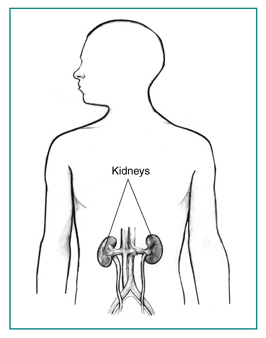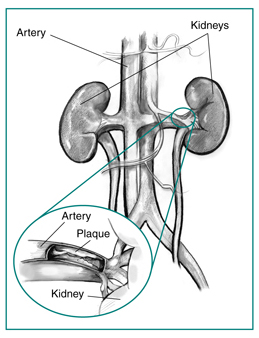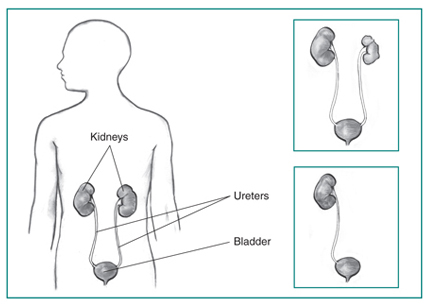














Acquired Cystic Kidney Disease

What is acquired cystic kidney disease?

Acquired cystic kidney disease happens when a person's kidneys develop fluid-filled sacs, called cysts, over time. Acquired cystic kidney disease is not the same as polycystic kidney disease (PKD), another disease that causes the kidneys to develop multiple cysts.

Acquired cystic kidney disease occurs in children and adults who have

  • chronic kidney disease (CKD)—a condition that develops over many years and may lead to end-stage kidney disease, or ESRD. The kidneys of people with CKD gradually lose their ability to filter wastes, extra salt, and fluid from the blood properly.
  • end-stage kidney disease—total and permanent kidney failure that requires a kidney transplant or blood-filtering treatments called dialysis.

The cysts are more likely to develop in people who are on kidney dialysis. The chance of developing acquired cystic kidney disease increases with the number of years a person is on dialysis. However, the cysts are caused by CKD or kidney failure, not dialysis treatments.

More information is provided in the NIDDK health topics, kidney failure and dialysis.

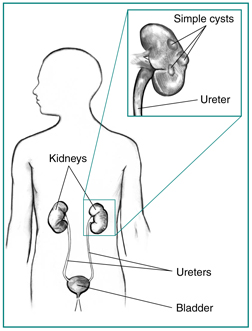
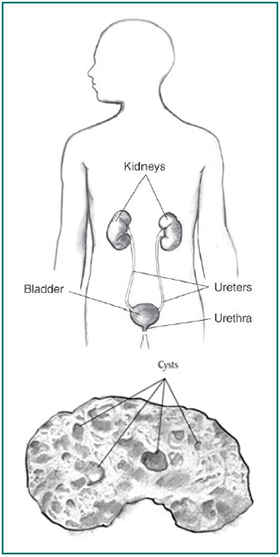
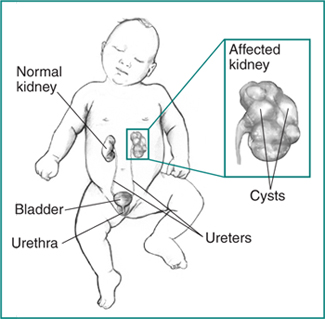
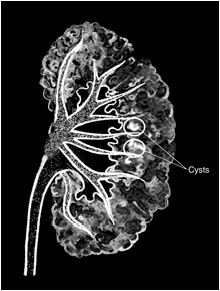
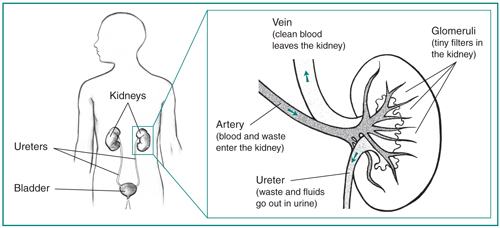
Drawing of a male torso with kidneys, ureters, bladder, and urethra labeled, and a drawing below of a kidney with sacs of fluid labeled as
Acquired cystic kidney disease happens when a person's kidneys develop fluid-filled sacs called cysts.

What are the differences between acquired cystic kidney disease and polycystic kidney disease?

Acquired cystic kidney disease differs from PKD in several ways. Unlike acquired cystic kidney disease, PKD is a genetic, or inherited, disorder that can cause complications such as high blood pressure and problems with blood vessels in the brain and heart.

The following chart lists the differences:

People with Polycystic Kidney Disease

  • are born with a gene that causes the disease
  • have enlarged kidneys
  • develop cysts in the liver and other parts of the body

People with Acquired Cystic Kidney Disease

  • do not have a disease-causing gene
  • have kidneys that are normal-sized or smaller
  • do not form cysts in other parts of the body

In addition, for people with PKD, the presence of cysts marks the onset of their disease, while people with acquired cystic kidney disease already have CKD when they develop cysts.

More information is provided in the NIDDK health topic, Polycystic Kidney Disease.

How common is acquired cystic kidney disease?

Acquired cystic kidney disease becomes more common the longer a person has CKD.

  • About 7 to 22 percent of people with CKD already have acquired cystic kidney disease before starting dialysis treatments.
  • Almost 60 percent of people on dialysis for 2 to 4 years develop acquired cystic kidney disease.1
  • About 90 percent of people on dialysis for 8 years develop acquired cystic kidney disease.1

What causes acquired cystic kidney disease?

Researchers do not fully understand what causes cysts to grow in the kidneys of people with CKD. The fact that these cysts occur only in the kidneys and not in other parts of the body, as in PKD, indicates that the processes that lead to cyst formation take place primarily inside the kidneys.2

What are the signs and symptoms of acquired cystic kidney disease?

A person with acquired cystic kidney disease often has no symptoms. However, the complications of acquired cystic kidney disease can have signs and symptoms.

What are the complications of acquired cystic kidney disease?

People with acquired cystic kidney disease may develop the following complications:

  • an infected cyst, which can cause fever and back pain.
  • blood in the urine, which can signal that a cyst in the kidney is bleeding.
  • tumors in the kidneys. People with acquired cystic kidney disease are more likely than people in the general population to have cancerous kidney tumors. However, the chance of cancer spreading is lower in people with acquired cystic kidney disease than that of other kidney cancers not associated with acquired cystic kidney disease, and the long-term outlook is better.1

How is acquired cystic kidney disease diagnosed?

A health care provider may diagnose a person with acquired cystic kidney disease based on

  • medical history
  • imaging tests

Medical History

Taking a medical history may help a health care provider diagnose acquired cystic kidney disease. A health care provider may suspect acquired cystic kidney disease if a person who has been on dialysis for several years develops symptoms such as fever, back pain, or blood in the urine.

Imaging Tests

To confirm the diagnosis, the health care provider may order one or more imaging tests. A radiologist—a doctor who specializes in medical imaging—interprets the images from these tests, and the patient does not need anesthesia.

  • Ultrasound uses a device, called a transducer, that bounces safe, painless sound waves off organs to create an image of their structure. A specially trained technician performs the procedure in a health care provider's office, an outpatient center, or a hospital. The images can show cysts in the kidneys as well as the kidneys' size and shape.
  • Computerized tomography (CT) scans use a combination of x-rays and computer technology to create images. For a CT scan, a nurse or technician may give the patient a solution to drink and an injection of a special dye, called contrast medium. CT scans require the patient to lie on a table that slides into a tunnel-shaped device where an x-ray technician takes the x-rays. An x-ray technician performs the procedure in an outpatient center or a hospital. CT scans can show cysts and tumors in the kidneys.
  • Magnetic resonance imaging (MRI) is a test that takes pictures of the body's internal organs and soft tissues without using x-rays. A specially trained technician performs the procedure in an outpatient center or a hospital. Although the patient does not need anesthesia, a health care provider may give people with a fear of confined spaces light sedation, taken by mouth. An MRI may include the injection of contrast medium. With most MRI machines, the patient will lie on a table that slides into a tunnel-shaped device that may be open-ended or closed at one end. Some machines allow the patient to lie in a more open space. During an MRI, the patient, although usually awake, must remain perfectly still while the technician takes the images, which usually takes only a few minutes. The technician will take a sequence of images from different angles to create a detailed picture of the kidneys. During the test, the patient will hear loud mechanical knocking and humming noises from the machine.

Sometimes a health care provider may discover acquired cystic kidney disease during an imaging exam for another condition. Images of the kidneys may help the health care provider distinguish acquired cystic kidney disease from PKD.

How is acquired cystic kidney disease treated?

If acquired cystic kidney disease is not causing complications, a person does not need treatment. A health care provider will treat infections with antibiotics—medications that kill bacteria. If large cysts are causing pain, a health care provider may drain the cyst using a long needle inserted into the cyst through the skin.

When a surgeon transplants a new kidney into a patient's body to treat kidney failure, acquired cystic kidney disease in the damaged kidneys, which usually remain in place after a transplant, often disappears.

A surgeon may perform an operation to remove tumors or suspected tumors. In rare cases, a surgeon performs an operation to stop cysts from bleeding.

Eating, Diet, and Nutrition

No specific diet will prevent or delay acquired cystic kidney disease. In general, a diet designed for people on hemodialysis or peritoneal dialysis reduces the amount of wastes that accumulate in the body between dialysis sessions.

More information is provided in the NIDDK health topics, Eat Right to Feel Right on Hemodialysis and Nutrition for Advanced Chronic Kidney Disease in Adults.

Points to Remember

  • Acquired cystic kidney disease happens when a person's kidneys develop fluid-filled sacs, called cysts, over time.
  • Acquired cystic kidney disease occurs in children and adults who have
    • chronic kidney disease (CKD)
    • end-stage kidney disease (ESRD)
  • People with acquired cystic kidney disease may develop the following complications:
    • an infected cyst, which can cause fever and back pain
    • blood in the urine, which can signal that a cyst in the kidney is bleeding
    • tumors in the kidneys
  • To confirm the diagnosis, the health care provider may order one or more imaging tests:
    • Ultrasound
    • Computerized tomography (CT) scan
    • Magnetic resonance imaging (MRI)
  • If acquired cystic kidney disease is not causing complications, a person does not need treatment.
  • A health care provider will treat infections with antibiotics—medications that kill bacteria.
  • If large cysts are causing pain, a health care provider may drain the cyst using a long needle inserted into the cyst through the skin.
  • A surgeon may perform an operation to remove tumors or suspected tumors. In rare cases, a surgeon performs an operation to stop cysts from bleeding.

References

Clinical Trials

The National Institute of Diabetes and Digestive and Kidney Diseases (NIDDK) and other components of the National Institutes of Health (NIH) conduct and support research into many diseases and conditions.

What are clinical trials, and are they right for you?

Clinical trials are part of clinical research and at the heart of all medical advances. Clinical trials look at new ways to prevent, detect, or treat disease. Researchers also use clinical trials to look at other aspects of care, such as improving the quality of life for people with chronic illnesses. Find out if clinical trials are right for you.

What clinical trials are open?

Clinical trials that are currently open and are recruiting can be viewed at www.ClinicalTrials.gov.

This content is provided as a service of the National Institute of Diabetes and Digestive and Kidney Diseases (NIDDK), part of the National Institutes of Health. The NIDDK translates and disseminates research findings through its clearinghouses and education programs to increase knowledge and understanding about health and disease among patients, health professionals, and the public. Content produced by the NIDDK is carefully reviewed by NIDDK scientists and other experts.

The NIDDK would like to thank:
Catherine Kelleher, M.D., University of Colorado Health Sciences Center

Albuminuria: Albumin in the Urine

What is albuminuria?

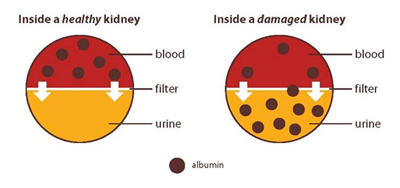
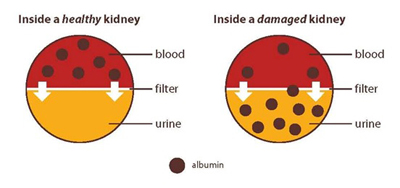
Albuminuria is a sign of kidney disease and means that you have too much albumin in your urine. Albumin is a protein found in the blood. A healthy kidney doesn’t let albumin pass from the blood into the urine. A damaged kidney lets some albumin pass into the urine. The less albumin in your urine, the better.

Sometimes albuminuria is also called proteinuria.

A diagram illustrating a healthy kidney with albumin only found in blood, and a damaged kidney that has albumin in both blood and urine.
A healthy kidney doesn’t let albumin pass into the urine. A damaged kidney lets some albumin pass into the urine.

More information is provided in the NIDDK health topics, Diabetic Kidney Disease and High Blood Pressure and Kidney Disease.

Why is urine albumin important?

Measurement of urine albumin is an important tool for

  • diagnosing kidney disease
  • monitoring the progression of kidney disease

Health care providers regularly test people for albuminuria as part of a routine medical exam and will closely monitor urine albumin in people with kidney disease.

A urine albumin level that stays the same or goes down may mean that treatments are working. Treatment that lowers the urine albumin level may lower the chances that kidney disease will progress to kidney failure.

People who have diabetes, high blood pressure, heart disease, or a family history of kidney failure are at risk for kidney disease. Talk with your health care provider about how often you should get a urine test for albumin.

How is albuminuria detected?

A health care provider often tests for albuminuria using a urine dipstick test followed by a urine albumin and creatinine measurement.

You will be asked to collect a urine sample in a special container in your health care provider’s office or a commercial facility. The office or facility tests the sample onsite or sends it to a lab for analysis.

Dipstick test for albumin. A dipstick test performed on a urine sample can detect the presence of albumin in the urine. For the test, a nurse or technician places a dipstick, a strip of chemically treated paper, into the urine. The dipstick changes color if albumin is present in the urine.

Albumin and creatinine measurement. A health care provider uses this measurement to determine the ratio between the albumin and creatinine in the urine and to estimate the amount of albumin excreted in 24 hours. Creatinine is a waste product that is filtered in the kidneys and excreted in the urine. Health care providers consider a urine albumin-to-creatinine ratio above 30 mg/g higher than normal.

Photo of two containers that store urine to be tested for albumin.
If you have kidney disease or are at risk for kidney disease, talk with your health care provider about how often you should get a urine test for albumin.

How can albuminuria be reduced?

You may be able to reduce the amount of albumin in your urine by taking medicines that lower blood pressure called ACE inhibitors or ARBs. The names of these medicines end in -pril or -sartan.

You may also be able to protect your kidneys and reduce albuminuria by working with a registered dietitian who can help you plan meals and change your eating habits. The meal plan may help you

A dietitian discusses healthy eating habits and how to plan meals with a patient.
Meet with a dietitian who can help you plan meals and change your eating habits.

Clinical Trials

The National Institute of Diabetes and Digestive and Kidney Diseases (NIDDK) and other components of the National Institutes of Health (NIH) conduct and support research into many diseases and conditions.

What are clinical trials, and are they right for you?

Clinical trials are part of clinical research and at the heart of all medical advances. Clinical trials look at new ways to prevent, detect, or treat disease. Researchers also use clinical trials to look at other aspects of care, such as improving the quality of life for people with chronic illnesses. Find out if clinical trials are right for you.

What clinical trials are open?

Clinical trials that are currently open and are recruiting can be viewed at www.ClinicalTrials.gov.

This content is provided as a service of the National Institute of Diabetes and Digestive and Kidney Diseases (NIDDK), part of the National Institutes of Health. The NIDDK translates and disseminates research findings through its clearinghouses and education programs to increase knowledge and understanding about health and disease among patients, health professionals, and the public. Content produced by the NIDDK is carefully reviewed by NIDDK scientists and other experts.

Amyloidosis & Kidney Disease

What is amyloidosis?

Amyloidosis is a rare disease that occurs when amyloid proteins are deposited in tissues and organs. Amyloid proteins are abnormal proteins that the body cannot break down and recycle, as it does with normal proteins. When amyloid proteins clump together, they form amyloid deposits. The buildup of these deposits damages a person’s organs and tissues. Amyloidosis can affect different organs and tissues in different people and can affect more than one organ at the same time. Amyloidosis most frequently affects the kidneys, heart, nervous system, liver, and digestive tract. The symptoms and severity of amyloidosis depend on the organs and tissues affected.

What are the kidneys and what do they do?

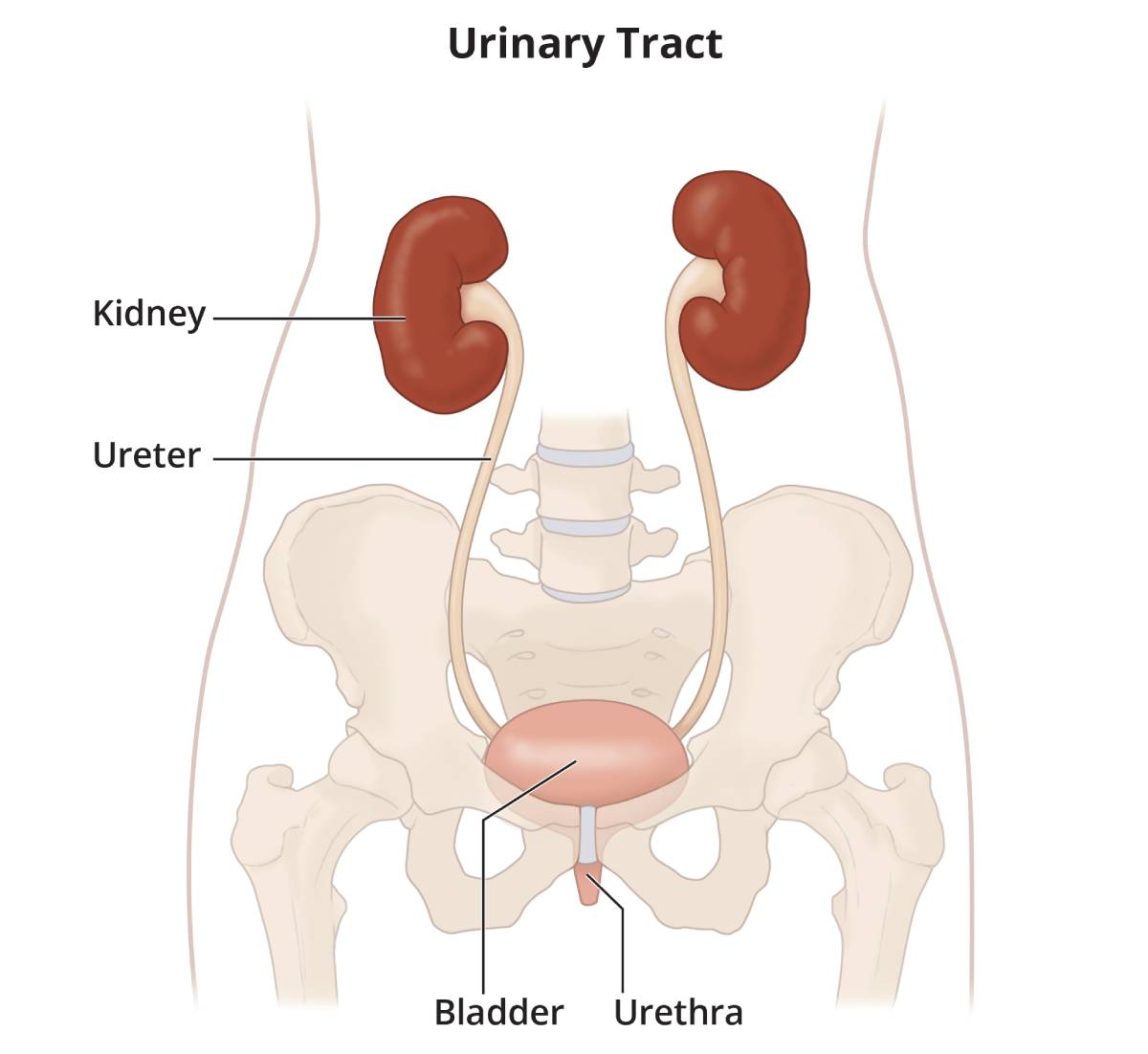
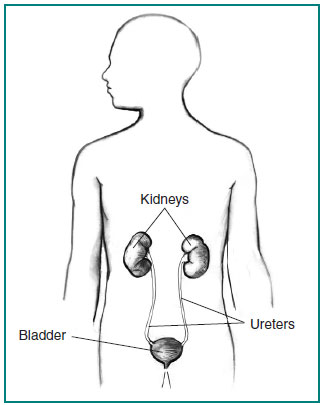
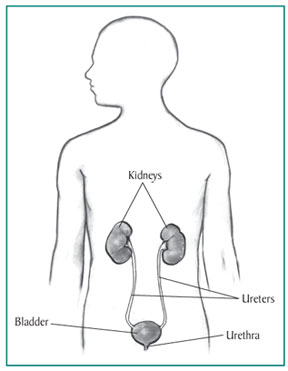
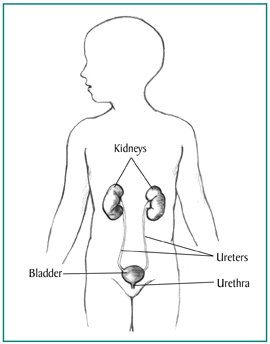
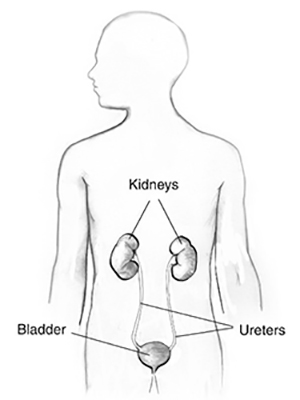
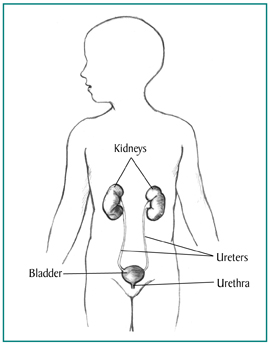
The kidneys are two bean-shaped organs, each about the size of a fist. They are located just below the rib cage, one on each side of the spine. Every day, the two kidneys filter about 120 to 150 quarts of blood to produce about 1 to 2 quarts of urine, composed of wastes and extra fluid. The urine flows from the kidneys to the bladder through tubes called ureters. The bladder stores urine. When the bladder empties, urine flows out of the body through a tube called the urethra, located at the bottom of the bladder. In men, the urethra is long, while in women it is short.

Drawing of the urinary tract inside the outline of the upper half of a human body. The kidneys, ureters, bladder, and urethra are labeled.
The kidneys are two bean-shaped organs, each about the size of a fist.

What types of amyloidosis affect the kidneys?

Primary amyloidosis and dialysis-related amyloidosis are the types of amyloidosis that can affect the kidneys.

Primary Amyloidosis of the Kidneys

The kidneys are the organs most commonly affected by primary amyloidosis. Amyloid deposits damage the kidneys and make it harder for them to filter wastes and break down proteins. When the kidneys become too damaged, they may no longer be able to function well enough to maintain health, resulting in kidney failure. Kidney failure can lead to problems such as high blood pressure, bone disease, and anemia—a condition in which the body has fewer red blood cells than normal.

Dialysis-related Amyloidosis

People who suffer from kidney failure and have been on long-term dialysis may develop dialysis-related amyloidosis. This type of amyloidosis occurs when a certain protein, called beta-2 microglobulin, builds up in the blood because dialysis does not remove it completely. The two types of dialysis are

  • hemodialysis. Hemodialysis uses a special filter called a dialyzer to remove wastes and extra fluid from the blood.
  • peritoneal dialysis. Peritoneal dialysis uses the lining of the abdominal cavity—the space in the body that holds organs such as the stomach, intestines, and liver—to filter the blood.

Dialysis-related amyloidosis is a complication of kidney failure because neither hemodialysis nor peritoneal dialysis effectively filters beta-2 microglobulin from the blood. As a result, elevated amounts of beta-2 microglobulin remain in the blood. Dialysis-related amyloidosis is relatively common in people with kidney failure, especially adults older than 60 years of age, who have been on dialysis for more than 5 years.1

More information is provided in the NIDDK health topics:

What are the signs and symptoms of primary amyloidosis of the kidneys?

The most common sign of primary amyloidosis of the kidneys is nephrotic syndrome––a collection of signs that indicate kidney damage. The signs of nephrotic syndrome include

  • albuminuria—an increased amount of albumin, a protein, in the urine. A person with nephrotic syndrome excretes more than half a teaspoon of albumin per day.
  • hyperlipidemia—a condition in which a person’s blood has more-than-normal amounts of fats and cholesterol.
  • edema—swelling, typically in a person’s legs, feet, or ankles and less often in the hands or face.
  • hypoalbuminemia—a condition in which a person’s blood has less-than-normal amounts of albumin.

More information is provided in the NIDDK health topic, Nephrotic Syndrome in Adults.

Other signs and symptoms of primary amyloidosis may include

  • fatigue, or feeling tired
  • shortness of breath
  • low blood pressure
  • numbness, tingling, or a burning sensation in the hands or feet
  • weight loss

What are the symptoms of dialysis-related amyloidosis?

The symptoms of dialysis-related amyloidosis may include

  • pain, stiffness, and fluid in the joints.
  • abnormal, fluid-containing sacs, called cysts, in some bones.
  • carpal tunnel syndrome, caused by unusual buildup of amyloid proteins in the wrists. The symptoms of carpal tunnel syndrome include numbness or tingling, sometimes associated with muscle weakness, in the fingers and hands.

Dialysis-related amyloidosis most often affects bones, joints, and the tissues that connect muscle to bone, called tendons. The disease may also affect the digestive tract and organs such as the heart and lungs. Bone cysts caused by dialysis-related amyloidosis can lead to bone fractures. Dialysis-related amyloidosis can also cause tears in tendons and ligaments. Ligaments are tissues that connect bones to other bones.

How is primary amyloidosis of the kidneys diagnosed?

A health care provider diagnoses primary amyloidosis of the kidneys with

  • a medical and family history
  • a physical exam
  • urinalysis
  • blood tests
  • a kidney biopsy

Medical and Family History

Taking a medical and family history may help a health care provider diagnose amyloidosis of the kidneys. He or she will ask the patient to provide a medical and family history.

Physical Exam

A physical exam may help diagnose primary amyloidosis of the kidneys. During a physical exam, a health care provider usually

  • examines a patient’s body to check for swelling
  • uses a stethoscope to listen to the lungs
  • taps on specific areas of the patient’s body

Urinalysis

A health care provider may use urinalysis—the testing of a urine sample—to check for albumin and amyloid proteins in urine. The patient provides a urine sample in a special container at a health care provider’s office or a commercial facility. A nurse or technician can test the sample in the same location or send it to a lab for analysis. More-than-normal amounts of albumin in urine may indicate kidney damage due to primary amyloidosis. Amyloid proteins in urine may indicate amyloidosis.

Blood Tests

The health care provider may use blood tests to see how well the kidneys are working and to check for amyloid proteins and hyperlipidemia. A blood test involves drawing a patient’s blood at a health care provider’s office or a commercial facility and sending the sample to a lab for analysis. Blood tests for kidney function measure the waste products in the blood that healthy kidneys normally filter out. Hyperlipidemia may indicate nephrotic syndrome. Amyloid proteins in blood may indicate amyloidosis.

Kidney Biopsy

Only a biopsy can show the amyloid protein deposits in the kidneys. A health care provider may recommend a kidney biopsy if other tests show kidney damage. A kidney biopsy is a procedure that involves taking a piece of kidney tissue for examination with a microscope. A health care provider performs a kidney biopsy in a hospital with light sedation and local anesthetic. The health care provider uses imaging techniques such as ultrasound or a computerized tomography (CT) scan to guide the biopsy needle into the kidney and take the tissue sample. A pathologist—a doctor who specializes in diagnosing diseases––examines the tissue in a lab for amyloid proteins and kidney damage.

The biopsy results can help the health care provider determine the best course of treatment. More information is provided in the NIDDK health topic, Kidney Biopsy.

How is dialysis-related amyloidosis diagnosed?

A health care provider diagnoses dialysis-related amyloidosis with

  • urinalysis
  • blood tests
  • imaging tests

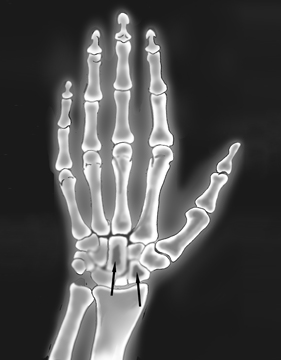
A health care provider can use urinalysis and blood tests to detect the amount of amyloid proteins in urine and blood. Imaging tests, such as x-rays and CT scans, can provide pictures of bone cysts and amyloid deposits in bones, joints, tendons, and ligaments. An x-ray technician performs imaging tests in a health care provider’s office, an outpatient center, or a hospital. A radiologist—a doctor who specializes in medical imaging—interprets the images. A patient does not require anesthesia.

X-ray image of the hand and wrist, with arrows pointing to darkened areas in two wrist bones, indicating amyloid deposits.
X-ray image showing amyloid deposits in the wrist

How is primary amyloidosis of the kidneys treated?

A health care provider treats primary amyloidosis of the kidneys with the following:

  • medication therapy, including chemotherapy
  • a stem cell transplant
  • treating other conditions

Medication therapy. The goal of medication therapy, including chemotherapy, is to reduce amyloid protein levels in the blood. Many health care providers recommend combination medication therapy such as

  • melphalan (Alkeran), a type of chemotherapy
  • dexamethasone (Decadron), an anti-inflammatory steroid medication

These medications can stop the growth of the cells that make amyloid proteins. These medications may cause hair loss and serious side effects, such as nausea, vomiting, and fatigue.

Stem cell transplant. A stem cell transplant is a procedure that replaces a patient’s damaged stem cells with healthy ones. Stem cells are found in the bone marrow and develop into three types of blood cells the body needs. To prepare for a stem cell transplant, the patient receives high doses of chemotherapy. The actual transplant is like a blood transfusion. The transplanted stem cells travel to the bone marrow to make healthy new blood cells. The chemotherapy a patient receives to prepare for the transplant can have serious side effects, so it is important to talk with the health care provider about the risks of this procedure.

Read more in What Is a Blood and Marrow Stem Cell Transplant? at www.nhlbi.nih.gov/health/health-topics/topics/bmsct.

Treating other conditions. Primary amyloidosis has no cure, so treating some of the side effects and other conditions seen with the disease is essential. Other conditions may include

  • anemia—treatment may include medications
  • depression—treatment may include talking with a mental health counselor and taking medications
  • fatigue—treatment may include changes in diet and activity level
  • kidney disease—treatment may include medications to help maintain kidney function or slow the progression of kidney disease

A patient and his or her family should talk with the health care provider about resources for support and treatment options.

More information about kidney disease is provided in the NIDDK health topic, Kidney Disease.

How is dialysis-related amyloidosis treated?

A health care provider treats dialysis-related amyloidosis with

  • medication therapy
  • newer, more effective hemodialysis filters
  • surgery
  • a kidney transplant

The goal of medication therapy and the use of newer, more effective hemodialysis filters is to reduce amyloid protein levels in the blood. Medication therapy can help reduce symptoms such as pain and inflammation. A health care provider may treat a person with dialysis-related amyloidosis who has bone, joint, and tendon problems, such as bone cysts and carpal tunnel syndrome, using surgery.

Dialysis-related amyloidosis has no cure; however, a successful kidney transplant may stop the disease from progressing.

More information is provided in the NIDDK health topic, Treatment Methods for Kidney Failure: Transplantation.

Eating, Diet, and Nutrition

Researchers have not found that eating, diet, and nutrition play a role in causing or preventing primary amyloidosis of the kidneys or dialysis-related amyloidosis. People with nephrotic syndrome may make dietary changes such as

  • limiting dietary sodium, often from salt, to help reduce edema and lower blood pressure
  • decreasing liquid intake to help reduce edema and lower blood pressure
  • eating a diet low in saturated fat and cholesterol to help control more-than-normal amounts of fats and cholesterol in the blood

Health care providers may recommend that people with kidney disease eat moderate or reduced amounts of protein. Proteins break down into waste products that the kidneys filter from the blood. Eating more protein than the body needs may burden the kidneys and cause kidney function to decline faster. However, protein intake that is too low may lead to malnutrition, a condition that occurs when the body does not get enough nutrients.

People with kidney disease on a restricted protein diet should receive blood tests that can show low nutrient levels. People with primary amyloidosis of the kidneys or dialysis-related amyloidosis should talk with a health care provider about dietary restrictions to best manage their individual needs.

Points to Remember

  • Amyloidosis is a rare disease that occurs when amyloid proteins are deposited in tissues and organs.
  • Primary amyloidosis and dialysis-related amyloidosis are the types of amyloidosis that can affect the kidneys.
  • The most common sign of primary amyloidosis of the kidneys is nephrotic syndrome.
  • The signs of nephrotic syndrome include
    • albuminuria—an elevated amount of albumin in the urine. A person with nephrotic syndrome excretes more than half a teaspoon of albumin per day.
    • hyperlipidemia—a condition in which a person’s blood has more-than-normal amounts of fats and cholesterol.
    • edema—swelling, typically in a person’s legs, feet, or ankles and less often in the hands or face.
    • hypoalbuminemia—a condition in which a person’s blood has less-than-normal amounts of albumin.
  • Other signs and symptoms of primary amyloidosis may include
    • fatigue, or feeling tired
    • shortness of breath
    • low blood pressure
    • numbness, tingling, or a burning sensation in the hands or feet
    • weight loss
  • The symptoms of dialysis-related amyloidosis may include
    • pain, stiffness, and fluid in the joints.
    • abnormal, fluid-containing sacs, called cysts, in some bones.
    • carpal tunnel syndrome, caused by unusual buildup of amyloid proteins in the wrists. The symptoms of carpal tunnel syndrome include numbness or tingling, sometimes associated with muscle weakness, in the fingers and hands.
  • A health care provider diagnoses primary amyloidosis of the kidneys with
    • a medical and family history
    • a physical exam
    • urinalysis
    • blood tests
    • a kidney biopsy
  • A health care provider diagnoses dialysis-related amyloidosis with
    • urinalysis
    • blood tests
    • imaging tests
  • A health care provider treats primary amyloidosis of the kidneys with the following:
    • medication therapy, including chemotherapy
    • a stem cell transplant
    • treating other conditions
  • A health care provider treats dialysis-related amyloidosis with
    • medication therapy
    • newer, more effective hemodialysis filters
    • surgery
    • a kidney transplant

References

Clinical Trials

The National Institute of Diabetes and Digestive and Kidney Diseases (NIDDK) and other components of the National Institutes of Health (NIH) conduct and support research into many diseases and conditions.

What are clinical trials, and are they right for you?

Clinical trials are part of clinical research and at the heart of all medical advances. Clinical trials look at new ways to prevent, detect, or treat disease. Researchers also use clinical trials to look at other aspects of care, such as improving the quality of life for people with chronic illnesses. Find out if clinical trials are right for you.

What clinical trials are open?

Clinical trials that are currently open and are recruiting can be viewed at www.ClinicalTrials.gov.

About the Kidney Failure Series

You and your doctor will work together to choose a treatment that's best for you. The publications of the NIDDK Kidney Failure Series can help you learn about the specific issues you will face.

Booklets

Fact Sheets

Learning as much as you can about your treatment will help make you an important member of your health care team.

This content is provided as a service of the National Institute of Diabetes and Digestive and Kidney Diseases (NIDDK), part of the National Institutes of Health. The NIDDK translates and disseminates research findings through its clearinghouses and education programs to increase knowledge and understanding about health and disease among patients, health professionals, and the public. Content produced by the NIDDK is carefully reviewed by NIDDK scientists and other experts.

The NIDDK would like to thank:
Glenn Chertow, M.D., University of California at San Francisco; William J. Stone, M.D., Vanderbilt University; Morie A. Gertz, M.D., Mayo Clinic

Anemia

What is anemia?

Anemia is a condition in which the body has fewer red blood cells than normal. Red blood cells carry oxygen to tissues and organs throughout the body and enable them to use energy from food. With anemia, red blood cells carry less oxygen to tissues and organs—particularly the heart and brain—and those tissues and organs may not function as well as they should.

How is anemia related to chronic kidney disease?

Anemia commonly occurs in people with chronic kidney disease (CKD)—the permanent, partial loss of kidney function. Anemia might begin to develop in the early stages of CKD, when someone has 20 to 50 percent of normal kidney function. Anemia tends to worsen as CKD progresses. Most people who have total loss of kidney function, or kidney failure, have anemia.1 A person has kidney failure when he or she needs a kidney transplant or dialysis in order to live. The two forms of dialysis include hemodialysis and peritoneal dialysis. Hemodialysis uses a machine to circulate a person’s blood through a filter outside the body. Peritoneal dialysis uses the lining of the abdomen to filter blood inside the body.

What are the kidneys and what do they do?

The kidneys are two bean-shaped organs, each about the size of a fist. They are located just below the rib cage, one on each side of the spine. Every day, the kidneys filter about 120 to 150 quarts of blood to produce about 1 to 2 quarts of urine.

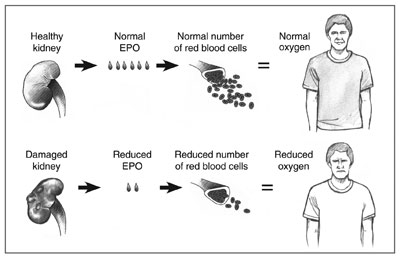
Healthy kidneys produce a hormone called erythropoietin (EPO). A hormone is a chemical produced by the body and released into the blood to help trigger or regulate particular body functions. EPO prompts the bone marrow to make red blood cells, which then carry oxygen throughout the body.

What causes anemia in chronic kidney disease?

When kidneys are diseased or damaged, they do not make enough EPO. As a result, the bone marrow makes fewer red blood cells, causing anemia. When blood has fewer red blood cells, it deprives the body of the oxygen it needs.

Other common causes of anemia in people with kidney disease include blood loss from hemodialysis and low levels of the following nutrients found in food:

  • iron
  • vitamin B12
  • folic acid

These nutrients are necessary for red blood cells to make hemoglobin, the main oxygen-carrying protein in the red blood cells.

If treatments for kidney-related anemia do not help, the health care provider will look for other causes of anemia, including

  • other problems with bone marrow
  • inflammatory problems—such as arthritis, lupus, or inflammatory bowel disease—in which the body’s immune system attacks the body’s own cells and organs
  • chronic infections such as diabetic ulcers
  • malnutrition
Top: process of normal red blood cell production with a healthy kidney. Bottom: process of reduced red blood cell production with a damaged kidney.
Healthy kidneys produce a hormone called EPO. EPO prompts the bone marrow to make red blood cells, which then carry oxygen throughout the body. When the kidneys are diseased or damaged, they do not make enough EPO. As a result, the bone marrow makes fewer red blood cells, causing anemia.

What are the signs and symptoms of anemia in someone with chronic kidney disease?

The signs and symptoms of anemia in someone with CKD may include

  • weakness
  • fatigue, or feeling tired
  • headaches
  • problems with concentration
  • paleness
  • dizziness
  • difficulty breathing or shortness of breath
  • chest pain

Anyone having difficulty breathing or with shortness of breath should seek immediate medical care. Anyone who has chest pain should call 911.

What are the complications of anemia in someone with chronic kidney disease?

Heart problems are a complication of anemia and may include

  • an irregular heartbeat or an unusually fast heartbeat, especially when exercising.
  • the harmful enlargement of muscles in the heart.
  • heart failure, which does not mean the heart suddenly stops working. Instead, heart failure is a long-lasting condition in which the heart can’t pump enough blood to meet the body’s needs.

How is anemia in chronic kidney disease diagnosed?

A health care provider diagnoses anemia based on

  • a medical history
  • a physical exam
  • blood tests

Medical History

Taking a medical history is one of the first things a health care provider may do to diagnose anemia. He or she will usually ask about the patient’s symptoms.

Physical Exam

A physical exam may help diagnose anemia. During a physical exam, a health care provider usually examines a patient’s body, including checking for changes in skin color.

Blood Tests

To diagnose anemia, a health care provider may order a complete blood count, which measures the type and number of blood cells in the body. A blood test involves drawing a patient’s blood at a health care provider’s office or a commercial facility. A health care provider will carefully monitor the amount of hemoglobin in the patient’s blood, one of the measurements in a complete blood count.

The Kidney Disease: Improving Global Outcomes Anemia Work Group recommends that health care providers diagnose anemia in males older than age 15 when their hemoglobin falls below 13 grams per deciliter (g/dL) and in females older than 15 when it falls below 12 g/dL.2 If someone has lost at least half of normal kidney function and has low hemoglobin, the cause of anemia may be decreased EPO production.

Two other blood tests help measure iron levels:

  • The ferritin level helps assess the amount of iron stored in the body. A ferritin score below 200 nanograms (ng) per milliliter may mean a person has iron deficiency that requires treatment.2
  • The transferrin saturation score indicates how much iron is available to make red blood cells. A transferrin saturation score below 30 percent can also mean low iron levels that require treatment.2

In addition to blood tests, the health care provider may order other tests, such as tests for blood loss in stool, to look for other causes of anemia.

How is anemia in chronic kidney disease treated?

Depending on the cause, a health care provider treats anemia with one or more of the following treatments:

Iron

The first step in treating anemia is raising low iron levels. Iron pills may help improve iron and hemoglobin levels. However, for patients on hemodialysis, many studies show pills do not work as well as iron given intravenously.2

Erythropoietin

If blood tests indicate kidney disease as the most likely cause of anemia, treatment can include injections of a genetically engineered form of EPO. A health care provider, often a nurse, injects the patient with EPO subcutaneously, or under the skin, as needed. Some patients learn how to inject the EPO themselves. Patients on hemodialysis may receive EPO intravenously during hemodialysis.

Studies have shown the use of EPO increases the chance of cardiovascular events, such as heart attack and stroke, in people with CKD. The health care provider will carefully review the medical history of the patient and determine if EPO is the best treatment for the patient’s anemia. Experts recommend using the lowest dose of EPO that will reduce the need for red blood cell transfusions. Additionally, health care providers should consider the use of EPO only when a patient’s hemoglobin level is below 10 g/dL. Health care providers should not use EPO to maintain a patient’s hemoglobin level above 11.5 g/dL.2 Patients who receive EPO should have regular blood tests to monitor their hemoglobin so the health care provider can adjust the EPO dose when the level is too high or too low.2 Health care providers should discuss the benefits and risks of EPO with their patients.

Many people with kidney disease need iron supplements and EPO to raise their red blood cell count to a level that will reduce the need for red blood cell transfusions. In some people, iron supplements and EPO will improve the symptoms of anemia.

Red Blood Cell Transfusions

If a patient’s hemoglobin falls too low, a health care provider may prescribe a red blood cell transfusion. Transfusing red blood cells into the patient’s vein raises the percentage of the patient’s blood that consists of red blood cells, increasing the amount of oxygen available to the body.

Vitamin B12 and Folic Acid Supplements

A health care provider may suggest vitamin B12 and folic acid supplements for some people with CKD and anemia. Using vitamin supplements can treat low levels of vitamin B12 or folic acid and help treat anemia. To help ensure coordinated and safe care, people should discuss their use of complementary and alternative medical practices, including their use of dietary supplements, with their health care provider.

Read more about vitamin B12 and folic acid on the MedlinePlus website at www.nlm.nih.gov/medlineplus. Read more about complementary and alternative medicine at nccih.nih.gov/.

Eating, Diet, and Nutrition

A health care provider may advise people with kidney disease who have anemia caused by iron, vitamin B12, or folic acid deficiencies to include sources of these nutrients in their diets. Some of these foods are high in sodium or phosphorus, which people with CKD should limit in their diet. Before making any dietary changes, people with CKD should talk with their health care provider or with a dietitian who specializes in helping people with kidney disease. A dietitian can help a person plan healthy meals.

Read more about nutrition for people with CKD on the National Kidney Disease Education Program page.

The following chart illustrates some good dietary sources of iron, vitamin B12, and folic acid.

Food Serving Size Iron Vitamin B12 Folic Acid
Recommended Daily Value    18 mg 6 mcg 400 mcg
100 percent fortified breakfast cereal ¾ cup (1 oz) 18 mg 6 mcg 394 mcg
beans, baked 1 cup (8 oz) 8 mg 0 mcg 37 mcg
beef, ground 3 oz 2 mg 2 mcg 8 mcg
beef liver 3 oz 5 mg 67 mcg 211 mcg
clams, fried 4 oz 3 mg 1 mcg 66 mcg
spinach, boiled 1 cup (3 oz) 2 mg 0 mcg 115 mcg
spinach, fresh 1 cup (1 oz) 1 mg 0 mcg 58 mcg
trout 3 oz 0 mg 5 mcg 16 mcg
tuna, canned 3 oz 1 mg 1 mcg 2 mcg

Points to Remember

  • Anemia is a condition in which the body has fewer red blood cells than normal. Red blood cells carry oxygen to tissues and organs throughout the body and enable them to use energy from food.
  • Anemia commonly occurs in people with chronic kidney disease (CKD)—the permanent, partial loss of kidney function. Most people who have total loss of kidney function, or kidney failure, have anemia.
  • When kidneys are diseased or damaged, they do not make enough erythropoietin (EPO). As a result, the bone marrow makes fewer red blood cells, causing anemia.
  • Other common causes of anemia in people with kidney disease include blood loss from hemodialysis and low levels of the following nutrients found in food:
    • iron
    • vitamin B12
    • folic acid
  • The first step in treating anemia is raising low iron levels.
  • If blood tests indicate kidney disease as the most likely cause of anemia, treatment can include injections of a genetically engineered form of EPO.
  • Many people with kidney disease need iron supplements and EPO to raise their red blood cell count to a level that will reduce the need for red blood cell transfusions.
  • A health care provider may suggest vitamin B12 and folic acid supplements for some people with CKD and anemia.
  • A health care provider may advise people with kidney disease who have anemia caused by iron, vitamin B12, or folic acid deficiencies to include sources of these nutrients in their diets.

References

Clinical Trials

The National Institute of Diabetes and Digestive and Kidney Diseases (NIDDK) and other components of the National Institutes of Health (NIH) conduct and support research into many diseases and conditions.

What are clinical trials, and are they right for you?

Clinical trials are part of clinical research and at the heart of all medical advances. Clinical trials look at new ways to prevent, detect, or treat disease. Researchers also use clinical trials to look at other aspects of care, such as improving the quality of life for people with chronic illnesses. Find out if clinical trials are right for you.

What clinical trials are open?

Clinical trials that are currently open and are recruiting can be viewed at www.ClinicalTrials.gov.

About the Kidney Failure Series

You and your doctor will work together to choose a treatment that's best for you. The publications of the NIDDK Kidney Failure Series can help you learn about the specific issues you will face.

Booklets

Fact Sheets

This content is provided as a service of the National Institute of Diabetes and Digestive and Kidney Diseases (NIDDK), part of the National Institutes of Health. The NIDDK translates and disseminates research findings through its clearinghouses and education programs to increase knowledge and understanding about health and disease among patients, health professionals, and the public. Content produced by the NIDDK is carefully reviewed by NIDDK scientists and other experts.

The NIDDK would like to thank:
John C. Stivelman, M.D., Emory University School of Medicine; Kerri Cavanaugh, M.D., M.H.S., Vanderbilt University

Caring for a Child with Kidney Disease

How can chronic kidney disease (CKD) affect children and their families?

The lives of children with serious and long-lasting conditions such as CKD are affected in many ways. CKD is any condition that causes reduced kidney function over an extended period of time. Children with CKD may have a negative self-image and may have relationship problems with family members due to the stress of living with a chronic disease. The condition can lead to behavior problems and make participating in school and extracurricular activities more difficult. CKD can cause learning problems because the buildup of wastes in the body can slow down nerve and brain function. Children with CKD may have trouble concentrating and may develop language and motor skills more slowly than their peers. The most severe problems occur when CKD is present starting early in infancy.

CKD that leads to kidney failure—described as end-stage kidney disease or ESRD when treated with a kidney transplant or blood-filtering treatments called dialysis—can increase these challenges. Fortunately, a kidney transplant can reverse or improve most of these problems. Dialysis can also improve or correct these problems. Most children with CKD who receive appropriate treatment can attend school, graduate from high school, and go on to college or vocational school. However, families of children with CKD or kidney failure need to recognize that these children may need additional guidance and understanding.

More information about kidney disease in children and its treatment is provided in the NIDDK health topics, Overview of Kidney Disease in Children and Treatment Methods for Kidney Failure in Children.

How can parents and other adults help children with chronic kidney disease in daily life?

Parents and other adults can help children with CKD fit in at school, deal with low self-esteem, make friends, be physically active, and follow their treatment regimen. As children with CKD approach adulthood, they may need help with preparing to enter the workforce.

Attending School

School attendance is vital in helping children with CKD lead the best life possible. Many people are unaware of how CKD affects children. School administrators, teachers, and classmates should receive education and information about the effects of CKD.

Children with kidney failure may miss school each week because of dialysis and medical appointments. These absences can compound the learning problems many children with CKD face. Parents or guardians should make every effort to schedule treatments outside of school hours.

The Individuals with Disabilities Education Act Public Law 94-142 states that every child is entitled to an appropriate education and directs school districts to provide special services to ensure children with disabilities can participate in regular classrooms to the fullest extent possible. Children with CKD may need

  • tutoring
  • vocational rehabilitation
  • special accommodations

To receive special education services, children must be evaluated to see if they have a disability and must receive an Individualized Education Program—a written document that details the services each child will receive. Parents or guardians of children with CKD should talk with the school counselor about having their child evaluated.

Dealing with Low Self-esteem

Having a chronic illness can make a child feel depressed and powerless. Learning and growth problems may also contribute to low self-esteem. One way to help children feel empowered is to give them as much control and responsibility over their own care as possible:

  • Children can learn more about their medications, including doses.
  • Children on dialysis should be encouraged to take an active part in their treatments.
  • Parents or guardians should allow children to participate in treatment decision making.

Urinary incontinence—the loss of bladder control, which results in the accidental loss of urine—is common in children with CKD. Urinary incontinence can be embarrassing for children and can make it harder to build relationships with their peers. However, several strategies and treatment options are available to help prevent urinary incontinence.

More information is provided in the NIDDK health topic, Urinary Incontinence in Children.

Making Friends

Children with CKD may have trouble fitting in with children their own age because of their small stature or delayed mental development. For children who have had a transplant, the side effects—such as a full face, weight gain, acne, or facial hair—of some of the medications they take may make it harder to make friends and may also lower self-esteem. Participating in regular classroom and extracurricular activities may help children improve their social skills. Summer camps and recreational programs for children with special needs can be a good place to make new friends.

Participating in Physical Activities and Sports

Children with CKD should be encouraged to participate in physical activities, including exercise and sports. In general, exercise has physical and psychological benefits. Parents or guardians may feel protective of children with CKD; however, they should not try to limit activities unless instructed to by a health care provider. Some children may even need to be encouraged to get outside and play. Parents or guardians should talk with their child’s health care provider about the right activity level and appropriate sports for their child.

Children who have had a kidney transplant can compete in sports. Every year the Transplant Games, sponsored by the National Kidney Foundation, allow people with transplants to participate in friendly competition and show the world that transplantation provides a new lease on life and health.

Following Treatment Regimens

Children with CKD may need to take multiple medications, eat a specific diet, and follow their health care provider’s orders to help control their disease. Many children have a hard time following the treatment regimen. Health care providers use the term nonadherence to describe the failure or refusal to take prescribed medications or follow a health care provider’s directions. Adherence can be improved with a combination of health education, motivational techniques, and behavioral skill methods. Strategies need to be tailored to each child and the child’s family. The health care provider should

  • teach the child about the condition and treatment regimen
  • talk with the child to learn about the child’s wishes, beliefs, and feelings to find ways to improve motivation
  • suggest methods for remembering to take medications, such as a calendar, a pillbox, or text message reminders

Preparing to Enter the Work Force

Young adults who have been treated for CKD during childhood have to overcome a number of barriers to prepare for a career and find a job. Completing the training required for employment takes more effort, and some people with CKD report that their small stature creates problems fitting into adult environments. Employers may have trouble understanding kidney problems and the accommodations that need to be made for people with CKD. The employment section of the U.S. Department of Labor’s Disability website offers a variety of resources for employers and job seekers about career planning, workplace accommodations, work incentive programs, and other related issues.

Who can help families deal with issues related to chronic kidney disease in children?

Many skilled professionals are available to ensure that children with CKD get the best possible care. The family may want to talk with a social worker, mental health professional, financial counselor, and dietitian. If a child reaches kidney failure, the medical staff at the dialysis center or transplantation clinic can provide help.

Social Worker

A social worker can help families locate services such as transportation and family counseling. The social worker can provide information about

  • finding support groups in the community
  • helping a child with a chronic illness rejoin school activities
  • reducing the stress of caring for a child with a chronic illness

The social worker can also help families submit applications for Medicare and Medicaid. Medicare is a program that helps people older than 65 and people with disabilities, including people of any age with kidney failure, pay for medical care. Medicaid is a health care program for certain low-income individuals and families who fit into an eligibility group that is recognized by federal and state law.

Mental Health Professional

A mental health professional, such as a psychologist, can help children with CKD find ways to deal with the emotional turmoil caused by having a chronic illness. Some child psychologists also specialize in helping children with disabilities and medical problems rejoin school activities. They may also be able to suggest techniques that reinforce adherence with taking medication and following the health care provider’s instructions.

Family members may also find that counseling helps them handle the conflicts and stresses they face. Many couples report increased tension in their marriage when their child has a serious illness such as CKD. Siblings may resent the amount of attention given to their sibling with CKD and feel guilty about having bad thoughts about their sibling.

Financial Counselor

A financial counselor can help families meet the financial obligations that chronic illness creates. Medical bills can strain family finances; in some cases, a parent or guardian may need to stop working to care for a child full time.

More information is provided in the NIDDK health topic, Financial Help for Treatment of Kidney Failure.

Dietitian

Proper nutrition is extremely important for children with CKD. Every dialysis clinic has a dietitian to help people understand how the food they eat affects their health. The dietitian

  • helps develop meal plans to fit a child’s restricted diet
  • provides information about possible nutritional deficiencies caused by kidney disease
  • recommends special dietary supplements or formulas to improve the child’s nutrition
  • provides recipes and recommends cookbooks appropriate for people with kidney disease

Following the restrictions of a kidney disease diet might be hard at first; however, making tasty and satisfying meals is possible with just a little creativity.

Eating, Diet, and Nutrition

For children with CKD, learning about nutrition is vital because their diet can affect how well their kidneys work. Parents or guardians should always consult with their child’s health care team before making any dietary changes. Staying healthy with CKD requires paying close attention to the following elements of a diet:

  • Protein. Children with CKD should eat enough protein for growth while limiting high protein intake. Too much protein can put an extra burden on the kidneys and cause kidney function to decline faster. Protein needs increase when a child is on dialysis because the dialysis process removes protein from the child’s blood. The health care team recommends the amount of protein needed for the child. Foods with protein include
    • eggs
    • milk
    • cheese
    • chicken
    • fish
    • red meats
    • beans
    • yogurt
    • cottage cheese
  • Sodium. The amount of sodium children need depends on the stage of their kidney disease, their age, and sometimes other factors. The health care team may recommend limiting or adding sodium and salt to the diet. Foods high in sodium include
    • canned foods
    • some frozen foods
    • most processed foods
    • some snack foods, such as chips and crackers
  • Potassium. Potassium levels need to stay in the normal range for children with CKD, because too little or too much potassium can cause heart and muscle problems. Children may need to stay away from some fruits and vegetables or reduce the number of servings and portion sizes to make sure they do not take in too much potassium. The health care team recommends the amount of potassium a child needs. Low-potassium fruits and vegetables include
    • apples
    • cranberries
    • strawberries
    • blueberries
    • raspberries
    • pineapple
    • cabbage
    • boiled cauliflower
    • mustard greens
    • uncooked broccoli
    High-potassium fruits and vegetables include
    • oranges
    • melons
    • apricots
    • bananas
    • potatoes
    • tomatoes
    • sweet potatoes
    • cooked spinach
    • cooked broccoli
  • Phosphorus. Children with CKD need to control the level of phosphorus in their blood because too much phosphorus pulls calcium from the bones, making them weaker and more likely to break. Too much phosphorus also can cause itchy skin and red eyes. As CKD progresses, a child may need to take a phosphate binder with meals to lower the concentration of phosphorus in the blood. Phosphorus is found in high-protein foods. Foods with low levels of phosphorus include
    • liquid nondairy creamer
    • green beans
    • popcorn
    • unprocessed meats from a butcher
    • lemon-lime soda
    • root beer
    • powdered iced tea and lemonade mixes
    • rice and corn cereals
    • egg whites
    • sorbet
  • Fluids. Early in CKD, a child’s damaged kidneys may produce either too much or too little urine, which can lead to swelling or dehydration. As CKD progresses, children may need to limit fluid intake. The health care provider will tell the child and parents or guardians the goal for fluid intake.

More information is provided in the NIDDK health topics, Nutrition for Chronic Kidney Disease in Children and Kidney Failure: Eat Right to Feel Right on Hemodialysis.

Points to Remember

  • Children with chronic kidney disease (CKD) may have a negative self-image and may have relationship problems with family members due to the stress of living with a chronic disease. The condition can lead to behavior problems and make participating in school and extracurricular activities more difficult.
  • CKD can cause learning problems because the buildup of wastes in the body can slow down nerve and brain function. Children with CKD may have trouble concentrating and may develop language and motor skills more slowly than their peers.
  • Parents and other adults can help children with CKD fit in at school, deal with low self-esteem, make friends, be physically active, and follow their treatment regimen. As children with CKD approach adulthood, they may need help with preparing to enter the workforce.
  • School attendance is vital in helping children with CKD lead the best life possible.
  • One way to help children feel empowered is to give them as much control and responsibility over their own care as possible:
    • Children can learn more about their medications, including doses.
    • Children on dialysis should be encouraged to take an active part in their treatments.
    • Parents or guardians should allow children to participate in treatment decision making.
  • Participating in regular classroom and extracurricular activities may help children improve their social skills. Summer camps and recreational programs for children with special needs can be a good place to make new friends.
  • Parents or guardians may feel protective of children with CKD; however, they should not try to limit activities unless instructed to by a health care provider.
  • Children with CKD may need to take multiple medications, eat a specific diet, and follow their health care provider’s orders to help control their disease. Many children have a hard time following the treatment regimen. Health care providers use the term nonadherence to describe the failure or refusal to take prescribed medications or follow a health care provider’s directions.
  • Adherence can be improved with a combination of health education, motivational techniques, and behavioral skill methods.
  • Many skilled professionals are available to ensure that children with CKD get the best possible care. The family may want to talk with a social worker, mental health professional, financial counselor, and dietitian. If a child reaches kidney failure, the medical staff at the dialysis center or transplantation clinic can provide help.
  • For children with CKD, learning about nutrition is vital because their diet can affect how well their kidneys work. Parents or guardians should always consult with their child’s health care team before making any dietary changes.

Resources

American Society of Transplantation

Facts about Kidney Transplantation: Pediatric Patient Education Brochure (PDF, 312 KB)

National Kidney Foundation

Children with Chronic Kidney Disease: Tips for Parents

Family Focus newsletter

Employers’ Guide

Nemours KidsHealth Website

When Your Child Has a Chronic Kidney Disease

What’s the Deal with Dialysis?

Nephkids

Cyber-support group

United Network for Organ Sharing

Organ Transplants: What Every Kid Needs to Know (PDF, 1.67 MB)

U.S. Department of Health and Human Services, Centers for Medicare & Medicaid Services

Medicare Coverage of Kidney Dialysis & Kidney Transplant Services (PDF, 743 KB)

U.S. Social Security Administration

Benefits for Children with Disabilities (PDF, 413 KB)

Clinical Trials

The National Institute of Diabetes and Digestive and Kidney Diseases (NIDDK) and other components of the National Institutes of Health (NIH) conduct and support research into many diseases and conditions.

What are clinical trials, and are they right for you?

Clinical trials are part of clinical research and at the heart of all medical advances. Clinical trials look at new ways to prevent, detect, or treat disease. Researchers also use clinical trials to look at other aspects of care, such as improving the quality of life for people with chronic illnesses. Find out if clinical trials are right for you.

What clinical trials are open?

Clinical trials that are currently open and are recruiting can be viewed at www.ClinicalTrials.gov.

This content is provided as a service of the National Institute of Diabetes and Digestive and Kidney Diseases (NIDDK), part of the National Institutes of Health. The NIDDK translates and disseminates research findings through its clearinghouses and education programs to increase knowledge and understanding about health and disease among patients, health professionals, and the public. Content produced by the NIDDK is carefully reviewed by NIDDK scientists and other experts.

The NIDDK would like to thank:
Barbara Fivush, M.D., and Kathy Jabs, M.D., of the American Society of Pediatric Nephrology (ASPN); Steve Alexander, M.D.; John Brandt, M.D.; Manju Chandra, M.D.; Ira Davis, M.D.; Joseph Flynn, M.D.; Ann Guillott, M.D.; Deborah Kees-Folts, M.D.; Tej Mattoo, M.D.; Alicia Neu, M.D.; William Primack, M.D.; and Steve Wassner, M.D., all on ASPN’s Clinical Affairs Committee; Frederick Kaskel, M.D., ASPN; Sharon Andreoli, M.D., ASPN

Causes of CKD

Diabetes and high blood pressure are the most common causes of chronic kidney disease (CKD). Your health care provider will look at your health history and may do tests to find out why you have kidney disease. The cause of your kidney disease may affect the type of treatment you receive.

Diabetes

Too much glucose, also called sugar, in your blood damages your kidneys’ filters. Over time, your kidneys can become so damaged that they no longer do a good job filtering wastes and extra fluid from your blood.

Often, the first sign of kidney disease from diabetes is protein in your urine. When the filters are damaged, a protein called albumin, which you need to stay healthy, passes out of your blood and into your urine. A healthy kidney doesn’t let albumin pass from the blood into the urine.

Diabetic kidney disease is the medical term for kidney disease caused by diabetes.

High blood pressure

High blood pressure can damage blood vessels in the kidneys so they don’t work as well. If the blood vessels in your kidneys are damaged, your kidneys may not work as well to remove wastes and extra fluid from your body. Extra fluid in the blood vessels may then raise blood pressure even more, creating a dangerous cycle.

More information is provided in the NIDDK health topic, High Blood Pressure and Kidney Disease.

A photo of an older man checking his blood pressure at home.
High blood pressure can damage blood vessels in your kidneys.

Other causes of kidney disease

Other causes of kidney disease include

This content is provided as a service of the National Institute of Diabetes and Digestive and Kidney Diseases (NIDDK), part of the National Institutes of Health. The NIDDK translates and disseminates research findings through its clearinghouses and education programs to increase knowledge and understanding about health and disease among patients, health professionals, and the public. Content produced by the NIDDK is carefully reviewed by NIDDK scientists and other experts.

Childhood Nephrotic Syndrome

What is childhood nephrotic syndrome?

Childhood nephrotic syndrome is not a disease in itself; rather, it is a group of symptoms that

  • indicate kidney damage—particularly damage to the glomeruli, the tiny units within the kidney where blood is filtered
  • result in the release of too much protein from the body into the urine

When the kidneys are damaged, the protein albumin, normally found in the blood, will leak into the urine. Proteins are large, complex molecules that perform a number of important functions in the body.

The two types of childhood nephrotic syndrome are

  • primary—the most common type of childhood nephrotic syndrome, which begins in the kidneys and affects only the kidneys
  • secondary—the syndrome is caused by other diseases

A health care provider may refer a child with nephrotic syndrome to a nephrologist—a doctor who specializes in treating kidney disease. A child should see a pediatric nephrologist, who has special training to take care of kidney problems in children, if possible. However, in many parts of the country, pediatric nephrologists are in short supply, so the child may need to travel. If traveling is not possible, some nephrologists who treat adults can also treat children.

What are the kidneys and what do they do?

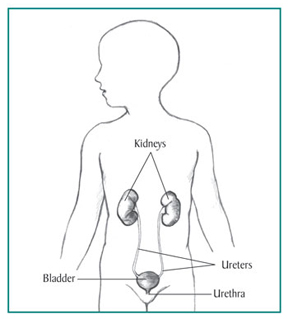
The kidneys are two bean-shaped organs, each about the size of a fist. They are located just below the rib cage, one on each side of the spine. Every day, the kidneys filter about 120 to 150 quarts of blood to produce about 1 to 2 quarts of urine, composed of wastes and extra fluid. Children produce less urine than adults and the amount produced depends on their age. The urine flows from the kidneys to the bladder through tubes called ureters. The bladder stores urine. When the bladder empties, urine flows out of the body through a tube called the urethra, located at the bottom of the bladder.

Urinary tract inside the outline of the upper half of a human body.
The urine flows from the kidneys to the bladder through tubes called ureters.

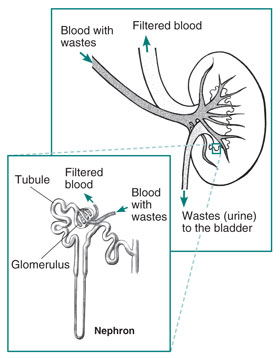
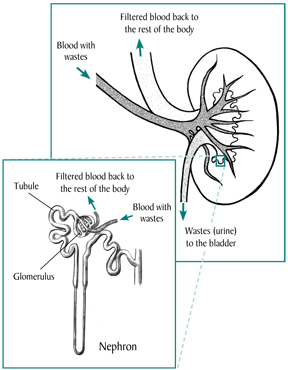
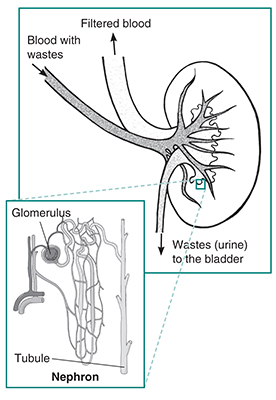
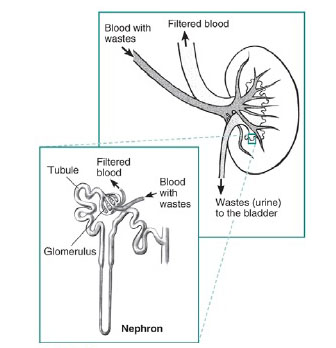
Kidneys work at the microscopic level. The kidney is not one large filter. Each kidney is made up of about a million filtering units called nephrons. Each nephron filters a small amount of blood. The nephron includes a filter, called the glomerulus, and a tubule. The nephrons work through a two-step process. The glomerulus lets fluid and waste products pass through it; however, it prevents blood cells and large molecules, mostly proteins, from passing. The filtered fluid then passes through the tubule, which sends needed minerals back to the bloodstream and removes wastes.

Drawing of the kidney. Blood with wastes enters the kidney, filtered blood exits, and wastes go to the bladder. Inset shows a nephron with glomerulus and tubule.
Each kidney is made up of about a million filtering units called nephrons. Each nephron filters a small amount of blood. The nephron includes a filter, called the glomerulus, and a tubule.

What causes childhood nephrotic syndrome?

While idiopathic, or unknown, diseases are the most common cause of primary childhood nephrotic syndrome, researchers have linked certain diseases and some specific genetic changes that damage the kidneys with primary childhood nephrotic syndrome.

The cause of secondary childhood nephrotic syndrome is an underlying disease or infection. Called a primary illness, it’s this underlying disease or infection that causes changes in the kidney function that can result in secondary childhood nephrotic syndrome.

Congenital diseases—diseases that are present at birth—can also cause childhood nephrotic syndrome.

Primary Childhood Nephrotic Syndrome

The following diseases are different types of idiopathic childhood nephrotic syndrome:

  • Minimal change disease involves damage to the glomeruli that can be seen only with an electron microscope. This type of microscope shows tiny details better than any other microscope. Scientists do not know the exact cause of minimal change disease.
    Minimal change disease is the most common cause of idiopathic childhood nephrotic syndrome.1
  • Focal segmental glomerulosclerosis is scarring in scattered regions of the kidney:
    • “Focal” means that only some of the glomeruli become scarred.
    • “Segmental” means damage affects only part of an individual glomerulus.
  • Membranoproliferative glomerulonephritis is a group of disorders involving deposits of antibodies that build up in the glomeruli, causing thickening and damage. Antibodies are proteins made by the immune system to protect the body from foreign substances such as bacteria or viruses.

Secondary Childhood Nephrotic Syndrome

Some common diseases that can cause secondary childhood nephrotic syndrome include

  • diabetes, a condition that occurs when the body cannot use glucose—a type of sugar—normally
  • Henoch-Schönlein purpura, a disease that causes small blood vessels in the body to become inflamed and leak
  • hepatitis, inflammation of the liver caused by a virus
  • human immunodeficiency virus (HIV), a virus that alters the immune system
  • lupus, an autoimmune disease that occurs when the body attacks its own immune system
  • malaria, a disease of the blood that is spread by mosquitos
  • streptococcal infection, an infection that results when the bacteria that causes strep throat or a skin infection is left untreated

Other causes of secondary childhood nephrotic syndrome can include certain medications, such as aspirin, ibuprofen, or other nonsteroidal anti-inflammatory drugs, and exposure to chemicals, such as mercury and lithium.

Congenital Diseases and Childhood Nephrotic Syndrome

Congenital nephrotic syndrome is rare and affects infants in the first 3 months of life.2 This type of nephrotic syndrome, sometimes called infantile nephrotic syndrome, can be caused by

  • inherited genetic defects, which are problems passed from parent to child through genes
  • infections at the time of birth

More information about underlying diseases or infections that cause changes in kidney function is provided in the NIDDK health topic, Glomerular Diseases.

Which children are more likely to develop childhood nephrotic syndrome?

In cases of primary childhood nephrotic syndrome for which the cause is idiopathic, researchers are unable to pinpoint which children are more likely to develop the syndrome. However, as researchers continue to study the link between genetics and childhood nephrotic syndrome, it may be possible to predict the syndrome for some children.

Children are more likely to develop secondary childhood nephrotic syndrome if they

  • have diseases that can damage their kidneys
  • take certain medications
  • develop certain types of infections

What are the signs and symptoms of childhood nephrotic syndrome?

The signs and symptoms of childhood nephrotic syndrome may include

  • edema—swelling, most often in the legs, feet, or ankles and less often in the hands or face
  • albuminuria—when a child’s urine has high levels of albumin
  • hypoalbuminemia—when a child’s blood has low levels of albumin
  • hyperlipidemia—when a child’s blood cholesterol and fat levels are higher than normal

In addition, some children with nephrotic syndrome may have

  • blood in their urine
  • symptoms of infection, such as fever, lethargy, irritability, or abdominal pain
  • loss of appetite
  • diarrhea
  • high blood pressure

What are the complications of childhood nephrotic syndrome?

The complications of childhood nephrotic syndrome may include

  • infection. When the kidneys are damaged, a child is more likely to develop infections because the body loses proteins that normally protect against infection. Health care providers will prescribe medications to treat infections. Children with childhood nephrotic syndrome should receive the pneumococcal vaccine and yearly flu shots to prevent those infections. Children should also receive age-appropriate vaccinations, although a health care provider may delay certain live vaccines while a child is taking certain medications.
  • blood clots. Blood clots can block the flow of blood and oxygen through a blood vessel anywhere in the body. A child is more likely to develop clots when he or she loses proteins through the urine. The health care provider will treat blood clots with blood-thinning medications.
  • high blood cholesterol. When albumin leaks into the urine, the albumin levels in the blood drop. The liver makes more albumin to make up for the low levels in the blood. At the same time, the liver makes more cholesterol. Sometimes children may need treatment with medications to lower blood cholesterol levels.

How is childhood nephrotic syndrome diagnosed?

A health care provider diagnoses childhood nephrotic syndrome with

  • a medical and family history
  • a physical exam
  • urine tests
  • a blood test
  • ultrasound of the kidney
  • kidney biopsy

Medical and Family History

Taking a medical and family history is one of the first things a health care provider may do to help diagnose childhood nephrotic syndrome.

Physical Exam

A physical exam may help diagnose childhood nephrotic syndrome. During a physical exam, a health care provider most often

  • examines a child’s body
  • taps on specific areas of the child’s body

Urine Tests

A health care provider may order the following urine tests to help determine if a child has kidney damage from childhood nephrotic syndrome.

Dipstick test for albumin. A dipstick test performed on a urine sample can detect the presence of albumin in the urine, which could mean kidney damage. The child or a caretaker collects a urine sample in a special container. For the test, a nurse or technician places a strip of chemically treated paper, called a dipstick, into the child’s urine sample. Patches on the dipstick change color when albumin is present in urine.

Urine albumin-to-creatinine ratio. A health care provider uses this measurement to estimate the amount of albumin passed into the urine over a 24-hour period. The child provides a urine sample during an appointment with the health care provider. Creatinine is a waste product filtered in the kidneys and passed in the urine. A high urine albumin-to-creatinine ratio indicates that the kidneys are leaking large amounts of albumin into the urine.

Blood Test

A blood test involves drawing blood at a health care provider’s office or a commercial facility and sending the sample to a lab for analysis. The lab tests the sample to estimate how much blood the kidneys filter each minute, called the estimated glomerular filtration rate, or eGFR. The test results help the health care provider determine the amount of kidney damage. Health care providers may also order other blood tests to help determine the underlying disease that may be causing childhood nephrotic syndrome.

Ultrasound of the Kidney

Ultrasound uses a device, called a transducer, that bounces safe, painless sound waves off organs to create an image of their structure. A specially trained technician performs the procedure in a health care provider’s office, an outpatient center, or a hospital. A radiologist—a doctor who specializes in medical imaging—interprets the images to see if the kidneys look normal; a child does not need anesthesia.

Kidney Biopsy

Biopsy is a procedure that involves taking a small piece of kidney tissue for examination with a microscope. A health care provider performs the biopsy in an outpatient center or a hospital. The health care provider will give the child light sedation and local anesthetic; however, in some cases, the child will require general anesthesia. A pathologist—a doctor who specializes in diagnosing diseases—examines the tissue in a lab. The test can help diagnose childhood nephrotic syndrome.

When the health care provider suspects a child has minimal change disease, he or she often starts treatment with medications without performing a biopsy. If the medication is effective, the child does not need a biopsy. In most cases, a health care provider does not perform a biopsy on children younger than age 12 unless he or she thinks that another disease is the cause.

How is childhood nephrotic syndrome treated?

Health care providers will decide how to treat childhood nephrotic syndrome based on the type:

  • primary childhood nephrotic syndrome: medications
  • secondary childhood nephrotic syndrome: treat the underlying illness or disease
  • congenital nephrotic syndrome: medications, surgery to remove one or both kidneys, and transplantation

Primary Childhood Nephrotic Syndrome

Health care providers treat idiopathic childhood nephrotic syndrome with several types of medications that control the immune system, remove extra fluid, and lower blood pressure.

  • Control the immune system. Corticosteroids are a group of medications that reduce the activity of the immune system, decrease the amount of albumin lost in the urine, and decrease swelling. Health care providers commonly use prednisone or a related corticosteroid to treat idiopathic childhood nephrotic syndrome. About 90 percent of children achieve remission with daily corticosteroids for 6 weeks and then a slightly smaller dose every other day for 6 weeks.2 Remission is a period when the child is symptom-free.

    Many children relapse after initial therapy, and health care providers treat them with a shorter course of corticosteroids until the disease goes into remission again. Children may have multiple relapses; however, they most often recover without long-term kidney damage.

    When a child has frequent relapses or does not respond to treatment, a health care provider may prescribe other medications that reduce the activity of the immune system. These medications prevent the body from making antibodies that can damage kidney tissues. They include
    • cyclophosphamide
    • mycophenolate (CellCept, Myfortic)
    • cyclosporine
    • tacrolimus (Hecoria, Prograf)
    A health care provider may use these other immune system medications with corticosteroids or in place of corticosteroids.
  • Remove extra fluid. A health care provider may prescribe a diuretic, a medication that helps the kidneys remove extra fluid from the blood. Removing the extra fluid can often help to lower blood pressure.
  • Lower blood pressure. Some children with childhood nephrotic syndrome develop high blood pressure and may need to take additional medications to lower their blood pressure. Two types of blood pressure-lowering medications, angiotensin-converting enzyme inhibitors and angiotensin receptor blockers, have the additional benefit of slowing the progression of kidney disease. Many children with nephrotic syndrome require two or more medications to control their blood pressure.

Secondary Childhood Nephrotic Syndrome

Health care providers treat secondary childhood nephrotic syndrome by treating the underlying cause of the primary illness. For example, a health care provider may treat children by

  • prescribing antibiotics for an infection
  • adjusting medications to treat lupus, HIV, or diabetes
  • changing or stopping medications that are known to cause secondary childhood nephrotic syndrome

While treating the underlying cause, the health care provider will also treat the child to improve or restore kidney function with the same medications used to treat primary childhood nephrotic syndrome.

Caretakers should make sure that children take all prescribed medications and follow the treatment plan recommended by their health care provider.

More information about specific treatments for secondary childhood nephrotic syndrome is provided in the NIDDK health topic, Glomerular Diseases.

Congenital Nephrotic Syndrome

Researchers have found that medications are not effective in treating congenital nephrotic syndrome, and that most children will need a kidney transplant by the time they are 2 or 3 years old. A kidney transplant is surgery to place a healthy kidney from someone who has just died or a living donor, most often a family member, into a person’s body to take over the job of the failing kidney. To keep the child healthy until the transplant, the health care provider may recommend the following:

  • albumin injections to make up for the albumin lost in urine
  • diuretics to help remove extra fluid that causes swelling
  • antibiotics to treat the first signs of infection
  • growth hormones to promote growth and help bones mature
  • removal of one or both kidneys to decrease the loss of albumin in the urine
  • dialysis to artificially filter wastes from the blood if the kidneys fail

More information is provided in the NIDDK health topic, Treatment Methods for Kidney Failure in Children.

How can childhood nephrotic syndrome be prevented?

Researchers have not found a way to prevent childhood nephrotic syndrome when the cause is idiopathic or congenital.

Eating, Diet, and Nutrition

Children who have nephrotic syndrome may need to make changes to their diet, such as

  • limiting the amount of sodium, often from salt, they take in each day
  • reducing the amount of liquids they drink each day
  • eating a diet low in saturated fat and cholesterol to help control elevated cholesterol levels

Parents or caretakers should talk with the child’s health care provider before making any changes to the child’s diet.

More information is provided in the NIDDK health topic, Nutrition for Chronic Kidney Disease in Children.

Points to Remember

  • Childhood nephrotic syndrome is not a disease in itself; rather, it is a group of symptoms that
    • indicate kidney damage—particularly damage to the glomeruli, the tiny units within the kidney where blood is filtered
    • result in the release of too much protein from the body into the urine
  • The two types of childhood nephrotic syndrome are
    • primary—the most common type of childhood nephrotic syndrome, which begins in the kidneys and affects only the kidneys
    • secondary—the syndrome is caused by other diseases
  • The signs and symptoms of childhood nephrotic syndrome may include
    • edema—swelling, most often in the legs, feet, or ankles and less often in the hands or face
    • albuminuria—when a child’s urine has high levels of albumin
    • hypoalbuminemia—when a child’s blood has low levels of albumin
    • hyperlipidemia—when a child’s blood cholesterol and fat levels are higher than normal
  • A health care provider may order urine tests to help determine if a child has kidney damage from childhood nephrotic syndrome.
  • Health care providers will decide how to treat childhood nephrotic syndrome based on the type:
    • primary childhood nephrotic syndrome: medications
    • secondary childhood nephrotic syndrome: treat the underlying illness or disease
    • congenital nephrotic syndrome: medications, surgery to remove one or both kidneys, or transplantation

Resources

National Kidney Foundation
Children with Chronic Kidney Disease: Tips for Parents
www.kidney.org

Family Focus newsletter
www.kidney.org

Employers’ Guide
www.kidney.org

Nemours KidsHealth Website
When Your Child Has a Chronic Kidney Disease
www.kidshealth.org

What’s the Deal With Dialysis?
www.kidshealth.org

Nephkids
Cyber-support group
www.cybernephrology.ualberta.ca

United Network for Organ Sharing
Organ Transplants: What Every Kid Needs to Know
www.unos.org (PDF, 1.67 MB)

U.S. Department of Health and Human Services, Centers for Medicare & Medicaid Services
Medicare Coverage of Kidney Dialysis & Kidney Transplant Services
www.medicare.gov (PDF, 1,080 KB)

U.S. Social Security Administration
Benefits For Children With Disabilities
www.ssa.gov (PDF, 413 KB)

References

Clinical Trials

The National Institute of Diabetes and Digestive and Kidney Diseases (NIDDK) and other components of the National Institutes of Health (NIH) conduct and support research into many diseases and conditions.

What are clinical trials, and are they right for you?

Clinical trials are part of clinical research and at the heart of all medical advances. Clinical trials look at new ways to prevent, detect, or treat disease. Researchers also use clinical trials to look at other aspects of care, such as improving the quality of life for people with chronic illnesses. Find out if clinical trials are right for you.

What clinical trials are open?

Clinical trials that are currently open and are recruiting can be viewed at www.ClinicalTrials.gov.

This content is provided as a service of the National Institute of Diabetes and Digestive and Kidney Diseases (NIDDK), part of the National Institutes of Health. The NIDDK translates and disseminates research findings through its clearinghouses and education programs to increase knowledge and understanding about health and disease among patients, health professionals, and the public. Content produced by the NIDDK is carefully reviewed by NIDDK scientists and other experts.

The NIDDK would like to thank:
Barbara Fivush, M.D., and Kathy Jabs, M.D., of the American Society of Pediatric Nephrology (ASPN); Tej Mattoo, M.D.; William Primack, M.D.; Joseph Flynn, M.D.; Ira Davis, M.D.; Ann Guillott, M.D.; Steve Alexander, M.D.; Deborah Kees-Folts, M.D.; Alicia Neu, M.D.; Steve Wassner, M.D.; John Brandt, M.D.; and Manju Chandra, M.D., all members of the ASPN’s Clinical Affairs Committee; Frederick Kaskel, M.D., Ph.D., and Sharon Andreoli, M.D., ASPN

Tests & Diagnosis

How can I tell if I have kidney disease?

Early kidney disease usually doesn’t have any symptoms. Testing is the only way to know how well your kidneys are working. Get checked for kidney disease if you have

If you have diabetes, get checked every year. If you have high blood pressure, heart disease, or a family history of kidney failure, talk with your health care provider about how often you should get tested. The sooner you know you have kidney disease, the sooner you can get treatment to help protect your kidneys.

A photo of a nurse drawing blood from an older man at a doctor’s office.
Get tested to find out if you have kidney disease. Early treatment may help protect your kidneys.

What tests do doctors use to diagnose and monitor kidney disease?

To check for kidney disease, health care providers use

  • a blood test that checks how well your kidneys are filtering your blood, called GFR. GFR stands for glomerular filtration rate.
  • a urine test to check for albumin. Albumin is a protein that can pass into the urine when the kidneys are damaged.

If you have kidney disease, your health care provider will use the same two tests to help monitor your kidney disease and make sure your treatment plan is working.

Watch a video on how to check for kidney disease.

Blood test for GFR

Your health care provider will use a blood test to check your kidney function. The results of the test mean the following:

  • a GFR of 60 or more is in the normal range. Ask your health care provider when your GFR should be checked again.
  • a GFR of less than 60 may mean you have kidney disease. Talk with your health care provider about how to keep your kidney health at this level.
  • a GFR of 15 or less is called kidney failure. Most people below this level need dialysis or a kidney transplant. Talk with your health care provider about your treatment options.
A diagram of a GFR dial showing how a GFR that is 60 or higher is normal; a GFR below 60 may mean kidney disease; and a GFR of 15 or lower may mean kidney failure.
GFR results show whether your kidneys are filtering at a normal level.

You can’t raise your GFR, but you can try to keep it from going lower. Learn more about what you can do to keep your kidneys healthy.

Creatinine. Creatinine is a waste product from the normal breakdown of muscles in your body. Your kidneys remove creatinine from your blood. Providers use the amount of creatinine in your blood to estimate your GFR. As kidney disease gets worse, the level of creatinine goes up.

Urine Test for Albumin

If you are at risk for kidney disease, your provider may check your urine for albumin.

Albumin is a protein found in your blood. A healthy kidney doesn’t let albumin pass into the urine. A damaged kidney lets some albumin pass into the urine. The less albumin in your urine, the better. Having albumin in the urine is called albuminuria.

A diagram showing a healthy kidney with albumin only found in blood, and a damaged kidney that has albumin in both blood and urine.
A healthy kidney doesn’t let albumin pass into the urine. A damaged kidney lets some albumin pass into the urine.

A health care provider can check for albumin in your urine in two ways:

Dipstick test for albumin. A provider uses a urine sample to look for albumin in your urine. You collect the urine sample in a container in a health care provider’s office or lab. For the test, a provider places a strip of chemically treated paper, called a dipstick, into the urine. The dipstick changes color if albumin is present in the urine.

Urine albumin-to-creatinine ratio (UACR). This test measures and compares the amount of albumin with the amount of creatinine in your urine sample. Providers use your UACR to estimate how much albumin would pass into your urine over 24 hours. A urine albumin result of

  • 30 mg/g or less is normal
  • more than 30 mg/g may be a sign of kidney disease

If you have albumin in your urine, your provider may want you to repeat the urine test one or two more times to confirm the results. Talk with your provider about what your specific numbers mean for you.

If you have kidney disease, measuring the albumin in your urine helps your provider know which treatment is best for you. A urine albumin level that stays the same or goes down may mean that treatments are working.

How do I know if my kidney disease is getting worse?

You can keep track of your test results (PDF, 262 KB)  over time. You can tell that your treatments are working if your

  • GFR stays the same
  • urine albumin stays the same or goes down

Your health care provider will work with you to manage your kidney disease.

This content is provided as a service of the National Institute of Diabetes and Digestive and Kidney Diseases (NIDDK), part of the National Institutes of Health. The NIDDK translates and disseminates research findings through its clearinghouses and education programs to increase knowledge and understanding about health and disease among patients, health professionals, and the public. Content produced by the NIDDK is carefully reviewed by NIDDK scientists and other experts.

Diabetes Inspidus

On this page:

What is diabetes insipidus?

Diabetes insipidus is a rare disorder that occurs when a person's kidneys pass an abnormally large volume of urine that is insipid—dilute and odorless. In most people, the kidneys pass about 1 to 2 quarts of urine a day. In people with diabetes insipidus, the kidneys can pass 3 to 20 quarts of urine a day. As a result, a person with diabetes insipidus may feel the need to drink large amounts of liquids.

Diabetes insipidus and diabetes mellitus—which includes both type 1 and type 2 diabetes—are unrelated, although both conditions cause frequent urination and constant thirst. Diabetes mellitus causes high blood glucose, or blood sugar, resulting from the body's inability to use blood glucose for energy. People with diabetes insipidus have normal blood glucose levels; however, their kidneys cannot balance fluid in the body.

What are the kidneys and what do they do?

The kidneys are two bean-shaped organs, each about the size of a fist. They are located just below the rib cage, one on each side of the spine. Every day, the kidneys normally filter about 120 to 150 quarts of blood to produce about 1 to 2 quarts of urine, composed of wastes and extra fluid. The urine flows from the kidneys to the bladder through tubes called ureters. The bladder stores urine. When the bladder empties, urine flows out of the body through a tube called the urethra, located at the bottom of the bladder.

Frontal body diagram with kidneys and bladder
Every day, the kidneys normally filter about 120 to 150 quarts of blood to produce about 1 to 2 quarts of urine.

How is fluid regulated in the body?

A person's body regulates fluid by balancing liquid intake and removing extra fluid. Thirst usually controls a person’s rate of liquid intake, while urination removes most fluid, although people also lose fluid through sweating, breathing, or diarrhea. The hormone vasopressin, also called antidiuretic hormone, controls the fluid removal rate through urination. The hypothalamus, a small gland located at the base of the brain, produces vasopressin. The nearby pituitary gland stores the vasopressin and releases it into the bloodstream when the body has a low fluid level. Vasopressin signals the kidneys to absorb less fluid from the bloodstream, resulting in less urine. When the body has extra fluid, the pituitary gland releases smaller amounts of vasopressin, and sometimes none, so the kidneys remove more fluid from the bloodstream and produce more urine.

What are the types of diabetes insipidus?

The types of diabetes insipidus include

  • central
  • nephrogenic
  • dipsogenic
  • gestational

Each type of diabetes insipidus has a different cause.

Central Diabetes Insipidus

Central diabetes insipidus happens when damage to a person's hypothalamus or pituitary gland causes disruptions in the normal production, storage, and release of vasopressin. The disruption of vasopressin causes the kidneys to remove too much fluid from the body, leading to an increase in urination. Damage to the hypothalamus or pituitary gland can result from the following:

  • surgery
  • infection
  • inflammation
  • a tumor
  • head injury

Central diabetes insipidus can also result from an inherited defect in the gene that produces vasopressin, although this cause is rare. In some cases, the cause is unknown.

Nephrogenic Diabetes Insipidus

Nephrogenic diabetes insipidus occurs when the kidneys do not respond normally to vasopressin and continue to remove too much fluid from a person's bloodstream. Nephrogenic diabetes insipidus can result from inherited gene changes, or mutations, that prevent the kidneys from responding to vasopressin. Other causes of nephrogenic diabetes insipidus include

  • chronic kidney disease
  • certain medications, particularly lithium
  • low potassium levels in the blood
  • high calcium levels in the blood
  • blockage of the urinary tract

The causes of nephrogenic diabetes insipidus can also be unknown.

Dipsogenic Diabetes Insipidus

A defect in the thirst mechanism, located in a person's hypothalamus, causes dipsogenic diabetes insipidus. This defect results in an abnormal increase in thirst and liquid intake that suppresses vasopressin secretion and increases urine output. The same events and conditions that damage the hypothalamus or pituitary—surgery, infection, inflammation, a tumor, head injury—can also damage the thirst mechanism. Certain medications or mental health problems may predispose a person to dipsogenic diabetes insipidus.

Gestational Diabetes Insipidus

Gestational diabetes insipidus occurs only during pregnancy. In some cases, an enzyme made by the placenta—a temporary organ joining mother and baby—breaks down the mother's vasopressin. In other cases, pregnant women produce more prostaglandin, a hormone-like chemical that reduces kidney sensitivity to vasopressin. Most pregnant women who develop gestational diabetes insipidus have a mild case that does not cause noticeable symptoms. Gestational diabetes insipidus usually goes away after the mother delivers the baby; however, it may return if the mother becomes pregnant again.

What are the complications of diabetes insipidus?

The main complication of diabetes insipidus is dehydration if fluid loss is greater than liquid intake. Signs of dehydration include

  • thirst
  • dry skin
  • fatigue
  • sluggishness
  • dizziness
  • confusion
  • nausea

Severe dehydration can lead to seizures, permanent brain damage, and even death.

How is diabetes insipidus diagnosed?

A health care provider can diagnose a person with diabetes insipidus based on the following:

  • medical and family history
  • physical exam
  • urinalysis
  • blood tests
  • fluid deprivation test
  • magnetic resonance imaging (MRI)

Medical and Family History

Taking a medical and family history can help a health care provider diagnose diabetes insipidus. A health care provider will ask the patient to review his or her symptoms and ask whether the patient's family has a history of diabetes insipidus or its symptoms.

Physical Exam

A physical exam can help diagnose diabetes insipidus. During a physical exam, a health care provider usually examines the patient's skin and appearance, checking for signs of dehydration.

Urinalysis

Urinalysis tests a urine sample. A patient collects the urine sample in a special container at home, in a health care provider's office, or at a commercial facility. A health care provider tests the sample in the same location or sends it to a lab for analysis. The test can show whether the urine is dilute or concentrated. The test can also show the presence of glucose, which can distinguish between diabetes insipidus and diabetes mellitus. The health care provider may also have the patient collect urine in a special container over a 24-hour period to measure the total amount of urine produced by the kidneys.

Blood Tests

A blood test involves drawing a patient's blood at a health care provider’s office or a commercial facility and sending the sample to a lab for analysis. The blood test measures sodium levels, which can help diagnose diabetes insipidus and in some cases determine the type.

Fluid Deprivation Test

A fluid deprivation test measures changes in a patient’s body weight and urine concentration after restricting liquid intake. A health care provider can perform two types of fluid deprivation tests:

  • A short form of the deprivation test. A health care provider instructs the patient to stop drinking all liquids for a specific period of time, usually during dinner. The next morning, the patient will collect a urine sample at home. The patient then returns the urine sample to his or her health care provider or takes it to a lab where a technician measures the concentration of the urine sample.
  • A formal fluid deprivation test. A health care provider performs this test in a hospital to continuously monitor the patient for signs of dehydration. Patients do not need anesthesia. A health care provider weighs the patient and analyzes a urine sample. The health care provider repeats the tests and measures the patient's blood pressure every 1 to 2 hours until one of the following happens:
    • The patient's blood pressure drops too low or the patient has a rapid heartbeat when standing.
    • The patient loses 5 percent or more of his or her initial body weight.
    • Urine concentration increases only slightly in two to three consecutive measurements.
    At the end of the test, a health care provider will compare the patient's blood sodium, vasopressin levels, and urine concentration to determine whether the patient has diabetes insipidus. Sometimes, the health care provider may administer medications during the test to see if they increase a patient's urine concentration. In other cases, the health care provider may give the patient a concentrated sodium solution intravenously at the end of the test to increase the patient's blood sodium level and determine if he or she has diabetes insipidus.

Magnetic Resonance Imaging

Magnetic resonance imaging (MRI) is a test that takes pictures of the body's internal organs and soft tissues without using x-rays. A specially trained technician performs the procedure in an outpatient center or a hospital, and a radiologist—a doctor who specializes in medical imaging—interprets the images. A patient does not need anesthesia, although people with a fear of confined spaces may receive light sedation. An MRI may include an injection of a special dye, called contrast medium. With most MRI machines, the person lies on a table that slides into a tunnel-shaped device that may be open ended or closed at one end. Some MRI machines allow the patient to lie in a more open space. MRIs cannot diagnose diabetes insipidus. Instead, an MRI can show if the patient has problems with his or her hypothalamus or pituitary gland or help the health care provider determine if diabetes insipidus is the possible cause of the patient's symptoms.

How is diabetes insipidus treated?

The primary treatment for diabetes insipidus involves drinking enough liquid to prevent dehydration. A health care provider may refer a person with diabetes insipidus to a nephrologist—a doctor who specializes in treating kidney problems—or to an endocrinologist—a doctor who specializes in treating disorders of the hormone-producing glands. Treatment for frequent urination or constant thirst depends on the patient’s type of diabetes insipidus:

  • Central diabetes insipidus. A synthetic, or man-made, hormone called desmopressin treats central diabetes insipidus. The medication comes as an injection, a nasal spray, or a pill. The medication works by replacing the vasopressin that a patient’s body normally produces. This treatment helps a patient manage symptoms of central diabetes insipidus; however, it does not cure the disease.
  • Nephrogenic diabetes insipidus. In some cases, nephrogenic diabetes insipidus goes away after treatment of the cause. For example, switching medications or taking steps to balance the amount of calcium or potassium in the patient’s body may resolve the problem. Medications for nephrogenic diabetes insipidus include diuretics, either alone or combined with aspirin or ibuprofen. Health care providers commonly prescribe diuretics to help patients’ kidneys remove fluid from the body. Paradoxically, in people with nephrogenic diabetes insipidus, a class of diuretics called thiazides reduces urine production and helps patients’ kidneys concentrate urine. Aspirin or ibuprofen also helps reduce urine volume.
  • Dipsogenic diabetes insipidus. Researchers have not yet found an effective treatment for dipsogenic diabetes insipidus. People can try sucking on ice chips or sour candies to moisten their mouths and increase saliva flow, which may reduce the desire to drink. For a person who wakes multiple times at night to urinate because of dipsogenic diabetes insipidus, taking a small dose of desmopressin at bedtime may help. Initially, the health care provider will monitor the patient’s blood sodium levels to prevent hyponatremia, or low sodium levels in the blood.
  • Gestational diabetes insipidus. A health care provider can prescribe desmopressin for women with gestational diabetes insipidus. An expecting mother’s placenta does not destroy desmopressin as it does vasopressin. Most women will not need treatment after delivery.

Most people with diabetes insipidus can prevent serious problems and live a normal life if they follow the health care provider’s recommendations and keep their symptoms under control.

Eating, Diet, and Nutrition

Researchers have not found that eating, diet, and nutrition play a role in causing or preventing diabetes insipidus.

Points to Remember

  • Diabetes insipidus is a rare disorder that occurs when a person’s kidneys pass an abnormally large volume of urine that is insipid—dilute and odorless.
  • A person’s body regulates fluid by balancing liquid intake and removing extra fluid. Thirst usually controls a person’s rate of liquid intake, while urination removes most fluid, although people also lose fluid through sweating, breathing, or diarrhea. The hormone vasopressin, also called antidiuretic hormone, controls the fluid removal rate through urination.
  • The types of diabetes insipidus include central, nephrogenic, dipsogenic, and gestational. Each type of diabetes insipidus has a different cause.
  • The main complication of diabetes insipidus is dehydration if fluid loss is greater than liquid intake.
  • A health care provider can diagnose a person with diabetes insipidus based on a medical and family history, a physical exam, urinalysis, blood tests, a fluid deprivation test, and magnetic resonance imaging (MRI).
  • The primary treatment for diabetes insipidus involves drinking enough liquid to prevent dehydration.

Clinical Trials

The National Institute of Diabetes and Digestive and Kidney Diseases (NIDDK) and other components of the National Institutes of Health (NIH) conduct and support research into many diseases and conditions.

What are clinical trials, and are they right for you?

Clinical trials are part of clinical research and at the heart of all medical advances. Clinical trials look at new ways to prevent, detect, or treat disease. Researchers also use clinical trials to look at other aspects of care, such as improving the quality of life for people with chronic illnesses. Find out if clinical trials are right for you.

What clinical trials are open?

Clinical trials that are currently open and are recruiting can be viewed at www.ClinicalTrials.gov.

This content is provided as a service of the National Institute of Diabetes and Digestive and Kidney Diseases (NIDDK), part of the National Institutes of Health. The NIDDK translates and disseminates research findings through its clearinghouses and education programs to increase knowledge and understanding about health and disease among patients, health professionals, and the public. Content produced by the NIDDK is carefully reviewed by NIDDK scientists and other experts.

The NIDDK would like to thank:
Bessie Young, M.D., M.P.H., University of Washington; Dr. Joseph Verbalis, M.D, Georgetown University

Eating Right

You may need to change what you eat to manage your chronic kidney disease (CKD). Work with a registered dietitian to develop a meal plan that includes foods that you enjoy eating while maintaining your kidney health.

The steps below will help you eat right as you manage your kidney disease. The first three steps (1-3) are important for all people with kidney disease. The last two steps (4-5) may become important as your kidney function goes down.

The first steps to eating right

Step 1: Choose and prepare foods with less salt and sodium

Why? To help control your blood pressure. Your diet should contain less than 2,300 milligrams of sodium each day.

  • Buy fresh food often. Sodium (a part of salt) is added to many prepared or packaged foods you buy at the supermarket or at restaurants.
  • Cook foods from scratch instead of eating prepared foods, “fast” foods, frozen dinners, and canned foods that are higher in sodium. When you prepare your own food, you control what goes into it.
  • Use spices, herbs, and sodium-free seasonings in place of salt.
  • Check for sodium on the Nutrition Facts label of food packages. A Daily Value of 20 percent or more means the food is high in sodium.
  • Try lower-sodium versions of frozen dinners and other convenience foods.
  • Rinse canned vegetables, beans, meats, and fish with water before eating.

Look for food labels with words like sodium free or salt free; or low, reduced, or no salt or sodium; or unsalted or lightly salted.

An example of a Nutrition Facts food label that shows a Percent Daily Value of 5 percent of sodium per serving.
Look for sodium on the food label. A food label showing a Percent Daily Value of 5% or less is low sodium. Also look for the amount of saturated and trans fats listed on the label.

Step 2: Eat the right amount and the right types of protein

Why? To help protect your kidneys. When your body uses protein, it produces waste. Your kidneys remove this waste. Eating more protein than you need may make your kidneys work harder.

  • Eat small portions of protein foods.
  • Protein is found in foods from plants and animals. Most people eat both types of protein. Talk to your dietitian about how to choose the right combination of protein foods for you.

Animal-protein foods:

  • Chicken
  • Fish
  • Meat
  • Eggs
  • Dairy

A cooked portion of chicken, fish, or meat is about 2 to 3 ounces or about the size of a deck of cards. A portion of dairy foods is ½ cup of milk or yogurt, or one slice of cheese.

Plant-protein foods:

  • Beans
  • Nuts
  • Grains

A portion of cooked beans is about ½ cup, and a portion of nuts is ¼ cup. A portion of bread is a single slice, and a portion of cooked rice or cooked noodles is ½ cup.

Step 3: Choose foods that are healthy for your heart

Why? To help keep fat from building up in your blood vessels, heart, and kidneys. To help keep fat from building up in your blood vessels, heart, and kidneys.

  • Grill, broil, bake, roast, or stir-fry foods, instead of deep frying.
  • Cook with nonstick cooking spray or a small amount of olive oil instead of butter.
  • Trim fat from meat and remove skin from poultry before eating.
  • Try to limit saturated and trans fats. Read the food label.

Heart-healthy foods:

  • Lean cuts of meat, such as loin or round
  • Poultry without the skin
  • Fish
  • Beans
  • Vegetables
  • Fruits
  • Low-fat or fat-free milk, yogurt, and cheese

Learn more about heart-healthy eating.

A photo of an older couple making a heart-healthy meal.
Choose heart-healthy foods to help protect your blood vessels, heart, and kidneys.

Limit alcohol
Drink alcohol only in moderation: no more than one drink per day if you are a woman, and no more than two if you are a man. Drinking too much alcohol can damage the liver, heart, and brain and cause serious health problems. Ask your health care provider how much alcohol you can drink safely.

The next steps to eating right

As your kidney function goes down, you may need to eat foods with less phosphorus and potassium. Your health care provider will use lab tests to check phosphorus and potassium levels in your blood, and you can work with your dietitian to adjust your meal plan. More information is provided in the NIDDK health topic, Nutrition for Advanced Chronic Kidney Disease.

Step 4: Choose foods and drinks with less phosphorus

Why? To help protect your bones and blood vessels. When you have CKD, phosphorus can build up in your blood. Too much phosphorus in your blood pulls calcium from your bones, making your bones thin, weak, and more likely to break. High levels of phosphorus in your blood can also cause itchy skin, and bone and joint pain.

  • Many packaged foods have added phosphorus. Look for phosphorus—or for words with “PHOS”—on ingredient labels.
  • Deli meats and some fresh meat and poultry can have added phosphorus. Ask the butcher to help you pick fresh meats without added phosphorus.

Your health care provider may talk to you about taking a phosphate binder with meals to lower the amount of phosphorus in your blood. A phosphate binder is a medicine that acts like a sponge to soak up, or bind, phosphorus while it is in the stomach. Because it is bound, the phosphorus does not get into your blood. Instead, your body removes the phosphorus through your stool.

Step 5: Choose foods with the right amount of potassium

Why? To help your nerves and muscles work the right way. Problems can occur when blood potassium levels are too high or too low. Damaged kidneys allow potassium to build up in your blood, which can cause serious heart problems. Your food and drink choices can help you lower your potassium level, if needed.

  • Salt substitutes can be very high in potassium. Read the ingredient label. Check with your provider about using salt substitutes.
  • Drain canned fruits and vegetables before eating.
Foods Lower in Potassium
  • Apples, peaches
  • Carrots, green beans
  • White bread and pasta
  • White rice
  • Rice milk (not enriched)
  • Cooked rice and wheat cereals, grits
  • Apple, grape, or cranberry juice
Foods Higher in Potassium
  • Oranges, bananas, and orange juice
  • Potatoes, tomatoes
  • Brown and wild rice
  • Bran cereals
  • Dairy foods
  • Whole-wheat bread and pasta
  • Beans and nuts
Foods Lower in Phosphorus
  • Fresh fruits and vegetables
  • Breads, pasta, rice
  • Rice milk (not enriched)
  • Corn and rice cereals
  • Light-colored sodas/pop, such as lemon-lime or homemade iced tea
Foods Higher in Phosphorus
  • Meat, poultry, fish
  • Bran cereals and oatmeal
  • Dairy foods
  • Beans, lentils, nuts
  • Dark-colored sodas/pop, fruit punch, some bottled or canned iced teas that have added phosphorus

Some medicines also can raise your potassium level. Your health care provider may adjust the medicines you take.

View tips for people with chronic kidney disease:

This content is provided as a service of the National Institute of Diabetes and Digestive and Kidney Diseases (NIDDK), part of the National Institutes of Health. The NIDDK translates and disseminates research findings through its clearinghouses and education programs to increase knowledge and understanding about health and disease among patients, health professionals, and the public. Content produced by the NIDDK is carefully reviewed by NIDDK scientists and other experts.

Financial Help for Treatment of Kidney Failure

How costly is kidney failure treatment?

Kidney failure treatment—hemodialysis, peritoneal dialysis, and kidney transplantation—is costly, and most people need financial help. The average cost to Medicare per person in 2011 was1

  • almost $88,000 for hemodialysis, a treatment for kidney failure that filters blood outside the body
  • more than $71,000 for peritoneal dialysis, a treatment for kidney failure that uses the lining of a person’s abdominal cavity as a filter
  • almost $33,000 for a transplant, surgery to place a healthy kidney from someone who has just died or a living donor, usually a family member, into a person’s body

Financial help is available from the Federal Government and other sources. In 1972, the U.S. Congress passed a law that allows most people with kidney failure coverage by Medicare.

Health care providers often bill private health plans for additional costs. States and other sources may also help. A person can live years with kidney failure, so getting help to pay for treatment is important.

Key Terms

Some terms listed here have many meanings; only those meanings that relate to the financial and medical aspects of kidney failure and its treatment are included.

coinsurance: an amount a person may still need to pay after a deductible for health care. The amount is most often a percent, such as 20 percent.

coordination period: if a person has more than one health plan, a coordination period is used to figure out which plan pays first and for how long. For example, if a person has an employer group plan and Medicare, the employer group plan is the first payer for the first 30 months the person is eligible for Medicare.

copay (or copayment): an amount a person may have to pay for health care. A copay is often a set fee. A person might pay $10 or $20 for a health care provider’s visit or prescription.

deductible: an amount a person must pay for health care or prescriptions before the health plan(s) will pay.

dialysis: the process of filtering wastes and extra fluid from the body by means other than the kidneys. The two forms of dialysis are hemodialysis and peritoneal dialysis. See also “hemodialysis” and “peritoneal dialysis.”

ESRD (end-stage renal disease): the legal term for permanent kidney failure. Renal means kidney.

hemodialysis: a treatment for kidney failure that filters wastes and extra fluid from the body. Hemodialysis uses a machine outside the person’s body to circulate a person’s blood through a filter, called a dialyzer.

kidney transplant: surgery to place a healthy kidney from someone who has just died or a living donor, usually a family member, into a person’s body to take over the job of the failing kidney.

network: a group of health care providers that gives members a discount. In some plans, health care and prescriptions are paid only if received from a network provider.

out of network: health care providers who are not in a plan’s network. In some health plans, health care and prescriptions cost more if received from these providers.

peritoneal dialysis: a treatment for kidney failure that uses the lining of a person’s abdominal cavity to filter blood.

premium: an amount a person must pay periodically—monthly or quarterly—for Medicare, other health plan, or drug plan coverage.

primary payer: the health plan that pays medical bills first, before bills can be sent to a secondary payer.

secondary payer: the health plan that pays medical bills second, after the primary payer has paid its portion.

social worker: a person who is trained to help people solve problems in their daily lives, especially people with disabilities or low incomes. A social worker may help with financial and employment issues. Dialysis clinics and transplant centers must have a social worker to help their patients.

What is Medicare?

Medicare is a federal insurance program that pays health care costs for eligible people who are

  • age 65 or older
  • under age 65 with certain disabilities
  • of any age with ESRD

How can a person get Medicare for kidney failure?

To get Medicare for kidney failure, a person must meet two conditions:

  1. Be on dialysis or have a kidney transplant for ESRD
  2. Have paid enough taxes—or be the spouse or child of someone who has—through
    • Social Security
    • Railroad Retirement Board
    • Government employment

What health plans does Medicare offer?

Three main types of Medicare health plans are available:

  1. Original Medicare has three parts:
    • Part A (hospital) covers inpatient care, kidney transplantation, skilled nursing home residence, and hospice care. Part A has no premium for those who have paid enough Medicare taxes. A premium is an amount a person must pay periodically—monthly or quarterly—for Medicare, other health plan, or drug plan coverage. Part A does have a deductible, an amount a person must pay for health care or prescriptions before the health plan will pay. A person must pay a daily amount for hospital stays that last longer than 60 days.
    • Part B (outpatient) covers most dialysis treatments and supplies, health care provider fees, and anti-rejection medications for transplant. Part B has a monthly premium based on a person’s income. Rates change each year. After a person pays the deductible each year, Part B pays 80 percent for most covered services as a primary payer. The billing staff of the service provider—hospital or clinic—can calculate how much a person will owe.
    • Part D (medications) has a premium and covers some medications. Private insurance companies offer different Part D plans approved by Medicare. Costs and coverage vary by plan. A person who has few assets and earns less than 150 percent of the federal poverty level may qualify for extra help to pay Part D premiums and medication costs. The current-year guidelines can be found at www.aspe.hhs.gov or by calling Social Security at 1–800–772–1213. Information and applications for Part D plans can be found at www.medicare.gov. A person can also apply for Part D with an insurance company that sells one of these plans.
  2. Medicare Advantage plans, also called Part C, are sold by insurance companies. Medicare must approve Medicare Advantage plans. Each Medicare Advantage plan must cover Part A and Part B services and may cover other services, too. Medicare Advantage plans may have Part D medication coverage. If not, a person can buy a Part D plan separately. Medicare Advantage plans are not all the same. A person with failing kidneys who is thinking of choosing a Medicare Advantage plan should ask about the rules of the plan. The rules may specify which health care providers or hospitals a person may use. The plan may require a referral from a primary care provider to see a specialist. The plan may not cover medical expenses incurred during travel.

    How much a person has to pay out-of-pocket each year will vary by plan. People who have a Medicare Advantage plan cannot have a Medigap plan to help pay out-of-pocket costs. See the section on Medigap.

    Four types of Medicare Advantage plans are available:

    • health maintenance organizations (HMOs)
    • preferred provider organizations (PPOs)
    • private fee for service plans
    • special needs plans for certain groups

    Those already on dialysis cannot join most Medicare Advantage plans. However, a person who had a Medicare Advantage plan before kidney failure can keep the plan. In some regions, special needs plans are designed for those on dialysis. A person can call 1–800–MEDICARE (1–800–633–4227) to learn if region-specific special needs plans are available for those on dialysis.

  3. Other Medicare health plans are for certain groups, such as frail people living in the community, and people with multiple chronic illnesses and include hospital and medical coverage. Some pay for prescribed medications, too. Some are partially financed and administered by state health insurance programs—called Medicaid. The plans include the following:
    • Medicare Cost Plans are HMOs, like the ones offered as Medicare Advantage plans, only out-of-network providers are paid as if the policy holder had original Medicare.
    • Program of All-Inclusive Care for the Elderly (PACE) combines medical, social, and long-term care services for frail people who live and get health care in the community.
    • Medicare Innovation Projects are special projects that test improvements in Medicare coverage, payment, and quality of care.

More information about Medicare Cost Plans and Demonstration or Pilot Programs can be found on the state Medicaid website at www.medicaid.gov or by calling 1–800–MEDICARE (1–800–633–4227). State Medicaid offices can provide more information about PACE. See the section on Medicaid.

Where can a person enroll in Medicare?

A person can apply for Medicare online at www.ssa.gov or at a local Social Security office. Social Security’s toll-free number is 1–800–772–1213, TTY 1–800–325–0778. A person can call to set up a time to meet with someone at a local office and apply.

When does Medicare start for people with ESRD?

A person with ESRD can apply for Medicare at the start of dialysis or at the time of a kidney transplant. The Medicare start date depends on the type of treatment:

  • Home dialysis, including peritoneal dialysis and hemodialysis at home. Medicare can start the first month of dialysis only if a person trains for home dialysis.
  • Kidney transplant. Medicare can start the same month as the transplant. In some cases, Medicare could start up to 2 months earlier if the patient is admitted to the hospital and the transplant is delayed. For example, if a patient is admitted to the hospital for a transplant in March and the transplant is delayed until May, payment still begins in March. A transplant financial counselor can provide more information.
  • In-center dialysis. Medicare will not start until the fourth month of in-center dialysis. For example, if a person starts dialysis in a clinic in July and does not train for home dialysis, Medicare will not start to pay until October 1.
July August September October
First month of dialysis Second month of dialysis Third month of dialysis Fourth month of dialysis. Medicare coverage begins.

When does Medicare end for people with ESRD?

Medicare continues for as long as a person is on dialysis and pays a premium, even for people who have jobs. Medicare will end for the following two reasons:

  1. Kidney failure is the only reason a person had Medicare and the person gets a kidney transplant. If the new kidney works and the person no longer needs dialysis, Medicare ends 3 years after the transplant surgery.
  2. A person’s kidneys get better and the person no longer needs dialysis. Medicare will end 12 months after a person stops dialysis, unless the person returns to dialysis or gets a transplant within those 12 months. Medicare will not end if the person is eligible because of age or disability.

How does Medicare pay if a person has other health insurance?

The rules for which plan pays first depend on which other health insurance a person has.

*This time period is called the “Medicare secondary payer coordination period.”

Type of Insurance Plan Who Pays First
Individual plan—not provided by an employer Medicare always pays first. An individual plan always pays second.
Employer or union group plan With kidney failure, the employer or union group plan pays first for 30 months* after a person is eligible for Medicare because of kidney failure. The 30-month clock starts whether the person enrolls in Medicare or not. However, the person will eventually have to enroll in Medicare. After the 30 months, Medicare pays first. The employer or union group plan may pay all or part of the rest.

Having Medicare Part B plus another health plan can limit what a person pays out-of-pocket for health care. In some cases, Medicare can limit how much a health care provider charges for services. If a person does not have Part B, the health care provider or dialysis clinic can bill the individual or group health plan and the person at a much higher rate. The person may have to pay what the plan does not pay.

In some situations, a person who has other insurance may be able to save money by not enrolling in Part B until the 30-month coordination period is over. The person would not have to pay the Part B premiums during that period.

Should a person with other insurance wait to start paying for Part B?

  • YES, if: A person’s plan pays 100 percent of all health care costs during that time.
    • If a person waits to enroll in both Part A and B, enrollment for both can happen at any time.
    • If a person takes Part A—waiting to start Part B—the person can only enroll once a year from January 1 through March 31 and Part B will not start until July 1. A person should enroll in Part B in time to prevent a gap in coverage. For example, if the 30-month coordination period ends April 30, an employer or union group plan can stop paying first on May 1. If a person enrolled in Part B by March 31, Part B will not start paying first until July 1. The person will have large bills for May and June.
  • NO, if: The person has to pay yearly deductibles, copays, or coinsurance, which are fees not covered by the insurance plan. Medicare may or may not pay those fees. However, having Medicare limits what a dialysis clinic can charge. The premium for Part B usually costs less than paying deductibles, copays, or coinsurance.

Where can I get more information about Medicare’s kidney failure treatment coverage?

These booklets from Medicare offer more information about Medicare’s kidney failure treatment coverage:

  • Medicare Coverage of Kidney Dialysis & Kidney Transplant Services
  • Medicare for Children with End-Stage Renal Disease

When does an employer or union group plan start to pay?

An employer or union group plan may help pay treatment and prescribed medication costs under the following circumstances:

  • Before Medicare starts to pay for dialysis, the employer or union group plan may cover most or all costs.
  • During the 30-month coordination period, the employer or union group plan pays the larger part of the costs first, and then Medicare pays its portion of the remaining costs.
  • After the 30-month coordination period is over, Medicare pays the larger portion first, and then the employer or union group plan pays its portion of the remaining costs.

People with kidney failure should read their health insurance policy carefully to make sure it covers kidney failure treatment. If they have questions about their benefits, they should ask their insurance agent or employer benefits counselor.

What other federal programs can help?

The following federal programs can help cover the cost of kidney failure treatment:

  • Social Security Disability Insurance (SSDI). SSDI is a federal insurance plan that pays a monthly amount to people who cannot work. People earn SSDI work credits when they pay Social Security taxes. A person must have enough credits based on age to qualify. Then, if an illness or injury prohibits a person from working for at least a year, SSDI payments may be an option. A chart shows how many work credits a person needs at www.ssa.gov.
  • Supplemental Security Income (SSI). SSI is a federal safety net program that pays a monthly amount to disabled children and adults who earn little and have few assets. A person who gets SSI may be able to get food stamps and Medicaid, too.

More information about both SSDI and SSI and how to apply can be found at www.ssa.gov or by calling 1–800–772–1213, TTY 1–800–325–0778.

What state programs can help?

State programs such as Medicaid, Medigap, and Medicare Savings Programs are funded in part by the Federal Government. However, states provide the services and decide who receives help.

Medicaid. Medicaid is a state program for those with low incomes and few assets. Each state runs its own program. The Federal Government requires that Medicaid programs cover a specific set of services; however, states can choose to cover more services in addition to the ones required. A person may have Medicaid alone or Medicare and Medicaid. If a person has both types of coverage, Medicare pays first and Medicaid pays second. Medicaid may pay for things Medicare does not. A person can apply for Medicaid at a city or county Department of Social Services office. A social worker can explain a state’s Medicaid program and help a person apply. More information about Medicaid can be found at www.medicaid.gov.

Medigap, also known as Medicare supplement. A Medigap plan can help pay what Original Medicare does not pay for covered services. Insurance companies sell Medigap coverage. People who have a Medicare Advantage plan cannot also have a Medigap plan.

For people who are 65 and older, federal law says that in the first 6 months a person has Part B, companies cannot deny an application or limit payment for anything Original Medicare covers based on the person’s health. Some states make insurance companies sell at least one Medigap coverage plan to those under 65 with Medicare. State insurance offices can explain the plans in their state. Local offices can be found by clicking on a map at www.naic.org.

Medicare Savings Programs. Some states may pay Medicare premiums, deductibles, and coinsurance if a person has low income and few assets. A city or county Department of Social Services can determine whether a person is eligible.

Kidney-specific state assistance programs. Some states use state funds to help pay for specific kidney-related costs. A dialysis or transplant clinic social worker or a social worker in a local Department of Social Services can help a person determine if a state has a kidney program.

State Health Insurance Assistance Program (SHIP). SHIPs get money from the Federal Government to give free health insurance advice to those with Medicare. A person who needs more health insurance should talk with a SHIP counselor or a social worker.

What programs can help special populations?

Many programs can help specific populations such as U.S. veterans; military service members, retirees, and families; American Indians and Alaska Natives; children; people with disabilities; job seekers with kidney failure; kidney transplant recipients; and living organ donors.

U.S. Veterans

For U.S. veterans, the U.S. Department of Veterans Affairs (VA) can help pay some health costs. Veterans can see if they qualify and apply online at www.va.gov/healthbenefits. A veteran can learn more at a local VA hospital or by calling 1–877–222–8387. Some VA hospitals provide dialysis. Others contract with dialysis clinics to give veterans better access to treatment. The VA also has its own network of transplant centers.

Military Service Members, Retirees, and Families

A person may be able to get TRICARE—the health care program serving uniformed service members, retirees, and their families worldwide—if that person is

  • an active duty service member
  • a military retiree
  • a family member of an active duty service member or military retiree
  • a member of the National Guard/Reserves on active duty for 30 days
  • a family member of someone who is in the National Guard/Reserves on active duty for 30 days

TRICARE for Life is a specific TRICARE plan that offers secondary coverage for people who have Medicare Part A and Part B.

Information about TRICARE and phone numbers for its four regions can be found at www.tricare.mil.

American Indians and Alaska Natives

The Indian Health Service may help members of federally recognized American Indian or Alaska Native tribes. More information is available on the Indian Health Service website at www.IHS.gov. An American Indian or Alaska Native may also be eligible for help from public, private, and state programs.

Children

The Children’s Health Insurance Program (CHIP) gives free or low-cost Medicaid to children whose parents earn too much for Medicaid, though not enough to pay for a health plan. CHIP may also provide assistance to parents. CHIP is a federal and state program. More information can be found at www.insurekidsnow.gov or by calling 1–877–543–7669.

People with Disabilities

A person can find state and local help for people with disabilities at www.disability.gov. On this website, a person can learn more about civil rights, community life, education, emergency planning, work, health, housing, technology, and transportation. A social worker can refer a person to federal, state, and local resources.

Job Seekers with Kidney Failure

Laws such as the Americans with Disabilities Act protect people with certain disabilities, including kidney failure. A person with kidney failure may find job training and job seeking information through

  • state vocational rehabilitation programs
  • private employment networks that contract with Social Security to help people with disabilities get jobs

More information about Social Security work incentives, the “Ticket to Work” program, and who can help, including vocational rehabilitation programs and employment networks, can be found at https://yourtickettowork.com.

Kidney Transplant Recipients

The United Network for Organ Sharing (UNOS) has a website called Transplant Living at www.transplantliving.org. More information about UNOS is provided in the NIDDK health topic, Treatment Methods for Kidney Failure: Transplantation.

Living Organ Donors

The National Living Donor Assistance Program may help those who want to donate an organ, though cannot afford to. Donors should let the transplant center know they want to apply for help to pay travel and living costs. More information about this program can be found at www.livingdonorassistance.org.

The Federal Government, some state governments, and private companies give donors medical leave. Some states give tax deductions or credits to living donors.

What private organizations can help?

Private organizations include charities and foundations. A few exist specifically to help people with kidney disease and kidney failure, such as the

  • American Kidney Fund. The American Kidney Fund gives small grants to U.S. dialysis and transplant patients based on need. The American Kidney Fund has grants to help pay health plan premiums. A social worker can help a person apply for assistance. The American Kidney Fund depends on donations, so there may be times when funds are low. More information can be found at www.kidneyfund.org.
  • National Kidney Foundation. Local National Kidney Foundation offices may help with nutrition, transportation, medications, and scholarships. A social worker can help a person apply for assistance. The National Kidney Foundation depends on donations, so there may be times when funds are low. More information can be found at www.kidney.org or by calling 1–800–622–9010.

How can a person save money on medications?

Medicare recommends the following ways to save money on medications:

  • Ask a health care provider or pharmacist about generic and lower-cost medications.
  • Ask charities for help.
  • Look into Medicaid and other state medication programs.
  • Apply for Part D “extra help” from Social Security.
  • Research patient assistance programs. A person will need to fill out a form to apply. Forms ask about income and health plan(s). A social worker may be able to help fill out the forms if needed. The following patient assistance programs may help people who cannot afford their medications:
    • State Pharmaceutical Assistance Programs are available in 22 states and one territory. More information is available at www.medicare.gov.
    • The Partnership for Prescription Assistance website at www.pparx.org lists more than 475 programs that help pay for medications. Many of these programs are provided by the drug companies that produce medications. People can find programs and apply for help by calling 1–888–477–2669.
    • NeedyMeds is a nonprofit group that helps people find programs that help pay for medications. The NeedyMeds website at www.NeedyMeds.org allows the user to search a list of programs by medication or manufacturer name. Some of the forms to apply are online.
    • RxAssist has a website at www.rxassist.org that provides information about drug company programs, state programs, discount drug cards, copay help, and more.

Points to Remember

  • Kidney failure treatment—hemodialysis, peritoneal dialysis, and kidney transplantation—is costly, and most people need financial help.
  • In 1972, the U.S. Congress passed a law that allows most people with kidney failure coverage by Medicare.
  • A social worker is a person who is trained to help people solve problems in their daily lives, especially people with disabilities or low incomes. A social worker may help with financial and employment issues. Dialysis clinics and transplant centers must have a social worker to help their patients.
  • Medicare is a federal insurance program that pays health care costs for eligible people.
  • Having Medicare Part B plus another health plan can limit what a person pays out-of-pocket for health care.
  • People with kidney failure should read their health insurance policy carefully to be sure it covers kidney failure treatment. If they have questions about their benefits, they should ask their insurance agent or employer benefits counselor.
  • State programs such as Medicaid, Medigap, and Medicare Savings Programs are funded in part by the Federal Government. However, states provide the services and decide who receives help.
  • State Health Insurance Assistance Programs (SHIPs) get money from the Federal Government to give free health insurance advice to those with Medicare.
  • Many programs can help specific populations such as U.S. veterans, American Indians, children, and people with disabilities.
  • Laws such as the Americans with Disabilities Act protect people with certain disabilities, including kidney failure.
  • A person with kidney failure may find job training and job seeking information.
  • The United Network for Organ Sharing (UNOS) has a website called Transplant Living at www.transplantliving.org.
  • Private organizations include charities and foundations. A few exist specifically to help people with kidney disease and kidney failure.
  • Patient assistance programs may help people who cannot afford their medications.

References

Clinical Trials

The National Institute of Diabetes and Digestive and Kidney Diseases (NIDDK) and other components of the National Institutes of Health (NIH) conduct and support research into many diseases and conditions.

What are clinical trials, and are they right for you?

Clinical trials are part of clinical research and at the heart of all medical advances. Clinical trials look at new ways to prevent, detect, or treat disease. Researchers also use clinical trials to look at other aspects of care, such as improving the quality of life for people with chronic illnesses. Find out if clinical trials are right for you.

What clinical trials are open?

Clinical trials that are currently open and are recruiting can be viewed at www.ClinicalTrials.gov.

About the Kidney Failure Series

You and your doctor will work together to choose a treatment that's best for you. The publications of the NIDDK Kidney Failure Series can help you learn about the specific issues you will face.

Booklets

Fact Sheets

Learning as much as you can about your treatment will help make you an important member of your health care team.

This content is provided as a service of the National Institute of Diabetes and Digestive and Kidney Diseases (NIDDK), part of the National Institutes of Health. The NIDDK translates and disseminates research findings through its clearinghouses and education programs to increase knowledge and understanding about health and disease among patients, health professionals, and the public. Content produced by the NIDDK is carefully reviewed by NIDDK scientists and other experts.

The NIDDK would like to thank:
Thomas Dudley, Maria Ciccanti, Eva Fung, Emerson Carvalho, and Kelly Anderson, Centers for Medicare & Medicaid Services; Leslie Pionke, M.S.W., Inova Transplant Center; Cindy Cornejo, M.S.W., DaVita Dialysis Clinic; Beth Witten, M.S.W., A.C.S.W., L.S.C.S.W., Medical Education Institute; Dori Schatell, M.S., Medical Education Institute; Amy E. Witten, B.A., Missouri Kidney Program’s Center for Chronic Kidney Disease Education

Glomerular Diseases

Many diseases affect kidney function by attacking the glomeruli, the tiny units within the kidney where blood is cleaned. Glomerular diseases include many conditions with a variety of genetic and environmental causes, but they fall into two major categories:

  • Glomerulonephritis (gloh-MEHR-yoo-loh-nef-RY-tis) describes the inflammation of the membrane tissue in the kidney that serves as a filter, separating wastes and extra fluid from the blood.
  • Glomerulosclerosis (gloh-MEHR-yoo-loh-skleh-ROH-sis) describes the scarring or hardening of the tiny blood vessels within the kidney.

Although glomerulonephritis and glomerulosclerosis have different causes, they can both lead to kidney failure.

What are the kidneys and what do they do?

The two kidneys are bean-shaped organs located just below the rib cage, one on each side of the spine. Everyday, the two kidneys filter about 120 to 150 quarts of blood to produce about 1 to 2 quarts of urine, composed of wastes and extra fluid.

Blood enters the kidneys through arteries that branch inside the kidneys into tiny clusters of looping blood vessels. Each cluster is called a glomerulus, which comes from the Greek word meaning filter. The plural form of the word is glomeruli. There are approximately 1 million glomeruli, or filters, in each kidney. The glomerulus is attached to the opening of a small fluid-collecting tube called a tubule. Blood is filtered in the glomerulus, and extra fluid and wastes pass into the tubule and become urine. Eventually, the urine drains from the kidneys into the bladder through larger tubes called ureters.

Drawing of a kidney. Labels show where blood with wastes enters the kidney, clean blood leaves the kidney, and wastes-urine-are sent to the bladder. An inset shows a microscopic view of a nephron. Labels point to the glomerulus and the tubule.
In the nephron (left), tiny blood vessels intertwine with fluid-collecting tubes. Each kidney contains about 1 million nephrons.

Each glomerulus-and-tubule unit is called a nephron. Each kidney is composed of about 1 million nephrons. In healthy nephrons, the glomerular membrane that separates the blood vessel from the tubule allows waste products and extra water to pass into the tubule while keeping blood cells and protein in the bloodstream.

How do glomerular diseases interfere with kidney function?

Glomerular diseases damage the glomeruli, letting protein and sometimes red blood cells leak into the urine. Sometimes a glomerular disease also interferes with the clearance of waste products by the kidney, so they begin to build up in the blood. Furthermore, loss of blood proteins like albumin in the urine can result in a fall in their level in the bloodstream. In normal blood, albumin acts like a sponge, drawing extra fluid from the body into the bloodstream, where it remains until the kidneys remove it. But when albumin leaks into the urine, the blood loses its capacity to absorb extra fluid from the body. Fluid can accumulate outside the circulatory system in the face, hands, feet, or ankles and cause swelling.

What are the symptoms of glomerular disease?

The signs and symptoms of glomerular disease include

  • albuminuria: large amounts of protein in the urine
  • hematuria: blood in the urine
  • reduced glomerular filtration rate: inefficient filtering of wastes from the blood
  • hypoproteinemia: low blood protein
  • edema: swelling in parts of the body

One or more of these symptoms can be the first sign of kidney disease. But how would you know, for example, whether you have proteinuria? Before seeing a doctor, you may not. But some of these symptoms have signs, or visible manifestations:

  • Proteinuria may cause foamy urine.
  • Blood may cause the urine to be pink or cola-colored.
  • Edema may be obvious in hands and ankles, especially at the end of the day, or around the eyes when awakening in the morning, for example.

How is glomerular disease diagnosed?

Patients with glomerular disease have significant amounts of protein in the urine, which may be referred to as "nephrotic range" if levels are very high. Red blood cells in the urine are a frequent finding as well, particularly in some forms of glomerular disease. Urinalysis provides information about kidney damage by indicating levels of protein and red blood cells in the urine. Blood tests measure the levels of waste products such as creatinine and urea nitrogen to determine whether the filtering capacity of the kidneys is impaired. If these lab tests indicate kidney damage, the doctor may recommend ultrasound or an x-ray to see whether the shape or size of the kidneys is abnormal. These tests are called renal imaging. But since glomerular disease causes problems at the cellular level, the doctor will probably also recommend a kidney biopsy—a procedure in which a needle is used to extract small pieces of tissue for examination with different types of microscopes, each of which shows a different aspect of the tissue. A biopsy may be helpful in confirming glomerular disease and identifying the cause.

What causes glomerular disease?

A number of different diseases can result in glomerular disease. It may be the direct result of an infection or a drug toxic to the kidneys, or it may result from a disease that affects the entire body, like diabetes or lupus. Many different kinds of diseases can cause swelling or scarring of the nephron or glomerulus. Sometimes glomerular disease is idiopathic, meaning that it occurs without an apparent associated disease.

The categories presented below can overlap: that is, a disease might belong to two or more of the categories. For example, diabetic nephropathy is a form of glomerular disease that can be placed in two categories: systemic diseases, since diabetes itself is a systemic disease, and sclerotic diseases, because the specific damage done to the kidneys is associated with scarring.

Autoimmune Diseases

When the body's immune system functions properly, it creates protein-like substances called antibodies and immunoglobulins to protect the body against invading organisms. In an autoimmune disease, the immune system creates autoantibodies, which are antibodies or immunoglobulins that attack the body itself. Autoimmune diseases may be systemic and affect many parts of the body, or they may affect only specific organs or regions.

Systemic lupus erythematosus (SLE) affects many parts of the body: primarily the skin and joints, but also the kidneys. Because women are more likely to develop SLE than men, some researchers believe that a sex-linked genetic factor may play a part in making a person susceptible, although viral infection has also been implicated as a triggering factor. Lupus nephritis is the name given to the kidney disease caused by SLE, and it occurs when autoantibodies form or are deposited in the glomeruli, causing inflammation. Ultimately, the inflammation may create scars that keep the kidneys from functioning properly. Conventional treatment for lupus nephritis includes a combination of two drugs, cyclophosphamide, a cytotoxic agent that suppresses the immune system, and prednisolone, a corticosteroid used to reduce inflammation. A newer immunosuppressant, mychophenolate mofetil (MMF), has been used instead of cyclophosphamide. Preliminary studies indicate that MMF may be as effective as cyclophosphamide and has milder side effects.

Goodpasture's Syndrome involves an autoantibody that specifically targets the kidneys and the lungs. Often, the first indication that patients have the autoantibody is when they cough up blood. But lung damage in Goodpasture's Syndrome is usually superficial compared with progressive and permanent damage to the kidneys. Goodpasture's Syndrome is a rare condition that affects mostly young men but also occurs in women, children, and older adults. Treatments include immunosuppressive drugs and a blood-cleaning therapy called plasmapheresis that removes the autoantibodies.

IgA nephropathy is a form of glomerular disease that results when immunoglobulin A (IgA) forms deposits in the glomeruli, where it creates inflammation. IgA nephropathy was not recognized as a cause of glomerular disease until the late 1960s, when sophisticated biopsy techniques were developed that could identify IgA deposits in kidney tissue.

The most common symptom of IgA nephropathy is blood in the urine, but it is often a silent disease that may go undetected for many years. The silent nature of the disease makes it difficult to determine how many people are in the early stages of IgA nephropathy, when specific medical tests are the only way to detect it. This disease is estimated to be the most common cause of primary glomerulonephritis—that is, glomerular disease not caused by a systemic disease like lupus or diabetes mellitus. It appears to affect men more than women. Although IgA nephropathy is found in all age groups, young people rarely display signs of kidney failure because the disease usually takes several years to progress to the stage where it causes detectable complications.

No treatment is recommended for early or mild cases of IgA nephropathy when the patient has normal blood pressure and less than 1 gram of protein in a 24-hour urine output. When proteinuria exceeds 1 gram/day, treatment is aimed at protecting kidney function by reducing proteinuria and controlling blood pressure. Blood pressure medicines—angiotensin—converting enzyme inhibitors (ACE inhibitors) or angiotensin receptor blockers (ARBs)—that block a hormone called angiotensin are most effective at achieving those two goals simultaneously.

Hereditary Nephritis—Alport Syndrome

The primary indicator of Alport syndrome is a family history of chronic glomerular disease, although it may also involve hearing or vision impairment. This syndrome affects both men and women, but men are more likely to experience chronic kidney disease and sensory loss. Men with Alport syndrome usually first show evidence of renal insufficiency while in their twenties and reach total kidney failure by age 40. Women rarely have significant renal impairment, and hearing loss may be so slight that it can be detected only through testing with special equipment. Usually men can pass the disease only to their daughters. Women can transmit the disease to either their sons or their daughters. Treatment focuses on controlling blood pressure to maintain kidney function.

Infection-related Glomerular Disease

Glomerular disease sometimes develops rapidly after an infection in other parts of the body. Acute post-streptococcal glomerulonephritis (PSGN) can occur after an episode of strep throat or, in rare cases, impetigo (a skin infection). The Streptococcus bacteria do not attack the kidney directly, but an infection may stimulate the immune system to overproduce antibodies, which are circulated in the blood and finally deposited in the glomeruli, causing damage. PSGN can bring on sudden symptoms of swelling (edema), reduced urine output (oliguria), and blood in the urine (hematuria). Tests will show large amounts of protein in the urine and elevated levels of creatinine and urea nitrogen in the blood, thus indicating reduced kidney function. High blood pressure frequently accompanies reduced kidney function in this disease.

PSGN is most common in children between the ages of 3 and 7, although it can strike at any age, and it most often affects boys. It lasts only a brief time and usually allows the kidneys to recover. In a few cases, however, kidney damage may be permanent, requiring dialysis or transplantation to replace renal function.

Bacterial endocarditis, infection of the tissues inside the heart, is also associated with subsequent glomerular disease. Researchers are not sure whether the renal lesions that form after a heart infection are caused entirely by the immune response or whether some other disease mechanism contributes to kidney damage. Treating the heart infection is the most effective way of minimizing kidney damage. Endocarditis sometimes produces chronic kidney disease (CKD).

HIV, the virus that leads to AIDS, can also cause glomerular disease. Between 5 and 10 percent of people with HIV experience kidney failure, even before developing full-blown AIDS. HIV-associated nephropathy usually begins with heavy proteinuria and progresses rapidly (within a year of detection) to total kidney failure. Researchers are looking for therapies that can slow down or reverse this rapid deterioration of renal function, but some possible solutions involving immunosuppression are risky because of the patients' already compromised immune system.

Sclerotic Diseases

Glomerulosclerosis is scarring (sclerosis) of the glomeruli. In several sclerotic conditions, a systemic disease like lupus or diabetes is responsible. Glomerulosclerosis is caused by the activation of glomerular cells to produce scar material. This may be stimulated by molecules called growth factors, which may be made by glomerular cells themselves or may be brought to the glomerulus by the circulating blood that enters the glomerular filter.

Diabetic nephropathy is the leading cause of glomerular disease and of total kidney failure in the United States. Kidney disease is one of several problems caused by elevated levels of blood glucose, the central feature of diabetes. In addition to scarring the kidney, elevated glucose levels appear to increase the speed of blood flow into the kidney, putting a strain on the filtering glomeruli and raising blood pressure.

Diabetic nephropathy usually takes many years to develop. People with diabetes can slow down damage to their kidneys by controlling their blood glucose through healthy eating with moderate protein intake, physical activity, and medications. People with diabetes should also be careful to keep their blood pressure at a level below 140/90 mm Hg, if possible. Blood pressure medications called ACE inhibitors and ARBs are particularly effective at minimizing kidney damage and are now frequently prescribed to control blood pressure in patients with diabetes and in patients with many forms of kidney disease.

Focal segmental glomerulosclerosis (FSGS) describes scarring in scattered regions of the kidney, typically limited to one part of the glomerulus and to a minority of glomeruli in the affected region. FSGS may result from a systemic disorder or it may develop as an idiopathic kidney disease, without a known cause. Proteinuria is the most common symptom of FSGS, but, since proteinuria is associated with several other kidney conditions, the doctor cannot diagnose FSGS on the basis of proteinuria alone. Biopsy may confirm the presence of glomerular scarring if the tissue is taken from the affected section of the kidney. But finding the affected section is a matter of chance, especially early in the disease process, when lesions may be scattered.

Confirming a diagnosis of FSGS may require repeat kidney biopsies. Arriving at a diagnosis of idiopathic FSGS requires the identification of focal scarring and the elimination of possible systemic causes such as diabetes or an immune response to infection. Since idiopathic FSGS is, by definition, of unknown cause, it is difficult to treat. No universal remedy has been found, and most patients with FSGS progress to total kidney failure over 5 to 20 years. Some patients with an aggressive form of FSGS reach total kidney failure in 2 to 3 years. Treatments involving steroids or other immunosuppressive drugs appear to help some patients by decreasing proteinuria and improving kidney function. But these treatments are beneficial to only a minority of those in whom they are tried, and some patients experience even poorer kidney function as a result. ACE inhibitors and ARBs may also be used in FSGS to decrease proteinuria. Treatment should focus on controlling blood pressure and blood cholesterol levels, factors that may contribute to kidney scarring.

Other Glomerular Diseases

Membranous nephropathy, also called membranous glomerulopathy, is the second most common cause of the nephrotic syndrome (proteinuria, edema, high cholesterol) in U.S. adults after diabetic nephropathy. Diagnosis of membranous nephropathy requires a kidney biopsy, which reveals unusual deposits of immunoglobulin G and complement C3, substances created by the body's immune system. Fully 75 percent of cases are idiopathic, which means that the cause of the disease is unknown. The remaining 25 percent of cases are the result of other diseases like systemic lupus erythematosus, hepatitis B or C infection, or some forms of cancer. Drug therapies involving penicillamine, gold, or captopril have also been associated with membranous nephropathy. About 20 to 40 percent of patients with membranous nephropathy progress, usually over decades, to total kidney failure, but most patients experience either complete remission or continued symptoms without progressive kidney failure. Doctors disagree about how aggressively to treat this condition, since about 20 percent of patients recover without treatment. ACE inhibitors and ARBs are generally used to reduce proteinuria. Additional medication to control high blood pressure and edema is frequently required. Some patients benefit from steroids, but this treatment does not work for everyone. Additional immunosuppressive medications are helpful for some patients with progressive disease.

Minimal change disease (MCD) is the diagnosis given when a patient has the nephrotic syndrome and the kidney biopsy reveals little or no change to the structure of glomeruli or surrounding tissues when examined by a light microscope. Tiny drops of a fatty substance called a lipid may be present, but no scarring has taken place within the kidney. MCD may occur at any age, but it is most common in childhood. A small percentage of patients with idiopathic nephrotic syndrome do not respond to steroid therapy. For these patients, the doctor may recommend a low-sodium diet and prescribe a diuretic to control edema. The doctor may recommend the use of nonsteroidal anti-inflammatory drugs to reduce proteinuria. ACE inhibitors and ARBs have also been used to reduce proteinuria in patients with steroid-resistant MCD. These patients may respond to larger doses of steroids, more prolonged use of steroids, or steroids in combination with immunosuppressant drugs, such as chlorambucil, cyclophosphamide, or cyclosporine.

What are renal failure and end-stage renal disease?

Renal failure is any acute or chronic loss of kidney function and is the term used when some kidney function remains. Total kidney failure, sometimes called end-stage renal disease (ESRD), indicates permanent loss of kidney function. Depending on the form of glomerular disease, renal function may be lost in a matter of days or weeks or may deteriorate slowly and gradually over the course of decades.

Acute Renal Failure

A few forms of glomerular disease cause very rapid deterioration of kidney function. For example, PSGN can cause severe symptoms (hematuria, proteinuria, edema) within 2 to 3 weeks after a sore throat or skin infection develops. The patient may temporarily require dialysis to replace renal function. This rapid loss of kidney function is called acute renal failure (ARF). Although ARF can be life-threatening while it lasts, kidney function usually returns after the cause of the kidney failure has been treated. In many patients, ARF is not associated with any permanent damage. However, some patients may recover from ARF and subsequently develop CKD.

Chronic Kidney Disease

Most forms of glomerular disease develop gradually, often causing no symptoms for many years. CKD is the slow, gradual loss of kidney function. Some forms of CKD can be controlled or slowed down. For example, diabetic nephropathy can be delayed by tightly controlling blood glucose levels and using ACE inhibitors and ARBs to reduce proteinuria and control blood pressure. But CKD cannot be cured. Partial loss of renal function means that some portion of the patient's nephrons have been scarred, and scarred nephrons cannot be repaired. In many cases, CKD leads to total kidney failure.

Total Kidney Failure

To stay alive, a patient with total kidney failure must go on dialysis—hemodialysis or peritoneal dialysis—or receive a new kidney through transplantation. Patients with CKD who are approaching total kidney failure should learn as much about their treatment options as possible so they can make an informed decision when the time comes. With the help of dialysis or transplantation, many people continue to lead full, productive lives after reaching total kidney failure.

Points to Remember

  • The kidneys filter waste and extra fluid from the blood.
  • The filtering process takes place in the nephron, where microscopic blood vessel filters, called glomeruli, are attached to fluid-collecting tubules.
  • A number of different disease processes can damage the glomeruli and thereby cause kidney failure. Glomerulonephritis and glomerulosclerosis are broad terms that include many forms of damage to the glomeruli.
  • Some forms of kidney failure can be slowed down, but scarred glomeruli can never be repaired.
  • Treatment for the early stages of kidney failure depends on the disease causing the damage.
  • Early signs of kidney failure include blood or protein in the urine and swelling in the hands, feet, abdomen, or face. Kidney failure may be silent for many years.

The Nephrotic Syndrome

  • The nephrotic syndrome is a condition marked by very high levels of protein in the urine; low levels of protein in the blood; swelling, especially around the eyes, feet, and hands; and high cholesterol.
  • The nephrotic syndrome is a set of symptoms, not a disease in itself. It can occur with many diseases, so prevention relies on controlling the diseases that cause it.
  • Treatment of the nephrotic syndrome focuses on identifying and treating the underlying cause, if possible, and reducing high cholesterol, blood pressure, and protein in the urine through diet, medication, or both.
  • The nephrotic syndrome may go away once the underlying cause, if known, is treated. However, often a kidney disease is the underlying cause and cannot be cured. In these cases, the kidneys may gradually lose their ability to filter wastes and excess water from the blood. If kidney failure occurs, the patient will need to be on dialysis or have a kidney transplant.

This content is provided as a service of the National Institute of Diabetes and Digestive and Kidney Diseases (NIDDK), part of the National Institutes of Health. The NIDDK translates and disseminates research findings through its clearinghouses and education programs to increase knowledge and understanding about health and disease among patients, health professionals, and the public. Content produced by the NIDDK is carefully reviewed by NIDDK scientists and other experts.

Growth Failure in Children with Chronic Kidney Disease

What is growth failure in children with chronic kidney disease (CKD)?

Growth failure is a complication of CKD in which children do not grow as expected. When a child is below the third percentile—meaning 97 percent of children the same age and gender are taller—he or she has growth failure.1 CKD is kidney disease that does not go away with treatment and tends to get worse over time.

Health care providers use charts to monitor the growth of children with CKD and look for signs of growth failure. Growth charts for children use percentiles to compare a particular child’s height with the height of children the same age and gender. For example, a child whose height is at the 50th percentile on a growth chart means half the children in the United States are taller than that child and half the children are shorter.

About one-third of children with CKD have growth failure.1 Children diagnosed with CKD at a younger age

  • have a higher chance of developing growth failure
  • have more health issues related to growth failure and CKD
Growth chart showing length-for-age and weight-for-age percentiles for girls.
Growth chart for girls 0 to 36 months old
Growth chart showing length-for-age and weight-for-age percentiles for boys.
Growth chart for boys 0 to 36 months old

What are the kidneys and what do they do?

The kidneys are two bean-shaped organs, each about the size of a fist. They are located just below the rib cage, one on each side of the spine. Every day, the two kidneys filter about 120 to 150 quarts of blood to produce about 1 to 2 quarts of urine, composed of wastes and extra fluid. Children produce less urine than adults and the amount produced depends on their age. The urine flows from the kidneys to the bladder through tubes called ureters. The bladder stores urine. When the bladder empties, urine flows out of the body through a tube called the urethra, located at the bottom of the bladder.

Urinary tract inside the outline of the upper half of a human body.
The urine flows from the kidneys to the bladder through tubes called ureters.

What causes growth failure in children with chronic kidney disease?

Researchers have found that many factors cause growth failure in children with CKD. In addition to removing wastes and extra fluid from the blood, the kidneys perform important functions for a child’s growth. Understanding normal kidney function and growth helps families understand what causes growth failure in children with CKD.

Normal kidney function helps maintain the

  • balance of nutrients and minerals, such as calcium and phosphorus, in the blood. These minerals are essential for normal bone growth. The kidneys use a hormone called calcitriol, a form of vitamin D, to help bones absorb the right amount of calcium from the blood. The kidneys also remove extra phosphorus, helping balance phosphorus and calcium levels in the blood.
  • body’s ability to use growth hormone. Growth hormone is necessary during childhood to help bones grow and stay healthy. The pituitary gland naturally produces growth hormone, which acts as a messenger to help the body grow. Growth hormone tells the liver to produce another hormone, called insulin-like growth factor, that travels to muscles, organs, and bones and tells them to grow.
  • correct levels of erythropoietin in the body. Erythropoietin is a hormone that helps bone marrow make red blood cells.
  • proper balance of sodium, also called salt; potassium; and acid-base levels in the blood. Acid-base balance refers to the amount of acid in the blood.

Damaged kidneys can slow a child’s growth by

  • causing mineral and bone disorder, which occurs when
    • vitamin D is not turned into calcitriol, which starves the bones of calcium.
    • phosphorus levels rise in the blood and draw calcium out of the bones and into the blood, causing the bones to weaken.
  • creating an imbalance of sodium, potassium, and acid-base levels in the blood, also called acidosis. When blood is not balanced, the body slows growth to focus energy on restoring the balance.
  • decreasing appetite. A child with CKD may not be hungry, or he or she may not have the energy to eat, which may lead to poor nutrition and slower growth.
  • decreasing the production of erythropoietin. When erythropoietin levels are low, a child may develop anemia—a condition that develops when the blood does not have enough healthy red blood cells to carry oxygen to cells throughout the body. Anemia can cause growth to slow or stop.
  • making an abnormally large amount of urine, called polyuria, which disrupts the body’s fluid balance. A child with polyuria loses minerals as well. The body slows growth to make up for the lost fluid and minerals.
  • preventing the body from correctly using growth hormone. When the kidneys are damaged, waste builds up in the blood and the body does not properly process growth hormone.

How is growth failure treated in children with chronic kidney disease?

Health care providers treat growth failure in children with CKD with

  • changes in eating, diet, and nutrition
  • medications
  • growth hormone therapy

Most children with growth failure grow to about one-third of their adult height within the first two years of life; therefore, it is important to start treatment for growth failure early.1

Eating, Diet, and Nutrition

Children with CKD may lose their appetite or lack the energy to eat. To treat growth failure in children, a health care provider may recommend dietary changes, such as

  • adding calcium. Children with CKD should get the recommended level of calcium for their age from their diet or from calcium supplements.
  • monitoring liquids. Balancing the child’s liquid intake based on his or her kidney disease is important. Some children will need to increase liquid intake, while other children will need to restrict liquid intake.
  • limiting phosphorus. Children with CKD may need to limit phosphorus intake if they have mineral and bone disorder.
  • monitoring protein. Children with CKD should eat enough protein for growth; however, they should avoid high protein intake, which can put an extra burden on the kidneys.
  • monitoring sodium. The amount of sodium children with CKD need depends on the stage of their kidney disease, their age, and sometimes other factors. The health care provider may recommend either limiting or adding sodium, often from salt, to the child’s diet.
  • adding vitamin D. Children who do not get enough vitamin D through diet may need to take vitamin D supplements.

To help ensure coordinated and safe care, parents and caregivers should discuss the use of complementary and alternative medical practices, including the use of dietary supplements, with the child’s health care provider. Read more at nccih.nih.gov/.

Some children will use a feeding tube to receive all their nutrition. A feeding tube is a small, soft plastic tube placed through the nose or mouth into the stomach. The child will receive supplements through the tube to provide a full supply of fluid and nutrients to help him or her grow and develop. Feeding tubes are most often used in infants; however, sometimes older children and adolescents benefit from them as well.

Encouraging children to develop healthy eating habits can help prevent poor nutrition and promote healthy growing. The health care team will work with parents or caretakers to develop a healthy diet tailored to meet the needs of their child.

More information about diet and kidney disease is provided in the NIDDK health topic, Nutrition for Chronic Kidney Disease in Children.

Drawing of an older boy sitting at a table, eating a healthy meal.
Encouraging children to develop health eating habits can help prevent poor nutrition and promote healthy growing.

Medications

A health care provider may prescribe medications that can help correct the underlying problems causing growth failure.

  • A health care provider may prescribe phosphate binders when phosphorus levels in the blood rise and interfere with bone formation and normal growth. In the intestine, the medications bind, or attach, to some of the phosphorus found in food, causing the phosphorus to move through the intestine without being absorbed and exit the body in the stool. This process can decrease blood phosphorus levels and increase blood calcium levels. Phosphate binders come as chewable tablets, liquids, capsules, and pills.
  • A health care provider may prescribe alkaline agents such as sodium bicarbonate to restore the acid-base balance in a child with acidosis.
  • Synthetic erythropoietin is a man-made form of erythropoietin given by injection to treat anemia.

Growth Hormone Therapy

When a health care provider diagnoses a child with CKD and the child begins to show signs of growth failure, the health care provider may prescribe daily human growth hormone injections. The injections are a man-made growth hormone that mimics the natural hormone found in the body. Researchers have shown that using growth hormone therapy is effective in helping children reach normal adult height.

More information is provided in the NIDDK health topic, Treatment Methods for Kidney Failure in Children.

Points to Remember

  • Growth failure is a complication of chronic kidney disease (CKD) in which children do not grow as expected.
  • Health care providers use charts to monitor the growth of children with CKD and look for signs of growth failure.
  • Researchers have found that many factors cause growth failure in children with CKD.
  • Health care providers treat growth failure in children with CKD with
    • changes in eating, diet, and nutrition
    • medications
    • growth hormone therapy
  • Encouraging children to develop healthy eating habits can help prevent poor nutrition and promote healthy growing.
  • The health care team will work with parents or caretakers to develop a healthy diet tailored to meet the needs of their child.
  • When a health care provider diagnoses a child with CKD and the child begins to show signs of growth failure, the health care provider may prescribe daily human growth hormone injections.

References

Clinical Trials

The National Institute of Diabetes and Digestive and Kidney Diseases (NIDDK) and other components of the National Institutes of Health (NIH) conduct and support research into many diseases and conditions.

What are clinical trials, and are they right for you?

Clinical trials are part of clinical research and at the heart of all medical advances. Clinical trials look at new ways to prevent, detect, or treat disease. Researchers also use clinical trials to look at other aspects of care, such as improving the quality of life for people with chronic illnesses. Find out if clinical trials are right for you.

What clinical trials are open?

Clinical trials that are currently open and are recruiting can be viewed at www.ClinicalTrials.gov.

This content is provided as a service of the National Institute of Diabetes and Digestive and Kidney Diseases (NIDDK), part of the National Institutes of Health. The NIDDK translates and disseminates research findings through its clearinghouses and education programs to increase knowledge and understanding about health and disease among patients, health professionals, and the public. Content produced by the NIDDK is carefully reviewed by NIDDK scientists and other experts.

The NIDDK would like to thank:
Barbara Fivush, M.D.; and Kathy Jabs, M.D., of the American Society of Pediatric Nephrology (ASPN); Tej Mattoo, M.D.; William Primack, M.D.; Joseph Flynn, M.D.; Ira Davis, M.D.; Ann Guillott, M.D.; Steve Alexander, M.D.; Deborah Kees-Folts, M.D.; Alicia Neu, M.D.; Steve Wassner, M.D.; John Brandt, M.D.; and Manju Chandra, M.D. , members of ASPN’s Clinical Affairs Committee; Frederick Kaskel, M.D., Ph.D., and Sharon Andreoli, M.D., ASPN

Heart Disease

If I have kidney disease, why should I learn about heart disease?

If you have kidney disease, you are more likely to get heart disease. Heart disease is the most common cause of death among people who have kidney disease. However, learning about kidney disease and heart disease can help you find ways to stay healthy.

Illustration of torso with bone structure, kidneys, heart, veins and arteries.
If you have kidney disease, you are more likely to get heart disease.

What is kidney disease?

Kidney disease means that the kidneys are damaged and can’t filter blood as they should. This damage can cause wastes to build up in the body. For most people, kidney damage occurs slowly over many years. This gradual loss of kidney function is called chronic kidney disease (CKD).

Most patients with CKD have no symptoms until kidney damage is advanced. After many years, you may start to feel sick or tired all of the time. Kidney failure is when you need a kidney transplant or a blood filtering treatment called dialysis to stay alive. Before you reach that stage, other health problems may develop. One of these problems is heart disease.

What is heart disease?

Heart disease includes any problem that keeps your heart from pumping blood as well as it should. The problem might start in your blood vessels or your heart. Heart and blood vessel problems include

  • the buildup of a substance called plaque in the walls of the blood vessels
  • a blood clot that blocks the flow of blood to the heart
  • heart attack—heart damage caused by a lack of blood and oxygen to the heart

The buildup of plaque is often the first step in making other problems. Plaque can block blood flow.

Illustration of a normal blood vessels
Normal blood vessel
Illustration of a blood vessel with plaque.
Blood vessel with plaque
Illustration of a blood vessel with plaque and blood clot.
Blood vessel with plaque and blood clot

The early symptoms of plaque in your blood vessels include

  • pain in your chest, called angina
  • pain in your legs when walking
  • sudden numbness or weakness in your arms or legs
  • temporary signs of a stroke—a blockage of blood to the brain—such as having a hard time speaking or drooping muscles in your face
  • feeling dizzy at times

A blood clot may form in a blood vessel that carries blood to the heart muscle. Then your heart muscle does not get the oxygen and nutrients it needs from the blood. The muscle becomes damaged. The damage to your heart caused by this blockage and lack of oxygen is called a heart attack.

Each person may have different heart attack symptoms. Symptoms can include

  • chest pains or discomfort, or often a sense of chest pressure
  • pain or discomfort in one or both arms—often the left arm—or in the back, jaw, neck, or stomach
  • shortness of breath
  • heavy sweating
  • nausea or vomiting
  • light-headedness

Women may not have chest pain. However, women may be more likely to have shortness of breath, nausea, or back and jaw pain.

If you have any of these symptoms, call 911 right away. You can start getting treatment in the ambulance on your way to the emergency room.

How are kidney disease and heart disease related?

Kidney disease and heart disease share two of the same main causes:

Diabetes

If you have diabetes, you have too much glucose, also called sugar, in your blood. Too much glucose in your blood for a long time can damage many parts of your body, including your heart and kidneys. More information is provided in the following NIDDK health topics:

High Blood Pressure

Blood pressure is the force of your blood pushing against the walls of your blood vessels. With high blood pressure, your heart works harder to pump blood, which can strain your heart. High blood pressure can damage your blood vessels. If high blood pressure damages the small blood vessels in your kidneys, your kidneys will not filter your blood as well as they should.

Blood pressure is written as two numbers separated by a slash. A doctor will say a blood pressure reading of 120/80 as “120 over 80.” The top number represents the force of blood pressing against the blood vessel walls when the heart is contracting. The bottom number represents the pressure when the heart is at rest between contractions. You should keep your blood pressure below 140/90 unless your doctor sets a different goal. Controlling your blood pressure can help protect your heart and kidneys.

High blood pressure is not only a cause of kidney disease; kidney disease is also a cause of high blood pressure. When you have damaged kidneys, they may be unable to filter extra water and salt from your body. The high blood pressure that results can then make kidney disease worse. Worsening kidney disease can raise blood pressure again. A dangerous cycle results as each disease makes the other worse. More information is provided in the NIDDK health topic, High Blood Pressure and Kidney Disease.

Who gets kidney disease?

You are more likely to develop kidney disease if you have

  • diabetes
  • high blood pressure
  • heart disease
  • lupus
  • a family member who has kidney failure

African Americans, Hispanics/Latinos, American Indians, and Alaska Natives are also more likely to develop kidney disease.

Who gets heart disease?

You are more likely to develop heart disease if you have

  • high blood pressure
  • high blood cholesterol, a blood fat
  • diabetes
  • kidney disease
  • a family history of early heart disease

You are also more likely to develop heart disease if you

  • smoke
  • eat a diet high in the wrong kinds of fats
  • have too much sodium—often from salt—in your diet
  • are overweight
  • don’t exercise
  • are a man age 45 or older
  • are a woman age 55 or older

What are the tests for kidney disease?

Tests for kidney disease include a blood test and a urine test. Both tests can be done in your doctor’s office or at a commercial facility.

  • The blood test checks your GFR, which tells how well your kidneys are filtering. GFR stands for glomerular filtration rate.
  • The urine test checks for albumin in your urine. Albumin is a protein that can pass into the urine when the kidneys are damaged.

If these tests show you have kidney disease, you may need to repeat these tests on a regular basis. More information is provided in the NIDDK health topic, Testing for Kidney Disease.

What are the tests for heart disease?

You can get several routine tests for heart disease in your doctor’s office or at an outpatient center, including

  • a blood pressure test
  • a blood test for cholesterol
  • an electrocardiogram—a test using sensors stuck to your skin to record the electrical signals that keep your heart beating

Another test, called a stress test, measures how your heart works during physical activity, such as walking, running on a treadmill, or riding a bike. This test usually takes place in a hospital or a specialized outpatient center.

If these tests show that you have heart disease, your doctor may want to do more tests.

How are kidney disease and heart disease treated?

If you have kidney disease or heart disease, your health care provider will want you to control your blood glucose if you have diabetes and your blood pressure if you have high blood pressure. Your health care provider may prescribe medicines to keep your blood glucose and blood pressure under control. Medicines for blood glucose control can include insulin injections and pills. Certain medicines for blood pressure may also keep your kidney disease from getting worse.

Another important part of treating kidney disease and heart disease includes living a healthy lifestyle. Staying active can help protect your kidneys and your heart. Try to be active for 30 minutes or more most days of the week. Start with easy activities such as walking slowly or raking leaves. Later, try some activities that get your heart pumping, such as walking briskly or swimming. Always talk with your health care provider before starting any new exercise program. You can find more information about about weight control and physical activity at NIDDK's Weight Control Information Network. See the “Eating, Diet, and Nutrition” section below for tips on eating a healthy diet that will protect your heart and kidneys.

How can I prevent kidney disease and heart disease?

You cannot always prevent kidney disease and heart disease. However, you can lower your chance of having kidney disease and heart disease by taking the following steps:

  • See your health care provider as directed.
  • Keep your blood pressure below 140/90. Follow your provider’s advice on how to stay at or below your target.
  • Control your blood glucose if you have diabetes.
  • Have your blood and urine checked as your provider instructs.
  • Try to keep your cholesterol numbers in a healthy range. Talk with your provider about your cholesterol goals.
  • Control your weight. If you are overweight, talk with your provider about how you can lose weight.
  • Be physically active 30 minutes a day most days of the week.
  • Take all medicines as prescribed.
  • Eat healthy—see “Eating, Diet, and Nutrition.”

Eating, Diet, and Nutrition

A healthy diet can help protect you from heart disease and kidney disease. Keep your heart and kidneys healthy by eating plenty of the following foods:

  • fruits and vegetables
  • whole-grain breads and cereals
  • low-fat milk and milk products such as yogurt and cheese
  • lean meats or meat substitutes such as tofu
  • fish
  • unsaturated fats such as olive oil or corn oil
  • low-sodium foods

People with advanced chronic kidney disease may need to adjust their diet to avoid high potassium. If you have advanced kidney disease, you may need to limit foods such as bananas, oranges, potatoes, and tomatoes and eat apples, berries, grapes, and peaches instead. Check with your provider to find out if you should cut back on your potassium. Do not alter your diet without checking because you might eat less of these healthy fruits and vegetables unnecessarily.

More information is provided in the NIDDK health topic, Potassium: Tips for People with Chronic Kidney Disease.

You need protein. However, protein breaks down into wastes that your kidneys need to remove. Most people eat more protein than they need. Large amounts of protein make your kidneys work harder. High-quality proteins such as meat, fish, and eggs make fewer wastes than other sources of protein. Beans, whole grains, soy products, nuts and nut butters, and dairy products can also be good sources of protein.

More information is provided in the NIDDK health topic, Protein: Tips for People with Chronic Kidney Disease.

Phosphorus is a mineral that helps keep your bones healthy. Phosphorus also helps blood vessels and muscles work. Phosphorus is found naturally in foods rich in protein, such as meat, poultry, fish, nuts, beans, and dairy products. Phosphorus is also added to many processed foods. When you have kidney disease, phosphorus can build up in your blood, making your bones thin, weak, and more likely to break. Many people with kidney disease need to eat foods with less phosphorus than they are used to eating.

More information is provided in the NIDDK health topic, Phosphorous: Tips for People with Chronic Kidney Disease.

Sodium is a part of salt. Sodium is found in many canned, packaged, and “fast” foods. Sodium is also found in many seasonings and meats. You should limit the amount of sodium you get to 2,300 mg or less each day.

More information is provided in the NIDDK health topic, Sodium: Tips for People with Chronic Kidney Disease.

A dietitian is a health care provider who helps people with kidney disease choose the right foods and plan healthy meals. Talk with a dietitian about foods that might harm you and foods you should add to your diet.

More information is provided in the NIDDK health topic, Eating Right for Kidney Health: Tips for People with Chronic Kidney Disease.

What should I ask my doctor about kidney disease and heart disease?

Some questions to ask your doctor include

  • What is my blood pressure? What should it be?
  • How often should I have my blood pressure checked?
  • Should I be taking medicines to control my blood pressure?
  • Should I be on a special diet?
  • What are my cholesterol numbers? What should they be?
  • How much exercise should I be getting?
  • Where can I get help to quit smoking?

Points to Remember

  • If you have kidney disease, you are more likely to get heart disease. Heart disease is the most common cause of death among people who have kidney disease.
  • Kidney disease means that the kidneys are damaged and can’t filter blood as they should. This damage can cause wastes to build up in the body.
  • Heart disease includes any problem that keeps your heart from pumping blood as well as it should. The problem might start in your blood vessels or your heart.
  • Tests for kidney disease include a blood test and a urine test.
  • You can get several routine tests for heart disease in your doctor’s office or at an outpatient center, including
    • a blood pressure test
    • a blood test for cholesterol
    • an electrocardiogram
    • a stress test
  • If you have kidney disease or heart disease, you will want to control your blood glucose if you have diabetes, and your blood pressure if you have high blood pressure.
  • You can lower your chance of having kidney disease and heart disease by taking the following steps:
    • See your health care provider as directed.
    • Keep your blood pressure below 140/90. Follow your provider’s advice on how to stay at or below your target.
    • Control your blood glucose if you have diabetes.
    • Have your blood and urine checked as recommended.
    • Try to keep your cholesterol numbers in a healthy range.
    • Control your weight. If you are overweight, talk with your provider about how you can lose weight.
    • Be physically active 30 minutes a day most days of the week.
    • Take all medicines as prescribed.
    • Eat healthy.
  • You should limit the amount of sodium you get to 2,300 mg or less each day. Sodium is a part of salt.

Clinical Trials

The National Institute of Diabetes and Digestive and Kidney Diseases (NIDDK) and other components of the National Institutes of Health (NIH) conduct and support research into many diseases and conditions.

What are clinical trials, and are they right for you?

Clinical trials are part of clinical research and at the heart of all medical advances. Clinical trials look at new ways to prevent, detect, or treat disease. Researchers also use clinical trials to look at other aspects of care, such as improving the quality of life for people with chronic illnesses. Find out if clinical trials are right for you.

What clinical trials are open?

Clinical trials that are currently open and are recruiting can be viewed at www.ClinicalTrials.gov.

This content is provided as a service of the National Institute of Diabetes and Digestive and Kidney Diseases (NIDDK), part of the National Institutes of Health. The NIDDK translates and disseminates research findings through its clearinghouses and education programs to increase knowledge and understanding about health and disease among patients, health professionals, and the public. Content produced by the NIDDK is carefully reviewed by NIDDK scientists and other experts.

The NIDDK would like to thank:
Lawrence Appel, M.D., Johns Hopkins University Medical Institutions; Brian Testerman and Vicki McClelland, Free Medical Clinic of the Northern Shenandoah Valley

Hemolytic Uremic Syndrome in Children

What is hemolytic uremic syndrome?

Hemolytic uremic syndrome, or HUS, is a kidney condition that happens when red blood cells are destroyed and block the kidneys' filtering system. Red blood cells contain hemoglobin—an iron-rich protein that gives blood its red color and carries oxygen from the lungs to all parts of the body.

When the kidneys and glomeruli—the tiny units within the kidneys where blood is filtered—become clogged with the damaged red blood cells, they are unable to do their jobs. If the kidneys stop functioning, a child can develop acute kidney injury—the sudden and temporary loss of kidney function. Hemolytic uremic syndrome is the most common cause of acute kidney injury in children.

What are the kidneys and what do they do?

The kidneys are two bean-shaped organs, each about the size of a fist. They are located just below the rib cage, one on each side of the spine. Every day, the two kidneys filter about 120 to 150 quarts of blood to produce about 1 to 2 quarts of urine, composed of wastes and extra fluid. Children produce less urine than adults and the amount produced depends on their age. The urine flows from the kidneys to the bladder through tubes called ureters. The bladder stores urine. When the bladder empties, urine flows out of the body through a tube called the urethra, located at the bottom of the bladder.

The kidneys are two bean-shaped organs, each about the size of a fist. They are located just below the rib cage, one on each side of the spine. Every day, the two kidneys filter about 120 to 150 quarts of blood to produce about 1 to 2 quarts of urine, composed of wastes and extra fluid. Children produce less urine than adults and the amount produced depends on their age. The urine flows from the kidneys to the bladder through tubes called ureters. The bladder stores urine. When the bladder empties, urine flows out of the body through a tube called the urethra, located at the bottom of the bladder.

Urinary tract inside the outline of the upper half of a human body.
The kidneys are two bean-shaped organs, each about the size of a fist. They are located just below the rib cage, one on each side of the spine.

What causes hemolytic uremic syndrome in children?

The most common cause of hemolytic uremic syndrome in children is an Escherichia coli (E. coli) infection of the digestive system. The digestive system is made up of the gastrointestinal, or GI, tract—a series of hollow organs joined in a long, twisting tube from the mouth to the anus—and other organs that help the body break down and absorb food.

Normally, harmless strains, or types, of E. coli are found in the intestines and are an important part of digestion. However, if a child becomes infected with the O157:H7 strain of E. coli, the bacteria will lodge in the digestive tract and produce toxins that can enter the bloodstream. The toxins travel through the bloodstream and can destroy the red blood cells. E.coli O157:H7 can be found in

  • undercooked meat, most often ground beef
  • unpasteurized, or raw, milk
  • unwashed, contaminated raw fruits and vegetables
  • contaminated juice
  • contaminated swimming pools or lakes

Less common causes, sometimes called atypical hemolytic uremic syndrome, can include

  • taking certain medications, such as chemotherapy
  • having other viral or bacterial infections
  • inheriting a certain type of hemolytic uremicsyndrome that runs in families

More information about foodborne illnesses and the digestive system is provided in the NIDDK health topic, foodborne illnesses.

Which children are more likely to develop hemolytic uremic syndrome?

Children who are more likely to develop hemolytic uremic syndrome include those who

  • are younger than age 5 and have been diagnosed with an E. coli O157:H7 infection
  • have a weakened immune system
  • have a family history of inherited hemolyticuremic syndrome

Hemolytic uremic syndrome occurs in about two out of every 100,000 children.

What are the signs and symptoms of hemolytic uremic syndrome in children?

A child with hemolytic uremic syndrome may develop signs and symptoms similar to those seen with gastroenteritis—an inflammation of the lining of the stomach, small intestine, and large intestine— such as

  • vomiting
  • bloody diarrhea
  • abdominal pain
  • fever and chills
  • headache

As the infection progresses, the toxins released in the intestine begin to destroy red blood cells. When the red blood cells are destroyed, the child may experience the signs and symptoms of anemia—a condition in which red blood cells are fewer or smaller than normal, which prevents the body's cells from getting enough oxygen.

Signs and symptoms of anemia may include

  • fatigue, or feeling tired
  • weakness
  • fainting
  • paleness

As the damaged red blood cells clog the glomeruli, the kidneys may become damaged and make less urine. When damaged, the kidneys work harder to remove wastes and extra fluid from the blood, sometimes leading to acute kidney injury.

Other signs and symptoms of hemolytic uremic syndrome may include bruising and seizures.

When hemolytic uremic syndrome causes acute kidney injury, a child may have the following signs and symptoms:

  • edema—swelling, most often in the legs, feet, or ankles and less often in the hands or face
  • albuminuria—when a child's urine has high levels of albumin, the main protein in the blood
  • decreased urine output
  • hypoalbuminemia—when a child's blood has low levels of albumin
  • blood in the urine

How is hemolytic uremic syndrome in children diagnosed?

A health care provider diagnoses hemolytic uremic syndrome with

  • a medical and family history
  • a physical exam
  • urine tests
  • a blood test
  • a stool test
  • kidney biopsy

Medical and Family History

Taking a medical and family history is one of the first things a health care provider may do to help diagnose hemolytic uremic syndrome.

Physical Exam

A physical exam may help diagnose hemolytic uremic syndrome. During a physical exam, a health care provider most often

  • examines a child's body
  • taps on specific areas of the child's body

Urine Tests

A health care provider may order the following urine tests to help determine if a child has kidney damage from hemolytic uremic syndrome.

Dipstick test for albumin. A dipstick test performed on a urine sample can detect the presence of albumin in the urine, which could mean kidney damage. The child or caretaker collects a urine sample in a special container in a health care provider's office or a commercial facility. For the test, a nurse or technician places a strip of chemically treated paper, called a dipstick, into the child's urine sample. Patches on the dipstick change color when albumin is present in the urine.

Urine albumin-to-creatinine ratio. A health care provider uses this measurement to estimate the amount of albumin passed into the urine over a 24-hour period. The child provides a urine sample during an appointment with the health care provider. Creatinine is a waste product that is filtered in the kidneys and passed in the urine. A high urine albumin-to-creatinine ratio indicates that the kidneys are leaking large amounts of albumin into the urine.

Blood Test

A blood test involves drawing blood at a health care provider's office or a commercial facility and sending the sample to a lab for analysis. A health care provider will test the blood sample to

  • estimate how much blood the kidneys filter eachminute, called the estimated glomerular filtrationrate, or eGFR. The test results help the healthcare provider determine the amount of kidneydamage from hemolytic uremic syndrome.
  • check red blood cell and platelet levels.
  • check for liver and kidney function.
  • assess protein levels in the blood.

Stool Test

A stool test is the analysis of a sample of stool. The health care provider will give the child's parent or caretaker a container for catching and storing the stool. The parent or caretaker returns the sample to the health care provider or a commercial facility that will send the sample to a lab for analysis. Stool tests can show the presence of E. coli O157:H7.

Kidney Biopsy

Biopsy is a procedure that involves taking a small piece of kidney tissue for examination with a microscope. A health care provider performs the biopsy in an outpatient center or a hospital. The health care provider will give the child light sedation and local anesthetic; however, in some cases, the child will require general anesthesia. A pathologist—a doctor who specializes in diagnosing diseases—examines the tissue in a lab. The pathologist looks for signs of kidney disease and infection. The test can help diagnose hemolytic uremic syndrome.

What are the complications of hemolytic uremic syndrome in children?

Most children who develop hemolytic uremic syndrome and its complications recover without permanent damage to their health.1

However, children with hemolytic uremic syndrome may have serious and sometimes life-threatening complications, including

  • acute kidney injury
  • high blood pressure
  • blood-clotting problems that can lead to bleeding
  • seizures
  • heart problems
  • chronic, or long lasting, kidney disease
  • stroke
  • coma

How is hemolytic uremic syndrome in children treated?

A health care provider will treat a child with hemolytic uremic syndrome by addressing

  • urgent symptoms and preventing complications
  • acute kidney injury
  • chronic kidney disease (CKD)

In most cases, health care providers do not treat children with hemolytic uremic syndrome with antibiotics unless they have infections in other areas of the body. With proper management, most children recover without long-term health problems.2

Treating Urgent Symptoms and Preventing Complications

A health care provider will treat a child's urgent symptoms and try to prevent complications by

  • observing the child closely in the hospital
  • replacing minerals, such as potassium and salt, and fluids through an intravenous (IV) tube
  • giving the child red blood cells and platelets— cells in the blood that help with clotting—through an IV
  • giving the child IV nutrition
  • treating high blood pressure with medications

Treating Acute Kidney Injury

If necessary, a health care provider will treat acute kidney injury with dialysis—the process of filtering wastes and extra fluid from the body with an artificial kidney. The two forms of dialysis are hemodialysis and peritoneal dialysis. Most children with acute kidney injury need dialysis for a short time only.

Treating Chronic Kidney Disease

Some children may sustain significant kidney damage that slowly develops into CKD. Children who develop CKD must receive treatment to replace the work the kidneys do. The two types of treatment are dialysis and transplantation.

In most cases, health care providers treat CKD with a kidney transplant. A kidney transplant is surgery to place a healthy kidney from someone who has just died or a living donor, most often a family member, into a person's body to take over the job of the failing kidney. Though some children receive a kidney transplant before their kidneys fail completely, many children begin with dialysis to stay healthy until they can have a transplant.

More information is provided in the NIDDK health topic, Treatment Methods for Kidney Failure in Children.

How can hemolytic uremic syndrome in children be prevented?

Parents and caregivers can help prevent childhood hemolytic uremic syndrome due to E. coli O157:H7 by

  • avoiding unclean swimming areas
  • avoiding unpasteurized milk, juice, and cider
  • cleaning utensils and food surfaces often
  • cooking meat to an internal temperature of at least 160° F
  • defrosting meat in the microwave or refrigerator
  • keeping children out of pools if they have had diarrhea
  • keeping raw foods separate
  • washing hands before eating
  • washing hands well after using the restroom and after changing diapers

When a child is taking medications that may cause hemolytic uremic syndrome, it is important that the parent or caretaker watch for symptoms and report any changes in the child's condition to the health care provider as soon as possible.

Eating, Diet, and Nutrition

At the beginning of the illness, children with hemolytic uremic syndrome may need IV nutrition or supplements to help maintain fluid balance in the body. Some children may need to follow a low-salt diet to help prevent swelling and high blood pressure.

Health care providers will encourage children with hemolytic uremic syndrome to eat when they are hungry. Most children who completely recover and do not have permanent kidney damage can return to their usual diet.

Points to Remember

  • Hemolytic uremic syndrome, or HUS, is a kidney condition that happens when red blood cells are destroyed and block the kidneys' filtering system.
  • The most common cause of hemolytic uremic syndrome in children is an Escherichia coli (E. coli) infection of the digestive system.
  • Normally, harmless strains, or types, of E. coli are found in the intestines and are an important part of digestion. However, if a child becomes infected with the O157:H7 strain of E. coli, the bacteria will lodge in the digestive tract and produce toxins that can enter the bloodstream.
  • A child with hemolytic uremic syndrome may develop signs and symptoms similar to those seen with gastroenteritis, an inflammation of the lining of the stomach, small intestine, and large intestine.
  • Most children who develop hemolytic uremic syndrome and its complications recover without permanent damage to their health.
  • Some children may sustain significant kidney damage that slowly develops into chronic kidney disease (CKD).
  • Parents and caregivers can help prevent childhood hemolytic uremic syndrome due to E. coli O157:H7 by
    • avoiding unclean swimming areas
    • avoiding unpasteurized milk, juice, and cider
    • cleaning utensils and food surfaces often
    • cooking meat to an internal temperature of at least 160° F
    • defrosting meat in the microwave or refrigerator
    • keeping children out of pools if they have had diarrhea
    • keeping raw foods separate
    • washing hands before eating
    • washing hands well after using the restroom and after changing diapers

Resources

National Kidney Foundation
Children with Chronic Kidney Disease: Tips for Parents
www.kidney.org

Family Focus newsletter
www.kidney.org

Employers' Guide
www.kidney.org

Nemours KidsHealth Website
When Your Child Has a Chronic Kidney Disease
www.kidshealth.org

What's the Deal With Dialysis?
www.kidshealth.org

Nephkids
Cyber-support group
www.cybernephrology.ualberta.ca

United Network for Organ Sharing
Organ Transplants: What Every Kid Needs to Know
www.unos.org (PDF, 1.67 MB)

U.S. Department of Health and Human Services, Centers for Medicare & Medicaid Services
Medicare Coverage of Kidney Dialysis & Kidney Transplant Services
www.medicare.gov (PDF, 1,080 KB)

U.S. Social Security Administration
Benefits For Children With Disabilities
www.socialsecurity.gov (PDF, 413 KB)

References

Clinical Trials

The National Institute of Diabetes and Digestive and Kidney Diseases (NIDDK) and other components of the National Institutes of Health (NIH) conduct and support research into many diseases and conditions.

What are clinical trials, and are they right for you?

Clinical trials are part of clinical research and at the heart of all medical advances. Clinical trials look at new ways to prevent, detect, or treat disease. Researchers also use clinical trials to look at other aspects of care, such as improving the quality of life for people with chronic illnesses. Find out if clinical trials are right for you.

What clinical trials are open?

Clinical trials that are currently open and are recruiting can be viewed at www.ClinicalTrials.gov.

This content is provided as a service of the National Institute of Diabetes and Digestive and Kidney Diseases (NIDDK), part of the National Institutes of Health. The NIDDK translates and disseminates research findings through its clearinghouses and education programs to increase knowledge and understanding about health and disease among patients, health professionals, and the public. Content produced by the NIDDK is carefully reviewed by NIDDK scientists and other experts.

The NIDDK would like to thank:
Barbara Fivush, M.D., and Kathy Jabs, M.D., of the American Society of Pediatric Nephrology (ASPN); Tej Mattoo, M.D.; William Primack, M.D.; Joseph Flynn, M.D.; Ira Davis, M.D.; Ann Guillott, M.D.; Steve Alexander, M.D.; Deborah Kees-Folts, M.D.; Alicia Neu, M.D.; Steve Wassner, M.D.; John Brandt, M.D.; and Manju Chandra, M.D., all members of the ASPN's Clinical Affairs Committee. Frederick Kaskel, M.D., Ph.D., ASPN; Sharon Andreoli, M.D., ASPN

High Blood Pressure

What is high blood pressure?

Blood pressure is the force of blood pushing against blood vessel walls as the heart pumps out blood, and high blood pressure, also called hypertension, is an increase in the amount of force that blood places on blood vessels as it moves through the body. Factors that can increase this force include higher blood volume due to extra fluid in the blood and blood vessels that are narrow, stiff, or clogged.

Picture of blood flowing through a normal blood vessel, blood flowing through a narrowed blood vessel, and too much blood flowing through a normal blood vessel.
Blood pressure is the force of blood pushing against blood vessel walls as the heart pumps out blood.

Blood pressure test results are written with two numbers separated by a slash. For example, a health care provider will write a blood pressure result as 120/80. A health care provider will say this blood pressure result as “120 over 80.” The top number is called the systolic pressure and represents the pressure as the heart beats and pushes blood through the blood vessels. The bottom number is called the diastolic pressure and represents the pressure as blood vessels relax between heartbeats.

Most people without chronic health conditions have a normal blood pressure if it stays below 120/80. Prehypertension is a systolic pressure of 120 to 139 or a diastolic pressure of 80 to 89. High blood pressure is a systolic pressure of 140 or above or a diastolic pressure of 90 or above.1

People should talk with their health care provider about their individual blood pressure goals and how often they should have their blood pressure checked.

What are the kidneys and what do they do?

The kidneys are two bean-shaped organs, each about the size of a fist. They are located just below the rib cage, one on each side of the spine. Every day, the two kidneys filter about 120 to 150 quarts of blood to produce about 1 to 2 quarts of urine, composed of wastes and extra fluid. The urine flows from the kidneys to the bladder through tubes called ureters. The bladder stores urine. When the bladder empties, urine flows out of the body through a tube called the urethra, located at the bottom of the bladder. In men the urethra is long, while in women it is short.

Kidneys work at the microscopic level. The kidney is not one large filter. Each kidney is made up of about a million filtering units called nephrons. Each nephron filters a small amount of blood. The nephron includes a filter, called the glomerulus, and a tubule. The nephrons work through a two-step process. The glomerulus lets fluid and waste products pass through it; however, it prevents blood cells and large molecules, mostly proteins, from passing. The filtered fluid then passes through the tubule, which sends needed minerals back to the bloodstream and removes wastes. The final product becomes urine.

Urinary tract inside the outline of the upper half of a human body and a drawing of a kidney with an inset of a nephron.
Each kidney is made up of about a million filtering units called nephrons.

How does high blood pressure affect the kidneys?

High blood pressure can damage blood vessels in the kidneys, reducing their ability to work properly. When the force of blood flow is high, blood vessels stretch so blood flows more easily. Eventually, this stretching scars and weakens blood vessels throughout the body, including those in the kidneys.

If the kidneys’ blood vessels are damaged, they may stop removing wastes and extra fluid from the body. Extra fluid in the blood vessels may then raise blood pressure even more, creating a dangerous cycle.

High blood pressure is the second leading cause of kidney failure in the United States after diabetes, as illustrated in Figure 1.2 In addition, the rate of kidney failure due to high blood pressure increased 7.7 percent from 2000 to 2010.3

Figure 1. Causes of kidney failure in the United States

A pie chart listing the causes of kidney failure in the United States.

What are the symptoms of high blood pressure and kidney disease?

Most people with high blood pressure do not have symptoms. In rare cases, high blood pressure can cause headaches.

Kidney disease also does not have symptoms in the early stages. A person may have swelling called edema, which happens when the kidneys cannot get rid of extra fluid and salt. Edema can occur in the legs, feet, or ankles and less often in the hands or face. Once kidney function decreases further, symptoms can include

  • appetite loss
  • nausea
  • vomiting
  • drowsiness or feeling tired
  • trouble concentrating
  • sleep problems
  • increased or decreased urination
  • generalized itching or numbness
  • dry skin
  • headaches
  • weight loss
  • darkened skin
  • muscle cramps
  • shortness of breath
  • chest pain

How are high blood pressure and kidney disease diagnosed?

A health care provider diagnoses high blood pressure when multiple blood pressure tests—often repeated over several visits to a health care provider’s office—show that a systolic blood pressure is consistently above 140 or a diastolic blood pressure is consistently above 90. Health care providers measure blood pressure with a blood pressure cuff. People can also buy blood pressure cuffs at discount chain stores and drugstores to monitor their blood pressure at home.

Kidney disease is diagnosed with urine and blood tests.

A male doctor taking the blood pressure of a female patient.
Health care providers measure blood pressure with a blood pressure cuff.

Urine Tests

Dipstick test for albumin. A dipstick test performed on a urine sample can detect the presence of albumin in the urine. Albumin is a protein in the blood that can pass into the urine when the kidneys are damaged. A patient collects the urine sample in a special container in a health care provider’s office or a commercial facility. The office or facility tests the sample onsite or sends it to a lab for analysis. For the test, a nurse or technician places a strip of chemically treated paper, called a dipstick, into the urine. Patches on the dipstick change color when blood or protein is present in urine.

Urine albumin-to-creatinine ratio. A health care provider uses the albumin and creatinine measurement to determine the ratio between the albumin and creatinine in the urine. Creatinine is a waste product in the blood that is filtered in the kidneys and excreted in the urine. A urine albumin-to-creatinine ratio above 30 mg/g may be a sign of kidney disease.

Blood Test

A blood test involves having blood drawn at a health care provider’s office or a commercial facility and sending the sample to a lab for analysis. A health care provider may order a blood test to estimate how much blood the kidneys filter each minute, called the estimated glomerular filtration rate (eGFR). The results of the test indicate the following:

  • eGFR of 60 or above is in the normal range
  • eGFR below 60 may indicate kidney damage
  • eGFR of 15 or below may indicate kidney failure

Get Screened for Kidney Disease

Kidney disease, when found early, can be treated to prevent more serious disease and other complications. The National Kidney Foundation recommends people with high blood pressure receive the following regular screenings:

  • blood pressure tests
  • urine albumin
  • eGFR

Health care providers will help determine how often people with high blood pressure should be screened.

How can people prevent or slow the progression of kidney disease from high blood pressure?

The best way to slow or prevent kidney disease from high blood pressure is to take steps to lower blood pressure. These steps include a combination of medication and lifestyle changes, such as

  • healthy eating
  • physical activity
  • maintaining a healthy weight
  • quitting smoking
  • managing stress

No matter what the cause of the kidney disease, high blood pressure can increase damage to the kidneys. People with kidney disease should keep their blood pressure below 140/90.4

Medication

Medications that lower blood pressure can also significantly slow the progression of kidney disease. Two types of blood pressure-lowering medications, angiotensin-converting enzyme (ACE) inhibitors and angiotensin receptor blockers (ARBs), have been shown effective in slowing the progression of kidney disease. Many people require two or more medications to control their blood pressure. In addition to an ACE inhibitor or an ARB, a health care provider may prescribe a diuretic—a medication that helps the kidneys remove fluid from the blood. A person may also need beta blockers, calcium channel blockers, and other blood pressure medications.

Eating, Diet, and Nutrition

Following a healthy eating plan can help lower blood pressure. A health care provider may recommend the Dietary Approaches to Stop Hypertension (DASH) eating plan. DASH focuses on fruits, vegetables, whole grains, and other foods that are heart healthy and lower in sodium, which often comes from salt. The DASH eating plan

  • is low in fat and cholesterol
  • features fat-free or low-fat milk and dairy products, fish, poultry, and nuts
  • suggests less red meat, sweets, added sugars, and sugar-containing beverages
  • is rich in nutrients, protein, and fiber

Read more about DASH at www.nhlbi.nih.gov/health/resources/heart/hbp-dash-index.htm.

A dietitian may also recommend this type of diet for people who have already developed kidney disease. A diet low in sodium and liquid intake can help reduce edema and lower blood pressure. Reducing saturated fat and cholesterol can help control high levels of lipids, or fats, in the blood.

Health care providers may recommend that people with kidney disease eat moderate or reduced amounts of protein, though the benefits of reducing protein in a person’s diet is still being researched. Proteins break down into waste products that the kidneys filter from the blood. Eating more protein than the body needs may burden the kidneys and cause kidney function to decline faster. However, protein intake that is too low may lead to malnutrition, a condition that occurs when the body does not get enough nutrients. People with kidney disease who are on a restricted protein diet should be monitored with blood tests that can show low nutrient levels.

In addition, consuming too much alcohol raises blood pressure, so people should limit alcoholic drinks—two per day for men and one per day for women.

A health care provider can help people change their diet to meet their individual needs.

Physical Activity

Regular physical activity can lower blood pressure and reduce the chances of other health problems. A health care provider can provide information about how much and what kinds of activity are safe. Most people should try to get at least 30 to 60 minutes of activity most or all days of the week. A person can do all physical activity at once or break up activities into shorter periods of at least 10 minutes each. Moderate activities include brisk walking, dancing, bowling, riding a bike, working in a garden, and cleaning the house.

Body Weight

People who are overweight or obese should aim to reduce their weight by 7 to 10 percent during the first year of treatment for high blood pressure. This amount of weight loss can lower the chance of health problems related to high blood pressure. Overweight is defined as a body mass index (BMI)—a measurement of weight in relation to height—of 25 to 29. A BMI of 30 or higher is considered obese. A BMI lower than 25 is the goal for keeping blood pressure under control.5

Smoking

People who smoke should quit. Smoking can damage blood vessels, raise the chance of high blood pressure, and worsen health problems related to high blood pressure. People with high blood pressure should talk with their health care provider about programs and products they can use to quit smoking.

Stress

Learning how to manage stress, relax, and cope with problems can improve emotional and physical health. Some activities that may help reduce stress include

  • exercising
  • practicing yoga or tai chi
  • listening to music
  • focusing on something calm or peaceful
  • meditating

Points to Remember

  • Blood pressure is the force of blood pushing against blood vessel walls as the heart pumps out blood, and high blood pressure, also called hypertension, is an increase in the amount of force that blood places on blood vessels as it moves through the body.
  • High blood pressure can damage blood vessels in the kidneys, reducing their ability to work properly. When the force of blood flow is high, blood vessels stretch so blood flows more easily. Eventually, this stretching scars and weakens blood vessels throughout the body, including those in the kidneys.
  • High blood pressure is the second leading cause of kidney failure in the United States after diabetes.
  • A health care provider diagnoses high blood pressure when multiple blood pressure tests—often repeated over several visits to a health care provider’s office—show that a systolic blood pressure is consistently above 140 or a diastolic blood pressure is consistently above 90.
  • Kidney disease is diagnosed with urine and blood tests.
  • The best way to slow or prevent kidney damage from high blood pressure is to take steps to lower blood pressure. These steps include a combination of medication and lifestyle changes, such as
    • healthy eating
    • physical activity
    • maintaining a healthy weight
    • quitting smoking
    • managing stress
  • No matter what the cause of the kidney disease, high blood pressure can increase damage to the kidneys. People with kidney disease should keep their blood pressure below 140/90.

References

Clinical Trials

The National Institute of Diabetes and Digestive and Kidney Diseases (NIDDK) and other components of the National Institutes of Health (NIH) conduct and support research into many diseases and conditions.

What are clinical trials, and are they right for you?

Clinical trials are part of clinical research and at the heart of all medical advances. Clinical trials look at new ways to prevent, detect, or treat disease. Researchers also use clinical trials to look at other aspects of care, such as improving the quality of life for people with chronic illnesses. Find out if clinical trials are right for you.

What clinical trials are open?

Clinical trials that are currently open and are recruiting can be viewed at www.ClinicalTrials.gov.

This content is provided as a service of the National Institute of Diabetes and Digestive and Kidney Diseases (NIDDK), part of the National Institutes of Health. The NIDDK translates and disseminates research findings through its clearinghouses and education programs to increase knowledge and understanding about health and disease among patients, health professionals, and the public. Content produced by the NIDDK is carefully reviewed by NIDDK scientists and other experts.

The NIDDK would like to thank:
Vito M. Campese, M.D., University of Southern California; Matthew Weir, M.D., University of Maryland; Eduardo Ortiz, M.D., National Heart, Lung, and Blood Institute

IgA Nephropathy

What is immunoglobulin A (IgA) nephropathy?

IgA nephropathy, also known as Berger’s disease, is a kidney disease that occurs when IgA deposits build up in the kidneys, causing inflammation that damages kidney tissues. IgA is an antibody—a protein made by the immune system to protect the body from foreign substances such as bacteria or viruses. Most people with IgA nephropathy receive care from a nephrologist, a doctor who specializes in treating people with kidney disease.

How does IgA nephropathy affect the kidneys?

IgA nephropathy affects the kidneys by attacking the glomeruli. The glomeruli are sets of looping blood vessels in nephrons—the tiny working units of the kidneys that filter wastes and remove extra fluid from the blood. The buildup of IgA deposits inflames and damages the glomeruli, causing the kidneys to leak blood and protein into the urine. The damage may lead to scarring of the nephrons that progresses slowly over many years. Eventually, IgA nephropathy can lead to end-stage kidney disease, sometimes called ESRD, which means the kidneys no longer work well enough to keep a person healthy. When a person’s kidneys fail, he or she needs a transplant or blood-filtering treatments called dialysis.

More information is provided in the NIDDK health topic, Glomerular Diseases Overview.

Cross-hatched images (2 over-laying images) of a kidney and the Nephron contained therein.
The glomeruli are sets of looping blood vessels in nephrons—the tiny working units of the kidneys that filter wastes and remove extra fluid from the blood.

What causes IgA nephropathy?

Scientists think that IgA nephropathy is an autoimmune kidney disease, meaning that the disease is due to the body’s immune system harming the kidneys.

People with IgA nephropathy have an increased blood level of IgA that contains less of a special sugar, galactose, than normal. This galactose-deficient IgA is considered “foreign” by other antibodies circulating in the blood. As a result, these other antibodies attach to the galactose-deficient IgA and form a clump. This clump is also called an immune complex. Some of the clumps become stuck in the glomerulus of the nephron and cause inflammation and damage.

For some people, IgA nephropathy runs in families. Scientists have recently found several genetic markers that may play a role in the development of the disease. IgA nephropathy may also be related to respiratory or intestinal infections and the immune system’s response to these infections.

How common is IgA nephropathy and who is more likely to get the disease?

IgA nephropathy is one of the most common kidney diseases, other than those caused by diabetes or high blood pressure.1

IgA nephropathy can occur at any age, although the first evidence of kidney disease most frequently appears when people are in their teens to late 30s.2 IgA nephropathy in the United States is twice as likely to appear in men than in women.3 While found in people all over the world, IgA nephropathy is more common among Asians and Caucasians.4

A person may be more likely to develop IgA nephropathy if

  • he or she has a family history of IgA nephropathy or Henoch-Schönlein purpura—a disease that causes small blood vessels in the body to become inflamed and leak
  • he is a male in his teens to late 30s
  • he or she is Asian or Caucasian

What are the signs and symptoms of IgA nephropathy?

In its early stages, IgA nephropathy may have no symptoms; it can be silent for years or even decades. Once symptoms appear, the most common one is hematuria, or blood in the urine. Hematuria can be a sign of damaged glomeruli. Blood in the urine may appear during or soon after a cold, sore throat, or other respiratory infection. The amount of blood may be

  • visible with the naked eye. The urine may turn pink or the color of tea or cola. Sometimes a person may have dark or bloody urine.
  • so small that it can only be detected using special medical tests.

Another symptom of IgA nephropathy is albuminuria—when a person’s urine contains an increased amount of albumin, a protein typically found in the blood, or large amounts of protein in the urine. Albumin is the main protein in the blood. Healthy kidneys keep most proteins in the blood from leaking into the urine. However, when the glomeruli are damaged, large amounts of protein leak out of the blood into the urine.

When albumin leaks into the urine, the blood loses its capacity to absorb extra fluid from the body. Too much fluid in the body may cause edema, or swelling, usually in the legs, feet, or ankles and less often in the hands or face. Foamy urine is another sign of albuminuria. Some people with IgA nephropathy have both hematuria and albuminuria.

After 10 to 20 years with IgA nephropathy, about 20 to 40 percent of adults develop end-stage kidney disease.5 Signs and symptoms of end-stage kidney disease may include

  • high blood pressure
  • little or no urination
  • edema
  • feeling tired
  • drowsiness
  • generalized itching or numbness
  • dry skin
  • headaches
  • weight loss
  • appetite loss
  • nausea
  • vomiting
  • sleep problems
  • trouble concentrating
  • darkened skin
  • muscle cramps

What are the complications of IgA nephropathy?

Complications of IgA nephropathy include

  • high blood pressure
  • acute kidney failure—sudden and temporary loss of kidney function
  • chronic kidney failure—reduced kidney function over a period of time
  • nephrotic syndrome—a collection of symptoms that indicate kidney damage; symptoms include albuminuria, lack of protein in the blood, and high blood cholesterol levels
  • heart or cardiovascular problems
  • Henoch-Schönlein purpura

More information is provided in the NIDDK health topics, Kidney Disease and Kidney Failure.

How is kidney disease diagnosed?

A health care provider diagnoses kidney disease with

  • a medical and family history
  • a physical exam
  • urine tests
  • a blood test

Medical and Family History

Taking a medical and family history may help a health care provider diagnose kidney disease.

Physical Exam

A physical exam may help diagnose kidney disease. During a physical exam, a health care provider usually

  • measures the patient’s blood pressure
  • examines the patient’s body for swelling

Urine Tests

Dipstick test for albumin and blood. A dipstick test performed on a urine sample can detect the presence of albumin and blood. The patient provides a urine sample in a special container in a health care provider’s office or a commercial facility. A nurse or technician can test the sample in the same location, or he or she can send it to a lab for analysis. The test involves placing a strip of chemically treated paper, called a dipstick, into the patient’s urine sample. Patches on the dipstick change color when albumin or blood is present in urine.

Urine albumin-to-creatinine ratio. A health care provider uses this measurement, which compares the amount of albumin with the amount of creatinine in a urine sample, to estimate 24-hour albumin excretion. A patient may have chronic kidney disease if the urine albumin-to-creatinine ratio is greater than 30 milligrams (mg) of albumin for each gram (g) of creatinine (30 mg/g). This measurement is also called UACR.

Blood Test

A blood test involves having blood drawn at a health care provider’s office or a commercial facility and sending the sample to a lab for analysis. A health care provider may order a blood test to estimate how much blood a patient’s kidneys filter each minute—a measurement called the estimated glomerular filtration rate (eGFR). Depending on the results, the test can indicate the following:

  • eGFR of 60 or above is in the normal range
  • eGFR below 60 may indicate kidney disease
  • eGFR of 15 or below may indicate kidney failure

How is IgA nephropathy diagnosed?

Currently, health care providers do not use blood or urine tests as reliable ways to diagnose IgA nephropathy; therefore, the diagnosis of IgA nephropathy requires a kidney biopsy.

A kidney biopsy is a procedure that involves taking a small piece of kidney tissue for examination with a microscope. A health care provider performs a kidney biopsy in a hospital or an outpatient center with light sedation and a local anesthetic. The health care provider uses imaging techniques such as ultrasound or a computerized tomography scan to guide the biopsy needle into the kidney. A pathologist—a doctor who specializes in examining tissues to diagnose diseases—examines the kidney tissue with a microscope. Only a biopsy can show the IgA deposits in the glomeruli. The biopsy can also show how much kidney damage has already occurred. The biopsy results can help the health care provider determine the best course of treatment.

How is IgA nephropathy treated?

Researchers have not yet found a specific cure for IgA nephropathy. Once the kidneys are scarred, they cannot be repaired. Therefore, the ultimate goal of IgA nephropathy treatment is to prevent or delay end-stage kidney disease. A health care provider may prescribe medications to

  • control a person’s blood pressure and slow the progression of kidney disease
  • remove extra fluid from a person’s blood
  • control a person’s immune system
  • lower a person’s blood cholesterol levels

Control Blood Pressure and Slow Progression of Kidney Disease

People with IgA nephropathy that is causing high blood pressure may need to take medications that lower blood pressure and can also significantly slow the progression of kidney disease. Two types of blood pressure-lowering medications—angiotensin-converting enzyme (ACE) inhibitors and angiotensin receptor blockers (ARBs)—have proven effective in slowing the progression of kidney disease. Many people require two or more medications to control their blood pressure. A person may also need beta-blockers, calcium channel blockers, and other blood pressure medications.

Remove Extra Fluid

A health care provider may prescribe a diuretic, a medication that helps the kidneys remove extra fluid from the blood. Removing the extra fluid can improve the control of blood pressure. Taking a diuretic along with an ACE inhibitor or an ARB often increases the effectiveness of these medications.

Control the Immune System

Health care providers sometimes use medications to control a person’s immune system. Since inflammation is the immune system’s normal response, controlling the immune system can decrease inflammation. Health care providers may prescribe the following medications:

  • corticosteroids, such as prednisone
  • cyclophosphamide

Lower Blood Cholesterol Levels

People with IgA nephropathy may develop high blood cholesterol levels. Cholesterol is a type of fat found in the body’s cells, in blood, and in many foods. People who take medications for high blood cholesterol levels can lower their blood cholesterol levels. A health care provider may prescribe one of several cholesterol-lowering medications called statins.

How can a person prevent IgA nephropathy?

Researchers have not found a way to prevent IgA nephropathy. People with a family history of IgA nephropathy should talk with their health care provider to find out what steps they can take to keep their kidneys healthy, such as controlling their blood pressure and keeping their blood cholesterol at healthy levels.

Eating, Diet, and Nutrition

Researchers have not found that eating, diet, and nutrition play a role in causing or preventing IgA nephropathy. Health care providers may recommend that people with kidney disease, such as IgA nephropathy, make dietary changes such as

  • limiting dietary sodium, often from salt, to help reduce edema and lower blood pressure
  • decreasing liquid intake to help reduce edema and lower blood pressure
  • eating a diet low in saturated fat and cholesterol to help control high levels of lipids, or fats, in the blood

Health care providers may also recommend that people with kidney disease eat moderate or reduced amounts of protein, although the benefit of reducing protein in a person’s diet is still being researched. Proteins break down into waste products the kidneys must filter from the blood. Eating more protein than the body needs may burden the kidneys and cause kidney function to decline faster. However, protein intake that is too low may lead to malnutrition, a condition that occurs when the body does not get enough nutrients. People with kidney disease on a restricted protein diet should receive blood tests that can show nutrient levels.

Some researchers have shown that fish oil supplements containing omega-3 fatty acids may slow kidney damage in some people with kidney disease by lowering blood pressure. Omega-3 fatty acids may help reduce inflammation and slow kidney damage due to IgA nephropathy. To help ensure coordinated and safe care, people should discuss their use of complementary and alternative medical practices, including their use of dietary supplements and probiotics, with their health care provider. Read more at nccih.nih.gov/health/supplements.

People with IgA nephropathy should talk with a health care provider about dietary changes to best manage their individual needs.

Points to Remember

  • Immunoglobulin A (IgA) nephropathy, also known as Berger’s disease, is a kidney disease that occurs when IgA deposits build up in the kidneys, causing inflammation that damages kidney tissues.
  • Scientists think that IgA nephropathy is an autoimmune kidney disease, meaning that the disease is due to the body’s immune system attacking tissues in the kidney.
  • IgA nephropathy is one of the most common kidney diseases, other than those caused by diabetes or high blood pressure.
  • In its early stages, IgA nephropathy may have no symptoms; it can be silent for years or even decades.
  • Once symptoms appear, the most common one is hematuria, or blood in the urine.
  • Another symptom of IgA nephropathy is albuminuria—when a person’s urine contains an increased amount of albumin, a protein typically found in the blood, or large amounts of protein in the urine.
  • Currently, health care providers do not use blood or urine tests as reliable ways to diagnose IgA nephropathy; therefore, the diagnosis of IgA nephropathy requires a kidney biopsy.
  • Researchers have not yet found a specific cure for IgA nephropathy.

References

Clinical Trials

The National Institute of Diabetes and Digestive and Kidney Diseases (NIDDK) and other components of the National Institutes of Health (NIH) conduct and support research into many diseases and conditions.

What are clinical trials, and are they right for you?

Clinical trials are part of clinical research and at the heart of all medical advances. Clinical trials look at new ways to prevent, detect, or treat disease. Researchers also use clinical trials to look at other aspects of care, such as improving the quality of life for people with chronic illnesses. Find out if clinical trials are right for you.

What clinical trials are open?

Clinical trials that are currently open and are recruiting can be viewed at www.ClinicalTrials.gov.

This content is provided as a service of the National Institute of Diabetes and Digestive and Kidney Diseases (NIDDK), part of the National Institutes of Health. The NIDDK translates and disseminates research findings through its clearinghouses and education programs to increase knowledge and understanding about health and disease among patients, health professionals, and the public. Content produced by the NIDDK is carefully reviewed by NIDDK scientists and other experts.

The NIDDK would like to thank:
Bruce A. Julian, M.D., School of Medicine, University of Alabama at Birmingham

Kidney Disease in Children

How does kidney disease affect children?

Kidney disease can affect children in various ways, ranging from treatable disorders without long-term consequences to life-threatening conditions. Acute kidney disease develops suddenly, lasts a short time, and can be serious with long-lasting consequences or may go away completely once the underlying cause has been treated. Chronic kidney disease (CKD) does not go away with treatment and tends to get worse over time. CKD eventually leads to kidney failure, described as end-stage kidney disease or ESRD when treated with a kidney transplant or blood-filtering treatments called dialysis.

Children with CKD or kidney failure face many challenges, which can include

  • a negative self-image
  • relationship problems
  • behavior problems
  • learning problems
  • trouble concentrating
  • delayed language skills development
  • delayed motor skills development

Children with CKD may grow at a slower rate than their peers, and urinary incontinence—the loss of bladder control, which results in the accidental loss of urine—is common.

More information is provided in the NIDDK health topic, Caring for a Child with Kidney Disease.

What are the kidneys and what do they do?

The kidneys are two bean-shaped organs, each about the size of a fist. They are located just below the rib cage, one on each side of the spine. Every day, the two kidneys filter about 120 to 150 quarts of blood to produce about 1 to 2 quarts of urine, composed of wastes and extra fluid. Children produce less urine than adults and the amount produced depends on their age. The kidneys work around the clock; a person does not control what they do. Ureters are the thin tubes of muscle—one on each side of the bladder—that carry urine from each of the kidneys to the bladder. The bladder stores urine until the person finds an appropriate time and place to urinate.

Urinary tract inside the outline of the upper half of a human body.
Every day, the two kidneys filter about 120 to 150 quarts of blood to produce about 1 to 2 quarts of urine, composed of wastes and extra fluid.

The kidney is not one large filter. Each kidney is made up of about a million filtering units called nephrons. Each nephron filters a small amount of blood. The nephron includes a filter, called a glomerulus, and a tubule. The nephrons work through a two-step process. The glomerulus lets fluid and waste products pass through it; however, it prevents blood cells and large molecules, mostly proteins, from passing. The filtered fluid then passes through the tubule, which changes the fluid by sending needed minerals back to the bloodstream and removing wastes. The final product becomes urine.

The kidneys also control the level of minerals such as sodium, phosphorus, and potassium in the body, and produce an important hormone to prevent anemia. Anemia is a condition in which the number of red blood cells is less than normal, resulting in less oxygen carried to the body’s cells.

Drawing of a kidney with an inset of a nephron.
Each kidney is made up of about a million filtering units called nephrons. Each nephron filters a small amount of blood. The nephron includes a filter, called a glomerulus, and a tubule.

What are the causes of kidney disease in children?

Kidney disease in children can be caused by

  • birth defects
  • hereditary diseases
  • infection
  • nephrotic syndrome
  • systemic diseases
  • trauma
  • urine blockage or reflux

From birth to age 4, birth defects and hereditary diseases are the leading causes of kidney failure. Between ages 5 and 14, kidney failure is most commonly caused by hereditary diseases, nephrotic syndrome, and systemic diseases. Between ages 15 and 19, diseases that affect the glomeruli are the leading cause of kidney failure, and hereditary diseases become less common.1

Birth Defects

A birth defect is a problem that happens while a baby is developing in the mother’s womb. Birth defects that affect the kidneys include renal agenesis, renal dysplasia, and ectopic kidney, to name a few. These defects are abnormalities of size, structure, or position of the kidneys:

  • renal agenesis—children born with only one kidney
  • renal dysplasia—children born with both kidneys, yet one does not function
  • ectopic kidney—children born with a kidney that is located below, above, or on the opposite side of its usual position

In general, children with these conditions lead full, healthy lives. However, some children with renal agenesis or renal dysplasia are at increased risk for developing kidney disease.

Hereditary Diseases

Hereditary kidney diseases are illnesses passed from parent to child through the genes. One example is polycystic kidney disease (PKD), characterized by many grapelike clusters of fluid-filled cysts—abnormal sacs—that make both kidneys larger over time. These cysts take over and destroy working kidney tissue. Another hereditary disease is Alport syndrome, which is caused by a mutation in a gene for a type of protein called collagen that makes up the glomeruli. The condition leads to scarring of the kidneys. Alport syndrome generally develops in early childhood and is more serious in boys than in girls. The condition can lead to hearing and vision problems in addition to kidney disease.

Infection

Hemolytic uremic syndrome and acute post-streptococcal glomerulonephritis are kidney diseases that can develop in a child after an infection.

  • Hemolytic uremic syndrome is a rare disease that is often caused by the Escherichia coli (E. coli) bacterium found in contaminated foods, such as meat, dairy products, and juice. Hemolytic uremic syndrome develops when E. coli bacteria lodged in the digestive tract make toxins that enter the bloodstream. The toxins start to destroy red blood cells and damage the lining of the blood vessels, including the glomeruli. Most children who get an E. coli infection have vomiting, stomach cramps, and bloody diarrhea for 2 to 3 days. Children who develop hemolytic uremic syndrome become pale, tired, and irritable. Hemolytic uremic syndrome can lead to kidney failure in some children.
  • Post-streptococcal glomerulonephritis can occur after an episode of strep throat or a skin infection. The Streptococcus bacterium does not attack the kidneys directly; instead, the infection may stimulate the immune system to overproduce antibodies. Antibodies are proteins made by the immune system. The immune system protects people from infection by identifying and destroying bacteria, viruses, and other potentially harmful foreign substances. When the extra antibodies circulate in the blood and finally deposit in the glomeruli, the kidneys can be damaged. Most cases of post-streptococcal glomerulonephritis develop 1 to 3 weeks after an untreated infection, though it may be as long as 6 weeks. Post-streptococcal glomerulonephritis lasts only a brief time and the kidneys usually recover. In a few cases, kidney damage may be permanent.

Nephrotic Syndrome

Nephrotic syndrome is a collection of symptoms that indicate kidney damage. Nephrotic syndrome includes all of the following conditions:

  • albuminuria—when a person’s urine contains an elevated level of albumin, a protein typically found in the blood
  • hyperlipidemia—higher-than-normal fat and cholesterol levels in the blood
  • edema—swelling, usually in the legs, feet, or ankles and less often in the hands or face
  • hypoalbuminemia—low levels of albumin in the blood

Nephrotic syndrome in children can be caused by the following conditions:

  • Minimal change disease is a condition characterized by damage to the glomeruli that can be seen only with an electron microscope, which shows tiny details better than any other type of microscope. The cause of minimal change disease is unknown; some health care providers think it may occur after allergic reactions, vaccinations, and viral infections.
  • Focal segmental glomerulosclerosis is scarring in scattered regions of the kidney, typically limited to a small number of glomeruli.
  • Membranoproliferative glomerulonephritis is a group of autoimmune diseases that cause antibodies to build up on a membrane in the kidney. Autoimmune diseases cause the body’s immune system to attack the body’s own cells and organs.

Systemic Diseases

Systemic diseases, such as systemic lupus erythematosus (SLE or lupus) and diabetes, involve many organs or the whole body, including the kidneys:

  • Lupus nephritis is kidney inflammation caused by SLE, which is an autoimmune disease.
  • Diabetes leads to elevated levels of blood glucose, also called blood sugar, which scar the kidneys and increase the speed at which blood flows into the kidneys. Faster blood flow strains the glomeruli, decreasing their ability to filter blood, and raises blood pressure. Kidney disease caused by diabetes is called diabetic kidney disease. While diabetes is the number one cause of kidney failure in adults, it is an uncommon cause during childhood.

More information about systemic kidney diseases is provided in the NIDDK health topics:

Trauma

Traumas such as burns, dehydration, bleeding, injury, or surgery can cause very low blood pressure, which decreases blood flow to the kidneys. Low blood flow can result in acute kidney failure.

Urine Blockage or Reflux

When a blockage develops between the kidneys and the urethra, urine can back up into the kidneys and cause damage. Reflux—urine flowing from the bladder up to the kidney—happens when the valve between the bladder and the ureter does not close all the way.

How is kidney disease in children diagnosed?

A health care provider diagnoses kidney disease in children by completing a physical exam, asking for a medical history, and reviewing signs and symptoms. To confirm diagnosis, the health care provider may order one or more of the following tests:

Urine Tests

Dipstick test for albumin. The presence of albumin in urine is a sign that the kidneys may be damaged. Albumin in urine can be detected with a dipstick test performed on a urine sample. The urine sample is collected in a special container in a health care provider’s office or a commercial facility and can be tested in the same location or sent to a lab for analysis. With a dipstick test, a nurse or technician places a strip of chemically treated paper, called a dipstick, into the person’s urine sample. Patches on the dipstick change color when albumin is present in urine.

Urine albumin-to-creatinine ratio. A more precise measurement, such as a urine albumin-to-creatinine ratio, may be necessary to confirm kidney disease. Unlike a dipstick test for albumin, a urine albumin-to-creatinine ratio—the ratio between the amount of albumin and the amount of creatinine in urine—is not affected by variation in urine concentration.

Blood test. Blood drawn in a health care provider’s office and sent to a lab for analysis can be tested to estimate how much blood the kidneys filter each minute, called the estimated glomerular filtration rate or eGFR.

Imaging studies. Imaging studies provide pictures of the kidneys. The pictures help the health care provider see the size and shape of the kidneys and identify any abnormalities.

Kidney biopsy. Kidney biopsy is a procedure that involves taking a small piece of kidney tissue for examination with a microscope. Biopsy results show the cause of the kidney disease and extent of damage to the kidneys.

How is kidney disease in children treated?

Treatment for kidney disease in children depends on the cause of the illness. A child may be referred to a pediatric nephrologist—a doctor who specializes in treating kidney diseases and kidney failure in children—for treatment.

Children with a kidney disease that is causing high blood pressure may need to take medications to lower their blood pressure. Improving blood pressure can significantly slow the progression of kidney disease. The health care provider may prescribe

  • angiotensin-converting enzyme (ACE) inhibitors, which help relax blood vessels and make it easier for the heart to pump blood
  • angiotensin receptor blockers (ARBs), which help relax blood vessels and make it easier for the heart to pump blood
  • diuretics, medications that increase urine output

Many children require two or more medications to control their blood pressure; other types of blood pressure medications may also be needed.

As kidney function declines, children may need treatment for anemia and growth failure. Anemia is treated with a hormone called erythropoietin, which stimulates the bone marrow to produce red blood cells. Children with growth failure may need to make dietary changes and take food supplements or growth hormone injections.

Children with kidney disease that leads to kidney failure must receive treatment to replace the work the kidneys do. The two types of treatment are dialysis and transplantation. More information is provided in the NIDDK health topic, Treatment Methods for Kidney Failure in Children.

Birth Defects

Children with renal agenesis or renal dysplasia should be monitored for signs of kidney damage. Treatment is not needed unless damage to the kidney occurs. More information is provided in the NIDDK health topic, Solitary Kidney.

Ectopic kidney does not need to be treated unless it causes a blockage in the urinary tract or damage to the kidney. When a blockage is present, surgery may be needed to correct the position of the kidney for better drainage of urine. If extensive kidney damage has occurred, surgery may be needed to remove the kidney. More information is provided in the NIDDK health topic, Ectopic Kidney.

Hereditary Diseases

Children with PKD tend to have frequent urinary tract infections, which are treated with bacteria-fighting medications called antibiotics. PKD cannot be cured, so children with the condition receive treatment to slow the progression of kidney disease and treat the complications of PKD. More information is provided in the NIDDK health topic, Polycystic Kidney Disease.

Alport syndrome also has no cure. Children with the condition receive treatment to slow disease progression and treat complications until the kidneys fail. More information is provided in the NIDDK health topic, Glomerular Diseases.

Infection

Treatment for hemolytic uremic syndrome includes maintaining normal salt and fluid levels in the body to ease symptoms and prevent further problems. A child may need a transfusion of red blood cells delivered through an intravenous (IV) tube. Some children may need dialysis for a short time to take over the work the kidneys usually do. Most children recover completely with no long-term consequences. More information is provided in the NIDDK health topic, Hemolytic Uremic Syndrome in Children.

Children with post-streptococcal glomerulonephritis may be treated with antibiotics to destroy any bacteria that remain in the body and with medications to control swelling and high blood pressure. They may also need dialysis for a short period of time. More information about post-streptococcal glomerulonephritis is provided in the NIDDK health topic, Glomerular Diseases.

Nephrotic Syndrome

Nephrotic syndrome due to minimal change disease can often be successfully treated with corticosteroids. Corticosteroids decrease swelling and reduce the activity of the immune system. The dosage of the medication is decreased over time. Relapses are common; however, they usually respond to treatment. Corticosteroids are less effective in treating nephrotic syndrome due to focal segmental glomerulosclerosis or membranoproliferative glomerulonephritis. Children with these conditions may be given other immunosuppressive medications in addition to corticosteroids. Immunosuppressive medications prevent the body from making antibodies. More information is provided in the NIDDK health topic, Childhood Nephrotic Syndrome.

Systemic Diseases

Lupus nephritis is treated with corticosteroids and other immunosuppressive medications. A child with lupus nephritis may also be treated with blood pressure-lowering medications. In many cases, treatment is effective in completely or partially controlling lupus nephritis. More information is provided in the NIDDK health topic, Lupus Nephritis.

Diabetic kidney disease usually takes many years to develop. Children with diabetes can prevent or slow the progression of diabetic kidney disease by taking medications to control high blood pressure and maintaining normal blood glucose levels.

Trauma

The types of trauma described above can be medically treated, though dialysis may be needed for a short time until blood flow and blood pressure return to normal.

Urine Blockage and Reflux

Treatment for urine blockage depends on the cause and severity of the blockage. In some cases, the blockage goes away without treatment. For children who continue to have urine blockage, surgery may be needed to remove the obstruction and restore urine flow. After surgery, a small tube, called a stent, may be placed in the ureter or urethra to keep it open temporarily while healing occurs. More information is provided in the NIDDK health topic, Urine Blockage in Newborns.

Treatment for reflux may include prompt treatment of urinary tract infections and long-term use of antibiotics to prevent infections until reflux goes away on its own. Surgery has also been used in certain cases. More information is provided in the NIDDK health topic, Vesicoureteral Reflux.

Eating, Diet, and Nutrition

For children with CKD, learning about nutrition is vital because their diet can affect how well their kidneys work. Parents or guardians should always consult with their child’s health care team before making any dietary changes. Staying healthy with CKD requires paying close attention to the following elements of a diet:

  • Protein. Children with CKD should eat enough protein for growth while limiting high protein intake. Too much protein can put an extra burden on the kidneys and cause kidney function to decline faster. Protein needs increase when a child is on dialysis because the dialysis process removes protein from the child’s blood. The health care team recommends the amount of protein needed for the child. Foods with protein include
    • eggs
    • milk
    • cheese
    • chicken
    • fish
    • red meats
    • beans
    • yogurt
    • cottage cheese
  • Sodium. The amount of sodium children need depends on the stage of their kidney disease, their age, and sometimes other factors. The health care team may recommend limiting or adding sodium and salt to the diet. Foods high in sodium include
    • canned foods
    • some frozen foods
    • most processed foods
    • some snack foods, such as chips and crackers
  • Potassium. Potassium levels need to stay in the normal range for children with CKD, because too little or too much potassium can cause heart and muscle problems. Children may need to stay away from some fruits and vegetables or reduce the number of servings and portion sizes to make sure they do not take in too much potassium. The health care team recommends the amount of potassium a child needs. Low-potassium fruits and vegetables include
    • apples
    • cranberries
    • strawberries
    • blueberries
    • raspberries
    • pineapple
    • cabbage
    • boiled cauliflower
    • mustard greens
    • uncooked broccoli
  • High-potassium fruits and vegetables include
    • oranges
    • melons
    • apricots
    • bananas
    • potatoes
    • tomatoes
    • sweet potatoes
    • cooked spinach
    • cooked broccoli
  • Phosphorus. Children with CKD need to control the level of phosphorus in their blood because too much phosphorus pulls calcium from the bones, making them weaker and more likely to break. Too much phosphorus also can cause itchy skin and red eyes. As CKD progresses, a child may need to take a phosphate binder with meals to lower the concentration of phosphorus in the blood. Phosphorus is found in high-protein foods. Foods with low levels of phosphorus include
    • liquid nondairy creamer
    • green beans
    • popcorn
    • unprocessed meats from a butcher
    • lemon-lime soda
    • root beer
    • powdered iced tea and lemonade mixes
    • rice and corn cereals
    • egg white
    • sorbet
  • Fluids. Early in CKD, a child’s damaged kidneys may produce either too much or too little urine, which can lead to swelling or dehydration. As CKD progresses, children may need to limit fluid intake. The health care provider will tell the child and parents or guardians the goal for fluid intake.

More information is provided in the NIDDK health topics, Nutrition for Chronic Kidney Disease in Children and Kidney Failure: Eat Right to Feel Right on Hemodialysis.

Points to Remember

  • Kidney disease can affect children in various ways, ranging from treatable disorders without long-term consequences to life-threatening conditions. Acute kidney disease develops suddenly, lasts a short time, and can be serious with long-lasting consequences, or may go away completely once the underlying cause has been treated.
  • Chronic kidney disease (CKD) does not go away with treatment and tends to get worse over time.
  • Kidney disease in children can be caused by
    • birth defects
    • hereditary diseases
    • infection
    • nephrotic syndrome
    • systemic diseases
    • trauma
    • urine blockage or reflux
  • A health care provider diagnoses kidney disease in children by completing a physical exam, asking for a medical history, and reviewing signs and symptoms. To confirm diagnosis, the health care provider may order one or more of the following tests:
    • urine tests
    • blood test
    • imaging studies
    • kidney biopsy
  • Treatment for kidney disease in children depends on the cause of the illness.
  • Children with a kidney disease that is causing high blood pressure may need to take medications to lower their blood pressure. Improving blood pressure can significantly slow the progression of kidney disease. As kidney function declines, children may need treatment for anemia and growth failure.
  • Children with kidney disease that leads to kidney failure must receive treatment to replace the work the kidneys do. The two types of treatment are dialysis and transplantation.
  • For children with CKD, learning about nutrition is vital because their diet can affect how well their kidneys work. Parents or guardians should always consult with their child’s health care team before making any dietary changes.

Resources

National Kidney Foundation
Children with Chronic Kidney Disease: Tips for Parents 

Family Focus newsletter 

Employers’ Guide 

Nemours KidsHealth Website

When Your Child Has a Chronic Kidney Disease 

What’s the Deal with Dialysis? 

Nephkids

Cyber-support group 

United Network for Organ Sharing

Organ Transplants: What Every Kid Needs to Know (PDF, 1.67 MB)

U.S. Department of Health and Human Services, Centers for Medicare & Medicaid Services

Medicare Coverage of Kidney Dialysis & Kidney Transplant Services (PDF, 743 KB)

U.S. Social Security Administration

Benefits for Children with Disabilities (PDF, 413 KB)

References

Clinical Trials

The National Institute of Diabetes and Digestive and Kidney Diseases (NIDDK) and other components of the National Institutes of Health (NIH) conduct and support research into many diseases and conditions.

What are clinical trials, and are they right for you?

Clinical trials are part of clinical research and at the heart of all medical advances. Clinical trials look at new ways to prevent, detect, or treat disease. Researchers also use clinical trials to look at other aspects of care, such as improving the quality of life for people with chronic illnesses. Find out if clinical trials are right for you.

What clinical trials are open?

Clinical trials that are currently open and are recruiting can be viewed at www.ClinicalTrials.gov.

This content is provided as a service of the National Institute of Diabetes and Digestive and Kidney Diseases (NIDDK), part of the National Institutes of Health. The NIDDK translates and disseminates research findings through its clearinghouses and education programs to increase knowledge and understanding about health and disease among patients, health professionals, and the public. Content produced by the NIDDK is carefully reviewed by NIDDK scientists and other experts.

The NIDDK would like to thank:
Barbara Fivush, M.D., and Kathy Jabs, M.D., of the American Society of Pediatric Nephrology (ASPN); Steve Alexander, M.D.; John Brandt, M.D.; Manju Chandra, M.D.; Ira Davis, M.D.; Joseph Flynn, M.D.; Ann Guillott, M.D.; Deborah Kees-Folts, M.D.; Tej Mattoo, M.D.; Alicia Neu, M.D.; William Primack, M.D.; and Steve Wassner, M.D., all members of the ASPN’s Clinical Affairs Committee; Frederick Kaskel, M.D., Ph.D., and Sharon Andreoli, M.D., ASPN

Kidney Dysplasia

What is kidney dysplasia?

Kidney dysplasia is a condition in which the internal structures of one or both of a fetus’ kidneys do not develop normally while in the womb. During normal development, two thin tubes of muscle called ureters grow into the kidneys and branch out to form a network of tiny structures called tubules. The tubules collect urine as the fetus grows in the womb. In kidney dysplasia, the tubules fail to branch out completely. Urine that would normally flow through the tubules has nowhere to go. Urine collects inside the affected kidney and forms fluid-filled sacs called cysts. The cysts replace normal kidney tissue and prevent the kidney from functioning.

Kidney dysplasia can affect one kidney or both kidneys. Babies with severe kidney dysplasia affecting both kidneys generally do not survive birth. Those who do survive may need the following early in life:

  • blood-filtering treatments called dialysis
  • a kidney transplant

Children with dysplasia in only one kidney have normal kidney function if the other kidney is unaffected. Those with mild dysplasia of both kidneys may not need dialysis or a kidney transplant for several years.

Kidney dysplasia is also called renal dysplasia or multicystic dysplastic kidney.

Cross section of the kidney in three stages of normal development. Labels point to the kidney and ureter.
During normal development, two thin tubes of muscle called ureters grow into the kidneys and branch out to form a network of tiny structures called tubules.
Urinary tract in an infant, with labels pointing to a normal kidney, ureters, bladder, and urethra. Inset shows an affected kidney with cysts.
Kidney dysplasia in one kidney

What are the kidneys and what do they do?

The kidneys are two bean-shaped organs, each about the size of a fist. They are located just below the rib cage, one on each side of the spine. Every day, the two kidneys filter about 120 to 150 quarts of blood to produce about 1 to 2 quarts of urine, which is composed of wastes and extra fluid. Children produce less urine than adults—the amount they produce depends on their age. The urine flows from the kidneys to the bladder through the two ureters, one on each side of the bladder. The bladder stores urine. The muscles of the bladder wall remain relaxed while the bladder fills with urine. As the bladder fills to capacity, signals sent to the brain tell a person to find a toilet soon. When the bladder empties, urine flows out of the body through a tube called the urethra, located at the bottom of the bladder.

The kidneys, ureters, bladder, and urethra are parts of the urinary tract. More information is provided in the NIDDK health topics, the kidneys and the urinary tract.

What causes kidney dysplasia?

Genetic factors can cause kidney dysplasia. Genes pass information from both parents to the child and determine the child’s traits. Sometimes, parents may pass a gene that has changed, or mutated, causing kidney dysplasia.

Genetic syndromes that affect multiple body systems can also cause kidney dysplasia. A syndrome is a group of symptoms or conditions that may seem unrelated yet are thought to have the same genetic cause. A baby with kidney dysplasia due to a genetic syndrome might also have problems of the digestive tract, nervous system, heart and blood vessels, muscles and skeleton, or other parts of the urinary tract.

A baby may also develop kidney dysplasia if his or her mother takes certain prescription medications during pregnancy, such as some used to treat seizures and high blood pressure. A mother’s use of illegal drugs, such as cocaine, during pregnancy may also cause kidney dysplasia in her unborn child.

How common is kidney dysplasia?

Kidney dysplasia is a common condition. Scientists estimate that kidney dysplasia affects about one in 4,000 babies.1 This estimate may be low because some people with kidney dysplasia are never diagnosed with the condition. About half of the babies diagnosed with this condition have other urinary tract defects.2

Who is more likely to develop kidney dysplasia?

Babies who are more likely to develop kidney dysplasia include those

  • whose parents have the genetic traits for the condition
  • with certain genetic syndromes affecting multiple body systems
  • whose mothers used certain prescription medications or illegal drugs during pregnancy

What are the signs of kidney dysplasia?

Many babies with kidney dysplasia in only one kidney have no signs of the condition. In some cases, the affected kidney may be enlarged at birth and may cause pain.

What are the complications of kidney dysplasia?

The complications of kidney dysplasia can include

  • hydronephrosis of the working kidney. A baby with kidney dysplasia in only one kidney might have other urinary tract defects. When other defects in the urinary tract block the flow of urine, the urine backs up and causes the kidneys and ureters to swell, a condition called hydronephrosis. If left untreated, hydronephrosis can damage the working kidney and reduce its ability to filter blood. Kidney damage may lead to chronic kidney disease (CKD) and kidney failure.
  • a urinary tract infection (UTI). A urine blockage may increase a baby’s chance of developing a UTI. Recurring UTIs can also lead to kidney damage.
  • high blood pressure.
  • a slightly increased chance of developing kidney cancer.

More information is provided in the NIDDK health topics, urine blockage in newborns and UTIs in children.

How is kidney dysplasia diagnosed?

Health care providers may be able to diagnose kidney dysplasia during a woman’s pregnancy using a fetal ultrasound, also called a fetal sonogram. Ultrasound uses a device, called a transducer, that bounces safe, painless sound waves off organs to create an image of their structure. Fetal ultrasound is a test done during pregnancy to create images of the fetus in the womb. A specially trained technician performs the procedure in a health care provider’s office, an outpatient center, or a hospital, and an obstetrician or a radiologist interprets the images. An obstetrician is a doctor who specializes in pregnancy and childbirth. A radiologist is a doctor who specializes in medical imaging. The patient—in this case, the fetus’ mother—does not need anesthesia for this procedure. The images can show defects in the fetus’ kidneys and other parts of the urinary tract.

Health care providers do not always diagnose kidney dysplasia before a baby is born. After birth, health care providers often diagnose kidney dysplasia during an evaluation of the child for a UTI or another medical condition. A health care provider uses ultrasound to diagnose kidney dysplasia after the baby is born.

How is kidney dysplasia treated?

If the condition is limited to one kidney and the baby has no signs of kidney dysplasia, no treatment may be necessary. However, the baby should have regular checkups that include

  • checking blood pressure.
  • testing blood to measure kidney function.
  • testing urine for albumin, a protein most often found in blood. Albumin in the urine may be a sign of kidney damage.
  • performing periodic ultrasounds to monitor the damaged kidney and to make sure the functioning kidney continues to grow and remains healthy.

How can kidney dysplasia be prevented?

Researchers have not found a way to prevent kidney dysplasia caused by genetic factors or certain genetic syndromes. Pregnant women can prevent kidney dysplasia by avoiding the use of certain prescription medications or illegal drugs during pregnancy. Pregnant women should talk with their health care provider before taking any medications during pregnancy.

What is the long-term outlook for a child with kidney dysplasia in only one kidney?

The long-term outlook for a child with kidney dysplasia in only one kidney is generally good. A person with one working kidney, a condition called solitary kidney, can grow normally and may have few, if any, health problems.

The affected kidney may shrink as the child grows. By age 10,3 the affected kidney may no longer be visible on x-ray or ultrasound. Children and adults with only one working kidney should have regular checkups to test for high blood pressure and kidney damage. A child with urinary tract problems that lead to failure of the working kidney may eventually need dialysis or a kidney transplant.

More information is provided in the NIDDK health topics, solitary kidney, dialysis, and kidney transplants.

What is the long-term outlook for a child with kidney dysplasia in both kidneys?

The long-term outlook for a child with kidney dysplasia in both kidneys is different from the long-term outlook for a child with one dysplastic kidney. A child with kidney dysplasia in both kidneys

  • is more likely to develop CKD.
  • needs close follow-up with a pediatric nephrologist––a doctor who specializes in caring for children with kidney disease. Children who live in areas that don’t have a pediatric nephrologist available can see a nephrologist who cares for both children and adults.
  • may eventually need dialysis or a kidney transplant.

Eating, Diet, and Nutrition

Researchers have not found that eating, diet, and nutrition play a role in causing or preventing kidney dysplasia.

Points to Remember

  • Kidney dysplasia is a condition in which the internal structures of one or both of a fetus’ kidneys do not develop normally while in the womb.
  • Genetic factors can cause kidney dysplasia.
  • Genetic syndromes that affect multiple body systems can also cause kidney dysplasia.
  • A baby may also develop kidney dysplasia if his or her mother takes certain prescription medications during pregnancy, such as some used to treat seizures and high blood pressure.
  • Many babies with kidney dysplasia in only one kidney have no signs of the condition.
  • Health care providers may be able to diagnose kidney dysplasia during a woman’s pregnancy using a fetal ultrasound, also called a fetal sonogram.
  • Health care providers do not always diagnose kidney dysplasia before a baby is born.
  • If the condition is limited to one kidney and the baby has no signs of kidney dysplasia, no treatment may be necessary.
  • Researchers have not found a way to prevent kidney dysplasia caused by genetic factors or certain genetic syndromes.
  • Pregnant women can prevent kidney dysplasia by avoiding the use of certain prescription medications or illegal drugs during pregnancy.
  • The long-term outlook for a child with kidney dysplasia in only one kidney is generally good.
  • The long-term outlook for a child with kidney dysplasia in both kidneys is different from the long-term outlook for a child with one dysplastic kidney. A child with kidney dysplasia in both kidneys
    • is more likely to develop chronic kidney disease (CKD)
    • needs close follow-up with a pediatric nephrologist
    • may eventually need dialysis or a kidney transplant

References

Clinical Trials

The National Institute of Diabetes and Digestive and Kidney Diseases (NIDDK) and other components of the National Institutes of Health (NIH) conduct and support research into many diseases and conditions.

What are clinical trials, and are they right for you?

Clinical trials are part of clinical research and at the heart of all medical advances. Clinical trials look at new ways to prevent, detect, or treat disease. Researchers also use clinical trials to look at other aspects of care, such as improving the quality of life for people with chronic illnesses. Find out if clinical trials are right for you.

What clinical trials are open?

Clinical trials that are currently open and are recruiting can be viewed at www.ClinicalTrials.gov.

This content is provided as a service of the National Institute of Diabetes and Digestive and Kidney Diseases (NIDDK), part of the National Institutes of Health. The NIDDK translates and disseminates research findings through its clearinghouses and education programs to increase knowledge and understanding about health and disease among patients, health professionals, and the public. Content produced by the NIDDK is carefully reviewed by NIDDK scientists and other experts.

The NIDDK would like to thank:
Deepa H. Chand, M.D.; Maria E. Ferris, M.D.; Joseph T. Flynn, M.D.; Keith Lau, M.D.; Tej K. Mattoo, M.D.; Asha Mougdil, M.D.; and Robert Weiss, M.D, all members of the American Society of Pediatric Nephrology Clinical Affairs Committee; Deepa H. Chand, M.D., M.H.S.A., Rush University Medical Center

Lupus Nephritis

What is lupus nephritis?

Lupus nephritis is a type of kidney disease caused by systemic lupus erythematosus (SLE or lupus). Lupus is an autoimmune disease—a disorder in which the body’s immune system attacks the body’s own cells and organs. Kidney disease caused by lupus may get worse over time and lead to kidney failure. If your kidneys fail, you will need dialysis or a kidney transplant to maintain your health.

Illustration of the location of the kidneys in the body.
Your kidneys are located in the middle of your back, just below your ribcage.

Who gets lupus?

Lupus is much more common in women than in men and most often strikes during the child-bearing years. Nine out of 10 people who have lupus are women. Lupus is also more common in people of African or Asian background. African Americans and Asian Americans are about 2 to 3 times more likely to develop lupus than Caucasians.1 In the United States, 1 out of every 250 African American women will develop lupus.2

How common is lupus nephritis?

Kidney damage is one of the more common health problems caused by lupus. In adults who have lupus, as many as 5 out of 10 will have kidney disease. In children who have lupus, 8 of 10 will have kidney disease.3

Who is more likely to develop lupus nephritis?

African Americans, Hispanics/Latinos, and Asian Americans are more likely to develop lupus nephritis than Caucasians.4 Lupus nephritis is more common in men than in women.5

What are the symptoms of lupus nephritis?

The symptoms of lupus nephritis may include foamy urine and edema—swelling that occurs when your body has too much fluid, usually in the legs, feet, or ankles, and less often in the hands or face. You may also develop high blood pressure.

Kidney problems often start at the same time or shortly after lupus symptoms appear and can include

  • joint pain or swelling
  • muscle pain
  • fever with no known cause
  • a red rash, often on the face, across the nose and cheeks, sometimes called a butterfly rash because of its shape
A health care professional checking a patient’s blood pressure.
Check your blood pressure. High blood pressure can be a sign of lupus nephritis.

What tests do health care professionals use to diagnose lupus nephritis?

Lupus nephritis is diagnosed through urine and blood tests and a kidney biopsy.

Urine Test

Your health care professional uses a urine sample to look for blood and protein in your urine. You collect the urine sample in a container in a health care professional’s office or lab. For the test, a nurse or technician places a strip of chemically treated paper, called a dipstick, into the urine. Patches on the dipstick change color when blood or protein is present. A high level of protein or a high number of red blood cells in the urine means kidney damage. The urine will also be examined under a microscope to look for kidney cells.

Blood Test

Your health care professional uses a blood test to check your kidney function. The blood test measures creatinine, a waste product from the normal breakdown of muscles in your body. Your kidneys remove creatinine from your blood. Health care professionals use the amount of creatinine in your blood to estimate your glomerular filtration rate (GFR). As kidney disease gets worse, the level of creatinine goes up.

Read more about blood and urine tests for kidney disease.

Kidney Biopsy

A kidney biopsy is a procedure that involves taking a small piece of kidney tissue for examination under a microscope. A doctor performs the biopsy in a hospital using imaging techniques such as ultrasound or a computed tomography (CT) scan to guide the biopsy needle into the kidney. Health care professionals numb the area to limit pain and use light sedation to help you relax during the procedure.

The kidney tissue is examined in a lab by a pathologist—a doctor who specializes in diagnosing diseases.

A kidney biopsy can

  • confirm a diagnosis of lupus nephritis
  • find out how far the disease has progressed
  • guide treatment

The American College of Rheumatology recommends biopsies for people with signs of active lupus nephritis who have not yet been treated.3 Early diagnosis and prompt treatment may help protect your kidneys.

How do doctors treat lupus nephritis?

Health care professionals treat lupus nephritis with medicines that suppress your immune system so it stops attacking and damaging your kidneys. Goals of treatment are to

  • reduce inflammation in your kidneys
  • decrease immune system activity
  • block your body’s immune cells from attacking the kidneys directly or making antibodies that attack the kidneys

Medicines

Your health care professional may prescribe a corticosteroid, usually prednisone, and a medicine to suppress your immune system, such as cyclophosphamide or mycophenolate mofetil, and hydroxychloroquine, a medicine for people who have SLE.

Lupus nephritis can cause high blood pressure in some people. You may need more than one kind of medicine to control your blood pressure. Blood pressure medicines include:

ACE inhibitors and ARBs may help protect your kidneys, and diuretics help your kidneys remove fluid from your body.

Read more about medicines and treatment for high blood pressure.

A health care professional talking to a patient about medicine.
Take medicines as prescribed by your health care professional.

What should I eat if I have lupus nephritis?

If you have kidney disease, you may need to change what you eat. Dietitians are nutrition experts who can advise you about healthy eating and meal planning. Find a registered dietitian who can help you. Eating the right foods can help you manage your kidney disease. If you have high blood pressure, eating foods with less sodium (a part of salt) may help you lower your blood pressure.

Read more about eating right for chronic kidney disease.

A dietitian talking to a patient about healthy food.
Meet with a dietitian to learn how to plan meals to help manage your blood pressure and kidney health.

What are the complications of lupus nephritis?

Treatment works well to control lupus nephritis, so you may not have complications.

Between 10 to 30 percent of people who have lupus nephritis develop kidney failure.6 Learn more about what happens if your kidneys fail.

The most severe form of lupus nephritis, called diffuse proliferative nephritis, can cause scars to form in the kidneys. Scars are permanent, and kidney function often declines as more scars form. Early diagnosis and treatment may help prevent long-lasting damage.

People who have lupus nephritis are at a high risk for cancer, primarily B-cell lymphoma—a type of cancer that begins in the cells of the immune system. They are also at a high risk for heart and blood vessel problems.

References

Clinical Trials

The National Institute of Diabetes and Digestive and Kidney Diseases (NIDDK) and other components of the National Institutes of Health (NIH) conduct and support research into many diseases and conditions.

What are clinical trials, and are they right for you?

Clinical trials are part of clinical research and at the heart of all medical advances. Clinical trials look at new ways to prevent, detect, or treat disease. Researchers also use clinical trials to look at other aspects of care, such as improving the quality of life for people with chronic illnesses. Find out if clinical trials are right for you.

What clinical trials are open?

Clinical trials that are currently open and are recruiting can be viewed at www.ClinicalTrials.gov.

This content is provided as a service of the National Institute of Diabetes and Digestive and Kidney Diseases (NIDDK), part of the National Institutes of Health. The NIDDK translates and disseminates research findings through its clearinghouses and education programs to increase knowledge and understanding about health and disease among patients, health professionals, and the public. Content produced by the NIDDK is carefully reviewed by NIDDK scientists and other experts.

The NIDDK would like to thank:
The National Institute of Arthritis and Musculoskeletal and Skin Diseases

Managing CKD

If you have chronic kidney disease (CKD), you can take steps to protect your kidneys from more damage.

The sooner you know you have kidney disease, the better. The steps you take to protect your kidneys from damage also may help prevent heart disease—and improve your health overall. Making these changes when you have no symptoms may be hard, but it’s worthwhile.

Control your blood pressure

The most important step you can take to treat kidney disease is to control your blood pressure. High blood pressure can damage your kidneys. You can protect your kidneys by keeping your blood pressure at or less than the goal set by your health care provider. For most people, the blood pressure goal is less than 140/90 mm Hg.

Work with your health care provider to develop a plan to meet your blood pressure goals. Steps you can take to meet your blood pressure goals may include eating heart-healthy and low-sodium meals, quitting smoking, being active, getting enough sleep, and taking your medicines as prescribed.

A photo showing a close-up of a health care provider checking a patient’s blood pressure.
The most important step you can take to treat kidney disease is to control your blood pressure.

Meet your blood glucose goal if you have diabetes

To reach your blood glucose goal, check your blood glucose level regularly. Use the results to guide decisions about food, physical activity, and medicines. Ask your health care provider how often you should check your blood glucose level.

Your health care provider will also test your A1C. The A1C is a blood test that measures your average blood glucose level over the past 3 months. This test is different from the blood glucose checks you do regularly. The higher your A1C number, the higher your blood glucose levels have been during the past 3 months. Stay close to your daily blood glucose numbers to help you meet your A1C goal.

The A1C goal for many people with diabetes is below 7 percent. Ask your health care provider what your goal should be. Reaching your goal numbers will help you protect your kidneys. Learn more about how to manage diabetes.

Work with your health care team to monitor your kidney health

The tests that health care providers use to test for kidney disease can also be used to track changes to kidney function and damage. Kidney disease tends to get worse over time. Each time you get checked, ask your provider how the test results compare to the last results. Your goals will be to

Your health care provider will also check your blood pressure and, if you have diabetes, your A1C level, to make sure you are meeting your blood pressure and blood glucose goals.

Bring this document to your appointment to help keep track of your kidney test results (PDF, 262 KB) .

How can I prepare for visits with my health care provider?

The more you plan for your visits, the more you will be able to learn about your health and treatment options.

Make a list of questions
It’s normal to have a lot of questions. Write down your questions as you think of them so that you can remember everything you want to ask when you see your health care provider. You may want to ask about what tests are being done, what test results mean, or the changes you need to make to your diet and medicines.

Sample questions to ask your provider for people with kidney disease

About your tests

  • What is my GFR? What does that mean?
  • Has my GFR changed since last time?
  • What is my urine albumin? What does it mean?
  • Has my urine albumin changed since the last time it was checked?
  • Is my kidney disease getting worse?
  • Is my blood pressure where it needs to be?

About treatment and self-care

  • What can I do to keep my disease from getting worse?
  • Do any of my medicines or doses need to be changed?
  • What time of day should I take each of my medicines?
  • Do I need to change what I eat?
  • Will you refer me to a dietitian for diet counseling?
  • When will I need to see a nephrologist (kidney specialist)?
  • Do I need to worry about dialysis or a kidney transplant?
  • What do I need to do to protect my veins?

About complications

  • What other health problems may I face because of my kidney disease?
  • Should I be looking for any symptoms? If so, what are they?

Bring a friend or relative with you for support
A trusted friend or family member can take notes, ask questions you may not have thought of, offer support, and help remember what the provider said during the visit. Talk ahead of time about what you want to get out of the visit and the role you would like your friend or relative to play.

Who is part of my health care team?

The following health care providers may be part of the health care team involved in your treatment:

A photo of a health care provider listening to an older patient and companion.

Primary care provider. Your primary care provider (PCP)—doctor, nurse practitioner, or physician assistant—is the person you see for routine medical visits. Your PCP may monitor your kidney health and help you manage your diabetes and high blood pressure. A PCP also prescribes medicines and may refer you to specialists.

Nurse. A nurse may help with your treatment and teach you about monitoring and treating kidney disease, as well as managing your health conditions. Some nurses specialize in kidney disease.

Registered dietitian. A registered dietitian is a food and nutrition expert who helps people create a healthy eating plan when they have a health condition such as kidney disease. Dietitians can help you by creating an eating plan based on how your kidneys are doing. “Renal dietitians” often work in dialysis centers and are specially trained to work with people with kidney failure.

Diabetes educator. A diabetes educator teaches people with diabetes how to manage their disease and handle diabetes-related problems.

Pharmacist. A pharmacist educates you about your medicines and fills your prescriptions. An important job for the pharmacist is to review all of your medicines, including over-the-counter (OTC) medicines, and supplements, to avoid unsafe combinations and side effects.

Social worker. When you are close to needing dialysis, you may have a chance to meet with a social worker. A dialysis social worker helps people and their families deal with the life changes and costs that come with having kidney disease and kidney failure. A dialysis social worker also can help people with kidney failure apply for help to cover treatment costs.

Nephrologist. A nephrologist is a doctor who is a kidney specialist. Your PCP may refer you to a nephrologist if you have a complicated case of kidney disease, your kidney disease is quickly getting worse, or your kidney disease is advanced.

Take medicines as prescribed

Many people with CKD take medicines prescribed to lower blood pressure, control blood glucose, and lower cholesterol.

Two types of blood pressure medicines, ACE inhibitors and ARBs, may slow kidney disease and delay kidney failure, even in people who don’t have high blood pressure. The names of these medicines end in –pril or –sartan.

Many people need to take two or more medicines for their blood pressure. You may also need to take a diuretic, sometimes called a water pill. The aim is to meet your blood pressure goal. These medicines may work better if you limit your salt intake.

Know that your medicines may change over time

Your health care provider may change your medicines as your kidney disease gets worse. Your kidneys don’t filter as well as they did in the past, and this can cause an unsafe buildup of medicines in your blood. Some medicines can also harm your kidneys. As a result, your provider may tell you to

  • take a medicine less often or take a smaller dose
  • stop taking a medicine or switch to a different one

Your pharmacist and health care provider need to know about all the medicines you take, including OTC medicines, vitamins, and supplements.

A photo of a health care provider talking about medicine to an older patient.
Talk with your provider about all the medicines you take, including OTC medicines, vitamins, and supplements.

Be careful about the over-the-counter medicines you take

If you take OTC or prescription medicines for headaches, pain, fever, or colds, you may be taking nonsteroidal anti-inflammatory drugs (NSAIDs). NSAIDs include commonly used pain relievers and cold medicines that can damage your kidneys and lead to acute kidney injury, especially in those with kidney disease, diabetes, and high blood pressure.

Ibuprofen and naproxen are NSAIDs. NSAIDs are sold under many different brand names, so ask your pharmacist or health care provider if the medicines you take are safe to use.

You also can look for NSAIDs on Drug Facts labels like the one below:

An example of a Drug Facts label for a nonsteroidal anti-inflammatory drug (NSAID) that shows the active ingredient of ibuprofen and its purpose as a pain reliever.

Watch a video explaining how NSAIDs can harm your kidneys.

If you have been taking NSAIDs regularly to control chronic pain, you may want to ask your health care provider about other ways to treat pain, such as meditation or other relaxation techniques. You can read more about pain management at the NIH National Center for Complementary and Integrative Health website.

Tips for managing your medicines

The next time you pick up a prescription or buy an OTC medicine or supplement, ask your pharmacist how the product may

  • affect your kidneys
  • affect other medicines you take

Fill your prescriptions at only one pharmacy or pharmacy chain so your pharmacist can

  • keep track of your medicines and supplements
  • check for harmful interactions

Keep track of your medicines and supplements:

  • Keep an up-to-date list of your medicines and supplements in your wallet. Take your list with you, or bring all of your medicine bottles, to all health care visits.
A photo of a patient showing all his medicine bottles to a health care provider.
You may want to bring all of your medicine bottles with you to your health care visits.

Work with a dietitian to develop a meal plan

What you eat and drink can help you

  • protect your kidneys
  • reach your blood pressure and blood glucose goals
  • prevent or delay health problems caused by kidney disease

As your kidney disease gets worse, you may need to make more changes to what you eat and drink.

A dietitian who knows about kidney disease can work with you to create a meal plan that includes foods that are healthy for you and that you enjoy eating. Cooking and preparing your food from scratch can help you eat healthier.

Nutrition counseling from a registered dietitian to help meet your medical or health goals is called medical nutrition therapy (MNT). If you have diabetes or kidney disease and a referral from your primary care provider, your health insurance may cover MNT. If you qualify for Medicare, MNT is covered.

Your health care provider may be able to refer you to a dietitian. You can also find a registered dietitian online through the Academy of Nutrition and Dietetics. Work closely with your dietitian to learn to eat right for CKD.

Make physical activity part of your routine

Be active for 30 minutes or more on most days. Physical activity can help you reduce stress, manage your weight, and achieve your blood pressure and blood glucose goals. If you are not active now, ask your health care provider about the types and amounts of physical activity that are right for you.

View physical activity and weight-management resources to help you get and stay motivated.

Aim for a healthy weight

Being overweight makes your kidneys work harder and may damage your kidneys. The NIH Body Weight Planner is an online tool to help you tailor your plans to achieve and stay at a healthy weight. The Body Weight Planner is part of the SuperTracker, a free food-, physical activity-, and weight-tracking tool from ChooseMyPlate.gov that will help you build a healthier diet, manage your weight, and reduce your risk of chronic disease, including kidney disease.

Get enough sleep

Aim for 7 to 8 hours of sleep each night. Getting enough sleep is important to your overall physical and mental health and can help you meet your blood pressure and blood glucose goals. You can take steps to improve your sleep habits.

Stop smoking

Cigarette smoking can make kidney damage worse. Quitting smoking may help you meet your blood pressure goals, which is good for your kidneys, and can lower your chances of having a heart attack or stroke. For tips on quitting, go to Smokefree.gov.

Find healthy ways to cope with stress and depression

Long-term stress can raise your blood pressure and your blood glucose and lead to depression. Some of the steps that you are taking to manage your kidney disease are also healthy ways to cope with stress. For example, physical activity and sleep help reduce stress. Listening to your favorite music, focusing on something calm or peaceful, or meditating may also help you. Learn more about healthy ways to cope with stress.

Depression is common among people with a chronic, or long-term, illness. Depression can make it harder to manage your kidney disease. Ask for help if you feel down. Seek help from a mental health professional. Talking with a support group, clergy member, friend, or family member who will listen to your feelings may help.

This content is provided as a service of the National Institute of Diabetes and Digestive and Kidney Diseases (NIDDK), part of the National Institutes of Health. The NIDDK translates and disseminates research findings through its clearinghouses and education programs to increase knowledge and understanding about health and disease among patients, health professionals, and the public. Content produced by the NIDDK is carefully reviewed by NIDDK scientists and other experts.

Medullary Sponge Kidney

What is Medullary Sponge Kidney?

Medullary sponge kidney, also known as Cacchi-Ricci disease, is a birth defect where changes occur in the tubules, or tiny tubes, inside a fetus’ kidneys.

In a normal kidney, urine flows through these tubules as the kidney is being formed during a fetus’ growth. In medullary sponge kidney, tiny, fluid-filled sacs called cysts form in the tubules within the medulla—the inner part of the kidney—creating a spongelike appearance. The cysts keep urine from flowing freely through the tubules.

Symptoms of medullary sponge kidney do not usually appear until the teenage years or the 20s. Medullary sponge kidney can affect one or both kidneys.

What are the complications of Medullary Sponge Kidney?

Complications of medullary sponge kidney include

  • hematuria, or blood in the urine
  • kidney stones
  • urinary tract infections (UTIs)

Medullary sponge kidney rarely leads to more serious problems, such as chronic kidney disease or kidney failure.

What causes Medullary Sponge Kidney?

Scientists do not fully understand the cause of medullary sponge kidney or why cysts form in the tubules during fetal development. Even though medullary sponge kidney is present at birth, most cases do not appear to be inherited.

How common is Medullary Sponge Kidney?

Medullary sponge kidney affects about one person per 5,000 people in the United States. Researchers have reported that 12 to 20 percent of people who develop calcium-based kidney stones have medullary sponge kidney1.

Who is more likely to develop Medullary Sponge Kidney?

Medullary sponge kidney affects all races and geographic regions. Among people who are more likely to develop calcium-based kidney stones, women are more likely than men to have medullary sponge kidney.2

What are the signs and symptoms of Medullary Sponge Kidney?

Many people with medullary sponge kidney have no symptoms. The first sign that a person has medullary sponge kidney is usually a UTI or a kidney stone. UTIs and kidney stones share many of the same signs and symptoms:

  • burning or painful urination
  • pain in the back, lower abdomen, or groin
  • cloudy, dark, or bloody urine
  • foul-smelling urine
  • fever and chills
  • vomiting

People who experience these symptoms should see or call a health care provider as soon as possible.

How is Medullary Sponge Kidney diagnosed?

A health care provider diagnoses medullary sponge kidney based on

  • a medical and family history
  • a physical exam
  • imaging studies

Medical and Family History

Taking a medical and family history can help diagnose medullary sponge kidney. A health care provider will suspect medullary sponge kidney when a person has repeated UTIs or kidney stones.

Physical Exam

No physical signs are usually present in a patient with medullary sponge kidney, except for blood in the urine. Health care providers usually confirm a diagnosis of medullary sponge kidney with imaging studies.

Imaging Studies

Imaging is the medical term for tests that use different methods to see bones, tissues, and organs inside the body. Health care providers commonly choose one or more of three imaging techniques to diagnose medullary sponge kidney:

  • intravenous pyelogram
  • computerized tomography (CT) scan
  • ultrasound

A radiologist—a doctor who specializes in medical imaging—interprets the images from these studies, and patients do not need anesthesia.

Intravenous Pyelogram

In an intravenous pyelogram, a health care provider injects a special dye, called contrast medium, into a vein in the patient’s arm. The contrast medium travels through the body to the kidneys. The kidneys excrete the contrast medium into urine, which makes the urine visible on an x-ray. An x-ray technician performs this procedure at a health care provider’s office, an outpatient center, or a hospital. An intravenous pyelogram can show any blockage in the urinary tract, and the cysts show up as clusters of light.

Drawing of a medullary sponge kidney as seen in an intravenous pyelogram. The background is black. The large part of the kidney appears to be porous, like a sponge. Two white spots on the kidney are circled. A label identifies the white spots as cysts.
In an intravenous pyelogram of a medullary sponge kidney, cysts show up as clusters of light.

Computerized Tomography Scans

Computerized tomography scans use a combination of x-rays and computer technology to create images. For a CT scan, a health care provider may give the patient a solution to drink and an injection of contrast medium. CT scans require the patient to lie on a table that slides into a tunnel-shaped device where the x-rays are taken. An x-ray technician performs the procedure in an outpatient center or a hospital. CT scans can show expanded or stretched tubules.

Ultrasound

Ultrasound uses a device, called a transducer, that bounces safe, painless sound waves off organs to create an image of their structure. A specially trained technician performs the procedure in a health care provider’s office, an outpatient center, or a hospital. Ultrasound can show kidney stones and calcium deposits within the kidney.

How is Medullary Sponge Kidney treated?

Scientists have not discovered a way to reverse medullary sponge kidney. Once a health care provider is sure a person has medullary sponge kidney, treatment focuses on

  • curing an existing UTI
  • removing any kidney stones

Curing an Existing Urinary Tract Infection

To treat a UTI, the health care provider may prescribe a medication called an antibiotic that kills bacteria. The choice of medication and length of treatment depend on the person’s medical history and the type of bacteria causing the infection. More information is provided in the NIDDK health topic, Urinary Tract Infections in Adults.

Removing Kidney Stones

Treatment for kidney stones usually depends on their size and what they are made of, as well as whether they are causing pain or obstructing the urinary tract. Kidney stones may be treated by a general practitioner or by a urologist—a doctor who specializes in the urinary tract.

Small stones usually pass through the urinary tract without treatment. Still, the person may need pain medication and should drink lots of liquids to help move the stone along. Pain control may consist of oral or intravenous (IV) medication, depending on the duration and severity of the pain. People may need IV fluids if they become dehydrated from vomiting or an inability to drink.

A person with a larger stone, or one that blocks urine flow and causes great pain, may need more urgent treatment, such as

  • shock wave lithotripsy. A machine called a lithotripter is used to break up the kidney stone into smaller pieces to pass more easily through the urinary tract. The patient may need local or general anesthesia.
  • ureteroscopy. A ureteroscope—a long, tubelike instrument with an eyepiece—is used to find and retrieve the stone with a small basket or to break the stone up with laser energy. Local or general anesthesia may be required.
  • percutaneous nephrolithotomy. In this procedure, a wire-thin viewing instrument, called a nephroscope, is used to locate and remove the stones. During the procedure, which requires general anesthesia, a tube is inserted directly into the kidney through a small incision in the patient’s back.

More information is provided in the NIDDK health topic, Kidney Stones in Adults.

Can Medullary Sponge Kidney be prevented?

Scientists have not yet found a way to prevent medullary sponge kidney. However, health care providers can recommend medications and dietary changes to prevent future UTIs and kidney stones.

Medications to Prevent Future Urinary Tract Infections and Kidney Stones

Health care providers may prescribe certain medications to prevent UTIs and kidney stones:

  • A person with medullary sponge kidney may need to continue taking a low-dose antibiotic to prevent recurrent infections.
  • Medications that reduce calcium in the urine may help prevent calcium kidney stones. These medications may include
    • potassium citrate
    • thiazide

Eating, Diet, and Nutrition

The following changes in diet may help prevent UTIs and kidney stone formation:

  • Drinking plenty of water and other liquids can help flush bacteria from the urinary tract and dilute urine so kidney stones cannot form. A person should drink enough liquid to produce about 2 to 2.5 quarts of urine every day.3
  • Reducing sodium intake, mostly from salt, may help prevent kidney stones. Diets high in sodium can increase the excretion of calcium into the urine and thus increase the chance of calciumcontaining kidney stones forming.
  • Foods rich in animal proteins such as meat, eggs, and fish can increase the chance of uric acid stones and calcium stones forming. People who form stones should limit their meat consumption to 6 to 8 ounces a day.4
  • People who are more likely to develop calcium oxalate stones should include 1,000 milligrams of calcium in their diet every day. Adults older than 50 years should consume 1,200 milligrams of calcium daily.3 Calcium in the digestive tract binds to oxalate from food and keeps it from entering the blood and the urinary tract, where it can form stones.

People with medullary sponge kidney should talk with their health care provider or a dietitian before making any dietary changes. A dietitian can help a person plan healthy meals.

Points to Remember

  • Medullary sponge kidney, also known as Cacchi-Ricci disease, is a birth defect where changes occur in the tubules, or tiny tubes, inside a fetus’ kidneys.
  • Symptoms of medullary sponge kidney do not usually appear until the teenage years or the 20s. Medullary sponge kidney can affect one or both kidneys.
  • Complications of medullary sponge kidney include
    • hematuria, or blood in the urine
    • kidney stones
    • urinary tract infections (UTIs)
  • Many people with medullary sponge kidney have no symptoms. The first sign that a person has medullary sponge kidney is usually a UTI or a kidney stone. UTIs and kidney stones share many of the same signs and symptoms:
    • burning or painful urination
    • pain in the back, lower abdomen, or groin
    • cloudy, dark, or bloody urine
    • foul-smelling urine
    • fever and chills
    • vomiting
  • Health care providers commonly choose one or more of three imaging techniques to diagnose medullary sponge kidney:
    • intravenous pyelogram
    • computerized tomography (CT) scan
    • ultrasound
  • Scientists have not discovered a way to reverse medullary sponge kidney. Once a health care provider is sure a person has medullary sponge kidney, treatment focuses on
    • curing an existing UTI
    • removing any kidney stones
  • Scientists have not yet found a way to prevent medullary sponge kidney. However, health care providers can recommend medications and dietary changes to prevent future UTIs and kidney stones.

References

Clinical Trials

The National Institute of Diabetes and Digestive and Kidney Diseases (NIDDK) and other components of the National Institutes of Health (NIH) conduct and support research into many diseases and conditions.

What are clinical trials, and are they right for you?

Clinical trials are part of clinical research and at the heart of all medical advances. Clinical trials look at new ways to prevent, detect, or treat disease. Researchers also use clinical trials to look at other aspects of care, such as improving the quality of life for people with chronic illnesses. Find out if clinical trials are right for you.

What clinical trials are open?

Clinical trials that are currently open and are recruiting can be viewed at www.ClinicalTrials.gov.

This content is provided as a service of the National Institute of Diabetes and Digestive and Kidney Diseases (NIDDK), part of the National Institutes of Health. The NIDDK translates and disseminates research findings through its clearinghouses and education programs to increase knowledge and understanding about health and disease among patients, health professionals, and the public. Content produced by the NIDDK is carefully reviewed by NIDDK scientists and other experts.

The NIDDK would like to thank:
Deepa Chand, M.D., Akron Children’s Hospital; Maria Ferris, M.D., University of North Carolina; Joseph Flynn, M.D., M.S., Seattle Children’s Hospital; Keith Lau, M.D., McMaster University, Hamilton, Ontario; Tej Mattoo, M.D., Children’s Hospital of Michigan, Detroit; Asha Mougdil, M.D., Children’s National Medical Center, Washington, D.C.; and Robert Weiss, M.D., Maria Fareri Children’s Hospital, all members of the American Society of Pediatric Nephrology Clinical Affairs Committee

Mineral & Bone Disorder

What is mineral and bone disorder in chronic kidney disease (CKD)?

Mineral and bone disorder in CKD occurs when damaged kidneys and abnormal hormone levels cause calcium and phosphorus levels in a person’s blood to be out of balance. Mineral and bone disorder commonly occurs in people with CKD and affects most people with kidney failure receiving dialysis.

In the past, health care providers used the term “renal osteodystrophy” to describe mineral and hormone disturbances caused by kidney disease. Today, renal osteodystrophy only describes bone problems that result from mineral and bone disorder in CKD. Health care providers might use the phrase “chronic kidney disease mineral and bone disorder,” or CKD-MBD, to describe the condition that affects the bones, heart, and blood vessels.

What is chronic kidney disease?

Chronic kidney disease is kidney damage that occurs slowly over many years, often due to diabetes or high blood pressure. Once damaged, the kidneys can’t filter blood as they should. This damage can cause wastes to build up in the body and other problems that can harm a person’s health, including mineral and bone disorder.

Why are hormones and minerals important?

Hormones and minerals are important because they help bones stay strong. If a person’s hormones and minerals are out of balance, his or her bones can become weak and malformed. Healthy bones continuously rebuild, sometimes taking a slightly altered shape or structure. To grow and rebuild, bones need

  • the hormone calcitriol—the active form of vitamin D
  • calcium
  • phosphorus
  • parathyroid hormone

The kidneys play an important role in maintaining healthy bone mass and structure by balancing phosphorus and calcium levels in the blood. Healthy kidneys activate a form of vitamin D that a person consumes in food, turning it into calcitriol, the active form of the vitamin. Calcitriol helps the kidneys maintain blood calcium levels and promotes the formation of bone.

The kidneys also remove extra phosphorus, helping balance phosphorus and calcium levels in the blood. Keeping the proper level of phosphorus in the blood helps maintain strong bones.

The parathyroid glands, four pea-sized glands in the neck, create parathyroid hormone, or PTH. Parathyroid hormone plays an important role in controlling calcium levels in the blood. When the kidneys do not function properly, extra parathyroid hormone is released into the blood to move calcium from inside the bones into the blood.

What causes mineral and bone disorder in chronic kidney disease?

Chronic kidney disease causes mineral and bone disorder because the kidneys do not properly balance the mineral levels in the body. The kidneys

  • stop activating calcitriol. The low levels of calcitriol in the body create an imbalance of calcium in the blood.
  • do not remove the phosphorus in the blood properly, so phosphorus levels rise in the blood. The extra phosphorus pulls calcium out of the bones, causing them to weaken.

Another factor contributes to the cause of mineral and bone disorder. When the kidneys are damaged, the parathyroid gland releases parathyroid hormone into the blood to pull calcium from the bones and raise blood calcium levels. This response restores the balance of phosphorus and calcium; however, it also starves the bones of much-needed calcium.

What are the signs and symptoms of mineral and bone disorder in chronic kidney disease?

In adults, symptoms of mineral and bone disorder in CKD may not appear until bone changes have taken place for many years. For this reason, people often refer to the disease as a “silent crippler.” Eventually, a person with the condition may begin to feel bone and joint pain.

Mineral and Bone Disorder in Children with Chronic Kidney Disease

Mineral and bone disorder in CKD is most serious when it occurs in children because their bones are still developing and growing. Growing children can show symptoms of mineral and bone disorder even in the early stages of CKD. Slowed bone growth leads to short stature, which may remain with a child into adulthood. One deformity caused by mineral and bone disorder in CKD occurs when the legs bend inward or outward, a condition often referred to as "renal rickets." More information is provided in the NIDDK health topic, Growth Failure in Children with Kidney Disease. Find more about children’s bone health on the Eunice Kennedy Shriver National Institute of Child Health and Human Development website at www.nichd.nih.gov.

What are the complications of mineral and bone disorder in chronic kidney disease?

The complications of mineral and bone disorder in CKD include slowed bone growth and deformities, and heart and blood vessel problems.

Slowed Bone Growth and Deformities

Damaged kidneys must work harder to clear phosphorus from the body. High levels of phosphorus cause lower levels of calcium in the blood, resulting in the following series of events:

  • When a person’s blood calcium level becomes too low, the parathyroid glands release parathyroid hormone.
  • Parathyroid hormone removes calcium from bones and places it into the blood, raising a person’s blood calcium level at the risk of harming bones.
  • A low calcitriol level also leads to an increased level of parathyroid hormone.

If mineral and bone disorder in CKD remains untreated in adults, bones gradually become thin and weak, and a person with the condition may begin to feel bone and joint pain. Mineral and bone disorder in CKD also increases a person’s risk of bone fractures.

Heart and Blood Vessel Problems

In addition to harming bones, mineral and bone disorder in CKD can cause problems in the heart and blood vessels:

  • High levels of blood calcium can damage blood vessels and lead to heart problems.
  • High phosphorus levels also can cause blood vessels to become like bone, leading to hardening of the arteries.
  • High phosphorus levels also cause abnormal hormone regulation, even if the calcium level is acceptable.

Parathyroid hormone and another hormone made in the bones called FGF23 can also affect bone and heart health, leading to the following series of problems:

  • When parathyroid hormone or FGF23 levels are high, a person can have heart problems.
  • The complex hormone abnormalities that cause bone deformities can also harm a person’s heart and blood vessels.

How is mineral and bone disorder in chronic kidney disease diagnosed?

A health care provider diagnoses mineral and bone disorder in CKD with

  • a family and medical history
  • a physical exam
  • a blood test
  • a bone biopsy
  • an x-ray

Family and Medical History

Taking a medical and family history is one of the first things a health care provider may do to help diagnose mineral and bone disorder in CKD. He or she will ask the patient or caretaker questions about when the patient was first diagnosed with CKD and whether any family members have also had mineral and bone disorder with or without CKD.

Physical Exam

A physical exam may help diagnose mineral and bone disorder in CKD. During a physical exam, a health care provider usually examines a patient’s body for changes in bone structure.

Blood Test

A blood test involves drawing blood at a health care provider’s office or a commercial facility and sending the sample to a lab for analysis. The blood test shows levels of calcium, phosphorus, parathyroid hormone, and sometimes vitamin D.

Bone Biopsy

A bone biopsy is a procedure that removes a piece of bone tissue for examination with a microscope. A health care provider performs the biopsy in a hospital with light sedation and local anesthetic. The health care provider uses imaging techniques such as ultrasound or a computerized tomography scan to guide the biopsy needle into the hip bone. A pathologist—a doctor who specializes in diagnosing diseases—examines the bone tissue in a lab. The test can show whether a person’s bone cells are building normal bone.

X-ray

An x-ray is a picture created by using radiation and recorded on film or on a computer. The amount of radiation used is small. A radiographer performs the x-ray at a hospital or an outpatient center, and a radiologist—a doctor who specializes in medical imaging—interprets the images. Patients do not need anesthesia. The patient will lie on a table or stand during the x-ray. The technician will position the x-ray machine over the bone area. The patient will hold his or her breath as the x-ray machine takes the picture so that the picture will not be blurry. The radiographer may ask the patient to change position for additional pictures. An x-ray can show extra calcium in blood vessels.

Each of these tests can help the health care provider determine whether CKD or some other condition is causing the mineral and bone disorder and decide on a course of treatment.

How is mineral and bone disorder in chronic kidney disease treated?

Treating mineral and bone disorder in CKD includes preventing damage to bones by controlling parathyroid hormone levels through changes in eating, diet, and nutrition; medications and supplements; and dialysis. If these treatments do not bring parathyroid hormone levels under control, a health care provider may remove a person’s parathyroid glands surgically, a procedure called a parathyroidectomy.

Eating, Diet, and Nutrition

Changes in diet can treat mineral and bone disorder in CKD. Reducing dietary intake of phosphorus is one of the most important steps in preventing bone disease. Most foods contain phosphorus; however, processed and packaged foods contain especially high levels of phosphorus. Food producers use phosphorus as an additive to preserve the food on the shelf. People who have CKD or are on dialysis should avoid packaged foods containing ingredients that include the letters PHOS. A renal dietitian can help develop a dietary plan to control phosphorus levels in the blood. Some drinks and natural foods also contain high amounts of phosphorus, including

  • beer
  • cheese
  • cocoa
  • dark sodas
  • dried beans
  • milk
  • nuts
  • peanut butter
  • peas

More information is provided in the NIDDK health topics, How To Read a Food Label: Tips for People with Chronic Kidney Disease and Phosphorus: Tips for People with Chronic Kidney Disease.

Medications and Supplements

Medications protect the bones by restoring the proper balance of minerals and hormones. If the kidneys do not make adequate amounts of calcitriol, a health care provider may prescribe synthetic calcitriol as a pill (Rocaltrol) or, for dialysis patients, in an injectable form (Calcijex). Calcitriol helps reduce parathyroid hormone levels. Medications called doxercalciferol (Hectorol) and paricalcitol (Zemplar) act like calcitriol because they are also activated forms of vitamin D. A health care provider may prescribe a calcium supplement in addition to calcitriol or another activated form of vitamin D.

Certain forms of vitamin D—available by prescription or as over-the-counter vitamin supplements—require activation by a person’s kidneys before they can act as calcitriol does. However, the benefits of some of these not-yet-activated forms of vitamin D—for example, ergocalciferol (Calciferol, Drisdol) or cholecalciferol (Delta D3)—are unclear. To help ensure coordinated and safe care, people should discuss their use of alternative medications, including use of vitamin and mineral supplements, with their health care provider.

Cinacalcet hydrochloride (Sensipar) belongs to another class of prescription medications called calcimimetics. Cinacalcet lowers parathyroid hormone levels by imitating calcium’s effects on the parathyroid gland. Generally, this medication is used only in people on dialysis.

Often, health care providers will prescribe medications called phosphate binders—such as calcium carbonate (Tums), calcium acetate (PhosLo), sevelamer carbonate (Renvela), or lanthanum carbonate (Fosrenol)—to take with meals and snacks to bind phosphorus in the bowel. These medications decrease the absorption of phosphorus into the blood.

Dialysis

Dialysis is the process of filtering wastes and extra fluid from the body by means other than the kidneys. The two forms of dialysis are hemodialysis and peritoneal dialysis:

  • Hemodialysis uses a machine to circulate a person’s blood through a filter outside the body. The blood passes from a patient’s body through a needle, at nearly 1 pint per minute. The blood then travels through a tube that takes it to the filter, called a dialyzer. Inside the dialyzer, the blood flows through thin fibers that filter out wastes and extra fluid. After the machine filters the blood, it passes back to the body through another tube. More information is provided in the NIDDK health topic, Treatment Methods for Kidney Failure: Hemodialysis.
  • Peritoneal dialysis uses the lining of the abdomen to filter a person’s blood inside the body. A soft tube called a catheter is placed in the patient’s abdomen a few weeks before peritoneal dialysis begins. A person uses the catheter to fill the empty space inside the abdomen with dialysis solution—a kind of salty water—from a plastic bag. While inside the body, the dialysis solution absorbs wastes and extra fluid. After a few hours, the person drains the used dialysis solution into another bag for disposal. The person then restarts the process with a fresh bag of dialysis solution. More information is provided in the NIDDK health topic, Treatment Methods for Kidney Failure: Peritoneal Dialysis.

Increasing a person’s dialysis dose can help control the blood phosphorus level. In hemodialysis, the health care provider can adjust the dose by increasing how quickly the blood flows to and from the dialyzer. Another way to adjust the dose involves increasing the time of a person’s dialysis session or the number of sessions. In peritoneal dialysis, using more dialysis solution in each fill or increasing the number of fills each day increases the dose. More information is provided in the NIDDK health topics:

Parathyroidectomy

If diet, medications, and dialysis can’t control parathyroid hormone levels, a surgeon can remove one or more of the parathyroid glands. He or she performs the procedure using general anesthesia.

A good treatment program, including a low-phosphorus diet, appropriate medications, adequate dialysis, and, if necessary, surgery, can improve the body’s ability to repair bones damaged by mineral and bone disorder in CKD. Overall, people can improve their bone health by exercising and not smoking. People should consult a health care provider before beginning any exercise program.

Points to Remember

  • Mineral and bone disorder in chronic kidney disease (CKD) occurs when damaged kidneys and abnormal hormone levels cause calcium and phosphorus levels in a person’s blood to be out of balance. Mineral and bone disorder commonly occurs in people with CKD and affects most people with kidney failure receiving dialysis.
  • Chronic kidney disease is kidney damage that occurs slowly over many years, often due to diabetes or high blood pressure. Once damaged, the kidneys can’t filter blood as they should.
  • Hormones and minerals are important because they help bones stay strong. If a person’s hormones and minerals are out of balance, his or her bones can become weak and malformed.
  • Parathyroid hormone plays an important role in controlling calcium levels in the blood. When kidneys do not function properly, extra parathyroid hormone is released in the blood to move calcium from inside the bones into the blood.
  • Chronic kidney disease causes mineral and bone disorder because the kidneys do not properly balance the mineral levels in the body. The kidneys stop activating calcitriol and do not remove the phosphorus in the blood properly.
  • The complications of mineral and bone disorder in CKD include slowed bone growth and deformities, and heart and blood vessel problems.
  • Treating mineral and bone disorder in CKD includes preventing damage to bones by controlling parathyroid hormone levels through changes in eating, diet, and nutrition; medications and supplements; and dialysis.
  • Reducing dietary intake of phosphorus is one of the most important steps in preventing bone disease.
  • If diet, medications, and dialysis can’t control parathyroid hormone levels, a surgeon can remove one or more of the parathyroid glands.

Clinical Trials

The National Institute of Diabetes and Digestive and Kidney Diseases (NIDDK) and other components of the National Institutes of Health (NIH) conduct and support research into many diseases and conditions.

What are clinical trials, and are they right for you?

Clinical trials are part of clinical research and at the heart of all medical advances. Clinical trials look at new ways to prevent, detect, or treat disease. Researchers also use clinical trials to look at other aspects of care, such as improving the quality of life for people with chronic illnesses. Find out if clinical trials are right for you.

What clinical trials are open?

Clinical trials that are currently open and are recruiting can be viewed at www.ClinicalTrials.gov.

About the Kidney Failure Series

You and your doctor will work together to choose a treatment that's best for you. The publications of the NIDDK Kidney Failure Series can help you learn about the specific issues you will face.

Booklets

Fact Sheets

Learning as much as you can about your treatment will help make you an important member of your health care team.

This content is provided as a service of the National Institute of Diabetes and Digestive and Kidney Diseases (NIDDK), part of the National Institutes of Health. The NIDDK translates and disseminates research findings through its clearinghouses and education programs to increase knowledge and understanding about health and disease among patients, health professionals, and the public. Content produced by the NIDDK is carefully reviewed by NIDDK scientists and other experts.

The NIDDK would like to thank:
Sharon Moe, M.D., Indiana University School of Medicine for reviewing this publication.

Nephrotic Syndrome in Adults

What is nephrotic syndrome?

Nephrotic syndrome is a collection of symptoms that indicate kidney damage. Nephrotic syndrome includes the following:

  • proteinuria—large amounts of protein in the urine
  • hyperlipidemia—higher than normal fat and cholesterol levels in the blood
  • edema, or swelling, usually in the legs, feet, or ankles and less often in the hands or face
  • hypoalbuminia—low levels of albumin in the blood

Albumin is a protein that acts like a sponge, drawing extra fluid from the body into the bloodstream where it remains until removed by the kidneys. When albumin leaks into the urine, the blood loses its capacity to absorb extra fluid from the body, causing edema.

Nephrotic syndrome results from a problem with the kidneys’ filters, called glomeruli. Glomeruli are tiny blood vessels in the kidneys that remove wastes and excess fluids from the blood and send them to the bladder as urine.

As blood passes through healthy kidneys, the glomeruli filter out the waste products and allow the blood to retain cells and proteins the body needs. However, proteins from the blood, such as albumin, can leak into the urine when the glomeruli are damaged. In nephrotic syndrome, damaged glomeruli allow 3 grams or more of protein to leak into the urine when measured over a 24-hour period, which is more than 20 times the amount that healthy glomeruli allow.

Drawing of the urinary tract in the outline of a male figure with an inset image of a kidney.
As blood passes through healthy kidneys, the glomeruli filter out the waste products and allow the blood to retain cells and proteins the body needs.

What causes nephrotic syndrome?

Nephrotic syndrome can be caused by diseases that affect only the kidneys, such as focal segmental glomerulosclerosis (FSGS) or membranous nephropathy. Diseases that affect only the kidneys are called primary causes of nephrotic syndrome. The glomeruli are usually the targets of these diseases for reasons that are not fully understood. In FSGS—the most common primary cause of nephrotic syndrome—scar tissue forms in parts of the glomeruli. In membranous nephropathy, immune molecules form harmful deposits on the glomeruli.

Nephrotic syndrome can also be caused by systemic diseases, which are diseases that affect many parts of the body, such as diabetes or lupus. Systemic diseases that affect the kidneys are called secondary causes of nephrotic syndrome. More than 50 percent of nephrotic syndrome cases in adults have secondary causes, with diabetes being the most common.1

What are the signs and symptoms of nephrotic syndrome?

In addition to proteinuria, hyperlipidemia, edema, and hypoalbumina, people with nephrotic syndrome may experience

  • weight gain
  • fatigue
  • foamy urine
  • loss of appetite

What are the complications of nephrotic syndrome?

The loss of different proteins from the body can lead to a variety of complications in people with nephrotic syndrome. Blood clots can form when proteins that normally prevent them are lost through the urine. Blood clots can block the flow of blood and oxygen through a blood vessel. Loss of immunoglobulins—immune system proteins that help fight disease and infection—leads to an increased risk of infections. These infections include pneumonia, a lung infection; cellulitis, a skin infection; peritonitis, an abdominal infection; and meningitis, a brain and spine infection. Medications given to treat nephrotic syndrome can also increase the risk of these infections. Other complications of nephrotic syndrome include

  • hypothyroidism—a condition in which the thyroid gland does not produce enough thyroid hormone to meet the body’s needs
  • anemia—a condition in which red blood cells are fewer or smaller than normal, which means less oxygen is carried to the body’s cells
  • coronary artery disease, also called coronary heart disease—heart disease caused by narrowing of the arteries that supply blood to the heart
  • high blood pressure, also called hypertension—a condition in which blood flows through the blood vessels with a force greater than normal
  • acute kidney injury—sudden and temporary loss of kidney function

How is nephrotic syndrome diagnosed?

Urine samples are taken to diagnose people suspected of having nephrotic syndrome.

Nephrotic syndrome is diagnosed when large amounts of protein are found in the urine. The blood protein albumin makes up much of the protein that is lost, though many other important proteins are also lost in nephrotic syndrome.

The presence of albumin in the urine can be detected with a dipstick test performed on a urine sample. The urine sample is collected in a special container in a health care provider’s office or commercial facility and can be tested in the same location or sent to a lab for analysis. For the test, a nurse or technician places a strip of chemically treated paper, called a dipstick, into the urine. Patches on the dipstick change color when protein is present in urine.

A more precise measurement is usually needed to confirm the diagnosis. Either a single urine sample or a 24-hour collection of urine can be sent to a lab for analysis. With the single urine sample, the lab measures both albumin and creatinine, a waste product of normal muscle breakdown. The comparison of the measurements is called a urine albumin-to-creatinine ratio. A urine sample containing more than 30 milligrams of albumin for each gram of creatinine may signal a problem. With a 24-hour collection of urine, the lab measures only the amount of albumin present. The single urine sample is easier to collect than the 24-hour sample and is usually sufficient to confirm diagnosis, though the 24-hour collection may be used in some cases.

Once nephrotic syndrome is diagnosed, blood tests are usually needed to check for systemic diseases that may be causing the nephrotic syndrome and to find out how well the kidneys are working overall. A blood test involves drawing blood at a health care provider’s office or commercial facility and sending the sample to a lab for analysis.

Though blood tests can point toward systemic diseases, a kidney biopsy is usually needed to diagnose the specific underlying disease causing the nephrotic syndrome and to determine the best treatment. A kidney biopsy is a procedure that involves taking a piece of kidney tissue for examination with a microscope. Kidney biopsies are performed by a health care provider in a hospital with light sedation and local anesthetic. A biopsy is often not needed for a person with diabetes because the person’s medical history and lab tests may be enough to diagnose the problem as being a result of diabetes.

How is nephrotic syndrome treated?

Treating nephrotic syndrome includes addressing the underlying cause as well as taking steps to reduce high blood pressure, edema, high cholesterol, and the risks of infection. Treatment usually includes medications and changes in diet.

Medications that lower blood pressure can also significantly slow the progression of kidney disease causing nephrotic syndrome. Two types of blood pressure lowering medications, angiotensin-converting enzyme (ACE) inhibitors and angiotensin receptor blockers (ARBs), have proven effective in slowing the progression of kidney disease by reducing the pressure inside the glomeruli and thereby reducing proteinuria. Many people require two or more medications to control their blood pressure. In addition to an ACE inhibitor or an ARB, a diuretic—a medication that aids the kidneys in removing fluid from the blood—can also be useful in helping to reduce blood pressure as well as edema. Beta blockers, calcium channel blockers, and other blood pressure medications may also be needed.

Statin medications may be given to lower cholesterol.

People with nephrotic syndrome should receive the pneumococcal vaccine, which helps protect against a bacterium that commonly causes infection, and yearly flu shots.

Blood thinning medications are usually only given to people with nephrotic syndrome who develop a blood clot; these medications are not used as a preventive measure.

Nephrotic syndrome may go away once the underlying cause has been treated. More information about treating the underlying causes of nephrotic syndrome is provided in the NIDDK health topic, Glomerular Diseases.

Eating, Diet, and Nutrition

Eating, diet, and nutrition have not been shown to play a role in causing or preventing nephrotic syndrome in adults. For people who have developed nephrotic syndrome, limiting intake of dietary sodium, often from salt, and fluid may be recommended to help reduce edema. A diet low in saturated fat and cholesterol may also be recommended to help control hyperlipidemia.

Points to Remember

  • Nephrotic syndrome includes the following:
    • proteinuria—large amounts of protein in the urine
    • hyperlipidemia—higher than normal fat and cholesterol levels in the blood
    • edema, or swelling, usually in the legs, feet, or ankles and less often in the hands or face
    • hypoalbuminia—low levels albumin in the blood
  • Primary causes of nephrotic syndrome are diseases that affect only the kidneys, such as focal segmental glomerulosclerosis (FSGS). Secondary causes of nephrotic syndrome are diseases that affect many parts of the body, such as diabetes.
  • In addition to proteinuria, hyperlipidemia, edema, and hypoalbumina, people with nephrotic syndrome may experience
    • weight gain
    • fatigue
    • foamy urine
    • loss of appetite
  • The loss of different proteins from the body can lead to a variety of complications in people with nephrotic syndrome.
  • Treating nephrotic syndrome includes addressing the underlying cause and taking steps to reduce high blood pressure, edema, high cholesterol, and the risks of infection. Treatment usually includes medications and changes in diet.

References

Clinical Trials

The National Institute of Diabetes and Digestive and Kidney Diseases (NIDDK) and other components of the National Institutes of Health (NIH) conduct and support research into many diseases and conditions.

What are clinical trials, and are they right for you?

Clinical trials are part of clinical research and at the heart of all medical advances. Clinical trials look at new ways to prevent, detect, or treat disease. Researchers also use clinical trials to look at other aspects of care, such as improving the quality of life for people with chronic illnesses. Find out if clinical trials are right for you.

What clinical trials are open?

Clinical trials that are currently open and are recruiting can be viewed at www.ClinicalTrials.gov.

This content is provided as a service of the National Institute of Diabetes and Digestive and Kidney Diseases (NIDDK), part of the National Institutes of Health. The NIDDK translates and disseminates research findings through its clearinghouses and education programs to increase knowledge and understanding about health and disease among patients, health professionals, and the public. Content produced by the NIDDK is carefully reviewed by NIDDK scientists and other experts.

The NIDDK would like to thank:
Patrick Gipson, M.D., and Matthias Kretzler, M.D., both of the University of Michigan Medical Center

Nutrition for Advanced Chronic Kidney Disease in Adults

Why is nutrition important for someone with advanced chronic kidney disease (CKD)?

A person may prevent or delay some health problems from CKD by eating the right foods and avoiding foods high in sodium, potassium, and phosphorus. Learning about calories, fats, proteins, and fluids is important for a person with advanced CKD. Protein foods such as meat and dairy products break down into waste products that healthy kidneys remove from the blood.

As CKD progresses, nutritional needs change. A health care provider may recommend that a patient with reduced kidney function choose foods carefully.

What do the kidneys do?

The kidneys remove wastes and extra water from the blood and make urine. To keep the body working properly, the kidneys balance the salts and minerals—such as calcium, phosphorus, sodium, and potassium—that circulate in the blood. The kidneys also release hormones that help make red blood cells, regulate blood pressure, and keep bones strong.

What are the effects of CKD?

CKD usually takes a long time to develop and does not go away. In CKD, the kidneys continue to work—just not as well as they should. Wastes may build up so gradually that the body becomes used to having those wastes in the blood. Salts containing phosphorus and potassium may rise to unsafe levels, causing heart and bone problems. Anemia—low red blood cell count—can result from CKD because the kidneys stop making enough erythropoietin, a hormone that causes bone marrow to make red blood cells. After months or years, CKD may progress to permanent kidney failure, which requires a person to have a kidney transplant or regular blood filtering treatments called dialysis.

What is medical nutrition therapy (MNT)?

MNT is the use of nutrition counseling by a registered dietitian to help promote a medical or health goal. A health care provider may refer a patient to a registered dietitian to help with the patient's food plan. Many insurance policies cover MNT when recommended by a health care provider. Anyone who qualifies for Medicare can receive a benefit for MNT from a registered dietitian or nutrition professional when a health care provider provides a referral indicating that the person has diabetes or kidney disease.

One way to locate a qualified dietitian is to contact the Academy of Nutrition and Dietetics at www.eatright.org and click on "Find a Registered Dietitian." Users can enter their address or ZIP code for a list of dietitians in their area. A person looking for dietary advice to prevent kidney damage should click on "Renal (Kidney) Nutrition" in the specialty field. Dietitians who specialize in helping people with CKD are called renal dietitians.

Why is knowing about calories important for someone with advanced CKD?

As CKD progresses, people often lose their appetites because they find that foods do not taste the same. As a result, they consume fewer calories—important units of energy in food—and may lose too much weight. Renal dietitians can help people with advanced CKD find healthy ways to add calories to their diet if they are losing too much weight.

Why is knowing about protein important for someone with advanced CKD?

Protein is an essential part of any diet. Proteins help build and maintain muscle, bone, skin, connective tissue, internal organs, and blood. They help fight disease and heal wounds. But proteins also break down into waste products that must be removed from the blood by the kidneys. Eating more protein than the body needs may put an extra burden on the kidneys and cause kidney function to decline faster.

Health care providers recommend that people with CKD eat moderate or reduced amounts of protein. However, restricting protein could lead to malnutrition, so people with CKD need to be careful. The typical American diet contains more than enough protein. Learning about portion sizes can help people limit protein intake without endangering their health.

What is the right meat portion size?

Most people—with or without CKD—can get the daily protein they need by eating two 3-ounce servings of meat or meat substitute. A 3-ounce serving of meat is about the size of a deck of cards or the palm of a person’s hand.

A renal dietitian can help people learn about the amount and sources of protein in their diet. Animal protein in egg whites, cheese, chicken, fish, and red meats contain more of the essential nutrients a body needs. With careful meal planning, a well-balanced vegetarian diet can also provide these nutrients. A renal dietitian can help people with advanced CKD make small adjustments in their eating habits that can result in significant protein reduction. For example, people can lower their protein intake by making sandwiches using thinner slices of meat and adding lettuce, cucumber slices, apple slices, and other garnishes. The following table lists some higher-protein foods and suggestions for lower-protein alternatives that are better choices for people with CKD trying to limit their protein intake.

Higher- and Lower-protein Foods

Based on about a 3 oz. portion
Higher-Protein Foods Lower-protein Alternatives
  • Ground beef
  • Halibut
  • Shrimp
  • Salmon
  • Tuna
  • Chicken breast
  • Roasted chicken
  • Chili con carne
  • Beef stew
  • Egg substitutes
  • Tofu
  • Imitation crab meat

When kidney function declines to the point where dialysis becomes necessary, patients should include more protein in their diet because dialysis removes large amounts of protein from the blood.

Why is knowing about fat important for someone with advanced CKD?

Everyone should know about fat sources because eating the wrong kinds of fat and too much fat increases the risk of clogged blood vessels and heart problems. Fat provides energy, helps produce hormonelike substances that regulate blood pressure and other heart functions, and carries fat-soluble vitamins. Everyone needs dietary fat, but some fats are healthier than others. People with CKD are at higher risk of having a heart attack or stroke. Therefore, people with CKD should be especially careful about how dietary fat affects their heart health.

People with advanced CKD should talk with a dietitian about healthy and unhealthy sources of fat. Saturated fats and trans-fatty acids can raise blood cholesterol levels and clog blood vessels. Saturated fats are found in animal products such as red meat, poultry, whole milk, and butter. These fats are usually solid at room temperature. Trans-fatty acids are often found in commercially baked goods such as cookies and cakes and in fried foods like doughnuts and french fries.

A dietitian can suggest healthy ways to include fat in the diet, especially if more calories are needed. Vegetable oils such as corn or safflower oil are healthier than animal fats such as butter or lard. Hydrogenated vegetable oils should be avoided because they are high in trans-fatty acids. Monounsaturated fats—olive, peanut, and canola oils—are healthy alternatives to animal fats. The table below shows the sources of fats, broken down into three types of fats that should be eaten less often and good fats that can be eaten more often.

Sources of Fats

Eat Less Often Eat More Often
Saturated fats
  • red meat
  • poultry
  • whole milk
  • butter
  • lard
Trans-fatty acids
  • commercial baked goods
  • french fries
  • doughnuts
Hydrogenated vegetable oils
  • margarine
  • shortening
Monounsaturated fats
  • corn oil
  • safflower oil
  • olive oil
  • peanut oil
  • canola oil

Why is knowing about sodium important for someone with advanced CKD?

Too much sodium in a person's diet can be harmful because it causes blood to hold fluid. People with CKD need to be careful not to let too much fluid build up in their bodies. The extra fluid raises blood pressure and puts a strain on the heart and kidneys. A dietitian can help people find ways to reduce the amount of sodium in their diet. Nutrition labels provide information about the sodium content in food. The U.S. Food and Drug Administration advises that healthy people should limit their daily sodium intake to no more than 2,300 milligrams (mg), the amount found in 1 teaspoon of table salt. People who are at risk for a heart attack or stroke because of a condition such as high blood pressure or kidney disease should limit their daily sodium intake to no more than 1,500 mg. Choosing sodium-free or low-sodium food products will help them reach that goal.

Sodium is found in ordinary table salt and many salty seasonings such as soy sauce and teriyaki sauce. Canned foods, some frozen foods, and most processed meats have large amounts of salt. Snack foods such as chips and crackers are also high in salt.

Alternative seasonings such as lemon juice, salt-free seasoning mixes, and hot pepper sauce can help people reduce their salt intake. People with advanced CKD should avoid salt substitutes that use potassium, such as AlsoSalt or Nu-Salt, because CKD limits the body's ability to eliminate potassium from the blood. The table below provides some high-sodium foods and suggestions for low-sodium alternatives that are healthier for people with any level of CKD who have high blood pressure.

High- and Low-sodium Foods

High-sodium Foods Low-sodium Alternatives
  • Salt
  • Regular canned vegetables
  • Hot dogs and canned meat
  • Packaged rice with sauce
  • Packaged noodles with sauce
  • Frozen vegetables with sauce
  • Frozen prepared meals
  • Canned soup
  • Regular tomato sauce
  • Snack foods
  • Salt-free herb seasonings
  • Low-sodium canned foods
  • Frozen vegetables without sauce
  • Fresh, cooked meat
  • Plain rice without sauce
  • Plain noodles without sauce
  • Fresh vegetables without sauce
  • Homemade soup with fresh ingredients
  • Reduced-sodium tomato sauce
  • Unsalted pretzels
  • Unsalted popcorn

Why is knowing about potassium important for someone with advanced CKD?

Keeping the proper level of potassium in the blood is essential. Potassium keeps the heart beating regularly and muscles working right. Problems can occur when blood potassium levels are either too low or too high. Damaged kidneys allow potassium to build up in the blood, causing serious heart problems. Potassium is found in many fruits and vegetables, such as bananas, potatoes, avocados, and melons. People with advanced CKD may need to avoid some fruits and vegetables. Blood tests can indicate when potassium levels have climbed above normal range. A renal dietitian can help people with advanced CKD find ways to limit the amount of potassium they eat. The potassium content of potatoes and other vegetables can be reduced by boiling them in water. The following table gives examples of some high-potassium foods and suggestions for low-potassium alternatives for people with advanced CKD.

High- and Low-potassium Foods

High-potassium Foods Low-potassium Alternatives
  • Oranges and orange juice
  • Melons
  • Apricots
  • Bananas
  • Potatoes
  • Tomatoes
  • Sweet potatoes
  • Cooked spinach
  • Cooked broccoli
  • Beans (baked, kidney, lima, pinto)
  • Apples and apple juice
  • Cranberries and cranberry juice
  • Canned pears
  • Strawberries, blueberries, raspberries
  • Plums
  • Pineapple
  • Cabbage
  • Boiled Cauliflower

Why is knowing about phosphorus important for someone with advanced CKD?

Damaged kidneys allow phosphorus, a mineral found in many foods, to build up in the blood. Too much phosphorus in the blood pulls calcium from the bones, making the bones weak and likely to break. Too much phosphorus may also make skin itch. Foods such as milk and cheese, dried beans, peas, colas, canned iced teas and lemonade, nuts, and peanut butter are high in phosphorus. A renal dietitian can help people with advanced CKD learn how to limit phosphorus in their diet.

As CKD progresses, a person may need to take a phosphate binder such as sevelamer hydrochloride (Renagel), lanthanum carbonate (Fosrenol), calcium acetate (PhosLo), or calcium carbonate (Tums) to control the phosphorus in the blood. These medications act like sponges to soak up, or bind, phosphorus while it is in the stomach. Because it is bound, the phosphorus does not get into the blood. Instead, it is removed from the body in the stool.

The table below lists some high-phosphorus foods and suggestions for low-phosphorus alternatives that are healthier for people with advanced CKD.

High- and Low-phosphorus Foods

High-phosphorus Foods Low-phosphorus Alternatives
  • Dairy foods (milk, cheese, yogurt)
  • Beans (baked, kidney, lima, pinto)
  • Nuts and peanut butter
  • Processed meats (hot dogs, canned meat)
  • Cola
  • Canned iced teas and lemonade
  • Bran cereals
  • Egg yolks
  • Liquid non-dairy creamer
  • Sherbet
  • Cooked rice
  • Rice, wheat, and corn cereals
  • Popcorn
  • Peas
  • Lemon-lime soda
  • Root beer
  • Powdered iced tea and lemonade mixes

Why is regulating fluid intake important for someone with advanced CKD?

People with advanced CKD may need to limit how much they drink because damaged kidneys can’t remove extra fluid. The fluid builds up in the body and strains the heart. Patients should tell their health care provider about any swelling around the eyes or in the legs, arms, or abdomen.

How can understanding and keeping track of lab reports help someone with advanced CKD make healthy food choices?

Learning how to read and understand lab reports lets a person see how different foods can affect the kidneys. A health care provider should order regular blood tests for people with CKD. Patients can ask their health care provider for copies of their lab reports and ask to have them explained, noting any results out of the normal range. Keeping track of these lab results can help people see whether they are making progress or getting worse. People with CKD should talk with their health care provider or dietitian about how they can make healthier food choices. For example, if a test shows that a person with advanced CKD has a high potassium level, that person should concentrate on reducing potassium in the diet by limiting high-potassium foods.

Points to Remember

  • A person may prevent or delay some health problems from chronic kidney disease (CKD) by eating the right foods and avoiding foods high in sodium, potassium, and phosphorus.
  • The kidneys remove wastes and extra water from the blood and make urine.
  • Medical nutrition therapy (MNT) is the use of counseling by a registered dietitian to help promote a medical or health goal.
  • Dietitians who specialize in helping people with CKD are called renal dietitians.
  • People with advanced CKD often lose their appetites and consume fewer calories—important units of energy in food—and may lose too much weight.
  • Eating more protein than the body needs may put an extra burden on the kidneys and cause kidney function to decline faster. Most people—with or without CKD—can get the daily protein they need by eating two 3-ounce servings of meat or meat substitute.
  • People with CKD are at higher risk of having a heart attack or stroke.
  • Everyone needs dietary fat, but some fats are healthier than others.
  • Too much sodium in a person’s diet can be harmful because it causes blood to hold fluid. People with CKD need to be careful not to let too much fluid build up in their bodies.
  • People with advanced CKD should avoid salt substitutes that use potassium because CKD limits the body’s ability to eliminate potassium from the blood.
  • Damaged kidneys allow potassium to build up in the blood, causing serious heart problems. Potassium is found in many fruits and vegetables, such as bananas, potatoes, avocados, and melons.
  • Too much phosphorus in the blood pulls calcium from the bones, making the bones weak and likely to break.
  • People with advanced CKD may need to limit how much they drink because damaged kidneys can't remove extra fluid.
  • Many patients find that keeping track of their test results helps them see how their treatment is working. Patients can ask their health care provider for copies of their lab reports and ask to have them explained, noting any results out of the normal range.

About the Nutrition for Chronic Kidney Disease Series

The NIDDK Nutrition for Chronic Kidney Disease Series includes two fact sheets:

Clinical Trials

The National Institute of Diabetes and Digestive and Kidney Diseases (NIDDK) and other components of the National Institutes of Health (NIH) conduct and support research into many diseases and conditions.

What are clinical trials, and are they right for you?

Clinical trials are part of clinical research and at the heart of all medical advances. Clinical trials look at new ways to prevent, detect, or treat disease. Researchers also use clinical trials to look at other aspects of care, such as improving the quality of life for people with chronic illnesses. Find out if clinical trials are right for you.

What clinical trials are open?

Clinical trials that are currently open and are recruiting can be viewed at www.ClinicalTrials.gov.

This content is provided as a service of the National Institute of Diabetes and Digestive and Kidney Diseases (NIDDK), part of the National Institutes of Health. The NIDDK translates and disseminates research findings through its clearinghouses and education programs to increase knowledge and understanding about health and disease among patients, health professionals, and the public. Content produced by the NIDDK is carefully reviewed by NIDDK scientists and other experts.

The NIDDK would like to thank:
Lisa Murphy-Gutekunst, M.S.Ed., R.D., C.S.R., Cleve-Hill Dialysis; Marcy Bushman, M.P.H., R.D., L.D.N., Sigma-Tau Pharmaceuticals

Polycystic Kidney Disease

What is PKD?

Polycystic kidney disease (PKD) is a genetic disorder that causes many fluid-filled cysts to grow in your kidneys. Unlike the usually harmless simple kidney cysts that can form in the kidneys later in life, PKD cysts can change the shape of your kidneys, including making them much larger.

PKD is a form of chronic kidney disease (CKD) that reduces kidney function and may lead to kidney failure. PKD also can cause other complications, or problems, such as high blood pressure, cysts in the liver, and problems with blood vessels in your brain and heart.
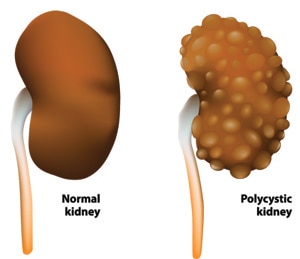
An illustration of a normal kidney and a polycystic kidney.
Polycystic kidney disease is a genetic disorder that causes many fluid-filled cysts to grow in your kidneys.

What are the types of PKD?

The two main types of PKD are

How common is PKD?

PKD is one of the most common genetic disorders. PKD affects about 500,000 people in the United States.1

ADPKD affects 1 in every 400 to 1,000 people in the world, and ARPKD affects 1 in 20,000 children.2,3

Who is more likely to have PKD?

PKD affects people of all ages, races, and ethnicities worldwide. The disorder occurs equally in women and men.

What causes PKD?

A gene mutation, or defect, causes PKD. In most PKD cases, a child got the gene mutation from a parent. In a small number of PKD cases, the gene mutation developed on its own, without either parent carrying a copy of the mutated gene. This type of mutation is called “spontaneous.” Read more about genes and genetic conditions.

What are the signs and symptoms of PKD?

The signs and symptoms of ADPKD, such as pain, high blood pressure, and kidney failure, are also PKD complications. In many cases, ADPKD does not cause signs or symptoms until your kidney cysts are a half inch or larger in size.

Early signs of ARPKD in the womb are larger-than-normal kidneys and a smaller-than-average size baby, a condition called growth failure. The early signs of ARPKD are also complications. However, some people with ARPKD do not develop signs or symptoms until later in childhood or even adulthood.

Can I prevent PKD?

Researchers have not yet found a way to prevent PKD. However, you may be able to slow PKD problems caused by high blood pressure, such as kidney damage. Aim for a blood pressure goal of less than 120/80. Work with a health care team to help manage your or your child’s PKD. The health care team will probably include a general practitioner and a nephrologist, a health care provider specializing in kidney health.

What can I do to slow down PKD?

The sooner you know you or your child has PKD, the sooner you can keep the condition from getting worse. Getting tested if you or your child are at risk for PKD can help you take early action.

You also can take steps to help delay or prevent kidney failure. Healthy lifestyle practices such as being active, reducing stress, and quitting smoking can help.

Make lifestyle changes

Be active for 30 minutes or more on most days. Regular physical activity can help you reduce stress, manage your weight, and control your blood pressure. If you are not active now, ask your health care provider about how much and what type of physical activity is right for you.

If you play contact sports, such as football or hockey, a health care provider should do a magnetic resonance imaging (MRI) test to see whether these sports are safe for you. Trauma to your body, especially to your back and sides, may cause kidney cysts to burst.

Lose weight. Being overweight makes your kidneys work harder. Losing weight helps protect your kidneys.

Aim for 7 to 8 hours of sleep each night. Getting enough sleep is important to your overall physical and mental health and can help you manage your blood pressure and blood glucose, or blood sugar.

Reduce stress. Long-term stress can raise your blood pressure and even lead to depression. Some of the steps you take to manage your PKD are also healthy ways to cope with stress. For example, getting enough physical activity and sleep helps reduce stress.

Quit smoking. Cigarette smoking can raise your blood pressure, making your kidney damage worse. Quitting smoking may help you meet your blood pressure goals, which is good for your kidneys and can lower your chances of having a heart attack or stroke. Quitting smoking is even more important for people with PKD who have aneurysms. An aneurysm is a bulge in the wall of a blood vessel. For tips on quitting, go to Smokefree.gov.

A photo of a woman and a man being active by walking.
To help delay or prevent kidney failure, be active, reduce stress, and quit smoking.

Change what you eat and drink

You may need to change what you eat and drink to help control your blood pressure and protect your kidneys. People with any kind of kidney disease, including PKD, should talk with a dietitian about which foods and drinks to include in their healthy eating plan and which may be harmful. Staying hydrated by drinking the right amount of fluid may help slow PKD’s progress toward kidney failure. Read more about what to eat or drink if you have PKD or are at risk for PKD.

Take blood pressure medicines

If lifestyle and diet changes don’t help control your blood pressure, a health care provider may prescribe one or more blood pressure medicines. Two types of blood pressure medicines, angiotensin-converting enzyme (ACE) inhibitors and angiotensin receptor blockers (ARBs), may slow kidney disease and delay kidney failure. The names of these medicines end in –pril or –sartan.


References


Autosomal Dominant PKD

What is autosomal dominant PKD?

Autosomal dominant polycystic kidney disease (ADPKD) is the most common form of PKD. ADPKD affects 1 in every 400 to 1,000 people and is the most common kidney disorder passed down through family members.4 Health care providers usually diagnose ADPKD between the ages of 30 and 50, when signs and symptoms start to appear, which is why it is sometimes called “adult PKD.”5

“Autosomal dominant” means you can get the PKD gene mutation, or defect, from only one parent. Researchers have found two different gene mutations that cause ADPKD. Most people with ADPKD have defects in the PKD1 gene, and 1 out of 6 or 1 out of 7 people with ADPKD have a defective PKD2 gene.6

Health care providers can diagnose people with PKD1 sooner because their symptoms appear sooner. People with PKD1 also usually progress more quickly to kidney failure than people with PKD2. How quickly ADPKD progresses also differs from person to person.

What are the most common complications of ADPKD?

Most people with ADPKD have pain, high blood pressure, and kidney failure at some point in their lives.

Pain

Pain is a common complication of ADPKD and is usually due to kidney or liver cysts. Pain also can be caused by

  • kidney cyst infection
  • bleeding or burst kidney cysts
  • urinary tract infection
  • kidney stones
  • tissue stretching around the kidney due to cyst growth

High blood pressure

Almost all people with ADPKD who have kidney failure have high blood pressure. High blood pressure increases your chances of heart disease and stroke. High blood pressure can also damage your kidneys even more. Keep your blood pressure under control to help delay kidney damage.

A photo of a man checking his blood pressure.
Most people with ADPKD have pain, high blood pressure, and kidney failure at some point in their lives.

Kidney failure

Kidney failure means your kidneys no longer work well enough to stay healthy. Untreated kidney failure can lead to coma and death. More than half of people with ADPKD progress to kidney failure by age 70.7

What are other complications of ADPKD?

ADPKD complications, or problems, can affect many systems in your body besides your kidneys. Researchers have not found a link between PKD and kidney cancer.

You may see some ADPKD complications right away. Other complications may not appear for many years, depending on whether you have the PKD1 or PKD2 gene. Also, ADPKD complications can vary from person to person, so you may not have all of these problems.

Vascular system problems

Abnormal heart valves. Abnormal heart valves can occur in some people with ADPKD. Abnormal heart valves can cause too little blood to flow into the aorta, the large artery that carries blood from the heart to the rest of your body. Abnormal heart valves in people with ADPKD rarely need to be replaced. However, you may need more tests if your health care provider detects a heart murmur.

Brain aneurysms. An aneurysm is a bulge in the wall of a blood vessel. Aneurysms in the brain might cause headaches that are severe or feel different from other headaches. See a health care provider even before you take over-the-counter pain medicines for severe headaches or headaches that won’t go away.

Brain aneurysms can break open and cause bleeding inside the skull. Large brain aneurysms are life threatening and need immediate medical treatment. If you have an aneurysm, stop smoking and control your blood pressure and lipids.

Digestive system problems

Liver cysts. Liver cysts, which are fluid-filled cysts on the liver, are the most common nonkidney complication of ADPKD. Liver cysts don’t usually cause symptoms in people under age 30, because liver cysts are normally small and few in number in the early stages of ADPKD. In rare cases, liver cysts can eventually reduce liver function. In the most severe cases, you may need a liver transplant.

Because the hormone estrogen may affect liver cyst growth, women are more likely to have liver cysts than men. The more pregnancies a woman with ADPKD has had, the more likely she will have liver cysts.7

Pancreatic cysts. PKD can also cause cysts in your pancreas. Pancreatic cysts rarely cause pancreatitis, which is inflammation, or swelling, of the pancreas.

Diverticula. Diverticula are small pouches, or sacs, that push through weak spots in your colon wall. Diverticula can cause diverticulosis. Diverticulosis can cause changes in your bowel movement patterns or pain in your abdomen.

Urinary tract problems

Urinary tract infections (UTIs). Kidney cysts can block urine flow through the kidneys so that urine stays in your urinary tract too long. When urine stays in your urinary tract too long, bacteria in your urine can cause a bladder infection or a kidney infection. A kidney infection can cause further damage to your kidneys by causing cysts to become infected.

Kidney stones. People with ADPKD sometimes have kidney stones. Kidney stones can block urine flow and cause infection and pain.

Reproductive problems

Although most women with PKD have normal pregnancies, women with PKD who have high blood pressure and decreased kidney function are more likely to have preeclampsia, or high blood pressure during pregnancy.

With preeclampsia, the fetus gets less oxygen and fewer nutrients. Women with preeclampsia should be followed closely by their health care provider during and after pregnancy. After delivery, preeclampsia goes away.

Many men with ADPKD have cysts on their seminal vesicles, which are glands in the male reproductive system that help produce semen. Seminal vesicle cysts rarely cause infertility.

People with PKD who are considering having children may want to discuss family planning concerns with a genetics counselor.

What are the signs and symptoms of ADPKD?

In many cases, ADPKD doesn’t cause signs or symptoms until cysts are a half inch or larger in size. For this reason, you should meet with a health care provider if you are at risk for PKD before your symptoms start.

The most common symptoms are pain in the back and sides, between the ribs and hips, and headaches. The pain can be short term or ongoing, mild or severe.

Hematuria, or blood in the urine, may be a sign of ADPKD. If you have hematuria, see a health care provider right away.

How do health care providers diagnose ADPKD?

Health care providers diagnose ADPKD using imaging tests and genetic testing. A health care provider can make a diagnosis based on these tests and your age, family history of PKD, and how many cysts you have.

The sooner a health care provider can diagnose ADPKD, the better your chances of delaying complications.

Imaging tests

A specially trained technician performs imaging tests in a health care provider’s office, an outpatient center, or a hospital. A radiologist reads the images. Adults usually don’t need anesthesia for these tests. However, a health care provider may give infants or children a sedative to help them fall asleep during the test.

Ultrasound. Ultrasound uses a device called a transducer that bounces safe, painless sound waves off your organs to create an image of their structure. An abdominal ultrasound can create images of your entire urinary tract or focus specifically on the kidneys. The images can show cysts in the kidneys.

Computed tomography (CT) scans. CT scans use a combination of x-rays and computer technology to create images of your urinary tract. For a CT scan of your urinary tract, a health care provider may give you an injection of contrast medium. Contrast medium is a dye or other substance that makes structures inside your body easier to see during imaging tests. You lie on a table that slides into a tunnel-shaped device that takes the x-rays. CT scans can show more detailed images of kidney cysts than ultrasound.

Magnetic resonance imaging (MRI). MRI machines use radio waves and magnets to produce detailed pictures of your body’s internal organs and soft tissues without using x-rays. An MRI may include an injection of contrast medium. With most MRI machines, you lie on a table that slides into a tunnel-shaped machine that may be open on each end or closed at one end. Some newer machines allow you to lie in a more open space. Health care providers use MRIs to measure kidney and cyst size and monitor kidney and cyst growth. Measuring kidney and cyst size and growth can help track the progress of PKD.

Genetic testing

Your health care provider may refer you to a geneticist if you are at risk for ADPKD. A geneticist is an expert in genes and diseases that are passed down through families. You will provide the geneticist with a blood or saliva sample, which will be tested in a special lab for the gene mutations that cause ADPKD. The genetic testing may take many days or weeks to complete.

A health care provider may also use genetic testing results to find out whether someone with a family history of PKD is likely to develop PKD in the future.

When to consider genetic counseling

If you are considering genetic testing, you and your family may want to talk with a genetics counselor as part of your health care team. Genetic counseling may be useful when you’re deciding whether to have genetic testing and again later when test results are available. Genetic counseling can help you and your family understand how test results may affect your lives.

A photo of a man and a woman speaking with a genetics counselor.
If you are considering genetic testing for autosomal dominant polycystic kidney disease, you and your family may want to talk with a genetics counselor as part of your health care team.

How does my health care team treat the most common complications of ADPKD?

Although a cure doesn’t exist yet for ADPKD, treatment can help reduce your complications, which can help you live longer.

Manage pain

A health care provider needs to find the source of your pain before he or she can treat it. For example, if growing cysts are causing pain, the health care provider may first suggest over-the-counter (OTC) pain medicines such as aspirin or acetaminophen.

Always talk with a health care provider before taking any OTC medicines because some may be harmful to your kidneys. People with ADPKD have a higher risk for acute kidney injury (AKI), which is the sudden and temporary loss of kidney function. Sometimes AKI is caused by using OTC painkillers for a long time.

Depending on the size and number of cysts and whether medicine helps your pain, a health care provider may suggest surgery. Surgery to shrink cysts can help pain in your back and sides for a while. However, surgery does not slow PKD’s progress toward kidney failure.

Control your blood pressure

Controlling your blood pressure can slow the effects of ADPKD. Lifestyle changes and medicines can lower high blood pressure. Sometimes you can control blood pressure with healthy eating and regular physical activity alone.

Some health care providers will recommend blood pressure medicines called angiotensin-converting enzyme (ACE) inhibitors or angiotensin receptor blockers (ARBs).

Treat kidney failure

ADPKD can eventually cause your kidneys to fail. People with kidney failure must have dialysis or a kidney transplant to replace their kidney function.

The two forms of dialysis are hemodialysis and peritoneal dialysis. Hemodialysis uses a machine to circulate your blood through a filter outside the body. Peritoneal dialysis uses the lining of your abdomen to filter the blood inside the body.

A kidney transplant is surgery to place a healthy kidney from a donor into your body.

How does ADPKD affect my day-to-day life?

Managing PKD successfully will probably include several lifestyle changes, such as changes in your physical activity level and what you eat. Visiting with a health care team on a regular basis is an important part of your routine as you work to limit your kidney problems.

PKD is a costly disease to manage and treat, especially if health insurance doesn’t cover some or any of your costs. Financial help may be available from the Federal Government and other sources. Visit the Centers for Medicare & Medicaid Services website or talk with your health care team for more information.

Many people with PKD may find it hard, but not impossible, to get life insurance. Contact an insurance company that specializes in “impaired risk life insurance.”

References


Autosomal Recessive PKD

What is autosomal recessive PKD?

Autosomal recessive polycystic kidney disease (ARPKD) is a rare genetic disorder that affects 1 in 20,000 children.8 A fetus or baby with ARPKD has fluid-filled kidney cysts that may make the kidneys too big, or enlarged. ARPKD can cause a child to have poor kidney function, even in the womb. ARPKD is sometimes called “infantile PKD” because health care providers can diagnose it so early in life.

Poor kidney function can cause breathing problems that can threaten the life of a fetus or baby. About 30 percent of newborns with ARPKD die within their first week of life.8 A baby with ARPKD who survives birth and the first few weeks of life has a good chance of surviving into adulthood. However, children or young adults with ARPKD will likely need medical treatment their whole life.

“Autosomal recessive” means that for a child to have this disorder, both parents must have and pass along the gene mutation. If only one parent carries the mutated gene, the child will not get the disorder, although the child may get the gene mutation. The child is a “carrier” of the disorder and can pass the gene mutation to the next generation.

How quickly ARPKD progresses to kidney failure is different for each child. The sooner a fetus is diagnosed in the womb, the better the child’s outlook. Getting good prenatal care is important for increasing a child’s survival rate. Working with a health care team as soon as possible can help parents manage their child’s PKD.

Photo of a pregnant woman getting a sonogram of her abdomen from a health care provider.
Getting good prenatal care is important for increasing a child’s survival rate.

What are the early signs of ARPKD?

The early signs of ARPKD often appear during the first few months of life and in the womb. Early signs of ARPKD in the womb can cause serious health problems. For this reason, it is important for a woman who is at risk for passing PKD to her children to get prenatal care as soon as she learns she is pregnant.

Enlarged kidney. An early sign of ARPKD is an enlarged kidney. Enlarged kidneys put pressure on a fetus’ or child’s lungs, which can make lung growth and breathing harder. A health care provider can see enlarged kidneys in a fetus or an infant using ultrasound imaging, also called a sonogram.

Growth failure. Due to decreased kidney and lung function, children with ARPKD are usually smaller-than-average size, a condition called growth failure.

Low levels of amniotic fluid. Decreased kidney function can cause low levels of amniotic fluid in a mother’s womb. Low levels of amniotic fluid can cause breathing problems in the fetus.

Some people with ARPKD do not develop signs or symptoms until later in childhood, or even adulthood.

What are the complications of ARPKD?

Children with ARPKD who survive birth often have kidney and liver problems that can affect their breathing. Working with a health care team as soon as possible can help manage these complications.

Breathing problems. Babies with the most severe cases of ARPKD often die hours or days after birth because they cannot breathe well enough to live. Their lungs do not develop as they should in the womb.

Kidney failure. Children born with ARPKD often develop kidney failure before reaching adulthood.

Liver problems. Liver scarring occurs in all cases of ARPKD and is usually present at birth. Liver scarring can lead to decreased liver function and other liver problems. However, liver problems from ARPKD tend to become more of a concern over time.

High blood pressure. Most children with ARPKD have high blood pressure.8 High blood pressure increases a child’s chances of heart disease and stroke. High blood pressure can also further damage a child’s kidneys.

How do health care providers diagnose ARPKD?

Health care providers diagnose ARPKD with ultrasound imaging. The test can show enlarged kidneys and liver scarring.

How do health care providers treat the complications of ARPKD?

Enlarged kidney. Kidney enlargement cannot be prevented or reversed. One or both kidneys may need to be removed if their size makes breathing impossible. Children who don’t have working kidneys will need dialysis or a kidney transplant.

Growth failure. A health care provider may treat growth failure with nutritional therapy. In severe cases of growth failure, a health care provider and a child’s parents may consider treatment with human growth hormone. Human growth hormone is a prescribed, man-made hormone that can help children grow.

Breathing problems. Health care providers treat infants with breathing problems with artificial ventilation, which allows them to breathe with the help of a machine.

Kidney failure. Peritoneal dialysis is the preferred method of treating children with kidney failure, although health care providers also use hemodialysis. Kidney transplants may be a limited option for infants because of their size.

Liver problems. If serious liver disease develops, some children may need to have a combined liver and kidney transplant.

High blood pressure. A health care provider can help control blood pressure with medicines. Treating high blood pressure can help delay kidney failure.

References


Eating, Diet, & Nutrition for PKD

If you have any kind of chronic kidney disease, including polycystic kidney disease (PKD), talk with a dietitian about which foods to include in your diet and which foods might be harmful. Find a dietitian who specializes in helping people with kidney disease to help you choose the right foods and plan healthy meals.

A photo of a man and a woman sitting at a table and eating a healthy meal
If you have PKD, following a healthy eating plan can help lower your blood pressure.

PKD may require diet changes to help lower your blood pressure by limiting how much sodium (salt) you eat. Staying hydrated by drinking the right amount of fluid may help slow PKD’s progress toward kidney failure. Eating high-quality protein and smaller portions of protein also can help protect the kidneys. As your kidneys become more damaged, you may need to eat foods lower in phosphorus and potassium. Your health care provider will use lab tests to watch your levels of these minerals.

Learn more about eating right with chronic kidney disease.


This content is provided as a service of the National Institute of Diabetes and Digestive and Kidney Diseases (NIDDK), part of the National Institutes of Health. The NIDDK translates and disseminates research findings through its clearinghouses and education programs to increase knowledge and understanding about health and disease among patients, health professionals, and the public. Content produced by the NIDDK is carefully reviewed by NIDDK scientists and other experts.

Preventing CKD

You are more likely to develop kidney disease if you have

  • diabetes
  • high blood pressure
  • heart disease
  • a family history of kidney failure

What can I do to keep my kidneys healthy?

You can protect your kidneys by preventing or managing health conditions that cause kidney damage, such as diabetes and high blood pressure. The steps described below may help keep your whole body healthy, including your kidneys.

During your next medical visit, you may want to ask your health care provider about your kidney health. Early kidney disease may not have any symptoms, so getting tested may be the only way to know your kidneys are healthy. Your health care provider will help decide how often you should be tested.

See a provider right away if you develop a urinary tract infection (UTI), which can cause kidney damage if left untreated.

Make healthy food choices

Choose foods that are healthy for your heart and your entire body: fresh fruits, fresh or frozen vegetables, whole grains, and low-fat or fat-free dairy products. Eat healthy meals, and cut back on salt and added sugars. Aim for less than 2,300 milligrams of sodium each day. Try to have less than 10 percent of your daily calories come from added sugars.

Photo of a healthy food choice: a grilled chicken breast with salad.
Choose foods that are healthy for your body.

Tips for making healthy food choices

  • Cook with a mix of spices instead of salt.
  • Choose veggie toppings such as spinach, broccoli, and peppers for your pizza.
  • Try baking or broiling meat, chicken, and fish instead of frying.
  • Serve foods without gravy or added fats.
  • Try to choose foods with little or no added sugar.
  • Gradually work your way down from whole milk to 2 percent milk until you’re drinking and cooking with fat-free (skim) or low-fat milk and milk products.
  • Eat foods made from whole grains—such as whole wheat, brown rice, oats, and whole-grain corn—every day. Use whole-grain bread for toast and sandwiches; substitute brown rice for white rice for home-cooked meals and when dining out.
  • Read food labels. Choose foods low in saturated fats, trans fats, cholesterol, salt (sodium), and added sugars.
  • Slow down at snack time. Eating a bag of low-fat popcorn takes longer than eating a slice of cake. Peel and eat an orange instead of drinking orange juice.
  • Try keeping a written record of what you eat for a week. It can help you see when you tend to overeat or eat foods high in fat or calories.

Research has shown that the DASH eating plan may help you lower your blood pressure. If you have diabetes, high blood pressure, or heart disease, you may want to locate and work with a dietitian to create a meal plan that meets your needs.

Make physical activity part of your routine

Be active for 30 minutes or more on most days. If you are not active now, ask your health care provider about the types and amounts of physical activity that are right for you. Add more activity to your life with these tips to help you get active.

Aim for a healthy weight

The NIH Body Weight Planner is an online tool to help you tailor your plans to achieve and stay at a healthy weight. The Body Weight Planner is a part of the SuperTracker, a free food-, physical activity-, and weight-tracking tool from ChooseMyPlate.gov that will help you build a healthier diet, manage your weight, and reduce your risk of chronic disease, including kidney disease.

If you are overweight or obese, work with your health care provider or dietitian to create a realistic weight-loss plan. View more weight control and physical activity resources to help you get and stay motivated.

Get enough sleep

Aim for 7 to 8 hours of sleep each night. If you have trouble sleeping, take steps to improve your sleep habits.

Stop smoking

If you smoke or use other tobacco products, stop. Ask for help so you don’t have to do it alone. You can start by calling the national quitline at 1-800-QUITNOW or 1-800-784-8669. For tips on quitting, go to Smokefree.gov.

Limit alcohol intake

Drinking too much alcohol can increase your blood pressure and add extra calories, which can lead to weight gain. If you drink alcohol, limit yourself to one drink per day if you are a woman and two drinks per day if you are a man. One drink is:

  • 12 ounces of beer
  • 5 ounces of wine
  • 1.5 ounces of liquor

Explore stress-reducing activities

Learning how to manage stress, relax, and cope with problems can improve emotional and physical health. Physical activity can help reduce stress, as can mind and body practices such as meditation, yoga, or tai chi.

Manage diabetes, high blood pressure, and heart disease

If you have diabetes, high blood pressure, or heart disease, the best way to protect your kidneys from damage is to

Keep blood glucose numbers close to your goal. Checking your blood glucose, or blood sugar, level is an important way to manage your diabetes. Your health care team may want you to test your blood glucose one or more times a day.

Keep your blood pressure numbers close to your goal. The blood pressure goal for most people with diabetes is below 140/90 mm Hg. Read more about high blood pressure.

Take all your medicines as prescribed. Talk with your health care provider about certain blood pressure medicines, called ACE inhibitors and ARBs, which may protect your kidneys. The names of these medicines end in –pril or –sartan.

Be careful about the daily use of over-the-counter pain medications. Regular use of nonsteroidal anti-inflammatory drugs (NSAIDs), such as ibuprofen and naproxen, can damage your kidneys. Learn more about over-the-counter medicines and your kidneys.

To help prevent heart attacks and stroke, keep your cholesterol levels in the target range. There are two kinds of cholesterol in your blood: LDL and HDL. LDL or “bad” cholesterol can build up and clog your blood vessels, which can cause a heart attack or stroke. HDL or “good” cholesterol helps remove the “bad” cholesterol from your blood vessels. A cholesterol test also may measure another type of blood fat called triglycerides.

Ask your health care provider questions

Ask your health care provider the following key questions about your kidney health during your next medical visit. The sooner you know you have kidney disease, the sooner you can get treatment to help protect your kidneys.

Key questions for your health care provider:

  • What is my glomerular filtration rate (GFR)?
  • What is my urine albumin result?
  • What is my blood pressure?
  • What is my blood glucose (for people with diabetes)?
  • How often should I get my kidneys checked?

Other important questions:

  • What should I do to keep my kidneys healthy?
  • Do I need to be taking different medicines?
  • Should I be more physically active?
  • What kind of physical activity can I do?
  • What can I eat?
  • Am I at a healthy weight?
  • Do I need to talk with a dietitian to get help with meal planning?
  • Should I be taking ACE inhibitors or ARBs for my kidneys?
  • What happens if I have kidney disease?

This content is provided as a service of the National Institute of Diabetes and Digestive and Kidney Diseases (NIDDK), part of the National Institutes of Health. The NIDDK translates and disseminates research findings through its clearinghouses and education programs to increase knowledge and understanding about health and disease among patients, health professionals, and the public. Content produced by the NIDDK is carefully reviewed by NIDDK scientists and other experts.

Renal Artery Stenosis

What are renal artery stenosis (RAS) and renovascular hypertension (RVH)?

Renal artery stenosis is the narrowing of one or both renal arteries. “Renal” means “kidney” and “stenosis” means “narrowing.” The renal arteries are blood vessels that carry blood to the kidneys from the aorta—the main blood vessel that carries blood from the heart to arteries throughout the body.

RVH is high blood pressure caused by RAS. Blood pressure is written with two numbers separated by a slash, 120/80, and is said as “120 over 80.” The top number is called the systolic pressure and represents the pressure as the heart beats and pushes blood through the blood vessels. The bottom number is called the diastolic pressure and represents the pressure as blood vessels relax between heartbeats. A person’s blood pressure is considered normal if it stays at or below 120/80. High blood pressure is a systolic pressure of 140 or above or a diastolic pressure of 90 or above.1

What are the kidneys and what do they do?

The kidneys are two bean-shaped organs, each about the size of a fist. They are located just below the rib cage, one on each side of the spine. Every day, the two kidneys filter about 120 to 150 quarts of blood to produce about 1 to 2 quarts of urine, composed of wastes and extra fluid.

Drawing of the kidneys in the outline of a male body.
The kidneys are two bean-shaped organs.

What causes RAS?

About 90 percent of RAS is caused by atherosclerosis—clogging, narrowing, and hardening of the renal arteries.2 In these cases, RAS develops when plaque—a sticky substance made up of fat, cholesterol, calcium, and other material found in the blood—builds up on the inner wall of one or both renal arteries. Plaque buildup is what makes the artery wall hard and narrow.

Most other cases of RAS are caused by fibromuscular dysplasia (FMD)—the abnormal development or growth of cells on the renal artery walls—which can cause blood vessels to narrow. Rarely, RAS is caused by other conditions.

Drawing of the kidneys with an insert showing a magnified cross-section of the renal artery with plaque building up on the inner wall.
In most cases of RAS, plaque builds up on the inner wall of one or both renal arteries.

Who is at risk for RAS?

People at risk for artherosclerosis are also at risk for RAS. Risk factors for RAS caused by artherosclerosis include

  • high blood cholesterol levels
  • high blood pressure
  • smoking
  • insulin resistance
  • diabetes
  • being overweight or obese
  • lack of physical activity
  • a diet high in fat, cholesterol, sodium, and sugar
  • being a man older than 45 or a woman older than 55
  • a family history of early heart disease

The risk factors for RAS caused by FMD are unknown, but FMD is most common in women and people 25 to 50 years of age.3 FMD can affect more than one person in a family, indicating that it may be caused by an inherited gene.

What are the symptoms of RAS?

In many cases, RAS has no symptoms until it becomes severe.

The signs of RAS are usually either high blood pressure or decreased kidney function, or both, but RAS is often overlooked as a cause of high blood pressure. RAS should be considered as a cause of high blood pressure in people who

  • are older than age 50 when they develop high blood pressure or have a marked increase in blood pressure
  • have no family history of high blood pressure
  • cannot be successfully treated with at least three or more different types of blood pressure medications

Symptoms of a significant decrease in kidney function include

  • increase or decrease in urination
  • edema—swelling, usually in the legs, feet, or ankles and less often in the hands or face
  • drowsiness or tiredness
  • generalized itching or numbness
  • dry skin
  • headaches
  • weight loss
  • appetite loss
  • nausea
  • vomiting
  • sleep problems
  • trouble concentrating
  • darkened skin
  • muscle cramps

What are the possible complications of RAS?

People with RAS are at increased risk for complications resulting from loss of kidney function or atherosclerosis occurring in other blood vessels, such as

  • chronic kidney disease (CKD)—reduced kidney function over a period of time
  • coronary artery disease—narrowing and hardening of arteries that supply blood to the heart
  • stroke—brain damage caused by lack of blood flow to the brain
  • peripheral vascular disease—blockage of blood vessels that restricts flow of blood from the heart to other parts of the body, particularly the legs

RAS can lead to kidney failure, described as end-stage renal disease when treated with blood-filtering treatments called dialysis or a kidney transplant, though this is uncommon in people who receive ongoing treatment for RAS.

How is RAS diagnosed?

A health care provider can diagnose RAS by listening to the abdomen with a stethoscope and performing imaging tests. When blood flows through a narrow artery, it sometimes makes a whooshing sound, called a bruit. The health care provider may place a stethoscope on the front or the side of the abdomen to listen for this sound. The absence of this sound, however, does not exclude the possibility of RAS.

In some cases, RAS is found when a person has a test for another reason. For example, a health care provider may find RAS during a coronary angiogram for diagnosis of heart problems. A coronary angiogram is a procedure that uses a special dye, called contrast medium, and x-rays to see how blood flows through the heart.

The following imaging tests are used to diagnose RAS:

  • Duplex ultrasound. Duplex ultrasound combines traditional ultrasound with Doppler ultrasonography. Traditional ultrasound uses a device, called a transducer, that bounces safe, painless sound waves off organs to create an image of their structure. Doppler ultrasonography records sound waves reflected off of moving objects, such as blood, to measure their speed and other aspects of how they flow. The procedure is performed in a health care provider’s office, outpatient center, or hospital by a specially trained technician, and the images are interpreted by a radiologist—a doctor who specializes in medical imaging. Anesthesia is not needed. The images can show blockage in the renal artery or blood moving through nearby arteries at a lower-than-normal speed. Ultrasound is noninvasive and low cost.
  • Catheter angiogram. A catheter angiogram, also called a traditional angiogram, is a special kind of x-ray in which a thin, flexible tube called a catheter is threaded through the large arteries, often from the groin, to the artery of interest—in this case, the renal artery. The procedure is performed in a hospital or outpatient center by a radiologist. Anesthesia is not needed though a sedative may be given to lessen anxiety during the procedure. Contrast medium is injected through the catheter so the renal artery shows up more clearly on the x-ray. Catheter angiogram is the “gold standard” for diagnosing RAS due to the high quality of the image produced. In addition, severe RAS can be treated during the same visit. However, a catheter angiogram is an invasive procedure, and a person may have side effects from the sedative or contrast medium or may have bleeding or injury to the artery from the catheter. The procedure is also more expensive than other imaging tests.
  • Computerized tomographic angiography (CTA) scan. CTA scans use a combination of x-rays and computer technology to create images. The procedure is performed in an outpatient center or hospital by an x-ray technician, and the images are interpreted by a radiologist. Anesthesia is not needed. Contrast medium is injected into a vein in the person’s arm to better see the structure of the arteries. CTA scans require the person to lie on a table that slides into a tunnel-shaped device where the x-rays are taken. CTA scans are less invasive than catheter angiograms and take less time. However, the risks from the x-ray radiation still exist, and the test often requires more contrast medium than a catheter angiogram, so it may not be recommended for a person with poor kidney function.
  • Magnetic resonance angiogram (MRA). MRA uses radio waves and magnets to produce detailed pictures of the body’s internal organs and soft tissues without using x-rays. The procedure is performed in an outpatient center or hospital by an x-ray technician, and the images are interpreted by a radiologist. Anesthesia is not needed though light sedation may be used for people with a fear of confined spaces. Contrast medium may be injected into a vein in the person’s arm to better see the structure of the arteries. With most MRA scans, the person lies on a table that slides into a tunnel-shaped device that may be open ended or closed at one end; some newer machines are designed to allow the person to lie in a more open space. In addition to providing high-quality images noninvasively, MRA can provide a functional assessment of blood flow and organ function. However, the use of contrast medium for an MRA is not advised for people with poor kidney function because of the risk of complications to the skin and other organs if the kidneys do not remove the contrast medium well enough.

How is RAS treated?

Treatment for RAS includes lifestyle changes, medications, and surgery and aims to

  • prevent RAS from getting worse
  • treat RVH
  • relieve the blockage of the renal arteries

RAS that has not led to RVH or caused a significant blockage of the artery may not need treatment. RAS that needs to be treated, also called critical RAS, is defined by the American Heart Association as a reduction by more than 60 percent in the diameter of the renal artery.1 However, health care providers are not exactly sure what degree of blockage will cause significant problems.

Lifestyle Changes

The first step in treating RAS is making lifestyle changes that promote healthy blood vessels throughout the body, including the renal arteries. The best ways to keep plaque from building up in the arteries are to exercise, maintain a healthy body weight, and choose healthy foods. People who smoke should quit to help protect their kidneys and other internal organs.

Medications

People with RVH may need to take medications that—when taken as prescribed by their health care provider—lower blood pressure and can also significantly slow the progression of kidney disease. Two types of blood pressure-lowering medications, angiotensin-converting enzyme (ACE) inhibitors and angiotensin receptor blockers (ARBs), have proven effective in slowing the progression of kidney disease. Many people require two or more medications to control their blood pressure. In addition to an ACE inhibitor or an ARB, a diuretic—a medication that helps the kidneys remove fluid from the blood—may be prescribed. Beta blockers, calcium channel blockers, and other blood pressure medications may also be needed. Some people with RAS cannot take an ACE inhibitor or ARB due to the effects on the kidneys. People with RAS who are prescribed an ACE inhibitor or ARB should have their kidney function checked within a few weeks of starting the medication.

A cholesterol-lowering medication to prevent plaque from building up in the arteries and a blood-thinner, such as aspirin, to help the blood flow more easily through the arteries may also be prescribed.

Surgery

Although surgery has been used in the past for treatment of RAS due to atherosclerosis, recent studies have not shown improved outcomes with surgery compared with medication. However, surgery may be recommended for people with RAS caused by FMD or RAS that does not improve with medication. Different types of surgery for RAS include the following. The procedures are performed in a hospital by a vascular surgeon—a doctor who specializes in repairing blood vessels. Anesthesia is needed.

  • Angioplasty and stenting. Angioplasty is a procedure in which a catheter is put into the renal artery, usually through the groin, just as in a catheter angiogram. In addition, for angioplasty, a tiny balloon at the end of the catheter can be inflated to flatten the plaque against the artery wall. A small mesh tube, called a stent, may then be positioned inside the artery to keep plaque flattened and the artery open. People with RAS caused by FMD may be successfully treated with angioplasty alone, while angioplasty with stenting has a better outcome for people with RAS caused by atherosclerosis.
  • Endarterectomy or bypass surgery. In an endarterectomy, the plaque is cleaned out of the artery, leaving the inside lining smooth and clear. To create a bypass, a vein or synthetic tube is used to connect the kidney to the aorta. This new path serves as an alternate route for blood to flow around the blocked artery into the kidney. These procedures are not performed as often as in the past due to a high risk of complications during and after the procedure.

Eating, Diet, and Nutrition

Limiting intake of fats, cholesterol, sodium, and sugar can help prevent atherosclerosis, which can lead to RAS. Most sodium in the diet comes from salt. A healthy diet that prevents people from becoming overweight or obese can also help prevent atherosclerosis. People with RAS that has caused decreased kidney function should limit their intake of protein, cholesterol, sodium, and potassium to slow the progression of kidney failure. More information about nutrition for CKD is provided in the NIDDK health topics, Nutrition for Early Chronic Kidney Disease in Adults and Nutrition for Advanced Chronic Kidney Disease in Adults. People should talk with their health care provider about what diet is right for them.

Points to Remember

  • Renal artery stenosis (RAS) is the narrowing of one or both renal arteries. The renal arteries are blood vessels that carry blood to the kidneys from the aorta—the main blood vessel that carries blood from the heart to arteries throughout the body.
  • Renovascular hypertension (RVH) is high blood pressure caused by RAS.
  • About 90 percent of RAS is caused by atherosclerosis. Most other cases of RAS are caused by fibromuscular dysplasia (FMD), which can cause blood vessels to narrow.
  • RAS often has no symptoms until it becomes severe. The first symptoms of RAS are usually either high blood pressure or decreased kidney function, or both, but RAS is often overlooked as a cause of high blood pressure.
  • People with RAS are at increased risk for chronic kidney disease (CKD), coronary artery disease, stroke, and peripheral vascular disease.
  • Imaging tests used to diagnose RAS include duplex ultrasound, catheter angiogram, computerized tomographic angiography (CTA) scan, and magnetic resonance angiogram (MRA).
  • Treatment for RAS includes lifestyle changes, medications, and surgery.

References

Clinical Trials

The National Institute of Diabetes and Digestive and Kidney Diseases (NIDDK) and other components of the National Institutes of Health (NIH) conduct and support research into many diseases and conditions.

What are clinical trials, and are they right for you?

Clinical trials are part of clinical research and at the heart of all medical advances. Clinical trials look at new ways to prevent, detect, or treat disease. Researchers also use clinical trials to look at other aspects of care, such as improving the quality of life for people with chronic illnesses. Find out if clinical trials are right for you.

What clinical trials are open?

Clinical trials that are currently open and are recruiting can be viewed at www.ClinicalTrials.gov.

This content is provided as a service of the National Institute of Diabetes and Digestive and Kidney Diseases (NIDDK), part of the National Institutes of Health. The NIDDK translates and disseminates research findings through its clearinghouses and education programs to increase knowledge and understanding about health and disease among patients, health professionals, and the public. Content produced by the NIDDK is carefully reviewed by NIDDK scientists and other experts.

The NIDDK would like to thank:
Christopher Cooper, M.D., University of Toledo

Simple Kidney Cysts

What are simple kidney cysts?

Simple kidney cysts are abnormal, fluid-filled sacs that form in the kidneys. Simple kidney cysts are different from the cysts that develop when a person has polycystic kidney disease (PKD), which is a genetic disorder. Simple kidney cysts do not enlarge the kidneys, replace their normal structure, or cause reduced kidney function like cysts do in people with PKD.

Simple kidney cysts are more common as people age. An estimated 25 percent of people 40 years of age and 50 percent of people 50 years of age have simple kidney cysts.1

Drawing of the urinary tract in the outline of a male figure and inset image of simple kidney cysts
Simple kidney cysts are abnormal, fluid-filled sacs that form in the kidneys.

What are the kidneys and what do they do?

The kidneys are two bean-shaped organs, each about the size of a fist. They are located near the middle of the back, just below the rib cage, one on each side of the spine. Every day, the two kidneys process about 200 quarts of blood to filter out about 1 to 2 quarts of urine, composed of waste products and extra water. The urine flows from the kidneys to the bladder through tubes called ureters. The bladder stores urine until releasing it through urination.

What causes simple kidney cysts?

The cause of simple kidney cysts is not fully understood. Obstruction of tubules—tiny structures within the kidneys that collect urine—or deficiency of blood supply to the kidneys may play a role. Diverticula—sacs that form on the tubules—may detach and become simple kidney cysts. The role of genetic factors in the development of simple kidney cysts has not been studied.

What are the symptoms of simple kidney cysts?

Simple kidney cysts usually do not cause symptoms or harm the kidneys. In some cases, however, pain can occur between the ribs and hips when cysts enlarge and press on other organs. Sometimes cysts become infected, causing fever, pain, and tenderness. Simple kidney cysts are not thought to affect kidney function, but one study found an association between the presence of cysts and reduced kidney function in hospitalized people younger than 60 years of age.1 Some studies have found a relationship between simple kidney cysts and high blood pressure. For example, high blood pressure has improved in some people after a large cyst was drained. However, this relationship is not well understood.2

How are simple kidney cysts diagnosed?

Most simple kidney cysts are found during imaging tests done for other reasons. When a cyst is found, the following imaging tests can be used to determine whether it is a simple kidney cyst or another, more serious condition. These imaging tests are performed at an outpatient center or hospital by a specially trained technician, and the images are interpreted by a radiologist—a doctor who specializes in medical imaging. Ultrasound may also be performed in a health care provider’s office. Anesthesia is not needed though light sedation may be used for people with a fear of confined spaces who undergo magnetic resonance imaging (MRI).

  • Ultrasound. Ultrasound uses a device, called a transducer, that bounces safe, painless sound waves off organs to create an image of their structure. An abdominal ultrasound can create images of the entire urinary tract. The images can be used to distinguish harmless cysts from other problems.
  • Computerized tomography (CT) scan. CT scans use a combination of x-rays and computer technology to create three-dimensional (3-D) images. A CT scan may include the injection of a special dye, called contrast medium. CT scans require the person to lie on a table that slides into a tunnel-shaped device where the x-rays are taken. CT scans can show cysts and tumors in the kidneys.
  • MRI. MRI machines use radio waves and magnets to produce detailed pictures of the body’s internal organs and soft tissues without using x-rays. An MRI may include the injection of contrast medium. With most MRI machines, the person lies on a table that slides into a tunnel-shaped device that may be open ended or closed at one end; some newer machines are designed to allow the person to lie in a more open space. Like CT scans, MRIs can show cysts and tumors.

How are simple kidney cysts treated?

Treatment is not needed for simple kidney cysts that do not cause any symptoms. Simple kidney cysts may be monitored with periodic ultrasounds.

Simple kidney cysts that are causing symptoms or blocking the flow of blood or urine through the kidney may need to be treated using a procedure called sclerotherapy. In sclerotherapy, the doctor punctures the cyst using a long needle inserted through the skin. Ultrasound is used to guide the needle to the cyst. The cyst is drained and then filled with a solution containing alcohol to make the kidney tissue harder. The procedure is usually performed on an outpatient basis with a local anesthetic.

If the cyst is large, surgery may be needed. Most surgeries can be performed using a laparoscope—a special tool with a small, lighted video camera. The procedure is usually done under general anesthesia in a hospital. The surgeon drains the cyst and then removes or burns away its outer tissue. This type of surgery allows for a smaller incision and quicker recovery.

Eating, Diet, and Nutrition

Eating, diet, and nutrition have not been shown to play a role in causing or preventing simple kidney cysts.

Points to Remember

  • Simple kidney cysts are abnormal, fluid-filled sacs that form in the kidneys.
  • Simple kidney cysts usually do not cause symptoms or harm the kidneys.
  • Most simple kidney cysts are found during imaging tests done for other reasons.
  • Treatment is not needed for simple kidney cysts that do not cause any symptoms.
  • Simple kidney cysts that are causing symptoms or blocking the flow of blood or urine through the kidney may need to be treated using sclerotherapy or surgery.

References

Clinical Trials

The National Institute of Diabetes and Digestive and Kidney Diseases (NIDDK) and other components of the National Institutes of Health (NIH) conduct and support research into many diseases and conditions.

What are clinical trials, and are they right for you?

Clinical trials are part of clinical research and at the heart of all medical advances. Clinical trials look at new ways to prevent, detect, or treat disease. Researchers also use clinical trials to look at other aspects of care, such as improving the quality of life for people with chronic illnesses. Find out if clinical trials are right for you.

What clinical trials are open?

Clinical trials that are currently open and are recruiting can be viewed at www.ClinicalTrials.gov.

This content is provided as a service of the National Institute of Diabetes and Digestive and Kidney Diseases (NIDDK), part of the National Institutes of Health. The NIDDK translates and disseminates research findings through its clearinghouses and education programs to increase knowledge and understanding about health and disease among patients, health professionals, and the public. Content produced by the NIDDK is carefully reviewed by NIDDK scientists and other experts.

The NIDDK would like to thank:
William McClellan, M.D., M.P.H., and Jason Cobb, M.D., both from Emory University

Syndicated Content Details:
Source URL: https://www.niddk.nih.gov/Syndication/simple-kidney-cysts
Source Agency: National Institute of Diabetes and Digestive and Kidney Diseases (NIDDK)
Captured Date: 2016-04-26 13:23:00.0

Solitary Kidney

What is a solitary kidney?

When a person has only one kidney or one working kidney, this kidney is called a solitary kidney. The three main causes of a solitary kidney are

  • birth defects. People with kidney agenesis are born with only one kidney. People born with kidney dysplasia have both kidneys; however, one kidney does not function. Many people with kidney agenesis or kidney dysplasia do not discover that they have a solitary kidney until they have an x-ray, an ultrasound, or surgery for an unrelated condition.
  • surgical removal of a kidney. Some people must have a kidney removed to treat cancer or another disease or injury. When a kidney is removed surgically due to disease or for donation, both the kidney and ureter are removed.
  • kidney donation. A growing number of people are donating a kidney to be transplanted into a family member or friend whose kidneys have failed.

In general, people with a solitary kidney lead full, healthy lives. However, some people are more likely to develop kidney disease.

Picture of urinary tract in an outline of the top half of a human body. Inset of one kidney and the bladder and one kidney, nonworking kidney, and the bladder.
When a person has only one kidney or one working kidney, this kidney is called a solitary kidney. People born with kidney dysplasia have both kidneys; however, one kidney does not function (top right). When a kidney is removed surgically due to disease or for donation, both the kidney and ureter are removed (bottom right).

What are the kidneys and what do they do?

The kidneys are two bean-shaped organs, each about the size of a fist. They are located just below the rib cage, one on each side of the spine. Every day, the kidneys filter about 120 to 150 quarts of blood to produce about 1 to 2 quarts of urine, composed of wastes and extra fluid. The urine flows from the kidneys to the bladder through tubes called ureters. The bladder stores urine until releasing it through urination.

Do people with a solitary kidney need to be monitored for kidney damage?

People with a solitary kidney should be tested regularly for the following signs of kidney damage:

  • albuminuria
  • decreased glomerular filtration rate (GFR)
  • high blood pressure

Albuminuria Testing

Albuminuria is an elevated level of the protein albumin in the urine. Albumin acts like a sponge, drawing extra fluid from the body into the bloodstream, where it remains until removed by the kidneys. When albumin leaks into the urine, the blood loses its capacity to absorb extra fluid from the body. Although the increased albumin in the urine may not cause any symptoms, it often indicates an increased chance of kidney disease.

Dipstick test for albumin. The presence of albumin in the urine can be detected with a dipstick test performed on a urine sample. The urine sample is collected in a special container in a health care provider’s office or a commercial facility and can be tested in the same location or sent to a lab for analysis. With a dipstick test, a nurse or technician places a strip of chemically treated paper, called a dipstick, into the person’s urine sample. Patches on the dipstick change color when protein is present in urine.

Albumin and creatinine measurement. A more precise measurement is usually needed to confirm albuminuria. A single urine sample or a 24-hour collection of urine is sent to a lab for analysis. With the single urine sample, the lab measures both albumin and creatinine, a waste product of normal muscle breakdown. The results are reported as a urine albumin-to-creatinine ratio. A urine sample containing more than 30 mg of albumin for each gram of creatinine may signal a problem. With a 24-hour collection of urine, the lab measures only the amount of albumin present. Although both tests are effective, the single urine sample is easier to collect than the 24-hour sample and is usually sufficient to diagnose and monitor kidney disease.

Decreased GFR Testing

Blood drawn at a health care provider’s office or a commercial facility and sent to a lab for analysis can be tested to estimate how much blood the kidneys filter each minute, called the estimated glomerular filtration rate (eGFR). The results of the test indicate the following:

  • eGFR of 60 or above is in the normal range.
  • eGFR below 60 may indicate kidney damage.
  • eGFR of 15 or below may indicate kidney failure.

High Blood Pressure Monitoring

Blood pressure is the force of blood pushing against the blood vessel walls as the heart pumps out blood. Blood vessels are also called arteries. High blood pressure, also called hypertension, is an increase in the amount of force the blood places on the blood vessels as it moves through the body. Blood pressure is written with two numbers separated by a slash. For example, a blood pressure result of 120/80 is said as “120 over 80.” The first number is called the systolic pressure and represents the pressure as the heart beats and pushes blood through the blood vessels. The second number is called the diastolic pressure and represents the pressure as the heart rests and the blood vessels relax between heartbeats.

A person’s blood pressure is considered normal if it stays below 120/80. Prehypertension is a systolic pressure of 120 to 139 or a diastolic pressure of 80 to 89. High blood pressure is a systolic pressure of 140 or above or a diastolic pressure of 90 or above.1 High blood pressure is diagnosed when multiple blood pressure tests—often repeated over several visits to the health care provider’s office—show that blood pressure is consistently above 140/90. Health care providers measure blood pressure with a blood pressure cuff. People can also buy blood pressure cuffs at places such as discount chain stores and drugstores to monitor their blood pressure at home.

High blood pressure can damage blood vessels in the kidneys, reducing their ability to work properly. Damaged kidneys may be less able to remove salt and extra fluid, raising blood pressure further and creating a dangerous cycle.

What steps can people with a solitary kidney take to protect their health?

People with a solitary kidney can protect their health by eating a nutritious diet, keeping their blood pressure at the appropriate level, and preventing injury to the working kidney.

Eating, Diet, and Nutrition

People with a solitary kidney do not need to eat a special diet. However, people with reduced kidney function may need to make changes to their diet to slow the progression of kidney disease. More information about recommended dietary changes is provided in the NIDDK health topics, Nutrition for Early Chronic Kidney Disease in Adults and Nutrition for Advanced Chronic Kidney Disease in Adults, and Managing Chronic Kidney Disease. People should talk with their health care provider about what diet is right for them.

Controlling Blood Pressure

People can control their blood pressure by not smoking, eating a healthy diet, and taking certain medications. Medications that lower blood pressure can also significantly slow the progression of kidney disease. Two types of blood pressure–lowering medications, angiotensin-converting enzyme (ACE) inhibitors and angiotensin receptor blockers (ARBs), have proven effective in slowing the progression of kidney disease. Many people require two or more medications to control their blood pressure. In addition to an ACE inhibitor or ARB, a diuretic—a medication that helps the kidneys remove fluid from the blood—may be prescribed. Beta-blockers, calcium channel blockers, and other blood pressure medications may also be needed.

Preventing Injury

For people with a solitary kidney, loss of the remaining working kidney results in the need for dialysis or kidney transplant. People should make sure their health care providers know they have a solitary kidney to prevent injury from medications or medical procedures. People who participate in certain sports may be more likely to injure the kidney; this risk is of particular concern with children, as they are more likely to play sports. The American Academy of Pediatrics recommends individual assessment for contact, collision, and limited-contact sports. Protective equipment may reduce the chance of injury to the remaining kidney enough to allow participation in most sports, provided that such equipment remains in place during activity. Health care providers, parents, and patients should consider the risks of any activity and decide whether the benefits outweigh those risks.

Points to Remember

  • When a person has only one kidney or one working kidney, this kidney is called a solitary kidney. The three main causes of a solitary kidney are birth defects, surgical removal of a kidney, and kidney donation.
  • In general, people with a solitary kidney lead full, healthy lives. However, some people are more likely to develop kidney disease.
  • People with a solitary kidney should be tested regularly for the following signs of kidney damage:
    • albuminuria
    • decreased glomerular filtration rate (GFR)
    • high blood pressure
  • People with a solitary kidney can protect their health by eating a nutritious diet, keeping their blood pressure at the appropriate level, and preventing injury to the working kidney.

References

Clinical Trials

The National Institute of Diabetes and Digestive and Kidney Diseases (NIDDK) and other components of the National Institutes of Health (NIH) conduct and support research into many diseases and conditions.

What are clinical trials, and are they right for you?

Clinical trials are part of clinical research and at the heart of all medical advances. Clinical trials look at new ways to prevent, detect, or treat disease. Researchers also use clinical trials to look at other aspects of care, such as improving the quality of life for people with chronic illnesses. Find out if clinical trials are right for you.

What clinical trials are open?

Clinical trials that are currently open and are recruiting can be viewed at www.ClinicalTrials.gov.

This content is provided as a service of the National Institute of Diabetes and Digestive and Kidney Diseases (NIDDK), part of the National Institutes of Health. The NIDDK translates and disseminates research findings through its clearinghouses and education programs to increase knowledge and understanding about health and disease among patients, health professionals, and the public. Content produced by the NIDDK is carefully reviewed by NIDDK scientists and other experts.

The NIDDK would like to thank:
Akinlolu Ojo, M.D., Ph.D., University of Michigan

What Is Chronic Kidney Disease?

Chronic kidney disease (CKD) means your kidneys are damaged and can’t filter blood the way they should. The disease is called “chronic” because the damage to your kidneys happens slowly over a long period of time. This damage can cause wastes to build up in your body. CKD can also cause other health problems.

Illustration of the location of the kidneys in the body.
Your kidneys are located in the middle of your back, just below your ribcage.

The kidneys’ main job is to filter extra water and wastes out of your blood to make urine. To keep your body working properly, the kidneys balance the salts and minerals—such as calcium, phosphorus, sodium, and potassium—that circulate in the blood. Your kidneys also make hormones that help control blood pressure, make red blood cells, and keep your bones strong.

Kidney disease often can get worse over time and may lead to kidney failure. If your kidneys fail, you will need dialysis or a kidney transplant to maintain your health.

The sooner you know you have kidney disease, the sooner you can make changes to protect your kidneys.

More information is provided in the NIDDK health topic, The Kidneys and How They Work.

Watch a video about what the kidneys do.

How common is CKD?

CKD is common among adults in the United States. More than 30 million American adults may have CKD.1

Who is more likely to develop CKD?

You are at risk for kidney disease if you have

  • Diabetes. Diabetes is the leading cause of CKD. High blood glucose, also called blood sugar, from diabetes can damage the blood vessels in your kidneys. Almost 1 in 3 people with diabetes has CKD.1
  • High blood pressure. High blood pressure is the second leading cause of CKD. Like high blood glucose, high blood pressure also can damage the blood vessels in your kidneys. Almost 1 in 5 adults with high blood pressure has CKD.1
  • Heart disease. Research shows a link between kidney disease and heart disease. People with heart disease are at higher risk for kidney disease, and people with kidney disease are at higher risk for heart disease. Researchers are working to better understand the relationship between kidney disease and heart disease.
  • Family history of kidney failure. If your mother, father, sister, or brother has kidney failure, you are at risk for CKD. Kidney disease tends to run in families. If you have kidney disease, encourage family members to get tested. Use tips from the family health reunion guide and speak with your family during special gatherings.

Your chances of having kidney disease increase with age.1 The longer you have had diabetes, high blood pressure, or heart disease, the more likely that you will have kidney disease.

African Americans, Hispanics, and American Indians tend to have a greater risk for CKD.2 The greater risk is due mostly to higher rates of diabetes and high blood pressure among these groups. Scientists are studying other possible reasons for this increased risk.

Watch a video about kidney disease risk.

If you are at risk for kidney disease, learn ways to prevent kidney disease.

What are the symptoms of CKD?

Early CKD may not have any symptoms

You may wonder how you can have CKD and feel fine. Our kidneys have a greater capacity to do their job than is needed to keep us healthy. For example, you can donate one kidney and remain healthy. You can also have kidney damage without any symptoms because, despite the damage, your kidneys are still doing enough work to keep you feeling well. For many people, the only way to know if you have kidney disease is to get your kidneys checked with blood and urine tests.

As kidney disease gets worse, a person may have swelling, called edema. Edema happens when the kidneys can’t get rid of extra fluid and salt. Edema can occur in the legs, feet, or ankles, and less often in the hands or face.

Symptoms of advanced CKD

  • chest pain
  • dry skin
  • itching or numbness
  • feeling tired
  • headaches
  • increased or decreased urination
  • loss of appetite
  • muscle cramps
  • nausea
  • shortness of breath
  • sleep problems
  • trouble concentrating
  • vomiting
  • weight loss

People with CKD can also develop anemia, bone disease, and malnutrition.

Does CKD cause other health problems?

Kidney disease can lead to other health problems, such as heart disease. If you have kidney disease, it increases your chances of having a stroke or heart attack.

High blood pressure can be both a cause and a result of kidney disease. High blood pressure damages your kidneys, and damaged kidneys don’t work as well to help control your blood pressure.

If you have CKD, you also have a higher chance of having a sudden change in kidney function caused by illness, injury, or certain medicines. This is called acute kidney injury (AKI).

How can CKD affect my day-to-day life?

Many people are afraid to learn that they have kidney disease because they think that all kidney disease leads to dialysis. However, most people with kidney disease will not need dialysis. If you have kidney disease, you can continue to live a productive life, work, spend time with friends and family, stay physically active, and do other things you enjoy. You may need to change what you eat and add healthy habits to your daily routine to help you protect your kidneys.

A photo of an older man and woman walking in a park.
People with kidney disease can continue to work, be active, and enjoy life.

Will my kidneys get better?

Kidney disease is often “progressive”, which means it gets worse over time. The damage to your kidneys causes scars and is permanent.

You can take steps to protect your kidneys, such as managing your blood pressure and your blood glucose, if you have diabetes.

What happens if my kidneys fail?

Kidney failure means that your kidneys have lost most of their ability to function—less than 15 percent of normal kidney function. If you have kidney failure, you will need treatment to maintain your health. Learn more about what happens if your kidneys fail.

References

This content is provided as a service of the National Institute of Diabetes and Digestive and Kidney Diseases (NIDDK), part of the National Institutes of Health. The NIDDK translates and disseminates research findings through its clearinghouses and education programs to increase knowledge and understanding about health and disease among patients, health professionals, and the public. Content produced by the NIDDK is carefully reviewed by NIDDK scientists and other experts.

Your Kidneys & How They Work

What are the kidneys and what do they do?

The kidneys are two bean-shaped organs, each about the size of a fist. They are located just below the rib cage, one on each side of the spine. Every day, the two kidneys filter about 120 to 150 quarts of blood to produce about 1 to 2 quarts of urine, composed of wastes and extra fluid. The urine flows from the kidneys to the bladder through two thin tubes of muscle called ureters, one on each side of the bladder. The bladder stores urine. The muscles of the bladder wall remain relaxed while the bladder fills with urine. As the bladder fills to capacity, signals sent to the brain tell a person to find a toilet soon. When the bladder empties, urine flows out of the body through a tube called the urethra, located at the bottom of the bladder. In men the urethra is long, while in women it is short.

More information about the ureters, bladder, and urethra is provided in the NIDDK health topic, The Urinary Tract and How It Works.

Anatomical drawing of the kidneys, ureters, bladder, and urethra within the outline of a male figure.
The urinary tract

Why are the kidneys important?

The kidneys are important because they keep the composition, or makeup, of the blood stable, which lets the body function. They

  • prevent the buildup of wastes and extra fluid in the body
  • keep levels of electrolytes stable, such as sodium, potassium, and phosphate
  • make hormones that help
    • regulate blood pressure
    • make red blood cells
    • bones stay strong

How do the kidneys work?

The kidney is not one large filter. Each kidney is made up of about a million filtering units called nephrons. Each nephron filters a small amount of blood. The nephron includes a filter, called the glomerulus, and a tubule. The nephrons work through a two-step process. The glomerulus lets fluid and waste products pass through it; however, it prevents blood cells and large molecules, mostly proteins, from passing. The filtered fluid then passes through the tubule, which sends needed minerals back to the bloodstream and removes wastes. The final product becomes urine.

Drawing of the kidney. Blood with wastes enters the kidney, filtered blood exits, and wastes go to the bladder. Inset shows a nephron with glomerulus and tubule.
Each kidney is made up of about a million filtering units called nephrons.

More information is provided in the NIDDK health topic, Questions and Answers about the Kidneys and Kidney Disease.

Points to Remember

  • Every day, the two kidneys filter about 120 to 150 quarts of blood to produce about 1 to 2 quarts of urine, composed of wastes and extra fluid.
  • The kidneys are important because they keep the composition, or makeup, of the blood stable, which lets the body function.
  • Each kidney is made up of about a million filtering units called nephrons. The nephron includes a filter, called the glomerulus, and a tubule.
  • The nephrons work through a two-step process. The glomerulus lets fluid and waste products pass through it; however, it prevents blood cells and large molecules, mostly proteins, from passing. The filtered fluid then passes through the tubule, which sends needed minerals back to the bloodstream and removes wastes.

Clinical Trials

The National Institute of Diabetes and Digestive and Kidney Diseases (NIDDK) and other components of the National Institutes of Health (NIH) conduct and support research into many diseases and conditions.

What are clinical trials, and are they right for you?

Clinical trials are part of clinical research and at the heart of all medical advances. Clinical trials look at new ways to prevent, detect, or treat disease. Researchers also use clinical trials to look at other aspects of care, such as improving the quality of life for people with chronic illnesses. Find out if clinical trials are right for you.

What clinical trials are open?

Clinical trials that are currently open and are recruiting can be viewed at www.ClinicalTrials.gov.

This content is provided as a service of the National Institute of Diabetes and Digestive and Kidney Diseases (NIDDK), part of the National Institutes of Health. The NIDDK translates and disseminates research findings through its clearinghouses and education programs to increase knowledge and understanding about health and disease among patients, health professionals, and the public. Content produced by the NIDDK is carefully reviewed by NIDDK scientists and other experts.

The NIDDK would like to thank:
Bessie Young, M.D., University of Washington; William McClellan, M.D., Emory University; Dr. Young. Harold Feldman, M.D., University of Pennsylvania


Terms of Use | Privacy Policy
©2017 ARCHES Technology. All Rights Reserved.