SYSTEMATIC REVIEW
Quality of Systematic Reviews of Observational Nontherapeutic Studies
Tatyana Shamliyan, MD, MS; Robert L. Kane, MD; Stacy Jansen, MPH
Suggested citation for this article: Shamliyan T, Kane RL, Jansen S. Quality of systematic reviews of observational nontherapeutic studies. Prev Chronic Dis 2010;7(6):A133. http://www.cdc.gov/pcd/issues/2010/nov/09_0195.htm. Accessed [date].
PEER REVIEWED
Abstract
Introduction High-quality epidemiologic research is essential in reducing chronic diseases. We analyzed the quality of systematic reviews of observational nontherapeutic studies.
Methods We searched several databases for systematic reviews of observational nontherapeutic studies that examined the prevalence of or risk factors for chronic diseases and were published in core clinical journals from 1966 through June 2008. We analyzed the quality of such reviews by using prespecified criteria and internal quality evaluation of the included studies.
Results Of the 145 systematic reviews we found, fewer than half met each quality criterion; 49% reported study flow, 27% assessed gray literature, 2% abstracted sponsorship of individual studies, and none abstracted the disclosure of conflict of interest by the authors of individual studies. Planned, formal internal quality evaluation of included studies was reported in 37% of systematic reviews. The journal of publication, topic of review, sponsorship, and conflict of interest were not associated with better quality. Odds of formal internal quality evaluation (odds ratio [OR], 1.10 per year; 95% confidence interval [CI], 1.02-1.19) and either planned, formal internal quality evaluation or abstraction of quality criteria of included studies (OR, 1.17 per year; 95% CI, 1.08-1.26) increased over time, without positive trends in other quality criteria from 1990 through June 2008. Systematic reviews with internal quality evaluation did not meet other quality criteria more often than those that ignored the quality of included studies.
Conclusion Collaborative efforts from investigators and journal editors are needed to improve the quality of systematic reviews.
Valid epidemiologic research is essential in preventing chronic diseases (1-3). Assessing the quality of observational studies is an important part of evidence synthesis (4). Systematic reviews have become key tools in evidence synthesis from a growing number of epidemiologic studies (5). Producing high-quality systematic reviews is essential to developing generalizable and actionable conclusions (6,7). Quality criteria for systematic reviews have been proposed by working groups that developed the Meta-analysis of Observational Studies in Epidemiology (MOOSE), Strengthening the Reporting of Observational Studies in Epidemiology (STROBE), and a measurement tool for assessment of multiple systematic reviews (AMSTAR) (8-12). The working groups and the Cochrane handbook (13) addressed those criteria for systematic reviews that more likely result in biased results, including bias in selection of the studies or the information within studies by the reviewers (14-18) or bias in the publication of positive significant results (6,15,19,20).
Previous research and guidelines (13,21-23) focus on systematic reviews of interventional therapeutic studies. Validity of observational nontherapeutic studies of prevalence of chronic diseases or risk factors for diseases is essential for effective preventive public health actions (24,25). Our aim was to evaluate the quality of systematic reviews of observational nontherapeutic studies that examined the incidence and prevalence of chronic conditions and risk factors for diseases. The criteria we used to determine the reporting and methodologic quality in systematic reviews were from published standards (8-12). We hypothesized that the quality of systematic reviews differs by the time when the study was published, the country in which the study was conducted, the journal of publication, the sponsorship of the study, and whether a conflict of interest was disclosed. We hypothesized also that systematic reviews with internal quality evaluation of the included studies would have better quality, demonstrating commitment to quality of evidence.
We searched MEDLINE via PubMed and via Ovid MEDLINE, the Cochrane Library (26) and working groups, WorldCat (27), and Scirus (28) to find systematic reviews of observational nontherapeutic studies published in English from 1966 through June 2008 in core clinical journals (exact search string is listed inAppendix Table 1). We used the definitions of core clinical journals from the Abridged Index Medicus (119 indexed titles). We defined observational nontherapeutic studies as observations of patient outcomes that did not examine procedures concerned with the remedial treatment or prevention of diseases (29).
Study selection
Three investigators independently decided on the eligibility of the studies according to recommendations from the Cochrane Handbook for Systematic Reviews of Interventions (13). We reviewed abstracts to exclude comments, expert opinions, letters, case reports, systematic reviews of interventional studies, and systematic reviews of studies of diagnostic accuracy of tests.
Data extraction
Evaluations of the studies and data extraction were performed independently by 2 researchers. Predefined categorical responses to the checklist items were abstracted into our spreadsheet. Errors in data extraction were assessed by a comparison of the data charts with the original articles (13,30). Any discrepancies were discussed and resolved. The quality criteria that we abstracted were based on guidelines for determining the reporting and methodologic quality of systematic reviews (8-12).
To evaluate selection bias, we abstracted whether the authors of systematic reviews described the search strategy (yes, no, or partially); yes indicated that the authors reported time periods of searches, searched databases, and exact search string. We abstracted whether the authors of systematic reviews described study flow (yes, no, or partially); yes indicated that the authors reported the list of retrieved citations, the list of excluded studies, and justification for exclusion.
We abstracted as dichotomous variables whether the authors of systematic reviews did any of the following:
Stated the aim of the review and the primary and secondary hypotheses of the review.
Included or justified exclusion of articles published in languages other than English.
Searched for gray literature, including abstracts and unpublished studies, to evaluate publication bias (21).
Described any contact with authors of the included studies.
Analyzed sponsorship of and conflict of interest in the included studies.
We abstracted how the authors of systematic reviews described obtained statistical methods with justification and models for pooling with fixed or random effects models in sufficient detail to be replicated (no pooling, random, or fixed). We abstracted whether the authors of pooling analyses reported statistical tests for heterogeneity and whether heterogeneity was statistically significant (not reported, not significant, or significant).
We used 3 categories to classify whether the authors of systematic reviews had evaluated the quality of included studies by using developed or previously published checklists or scales (31): 1) the authors stated planned, formal internal quality evaluations; 2) the authors abstracted selected criteria of external or internal validity without using a planned, formal, and comprehensive internal quality evaluation; and 3) the authors did not conduct internal quality evaluations. We further categorized the studies that evaluated quality criteria to compare studies with no mention of internal quality evaluation of the included studies. We also compared studies with and without planned formal internal quality evaluation. We abstracted with dichotomous responses blinding and reliability testing (reported or not reported) of internal quality evaluations.
We abstracted several explanatory variables that could be related to the quality of systematic reviews:
The year of publication, defined as a continuous variable. We created categories of 4- or 5-year periods: 1990 to 1994, 1995 to 1999, 2000 to 2004, and 2005 through June 2008.
The journals of publication.
The country where the systematic reviews were performed.
The sponsorship of the reviews. Those that had either governmental or foundational support or were fellowships were defined as having nonprofit support.
The disclosure of conflict of interest by authors of reviews (either not disclosed, disclosed as no conflict of interest, or disclosed conflict of interest).
The number of disclosed relationships with industry, defined as a continuous variable.
The sponsor’s participation in data collection, analysis, and interpretation of the results of the review.
The review outcomes as risk factors for prevalence or incidence of chronic conditions or diseases.
Data synthesis
We summarized the results in evidence tables. We used prespecified categories of dependent and independent variables and did not force the data into binary categories for definitive tests of significance. We used univariate logistic regression to examine the association between internal quality evaluation and the year of the publication by using the Wald test. Odds ratios (ORs) were calculated with binary logit models and Fisher’s scoring method technique. We computed the fractions of systematic reviews meeting various quality criteria in each of the 4 time periods considered. The proportions of systematic reviews that met different levels of each quality criterion were evaluated by using ?2 tests and Fisher’s exact tests in cases of small numbers. All calculations were performed at 95% confidence intervals (CIs) by using 2-sided P values with SAS version 9.1.3 (SAS Institute Inc, Cary, North Carolina).
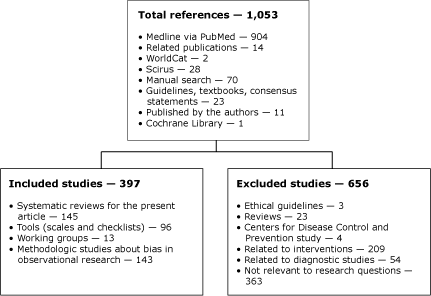
We found 145 eligible systematic reviews of observational nontherapeutic studies (study flow in the Appendix Figure) (32-176). The number of published systematic reviews increased from 17 during 1990-1994 to 56 during 2005-2008. Most of the studies were conducted in the United States (55 publications) or in the United Kingdom (28 publications) (Appendix Table 2). Half of the systematic reviews (73 publications) were funded by nonprofit organizations; 56 (39%) reviews did not publish their funding sources, 4 reviews received industry support, and 10 were sponsored jointly by industry and nonprofit organizations. Almost three-fourths (106) of the authors of systematic reviews did not disclose conflict of interest; 35 publications stated that the authors do not have any conflict of interest; and 4 studies were conducted by authors who reported conflict of interest. The studies were published in 49 journals. Most systematic reviews (122 studies) assessed risk factors for chronic diseases, 19 summarized estimates of prevalence or incidence, 2 studies reported prevalence and associations with risk factors, and 2 studies examined levels of risk factors. Most studies reported incidence and risk factors for cardiovascular diseases (46 studies) or cancer (26 studies).
Quality of systematic reviews
Less than half of the studies reported study flow (49%), assessed gray literature (27%), or addressed language bias (29%) (Table 1). Only 2% of reviews abstracted sponsorship of individual studies and none abstracted the disclosure of conflict of interest by the authors of individual studies that were eligible for the reviews. Pooling was performed in 137 studies; of these, 62% used a random effects model; 57% reported detecting significant heterogeneity across the studies; and 19% did not provide any information about statistical heterogeneity in pooled estimates. The proportion of systematic reviews that met quality criteria including study flow, assessment of gray literature, or the abstraction of funding sources of included studies did not show significant trends from 1990 through 2008. The proportion of systematic reviews that assessed language bias increased from 8% during 1995-1999 to 41% during 2005-2008. In later years, more studies reported using random effects models (79% during 2005-2008 vs 39% during 1995-1999) and tests for statistical heterogeneity (89% during 2005-2008 vs 65% during 1995-1999).
Internal quality evaluation
Planned and detailed quality assessment of included studies was reported in 37% of systematic reviews, and 18% abstracted more than 1 criterion of external or internal quality; significant positive trends were reported during the evaluated time (Table 1). Quality assessment was masked in 3 studies. Development of the appraisals, including references to previously published tools, was reported in 32 studies, but only 6 tested interobserver agreement for quality assessment.
Quality of systematic review by explanatory factors
The quality of systematic reviews did not differ much by study location or by the journal of publication. Systematic reviews of prevalence or incidence or risk factors of the diseases did not differ in their quality measures. Sponsorship was not associated with quality of the reviews. The role of conflict of interest was impossible to establish because the authors of 56 reviews did not disclose funding and authors of 106 reviews did not disclose conflict of interest.
Explanatory factors of internal quality evaluation of included studies
The journal of publication, topic of the review, and continent where the review was conducted were not associated with the likelihood of internal quality evaluation. Systematic reviews of risk factors tended to conduct internal quality evaluation of the included studies more often than reviews of incidence or prevalence or of levels of risk factors. Systematic reviews sponsored by nonprofit organizations conducted internal quality evaluations of individual studies more often than reviews that received corporate funding. Systematic reviews that disclosed conflict of interest conducted internal quality evaluation of individual studies less frequently (10 of 39 studies; 26%) than reviews with no disclosure (44 of 106 studies; 42%). Odds of formal internal quality evaluation (OR, 1.10 per year; 95% CI, 1.02-1.19) and either planned, formal internal quality evaluation or abstraction of quality criteria (OR, 1.17 per year; 95% CI, 1.08-1.26) increased over time. Disclosure of conflict of interest by the authors of systematic reviews was not associated with greater odds of internal quality evaluation.
Quality of systematic reviews by internal quality evaluation
Complete documentation of the literature search including time period, databases searched, and exact literature search strings was less common among reviews with planned, formal internal quality evaluation (48 studies, 35%) than among reviews without it (90 studies, 65%) (Table 2). However, reviews that either abstracted selected quality criteria or planned, formal internal quality evaluation reported partial (6 studies) or complete (74 studies) information about the literature search more often than studies that did not evaluate quality of included studies (64 studies). Reviews that did not justify exclusion of non-English studies ignored quality of individual studies more often (72 studies) than reviews with planned, formal internal quality evaluation (31 studies). The same pattern was present for publication bias: the reviews that did not mention gray literature also ignored the quality of individual studies. The reviews reporting attempts to contact the authors of included studies either performed planned, formal internal quality evaluation or abstracted selected quality criteria more often than reviews without such attempts (OR, 2.3; 95% CI, 1.1-4.7). Reviews with complete reporting of study flow performed planned, formal internal quality evaluation or abstracted quality criteria more often (51 studies) than reviews without study flows (20 studies). More than half of systematic reviews without planned, formal internal quality evaluation (44 studies) also did not report study flow.
The association between quality of systematic reviews and sponsor participation in the data collection, analyses, and interpretation was difficult to analyze because this information was either omitted or reported in various ways. Less than 10% of systematic reviews contained a clear statement that the sponsors did not play any role in gathering the studies or analyzing or interpreting the results and did not influence the content of the manuscript. Other reviews omitted mention of the role of the sponsor in approval of the manuscript or provided a general statement that sponsors did not influence the conclusions or the content of the paper. Two reviews included statements of unconditional or unrestricted sponsorship of the meta-analyses.
Our analyses showed that less than half of the systematic reviews of nontherapeutic observational studies that were published in core clinical journals met each quality criterion. Quality of systematic reviews did not improve over time. Planned, formal internal quality evaluations of the included studies was reported in less than half of systematic reviews, but the prevalence of internal quality evaluations has increased during the last decade. Our findings are in concordance with previously published methodologic analyses of systematic reviews that also found inconsistent quality and incomplete internal quality evaluation of individual studies (6). Methodologic analyses of systematic reviews that focused on particular diseases or conditions demonstrated that half of the publications had major flaws in design and reporting. For instance, systematic reviews of therapies for renal diseases failed to assess the methodologic quality of included studies (177). Methodologic analyses of systematic reviews of interventions showed that 69% of those randomly selected in MEDLINE meta-analyses did not analyze quality of trials (22). Most (68%) systematic reviews of diagnostic tests for cancer did not provide formal assessments of study quality (178). We also found that the quality of reviews did not differ among types of studies (incidence or risk factors for diseases), types of diseases, or journal of publication.
Journal commitment to high-quality research, however, was associated with improved reporting quality of the publications. For example, adoption by journals of the Consolidated Standards of Reporting Trials (CONSORT) improved the quality of the publications of interventional studies (179,180). An endorsement of the developed standards for observational studies including MOOSE and STROBE checklists may also improve quality of the publications. We did not analyze how many core clinical journals adopted these standards and how quality of the publications changed depending on this adaptation. Peer review of submitted manuscripts should include quality assessment using validated tools (12).
We could not identify the factors that can explain differences in quality of systematic reviews. The role of sponsorship and conflict of interest could not be estimated because of poor reporting of this information. The quality and reliability of quality evaluation of the included studies is unclear because development of the appraisals was described in a small proportion of systematic reviews (32 of 80 studies), and only 6 of 80 studies tested interobserver agreement for quality assessment. We did not evaluate all reviews of observational studies that were published in epidemiologic journals. However, it is unlikely that the quality of reviews published in other journals would be better than those in core clinical journals. Future research should investigate the factors that can explain differences in the quality of systematic reviews.
Peer reviewed publications of high-quality systematic reviews can provide the best available research evidence for evidence-based public health (24). Evidence-based decisions can improve public health practice in preventing incidence and progression of chronic diseases (25). In our analysis, less than half of the systematic reviews of observational nontherapeutic studies met quality criteria established in the MOOSE, STROBE, and AMSTAR statements. Internal quality evaluation of included studies should be an essential part of evidence synthesis, but only half of the reviews reported such evaluation. Collaborative efforts from investigators and journal editors are needed to improve quality of systematic reviews.
This article is based on research conducted by the Minnesota Evidence-based Practice Center under contract to the Agency for Healthcare Research and Quality (AHRQ), Rockville, Maryland (contract no. 290-02-0009).
We thank our reviewers David Atkins, MD, John Hoey, MD, and Christine Laine, MD, for reviewing and commenting on the draft; our collaborating experts, Mohammed Ansari, MBBS, Ethan Balk, MD, Nancy Berkman, PhD, Chantelle Garritty, Mark Grant, MD, Gail Janes, PhD, Margaret Maglione, MPP, David Moher, PhD, Mona Nasser, DDS, Gowri Raman, MD, Karen Robinson, MD, Jodi Segal, MD, and Thomas Trikalinos, PhD, for their scientific input throughout this project; and Carmen Kelly, PharmD, our task order officer, and Stephanie Chang, MD, medical officer, at AHRQ for their guidance throughout the project. We also thank librarian Judith Stanke for her contributions to the literature search; research assistants Emily Zabor, candidate for the master of science degree (MS) in biostatistics, and Akweley Ablorh, candidate for MS in biostatistics, for the data abstraction, quality control, and synthesis of evidence; Zhihua Bian, candidate for MS in biostatistics, for her statistical help; Zhiyuan Xu, candidate for MS in applied economics, for his work creating the ACCESS database; Dean McWilliams for his assistance in database development; Qi Wang, research fellow, for her statistical expertise in reliability testing; Susan Duval, PhD, for her help estimating sample size; Marilyn Eells for editing and formatting the report; and Nancy Russell, MLS, and Rebecca Schultz for their assistance gathering data from the experts and formatting the tables, and Christa Prodzinski for quality control of the data.
Corresponding Author: Tatyana Shamliyan, MD, MS, Minnesota Evidence-based Practice Center, University of Minnesota School of Public Health, D351 Mayo (MMC 197), 420 Delaware St SE, Minneapolis, MN 55455. Telephone: 612-624-1185. E-mail: shaml005@umn.edu.
Author Affiliations: Robert L. Kane, Stacy Jansen, University of Minnesota School of Public Health, Minneapolis, Minnesota.
West S, King V, Carey TS, Lohr KN, McKoy N, Sutton SF, et al. Systems to rate the strength of scientific evidence. Evidence Report/Technology Assessment no. 47 (Prepared by the Research Triangle Institute — University of North Carolina Evidence-based Practice Center under Contract no. 290-97-0011). AHRQ Publication no. 02-E016. Rockville (MD): Agency for Healthcare Research and Quality; 2002.
US Preventive Services Task Force, Agency for Healthcare Research and Quality. The guide to clinical preventive services, 2008: recommendations of the US Preventive Services Task Force. Rockville (MD): Agency for Healthcare Research and Quality; 2008.
Methods guide for comparative effectiveness reviews. Agency for Healthcare Research and Quality. http://www.effectivehealthcare.ahrq.gov/repFiles/ 20090427IdenttifyingTopics.pdf. Accessed June 2010.
Brownson RC, Gurney JG, Land GH. Evidence-based decision making in public health. J Public Health Manag Pract 1999;5(5):86-97.
Higgins J, Green S. The Cochrane handbook for systematic reviews of interventions 4.2.6, updated September 2006. http://www2.cochrane.org/resources/handbook/handbook.pdf. Accessed July 2010.
WorldCat. OCLC Online Computer Library Center. http://www.oclc.org/worldcat/. Accessed July 2010.
Scirus for scientific information only. Elsevier. http://www.scirus.com. Accessed July 2010.
Principles of epidemiology in public health practice: an introduction to applied epidemiology and biostatistics. 3rd edition. Atlanta (GA): US Department of Health and Human Services, Centers for Disease Control and Prevention, Office of Workforce and Career Development; 2006.
Higgins JPT, Green S, editors. Cochrane handbook for systematic reviews of interventions, version 5.0.2 [updated September 2009]. London (GB): Cochrane Collaboration; 2009. http://www.cochrane-handbook.org/. Accessed July 2010.
Table 1. Quality Criteria of Systematic Reviews of Observational Nontherapeutic Studies Published in Core Clinical Journals, by Year of Publication, 1990 Through June 2008
Evaluated Criteria
1990-1994, n (N = 17)
1995-1999, n (N = 26)
2000-2004, n (N = 46)
2005-2008, n (N = 56)
Total, n (N = 145)
P Valuea
Literature search
No information
0
0
1
0
1
.7
Documented partially
1
1
3
1
6
Complete documenting of databases used, exact search strings used, and time periods of searches
16
25
42
55
138
Contact with authors of the included studies
No information
13
17
31
31
92
.4
The authors of the review attempted to contact the authors of included studies
4
9
15
25
53
Study flow
Study flow not reported
10
15
29
18
72
.04
Study flow partially reported
0
0
0
2
2
Study flow reported with the list of retrieved citations, the list of excluded studies, and justification for exclusion for each study
7
11
17
36
71
Articles published in languages other than English
Language bias was not addressed
15
24
31
33
103
.01
Language bias was addressed: the authors included or justified exclusion of the non-English publications
2
2
15
23
42
Gray literature
Gray literature was not assessed
15
17
36
38
106
.25
Reporting of the method of handling abstracts and unpublished studies
2
9
10
18
39
Conflict of interest from included studies
Conflict of interest in included studies was not abstracted
17
26
46
56
145
NA
Sponsorship of the included studies
Sponsorship of included studies was not analyzed
16
25
46
55
142
.45
Sponsorship of included studies was analyzed
1
1
0
1
3
Pooled model obtained in the review
Pooling was not obtained
2
0
4
2
8
<.001
Fixed effects model was obtained for meta-analyses
10
16
11
10
47
Random effects model was obtained for meta-analyses
5
10
31
44
90
Heterogeneity across included studies
Heterogeneity across studies was not reported
6
9
7
6
28
.04
Heterogeneity across studies was not significant
5
6
13
11
35
Heterogeneity across studies was significant
6
11
26
39
82
Formal internal quality evaluation of included studies
Planned, formal internal quality evaluation with developed or previously published checklists or scales
3
6
20
25
54
<.001
Some selected criteria of external or internal quality of included studies were abstracted without planned, formal internal quality evaluation
2
3
1
20
26
No internal quality evaluation
12
17
25
11
65
Reliability of internal quality evaluation reported
2
4
8
18
32
.99
Internal quality evaluation was masked
1
1
0
1
3
.11
Abbreviation: NA, not applicable. aP values for overall ?2 test.
Table 2. Quality of Systematic Reviews, by Internal Quality Evaluation of Included Studies, 1990 Through June 2008
Quality Criterion
Definition of Formal Internal Quality Evaluation
Planned, Formal Internal Quality Evaluation or Abstraction of Some Quality Criteria, n
Neither Planned, Formal Internal Quality Evaluation nor Abstraction of Some Quality Criteria, n
Planned, Formal Internal Quality Evaluation, n
No Planned, Formal Internal Quality Evaluation, n
Literature search
P = .04a
P = .004b
No information
0
1
0
1
Documented partially
6
0
6
0
Complete documenting of databases used, exact search strings used, and time periods of searches
74
64
48
90
Contact with authors of the included studies
P = .02a
P = .25b
No information
44
48
31
61
The authors of the review attempted to contact the authors of included studies
36
17
23
30
Study flow
P < .001a
P = .003b
Study flow not reported
28
44
17
55
Study flow partially reported
1
1
1
1
Study flow reported with the list of retrieved citations, the list of excluded studies, and justification for exclusion for each study
51
20
36
35
Articles published in languages other than English
P = .001a
P = .01b
No information
48
55
31
72
Inclusion of non-English studies or justification for exclusion
32
10
23
19
Gray literature
P = .09a
P = .04b
No information
54
52
34
72
Reporting of the method of handling abstracts and unpublished studies
26
13
20
19
Conflict of interest from included studies
No information
80
65
54
91
Sponsorship of the included studies
P = .44a
P = .18b
No information
79
63
54
88
Sponsorship of included studies was abstracted
1
2
0
3
Pooled model obtained in the review
P < .001a
P = .06b
Not applicable (no pooling)
6
2
5
3
Fixed effects model
15
32
12
35
Random effects model
59
31
37
53
Heterogeneity across included studies
P = .27a
P = .67b
Not reported
13
15
9
19
Heterogeneity was not significant
17
18
15
20
Heterogeneity was significant at least for one association
50
32
30
52
aP value for overall ?2 test between planned, formal internal quality evaluation or abstraction of some quality criteria versus neither planned, formal internal quality evaluation nor abstraction of some quality criteria. bP value for overall ?2 test between planned, formal internal quality evaluation versus no planned, formal internal quality evaluation.
Table 1. Search Strategy and Exact Search Strings Used to Identify Systematic Reviews of Observational Studies, Scales and Checklists for Internal Quality Evaluation, and Studies About Bias in Observational Research, 1966 Through June 2008
Search Method
No. of Articles Identified
Search strategy for Ovid MEDLINE
1. exp Research Design/st [Standards]
4,303
2. exp Chronic Disease/ep [Epidemiology]
1,619
3. exp Urinary Incontinence/ep [Epidemiology]
1,155
4. exp Fecal Incontinence/ep [Epidemiology]
328
5. exp “Sleep Initiation and Maintenance Disorders”/ep [Epidemiology]
565
6. exp Depression/ep [Epidemiology]
4,700
7. exp Depressive Disorder/ep [Epidemiology]
6,816
8. exp Myocardial Infarction/
43,531
9. 6 or 7
11,214
10. 8 and 9
105
11. 2 or 3 or 4 or 5 or 10
3,636
12. 1 and 11
9
13. exp Data Collection/mt, st [Methods, Standards]
36,173
14. exp “Bias (Epidemiology)”/
25,369
15. exp Questionnaires/st [Standards]
3,879
16. exp Evidence-Based Medicine/
27,487
17. 13 or 14 or 15 or 16
86,857
18. 11 and 17
127
19. 12 or 18
133
20. limit 19 to english language
124
21. exp “Predictive Value of Tests”/
62,290
22. exp “Reproducibility of Results”/
126,475
23. 21 or 22
182,941
24. 11 and 23
126
25. limit 24 to english language
121
26. 20 or 25
224
27. exp randomized controlled trial/
151,027
28. 11 and 27
74
29. exp research design/
134,468
30. 28 and 29
15
31. 1 and 16
547
32. ep.fs.
434,923
33. exp epidemiology/
6,500
34. 32 or 33
437,784
35. 31 and 34
29
36. exp incidence/
81,260
37. exp prevalence/
83,713
38. 36 or 37
157,239
39. 31 and 38
14
40. 26 or 30 or 35 or 39
268
41. limit 40 to english language
267
42. limit 41 to journal article
251
43. from 42 keep 1-251
251
MEDLINE search via PubMed
(“Biomedical Research/methods”[MeSH] OR “Biomedical Research/organization and administration?[MeSH] OR “Biomedical Research/standards?[MeSH] OR “Biomedical Research/statistics and numerical data?[MeSH] OR “Biomedical Research/trends?[MeSH]) Limits: Humans, Journal Article, English
3,703
“Epidemiologic Studies?[MeSH] AND “Research Design/standards?[MeSH] AND (“Evaluation Studies as Topic/classification?[MeSH] OR “Evaluation Studies as Topic/methods?[MeSH] OR “Evaluation Studies as Topic/standards?[MeSH]) Limits: Humans, Journal Article, English
59
“Publishing/standards?[MeSH] AND “Epidemiologic Methods?[MeSH] AND “Research Design/standards?[MeSH] Limits: Humans, Journal Article, English
65
“STROBE Initiative”[Corporate Author]
10
“Bias (Epidemiology)?[MeSH] AND “Epidemiologic Studies?[MeSH] AND “Epidemiologic Methods?[MeSH] AND “Research Design/standards?[MeSH] Limits: Humans, Journal Article, English
97
“Evidence-Based Medicine?[MeSH] AND “Epidemiologic Studies?[MeSH] AND ”Epidemiologic Methods?[MeSH] AND “Research Design/standards?[MeSH] Limits: Humans, Journal Article, English
25
“Research Design/standards?[MeSH] AND “Epidemiologic Studies?[MeSH] AND “Epidemiologic Measurements?[MeSH] AND “Bias (Epidemiology)?[MeSH] Limits: Humans, Journal Article, English AND “Incidence?[MeSH] Limits: Humans, Journal Article, English
8
“Research Design/standards?[MeSH] AND “Epidemiologic Studies?[MeSH] AND “Epidemiologic Measurements?[MeSH] AND “Bias (Epidemiology)?[MeSH] Limits: Humans, Journal Article, English AND “Prevalence?[MeSH] Limits: Humans, Journal Article, English
7
(“Prevalence”[MeSH]) AND systematic[sb] “Working group” Limits: English
“Review Literature as Topic”[MeSH] AND “Research Design/standards”[MeSH] AND “Epidemiologic Studies?[MeSH] Limits: Humans, English, Core clinical journals
0
“Review Literature as Topic”[MeSH] AND “Epidemiologic Studies?[MeSH] AND “Quality control?[MeSH]
1
“Incidence”[MeSH] AND “Chronic Disease/epidemiology?[MeSH] AND “Peer Review, Research?[MeSH] AND “Research Design/standards?[MeSH]
0
“Incidence”[MeSH] AND “Chronic Disease/epidemiology?[MeSH] AND “Peer Review, Research?[MeSH]
0
“Incidence”[MeSH] AND “Chronic Disease/epidemiology?[MeSH] AND “Research Design/standards?[MeSH]
0
“Incidence”[MeSH] AND “Chronic Disease/epidemiology?[MeSH] AND (“Data Collection/methods?[MeSH] OR “Data Collection/standards?[MeSH])
5
“Incidence”[MeSH] AND “Chronic Disease/epidemiology?[MeSH] AND “Bias (Epidemiology)?[MeSH]
1
“Incidence”[MeSH] AND “Chronic Disease/epidemiology?[MeSH] AND (“Questionnaires/methods?[MeSH] OR “Questionnaires/standards?[MeSH])
0
“Incidence”[MeSH] AND “Chronic Disease/epidemiology?[MeSH] AND “Evidence-Based Medicine?[MeSH]
2
“Incidence”[MeSH] AND “Chronic Disease/epidemiology?[MeSH] AND “Reproducibility of Results?[MeSH]
3
“Prevalence”[MeSH] AND “Chronic Disease/epidemiology?[MeSH] AND “Peer Review, Research?[MeSH] AND “Research Design/standards?[MeSH]
0
“Prevalence”[MeSH] AND “Chronic Disease/epidemiology”[MeSH] AND “Peer Review, Research”[MeSH]
0
“Prevalence”[MeSH] AND “Chronic Disease/epidemiology”[MeSH] AND “Research Design/standards”[MeSH]
0
“Prevalence”[MeSH] AND “Chronic Disease/epidemiology”[MeSH] AND (“Data Collection/methods”[MeSH] OR “Data Collection/standards”[MeSH])
16
“Prevalence”[MeSH] AND “Chronic Disease/epidemiology”[MeSH] AND “Bias (Epidemiology)”[MeSH]
6
“Prevalence”[MeSH] AND “Chronic Disease/epidemiology”[MeSH] AND (“Questionnaires/methods”[MeSH] OR “Questionnaires/standards”[MeSH])
1
“Prevalence”[MeSH] AND “Chronic Disease/epidemiology”[MeSH] AND “Evidence-Based Medicine”[MeSH]
0
“Prevalence”[MeSH] AND “Chronic Disease/epidemiology”[MeSH] AND “Reproducibility of Results”[MeSH]
12
“Risk Factors”[MeSH] AND “Chronic Disease/epidemiology”[MeSH] AND “Peer Review, Research”[MeSH] AND “Research Design/standards”[MeSH]
0
“Risk Factors”[MeSH] AND “Chronic Disease/epidemiology”[MeSH] AND “Peer Review, Research”[MeSH]
0
“Risk Factors”[MeSH] AND “Chronic Disease/epidemiology”[MeSH] AND “Research Design/standards”[MeSH]
1
“Risk Factors”[MeSH] AND “Chronic Disease/epidemiology”[MeSH] AND (“Data Collection/methods”[MeSH] OR “Data Collection/standards”[MeSH])
18
“Risk Factors”[MeSH] AND “Chronic Disease/epidemiology”[MeSH] AND “Bias (Epidemiology)”[MeSH]
7
“Risk Factors”[MeSH] AND “Chronic Disease/epidemiology”[MeSH] AND (“Questionnaires/methods”[MeSH] OR “Questionnaires/standards”[MeSH])
1
“Risk Factors”[MeSH] AND “Chronic Disease/epidemiology”[MeSH] AND “Evidence-Based Medicine”[MeSH]
4
“Risk Factors”[MeSH] AND “Chronic Disease/epidemiology”[MeSH] AND “Reproducibility of Results”[MeSH]
10
“Health Care Quality, Access, and Evaluation”[MeSH] AND “Chronic Disease/epidemiology”[MeSH] AND “Peer Review, Research”[MeSH] AND “Research Design/standards”[MeSH]
0
“Health Care Quality, Access, and Evaluation”[MeSH] AND “Chronic Disease/epidemiology”[MeSH] AND “Peer Review, Research”[MeSH]
0
“Health Care Quality, Access, and Evaluation”[MeSH] AND “Chronic Disease/epidemiology”[MeSH] AND “Research Design/standards”[MeSH]
4
“Health Care Quality, Access, and Evaluation”[MeSH] AND “Chronic Disease/epidemiology”[MeSH] AND “Evidence-Based Medicine”[MeSH]
8
“Health Care Quality, Access, and Evaluation”[MeSH] AND “Chronic Disease/epidemiology”[MeSH] AND “Bias (Epidemiology)”[MeSH]
33
“Models, Statistical”[MeSH] AND “Risk Factors”[MeSH] AND “Chronic Disease/epidemiology”[MeSH] AND “Research Design/standards”[MeSH]
0
“Models, Statistical”[MeSH] AND “Incidence”[MeSH] AND “Chronic Disease/epidemiology”[MeSH] AND “Research Design/standards”[MeSH]
0
“Models, Statistical”[MeSH] AND “Prevalence”[MeSH] AND “Chronic Disease/epidemiology”[MeSH] AND “Research Design/standards”[MeSH]
0
“Epidemiologic Studies”[MeSH] AND “Models, Statistical”[MeSH] AND “Research Design/standards”[MeSH]
47
“Prevalence”[MeSH] AND “Epidemiologic Studies”[MeSH] AND “Models, Statistical”[MeSH] AND “Bias (Epidemiology)”[MeSH]
61
“Incidence”[MeSH] AND “Epidemiologic Studies”[MeSH] AND “Models, Statistical”[MeSH] AND “Bias (Epidemiology)”[MeSH]
66
“Research Design/standards”[MeSH] AND (“Biomedical Research/methods”[MeSH] OR “Biomedical Research/organization and administration”[MeSH] OR “Biomedical Research/standards”[MeSH] OR “Biomedical Research/statistics and numerical data”[MeSH] OR “Biomedical Research/trends”[MeSH]) Limits: Humans, Journal Article, English
Figure. Study flow to identify systematic reviews of observational studies, scales, and checklists for planned formal internal quality evaluation, and studies about bias in observational research, 1990 through June 2008. [A text description of this figure is also available.]
Table 2. Quality of Systematic Review and Meta-Analyses of Nontherapeutic Observational Studies Published in Core Clinical Journals, 1990 through June 2008
Publication Characteristics
Outcome
Estimate
Assessment of Quality of Included Studies
Bracken, 1990 (32) Country: United States Journal: Obstet Gynecol Sponsorship: Not reported Conflict of interest (COI): Not reported Sponsor participation in data analyses: Not reported
Congenital malformations in offspring
Risk
No
Romieu et al, 1990 (33) Country: United States Journal: Cancer Sponsorship: Government COI: Not reported Sponsor participation in data analyses: Not reported
Breast cancer
Risk
Quality criteria abstracted
Haughey et al, 1992 (34) Country: United States Journal: Ann Otol Rhinol Laryngol Sponsorship: Not reported COI: Not reported Sponsor participation in data analyses: Not reported
Second malignant tumors in head and neck cancer
Risk
No
Lemon et al, 1992 (35) Country: United States Journal: Cancer Sponsorship: Government COI: Not reported Sponsor participation in data analyses: Not reported
Nonfamilial breast cancer
Continuous variable
No
McKenna, 1992 (36) Country: United Kingdom Journal: Am J Med Sponsorship: Nonprofit organization, nursing home COI: Not reported Sponsor participation in data analyses: Not reported
Differences in vitamin D status
Prevalence
Quality criteria abstracted
Morris et al, 1992 (37) Country: United States Journal: Am J Public Health Sponsorship: Not reported COI: Not reported Sponsor participation in data analyses: Not reported
Cancer
Risk
Yes
Myers and Basinski, 1992 (38) Country: Canada Journal: Arch Intern Med Sponsorship: Nonprofit organization, award COI: Not reported Sponsor participation in data analyses: Not reported
Coronary heart disease
Risk
No
Becker et al, 1993 (39) Country: United States Journal: Ann Emerg Med Sponsorship: Not reported COI: Not reported Sponsor participation in data analyses: Not reported
Survival of cardiac arrest
Risk
No
Brownson et al, 1993 (40) Country: United States Journal: Arch Intern Med Sponsorship: Not reported COI: Not reported Sponsor participation in data analyses: Not reported
Adult leukemia
Risk
Yes
Ernst and Resch, 1993 (41) Country: Austria Journal: Ann Intern Med Sponsorship: Not reported COI: Not reported Sponsor participation in data analyses: Not reported
Cardiovascular risk factor
Risk
No
Katerndahl, 1993 (42) Country: United States Journal: J Nerv Ment Dis Sponsorship: Not reported COI: Not reported Sponsor participation in data analyses: Not reported
Panic disorder and mitral valve prolapse
Risk
Yes
Harris and Barraclough, 1994 (43) Country: United Kingdom Journal: Medicine Sponsorship: Industry COI: Not reported Sponsor participation in data analyses: Not reported
Suicide
Risk
No
Kawachi et al, 1994 (44) Country: United States Journal: Br Heart J Sponsorship: Industry, scholarship COI: Not reported Sponsor participation in data analyses: Not reported
Coronary heart disease
Risk
No
Law et al, 1994 (45) Country: United Kingdom Journal: BMJ Sponsorship: Not reported COI: Not reported Sponsor participation in data analyses: Not reported
Hazards of reducing serum cholesterol
Risk
No
Law et al, 1994 (46) Country: United Kingdom Journal: BMJ Sponsorship: Not reported COI: Not reported Sponsor participation in data analyses: Not reported
Ischemic heart disease
Risk
No
Steffen et al, 1994 (47) Country: Switzerland Journal: JAMA Sponsorship: Not reported COI: Not reported Sponsor participation in data analyses: Not reported
Hepatitis A
Risk
No
Zhang and Begg, 1994 (48) Country: United States Journal: Int J Epidemiol Sponsorship: Government COI: Not reported Sponsor participation in data analyses: Not reported
Cervical neoplasia
Risk
No
Everhart and Wright, 1995 (49) Country: United States Journal: JAMA Sponsorship: Not reported COI: Not reported Sponsor participation in data analyses: Not reported
Pancreatic cancer
Risk
No
Feinberg et al, 1995 (50) Country: United States Journal: Arch Intern Med Sponsorship: Not reported COI: Not reported Sponsor participation in data analyses: Not reported
Atrial fibrillation
Prevalence
No
Ritchie and Kildea, 1995 (51) Country: France Journal: Lancet Sponsorship: Not reported COI: Not reported Sponsor participation in data analyses: Not reported
Senile dementia
Prevalence
No
Raman-Wilms et al, 1995 (52) Country: Canada Journal: Obstet Gynecol Sponsorship: Not reported COI: Not reported Sponsor participation in data analyses: Not reported
Fetal genital effects
Risk
No
Hatsukami and Fischman, 1996 (53) Country: United States Journal: JAMA Sponsorship: Not reported COI: Not reported Sponsor participation in data analyses: Not reported
Use of crack cocaine and cocaine hydrochloride
Prevalence
No
Hill and Schoener, 1996 (54) Country: United States Journal: Am J Psychiatry Sponsorship: Not reported COI: Not reported Sponsor participation in data analyses: Not reported
Attention deficit hyperactivity disorder
Prevalence
No
Hackshaw et al, 1997 (55) Country: United Kingdom Journal: BMJ Sponsorship: Government COI: Reported as not a conflict of interest Sponsor participation in data analyses: “The views expressed are those of the authors and not necessarily those of the Department of Health.”
Lung cancer
Risk
No
Kluijtmans et al, 1997 (56) Country: Netherlands Journal: Circulation Sponsorship: Nonprofit organization, industry COI: Not reported Sponsor participation in data analyses: Not reported
Coronary artery disease
Risk
No
Law and Hackshaw, 1997 (57) Country: United Kingdom Journal: BMJ Sponsorship: None COI: Reported as not a conflict of interest Sponsor participation in data analyses: None
Hip fracture
Risk
No
Law et al, 1997 (58) Country: United Kingdom Journal: BMJ Sponsorship: Government COI: Reported as not a conflict of interest Sponsor participation in data analyses: “The Department of Health (England) supported this work, although the views are our own.”
Ischemic heart disease
Risk
No
Danesh et al, 1998 (59) Country: United Kingdom Journal: JAMA Sponsorship: Scholarship, nonprofit organization COI: Not reported Sponsor participation in data analyses: Not reported
Coronary heart disease
Risk
Yes
French and Brocklehurst, 1998 (60) Country: United Kingdom Journal: Br J Obstet Gynaecol Sponsorship: Not reported COI: Not reported Sponsor participation in data analyses: Not reported
Survival in women infected with human immunodeficiency virus
Risk
Yes
Forgie et al, 1998 (61) Country: Canada Journal: Arch Intern Med Sponsorship: Industry, government, fellowships, nonprofit organization COI: Not reported Sponsor participation in data analyses: Not reported
Allogeneic blood transfusion
Risk
No
Huang et al, 1998 (62) Country: Canada Journal: Gastroenterology Sponsorship: Not reported COI: Not reported Sponsor participation in data analyses: Not reported
Gastric cancer
Risk
Yes
Johnston et al, 1998 (63) Country: United States Journal: Neurology Sponsorship: Not reported COI: Not reported Sponsor participation in data analyses: Not reported
Subarachnoid hemorrhage
Risk
No
Lazarou et al, 1998 (64) Country: Canada Journal: JAMA Sponsorship: Scholarship, nonprofit organization COI: Not reported Sponsor participation in data analyses: Not reported
Adverse drug reactions in hospitalized patients
Prevalence
Quality criteria abstracted
Ray, 1998 (65) Country: Canada Journal: Arch Intern Med Sponsorship: Not reported COI: Not reported Sponsor participation in data analyses: Not reported
Venous thromboembolic disease
Risk
Quality criteria abstracted
Spencer-Green, 1998 (66) Country: United States Journal: Arch Intern Med Sponsorship: Not reported COI: Not reported Sponsor participation in data analyses: Not reported
Secondary diseases from primary Reynaud phenomenon
Risk
Yes
Stratton et al, 1998 (67) Country: United Kingdom Journal: Br J Obstet Gynaecol Sponsorship: Research fellowship, nonprofit organization COI: Not reported Sponsor participation in data analyses: Not reported
Ovarian cancer
Risk
No
Zock and Katan, 1998 (68) Country: Netherlands Journal: Am J Clin Nutr Sponsorship: Nonprofit organization COI: Not reported Sponsor participation in data analyses: Not reported
Breast, colorectal, and prostate cancer
Risk
Quality criteria abstracted
Zondervan et al, 1998 (69) Country: United Kingdom Journal: Br J Obstet Gynaecol Sponsorship: Nonprofit organization COI: Not reported Sponsor participation in data analyses: Not reported
Chronic pelvic pain in women
Prevalence
No
Angelillo and Villari, 1999 (70) Country: Italy Journal: Bull World Health Organ Sponsorship: Not reported COI: Not reported Sponsor participation in data analyses: Not reported
Childhood leukemia
Risk
Yes
He et al, 1999 (71) Country: United States Journal: N Engl J Med Sponsorship: Nonprofit organization COI: Not reported Sponsor participation in data analyses: Not reported
Coronary heart disease
Risk
No
Shaffer et al, 1999 (72) Country: United States Journal: Am J Public Health Sponsorship: Nonprofit organization COI: Not reported Sponsor participation in data analyses: Not reported
Disordered gambling behavior
Prevalence
No
Wittrup et al, 1999 (73) Country: Denmark Journal: Circulation Sponsorship: Government COI: Not reported Sponsor participation in data analyses: Not reported
Ischemic heart disease
Risk
Yes
Yoder et al, 1999 (74) Country: United States Journal: Obstet Gynecol Sponsorship: Not reported COI: Not reported Sponsor participation in data analyses: Not reported
Fetus with isolated choroid plexus cysts
Risk
No
Christen et al, 2000 (75) Country: United States Journal: Arch Intern Med Sponsorship: Not reported COI: Not reported Sponsor participation in data analyses: Not reported
Cardiovascular disease
Risk
Yes
Cleophas et al, 2000 (76) Country: Netherlands Journal: Am J Cardiol Sponsorship: Not reported COI: Not reported Sponsor participation in data analyses: Not reported
Coronary artery disease
Risk
Yes
DiMatteo et al, 2000 (77) Country: United States Journal: Arch Intern Med Sponsorship: Industry, scholarship COI: Not reported Sponsor participation in data analyses: Not reported
Noncompliance with medical treatment
Risk
Quality criteria abstracted
WHO Collaborative Study Team on the Role of Breastfeeding on the Prevention of Infant Mortality, 2000 (78) Country: Brazil Journal: Lancet Sponsorship: Nonprofit organization COI: Not reported Sponsor participation in data analyses: Not reported
Infant and child mortality
Risk
No
Wilson et al, 2000 (79) Country: Canada Journal: Arch Intern Med Sponsorship: Not reported COI: Not reported Sponsor participation in data analyses: Not reported
Mortality after myocardial infarction
Risk
Yes
Zeegers et al, 2000 (80) Country: Netherlands Journal: Cancer Sponsorship: Not reported COI: Not reported Sponsor participation in data analyses: Not reported
Urinary tract cancer
Risk
Yes
Danesh et al, 2001 (81) Country: United Kingdom Journal: Circulation Sponsorship: Government, scholarship COI: Not reported Sponsor participation in data analyses: Not reported
Coronary heart disease
Risk
No
Eaden et al, 2001 (82) Country: United Kingdom Journal: Gut Sponsorship: Nonprofit organization COI: Not reported Sponsor participation in data analyses: Not reported
Colorectal cancer
Risk
Yes
Faraone et al, 2001 (83) Country: United States Journal: Am J Psychiatry Sponsorship: Government COI: Not reported Sponsor participation in data analyses: Not reported
Attention deficit hyperactivity disorder
Risk
Yes
Horta et al, 2001 (84) Country: Brazil Journal: Am J Public Health Sponsorship: Government COI: Not reported Sponsor participation in data analyses: Not reported
Early weaning
Risk
Yes
Rebora, 2001 (85) Country: Italy Journal: Arch Dermatol Sponsorship: Not reported COI: Not reported Sponsor participation in data analyses: Not reported
Coronary artery disease
Risk
Yes
Cannon et al, 2002 (86) Country: United Kingdom Journal: Am J Psychiatry Sponsorship: Research fellowship, nonprofit organization COI: Not reported Sponsor participation in data analyses: Not reported
Schizophrenia
Risk
No
Hellermann et al, 2002 (87) Country: United States Journal: Am J Med Sponsorship: Government, nonprofit organization, fellowship COI: Not reported Sponsor participation in data analyses: Not reported
Heart failure
Risk
No
Huang et al, 2002 (88) Country: Canada Journal: Lancet Sponsorship: Not reported COI: Reported as not a conflict of interest Sponsor participation in data analyses: Not reported
Peptic-ulcer disease
Risk
Yes
Huncharek et al, 2002 (89) Country: United States Journal: Am J Public Health Sponsorship: Nonprofit organization, industry COI: Not reported Sponsor participation in data analyses: Not reported
Malignant melanoma
Risk
Yes
Juul et al, 2002 (90) Country: Denmark Journal: Blood Sponsorship: Government, nonprofit organization COI: Not reported Sponsor participation in data analyses: “They had no role in gathering, analyzing, or interpreting the data and had no right to approve or disapprove the submitted paper.”
Factor V Leiden
Risk
Yes
Kelly et al, 2002 (91) Country: United States Journal: Neurology Sponsorship: Nonprofit organization, industry, fellowship COI: Not reported Sponsor participation in data analyses: Not reported
Risk of ischemic stroke
Risk
No
Klerk et al, 2002 (92) Country: Netherlands Journal: JAMA Sponsorship: Government, “public/private partnership” COI: Not reported Sponsor participation in data analyses: Not reported
Coronary heart disease
Risk
Yes
Kozer et al, 2002 (93) Country: Canada Journal: Am J Obstet Gynecol Sponsorship: Industry COI: Not reported Sponsor participation in data analyses: Not reported
Congenital anomalies
Risk
No
Law et al, 2002 (94) Country: United Kingdom Journal: Arch Intern Med Sponsorship: Not reported COI: Not reported Sponsor participation in data analyses: Not reported
Death after myocardial infarction
Risk
No
Wald et al, 2002 (95) Country: United Kingdom Journal: BMJ Sponsorship: None COI: Reported as not a conflict of interest Sponsor participation in data analyses: None
Cardiovascular disease
Risk
No
Wald and Link, 2002 (96) Country: United States Journal: J Infect Dis Sponsorship: Government COI: Not reported Sponsor participation in data analyses: Not reported
Human immunodeficiency virus infection
Risk
No
Benjamin et al, 2003 (97) Country: United States Journal: Pediatrics Sponsorship: Government COI: Not reported Sponsor participation in data analyses: Not reported
End-organ damage
Prevalence
No
Clarfield, 2003 (98) Country: Israel Journal: Arch Intern Med Sponsorship: Not reported COI: Reported as not a conflict of interest Sponsor participation in data analyses: Not reported
Reversible dementias
Prevalence
No
Cole and Dendukuri, 2003 (99) Country: Canada Journal: Am J Psychiatry Sponsorship: Not reported COI: Not reported Sponsor participation in data analyses: Not reported
Depression among elderly community subjects
Risk
Yes
Gisbert et al, 2003 (100) Country: Spain Journal: Gastroenterology Sponsorship: Nonprofit organization COI: Not reported Sponsor participation in data analyses: Not reported
Hepatitis C virus infection
Risk
Yes
Glatt et al, 2003 (101) Country: United States Journal: Am J Psychiatry Sponsorship: Government COI: Not reported Sponsor participation in data analyses: Not reported
Schizophrenia
Risk
No
Halbert et al, 2003 (102) Country: United States Journal: Chest Sponsorship: Industry COI: Not reported Sponsor participation in data analyses: Not reported
Prevalence estimates for chronic obstructive pulmonary disease
Prevalence
No
Huang et al, 2003 (103) Country: Canada Journal: Gastroenterology Sponsorship: Not reported COI: Not reported Sponsor participation in data analyses: Not reported
Gastric cancer
Risk
Yes
Rey et al, 2003 (104) Country: Canada Journal: Lancet Sponsorship: Government COI: Reported as not a conflict of interest Sponsor participation in data analyses: Not reported
Fetal loss
Risk
Yes
Riboli and Norat, 2003 (105) Country: France Journal: Am J Clin Nutr Sponsorship: Government COI: Reported as not a conflict of interest Sponsor participation in data analyses: Not reported
Cancer risk
Risk
No
Scholten-Peeters et al, 2003 (106) Country: Netherlands Journal: Pain Sponsorship: Not reported COI: Not reported Sponsor participation in data analyses: Not reported
Whiplash-associated disorders
Risk
Yes
Thurnham et al, 2003 (107) Country: United Kingdom Journal: Lancet Sponsorship: Government, fellowship COI: Reported as not a conflict of interest Sponsor participation in data analyses: “The funding source had no role in study design, data collection, data analysis, data interpretation, or in the writing of this report.”
Vitamin A deficiency
Continuous variable
No
Zeegers et al, 2003 (108) Country: Netherlands Journal: Cancer Sponsorship: Government COI: Not reported Sponsor participation in data analyses: Not reported
Prostate carcinoma
Risk
No
Burzotta et al, 2004 (109) Country: Italy Journal: Heart Sponsorship: Fellowship COI: Not reported Sponsor participation in data analyses: Not reported
Coronary ischemic syndromes
Risk
No
Casas et al, 2004 (110) Country: United Kingdom Journal: Circulation Sponsorship: Government, 1 author holds a chair of nonprofit organization COI: Not reported Sponsor participation in data analyses: Not reported
Ischemic heart disease
Risk
No
Casas et al, 2004 (111) Country: United Kingdom Journal: Arch Neurol Sponsorship: Fellowship COI: Not reported Sponsor participation in data analyses: Not reported
Ischemic stroke
Risk
No
He et al, 2004 (112) Country: United States Journal: Circulation Sponsorship: Not reported COI: Not reported Sponsor participation in data analyses: Not reported
Coronary heart disease mortality
Risk
No
Huang et al, 2004 (113) Country: United States Journal: Neurology Sponsorship: Government COI: Not reported Sponsor participation in data analyses: Not reported
Sporadic Parkinson disease
Risk
No
Klement et al, 2004 (114) Country: Israel Journal: Am J Clin Nutr Sponsorship: Medical center COI: Reported as not a conflict of interest Sponsor participation in data analyses: Not reported
Inflammatory bowel disease
Risk
Yes
Kovalevsky et al, 2004 (115) Country: United States Journal: Arch Intern Med Sponsorship: Not reported COI: Reported as not a conflict of interest Sponsor participation in data analyses: Not reported
Recurrent pregnancy loss
Risk
No
Levitan et al, 2004 (116) Country: United States Journal: Arch Intern Med Sponsorship: Not reported COI: Reported as not a conflict of interest Sponsor participation in data analyses: Not reported
Cardiovascular disease
Risk
No
Lovett et al, 2004 (117) Country: United Kingdom Journal: Neurology Sponsorship: Not reported COI: Not reported Sponsor participation in data analyses: Not reported
Subtype of ischemic stroke
Risk
Yes
Mitsikostas et al, 2004 (118) Country: Greece Journal: Brain Sponsorship: Not reported COI: Not reported Sponsor participation in data analyses: Not reported
Headache
Risk
No
Montanez et al, 2004 (119) Country: United States Journal: Arch Intern Med Sponsorship: Not reported COI: Reported as not a conflict of interest Sponsor participation in data analyses: Not reported
Total and cardiovascular mortality and sudden death
Risk
No
Woodbury and Houghton, 2004 (120) Country: Canada Journal: Ostomy Wound Manage Sponsorship: Not reported COI: Not reported Sponsor participation in data analyses: Not reported
Pressure ulcers
Prevalence
Yes
Bolland et al, 2005 (121) Country: New Zealand Journal: J Clin Endocrinol Metab Sponsorship: Scholarship COI: Not reported Sponsor participation in data analyses: Not reported
Increased body weight
Risk
Quality criteria abstracted
Contopoulos-Ioannidis et al, 2005 (122) Country: Greece Journal: J Allergy Clin Immunol Sponsorship: Not reported COI: Not reported Sponsor participation in data analyses: Not reported
Asthma phenotypes
Risk
Quality criteria abstracted
Dauchet et al, 2005 (123) Country: France Journal: Neurology Sponsorship: Nonprofit organization, educational institute COI: Reported as not a conflict of interest Sponsor participation in data analyses: Not reported
Stroke
Risk
No
Etminan et al, 2005 (124) Country: Canada Journal: BMJ Sponsorship: Government, fellowship COI: Reported as not a conflict of interest Sponsor participation in data analyses: Not reported
Ischemic stroke
Risk
Yes
Fazel et al, 2005 (125) Country: United Kingdom Journal: Lancet Sponsorship: Nonprofit organization COI: Reported as not a conflict of interest Sponsor participation in data analyses: “The sponsors of the study had no role in study design, data collection, data analysis, data interpretation, or writing of the report. The corresponding author had full access to all the data in the study and had final responsibility for the decision to submit for publication.”
Serious mental disorder
Prevalence
Quality criteria abstracted
Garc?a-Closas et al, 2005 (126) Country: United States Journal: Lancet Sponsorship: Nonprofit organization COI: Reported as not a conflict of interest Sponsor participation in data analyses: “The study sponsors had no role in the design of the study; in the collection, analysis, or interpretation of the data; or in the writing of the report. The corresponding author had full access to all the data in the study and had final responsibility for the decision to submit the paper for publication.”
Bladder cancer
Risk
No
Lee et al, 2005 (127) Country: United States Journal: Arthritis Rheum Sponsorship: Government, industry COI: Not reported Sponsor participation in data analyses: Unrestricted
Systemic lupus erythematosus
Risk
No
Lin and August, 2005 (128) Country: United States Journal: Obstet Gynecol Sponsorship: Not reported COI: Not reported Sponsor participation in data analyses: Not reported
Preeclampsia
Risk
No
McDonald et al, 2005 (129) Country: Canada Journal: Am J Obstet Gynecol Sponsorship: Not reported COI: Not reported Sponsor participation in data analyses: Not reported
Perinatal outcomes
Risk
Yes
Palmer, 2005 (130) Country: United States Journal: Arch Gen Psychiatry Sponsorship: Nonprofit organization COI: Not reported Sponsor participation in data analyses: Not reported
Lifetime risk of suicide in schizophrenia
Prevalence
Quality criteria abstracted
Sin et al, 2005 (131) Country: Canada Journal: Chest Sponsorship: Nonprofit organization, educational institute COI: Not reported Sponsor participation in data analyses: Not reported
Cardiovascular mortality
Risk
Yes
Boudville et al, 2006 (132) Country: Canada Journal: Ann Intern Med Sponsorship: Government, fellowship COI: Reported as not a conflict of interest Sponsor participation in data analyses: “The study sponsors had no role in the study design; in the collection, analysis, and interpretation of data; in the writing of the report; or in the decision to submit the paper for publication.”
Hypertension
Risk
No
Clark et al, 2006 (133) Country: United Kingdom Journal: Pediatrics Sponsorship: Fellowship COI: Not reported Sponsor participation in data analyses: Not reported
Fractures
Risk
Yes
de Boer et al, 2006 (134) Country: Netherlands Journal: Cancer Sponsorship: Not reported COI: Not reported Sponsor participation in data analyses: Not reported
Unemployment
Risk
Yes
Di Castelnuovo et al, 2006 (135) Country: Italy Journal: Arch Intern Med Sponsorship: Government COI: Not reported Sponsor participation in data analyses: “The sponsor of the study had no involvement in study design; data collection, analysis, or interpretation; writing of the report; or in the decision to submit the paper for publication.”
Total mortality in men and women
Risk
Yes
Flores-Mateo et al, 2006 (136) Country: United States Journal: Am J Clin Nutr Sponsorship: Nonprofit organization COI: Reported as not a conflict of interest Sponsor participation in data analyses: Not reported
Coronary heart disease
Risk
Yes
Galassi et al, 2006 (137) Country: United States Journal: Am J Med Sponsorship: Government COI: Not reported Sponsor participation in data analyses: Not reported
Cardiovascular disease
Risk
Quality criteria abstracted
Huxley et al, 2006 (138) Country: Australia Journal: BMJ Sponsorship: Government, fellowship, industry COI: Reported as not a conflict of interest Sponsor participation in data analyses: Unconditional
Fatal coronary heart disease
Risk
Quality criteria abstracted
Kahlenborn et al, 2006 (139) Country: United States Journal: Mayo Clin Proc Sponsorship: Government COI: Not reported Sponsor participation in data analyses: Not reported
Premenopausal breast cancer
Risk
Quality criteria abstracted
Larsson et al, 2006 (140) Country: Sweden Journal: Gastroenterology Sponsorship: Not reported COI: Not reported Sponsor participation in data analyses: Not reported
Esophageal, gastric, and pancreatic cancer
Risk
Quality criteria abstracted
Mahid et al, 2006 (141) Country: United States Journal: Mayo Clin Proc Sponsorship: Nonprofit organization COI: Not reported Sponsor participation in data analyses: Not reported
Inflammatory bowel disease
Risk
Yes
Owen et al, 2006 (142) Country: United Kingdom Journal: Am J Clin Nutr Sponsorship: Nonprofit organization COI: Reported as not a conflict of interest Sponsor participation in data analyses: Not reported
Type 2 diabetes
Risk
Quality criteria abstracted
Ownby et al, 2006 (143) Country: United States Journal: Arch Gen Psychiatry Sponsorship: Government COI: Not reported Sponsor participation in data analyses: Not reported
Alzheimer disease
Risk
Yes
Pavia et al, 2006 (144) Country: Italy Journal: Am J Clin Nutr Sponsorship: Not reported COI: Reported as not a conflict of interest Sponsor participation in data analyses: Not reported
Oral cancer
Risk
Yes
Riddle et al, 2006 (145) Country: United States Journal: Am J Trop Med Hyg Sponsorship: Not reported COI: Not reported Sponsor participation in data analyses: Not reported
Diarrhea
Prevalence
Yes
Rutledge et al, 2006 (146) Country: United States Journal: J Am Coll Cardiol Sponsorship: Not reported COI: Not reported Sponsor participation in data analyses: Not reported
Depression
Prevalence/ risk
Quality criteria abstracted
Smith et al, 2006 (147) Country: United States Journal: J Am Coll Cardiol Sponsorship: Government COI: Not reported Sponsor participation in data analyses: Not reported
Renal impairment
Risk
Yes
Weis et al, 2006 (148) Country: United States Journal: Arch Ophthalmol Sponsorship: Government COI: Reported as not a conflict of interest Sponsor participation in data analyses: Not reported
Uveal melanoma
Risk
Quality criteria abstracted
Williams et al, 2006 (149) Country: United Kingdom Journal: Arch Dis Child Sponsorship: Nonprofit organization COI: Reported as not a conflict of interest Sponsor participation in data analyses: Not reported
Autism spectrum disorders
Prevalence/ risk
Quality criteria abstracted
Bahekar et al, 2007 (150) Country: United States Journal: Am Heart J Sponsorship: Not reported COI: Not reported Sponsor participation in data analyses: Not reported
Coronary heart disease
Risk
Yes
Baurecht et al, 2007 (151) Country: Germany Journal: J Allergy Clin Immunol Sponsorship: Government, university COI: Reported as a conflict of interest Sponsor participation in data analyses: Not reported
Atopic eczema
Risk
No
Bellamy et al, 2007 (152) Country: United Kingdom Journal: BMJ Sponsorship: Government, fellowship COI: Reported as not a conflict of interest Sponsor participation in data analyses: Not reported
Cardiovascular disease
Risk
Quality criteria abstracted
Conde-Agudelo et al, 2007 (153) Country: Colombia Journal: Am J Obstet Gynecol Sponsorship: Government COI: Not reported Sponsor participation in data analyses: “The content of the paper has not been influenced by the sponsor.”
Maternal health
Risk
Yes
Dehghan et al, 2007 (154) Country: Netherlands Journal: Diabetes Sponsorship: University, government COI: Not reported Sponsor participation in data analyses: Not reported
Diabetes
Risk
No
Eichler et al, 2007 (155) Country: Switzerland Journal: Am Heart J Sponsorship: Nonprofit organization COI: Not reported Sponsor participation in data analyses: “The funding source had no influence on study design; in the collection, analysis, and interpretation of the data; in the writing of the manuscript; and in the decision to submit the manuscript for publication.”
First coronary events
Risk
Yes
Gami et al, 2007 (156) Country: United States Journal: J Am Coll Cardiol Sponsorship: Not reported COI: Not reported Sponsor participation in data analyses: Not reported
Cardiovascular events and death
Risk
Yes
Grulich et al, 2007 (157) Country: Australia Journal: Lancet Sponsorship: Government, fellowship, scholarship COI: Reported as a conflict of interest Sponsor participation in data analyses: “There was no funding source for this study. All authors had access to all the data. The corresponding author had final responsibility for the decision to submit for publication.”
Cancers
Risk
Yes
Havemann et al, 2007 (158) Country: United States Journal: Gut Sponsorship: Industry COI: Reported as a conflict of interest Sponsor participation in data analyses: Not reported
Asthma
Risk
Quality criteria abstracted
Hirtz et al, 2007 (159) Country: United States Journal: Neurology Sponsorship: Not reported COI: Reported as not a conflict of interest Sponsor participation in data analyses: Not reported
Common neurologic disorders
Prevalence
Yes
Huxley et al, 2007 (160) Country: Australia Journal: Am J Clin Nutr Sponsorship: Government, nonprofit organization COI: Reported as not a conflict of interest Sponsor participation in data analyses: “None of the funding sources had any role in the study design, data analysis, data interpretation, writing of the paper, or the decision to submit the paper for publication.”
Ischemic heart disease
Risk
Yes
Krishna and Kim, 2007 (161) Country: United States Journal: J Neurosurg Sponsorship: Government COI: Not reported Sponsor participation in data analyses: Not reported
Risk factors for subarachnoid hemorrhage
Risk
Quality criteria abstracted
Langan et al, 2007 (162) Country: United Kingdom Journal: Arch Dermatol Sponsorship: Nonprofit organization COI: Reported as not a conflict of interest Sponsor participation in data analyses: “The sponsor had no role in the design and conduct of the study; in the collection, analysis, and interpretation of data; or in the preparation, review, or approval of the manuscript.”
Eczema
Risk
Quality criteria abstracted
Larsson and Wolk, 2007 (163) Country: Sweden Journal: Am J Clin Nutr Sponsorship: Nonprofit organization COI: Reported as not a conflict of interest Sponsor participation in data analyses: Not reported
Colon and rectal cancer risk
Risk
Quality criteria abstracted
Larsson and Wolk, 2007 (164) Country: Sweden Journal: Gastroenterology Sponsorship: Nonprofit organization COI: Reported as not a conflict of interest Sponsor participation in data analyses: “The sponsor had no role in the study design or in the collection, analysis, and interpretation of the data.”
Liver cancer
Risk
Quality criteria abstracted
Liu et al, 2007 (165) Country: China Journal: J Am Coll Cardiol Sponsorship: Not reported COI: Not reported Sponsor participation in data analyses: Not reported
Recurrence of atrial fibrillation after successful electrical cardioversion
Risk
Yes
Loza and Chang, 2007 (166) Country: United States Journal: J Allergy Clin Immunol Sponsorship: Government, nonprofit organization COI: Reported as not a conflict of interest Sponsor participation in data analyses: Not reported
Atopic asthma risk
Risk
Yes
Pittas et al, 2007 (167) Country: United States Journal: J Clin Endocrinol Metab Sponsorship: Government COI: Reported as not a conflict of interest Sponsor participation in data analyses: Not reported
Type 2 diabetes
Risk
No
Polanczyk et al, 2007 (168) Country: Brazil Journal: Am J Psychiatry Sponsorship: Industry, foreign grants COI: Not reported Sponsor participation in data analyses: “There was no involvement of any funding source in the study design, data collection, analysis, interpretation of data, and writing of this article or in the decision to submit the article for publication.”
Attention deficit hyperactivity disorder
Prevalence
No
Rona et al, 2007 (169) Country: United Kingdom Journal: J Allergy Clin Immunol Sponsorship: Government COI: Reported as a conflict of interest Sponsor participation in data analyses: Not reported
Food allergy
Prevalence
Quality criteria abstracted
Sarwar et al, 2007 (170) Country: United Kingdom Journal: Circulation Sponsorship: Government, scholarship, industry COI: Reported as not a conflict of interest Sponsor participation in data analyses: Unrestricted
Coronary heart disease
Risk
No
Snoep et al, 2007 (171) Country: Netherlands Journal: Am Heart J Sponsorship: Not reported COI: Not reported Sponsor participation in data analyses: Not reported
Clopidogrel nonresponsiveness
Prevalence
Yes
Zintzaras and Kaditis, 2007 (172) Country: Greece Journal: Arch Pediatr Adolesc Med Sponsorship: Not reported COI: Not reported Sponsor participation in data analyses: Not reported
Blood pressure
Risk
Yes
Ageno et al, 2008 (173) Country: Italy Journal: Circulation Sponsorship: Not reported COI: Not reported Sponsor participation in data analyses: Not reported
Venous thromboembolism
Risk
Yes
Barclay et al, 2008 (174) Country: Australia Journal: Am J Clin Nutr Sponsorship: Government COI: Reported as not a conflict of interest Sponsor participation in data analyses: Not reported
Chronic disease risk
Risk
Quality criteria abstracted
Conde-Agudelo et al, 2008 (175) Country: United States Journal: Am J Obstet Gynecol Sponsorship: Government COI: Not reported Sponsor participation in data analyses: “The views expressed in this document are solely the responsibility of the authors and do not necessarily represent the views of the World Health Organization.”
Risk of preeclampsia
Risk
Yes
Schunkert et al, 2008 (176) Country: Germany Journal: Circulation Sponsorship: Government COI: Reported as not a conflict of interest Sponsor participation in data analyses: Not reported



 Table 2. Quality of Systematic Reviews, by Internal Quality Evaluation of Included Studies, 1990 Through June 2008