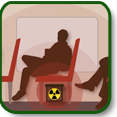
Radiation emergencies may be intentional (e.g., caused by terrorists) or unintentional. Below are some examples of different types of radiation emergencies. Click on the icons to find out what to do if a radiation emergency happens in your area.
Nuclear Emergencies
- A nuclear emergency involves the explosion of a nuclear weapon or improvised nuclear device (IND).
- The explosion produces an intense pulse of heat, light, air pressure, and radiation.
- Nuclear explosions produce fallout (radioactive materials that can be carried long distances by the wind).
Learn more about nuclear emergencies
Dirty Bomb or Radiological Dispersal Device (RDD)
- A dirty bomb (also known as a radiological dispersal device) is a mix of explosives such as dynamite, with radioactive powder or pellets.
- A dirty bomb cannot create an atomic blast.
- When the explosives are set off, the blast carries radioactive material into the surrounding area.
Learn more about dirty bombs
Radiological Exposure Device (RED)
- A radiological exposure device (also called a hidden sealed source) is made of or contains radioactive material.
- REDs are hidden from sight to expose people to radiation without their knowledge.
Learn more about radiological exposure devices
Transportation Accidents
- It is very unlikely that a transportation accident involving radiation would result in any radiation-related injuries or illnesses.
- Shipments involving significant amounts of radioactive material are required to have documentation, labels, and placards identifying their cargo as radioactive.
Learn more about transportation accidents
Occupational Accidents
- Radiation sources are found in a wide range of settings such as health care facilities, research institutions, and manufacturing operations.
- Accidents can occur if the radiation source is used improperly, or if safety controls fail.
Learn more about occupational accidents