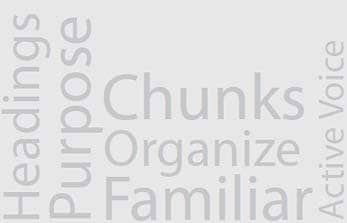
Keep the reader in mind as you make decisions about organization, word choice and presentation.
Plain language makes it easier for everyone to understand and use health information. Although plain language is a familiar idea, many organizations don’t use it as often as they should. The Plain Writing Act of 2010 requires federal agencies to train staff and use plain language when they communicate with the public.
Plain Language Resources
Everyday Words for Public Health Communication [282 KB, 44 Pages] Centers for Disease Control and Prevention Everyday Words for Public Health Communication offers expert recommendations from CDC’s Health Literacy Council and other agency communicators on how to reduce jargon and replace problematic terms to improve comprehension. “Everyday Words” provides:
Substitute terms,
Real-life examples of difficult public health passages
Revised wording
Tips to reinforce meaning and avoid other common pitfalls
The Federal Plain Language Guidelines The Plain Language Action and Information Network (PLAIN) is a community of federal employees dedicated to the idea that citizens deserve clear communications from government. PLAIN developed and continues to revise The Federal Plain Language Guidelines to provide updated advice on clear communication.
Plain Language at NIH National Institutes of Health NIH has established the Clear Communication initiative that focuses on achieving health literacy objectives. Their page on plain language has information about training and links to plain language resources.
CDC is committed to plain language communication with the public. We created these posters to remind staff about plain language techniques. You can use these materials or create your own to promote plain language in your organization. You can find many plain language resources on the federal plain language web site.
These materials are sized for 8.5 X 11. If you want a large poster or small postcard size, please contact us.